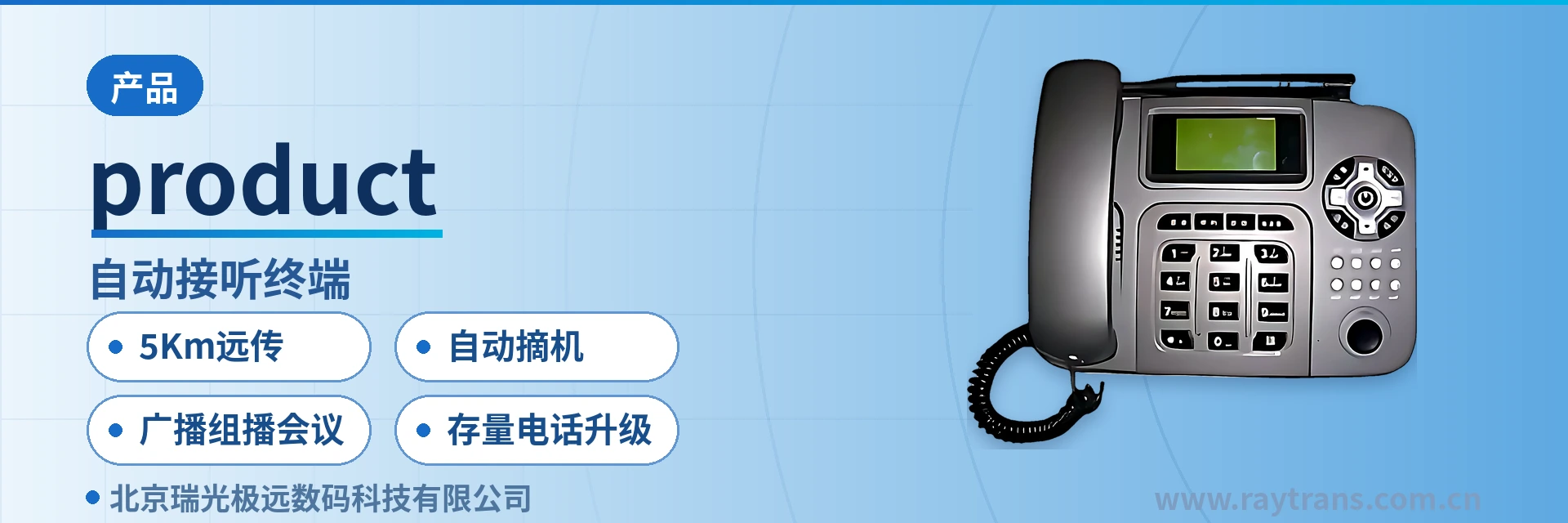
Auto-Answer Terminal
Auto off-hook on unanswered ringing, dial-free PA for dispatch commands, 5Km subscriber line remote transmission
When ringing goes unanswered several times, the auto-answer terminal can automatically go off-hook to provide an emergency response function and perform a PA announcement. It can also receive broadcast, multicast, and conference commands from the dispatching exchange to go off-hook automatically and provide PA intercom. In use, it is connected to the subscriber telephone interface of a PBX or IP PBX switch, with a maximum transmission distance of 5Km. The above two modes can be selected at the factory, and existing telephones can also be upgraded.
An auto-answer terminal is an emergency broadcast and PA intercom device connected to the subscriber telephone interface of a PBX or IP PBX switch. Developed by Beijing Ruiguang Jiyuan Digital Technology Co., Ltd. (Raytrans), it turns the ordinary telephone interface at a remote unattended site into an announcement channel that answers automatically and amplifies automatically, and serves as an edge access element in audio and video dispatching and command and dispatch systems. When ringing goes unanswered for a set number of rings, the device automatically goes off-hook and enters the broadcast announcement state; it can also go off-hook automatically upon receiving broadcast, multicast, or conference commands from the dispatching exchange, completing PA intercom. It suits the emergency broadcast and PA intercom requirements of intrinsically safe mining communication scenarios.
Key Specifications at a Glance: Automatic off-hook on ringing · 5Km remote transmission · PBX/IP PBX subscriber line access · Broadcast, multicast, and conference commands · Two modes selectable at the factory
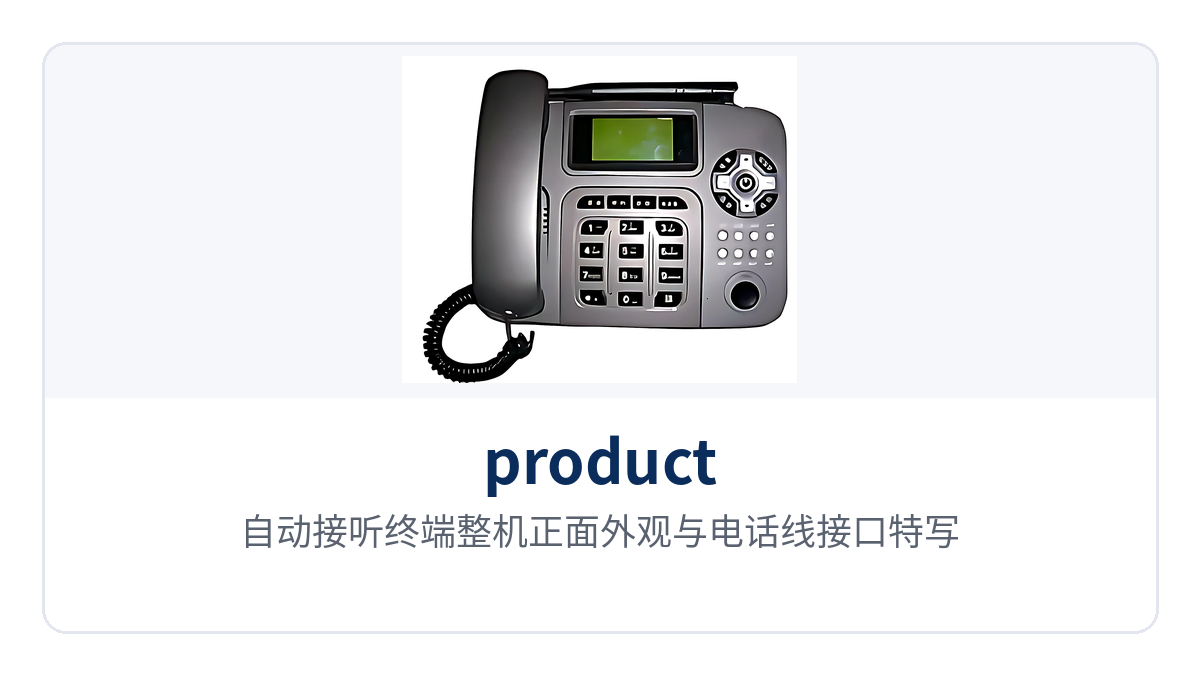
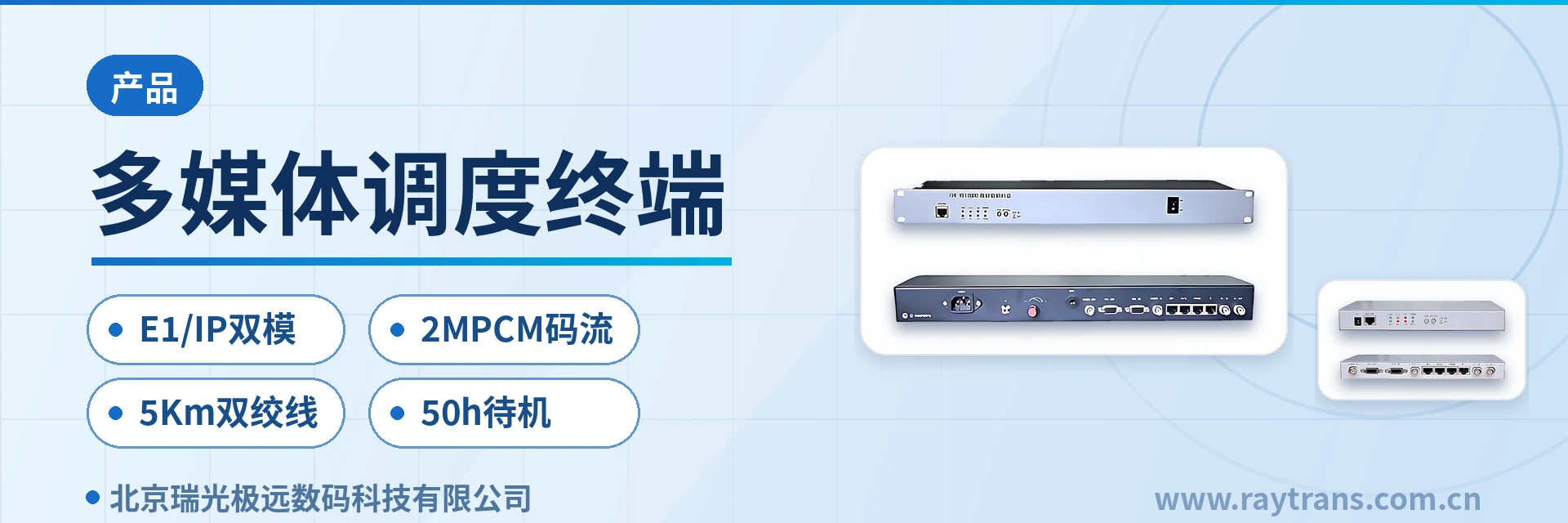
Figure 1: Front view of the auto-answer terminal and close-up of the telephone line interface
How does the auto-answer terminal go off-hook automatically when ringing is unanswered?
Automatic off-hook relies on detecting the ringing state of the subscriber line, with no need to modify the upper-layer dispatch software. After the caller dials, the device detects continuous ringing with no answer and completes the off-hook action according to the factory-set ring count, and the line is connected immediately. The ring count is determined by the factory configuration; for the specific value, the manufacturer's technical documentation supplied with the unit shall prevail.
Once the line is connected, the voice from the calling side goes directly to the PA output, so the duty console or dispatch console no longer needs to confirm whether anyone is on site—speaking directly completes the announcement. The same voice path can also be sent back along the subscriber line, forming a two-way PA intercom channel that can both send announcements out and bring replies back. In the audio and video dispatching architecture, this auto-answer terminal handles the edge connection step; working with the dispatching platform of a command and dispatch system manufacturer, it completes on-site deployment beyond the product showcase.
What functions can one auto-answer terminal provide?
The functions of the auto-answer terminal center on four main lines: automatic connection, emergency broadcast, dispatch PA, and remote line transmission. The table below lists the device's own capabilities item by item, for direct comparison against the on-site requirements of unattended sites. Each row corresponds to a capability that can be verified independently; confirm row by row during commissioning and record on the spot any item not yet implemented.
| Function | Description |
|---|---|
| Automatic off-hook on ringing | Automatically goes off-hook when ringing goes unanswered for a set number of rings, with no on-site personnel needed; off-hook immediately enters the broadcast announcement state |
| Auto-answer emergency response | Automatically connects when the unattended site is called; the caller's voice goes directly to the PA output, forming an emergency response channel |
| Dispatch command reception | Receives broadcast, multicast, and conference commands issued by the dispatching exchange, and automatically goes off-hook and switches to PA intercom according to the command |
| Broadcast announcement and PA | After off-hook, the voice is sent to the site via the PA output, covering the operations area where the device is installed |
| Broadcast, multicast, and conference | Single-point broadcast, group multicast, and conference access—all three dispatch methods can be implemented on the same terminal |
| PBX subscriber line access | Connects directly to the subscriber telephone interface of a PBX or IP PBX switch, occupying one ordinary subscriber port |
| 5Km remote transmission | Transmits up to 5Km along the subscriber line, covering field and underground sites far from the equipment room |
| Two selectable modes | The auto-answer mode and the dispatch command mode are selected at the factory and confirmed at ordering |
| Telephone upgrade and retrofit | Existing telephones can be upgraded and retrofitted without replacing the existing telephone assets as a whole |
The above capabilities can be networked with Raytrans intrinsically safe mining communication equipment and SIP telephones, and serve as the edge execution element for emergency broadcast PA intercom and audio and video dispatching in smart mining communication solutions.
How to choose between the two operating modes?
The two modes correspond to two types of sites: one where someone dials but no one is on site to answer, relying on automatic off-hook on ringing; the other where the dispatch console actively sends voice, relying on automatic off-hook upon receiving dispatch commands. The mode is selected at the factory and confirmed at ordering according to the purpose of the site; devices in the same batch can be configured separately by site.
Auto-answer mode: automatic off-hook and announcement when ringing is unanswered
The auto-answer mode leaves the connection action to ringing detection. A duty operator or the dispatch console dials the site number; when no one on site answers, the device automatically goes off-hook, and the caller can continue speaking to make an announcement to the site. It suits locations that are normally unattended and need immediate notification when something goes wrong.
The detection logic of this mode is simple: no network deployment is needed on site, and no separate operation is needed for the announcement. A call in is a connection, which is the basic form of daily emergency contact for sites such as underground pumping stations and substation duty rooms. No manual step is inserted between dialing and connection, and the announcement latency depends mainly on the ring count setting.
Dispatch command mode: automatic PA upon receiving broadcast, multicast, or conference commands
The dispatch command mode leaves the connection action to the dispatching exchange. After receiving broadcast, multicast, or conference commands issued by the dispatching exchange, the device automatically goes off-hook and amplifies the voice from the dispatch side; multiple sites can be called simultaneously by the same multicast or conference command. Commands are initiated from the dispatch side, while the site side only handles automatic off-hook and PA, with operating authority centralized at the dispatch console.
This mode suits scenarios under unified command from a dispatch center, such as zone paging in a chemical industrial park or joint above-ground-to-underground announcements in a mining area. The dispatch console does not need to dial numbers one by one; a single command completes automatic off-hook and PA at multiple sites. For industrial parks and mining areas with scattered sites, covering multiple sites with one command saves considerable dispatch seat operating time compared with dialing one by one. In smart mining communication solutions, this mode can be programmed together with intrinsically safe mining communication terminals and SIP telephones into the dispatch console of a command and dispatch system manufacturer, enabling centralized triggering of emergency broadcast PA intercom.
What are the technical specifications and configurations of the auto-answer terminal?
The overall electrical specifications of the auto-answer terminal vary with model configuration and ordering requirements. The table below lists the access and operating parameters already specified in the product documentation; other items are marked as not yet recorded in the knowledge base, so that site and commercial teams can check them together. The parameter table is broken down by item; access mode and operating mode are the two that must be decided first, and the remaining specifications vary with model configuration.
| Item | Parameter/Specification | Description/Applicable Conditions |
|---|---|---|
| Access interface | Subscriber telephone interface of a PBX or IP PBX switch | Accessed as an ordinary subscriber line, occupying one subscriber port |
| Transmission distance | Up to 5Km | Transmitted along the subscriber line; sites beyond this distance require line condition verification |
| Off-hook trigger | Automatic off-hook when ringing goes unanswered for a set number of rings | Enters the broadcast announcement state after off-hook |
| Dispatch commands | Broadcast, multicast, and conference commands | Automatically goes off-hook and performs PA intercom after receiving commands from the dispatching exchange |
| Operating mode | Auto-answer mode, dispatch command mode | Selected at the factory and confirmed at ordering |
| Retrofit capability | Supports upgrade and retrofit of existing telephones | Retrofit method and compatible telephones are subject to the manufacturer's technical documentation |
| Power supply mode | Not yet recorded in the knowledge base | Subject to the technical documentation supplied with the unit |
| Overall power consumption | Not yet recorded in the knowledge base | Subject to the technical documentation supplied with the unit |
| Operating temperature | Not yet recorded in the knowledge base | Subject to the technical documentation supplied with the unit |
| Dimensions | Not yet recorded in the knowledge base | Subject to the technical documentation supplied with the unit |
Power supply, power consumption, dimensions, and environmental specifications not covered in the table vary between batches and shall not be used as a basis for selection. Before implementation, request the technical documentation supplied with the unit from the manufacturer according to the ordered model, and check it together with the port plan on the switch side, so as to avoid discovering a power supply access point or installation space mismatch only after rack mounting. During selection, confirm in parallel with the product showcase materials provided by Raytrans and the interface list given by the command and dispatch system manufacturer.
How does 5Km remote transmission cover underground and field unattended sites?
A PBX subscriber line is an analog subscriber line between the switch and the telephone, carrying both voice and signaling, so remote sites do not need a separate network for announcements. The device accesses along this subscriber line and can transmit up to 5Km, which usually covers the distance from the pithead to the pit bottom and from the equipment room to outside the perimeter wall.
5Km is the subscriber line transmission distance given in the product documentation and is a boundary condition for selection. Where the on-site line passes through multiple splices, oxidized joints, or thin wire gauges, the actual usable distance is shortened; sites beyond the range must be assessed according to wire gauge and line quality, or another access method must be used.
Because the existing telephone line is reused, the sections with concentrated construction work—the shaft, the pipe gallery, and outside the perimeter wall—need no further excavation. Existing sites only need auto-answer capability added on the telephone side, shifting the focus of the work from cabling to port planning and commissioning. Checking ports and numbers against the site records before the retrofit avoids discovering during construction that a number is already occupied. In smart mining communication solutions, this remote transmission feature, together with intrinsically safe mining communication equipment and SIP telephones, brings underground unattended sites into the scope of audio and video dispatching and emergency broadcast PA intercom.
Typical application scenarios
The target sites of the auto-answer terminal are locations that are normally unattended and must be reachable immediately when something goes wrong. Underground mines, petrochemical industrial parks, and unattended electric power and water conservancy stations are three typical scenarios, each with different access locations and announcement targets. The three scenarios differ in announcement targets and command sources, while the access method and off-hook logic are the same.
Underground mining operations: emergency announcements at the pit-bottom yard and pumping stations
Underground pumping stations, pit-bottom yards, and belt conveyor heads are mostly unattended sites, and the above-ground dispatch console needs to make announcements directly to these locations from the surface. The telephone line runs down the shaft to the underground, usually within a few kilometers, and access to the auto-answer terminal along the existing subscriber line provides coverage.
When a surface call goes unanswered, the device automatically goes off-hook and the dispatcher's voice is amplified underground, so evacuation instructions no longer need to be relayed. The dispatch side can also use multicast commands to send the same voice to multiple underground sites at once, shortening the time from detecting an anomaly to notifying the people concerned. This scenario is a typical part of smart mining communication solutions: the auto-answer terminal, together with intrinsically safe mining communication equipment and SIP telephones, connects to the dispatching platform of a command and dispatch system manufacturer, forming the underground emergency broadcast PA intercom link.
Petrochemical industrial parks: PA intercom in process units and tank farms
The process units and tank farms of a chemical industrial park are noisy and the personnel are scattered, so announcements must rise above ambient sound and still reach people. Most sites already have telephone lines to the control room; once an auto-answer terminal is connected, the control room can dial to make a PA announcement to the process units. The line from the control room to the process units is mostly already in place, so the retrofit only requires terminating the terminal on the telephone side.
When the park dispatch center sends zone paging, the terminal receives the broadcast and multicast commands and goes off-hook automatically, so the process units, tank farms, and loading areas can be called in groups. With conference command access, inspection personnel can also join dispatch consultations through the on-site PA without returning to the control room. When multiple parks are networked, the audio and video dispatching platform can coordinate all zones uniformly, while the authority to trigger emergency broadcast PA intercom remains at the dispatch console.
Unattended electric power and water conservancy stations: remote announcements at substations and pumping stations
Substations and water conservancy pumping stations mostly operate unattended with periodic inspection, and the distance from the equipment room to the site is often several kilometers. With an auto-answer terminal connected along the existing subscriber line, the dispatch end can dial to make a PA announcement to the site for operating prompts, anomaly alerts, and personnel evacuation.
During periods requiring more frequent announcements, such as thunderstorms and flood seasons, automatic off-hook ensures every call reaches the on-site PA, regardless of whether anyone is at the site. Such sites usually need only one-way announcements, while the two-way intercom capability is left for on-site personnel to reply. When a site is expanded, terminals can be added through the same audio and video dispatching interface, with the command and dispatch system manufacturer completing the interfacing with the existing platform.
How to retrofit existing telephones in a legacy telephone upgrade?
A legacy telephone upgrade suits sites where telephones are already installed and only auto-answer capability needs to be added. The retrofit does not touch the backbone structure of the switch; proceed on site in the following five steps, each of which must align with the call handling plan on the switch side. The order of the five steps cannot be reversed: if the access location and line distance are not verified before ordering, the rework cost will fall on the site.
- Verify the access location: confirm whether the target site is connected to the subscriber telephone interface of a PBX or an IP PBX switch, and record the port number and the corresponding number.
- Measure the line distance: measure the length to the equipment room along the actual route of the subscriber line, and confirm it is within 5Km; if it exceeds this, verify the line conditions first before deciding on the solution.
- Select the operating mode: determine the auto-answer mode or the dispatch command mode according to the purpose of the site, state it clearly at ordering, and different sites in the same batch can be configured separately.
- Retrofit or replace the telephone: upgrade and retrofit the existing telephone; the specific retrofit method and compatible telephone models are subject to the manufacturer's technical documentation.
- Commissioning and drill: dial to verify automatic off-hook and the PA effect, then have the dispatch console send one broadcast, one multicast, and one conference command in sequence, confirming each item.
The first two steps determine whether a site can be used; the last three determine whether it works smoothly. During commissioning, confirm the number of rings, the PA volume, and the announcement coverage together — one drill is more effective than reading ten pages of instructions. After the upgrade is complete, it is recommended to record the port numbers and modes in the site records, so that later capacity expansion can copy the configuration from those records. For mining area sites, you can also refer to Raytrans's smart mining communication solution and intrinsically safe mining communication requirements, incorporating audio and video dispatching and emergency broadcast PA intercom into the same site plan.
Conclusion
The auto-answer terminal turns the long-standing problem of unattended sites where calls go unanswered into automatic connection and PA announcement completed with a single dial. Access along existing subscriber lines and transmission capability of up to 5 km mean that pit bottoms, plant areas, and remote pumping stations do not need a new network for announcements, and the upgrade effort is concentrated on port planning and commissioning.
For the dispatch center, automatic go-off-hook on ringing and automatic go-off-hook on dispatch commands are two parallel paths, so both daily emergency contact and unified broadcast can run on the same set of equipment. With the mode selected according to site purpose and ports managed by records, the auto-answer terminal can reliably handle emergency response and PA intercom tasks at remote sites. In mining scenarios, choosing a command and dispatch system manufacturer with experience in smart mining communication solutions (such as Raytrans) for selection support allows audio and video dispatching, emergency broadcast PA intercom, and SIP telephones to be incorporated into one command and dispatch system, reducing the O&M burden of running multiple systems in parallel.