IDM MCC6000 Portable Converged Communication Command Platform
One host with three screens, connectivity that survives a network outage, rapid deployment, on-the-spot command post setup
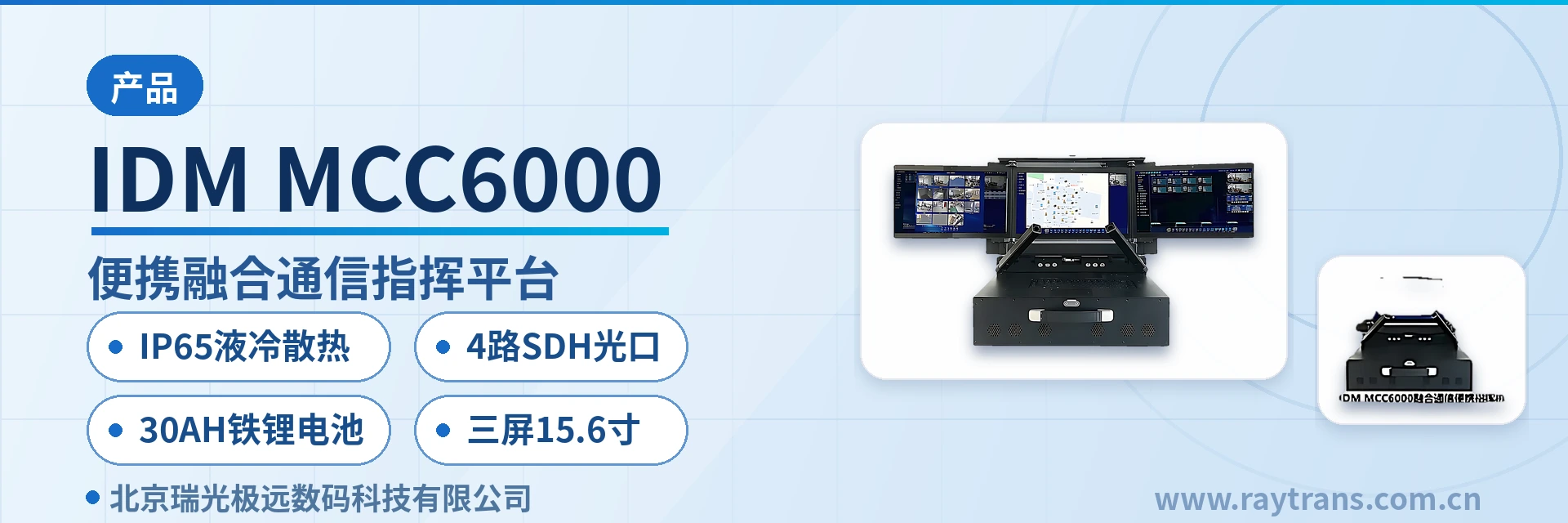
The IDM MCC6000 portable converged communication command platform is a communication command platform built around integration, compact design, and portability, equipped with three 15.6-inch fold-out monitoring screens and supporting rapid deployment and mobile use. The platform integrates multiple communication network modes (optical fiber transmission, Ethernet transmission, on-site wireless ad-hoc networks (LTE, MESH, trunking), satellite communication, 4G/5G public and private networks, etc.), and can connect on site to various communication terminals such as trunking intercom, mobile man-pack devices, deployable surveillance cameras, UAV video, and video consultation, providing on-site communication networks, command and dispatch, and front-and-rear coordinated handling capabilities
IDM MCC6000 multi-network converged portable command platform is an integrated portable converged communication command equipment developed by Beijing Ruiguang Jiyuan Digital Technology Co., Ltd. (Raytrans). Inside a single IP65 ruggedized portable chassis, it accommodates three 15.6-inch fold-out monitoring screens, multi-standard communication access modules and converged communication dispatch software, and is used in scenarios such as emergency command and firefighting rescue, public security and public safety, and energy and electric power field operations, where a command post must be set up on the spot. What these three types of sites have in common is that neither a fixed equipment room nor a stable public network can be relied upon, the command post must be built upon arrival and moved with the team, and a single device must simultaneously handle image display, on-site networking and unified dispatching — which is exactly where the core value of audio and video dispatching and converged dispatching capabilities lies in mobile scenarios.
Key Specifications at a Glance: three 15.6-inch screens · IP65 liquid cooling · 30AH lithium iron phosphate battery · 4 SDH optical ports (2.5G/622M/155M) · 14th-gen i9 processor + RTX 4090 graphics card · optical fiber/satellite/LTE/Mesh multi-network access · 8 groups of 4-party video conferencing
What Kind of Device Is a Multi-Network Converged Portable Command Platform?
A multi-network converged portable command platform is a type of converged communication equipment that concentrates display, communication and audio and video dispatching functions into a portable chassis, ready to carry on-site command services upon arrival. IDM MCC6000 is a representative model: the unit adopts a one host with three screens structure, and its three 15.6-inch fold-out monitoring screens present multiple feeds simultaneously when opened, respectively carrying video surveillance, video consultation and command output, and can run dispatch console software to present GIS maps and visualized data.
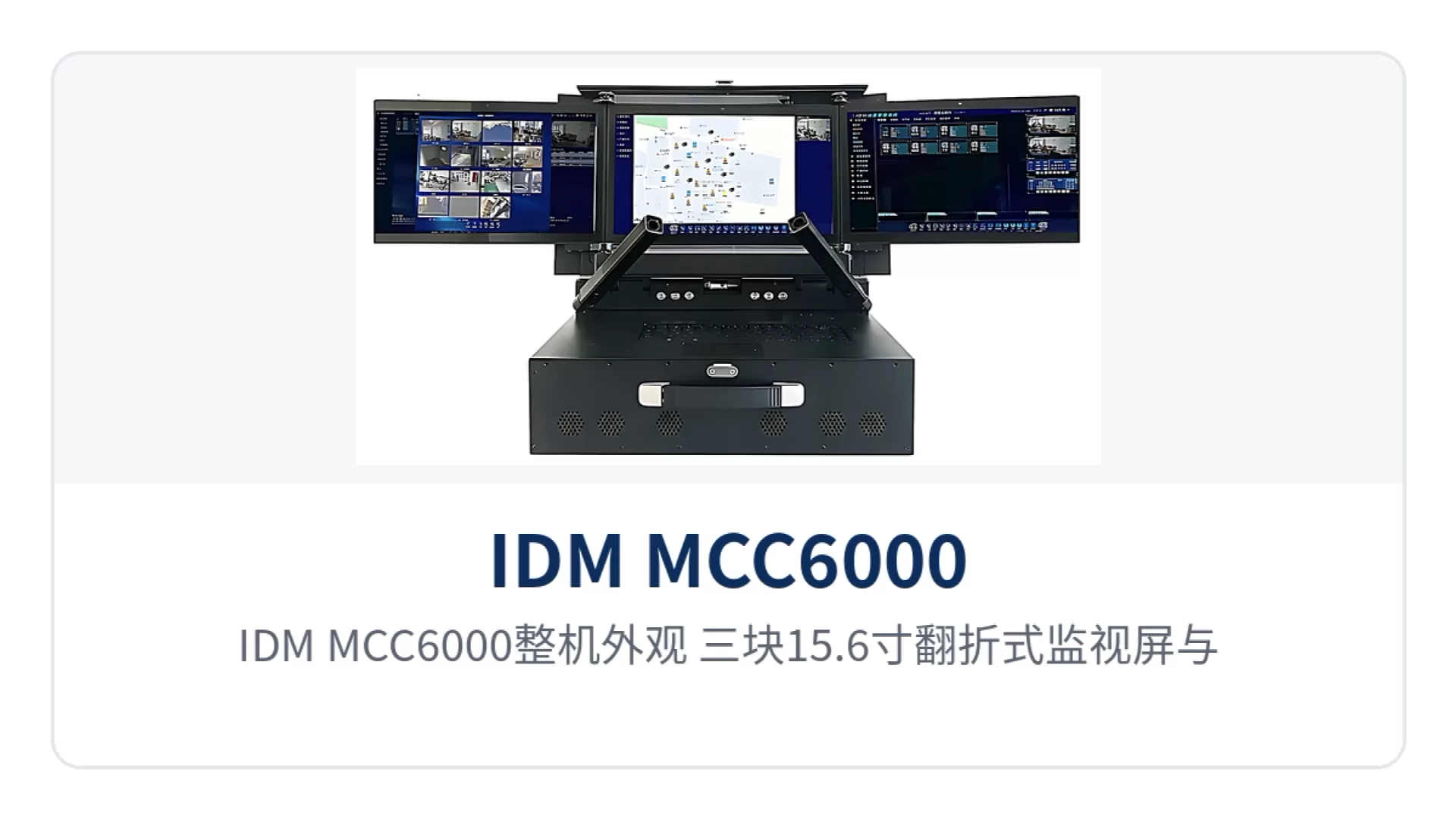
Figure 1: Overall appearance of IDM MCC6000 — three 15.6-inch fold-out monitoring screens and IP65 portable chassis
The chassis integrates a computing module built from a 14th-gen i9 processor and an RTX 4090 graphics card, capable of running large models such as Deepseek and QWQ 32B, providing computing power for high-definition video conferencing and visualized command and dispatch software. Field adaptability is carried jointly by three design aspects: protection, heat dissipation and power supply. IDM MCC6000 has an IP65 ingress protection rating, adopts liquid cooling + forced air cooling hybrid heat dissipation, and has a built-in 30AH lithium iron phosphate battery with power management capability, so command operations can still be carried out in field and vehicle-mounted environments without a fixed equipment room or mains power. The dimensions and weight of the unit are not yet recorded in the knowledge base; please refer to the manufacturer's technical documentation and commercial confirmation.
Key Specifications
The table below covers display, protection, power supply, computing and communication interfaces, for item-by-item verification against project on-site conditions during selection; the parameters are subject to the product documentation.
Item | Parameter/Specification | Description/Applicable Conditions |
|---|---|---|
Unit form | Portable integrated chassis, one host with three screens | Deployed for emergency command, firefighting rescue, public security handling and electric power field operations |
Display screen | Three 15.6-inch fold-out monitoring screens | Respectively carry video surveillance, video consultation and command output feeds, and can present GIS and visualized data |
Ingress protection rating | IP65 (per GB/T 4208 enclosure protection rating standard) | Suitable for outdoor, field, vehicle-mounted and dusty/rainy environments |
Heat dissipation method | Liquid cooling + forced air cooling hybrid heat dissipation | Supports high-load, long-duration continuous operation |
Power supply | Built-in 30AH lithium iron phosphate battery with power management | Supplies power to the unit in environments without mains power |
Computing platform | 14th-gen i9 processor, RTX 4090 graphics card | Can run large models such as Deepseek and QWQ 32B, supporting high-definition video conferencing and visualized command and dispatch software |
Optical interface | 4 SDH optical ports | Supports multiple rates such as 2.5G, 622M and 155M |
Digital trunk | E1 digital trunk interface | Complies with ITU-T G.703 (2.048Mbps, HDB3), supports SS7 and PRI signaling |
Online concurrency | Supports 20 concurrent online services | Concurrent capacity for local switching and dispatch services |
Video conferencing | Supports 8 groups of 4-party video conferencing | Multi-party consultation and coordination capability |
Streaming media protocol | RTMP and RTSP streaming services | On-site audio and video transmission and access |
Video output | HDMI integrated video output | Outputs the images organized by the dispatch console to an external large display |
Intercom access | Commercial 130M trunking, public security 350MHz trunking (PDT), 370MHz emergency management trunking (PDT), 400MHz commercial trunking, analog/digital conventional (DMR), HF system | Converged interfacing via dedicated gateways |
Wireless broadband | WiFi HaLow, regional broadband wireless, field wire broadband | Field wire broadband has an upper bandwidth limit of 10Mbps, suitable for complex terrain |
Unit dimensions and weight | Not yet recorded in the knowledge base | Please refer to the manufacturer's technical documentation and commercial confirmation |
Which Communication Networks Can a Multi-Network Converged Portable Command Platform Access?
Conclusion first: IDM MCC6000 multi-network converged portable command platform accesses optical fiber, satellite, LTE and Mesh networks in a single device, selects links for networking on site according to available conditions, and multiple links serve as mutual backup. The capabilities of each access mode are shown in the table below.
Access Mode | Capability Description |
|---|---|
Optical fiber transmission | 4 SDH optical ports, supporting 2.5G, 622M, and 155M rates, wired interconnection with terrestrial service networks and the command center |
4G/5G public and private networks | Backhaul via carrier networks or self-built private networks, providing high-speed, low-latency channels |
Wireless Mesh ad-hoc network | Builds a communication network without infrastructure, supporting self-organizing and self-healing |
Satellite communication (SATCOM) | Maintains communication with the rear in remote areas or where there is no terrestrial network coverage |
WiFi HaLow | Long-distance, low power consumption wireless broadband access, suitable for large-area coverage |
Regional broadband wireless | On-site regional broadband wireless access, enhancing communication flexibility and reliability |
Field wire broadband | Bandwidth up to 10Mbps, adapting to wired access in complex terrain |
The real value of multi-network access is connectivity that survives a network outage: when public networks are normal, 4G/5G and optical fiber backhaul are preferred; when public networks are interrupted or out of coverage, the system switches to the wireless Mesh ad-hoc network, satellite communication, and field wire broadband to keep the command link available for emergency, firefighting, public security, and electric power sites as much as possible. Optical fiber, Ethernet, on-site wireless ad-hoc networks (LTE, MESH, trunking), satellite communication, and 4G/5G public and private network communication are all available at the same time, so the site does not need a separate standalone device for each type of link.
How Are Heterogeneous Intercom Trunking Systems Converged on One Platform?
Conclusion first: the convergence point for heterogeneous intercom trunking is a dedicated gateway. Intercom networks of different formats each keep their original air interface and call mode, and voice is converted by the gateway into unified dispatching resources and merged into the same dispatch console. IDM MCC6000 supports 130M/350M PDT/370M PDT/400M/DMR/HF trunking access, converging heterogeneous intercom over one gateway, so each unit does not need to replace its existing intercom terminals.
Intercom System Format | Access and Convergence Mode |
|---|---|
Commercial 130M trunking | Accessed via the trunking gateway, with voice incorporated into unified dispatching |
Public security 350MHz trunking (PDT) | Converged and interfaced via a dedicated gateway, accessing voice from the public security PDT trunking network |
370MHz emergency management trunking (PDT) | Converged and interfaced via a dedicated gateway, accessing voice from the emergency management PDT trunking network |
400MHz commercial trunking | Accessed via the trunking gateway, intercommunicating with on-site terminals of other formats |
Analog/digital conventional (DMR) | Supports channel point-to-point communication access, with conventional intercom voice merged into the dispatch console |
HF system | Accessed via the radio gateway, with long-distance voice incorporated into the same dispatch console |
After convergence and interfacing, the dispatcher can see the call handling status of trunking intercom, conventional intercom, and HF on one screen, and issue the same set of dispatch orders to talk groups of different formats. The value of this capability is more obvious during cross-department joint operations: after the communication teams of public security, emergency management, firefighting, and electric power arrive on site, there is no need to first unify equipment models, and voice can be intercommunicated on the same dispatch console.
Which Terminals and Services Can Converged Communication Dispatch Handle?
The dispatching capability of IDM MCC6000 covers intercom, voice, video, conferencing, and large display output. The terminal types and service functions that can be accessed on site are shown in the following table.
Function | Description |
|---|---|
Wireless intercom system access | Supports commercial 130M trunking, public security 350MHz trunking (PDT), 370MHz emergency management trunking (PDT), 400MHz commercial trunking, analog/digital conventional (DMR), and HF systems, converged and interfaced via a dedicated gateway |
On-site terminal access | Can access various communication terminals such as trunking intercom, mobile man-pack devices, deployable surveillance cameras, UAV video, and video consultation |
Audio terminal access | Supports ordinary telephone, IP phone, handheld device app, network broadcast, and network intercom |
Gateway capability | Provides radio gateway, trunking gateway, and SMS gateway |
Video terminal access | Supports handheld device app, PC camera, PC screen or window, GB28181 camera, and ONVIF camera |
Local switching capability | Provides E1 digital trunk interface, supports SS7 and PRI signaling, and supports 20 concurrent online services |
Conference consultation capability | Supports 8 groups of 4-party video conferencing, and supports RTMP and RTSP streaming services |
IoT terminal access | Supports local IoT terminal access, and is compatible with IoT information provided by audio and audio and video terminals |
Large display output capability | Outputs the display content organized by the dispatch console to an external large display through the HDMI integrated video output interface |
From the perspective of service forms, trunking intercom, broadcast, telephone, video conferencing, and on-site video transmission are interconnected within the same device; IDM MCC6000 is compatible with each unit's existing video surveillance, video conferencing, central control, alarm, broadcast, and IoT monitoring systems, so the site does not need to rebuild existing communication facilities.
What On-Site Problems Do the Three Differentiated Capabilities Solve?
The value of IDM MCC6000 is concentrated in three differentiated capabilities: protective power supply, multi-network access, and heterogeneous intercom convergence, which address three types of on-site problems: no mains power in the field, public network interruption, and multi-format intercom each forming its own network.
Differentiated Capability | Value on Site |
|---|---|
IP65 liquid cooling and 30AH lithium iron phosphate battery | Sustained command in the field without mains power: the IP65 ingress protection rating combined with liquid cooling plus forced air cooling, a built-in 30AH lithium iron phosphate battery and power management allow the unit to be powered on and run in dusty, rainy conditions without mains power |
4 SDH optical ports and multi-network access | One unit accesses optical fiber, satellite, LTE and Mesh networks: 4 SDH optical ports support 2.5G/622M/155M rates, and when the public network is interrupted the system can switch to the ad-hoc network, satellite and field wire links |
Dedicated gateway for converged heterogeneous intercom | Heterogeneous intercom converged through one gateway: supports 130M/350M PDT/370M PDT/400M/DMR/HF trunking access, so public security, emergency and commercial intercom voice is aggregated into the same dispatch console without replacing existing terminals |
How does a portable command platform sustain command without mains power?
Sustained command by a portable command platform without mains power depends on three conditions being met at the same time: battery, protection and heat dissipation, and link backup. The IDM MCC6000 has a built-in 30AH lithium iron phosphate battery with power management, so it can be powered on and run on site without a generator or mains power; the IP65 ingress protection rating and liquid cooling plus forced air cooling make the temperature more controllable during continuous high-load operation, giving more reliable available time in field and vehicle-mounted environments.
At the link level, the IDM MCC6000 connects to the ground private network service network through 4 SDH optical ports, and uses a self-built LTE private network, trunking communication network, wireless Mesh ad-hoc network and satellite links as on-site access methods; when a link is interrupted or coverage is unavailable, the ad-hoc network and satellite links take over to maintain communications as far as possible. With the combined margins of power supply, heat dissipation and links, 20 concurrent online services and 8 groups of 4-party video conferencing can run at the same time, so voice dispatching, video consultation and terminal management at duty sites do not have to be carried out in turn.
Typical Application Scenarios
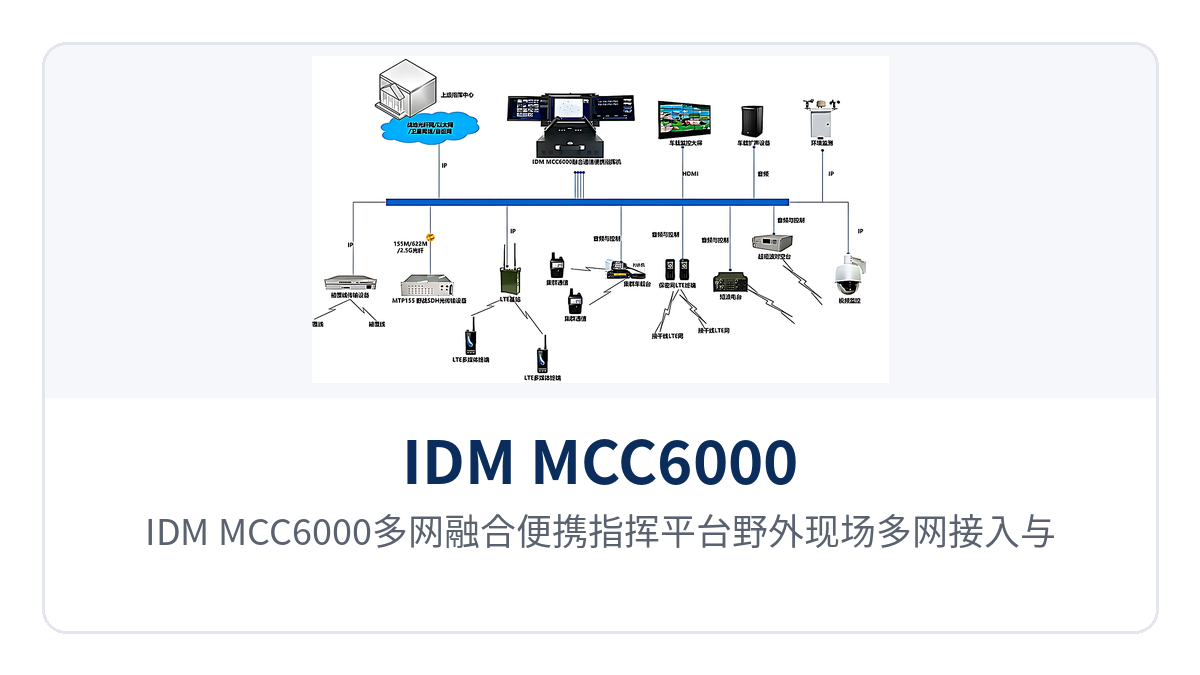
Figure 2: IDM MCC6000 multi-network converged portable command platform field site multi-network access and command and dispatch networking diagram
Emergency command and firefighting and rescue sites
The communication characteristics of disaster and fire sites are that existing base stations and fixed links may fail at any time, and multiple rescue teams arrive on site at the same time, each carrying intercom devices of different formats. The IDM MCC6000 can quickly establish a temporary command post on site, restore communications through optical fiber, 4G/5G private network, wireless Mesh ad-hoc network and satellite, and access trunking intercom, individual soldier, deployable surveillance camera and UAV video; three 15.6-inch screens display on-site images and GIS situation at the same time, based on which the commander dispatches rescue teams, checks handling progress, and maintains coordination with the rear command center.
Public security and public safety on-site handling
Tasks such as security for large events, emergency handling and checkpoint control require stable and available voice, video and data channels between the site and the command center, and the ability to interconnect with the public security 350MHz trunking (PDT) system. The IDM MCC6000 uses a dedicated gateway to access the public security PDT trunking network, aggregating on-site police intercom, deployable surveillance camera and surveillance camera images into the same dispatch console; when cross-regional coordination is required, on-site images can be backhauled to the rear through the 4G/5G private network or satellite links, so that the front and rear can grasp the situation synchronously. Existing video surveillance and alarm systems can continue to be connected and used.
Energy and electric power field operations
Transmission lines and substations are mostly located in mountainous areas, open fields and other areas with insufficient public network coverage, where a stable communication and dispatch channel is required between inspection teams and the centralized control station. The IDM MCC6000 can enter the site with the inspection team, access the optical fiber resources of the electric power communication network through 4 SDH optical ports, or connect scattered inspection points into one through the wireless Mesh ad-hoc network, with satellite communication as backup for remote sections; inspection images, voice reports and work order information are aggregated on the same dispatch console, and the command end can watch multiple on-site video channels synchronously and issue orders.
Selection and Deployment Recommendations
When selecting a multi-network converged portable command platform, it is recommended to check three things item by item: first, the match between the communication methods available on site (optical fiber, 4G/5G public or private network, satellite, Mesh, field wire) and the access capacity of the device; second, whether the intercom formats and terminal types to be connected (PDT trunking, DMR, HF, individual soldier, deployable surveillance camera, UAV video, GB28181 camera, IoT terminal) are within the supported range; third, whether the number of video conferencing channels and the concurrent online capacity meet the on-site command scale.
For how to deploy a portable command platform at an emergency site, it is recommended to follow three steps: first connect the available links, giving priority to optical fiber or the 4G/5G private network, with the other links as backup; then access front ends such as intercom, individual soldier and UAV video as required, and check the talk group division of each format gateway; when centralized viewing is required, use the HDMI integrated video output to send the dispatch console image to an external large display.
After deployment, the IDM MCC6000 multi-network converged portable command platform supports field operation without mains power through IP65 ingress protection and liquid cooling, achieves optical fiber, satellite, LTE and Mesh multi-network access through 4 SDH optical ports, and completes heterogeneous intercom convergence through a dedicated gateway; for the overall dimensions, weight, battery endurance and commercial price, please refer to the manufacturer's technical documentation and commercial confirmation.