IDM-OXC
IDM-OXC
The IDM-OXC Optical Cross-Connect Device is an optical path control equipment that enables arbitrary non-blocking cross-connection and interconnection between multiple input and output optical ports. It features compact size, fast switching speed, and high operational reliability. In optical communications, it is primarily used for intelligent fiber scheduling at nodes, multi-dimensional online monitoring, multi-route service protection, fiber equipment or network testing, etc.
I. Overview
The IDM-OXC Optical Cross-Connect Device is an optical path control equipment that enables arbitrary non-blocking cross-connection and interconnection between multiple input and output optical ports. It features compact size, fast switching speed, and high operational reliability. In optical communications, it is primarily used for intelligent fiber scheduling at nodes, multi-dimensional online monitoring, multi-route service protection, fiber equipment or network testing, etc.
II. Device Structure

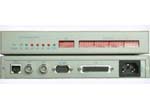
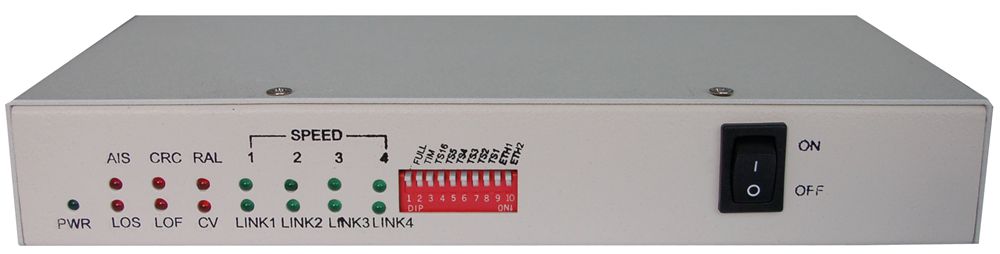
Device Rear Panel Diagram
III. Product Features
(1). Adopts 19-inch 6U rack-mount installation;
(2). Equipped with intelligent Optical Distribution Frame (ODF) management, replacing manual ODF patch cord operations. The transmission-side and user-side optical ports can be configured for arbitrary cross-connection on the intelligent O&M platform, enabling rapid service scheduling and restoration;
(3). Supports configuration of cross-connection and patch-through between input-side and output-side fiber resources via the intelligent O&M platform, enabling rapid completion of fiber service scheduling;
(4). Supports device cross-protection, with dual-backup or multi-backup protection on the user side. When the primary device fails, it intelligently switches to the backup device, ensuring rapid service recovery;
(5). Supports targeted on-demand fiber quality testing and periodic routine testing functions, enabling detection of fiber link transmission loss, splice loss, fiber link event point detection, and generation of quality test curves;
(6). Supports intelligent fiber route planning function. The software can recommend optimal fiber routing channels and scheduling schemes from multiple dimensions, including shortest total cable length, minimum number of intermediate nodes, minimum link loss, and shortest patch cord switching time;
(7). Equipped with power-off hold function. After device power failure, cross-connection channels maintain the current route as pass-through without interrupting services;
(8). Supports port received optical power detection function;
(9). Supports anti-tangling function, with no fiber pigtail tangling or twisting during the patch cross-connection process;
(10). Equipped with OTDR detection module and received optical power detection module;
(11). Device capacity: ≥48 input fibers, 48 output fibers;
(12). Patch switching time: ≤3 minutes;
(13). Insertion loss: ≤1dB;
(14). Device interface: LC/UPC connector;
(15). Management interface: RJ45 network port.
(16). Power supply: Dual power supplies with hot backup, seamless switching.
FAQs
What is the difference between optical fiber and optical cable? What are the common optical fiber connectors?
Optical fiber is a medium that transmits information from one end to another. It is a glass or plastic fiber that…
View answer