IDM E1
IDM E1
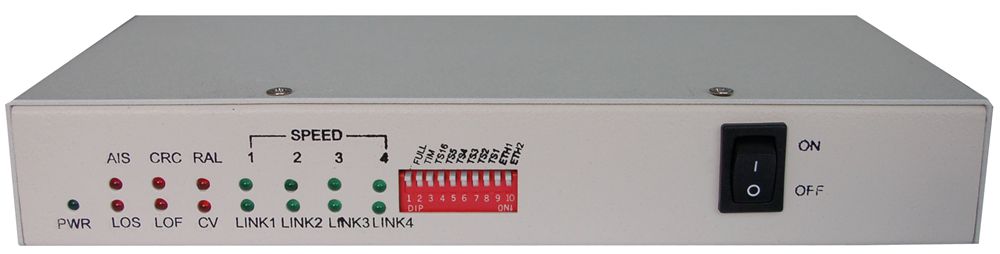
The IDM E1/FE Bridge is designed with large-scale dedicated integrated circuits, implementing inverse multiplexing of Ethernet data to one E1 or fiber optic link. The device is available in centralized and desktop models, with the centralized model providing 1 Ethernet interface and the desktop model providing 4 Ethernet interfaces. The device supports two transmission modes: E1 and fiber optic. In E1 transmission mode, the maximum Ethernet bandwidth is 2.048M; in fiber optic transmission mode, the maximum Ethernet bandwidth is 4.096M. The device supports network management functions, allowing the management device to manage the local end or desktop devices through the centralized device. Additionally, both centralized and desktop devices can configure E1 interface parameters, device clock, and Ethernet parameters via DIP switches.
Overview
The IDM E1/FE Bridge is designed with large-scale dedicated integrated circuits, implementing inverse multiplexing of Ethernet data to one E1 or fiber optic link. The device is available in centralized and desktop models, with the centralized model providing 1 Ethernet interface and the desktop model providing 4 Ethernet interfaces. The device supports two transmission modes: E1 and fiber optic. In E1 transmission mode, the maximum Ethernet bandwidth is 2.048M; in fiber optic transmission mode, the maximum Ethernet bandwidth is 4.096M. The device supports network management functions, allowing the management device to manage the local end or desktop devices through the centralized device. Additionally, both centralized and desktop devices can configure E1 interface parameters, device clock, and Ethernet parameters via DIP switches.
System Features
Ø Designed with large-scale dedicated integrated circuits
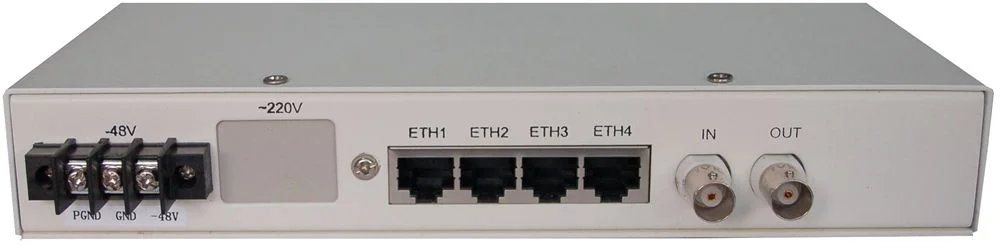
Ø Provides 4 Ethernet interfaces; the central office device provides 1 Ethernet interface
Ø Provides 1 group of unbalanced E1 interfaces with BNC connectors
Ø Power supply mode: AC220V/DC-48V optional
Ø Network management can manage the central office and remote devices via the central office COM port, including Ethernet configuration and query, E1 alarm information query, etc.
Ethernet Interface Performance Features
Ø Compliant with IEEE 802.3 10/100BASE-TX standard
Ø Remote device supports up to 4 Ethernet electrical interfaces (central office device supports 1 Ethernet interface)
Ø Supports enabling and disabling of Ethernet ports
Ø Supports auto-negotiation, rate, and full/half duplex configuration of Ethernet ports
Ø Central office device can manage Ethernet of both central office and remote devices
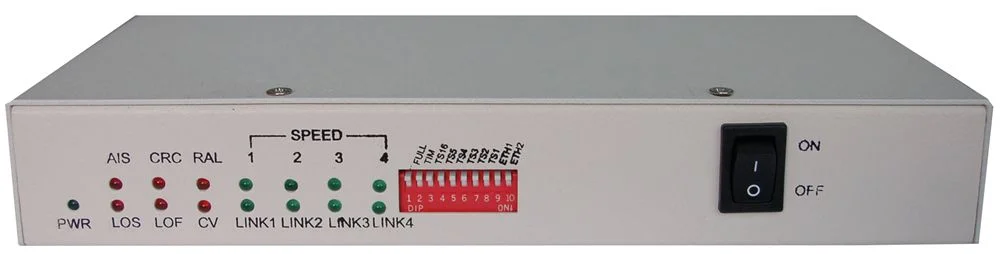
Ø Central office and remote devices can configure E1 interface and Ethernet interface parameters via DIP switches
Ø RJ45 interface, CAT3/5 unshielded twisted pair (MDI/MDI-X auto-sensing)
Ø Ethernet frame length standard 64 to 1516 bytes, maximum supported frame length 1516 bytes
Ø Ethernet performance complies with RFC2544
Ø Packet loss rate <0.01%; latency ≤100μs
Ø Supports PAUSE flow control
Technical Specifications
E1 Interface Specifications
Ø Fully compliant with ITU-T G.703/G.704 recommendations
Ø Jitter characteristics: ITU-T G.823
Ø Line code: HDB3
Ø Bit rate: 2048kbit/s±50ppm
Ø Impedance: 75Ω (unbalanced interface)
Ø Framed and unframed settings; in framed mode, timeslots can be configured via hardware or software
Ethernet Interface
Ø Interface protocol: Compliant with IEEE-802.3u standard
Ø Interface type: RJ45
Ø Port mode: 10/100Mbps auto-negotiation mode
Environmental Requirements
Ø Operating temperature: -30℃ to 40℃ (operating)
Ø Storage temperature: -20℃ to +70℃
Ø Relative humidity: ≤95% (non-condensing)
Power Supply
Ø Power mode: AC220V/DC-48V
Ø Power consumption: <2W
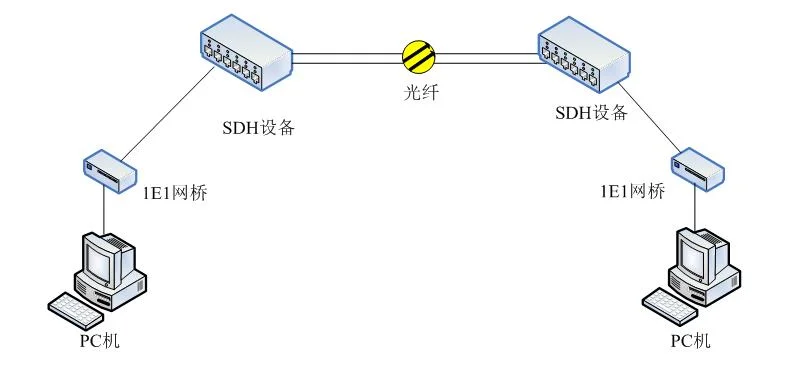
Application Example:
FAQs
What is the working principle and function of a media converter?
The rapid advancement of informatization has led to growing demand for multimedia communications such as data, voice…
View answer