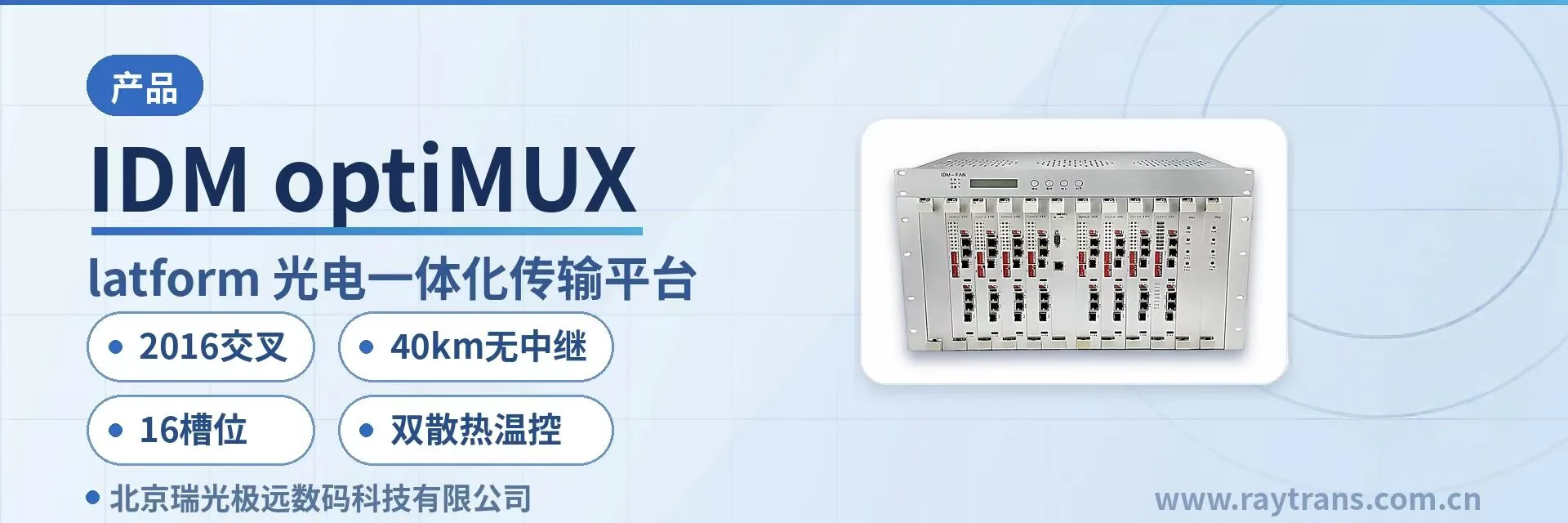
IDM OptiMUX Aggregation-Type Integrated Platform
16-slot card-based mixed insertion; one chassis integrates transmission, switching, access, and dispatching; saves equipment room space and supporting power supply
The IDM OptiMUX aggregation-type integrated platform adopts a (6+1)U card-based chassis design and provides 16 slots. The device integrates high-speed optical fiber transmission, PBX voice switching, PCM access, and audio and video command and dispatch technologies, and supports multiple networking approaches: point-to-point, chain, ring network, star, tree, ring-cut-ring, ring-intersecting, and other networks.
The IDM OptiMUX Platform aggregation-type integrated platform (OMP for short, i.e., a 16-slot card-based converged platform) is a new-generation optical-electrical integrated transmission device developed by Beijing Ruiguang Jiyuan Digital Technology Co., Ltd. It integrates four types of technologies — high-speed optical fiber transmission, PBX voice switching, PCM access, and audio and video command and dispatch — into a single chassis, and is used for service access, transmission, and dispatching in private networks such as electric power, energy, rail transit, and military and government emergency communications. As a professional command and dispatch system manufacturer, the platform has significant advantages in the field of converged communication command and dispatch systems, and can meet the diverse requirements of government private network optical fiber communication solutions and military emergency communications vehicle solutions. The equipment chassis adopts a (6+1)U card-based design and provides 16 slots. Each function card is selected according to the site service volume, supporting flexible configuration of various service cards such as PDH, integrated service access devices, optical multiplexing equipment, and PCM equipment, providing an integrated carrying platform for product showcase and converged dispatching.
Key Specifications at a Glance: (6+1)U card-based design · 16 slots · 2016×2016 cross-connection · 40km repeaterless · 100Base-T network management · 2 alarm outputs
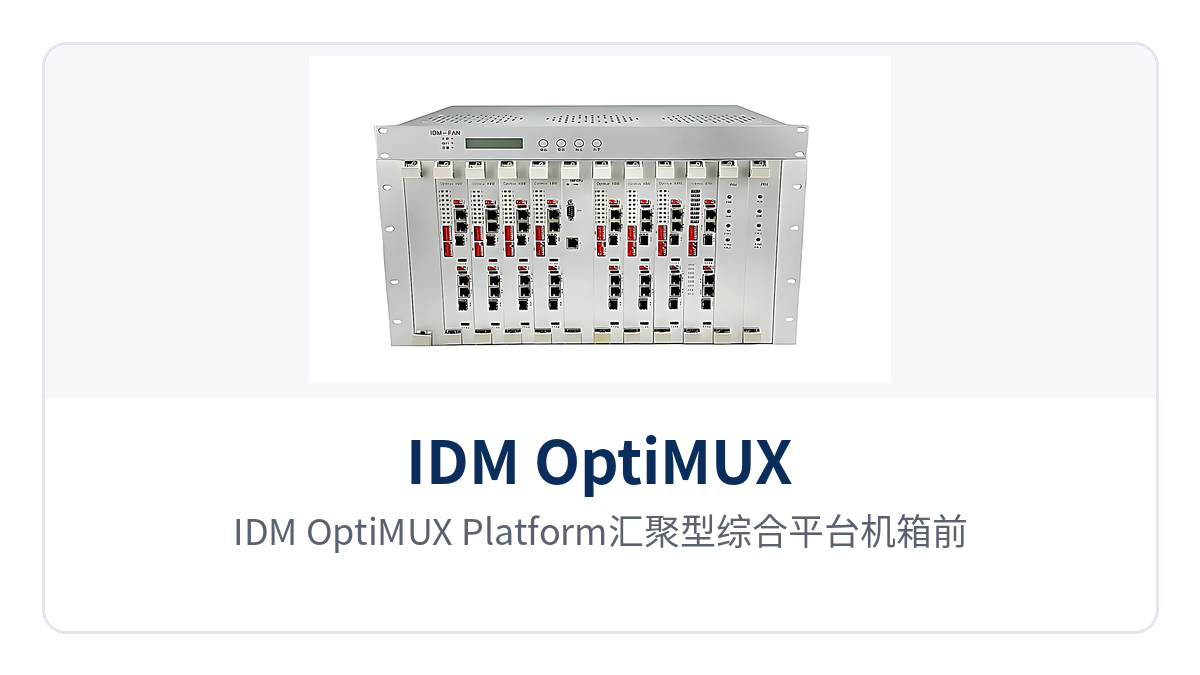
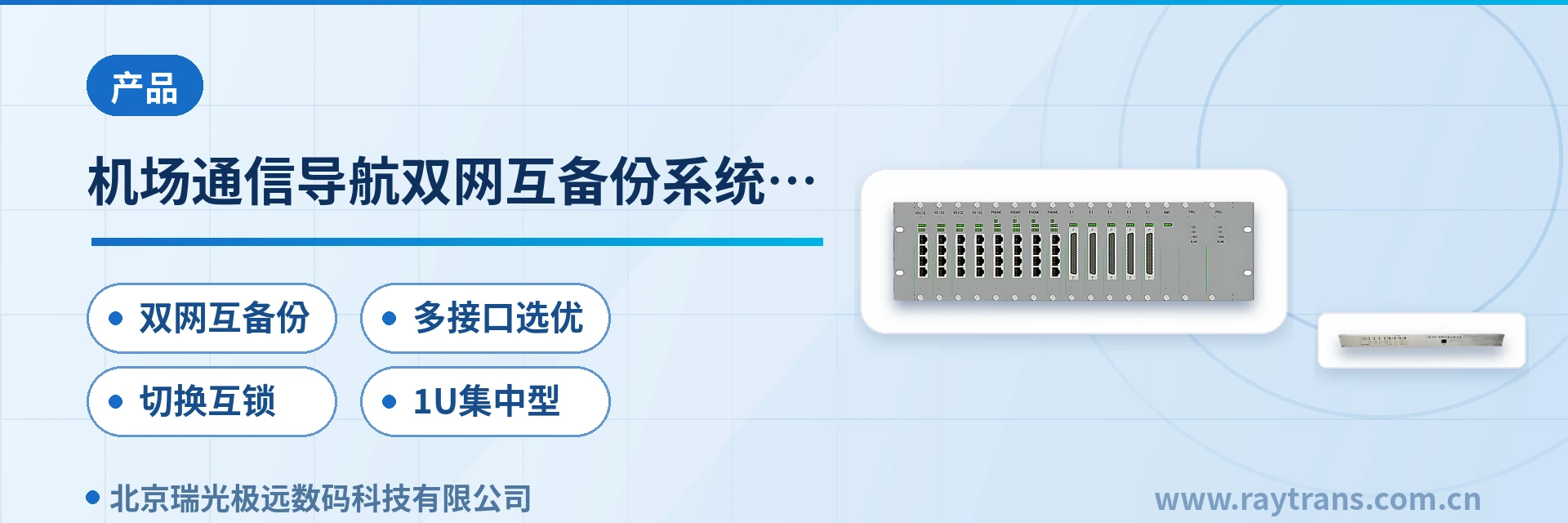
Figure 1: Close-up of the front panel and 16 card slots of the IDM OptiMUX Platform aggregation-type integrated platform chassis
What Is a 16-Slot Card-Based Converged Platform
A 16-slot card-based converged platform is an integrated service access device that packs transmission, switching, access, and dispatching into a single (6+1)U chassis. The chassis has a card-based structure and provides 16 slots, in which function cards are mixed according to service requirements. As the core hardware of a converged communication command and dispatch system, the platform achieves multi-service carrying within a single chassis.
The device internally integrates high-speed optical fiber transmission, PBX voice switching, PCM access, and audio and video command and dispatch technologies, so that telephone, data, Ethernet, and video services complete access, multiplexing, and converged dispatching on the same machine. The optical multiplexing equipment capability and the PCM equipment access capability can both be flexibly configured in a card-based manner, meeting the product showcase requirements of different sites.
Compared with the stacking approach in which one device handles only one type of service, a site needs only one chassis to carry multiple types of services, so equipment room space, supporting power supply, and maintenance interfaces are reduced accordingly; when services grow, capacity can be expanded by adding cards online without replacing the complete unit. This feature gives the platform a clear integration advantage in the solution selection of command and dispatch system manufacturers.
What Transmission, Switching, and Access Capabilities Are Integrated in a Single Unit
The capabilities of the IDM OptiMUX Platform unfold along four threads: transmission, switching, access, and dispatching. Both the service access mode and the function card configuration can be adjusted per project. The following function items summarize the main capabilities on the equipment room side and the site side, and also represent the product showcase of a converged communication command and dispatch system at the hardware level.
Function | Description |
|---|---|
16-slot card-based chassis | The (6+1)U chassis provides 16 slots; function cards are mixed according to the site service volume, and cards can be added online when services grow |
High-speed optical fiber transmission | Provides high-speed optical fiber transmission channels; the standard model has a repeaterless transmission distance of 40 km, and longer distances can be customized |
PBX voice switching | Performs stored program control (SPC) switching of telephone voice within the chassis; with a signaling gateway card inserted, it supports SS7, No.1, PRI, V5.2, and other signaling as well as SIP softswitch signaling |
PCM service access | A PCM service access card can be inserted, and more than 20 types of PCM plug-in cards can be mounted on the PCM user card, providing voice and data services |
Audio and video command and dispatch | An audio and video visualized command and dispatch card can be inserted, providing image dispatching communication over E1 or IP transmission channels |
2016×2016 VC-12 non-blocking cross-connection | TDM interface services are cross-connected at the VC-12 level in a non-blocking manner, supporting unidirectional, bidirectional, and broadcast services |
Flexible TM/ADM/MADM configuration | The same device can be configured as a TM, ADM, or MADM, with the operating mode selected according to the private network topology |
Multi-topology networking | Supports point-to-point, chain, ring network, star, tree, ring-cut-ring, and ring-intersecting networks |
Network management and alarms | Provides an F (100Base-T) network management interface and the SNMP protocol; configuration, alarm, performance, maintenance, and security functions are implemented through the Netguard management system, and 2 device alarm output interfaces are provided |
Heat dissipation and online upgrade | Natural heat dissipation and forced fan cooling coexist; the intelligent temperature control fan features fan status detection, and the device software supports online upgrade |
Technical Specifications of the 16-Slot Card-Based Converged Platform
The table below summarizes the key performance and interface items of the IDM OptiMUX Platform. The parameters are taken from the product's public technical documentation and are provided for reference in selection and solution design; the power supply mode, overall power consumption, and environmental specifications are not yet recorded in the knowledge base, and it is recommended to confirm them with the command and dispatch system manufacturer according to project conditions.
Item | Parameter/Specification | Description/Applicable Conditions |
|---|---|---|
Chassis structure | (6+1)U, card-based design, 16 slots | Function cards are selected according to site service volume and can be expanded online |
Non-blocking cross-connection | 2016×2016 VC-12 level | Between TDM interface services, supports unidirectional, bidirectional, and broadcast services |
Equipment configuration mode | TM / ADM / MADM | The same equipment can be configured, corresponding to terminal multiplexing, add/drop multiplexing, and multi-add/drop multiplexing scenarios |
Networking approach | Point-to-point, chain, ring network, star, tree, ring-to-ring, ring intersection | Topology is selected according to private network site distribution and optical cable routing |
Repeaterless transmission distance | 40 km for standard model | Excess can be customized; actual distance depends on optical fiber type and optical module |
Network management interface | F (100Base-T) | The Netguard management system provides configuration, alarm, performance, maintenance, and security functions, and provides equipment network management cascading interfaces |
Network management protocol | SNMP | Incorporated into the unified NMS platform |
Alarm output | 2-channel equipment alarm output interfaces | Connected to station-side audible and visual alarms or reported to monitoring |
Heat dissipation | Natural heat dissipation plus fan-forced heat dissipation | Intelligent temperature control fan, fan status detection |
Software upgrade | Supports online equipment software upgrade | Maintenance without downtime |
Signaling support | No.1, SS7, PRI, V5.2, SIP softswitch | Supported after inserting the signaling gateway card |
PCM plug-in card | More than 20 types of PCM plug-in cards are inserted on the PCM user card | Provides voice and data services |
What Problem Does 2016×2016 VC-12 Non-Blocking Cross-Connection Solve
The engineering significance of 2016×2016 VC-12 non-blocking cross-connection lies in that existing services are not affected when expanding or adjusting circuits. The IDM OptiMUX Platform provides 2016×2016 VC-12 non-blocking cross-connection between TDM interface services, supports unidirectional, bidirectional, and broadcast services, and any input time slot can be allocated to any output time slot without connections competing for matrix resources. This capability is particularly critical in converged dispatching scenarios, where time slot allocation for command and dispatch orders can be done without affecting online services.
After the central station aggregates E1 services from multiple directions, cross-connection and allocation are completed at the VC-12 time slot level; adding circuits or changing service assignment only requires modifying the cross-connect configuration, while external lines and opposite-end equipment remain unchanged, reducing on-site workload.
Broadcast services especially rely on this capability: one input can be simultaneously copied to multiple output directions, and command orders and broadcast voice are delivered to all sites on the network at once, without the need to repeatedly configure circuits site by site. In military emergency communications vehicle solutions, this feature ensures that command orders are quickly delivered to each vehicle-mounted site.
Knowledge block: VC-12 is a virtual container level in the SDH hierarchy. One VC-12 corresponds to the capacity of one 2 Mbit/s (E1) channel, and VC-12 level cross-connection means time slot allocation is completed at the granularity of a single E1 channel.
How TM, ADM, and MADM Configurations Adapt to Different Private Network Topologies
The three operating modes of TM, ADM, and MADM are key to how the IDM OptiMUX Platform adapts to different private network forms. TM, or terminal multiplexing, is used at end stations of a link to multiplex multiple services onto one optical path; ADM, or add/drop multiplexing, is used at intermediate stations of a link, where local services are added and dropped while the remaining services continue to be transparently transmitted to the next station; MADM, or multi-add/drop multiplexing, performs add/drop and cross-connection simultaneously in multiple optical directions.
When the role of a site in the private network changes, the same equipment can switch operating modes through configuration without changing the equipment form factor. The same equipment can be configured as TM/ADM/MADM, allowing one machine to cover the three roles of end station, intermediate station, and hub station at the same time, unifying spare parts and maintenance practices. This flexibility makes the platform an ideal converged dispatching node device in government private network optical fiber communication solutions and military emergency communications vehicle solutions.
Ring networking is the foundation of private network self-healing capability. After aggregation-type integrated platforms are networked in a ring, services are transmitted bidirectionally on the ring, and when a single segment of optical path or a single site fails, services can be rerouted along the other direction; with ADM and MADM configurations, sites on the ring can both transparently transmit while adding and dropping local services, and flexibly dispatch among multiple directions.
In addition to ring networks, the equipment also supports point-to-point, chain, star, tree, ring-to-ring, and ring intersection networking approaches. When site scale and optical cable routing change, the topology can be adjusted without replacing the chassis.
The IDM optiMUX Platform aggregation-type main unit can form a star network with IDM GP5000 and IDM GP4000, providing telephone, data, IP, and video services to users. The central station uses one aggregation-type integrated platform to carry switching and audio and video dispatching, while each remote station accesses IDM GP5000, IDM GP4000, and other access devices through optical ports. Remote telephone, data, Ethernet, and video services are aggregated to the center over optical fiber, making it suitable for private network structures where one central station aggregates multiple dispersed sites, effectively supporting the networking requirements of government private network optical fiber communication solutions and military emergency communications vehicle solutions.
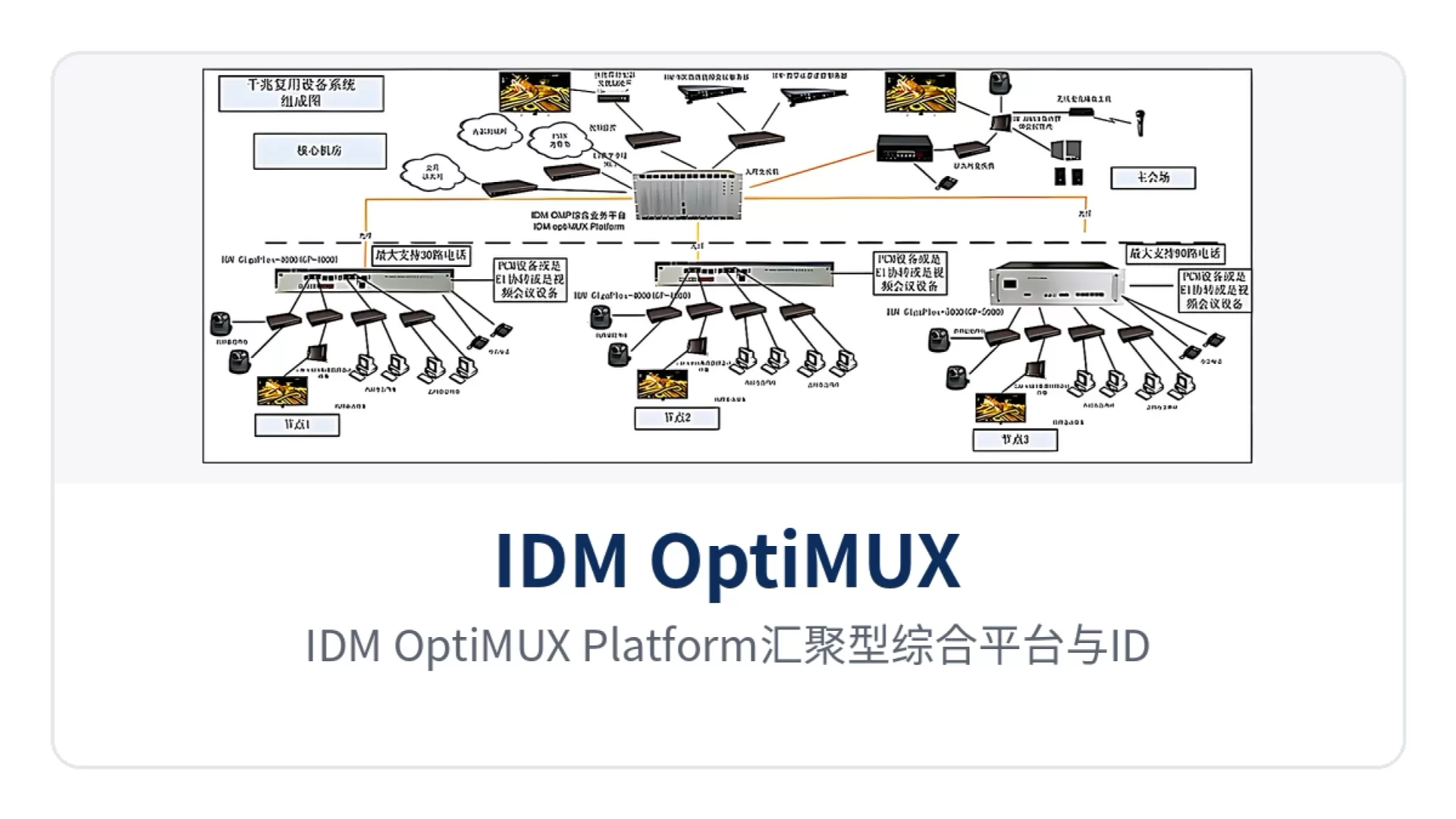
Figure 2: Star networking topology of the IDM OptiMUX Platform aggregation-type integrated platform with IDM GP5000 and IDM GP4000
Which Private Network Scenarios Are Suitable for Deploying the 16-Slot Card-Based Converged Platform
The 16-slot card-based converged platform is designed for private networks with dispersed sites, many service types, and long transmission distances. Typical industries are electric power and energy private networks, rail transit communication, and military and government emergency command. Once the service list is determined, cards are configured according to site scale, so the same model can cover the entire line. This product showcase approach also applies to the selection of converged communication command and dispatch systems.
Electric Power and Energy Private Network: One Chassis Aggregates Multiple Service Types at a Substation
In electric power and energy private networks, dispatch telephones, telecontrol data, and video surveillance run simultaneously between substations, switching stations, and dispatch centers, with many service types and dispersed sites. The 16-slot card-based converged platform aggregates telephone, data, Ethernet, and video services into the same chassis, so sites no longer need to install a separate device for each service type, and converged dispatching capability makes command and dispatch more efficient.
The standard model offers 40 km repeaterless transmission, so long-distance transmission lines and remote sites require fewer repeater stations, unifying spare parts and maintenance practices. The equipment supports ring networking; after sites are connected in a ring, services can be rerouted when a single segment of optical path fails, and critical circuits such as dispatch telephones are not interrupted.
Rail Transit Communication: Along the Line, Sites Are Configured with Cards as Needed and Form a Self-Healing Ring Network
Along rail transit lines, station spacing varies and services change with station class. The communication system must carry both inter-station liaison telephones and surveillance and data. The 16-slot card-based converged platform uses 16 slots to configure cards according to site service volume: sites with less workload get fewer cards, while central stations and interchange stations get more cards, so the same model covers all sites along the line.
Under ring networking, sites along the line are connected end to end. When any segment of optical cable is interrupted, services are switched over to the other direction, and train-operation-related communication is not affected; adding sites or adjusting service assignment only requires configuration changes, while external optical cables remain unchanged.
Military and Government Emergency Command: Voice and Image Dispatching on the Same Network
Military and government emergency command requires voice command and image dispatching to be completed on the same network, and on-site equipment room conditions are often lacking. The 16-slot card-based converged platform can be fitted with audio and video visualized command and dispatch cards, providing image dispatching communication based on E1 or IP transmission channels. A single optical fiber channel between the command center and the site carries both telephone and image, meeting the rapid deployment requirements of military emergency communications vehicle solutions.
The device supports networking approaches such as ring intersection and ring-to-ring connection. When multiple command nodes are interconnected, they can be flexibly spliced according to the on-site optical cable routing. The 40 km repeaterless transmission capability eliminates the need for trunk equipment between field sites and the command post, making on-site risks more controllable during rapid deployment.
Differentiated Value
Differentiated Capability | Value to Users |
|---|---|
16-slot card-based converged platform | Transmission, switching, access, and dispatch are integrated in a standalone unit. One device at a site can carry telephone, data, Ethernet, and video services, reducing equipment room space and supporting power supply accordingly |
2016×2016 VC-12 non-blocking cross-connection | Supports unidirectional, bidirectional, and broadcast services. A central station can carry a large number of services simultaneously without competing for matrix resources |
The same device can be configured as TM/ADM/MADM | Flexibly adapts to various private network topologies. When a site role changes, only the configuration changes, not the device, unifying spare parts and operation and maintenance practices |
Conclusion
The 16-slot card-based converged platform packs transmission, switching, access, and dispatch into a single (6+1)U chassis: 16 slots are populated with cards as required, 2016×2016 VC-12 non-blocking cross-connection supports unidirectional, bidirectional, and broadcast services, and the same device can be configured as a TM, ADM, or MADM. The standard model offers 40 km repeaterless transmission, with customizable distances for longer spans, and supports ring network networking and SNMP network management. Before deployment, it is recommended to confirm the service card configuration and device operating mode based on the site service list, networking topology, and optical path distance.