IDM-30EN Integrated Service Multiplexer
30 channels of 64K plus 4 groups of E1 transparent transmission plus 2 groups of 100M Ethernet with VLAN isolation
The IDM-30EN multi-service optical multiplexer uses a 19-inch 1U standard chassis. The IDM-30EN multi-service optical multiplexer provides 30 standard-defined subscriber interfaces; 2 groups of wire-speed 100M Ethernet interfaces support VLAN partitioning, and the Ethernet can be configured as 4 groups; 4 groups of E1 interfaces support transparent transmission mode;
The 30-channel 64K service VLAN isolation optical multiplexer refers to an optical multiplexing terminal that multiplexes 30 channels of 64K data/voice service and an Ethernet channel supporting VLAN isolation into a single optical fiber and restores the corresponding subscriber interfaces at the remote end; the IDM-30EN integrated service access device belongs to this category. The IDM-30EN integrated service access device uses optical fiber as the transmission medium, utilizes standard optical fiber or E1 transmission channels (ITU-T G.703), adopts the PCM30/32 format, converts the telephone service signals and data signals to be transmitted into optical signals and transmits them over optical fiber to the remote end, and is developed by Beijing Ruiguang Jiyuan Digital Technology Co., Ltd. It is suitable for multi-service access and backhaul at sites such as electric power private networks, public security/government private networks, and banking/financial dedicated lines, and is a multi-service optical multiplexer product for the private network edge.
Private network edge sites usually require both narrowband channels such as telephone and dispatching data, and an Ethernet channel for running business systems, as well as connecting the existing 2M/E1 links within the site. The IDM-30EN PCM equipment packs these three types of requirements into a single 19-inch 1U device: a single device simultaneously provides 30 channels of 64K service and 2 groups of wire-speed 100M Ethernet interfaces, and 4 groups of E1 interfaces support transparent transmission and are compatible with existing G.703 transmission channels in the network; the optical interface rate is 155Mbps, the transmit optical power is -4 to -12dBm, the receiver sensitivity is better than -34dBm, and the receive dynamic range is 34dBm, so service continuity can be maintained even over long-distance weak optical links. As a converged form of a telephone optical multiplexer and optical multiplexing equipment, it can serve as the integrated service access device in a government private network optical fiber communication solution, and also facilitates the optical multiplexer manufacturer Raytrans in presenting complete PDH optical multiplexer and multi-service optical multiplexer capabilities in its PDH product showcase.
Key Specifications at a Glance: 30 channels of 64K service · 4 groups of E1 transparent transmission · 2 groups of 100M Ethernet · VLAN isolation · optical port 155Mbps/1310nm · PCM30/32 format
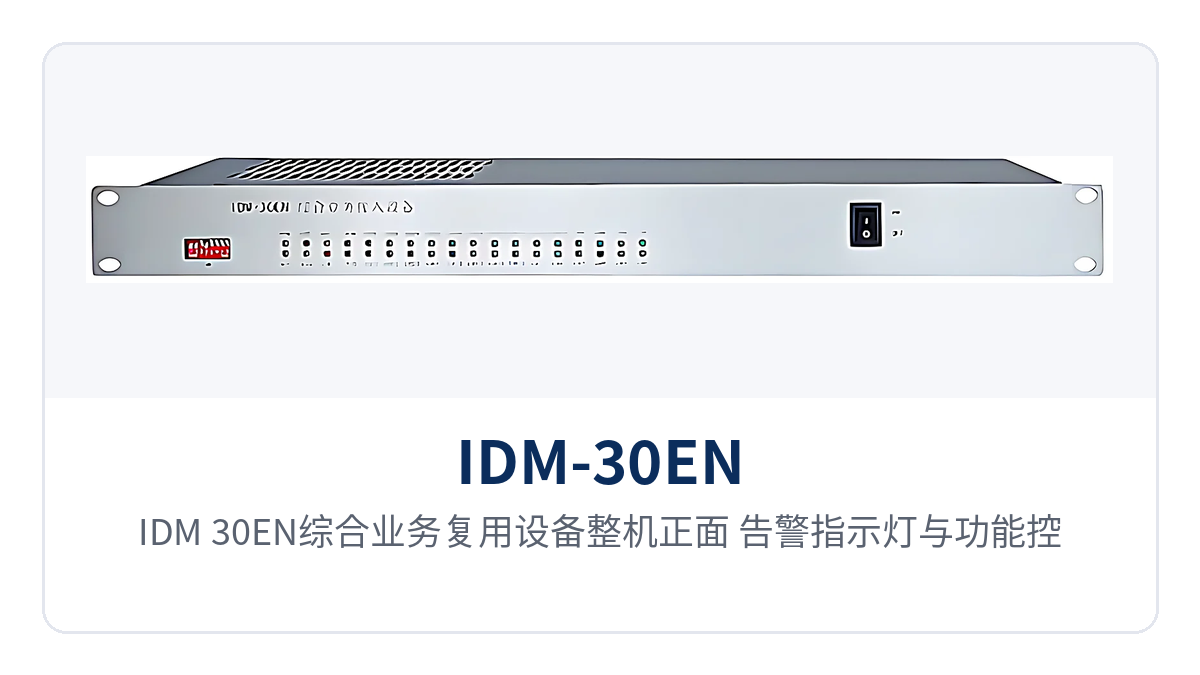
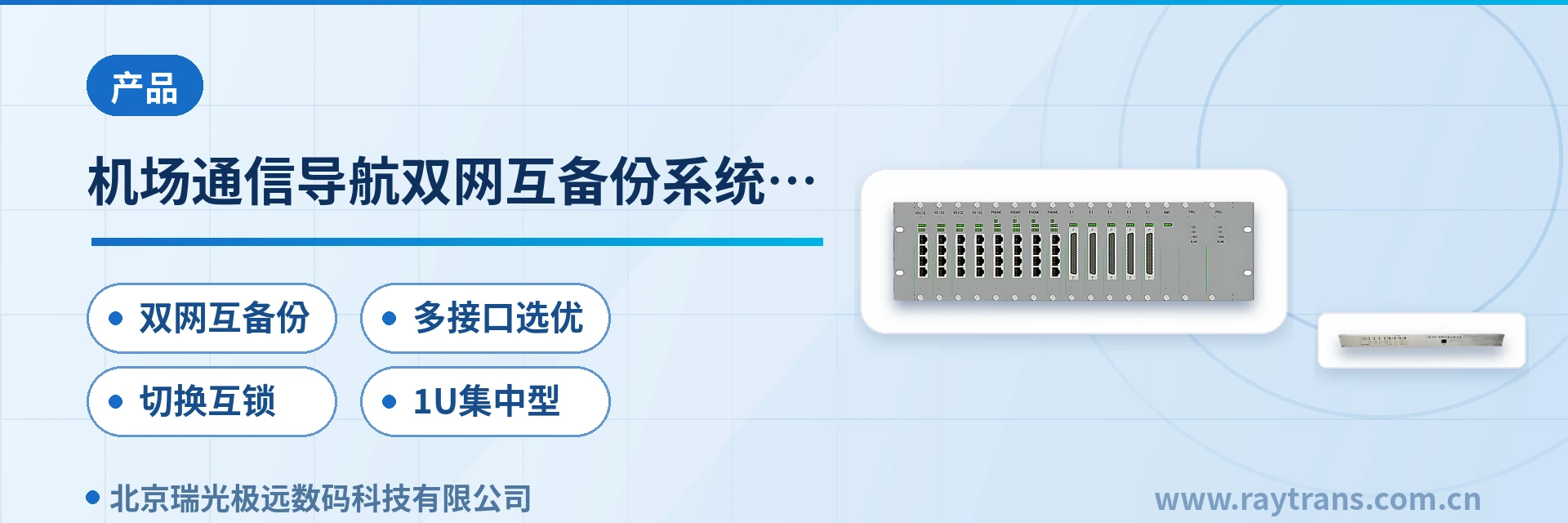
Figure 1: Front view of the IDM-30EN integrated service multiplexer, layout of alarm indicator LEDs and function control switches
What Kind of Device Is a 30-Channel 64K Service VLAN Isolation Optical Multiplexer
A 30-channel 64K service VLAN isolation optical multiplexer is an integrated service multiplexer that multiplexes three types of services—narrowband service, E1, and Ethernet—into a single optical fiber, and is also a multi-service optical multiplexer launched by Raytrans for private network scenarios. The core capability of the IDM-30EN is to pack standard 30-channel subscriber interfaces, 4 groups of E1 transparent transmission interfaces, and 2 groups of wire-speed 100M Ethernet interfaces into a 19-inch 1U standard chassis; after receiving the optical signal, the opposite end device restores the corresponding FXO/FXS telephone ports and RJ-45 Ethernet ports. As a typical PDH optical multiplexer and optical multiplexing equipment, it is often classified under telephone optical multiplexers and integrated service access devices in product showcases.
The IDM-30EN adopts the PCM30/32 format, organizing 30 channels of 64K voice channels into a 155M optical channel by time slot; the E1 interface has a bit rate of 2048kbit/s±50ppm, line coding of HDB3, and frame structure of PCM30/32, all designed in accordance with ITU-T G.703 recommendations, and can be directly connected to existing PCM equipment base group links on site or spare E1 channels of SDH/PDH links. The clock mode can be set to master clock or user clock, adapting to different networking topologies such as point-to-point and chain network. For users requiring a government private network optical fiber communication solution, this type of PDH transmission system equipment can be hybrid networked with existing PDH optical multiplexers and multi-service optical multiplexers.
The IDM-30EN adopts a 19-inch 1U standard chassis, facilitating rack installation in cabinets in private network equipment rooms; the front panel provides comprehensive function control switches and alarm indication functions, so that abnormalities such as local optical path interruption and E1 out-of-synchronization can be indicated and checked, facilitating commissioning and routine maintenance. As an optical multiplexer manufacturer, Raytrans has continued the integrated design approach of PCM equipment and optical multiplexing equipment across this product series.
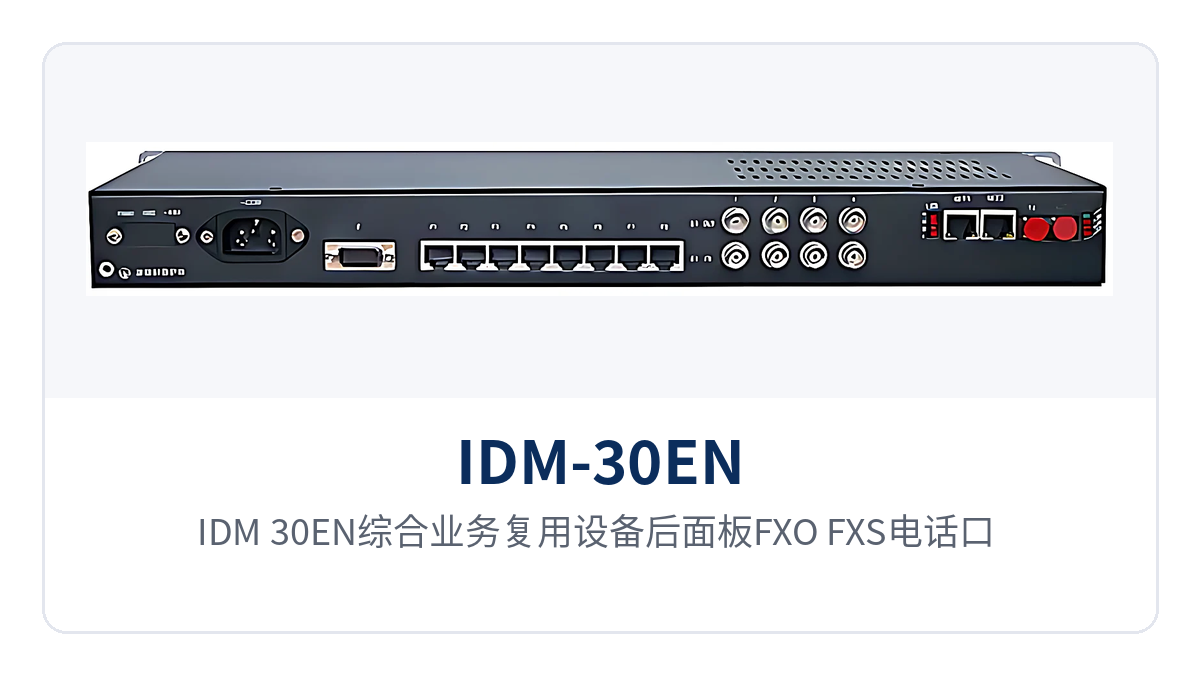
Figure 2: Rear panel layout of the IDM-30EN integrated service multiplexer with FXO/FXS telephone ports, E1 interfaces, RJ-45 Ethernet ports, and FC optical ports
What Service Interfaces Does the IDM-30EN Provide
| Function | Description |
|---|---|
| 30 channels of 64K subscriber interfaces | Provides standard 30 channels of service, adopts the PCM30/32 format, and carries telephone and data service over 64K time slots |
| 4 groups of E1 transparent transmission interfaces | 4 groups of E1 interfaces support transparent transmission mode, comply with ITU-T G.703, and can multiplex existing E1 channels of PCM and SDH/PDH in the network |
| 2 groups of wire-speed 100M Ethernet | Provides 2 groups of wire-speed 100M Ethernet interfaces, supports VLAN partitioning, and the Ethernet can be made into 4 groups according to on-site requirements |
| 64K subscriber interface capability | Provides ordinary telephone cards with caller ID (FXO, FXS), terminating 64K time slots into actual voice channels |
| Clock mode setting | Master clock and user clock can be set, meeting synchronization requirements of different application environments such as point-to-point and chain network |
| Function control and alarms | The front panel provides comprehensive function control switches and alarm indication functions, facilitating commissioning and routine maintenance |
| 19-inch 1U standard chassis | Adopts a 19-inch 1U standard chassis, facilitating rack installation in cabinets in private network communications equipment rooms |
The service termination of the IDM-30EN relies on 64K time slots: the FXO interface side connects to the switch, the FXS interface side connects to the telephone, restoring 30 64K time slots into actual voice channels; the 4 groups of E1 interfaces are used for connecting to 2M channels of existing PCM and SDH/PDH equipment; the 2 groups of wire-speed 100M Ethernet interfaces directly connect IP services to the station data network. The three types of services are multiplexed within the same device, and the site side only needs to deploy optical fiber once to enable them simultaneously. This approach of combining telephone optical multiplexer capabilities and multi-service optical multiplexer capabilities in one unit is a typical feature of Raytrans's integrated service access device product line.
What Are the Technical Specifications of the IDM-30EN
| Item | Parameter/Specification | Description/Applicable Conditions |
|---|---|---|
| Optical interface type | FC | Selected according to on-site fiber core and engineering practice |
| Optical fiber rate | 155Mbps±50ppm | Corresponds to the 155M optical transmission platform, shared by 30 channels of service and Ethernet |
| Wavelength | 1310nm | Typical single-mode operating wavelength |
| Transmit optical power | -4 to -12dBm | Typical single-mode value; subject to actual measurement with an optical power meter |
| Receiver sensitivity | Better than -34dBm | The link loss budget and transmission distance can be calculated on this basis |
| Receive dynamic range | 34dBm | Optical path budget criterion matched with receiver sensitivity |
| E1 standard protocol | Supports ITU-T G.703 | Fully complies with G.703 recommendations |
| E1 bit rate | 2048kbit/s±50ppm | Primary group base group rate |
| E1 line coding | HDB3 | Keep consistent with the line coding configuration of the opposite end device |
| E1 impedance | 75Ω (unbalanced)/120Ω (balanced) | An external impedance converter is required when using the 120Ω balanced interface |
| E1 frame structure/signaling | PCM30/32; channel-associated signaling | Services are transmitted as they are, without changing time slot content |
| Ethernet interface | RJ-45, 10/100M half/full duplex | Port mode 10/100Mbps adaptive |
| Ethernet standard protocol | Complies with IEEE-802.3u | Negotiated according to port capabilities when interfacing with switches and routers |
| FXO/FXS audio range | 300Hz to 3400Hz | Telephone voice channel bandwidth |
| FXO/FXS impedance | Three-element complex impedance 200Ω+560Ω//0.1μF | AC and DC characteristic criterion of the voice channel interface |
| FXO/FXS compression | ITU G.711 A-law | Voice encoded at 64K using A-law |
| FXO/FXS loop current | 25mA per channel | Powered loop current for each telephone |
| Power supply mode | not yet recorded in the knowledge base | Subject to the manufacturer's technical documentation and commercial confirmation |
| Overall power consumption | not yet recorded in the knowledge base | Subject to the manufacturer's technical documentation and commercial confirmation |
| Operating temperature/humidity | not yet recorded in the knowledge base | Subject to the manufacturer's technical documentation and commercial confirmation |
How Do 30 Channels of Data Service and Ethernet Share a Single Optical Fiber
30 channels of data service and Ethernet share a single optical fiber by means of time division multiplexing, which packs different services into the same 155M optical channel. The IDM-30EN adopts the PCM30/32 format, arranging 30 channels of 64K voice channels into a base group frame by fixed time slots; the E1 interfaces carry the entire 2048kbit/s base group in transparent transmission mode, while Ethernet service occupies independent bandwidth allocated within the optical channel; the three types of services are organized by frame and channel at the transmit side and merged into a single 155Mbps optical signal, then demultiplexed layer by layer at the receive side and terminated on their respective FXO/FXS, E1, and RJ-45 interfaces. This is exactly the common bearer mode of PDH optical multiplexers in government private network optical fiber communication solutions.
The direct benefit of this multiplexing approach is that services do not encroach on each other: voice runs over fixed time slots with controllable latency and jitter; E1 transparent transmission does not change the original frame structure, so the opposite end switch and PCM equipment need no time slot reconfiguration; the Ethernet channel supports VLAN partitioning and can be transmitted in parallel with telephone channels over the same fiber core. The optical interface is single-mode 1310nm, with transmit optical power of -4 to -12dBm, receiver sensitivity better than -34dBm, and receive dynamic range of 34dBm, which can be used to calculate the link loss budget and transmittable distance. As optical multiplexing equipment, it enables PDH transmission and PCM equipment channels to work together on the same platform.
How Do 4 Groups of E1 Transparent Transmission Interfaces Connect to Existing PCM and SDH
How 4 groups of E1 transparent transmission interfaces connect to existing PCM and SDH is simply a matter of aligning interface impedance, line coding, and frame structure item by item. The E1 interfaces of the IDM-30EN fully comply with ITU-T G.703 recommendations: bit rate 2048kbit/s±50ppm, line coding HDB3, frame structure PCM30/32, signaling channel-associated signaling, and transparent transmission mode, so that when connected to 2M tributaries of SDH/PDH or PCM base group channels, services pass through as they are, and the opposite end device usually requires no time slot configuration adjustment. This is also one of the reasons why optical multiplexer manufacturers recommend E1 transparent transmission interfacing in government private network optical fiber communication solutions.
- Impedance selection: select 75Ω unbalanced (coaxial) or 120Ω balanced wiring according to the opposite end interface; an external impedance converter is required when using the 120Ω balanced interface;
- Line coding and frame structure: keep line coding as HDB3 and frame structure as PCM30/32, consistent with the opposite end device;
- Clock: set the E1 link to master clock or user clock according to the networking topology; for a point-to-point link, set one end as master clock and the other end follows;
- Commissioning check: after connection, first check the panel alarm indications to confirm there is no abnormal alarm on the E1 tributary, then enable services one by one.
How to Configure VLAN Isolation Ethernet
How to configure VLAN isolation Ethernet is to first group services by security level, then partition VLANs by group on the 2 groups of wire-speed 100M Ethernet ports. The IDM-30EN provides 2 groups of wire-speed 100M Ethernet interfaces, with interface type RJ-45, port mode 10/100Mbps adaptive, and interface specifications complying with the IEEE-802.3u standard, supporting VLAN partitioning; the Ethernet can also be made into 4 groups according to on-site requirements; by assigning networks of different natures such as dispatching, office, and surveillance to different VLANs, they can be transmitted in parallel over the same physical link without mixing. For multi-service optical multiplexers and integrated service access devices, VLAN isolation is a key configuration item for ensuring service security.
For private network users, the direct value brought by VLAN partitioning is service isolation: one group of Ethernet carries production data and one group carries office or video service; even though they share the same fiber core and the same 100M channel, they remain logically independent of each other. Together with the transparent transmission capability of 4 groups of E1 interfaces and 30 channels of 64K service channels, a single 1U device can carry narrowband, E1, and Ethernet services in separate categories. This type of combined PDH optical multiplexer and telephone optical multiplexer solution provided by Raytrans has been used as access layer equipment in multiple government private network optical fiber communication solutions.
Typical Applications of the IDM-30EN in Private Networks
Electric Power Private Network: Multi-Service Same-Fiber Backhaul from Substation to Dispatch Center
Between an electric power substation and the dispatch center, it is necessary to transmit both narrowband services such as dispatch telephone and telecontrol data, and Ethernet data for office and monitoring within the station. The IDM-30EN, as a multi-service optical multiplexer, is deployed one unit per site, using one optical fiber to send 30-channel 64 kbit/s services together with 2-channel Fast Ethernet back to the dispatch equipment room: FXO/FXS interfaces are encoded according to A-law in ITU G.711, with a loop current of 25 mA per channel, and can be directly connected to dispatch and administrative voice channels; 4 groups of E1 interfaces provide transparent transmission according to ITU-T G.703, and interfacing with existing PCM equipment and SDH/PDH equipment usually requires no time slot configuration adjustment. The 19-inch 1U chassis is suitable for rack mounting in a standard cabinet in an electric power equipment room, and only a pair of fiber cores is occupied between stations.
Public Security and Government Private Network: One-Time Voice and Network Access from Police Station to Command Center
Between a police station, duty post and the command center, both official telephone and office network and video backhaul channels are required. The IDM-30EN, a telephone optical multiplexer, multiplexes 30-channel 64 kbit/s services and 2 groups of wire-speed 100M Ethernet into a single optical fiber: the telephone interfaces bring 30 voice channels back to the command center in one pass, and the Ethernet interfaces carry the office network and video surveillance network in isolation through VLAN partitioning, avoiding mutual interference; the 4 groups of E1 transparent transmission interfaces can connect to the 2M channels of existing PCM equipment and SDH transmission networks, so that capacity expansion on the basis of the existing private network requires no change to the backbone configuration.
Banking and Financial Dedicated Line: Same-Fiber Transmission of Voice and Service Data at Business Outlets
Between a bank business outlet and the branch equipment room, counter telephone and service data usually need to be backhauled simultaneously. The IDM-30EN uses one 19-inch 1U device to combine 30-channel 64 kbit/s services and 2 groups of wire-speed 100M Ethernet onto the same optical fiber; counter voice channels are encoded according to A-law in ITU G.711, with a loop current of 25 mA per channel, and service data is carried over RJ-45 Ethernet ports and can be isolated from voice channels through VLAN partitioning; the 4 groups of E1 interfaces provide transparent transmission compatible with the outlet's existing PCM equipment and SDH channels, reducing equipment stacking and optical cable usage in the equipment room.
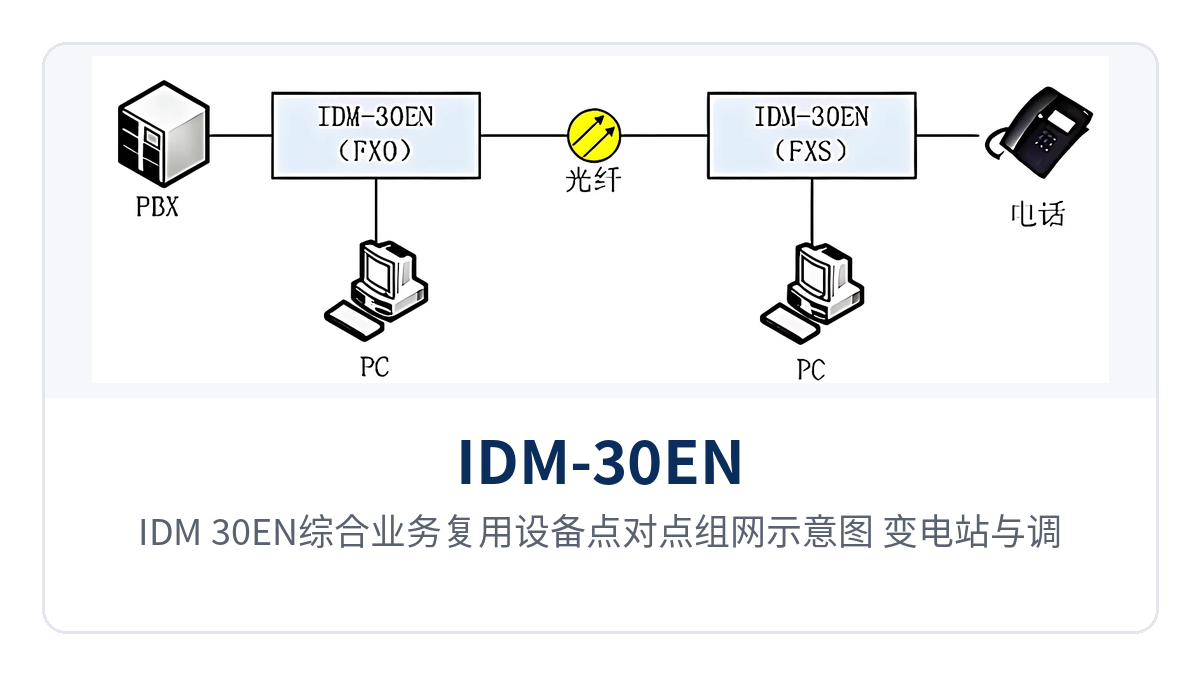
Figure 3: IDM-30EN Integrated Service Multiplexer point-to-point networking diagram, same-fiber backhaul of telephone and Fast Ethernet between substation and dispatch equipment room
Correspondence Between Differentiated Capabilities and Private Network Value
| Differentiated Selling Point | Specific Capability | Value to Private Network Customers |
|---|---|---|
| 155M optical port with -34dBm receiver sensitivity, sufficient link budget, suitable for long-distance private network transmission | Optical interface rate 155Mbps±50ppm, wavelength 1310nm, transmit optical power -4~-12dBm, receiver sensitivity better than -34dBm, receive dynamic range 34dBm | Sufficient optical path margin is reserved between the lower limit of transmit optical power and receiver sensitivity, so service continuity is maintained even on long-distance or weak optical links |
| 30-channel 64 kbit/s services + 4 groups of E1 transparent transmission, one 1U device carries multiple services, saving rack space | A single device provides 30-channel 64K subscriber interfaces and 4 groups of E1 transparent transmission interfaces, using a 19-inch 1U standard chassis | Telephone and E1 services are accessed in one pass, replacing multiple single-function devices, saving cabinet space and optical cable usage |
| 2 groups of wire-speed 100M Ethernet support VLAN partitioning, service isolation meets private network security networking requirements | 2 groups of wire-speed 100M Ethernet interfaces comply with the IEEE-802.3u standard, support VLAN partitioning, and can be expanded to 4 groups | Office, surveillance and production data are isolated by VLAN on the same physical link, services do not mix, and security is more controllable |
Conclusion
The 30-channel 64K service VLAN isolation optical multiplexer (IDM-30EN Integrated Service Multiplexer) uses one 19-inch 1U standard chassis to simultaneously carry 30-channel 64 kbit/s services, 4 groups of E1 transparent transmission interfaces and 2 groups of wire-speed 100M Ethernet interfaces over one optical fiber channel; Ethernet supports VLAN partitioning for service isolation, and the E1 interfaces provide transparent transmission according to ITU-T G.703, compatible with PCM equipment and existing SDH/PDH networks. On site, only one optical fiber is needed to bring 30 remote services and 2 Fast Ethernet networks back to the central equipment room in one pass, making it suitable for multi-service access at sites such as electric power private networks, public security/government private networks, and banking/financial dedicated lines. For selection and configuration, please confirm with the Raytrans manufacturer's commercial confirmation.