IDM OPTCOM
IDM OPTCOM
The serial fiber optic transmission equipment offers superior anti-interference capability, immune to electromagnetic interference, lightning strikes, and ground loop issues, ensuring high reliability and security of data transmission. It supports multiple serial protocols including RS-232, RS-485, and RS-422, allowing users to switch between different interface types via jumper pins to accommodate diverse device communication requirements. The serial baud rate is auto-adaptive (0~115200bps), automatically adjusting the rate to ensure transmission efficiency. The internal sampling frequency for RS-232, RS-485, and RS-422 services is 13MHz. It supports 1 channel of CTS/RTS control transmission interface. The service interfaces feature anti-static design.
The IDM OPTCOM Serial Fiber Optic Transmission Equipment is a high-performance, multifunctional integrated service transmission device developed by Beijing Ruiguang Jiyuan Digital Technology Co., Ltd., specifically designed for users requiring long-distance, secure, and reliable serial data transmission. By utilizing fiber optic transmission media, this device converts serial data services from copper cables to fiber optics, thereby overcoming the limitations of traditional twisted-pair cables in long-distance transmission, greatly expanding the coverage of data transmission, and ensuring data transmission stability and security in harsh environments.
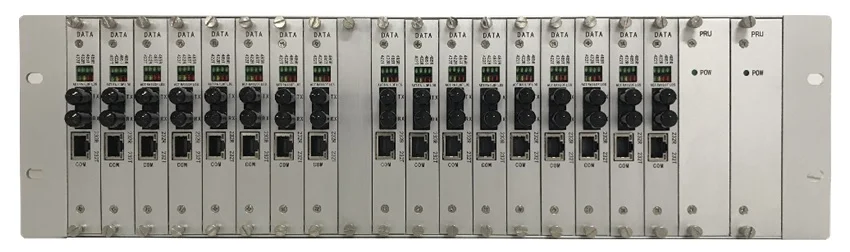
IDM OPTCOM Serial Fiber Optic Transmission Equipment Front View
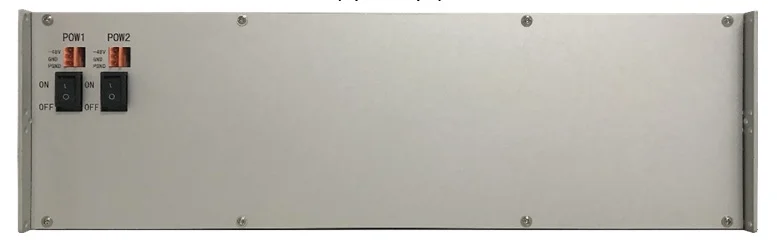
IDM OPTCOM Serial Fiber Optic Transmission Equipment Rear View
I. Product Features
1.1 High-Performance Long-Distance Transmission
n Utilizes fiber optic transmission with support for multi-core fiber aggregation, enabling multiple data services to be transmitted over a single fiber, breaking through the physical limitations of copper wire, with transmission distances up to 120 kilometers;
n Fiber optic transmission offers superior anti-interference capability, immune to electromagnetic interference, lightning strikes, and ground loop issues, ensuring high reliability and security of data transmission.
1.2 Flexible Configuration with Multiple Interfaces
n Supports multiple serial protocols including RS-232, RS-485, and RS-422, allowing users to switch between different interface types via jumper pins to accommodate diverse device communication requirements;
n Capable of transmitting 1 channel of RS-232, 1 channel of RS-485 or RS-422 data services, as well as 1 channel of USB serial service;
n Serial baud rate is auto-adaptive (0~115200bps), automatically adjusting the rate to ensure transmission efficiency; the internal sampling frequency for RS-232, RS-485, and RS-422 services is 13MHz;
n Supports 1 channel of CTS/RTS control transmission interface;
n Service interfaces feature anti-static design.
1.3 Modular Design for Flexible Expansion
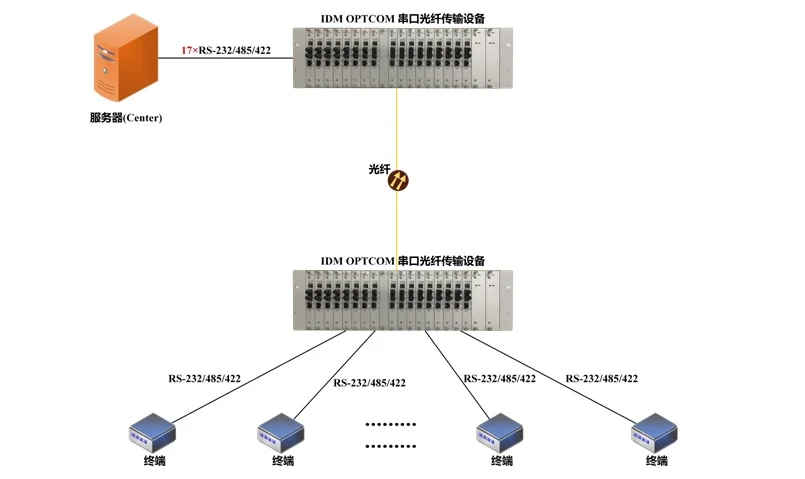
n Rack-mount design: The central office end adopts a 3U 19-inch standard rack-mount structure with hot-swap support, allowing users to flexibly configure the number of service boards as needed, supporting up to 17 user board slots and 2 power supply slots;
n Desktop design: Suitable for single-point applications at the user end, compact in size and easy to install;
n Dual power supply redundancy design: Dual power supply configuration provides 1+1 power protection, ensuring the device continues to operate normally even if one power supply fails.
1.4 Comprehensive Alarm and Monitoring Functions
n The front panel is equipped with multiple alarm indicator lights, including No Optical Power (NOP) alarm, Loss of Frame (LOF) alarm, Remote Alarm Indication (RAI), etc., facilitating real-time monitoring of device status by operations and maintenance personnel, enabling timely response to abnormal conditions and enhancing network stability;
n RS-232/RS-485/RS-422 feature data transmit/receive indicator lights;
n Supports testing of local or remote RS-232/RS-485/RS-422 services via the Type-C interface.
1.5 Simple Installation and Maintenance
n Provides an RJ45 interface for convenient connection to a PC or other devices for debugging and maintenance.
n Optional Type-C serial port conversion simplifies the installation and debugging process, improving work efficiency.
II. Typical Networking Solutions
2.1 Point-to-Point Transmission
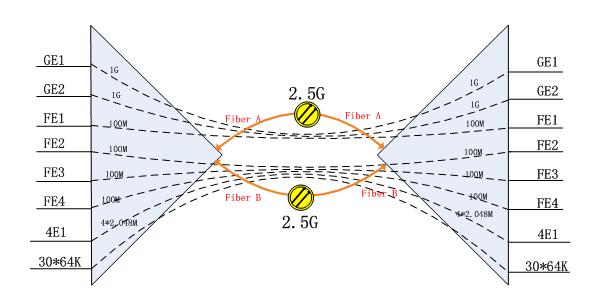
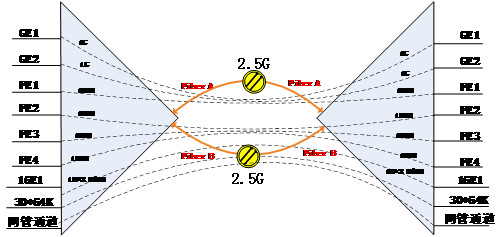
2.2 Star Topology Transmission
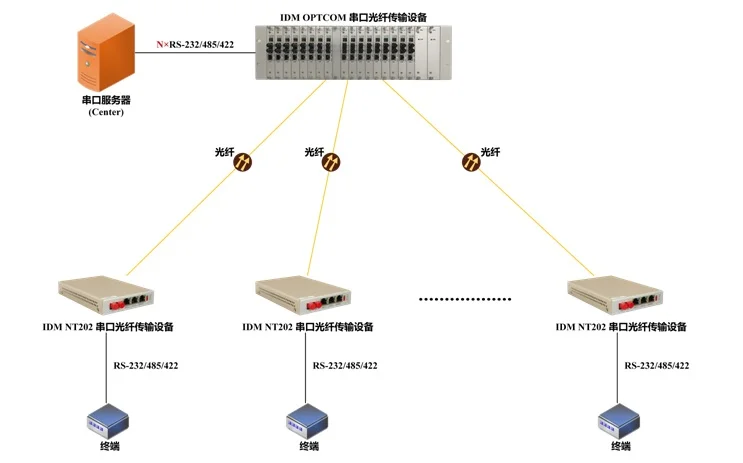
III. Typical Application Scenarios
3.1 Industrial Automation
Suitable for centralized control and data acquisition of remote equipment in industrial environments, widely applied in distributed data acquisition systems, industrial equipment monitoring, and smart factory construction. By transmitting serial data over fiber optics, real-time and accurate data transmission is ensured.
3.2 Intelligent Transportation
Monitoring equipment, signal control equipment, and data acquisition systems in intelligent transportation systems typically require stable long-distance communication. The IDM OPTCOM ensures efficient data transmission for various surveillance cameras and traffic signal control systems, and can aggregate multiple transmission lines onto a single fiber core, improving management efficiency.
3.3 Power and Energy Industry
In power systems, remote monitoring and data transmission of substations, distribution networks, and power generation stations are core elements in ensuring stable power operation. The IDM OPTCOM provides highly reliable, low-latency fiber optic transmission channels, ensuring the security and stability of power system communications.
3.4 Banking and Financial Industry
In the financial industry, long-distance communication between branch offices and data centers demands extremely high data security. The IDM OPTCOM provides strong anti-interference capability and long-distance transmission performance, ensuring the confidentiality and transmission efficiency of sensitive data in banking systems.
3.5 Public Safety and Military
Public security and military departments have extremely high requirements for the security and stability of information transmission. Through fiber optic transmission technology, the IDM OPTCOM effectively overcomes the limitations of traditional copper wire communication and possesses strong anti-interference capability, making it an ideal solution for public switched telephone network access and dedicated line transmission.
IV. Product Specifications
n Supported interfaces: RS-232/485/422;
n Transmission distance: Up to 120 kilometers (depending on the optical module);
n Transmission rate: 0~115200bps auto-adaptive;
n Power input: Desktop type DC12V, rack-mount type DC5V or -48V to DC5V;
n Operating temperature: -40℃~+85℃;
n Device type: Desktop box type, rack-mount type;
n Optical interface type: Multimode or single-mode optional;
n Indicator alarms: Supports status indication for no optical input, loss of frame, remote alarm, etc.
V. Customer Support and Service
We provide 7*24-hour technical support services to ensure that any issues you encounter during use receive timely responses. Whether it is preliminary project planning, equipment installation and commissioning, or subsequent maintenance and upgrades, our technical team will provide full support throughout the entire process.
Choosing the IDM OPTCOM Serial Fiber Optic Transmission Equipment means choosing an efficient, stable, and reliable communication solution, empowering your business to achieve intelligent and efficient development!
FAQs
What is an E1 line? What are the core knowledge points?
E1 Basics Frame Structure of the E1 Channel In an E1 channel, 8 bits form one timeslot (TS)…
View answerWhat is E1? How to Use E1
What is E1 The European 30-channel pulse code modulation PCM is abbreviated as E1, with a rate of 2.048Mbit/s.
View answerCommunication Transmission Products
PDH Equipment Physically Isolated Gigabit Multi-service Optical Terminal IDM GP2400 Series Optical Terminal IDM…
View answerIntroduction to EoPDH Technology
Ethernet-over-PDH is a set of technologies and standards used to transport local Ethernet frames over established…
View answerPrinciples and Application Scenarios of PDH Optical Terminal Equipment
Optical terminal equipment consists of a transmitter and a receiver. The transmitter amplifies, converts (A/D)…
View answer