Principles and Application Scenarios of PDH Optical Terminal Equipment
Optical terminal equipment consists of a transmitter and a receiver. The transmitter amplifies, converts (A/D)…
The principle of different types of optical terminal equipment is the same. An optical terminal consists of a transmitter and a receiver. The transmitter processes the analog signals from the user end through amplification, A/D conversion, and multiplexing, and finally converts the electrical signals into optical signals via electrical/optical conversion for transmission over optical fibers to the receiver.
At the receiver, the opposite process occurs. First, the received optical signals are converted back into electrical signals through optical/electrical conversion. The electrical signals are then demultiplexed and sent to the client end via D/A conversion and amplification filtering.
PDH Optical Terminal Application
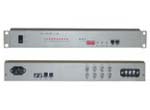
PDH optical terminals use large-scale integrated chips, featuring low power consumption and high reliability. They provide remote loopback testing for E1 channels, making maintenance convenient.
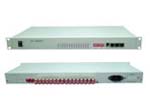
The IDM-120N provides 4 E1 channels; it has comprehensive alarm functions that can display both local and remote alarms. Alarm information (including power failure alarms) can be reported to the opposite end through the network management channel. It uses integrated optical transceiver components, ensuring stable and reliable operation. The entire unit is designed as a single board, making it compact and easy to use. It is suitable for small-capacity switch networks, user loop networks, information superhighways, mobile communications (base stations), dedicated networks, and DDN networks.
FAQs
What Is the Definition of Communication?
Communication: the exchange and transmission of information between people, or between people and nature…
View answerWhat are the characteristics and principles of fiber-optic transmission?
I. Background of Optical Communication In today's world, optical fiber communication has become the primary means of…
View answerWhat is the working principle and function of a media converter?
The rapid advancement of informatization has led to growing demand for multimedia communications such as data, voice…
View answerFrame Structure of 30/32-Channel PCM Primary Group
A communication system consists of transmitting equipment, receiving equipment, and transmission equipment.
View answerLow-Cost SDH Is an Inevitable Choice for Access Network Construction in the Near to Medium Term
The current status of metropolitan optical networks is that SDH/MSTP (DWDM) optical networks have become the mainstream…
View answer