IDM MSTP155-24 SDH Multi-Service Transmission Platform
Dual STM-1 1+1 protection
The SDH equipment is a new-generation product based on SDH/MSTP technology launched by our company in response to market demand. It meets users' needs for optical fiber transmission and access of multiple broadband and narrowband services, while also satisfying larger-capacity user requirements and providing more reliable communication protection. The IDM MSTP155-24 can directly interface with remote PDH optical multiplexers, optical modems, and multi-service optical multiplexers, adapting to various network topologies, and can serve as a compact MSTP device integrating multi-service access, SDH transmission, and PDH optical access functions.
The IDM MSTP155-24 3-slot mixed-insertion MSTP equipment is an SDH multi-service transmission platform developed by Beijing Ruiguang Jiyuan. It combines three types of units—SDH/MSTP transmission, PCM multiplexing, and Ethernet access—to deliver optical fiber transmission and access for both broadband and narrowband services within a single 19-inch 1U chassis, making it a typical optical transmission device.
This SDH equipment can be directly connected to remote PDH optical multiplexers, optical modems, and multi-service optical multiplexers. It adapts to network topologies such as point-to-point, chain, and ring, integrating multi-service access, SDH transmission, and PDH optical access into a single chassis. The unit uses industrial-grade components and features comprehensive electromagnetic compatibility and interface protection design. As a professional SDH equipment manufacturer, Ruiguang Jiyuan highlights this platform's integration level and industrial-grade reliability in its product showcase.
The rack position and power supply conditions at private network access nodes are often constrained, yet the site simultaneously runs three types of services: dispatch telephones, E1 telecontrol channels, and office surveillance networks. The platform is deployed in a 1U chassis with interfaces configured by plug-in card, so the site side no longer needs to cascade standalone PDH optical multiplexers and PCM multiplexers, reducing both rack occupancy and points of failure. This characteristic makes it suitable for government private network optical fiber communication solutions and military emergency communications vehicle solutions, and it is also frequently selected by command and dispatch system manufacturers and optical multiplexer manufacturers as an access layer device.
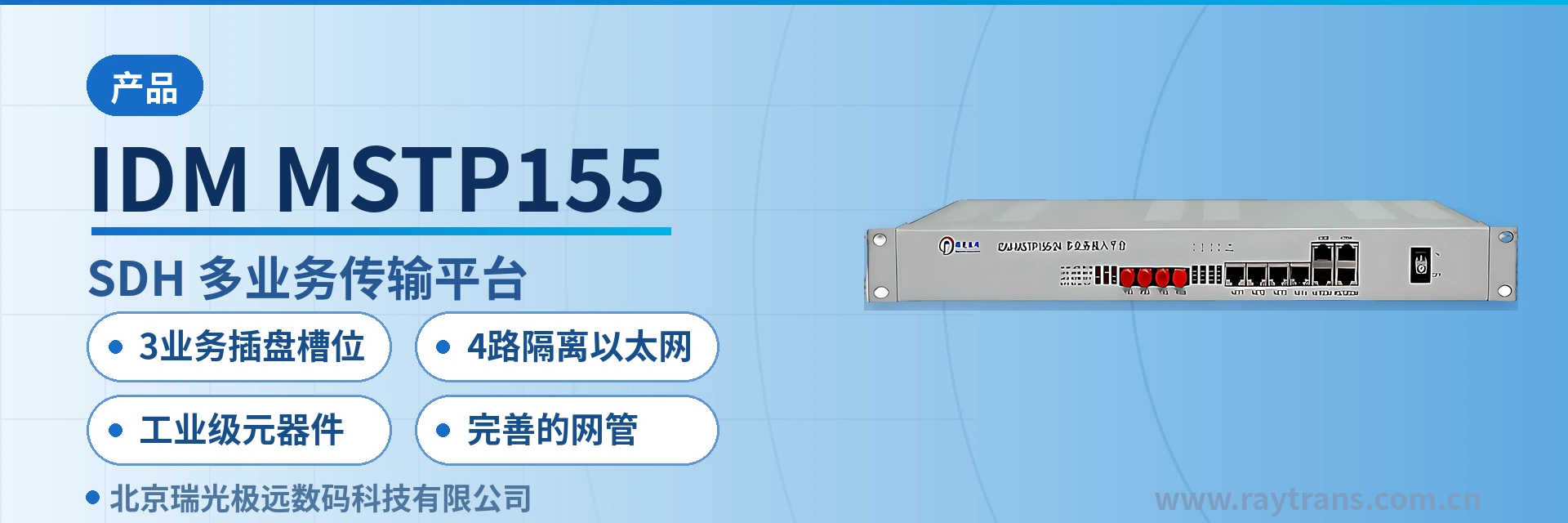
Key Specifications at a Glance: Dual STM-1 1+1 protection · 3 service card slots · 4 physically isolated Ethernet interfaces · Industrial-grade components · 2-channel n×64K (V.35/V.11) · 19-inch 1U chassis · ITU-T G.813 synchronization
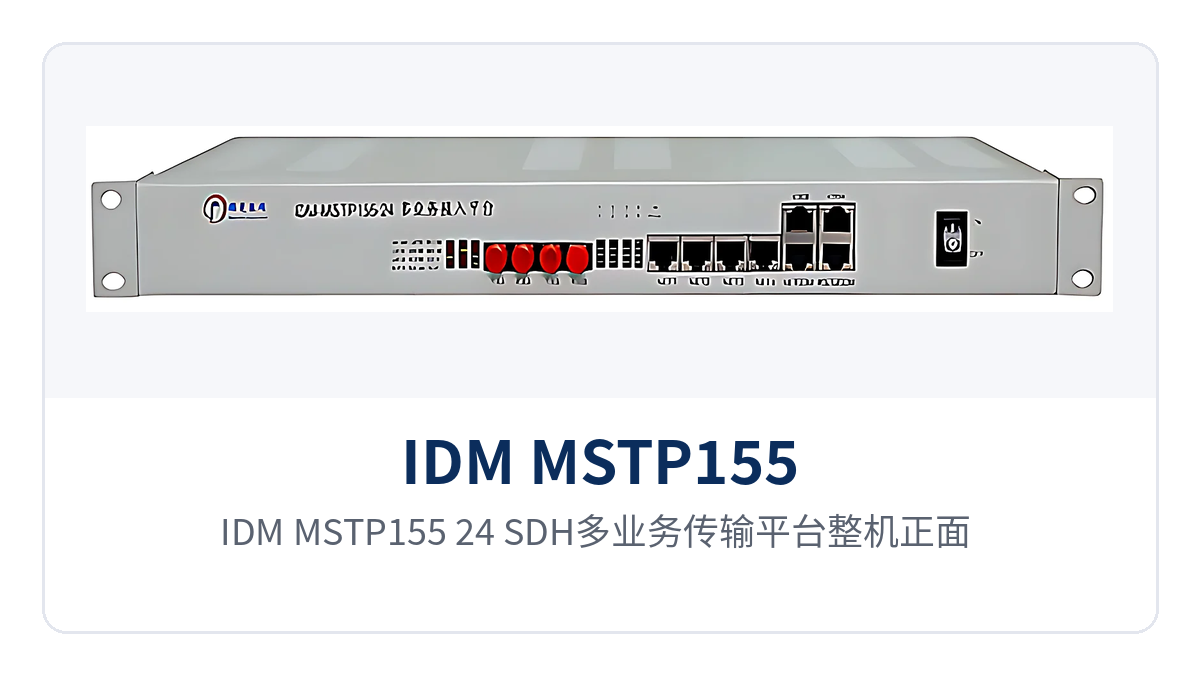
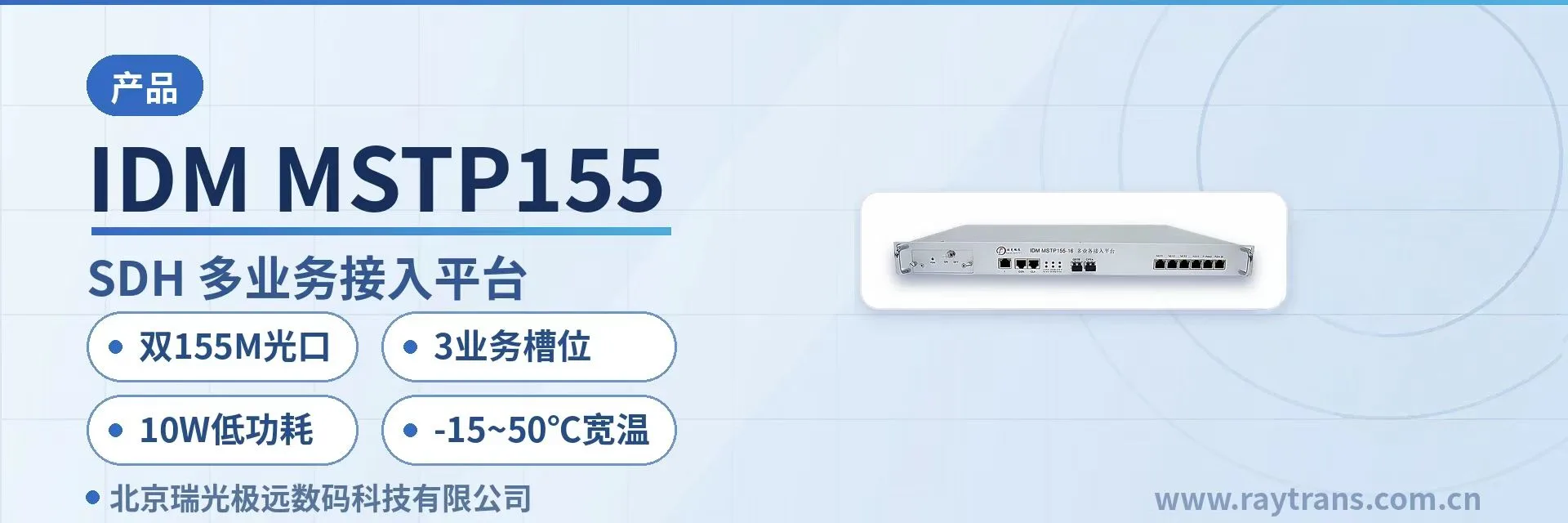
Figure 1: Front view of the IDM MSTP155-24 SDH multi-service transmission platform, with 19-inch 1U chassis and panel operating indicator LEDs
What Is a 3-Slot Mixed-Insertion MSTP Equipment
The 3-slot mixed-insertion MSTP equipment is a modular card-based SDH access device, belonging to the access layer products among optical transmission equipment. Its three service card slots are not bound to specific service types, and different interface cards can be inserted into the same chassis according to the site service list. When services need capacity expansion, only the cards are replaced while the chassis and backplane remain in use, so the upgrade cost falls on the cards.
Optional interface cards include the 8E1 interface card, USER board, 8-channel telephone interface card, and 8-channel RS232/RS485/RS422 interface card. The interface card determines the service form: the same SDH equipment can provide telephone access at one site and E1 aggregation at another, with the difference reflected only in the card configuration.
What Can Be Inserted into the Three Service Card Slots
The three slots are configured in combination according to the site service list, and the cards do not affect each other, with one card corresponding to one interface type. The services carried by common interface cards are as follows; during selection, calculate the number of voice channels and serial ports card by card and reserve margin for future capacity expansion. The number of cards and interface types are specified item by item in the configuration list:
- 8E1 interface card: each card provides 8 E1 interfaces, carries 2.048 Mbps E1 services, and is used to connect to existing E1 equipment and remote PDH optical multiplexers.
- 8-channel telephone interface card: each card provides 8 telephone interfaces for dispatch telephones, administrative telephones, and hotlines.
- 8-channel RS232/RS485/RS422 interface card: each card provides 8 serial interfaces, carrying low-speed data for telecontrol, monitoring, and industrial control.
- USER board: a general-purpose user service board whose interface types are configured per project; the specific interface types available are not yet recorded in the knowledge base, so confirm with the manufacturer during selection.
How to Build a Ring Network with Dual STM-1 Optical Port 1+1 Path Protection
The equipment provides two STM-1 optical interfaces, forming dual STM-1 optical port 1+1 protection: the active optical channel carries services while the backup optical channel remains available. When the fiber or optical module of the active channel fails, services are taken over by the backup channel, and site services are not interrupted by a single optical path failure.
Networking topologies are selected according to site distribution and optical cable resources, and multiple topologies can coexist within the same private network. The applicable conditions for the four common approaches are as follows; on this basis, determine the optical port connection mode and backup channel routing for each section, and mark the wiring positions of the active and standby optical ports:
- Point-to-point: one device at each end, with services directly connected through the optical channel, suitable for service extension between two equipment rooms.
- Chain: multiple sites connected in series, with intermediate sites adding and dropping services on the spot, suitable for lines with evenly spaced sites along the line.
- Ring: sites form a ring end to end; if any section of optical cable is interrupted, services are rerouted in the other direction around the ring, working in conjunction with 1+1 path protection.
- Joint networking: acting as a remote access node connected to a centralized MSTP system, with services converging to the central end for unified dispatching.
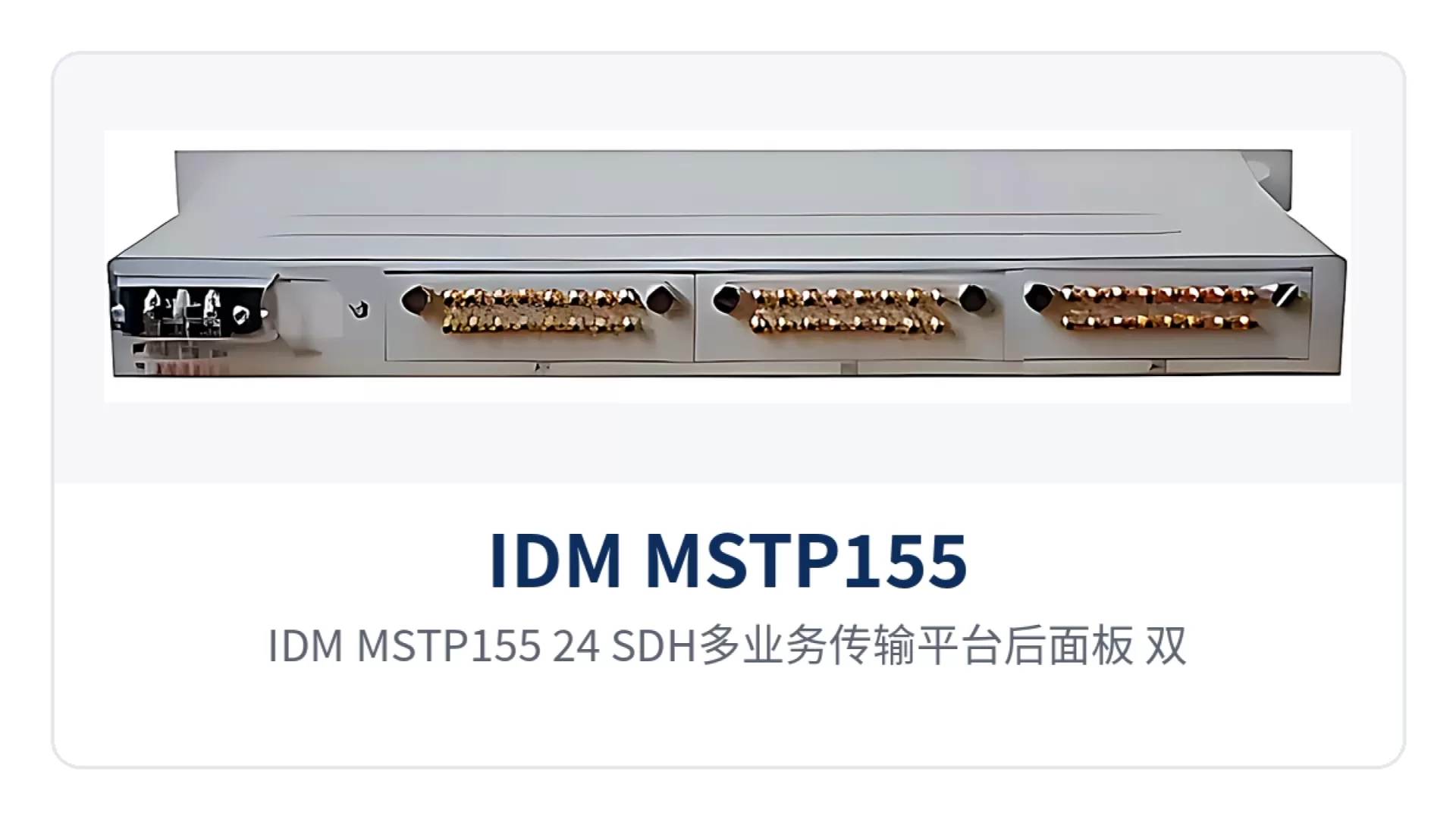
Figure 2: Rear panel of the IDM MSTP155-24 SDH multi-service transmission platform, showing the layout of dual STM-1 optical interfaces and service card interfaces
During ring network deployment, the two optical ports connect to the two directions of the ring respectively. If one optical cable is cut, only one side of the channel is affected, and services continue to be transmitted after switching to the other side. Ring and chain topologies can be mixed according to site distribution, and lines built first as chains and later as rings can transition smoothly without rebuilding existing equipment rooms. For scenarios with high requirements for link continuity, such as government private network optical fiber communication solutions and military emergency communications vehicle solutions, the dual-optical-port ring network structure can be a preferred networking option.
Core Functions
The IDM MSTP155-24 integrates SDH transmission, PCM multiplexing, and Ethernet access into the same chassis. Its functions cover four categories—transmission, protection, interfaces, and O&M—listed item by item in the table below. The interface quantities in the table are per card, and sites can be configured by stacking according to the service list.
| Function | Description |
|---|---|
| SDH/MSTP optical transmission | Two STM-1 optical interfaces carry services and can be jointly networked with a centralized MSTP system, with services from remote PDH devices converging into the transmission ring |
| 1+1 path protection | Dual optical ports, one active and one standby; when the active channel fails, services are taken over by the backup channel, so private network link failures do not interrupt services |
| PCM multiplexing | Integrates SDH optical transmission, PCM multiplexing, and Ethernet access, with narrowband voice and data multiplexed and transmitted within SDH channels |
| 3 service card slots | Three slots are mixed-inserted with interface cards according to the site service list; capacity expansion and service changes only involve the cards, while the chassis remains in use |
| Telephone interface | Optional 8-channel telephone interface card, with 8 voice channels per card, allowing dispatch telephones and administrative telephones to access the same equipment |
| Serial data interface | Optional 8-channel RS232/RS485/RS422 interface card, with 8 serial ports per card, carrying telecontrol and industrial control data |
| E1 interface | Optional 8E1 interface card, with 8 E1 groups per card, connecting to existing E1 equipment and remote PDH optical multiplexers |
| Physically isolated Ethernet | Can provide 4 physically isolated Ethernet interfaces, each forwarding independently without sharing bandwidth, so services are carried in separate domains |
| N×E1 bandwidth bundling | Ethernet bandwidth can be allocated arbitrarily as N×E1, and bandwidth is reallocated when line resources are adjusted |
| 64K data channel | 2-channel n×64K (n=1–31) V.35/V.11 channels for low-speed data and protocol conversion services |
| Network management functions | Complete network management functions for device configuration, fault query, and data statistics, with online real-time monitoring of network operating status |
| Synchronization timing | Complies with ITU-T G.813 and meets requirements for timing accuracy, pull-in and pull-out, noise generation, and noise tolerance |
Key Technical Specifications
The parameters in the table below are taken from the product technical documentation and are suitable for networking design and equipment selection verification; for items not listed, refer to the accompanying technical documentation and commercial confirmation. The recommended verification order is to first check the optical interfaces and protection mode, then the cards and Ethernet capabilities, and finally confirm the power supply and installation conditions.
| Item | Parameter/Specification | Description/Applicable Conditions |
|---|---|---|
| Chassis structure | 19-inch 1U standard chassis | Facilitates rack installation and occupies little rack space at the site |
| Number of optical interfaces | 2 STM-1 optical interfaces | Form dual STM-1 optical port 1+1 protection, connected to the two directions of the ring respectively |
| Protection mode | 1+1 path protection | When the active optical channel fails, services are taken over by the backup channel |
| Service card slots | 3 | Can be inserted with 8E1 interface cards, USER boards, 8-channel telephone interface cards, and 8-channel RS232/RS485/RS422 interface cards |
| 64K data channel | 2-channel n×64K (n=1–31), V.35/V.11 | Bandwidth allocated as n×64 Kbps for low-speed data access |
| Ethernet interface | Can provide 4 physically isolated Ethernet interfaces | Each forwards independently, with bandwidth allocated arbitrarily through N×E1 bundling |
| Multiplexing capability | Integrates SDH optical transmission, PCM multiplexing, and Ethernet access | Broadband and narrowband services are carried within the same transmission channel |
| Networking approach | Point-to-point, chain, and ring, and joint networking with a centralized MSTP system | Topology selected according to site distribution; ring networks provide path protection |
| Synchronization timing | Complies with ITU-T G.813 | Meets standard requirements for timing accuracy, pull-in and pull-out, noise generation and tolerance, and transfer characteristics |
| Network management | Complete network management functions, supporting configuration, fault query, data statistics, and online real-time monitoring | The central equipment room monitors the operating status of each site |
| Components and protection | Industrial-grade components, comprehensive electromagnetic compatibility and interface protection design | Adapts to private network environments such as substations and sites along rail transit lines |
| Optical interface type, wavelength, and transmission distance | Not yet recorded in the knowledge base | Subject to the accompanying technical documentation and commercial confirmation |
| Power supply mode and overall power consumption | Not yet recorded in the knowledge base | Subject to the accompanying technical documentation and commercial confirmation |
| Operating temperature and relative humidity | Not yet recorded in the knowledge base | Subject to the accompanying technical documentation and commercial confirmation |
Specific values for the optical interface type, wavelength, and transmission distance, as well as the power supply mode, overall power consumption, operating temperature, and humidity, are not given in the product documentation and are not yet recorded in the knowledge base; confirm with the manufacturer when ordering. These gaps do not affect networking design: first determine the topology and card configuration based on on-site optical cable resources and equipment room conditions, then confirm the optical modules and power supply scheme accordingly. As an SDH equipment manufacturer, Ruiguang Jiyuan can provide product showcase and selection support based on actual requirements such as government private network optical fiber communication solutions and military emergency communications vehicle solutions, making it convenient for command and dispatch system manufacturers and optical multiplexer manufacturers to complete equipment configuration verification during the solution phase.
Differentiated Value
When selecting small MSTP equipment for private networks, the judgment criteria usually focus on three points: whether the link can withstand failures, how many types of services one device can connect, and whether different services can be carried separately. The table below lists the product showcase capabilities and corresponding value according to these three criteria. These three criteria also determine the availability of access layer SDH equipment as well as subsequent capacity expansion and O&M investment.
| Differentiated Capability | Value for Private Network Users |
|---|---|
| Dual STM-1 optical port 1+1 protection | Private network link failures do not interrupt services: after the active optical channel is interrupted, services are taken over by the backup channel, and dispatch telephones and E1 channels do not go down due to a single optical path failure |
| 3 service card slots for mixed insertion as required | Telephone, E1, and RS485 services are ready for mixed insertion: the three slots are configured according to the site service list, and one SDH equipment carries multiple service types including voice, E1, and serial data |
| 4 physically isolated Ethernet interfaces and N×E1 bandwidth bundling | Adjustable service security isolation: surveillance, office, and production services are carried in separate domains, and bandwidth is reallocated according to line resources |
| Industrial-grade components and electromagnetic compatibility design | Stable operation in high-interference environments such as substations and sites along rail transit lines, with interface protection reducing board damage caused by lightning strikes and surges |
Typical Application Scenarios
The 3-slot mixed-insertion MSTP equipment is mostly located at the access layer in private networks, converging upward into the transmission ring through STM-1 optical ports and connecting downward to remote PDH optical multiplexers, optical modems, and various service terminals. Different industries have different priorities for the access layer; the following three scenarios are common applications and also typical application directions for Ruiguang Jiyuan optical transmission equipment at the private network access layer.
Substations and Power Supply Business Outlets in Electric Power Private Networks
Substations and remote power supply outlets have limited rack space, and the site simultaneously needs to upload dispatch telephones, E1 telecontrol channels, and surveillance networks, while fiber core resources are limited. The equipment is installed in a communication cabinet in a 1U chassis, with the three slots configured with cards according to the on-site service list, and telephone and E1 services converge into the transmission ring of the centralized control station through STM-1 optical ports.
The two STM-1 optical ports connect to the two directions of the ring respectively. When the inter-station optical cable is damaged by external forces, services are rerouted along the other side, and dispatch telephone and telecontrol channels remain uninterrupted. Four physically isolated Ethernet interfaces carry the surveillance network and the office network separately, so production control services and office services do not affect each other in the transmission segment.
Communication Nodes Along Rail Transit Lines
Sites along a rail transit line are distributed and widely spaced, and both the space in the communication equipment compartment and the maintenance windows are limited. The device uses a 19-inch 1U chassis and a modular card-based structure. Service interfaces are configured according to the actual voice channel and data requirements of the site, and when new services are added, only the plug-in board needs to be replaced rather than the entire unit.
Networking along the line usually starts in a chain and gradually forms a ring. Dual optical ports and 1+1 path protection ensure that a single-segment optical cable failure on the ring does not affect telephone and data services across the whole line. The serial interface card carries low-speed data for signaling and monitoring, and is accessed on the same SDH equipment as telephone and E1 services, reducing the number of devices in the equipment compartment accordingly.
Command and Dispatch Nodes for Military and Public Security
Command and dispatch nodes carry many types of services and have high requirements for link continuity, and nodes often need to be added temporarily or adjusted quickly between sites. The device can be directly connected to remote PDH optical multiplexers, optical modems and multi-service optical multiplexers, so existing access equipment does not need to be replaced. Services are aggregated into the transmission system of the command center through STM-1 optical ports, meeting the access layer requirements of military emergency communications vehicle solutions and government private network optical fiber communication solutions.
The three slots are mixed-inserted according to the on-site service list, carrying telephone, E1 trunk and RS485 control data on one device; four physically isolated Ethernet interfaces allow command information and video surveillance to be transmitted in separate domains. Comprehensive network management functions provide online real-time monitoring of the operating status of each node, so the command center can grasp link conditions without site-by-site inspection.
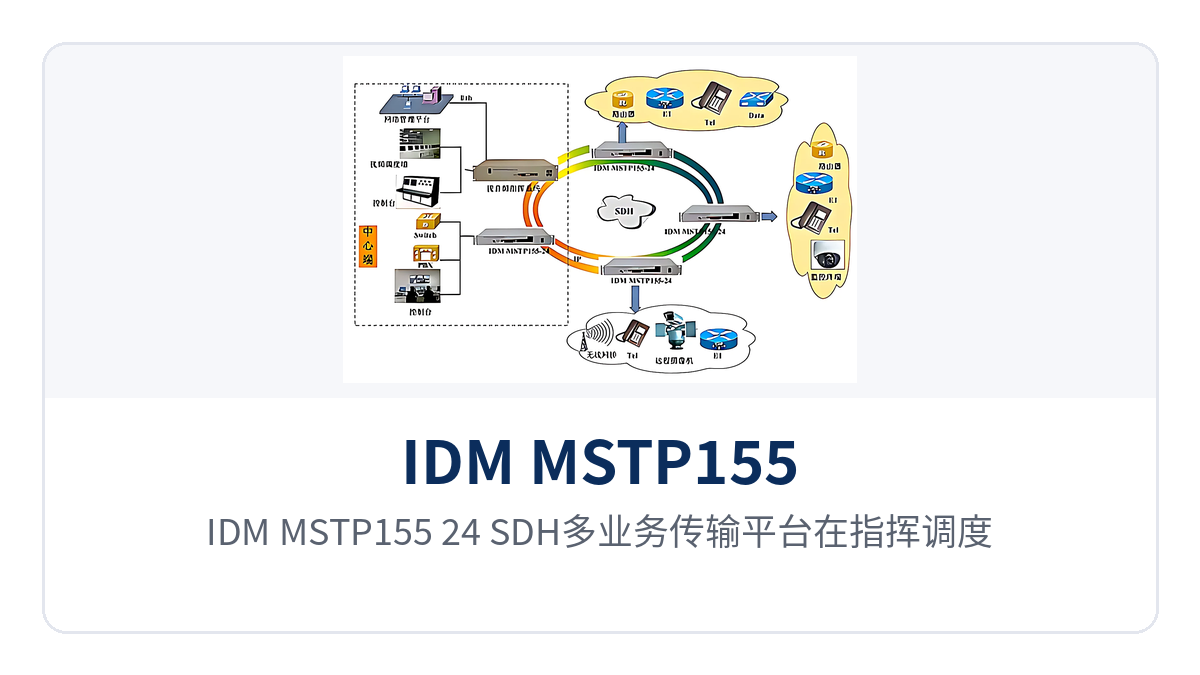
Figure 3: Networking application schematic of the IDM MSTP155-24 SDH multi-service transmission platform in a command and dispatch system
Conclusion
As a 3-slot mixed-insertion MSTP device, the IDM MSTP155-24 packs SDH transmission, PCM multiplexing and Ethernet access into a 19-inch 1U chassis. 1+1 protection for the dual STM-1 optical ports keeps channels available on the private network link when a single optical path fails, and the three service board slots allow telephone, E1 and RS485 to be mixed-inserted according to site requirements. Four physically isolated Ethernet interfaces and N×E1 bandwidth bundling carry different service domains separately.
For access layer nodes in electric power private networks, rail transit, and military and public security command and dispatch, service types are numerous while rack positions and fiber cores are limited. One SDH device simultaneously performs multi-service access, SDH transmission and PDH optical access, reducing the number of devices and points of failure at the site side accordingly. As an SDH equipment manufacturer and optical multiplexer manufacturer, Raytrans can, in project support for government private network optical fiber communication solutions, military emergency communications vehicle solutions and command and dispatch system manufacturers, work with the specific plug-in board configuration, optical modules and power supply scheme; it is recommended that these be determined after confirmation with the manufacturer based on the project service list.