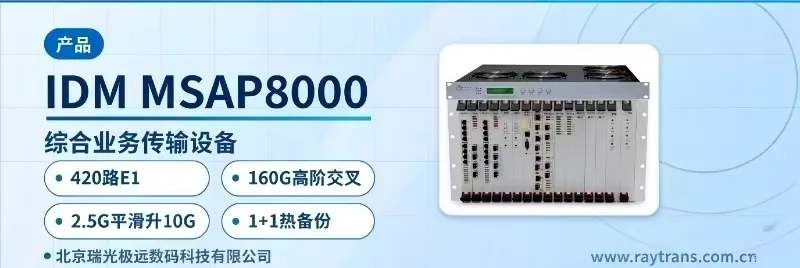
IDM MSAP8000 Integrated Service Transmission Equipment
420 E1 channels, 300 PCM channels, 160G cross-connect, 2.5G smooth upgrade to 10G
The IDM MSAP8000 Integrated Service Transmission Equipment is an STM-16/STM-64 multi-service transmission equipment that integrates ADM, DXC, Ethernet switch, and PCM functions, providing high-capacity, long-distance service transmission. It can be used for the formation and capacity expansion of various transmission backbones as well as high-capacity metropolitan service scheduling, meeting bandwidth requirements of different fields and levels. It is an ideal device for building a broadband transport network.
IDM MSAP8000 420-channel E1 multi-service transmission equipment is an STM-16/STM-64 multi-service transmission equipment developed by Beijing Ruiguang Jiyuan Digital Technology Co., Ltd. (Raytrans). It is used for the formation and capacity expansion of various optical transmission equipment backbones as well as high-capacity metropolitan service scheduling, integrating ADM add/drop multiplexing, DXC cross-connection, Ethernet switching, and PCM multiplexing into a 19-inch 7U chassis. As a professional SDH equipment manufacturer, Raytrans has implemented on this platform a device rate configurable up to STM-64, backward compatible with STM-16, STM-4, and STM-1 networking, completing the access, aggregation, and scheduling of narrowband voice, 2M circuits, and data services within a single chassis. A standalone unit supports 420-channel E1 and 300-channel 64K PCM services, suitable for aggregating end services scattered at site side directly to backbone nodes.
Electric power private networks, rail transit private networks, and military and government private networks, when selecting a backbone transmission platform, usually require high-capacity time-slot cross-connection, high-density end-service termination, and unit-level redundancy protection at the same time. IDM MSAP8000 420-channel E1 multi-service transmission equipment concentrates these three requirements on the same platform: the cross-connect layer provides 160G higher-order cross-connect and 20G lower-order cross-connect, the access layer provides 14 service slots and complete service interface types, and the reliability layer adopts dual bus and 1+1 hot standby for boards. This unit form can reduce the number of devices in the equipment room, simplify cable connections, and facilitate unified spare parts and network management. In government private network optical fiber communication solutions and military emergency communications vehicle solutions, this SDH equipment can coordinate networking with MSTP platforms, giving full play to the respective advantages of SDH and MSTP to meet multi-service product showcase and scheduling requirements.
Key Specifications at a Glance: STM-16/STM-64 · 160G higher-order cross-connect / 20G lower-order cross-connect · 14 service slots · standalone unit 420-channel E1 + 300-channel 64K PCM · dual bus + 1+1 hot standby for boards + 1:N protection for tributary boards · 19-inch 7U, typical power consumption <200W
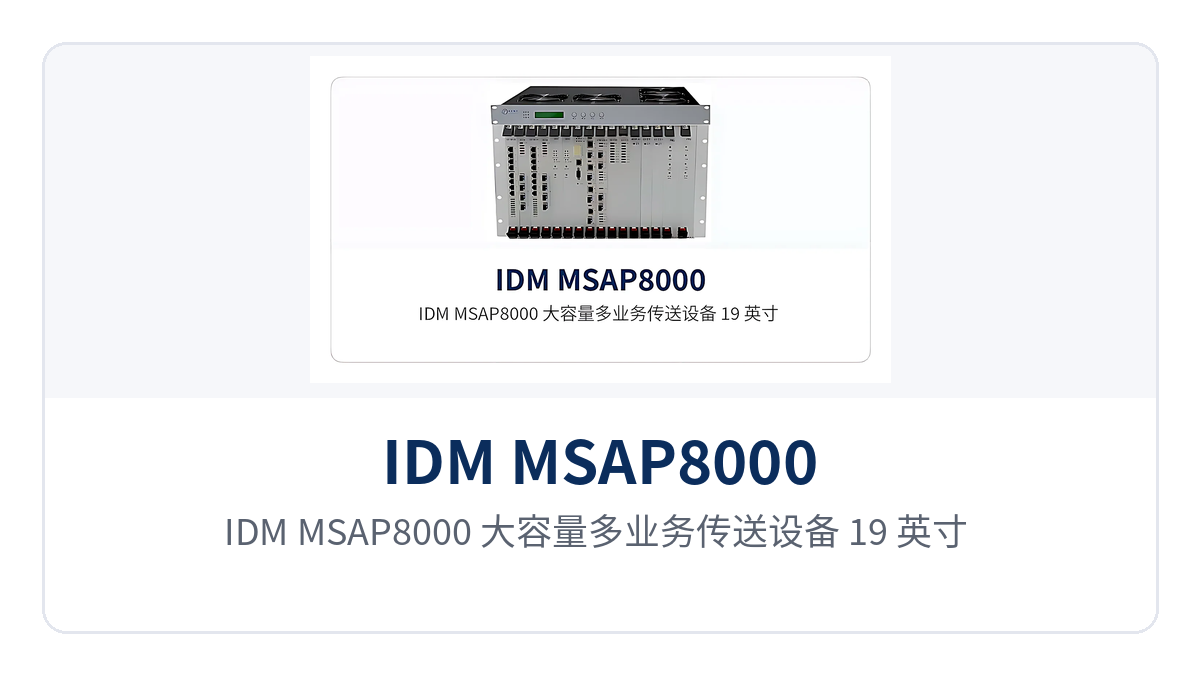
Figure 1: IDM MSAP8000 high-capacity multi-service transmission equipment 19-inch 7U chassis front overall appearance and board slot indicator LEDs
What Kind of Device Is IDM MSAP8000 420-Channel E1 Multi-Service Transmission Equipment?
IDM MSAP8000 420-channel E1 multi-service transmission equipment belongs to the SDH/MSTP multi-service transmission equipment family, adding EOS, PCM, and other data interfaces on the basis of traditional SDH equipment. Downward, the device accesses narrowband voice and circuit services at 64K/2M/155M/622M rates; upward, it connects to the backbone network through STM-16/STM-64 optical ports, and a standalone unit simultaneously assumes the three roles of access, aggregation, and scheduling. When used as a 10G (STM-64) system, it supports 4 10G optical directions; when used as a 2.5G (STM-16) system, it supports 16 2.5G optical directions.
Compared with a three-device solution that separately deploys an add-drop multiplexer, cross-connect equipment, and PCM multiplexer, one IDM MSAP8000 doing the same work can reduce equipment room footprint and simplify cable connections. The main functions of IDM MSAP8000 are shown in the table below.
Function | Description |
|---|---|
Multi-service integrated transmission | Integrates ADM, DXC, Ethernet switching, and PCM functions, completing the access, aggregation, and scheduling of voice, E1 circuits, and data services in a standalone unit |
2.5G smooth upgrade to 10G | As a 2.5G (STM-16) system, it can be smoothly upgraded to a 10G (STM-64) system, retaining 64K/2M/155M/622M access and GE/FE data access capabilities after the upgrade |
Time-slot cross-connection | Provides 160G higher-order cross-connect and 20G lower-order cross-connect capabilities; a 10G system supports 4 10G optical directions, and a 2.5G system supports 16 2.5G optical directions |
High-density service access | Provides 14 service slots, supports mixed insertion of 10G, 2.5G, 622M, 155M, GE, FE, and PCM service boards, and a standalone unit supports 420-channel E1, 300-channel 64K PCM, and 64 155M optical directions |
Device-level protection | Dual bus design, 1+1 hot standby for important boards, 1:N protection for tributary boards, dual power supply distribution system, distributed power supply for boards |
Network-level protection | Supports MSP 1+1/1:1, with protection modes compliant with ITU-T recommendations |
Data services and maintenance | Provides EOS and PCM data interfaces on the basis of traditional SDH equipment, supports mixed insertion of boards, pluggable SFP optical modules (LC connector), ALS function, and online optical power detection at the optical port |
What boards can be mixed in the 14 service slots?
The 14 service slots refer to the number of card slot positions available for service boards in the chassis, and the slots are not fixedly bound to board types. 10G, 2.5G, 622M, and 155M optical boards as well as GE, FE data boards and PCM voice boards can be mixed according to project needs, so the same device can both aggregate high-capacity optical directions and directly terminate 64K voice and E1 circuits. During capacity expansion, only boards need to be added or replaced, without replacing the unit or rebuilding the equipment room layout, making both the initial investment and subsequent capacity expansion investment more controllable.
Technical Specifications of IDM MSAP8000 420-Channel E1 Multi-Service Transmission Equipment
The technical specifications of IDM MSAP8000 are based on the SDH transmission system, covering dimensions such as rate, cross-connection, interfaces, power supply, and environment. The parameters are subject to the product documentation, and the specific configuration varies with the board combination. The E1 interface bit rate and line coding follow ITU-T G.703 recommendations, and the rate level definitions are specified in ITU-T G.707. The key specifications of IDM MSAP8000 are shown in the table below.
Item | Parameter/Specification | Description/Applicable Conditions |
|---|---|---|
Rate level | STM-64 | Compatible with STM-16, STM-4 and STM-1 networking; line rate complies with ITU-T G.707 |
Cross-connect capability | Higher-order 160G; lower-order 20G | High-capacity higher-order and lower-order time slot dispatching |
Optical direction | 4 for a 10G system; 16 for a 2.5G system | Used according to the actual system configuration |
Service interface | STM-64, STM-16, STM-4, STM-1(O), STM-1(E), E1, FE, GE, 64K services | 64K services include FXO/FXS, 2/4-wire E&M, V.24, V.35, RS485 and magneto telephone; E1 interfaces comply with ITU-T G.703 |
Service slot | 14 | Supports mixed insertion of 10G, 2.5G, 622M, 155M, GE, FE and PCM service boards |
Mechanical dimensions | 19-inch 7U standard rack-mounted device | Optical transmission interfaces are cabled at the front and service interfaces at the rear; front installation and front maintenance |
Device-level protection | Dual bus design, 1+1 hot standby for critical boards, 1:N protection for tributary boards, dual power supply distribution system, distributed power supply for boards | Service assurance under board-level failures |
Network-level protection | MSP 1+1/1:1 | Optical line-level protection switching, compliant with ITU-T recommended protection modes |
Typical power consumption | Power consumption <200W | Typical power consumption of the unit |
Power supply | Nominal voltage -48VDC, fluctuation range -57VDC ~ -40VDC | Standard DC power supply in the equipment room |
Environmental requirements | Temperature 0℃~+45℃, relative humidity 5%~90% | Standard equipment room environment |
Electromagnetic compatibility | Electromagnetic interference meets CISPR22 Class A; anti-interference performance meets the IEC1000-4 series standards | Electromagnetic compatibility indicators |
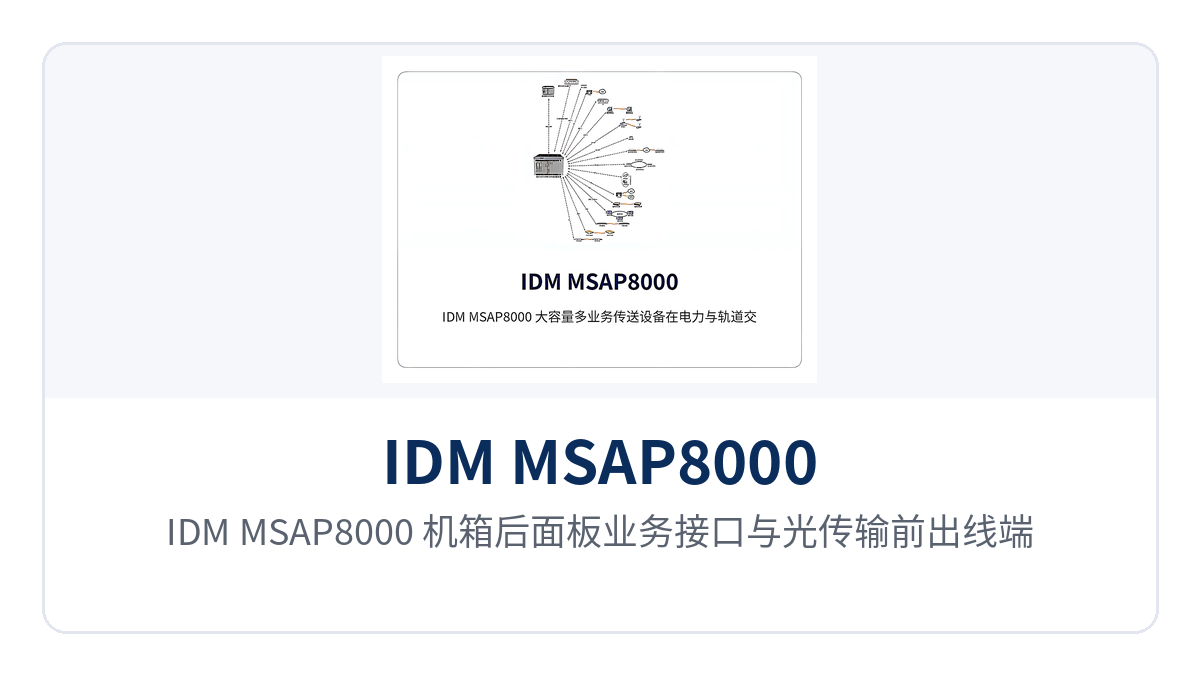
Figure 2: Close-up of the service interfaces on the rear panel and the front-cabled optical transmission terminals of the IDM MSAP8000 chassis
How much traffic can 160G higher-order cross-connect carry?
The 160G higher-order cross-connect corresponds to a termination capacity of 420 E1 channels, 300 64K PCM services and 64 155M optical directions per unit. As a 10G system, the IDM MSAP8000 supports 4 10G optical directions; as a 2.5G system, it supports 16 2.5G optical directions. High-capacity higher-order and lower-order dispatching means that one device can both aggregate large volumes of 2M and 155M tributary services onto the backbone and terminate GE/FE data together with 64K voice, eliminating the need for an additional layer of PCM equipment for narrowband services.
Practical value brought by three types of differentiated capabilities
The following three types of capabilities correspond to three requirements often raised at the same time in private network projects, compared item by item by capability and value.
Differentiated capability | Value to private network customers |
|---|---|
High-density termination of 420 E1 channels and 300 64K PCM channels per unit | Termination of private network edge services on one device: substation telecontrol channels, station data circuits and dispatch telephones are aggregated in E1 and 64K form, reducing the number of cabinets and associated cables |
Upgrade path from 160G higher-order cross-connect and 2.5G to a smooth 10G upgrade | Private network bandwidth planned once and invested in phases: first commissioned at 2.5G, then upgraded to 10G by replacing boards as traffic grows, while service boards and interface resources already invested in the 2.5G phase continue to be used |
Dual bus + 1+1 hot standby for boards + 1:N protection for tributary boards | Multiple redundancy for uninterrupted private network services: services switch over automatically when a main board or tributary board fails, with MSP 1+1/1:1 protection at the network level |
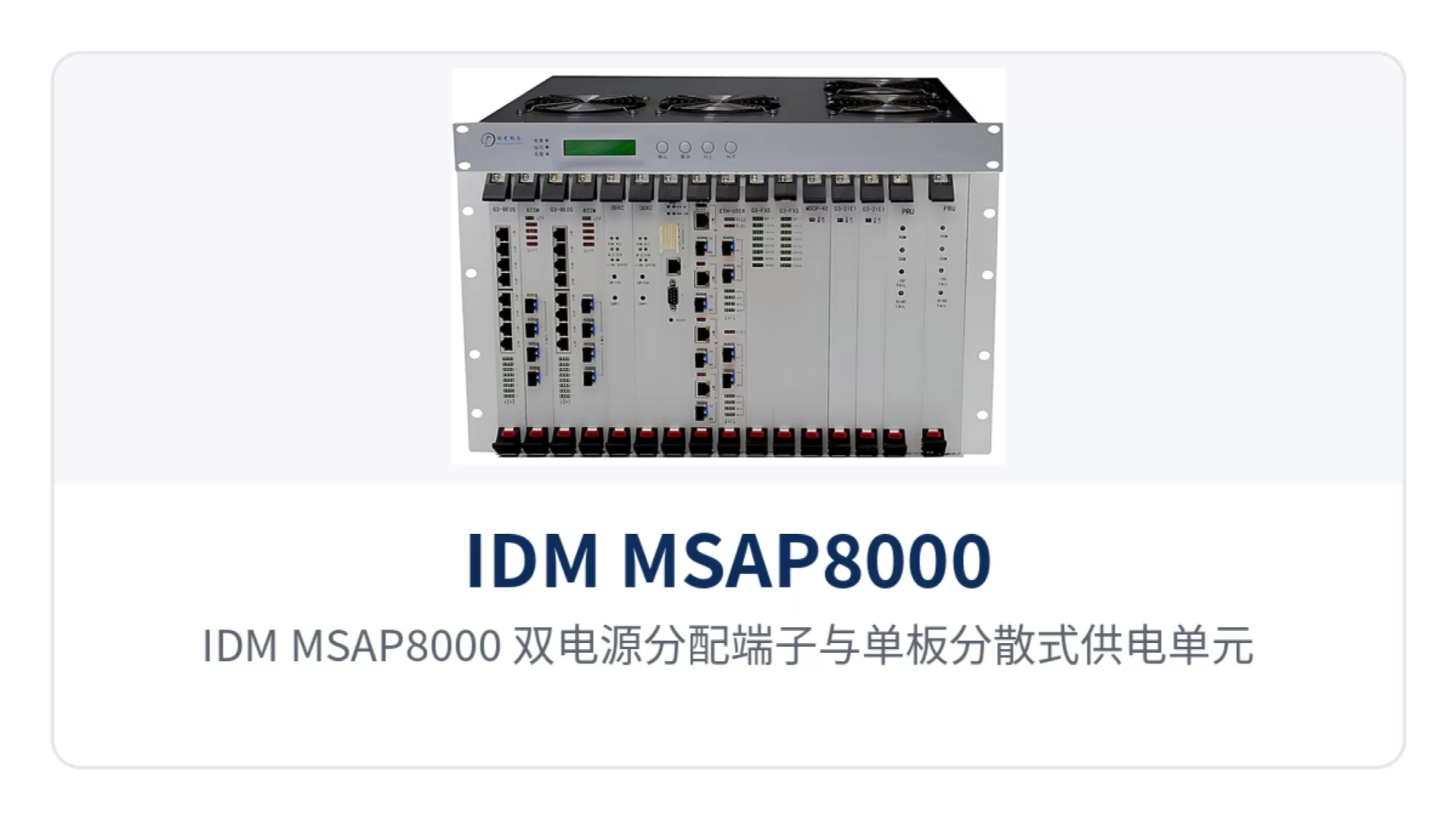
Figure 3: Close-up of the dual power supply distribution terminals and the distributed power supply units for boards of the IDM MSAP8000
Which boards need to be replaced for a smooth 2.5G to 10G upgrade?
The smooth 2.5G to 10G upgrade is completed by adding or replacing boards, while the chassis, backplane and dual power supply distribution system continue to be used, and the 64K/2M/155M/622M and GE/FE service boards already invested in the 2.5G phase can be retained as required by the project. After the upgrade, the IDM MSAP8000 as a 10G (STM-64) system supports 4 10G optical directions, and the 160G higher-order cross-connect capacity does not change with the upgrade. Calculating cross-connect capacity, number of optical directions, service slots and target number of service channels together during the planning phase avoids configuring only for the current scale and missing the capacity expansion margin.
Typical application scenarios
The IDM MSAP8000 420-channel E1 multi-service transmission equipment targets scenarios such as electric power private networks, rail transit private networks and military and government private networks that place simultaneous demands on transmission capacity and reliability, and is a highly representative optical transmission equipment in the product showcase of SDH equipment and MSTP products.
Electric power private network: substation telecontrol and dispatch automation
The substation telecontrol channels and dispatch automation services of electric power private networks are sensitive to transmission interruption and usually require transmission equipment with board-level redundancy and wide-voltage DC power supply. The IDM MSAP8000 420-channel E1 multi-service transmission equipment meets this requirement with its dual bus design, 1+1 hot standby for critical boards and 1:N protection for tributary boards; its power supply is nominally -48VDC with a fluctuation range of -57VDC ~ -40VDC, allowing direct connection to the DC power supply in the equipment room. The capacity of 420 E1 channels per unit facilitates centralized aggregation of 2M circuits distributed across multiple sites onto the backbone; services switch over automatically when an inter-station optical path fails, reducing the equipment room and maintenance pressure caused by stacking equipment site by site. For users with government private network optical fiber communication solution requirements, this SDH equipment can be a preferred choice for aggregation nodes.
Rail transit private network: data and dispatch telephones at stations along the line carried on the same device
The transmission network of a rail transit private network needs to carry station data, video, and dispatch telephone services simultaneously within limited equipment room space. The IDM MSAP8000 420-channel E1 multi-service transmission equipment mixes and inserts 14 service slots to place PCM voice boards, E1 tributary boards, and GE/FE data boards in the same chassis, so narrowband services and data services at stations along the line can be accessed in one pass. 1:N protection on tributary boards keeps a single point of failure from affecting services along the entire line. The design with optical transmission interfaces cabled at the front, service interfaces at the rear, and front installation and front maintenance facilitates cabling and routine maintenance in space-constrained station equipment rooms.
Military and Government Private Networks: Continuity of Long-Cycle Dedicated Lines and Phased Investment
Long-cycle dedicated line communication on military and government private networks demands high continuous availability and rapid maintenance, and the military emergency communications vehicle solution also imposes requirements on rapid deployment capability of the equipment. The IDM MSAP8000 420-channel E1 multi-service transmission equipment supports pluggable SFP optical modules (LC connector), the ALS function, and online optical power detection at the optical port, so O&M personnel can locate line problems without changing service configurations. Dual bus and 1+1 hot standby of boards, together with MSP 1+1/1:1 network-level protection, provide continuous transmission channels for command and dispatch services; the evolution path of initial 2.5G activation followed by board replacement to upgrade to 10G also facilitates phased investment by private networks according to their construction pace. As a professional SDH equipment manufacturer, Raytrans has extensive product showcase and implementation experience in this field.
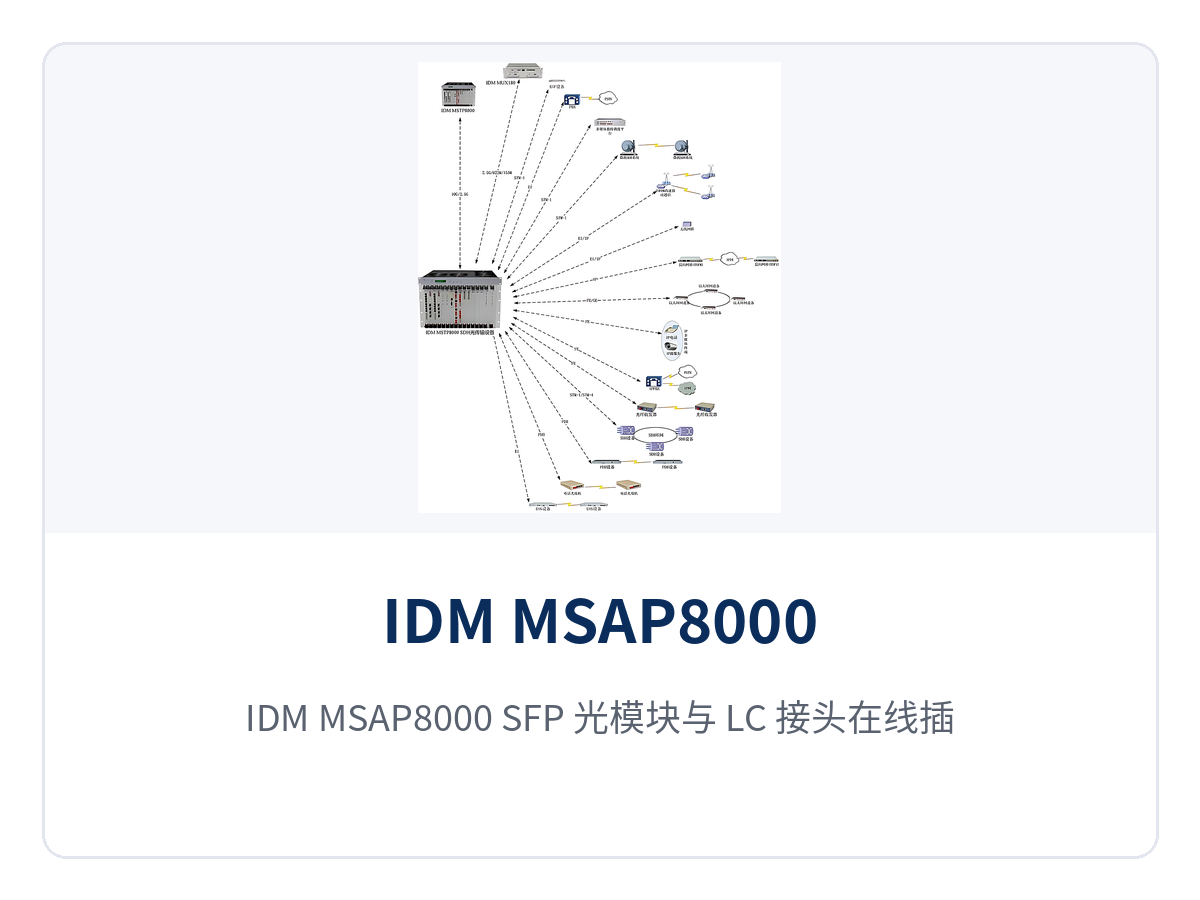
Figure 4: Schematic of online plugging or unplugging of the IDM MSAP8000 SFP optical module and LC connector
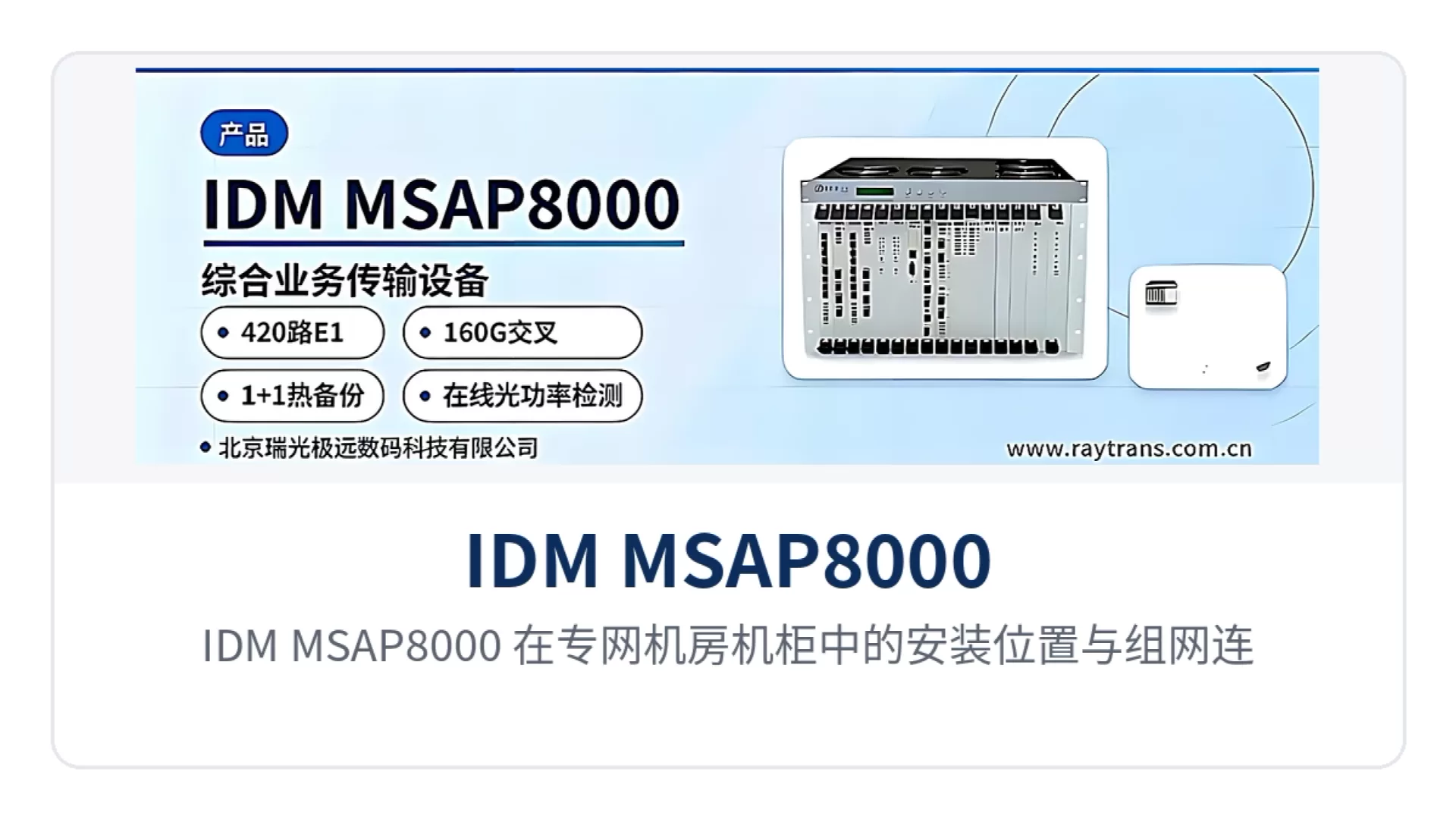
Figure 5: Schematic of the installation position and networking connections of the IDM MSAP8000 in a cabinet in a private network equipment room