IDM M3000 Communication Command and Dispatch System
TDM time-slot hard switching, 90 terminals and 24 radio sets mixed access, 2.5G optical fiber ring network
The IDM M3000 is a 19-inch 2U dispatching exchange. The IDM M3000 provides access to a group of 2.5G optical fiber ring network equipment (IDM GTD442) through the IDM 120N-GP optical card. This equipment provides 2 physically isolated gigabit Ethernet (GE) interfaces and 4 telephone channels, and a serial port server card can also be inserted to connect various monitoring devices. Many HD cameras can be connected to the gigabit ring network. A WG300 card can be inserted to enable telephone access over 3 E1 links. It provides 2 E1 interfaces with No.1, No.7, and PRI signaling access. The M3000 can provide
IDM M3000 Converged Communication Command and Dispatch System is a 19-inch 2U rack-mounted TDM time-slot switching dispatch exchange developed by Beijing Ruiguang Jiyuan Digital Technology Co., Ltd. It is used to connect HF radio sets, VHF radio sets, 350M and 800M trunking intercom, satellite phones and ordinary telephones to the same voice switching platform, achieving unified audio and video dispatching and command and dispatch.
The unit can connect 90 telephone or wired intercom terminals and 24 radio sets. The main control card comes with 2 E1 trunks, and a WG300 card can be inserted to connect telephones over 3 E1 links. It also provides 2.5Gbps optical fiber ring network and serial port aggregation capabilities, making it suitable for emergency command, civil air defense private networks, public security and armed police radio dispatch and other occasions requiring rapid on-site commissioning. As a professional command and dispatch system manufacturer, Ruiguang Jiyuan supports a product showcase-grade dispatch console operating experience on this platform, and can interface with military emergency communications vehicle solutions and government private network optical fiber communication solutions, meeting command and dispatch requirements in multiple scenarios.
Key Specifications at a Glance: 90 terminal access · 24 radio set access · 6 user card slots for mixed insertion · 2 E1 (SS7/PRI) · 2.5G optical fiber ring network · 64-party conference (expandable to 128 parties) · AC and DC dual power supply
What Is a TDM Time-Slot Switching Dispatch Exchange?
A TDM time-slot switching dispatch exchange is a dispatch device that completes voice connections within a hardware switching matrix according to fixed time slots. Bandwidth is reserved for each voice channel before call setup, and the connection is completed by time-slot cross-connection without IP packetization, routing and forwarding, or queueing. As the underlying switching equipment in an audio and video dispatching system, it undertakes the core task of voice connection.
The core advantage of this type of equipment comes from the switching mechanism itself: bandwidth is reserved and resources are exclusive, so voice interruption will not occur because an extra video stream or a large file transfer is added to the link; the connection latency of the switching matrix is measured in microseconds, and the prompt tone heard by the dispatcher after pressing PTT or dialing has almost no delay. In a converged communication command and dispatch system, this deterministic latency is particularly critical for the instant delivery of command and dispatch orders.
In contrast, IP softswitch packetizes voice into data packets for transmission over Ethernet. Any burst traffic, broadcast storm or missing VLAN planning on the link will directly manifest as noise, interruption or even dropped calls. Running voice on an office network without IP transmission planning requires both port traffic limiting and VLAN partitioning, which is why command sites with high security levels still prefer TDM dispatch.
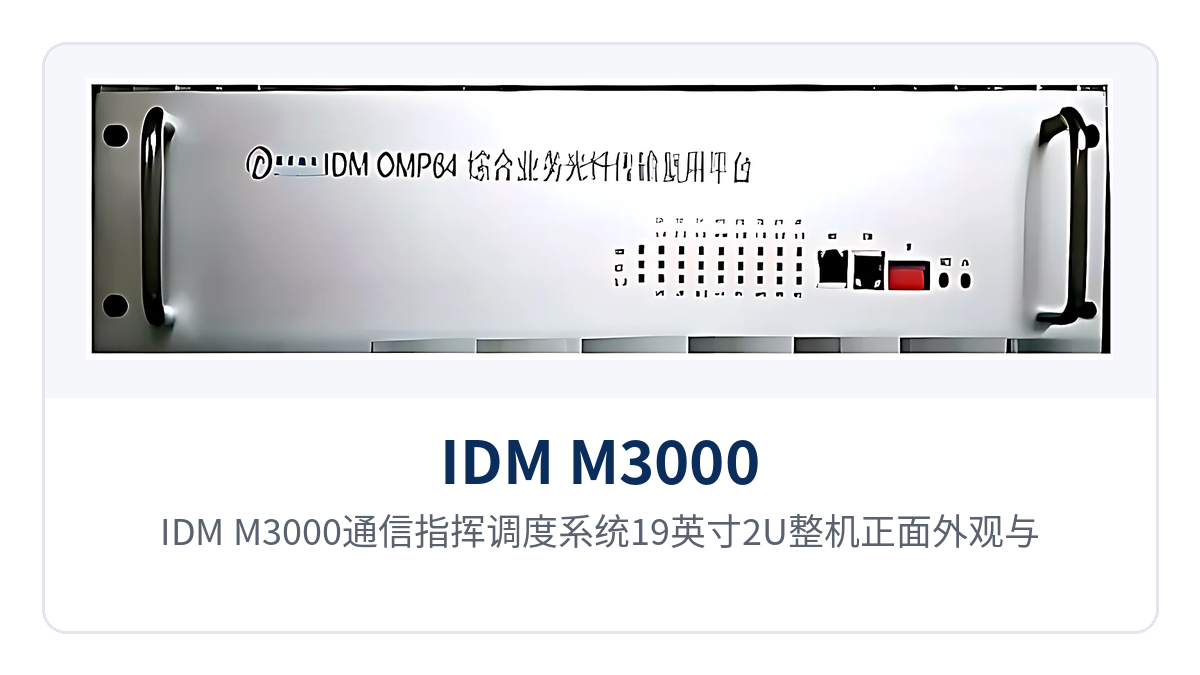
Figure 1: Front view and status indicator LEDs of the 19-inch 2U IDM M3000 Communication Command and Dispatch System
The front of the equipment displays system and user status with multi-color indicator LEDs. The chassis is 19-inch 2U standard width and can be directly fixed in a command post cabinet or a communication vehicle rack. The dispatch console accesses the unit over Ethernet, and the dispatcher completes calls, conferences and radio talk right control at the seat without operating item by item on the panel.
Core Specifications and Interface Specifications at a Glance
The access capacity of the IDM M3000 is determined jointly by the main control and switching card and 6 user card slots. The cards inserted determine how many radio sets and how many telephones this dispatch exchange can connect. Functions, card slot configuration and unit parameters are listed in three tables for item-by-item verification against the number of on-site terminals in a project.
| Function | Description |
|---|---|
| Multi-format trunk access | Supports GSM/CDMA interfaces, ordinary telephone trunk interfaces, ordinary magneto or 2100Hz magneto interfaces, and satellite phone interfaces |
| IP phone access channel | The WAN port supports IP phone access in the form of an electrical interface (RJ45) or an optical interface (FC) |
| Signaling access | Supports China No.1 signaling, China No.7 signaling and PRI signaling; the 2 E1 groups on the main control card can be configured as SS7 or PRI |
| Radio set access | Connects 24 radio sets, including HF radio sets, VHF single sideband (SSB) radio sets, and 350M and 800M trunking intercom |
| Wired terminal access | Connects 90 ordinary telephones or wired intercom terminals, supporting FXS, FXO, hotline and magneto user cards |
| Switching and conferencing | The main control card provides a 64-party conference call (expandable to 128 parties), can host 32 simultaneous conference calls, and supports 64-channel DTMF detection |
| Dispatch operations | Automatic and manual connection, one-touch direct, rapid group splitting and merging, same-level and higher-level override command, command recording and playback, tablet remote control synchronous operation |
| Optical fiber ring network | Provides a 2.5Gbps optical fiber ring network, on which 30 telephone channels can be allocated, and a serial port server card can be inserted to aggregate remote serial ports |
| Audio processing | Time-domain noise reduction, transmit/receive audio delay, VOX voice-operated transmission, VMR voice modulation recognition, DTMF detection and generation, PSTN adaptive hybrid |
| Card Slot | Capacity per Card | Description |
|---|---|---|
| Main control and switching card | 2 E1 groups + 64-party conference | Can be configured with China No.7 signaling or PRI signaling, or configured as 60 subscriber interfaces |
| VHF radio interface card | 4 channels per card | Connects radio transmitters, receivers and remote control consoles; 6 card slots fully configured provide 24 channels |
| FXS subscriber telephone card | 10 channels per card | Connects ordinary telephones and PTT intercom terminals, and can also be transmitted over PCM to farther operating sites |
| FXO central office telephone card | 10 channels per card | External lines access dispatching resources on the M3000 through exchange subscriber lines, and can also monitor VHF radio interfaces |
| Hot hotline card | 10 channels per card | A call is connected as soon as the handset is lifted, suitable for dial-free calls at fixed posts |
| MAG magneto card | 10 channels per card | Connects ordinary magneto terminals or 2100Hz magneto terminals |
| Mpconv 100M optical fiber expansion card | 4 optical ports per card | Each optical direction can access an NTD421 optical fiber chain network |
| WG300 card | 3 E1 | Provides telephone access over 3 E1 links and additionally provides No.1, No.7 and PRI signaling access over 2 E1 links |
| Serial port server card | Configured board by board | Aggregates remote serial ports and can connect various monitoring devices |
| Item | Parameter/Specification | Description/Applicable Conditions |
|---|---|---|
| Equipment form factor | 19-inch 2U rack-mounted dispatch exchange | Can be installed in a standard cabinet, a communication vehicle rack or a portable chassis |
| User card slots | 6 | VHF, FXS, FXO, Hot, MAG, Mpconv and other interface cards can be mixed; hot-swappable |
| Radio set access capacity | 24 channels | Calculated as 4 channels per VHF radio interface card, 6 cards fully configured |
| Telephone and intercom access | 90 channels | Calculated as 10 channels per FXS/FXO/MAG card; the actual configuration varies with the card combination |
| E1 interfaces | 2 E1 groups on the main control card; 3 E1 on the WG300 card | The main control E1 can be configured with SS7 or PRI signaling; the WG300 additionally provides No.1/No.7/PRI signaling access over 2 E1 links |
| Conference resources | 64 parties, expandable to 128 parties | Can host 32 simultaneous conference calls with 64-channel parallel DTMF detection |
| Optical fiber ring network | 2.5Gbps | The system can form 8 optical fiber rings, with every two rings sharing 30 telephone channels |
| Ring network remote device | IDM GTD442, IDM NTD421 | The GTD442 provides 2 physically isolated gigabit Ethernet (GE) interfaces + 4 telephone channels and can accept a serial port server card |
| Recording capacity | Simultaneous recording of 30 telephone channels | Used with an IP voice logging recorder |
| Power supply mode | AC and DC dual power supply | DC 11V |
| Operating modes | Multi-party conferencing, ordinary telephone intercom, PTT terminal intercom, PA | The four modes can be combined, and multiple VHF radio sets can be paralleled |
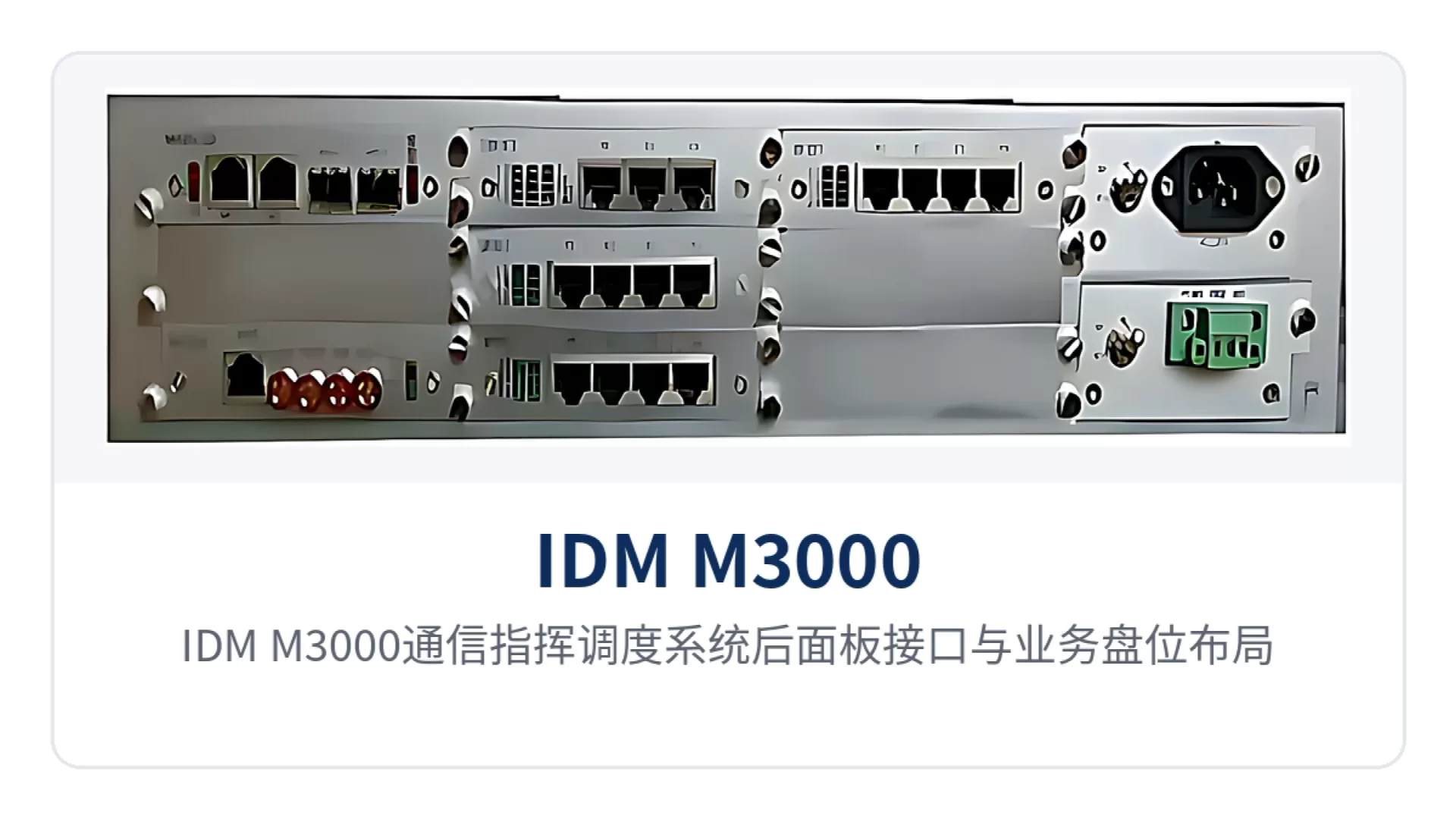
Figure 2: Rear panel interfaces and service card slot layout of the IDM M3000 Communication Command and Dispatch System
The rear panel concentrates the E1 trunks, optical ports, power and grounding terminals. The service card slots are arranged by slot number inside the chassis, and cards can be inserted by slot when replacing or expanding capacity. The modular structure of the unit supports hot swapping, and replacing a module of the same type on site does not require shutdown or configuration rewriting.
How Are 90 Terminal Access and 24 Radio Set Access Implemented?
Wired terminal and radio set access are both achieved through card slot combinations: FXS, FXO, Hot or MAG cards are inserted into the 6 user card slots, each providing 10 telephone interfaces. When all slots are filled with telephone cards, 90 ordinary telephones or wired intercom terminals can be connected; when VHF radio interface cards are inserted, each card provides 4 channels, and 6 cards fully configured provide 24 radio channels.
The radio interface card directly connects the radio transmitter, receiver and remote control console. One dispatch exchange can bring radio sets of different frequency bands and different formats into the same switching matrix, and the duty operator can call radio sets on each network in turn using one telephone or one dispatch seat. This card slot flexibility at the product showcase level allows a command and dispatch system manufacturer to configure flexibly according to project requirements and also provides compact access capacity for military emergency communications vehicle solutions.
- HF and VHF radio sets: After HF and VHF single sideband (SSB) radio sets are connected, they can dial each other with telephones, suitable for long-distance and mountainous coverage.
- Trunking intercom: After 350M and 800M trunking intercom is connected, two-way calls between telephones and trunking users can be achieved.
- Satellite phones and external lines: After satellite phone interfaces, GSM/CDMA interfaces and ordinary telephone trunks are connected, the site can extend the command chain through external networks.
- Magneto and hotline terminals: MAG magneto cards and Hot hotline cards are used for legacy magneto telephones and dial-free post telephones.
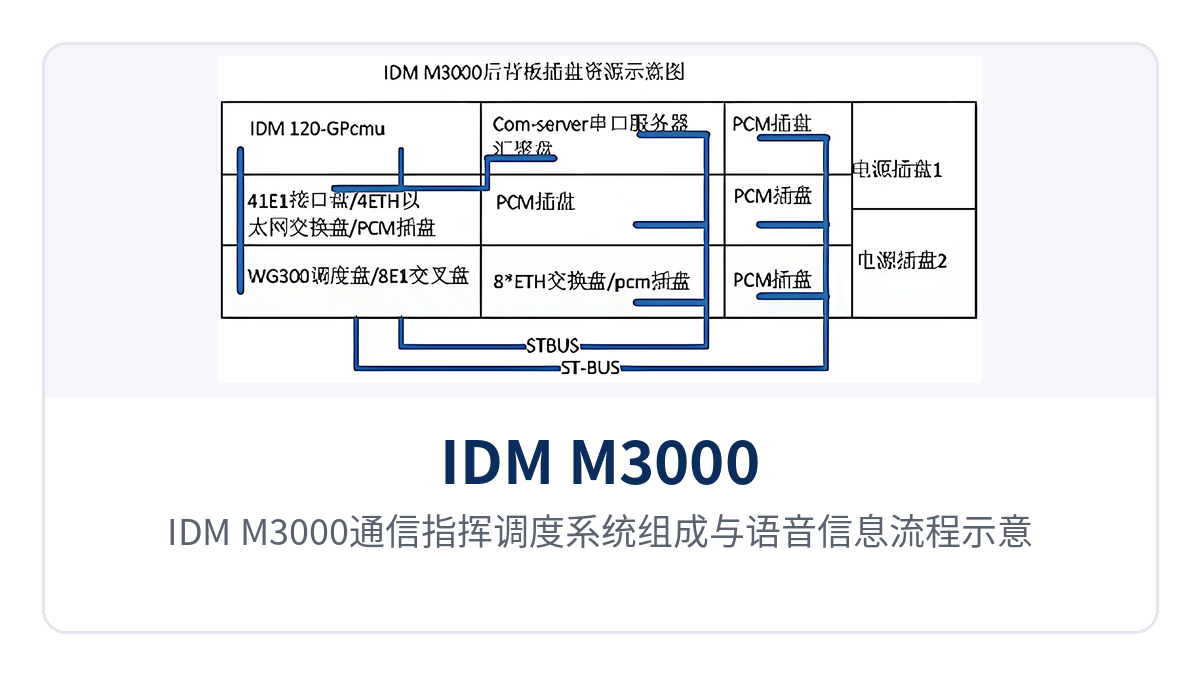
Figure 3: Composition and voice information flow of the IDM M3000 Communication Command and Dispatch System
The main control and switching card undertakes all switching and conference resources. Voice from each interface card is aggregated into the main control card through backplane time slots and then distributed by the main control card to the target ports. The dispatch console, IP voice logging recorder and tablet remote control terminal access over Ethernet and are logically separated from the exchange side, so operations do not affect the real-time performance of the switching matrix. In government private network optical fiber communication solutions, the 2.5Gbps optical fiber ring network can return voice from remote stations to the main control card over optical paths. As a command and dispatch system manufacturer, Ruiguang Jiyuan relies on this platform to provide a complete link from dispatch console seats to remote access for audio and video dispatching and converged communication command and dispatch system scenarios.
How Is the 2.5G Optical Fiber Ring Network Formed?
The 2.5Gbps optical fiber ring network is derived through the IDM 120N-GP optical card. Remote nodes on the ring use the IDM GTD442, which provides 2 physically isolated gigabit Ethernet (GE) interfaces and 4 telephone channels, and can also accept a serial port server card to connect various monitoring devices. Multiple HD cameras can be connected on the gigabit ring network, providing stable bearer capacity for audio and video dispatching.
The value of the ring network lies in path redundancy: if the optical fiber at any point on the ring is broken, services automatically detour in the other direction, and the intermediate break point does not affect normal communication. Telephones and images between the command post and remote posts will not disappear together with the fiber break. A call is connected as soon as the handset is lifted at the remote end and images are displayed synchronously; PA and transfer to each post are also possible, and telephones and trunking intercom can monitor simultaneously, meeting the real-time performance requirements of command and dispatch.
The system can form 8 optical fiber rings, with every two rings sharing 30 telephone channels. Ring network telephone channels are allocated by post, so there is no need to pull a separate pair of fibers for each remote point. When serial port devices need to be extended, a serial port server card inserted at a ring node can aggregate distributed remote serial ports for unified management at the center.
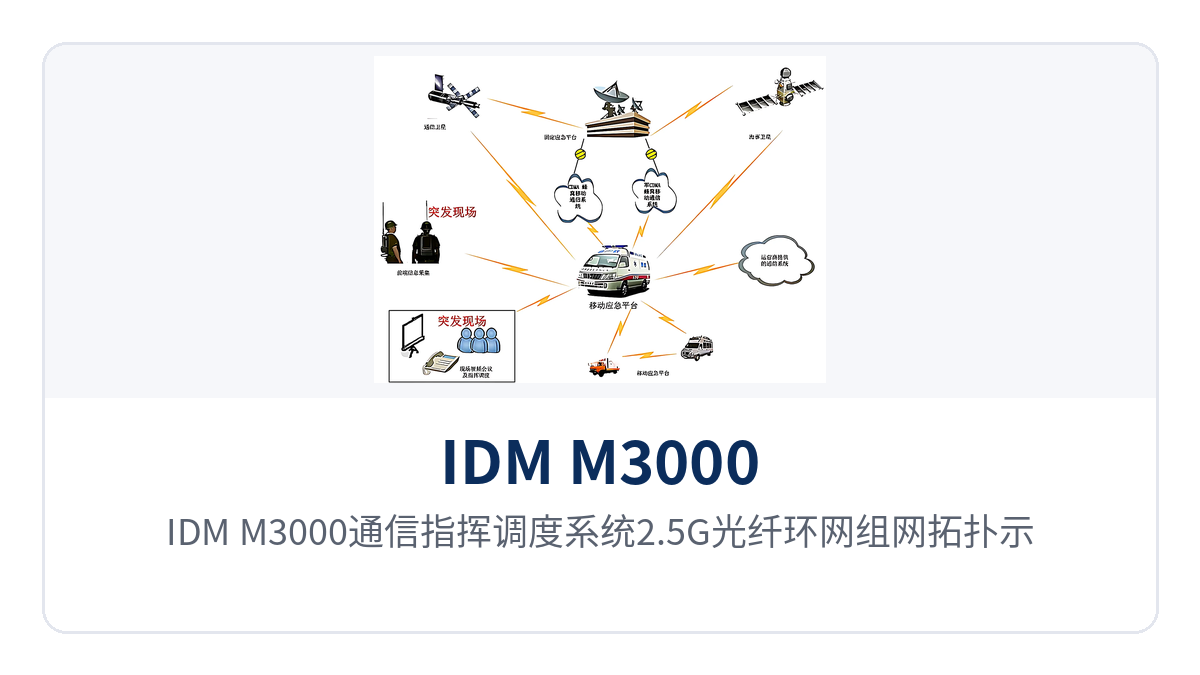
Figure 4: 2.5G optical fiber ring network topology of the IDM M3000 Communication Command and Dispatch System
The ring network card is the IDM MPconv card, with 4 optical ports per card. Each optical direction can access an NTD421 optical fiber chain network, and the remote end is then terminated by the GTD442 into gigabit Ethernet (GE) and 4 telephone channels. In this way, one link carries voice, video and serial port data simultaneously. Cabling follows the ring, and installation and spare parts are prepared with the same set of card types, which also facilitates unified networking of the converged communication command and dispatch system.
Four Intercom Operating Modes and Three Radio Channel Control Modes
The same radio set can be configured with different intercom modes according to the nature of the job role. Before provisioning, the dispatcher first determines whether the role "must speak" or "only needs to listen", and then selects the mode, avoiding multiple roles competing for the talk right at the same time. The four modes are not mutually exclusive; the same radio set can be switched between shifts, and the switch is performed on the dispatch console without changing the wiring of the interface card.
- Multi-party conferencing mode: each VHF radio set is assigned a conference number. Telephones listening to that radio set dial in to join the conference, and the voice of any party is forwarded to the other telephones and radio sets. The continuous transmit time of the radio set is limited to 2 minutes.
- Ordinary telephone intercom mode: a telephone can listen after dialing the radio access number. To speak, press the flash key or tap the hook switch to obtain a 20-second talk right (20 seconds by default, configurable). The telephone that obtains the talk right hears a prompt tone.
- PTT terminal intercom mode: the terminal normally listens and speaks when the PTT key is pressed; the talk time is determined by the terminal. Ordinary telephones require a PTT adapter.
- PA mode: the radio voice is broadcast one-way to all listening telephones, which only listen and do not speak, and the number of listeners is unlimited.
There are three ways to control receive/transmit on a wireless channel, and each radio interface selects one of them: PTT control mode is preferred for audio interfaces with PTT capability; DSP volume control mode is used for terminals without PTT, such as conference microphones, where receive/transmit is controlled by volume; DTMF keypad control mode lets telephones and mobile phones issue receive/transmit commands through the DTMF keypad.
In practice, the four modes can be combined: two or more radio sets can be bridged to the same conference room, and the voice received by one radio set is forwarded to other radio sets or telephones; one telephone can also join multiple radio sets for listening at the same time, and its speech is sent to multiple radio sets simultaneously. The dispatch console can centrally manage these channels.
Typical Application Scenarios
What the three types of sites have in common is scattered communication resources, high reliability requirements, and often no conditions for complete IP transmission planning. IDM M3000 provides access in a "wired and wireless integrated, ring network as fallback" manner, and on site each type of terminal only needs to be connected to the corresponding card slot.
Emergency Command and Civil Air Defense Private Network
An emergency command post usually has HF radio sets, VHF/UHF radio sets, satellite phones and public network telephones at the same time, and the commander needs to complete skip-level command and group calls at the same seat. IDM M3000 aggregates these resources into one 2U enclosure. One-touch direct and quick group splitting and merging let instructions be delivered without relaying level by level, and the same configuration can be used in a military emergency communications vehicle solution to quickly form a network.
The duty posts of the civil air defense private network are scattered across underground works and urban sites. Telephones at each site are connected to the command center through a 2.5G optical fiber ring network, and a breakpoint on the ring does not affect communication: when a section of optical fiber is cut by construction, the other sites continue to communicate normally. AC and DC dual power supply keeps the sites running basic dispatching after mains power failure, and a government private network optical fiber communication solution can also adopt this ring network structure.
Public Security and Armed Police Wireless Communication Dispatching
Public security and armed police operations on site rely mainly on 350M and 800M trunking intercom, and the command vehicle needs to connect trunking traffic with wired telephones and the superior private network. IDM M3000 can connect 24 radio sets; with a trunking interface card installed, telephones and trunking users can hold two-way calls, and the commander can poll each channel with one telephone.
A command post is often set up temporarily at the scene, so the equipment is small, battery-powered and fast to deploy in the field: once on site, it is powered on as soon as power and wiring are connected. The command recording and playback function keeps the calls of the whole process completely for later review and evidence collection. The dispatch console can temporarily split groups according to the response phase, placing terminals of different police types into the same talk group, and merge the groups again after the phase ends.
Energy and Border and Coastal Defense Unattended Sites
The communication points of oil and gas pipelines, substations and border and coastal defense outposts are scattered, with few duty personnel and long distances between sites. IDM M3000 is configured with a dispatch host at the central station, and remote stations connect local telephones and serial ports through the optical fiber ring network or PCM; the serial port server card aggregates the serial port data of monitoring devices back to the center.
Unattended sites value fault self-recovery capability more: when a single point on the ring has a fiber break, services are rerouted; modular card slots support hot-swappable replacement, and the site can recover by replacing a module of the same class; parameters are stored in the module, so replacing a module of the same model does not require resetting the frequency range in use. The device is powered by 11V~15V DC and can use a lightweight rechargeable battery or vehicle power.
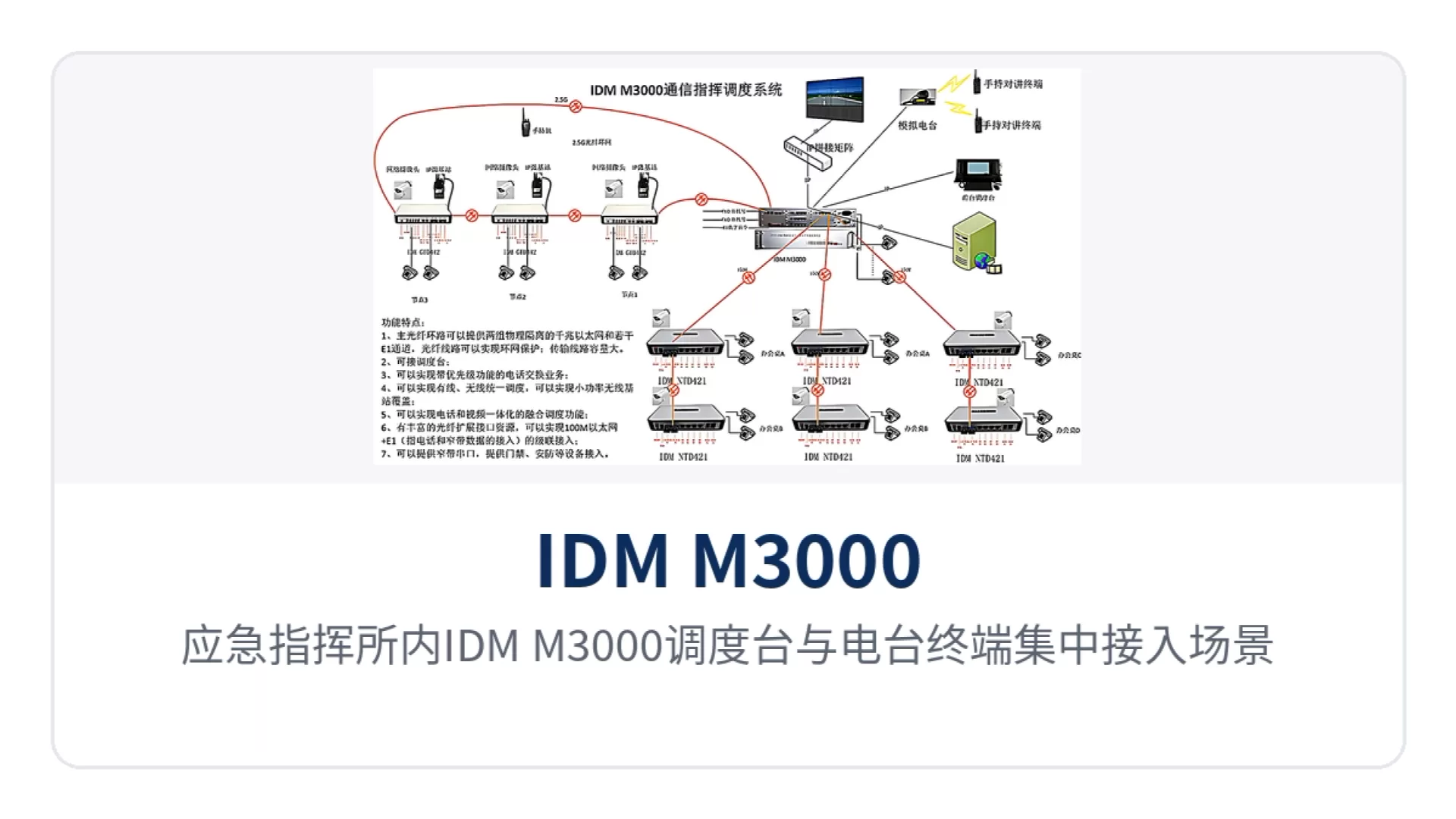
Figure 5: Centralized access of the IDM M3000 dispatch console and radio terminals in an emergency command post
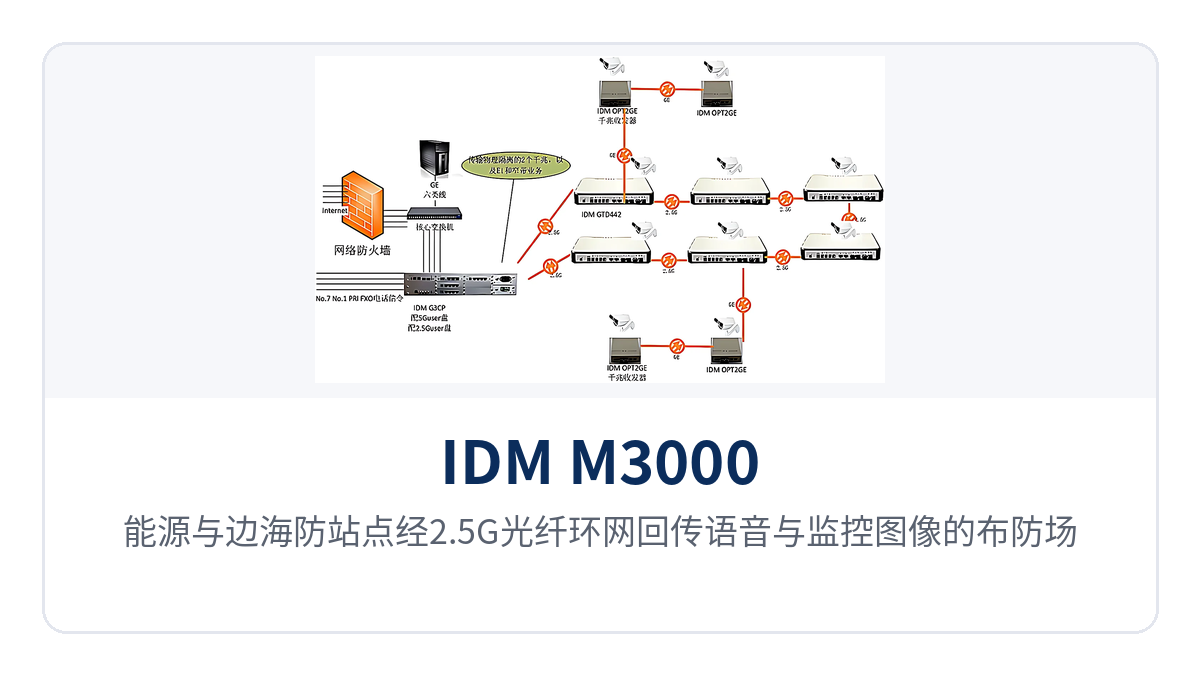
Figure 6: Post deployment scenario in which energy and border and coastal defense sites backhaul voice and monitoring images over a 2.5G optical fiber ring network
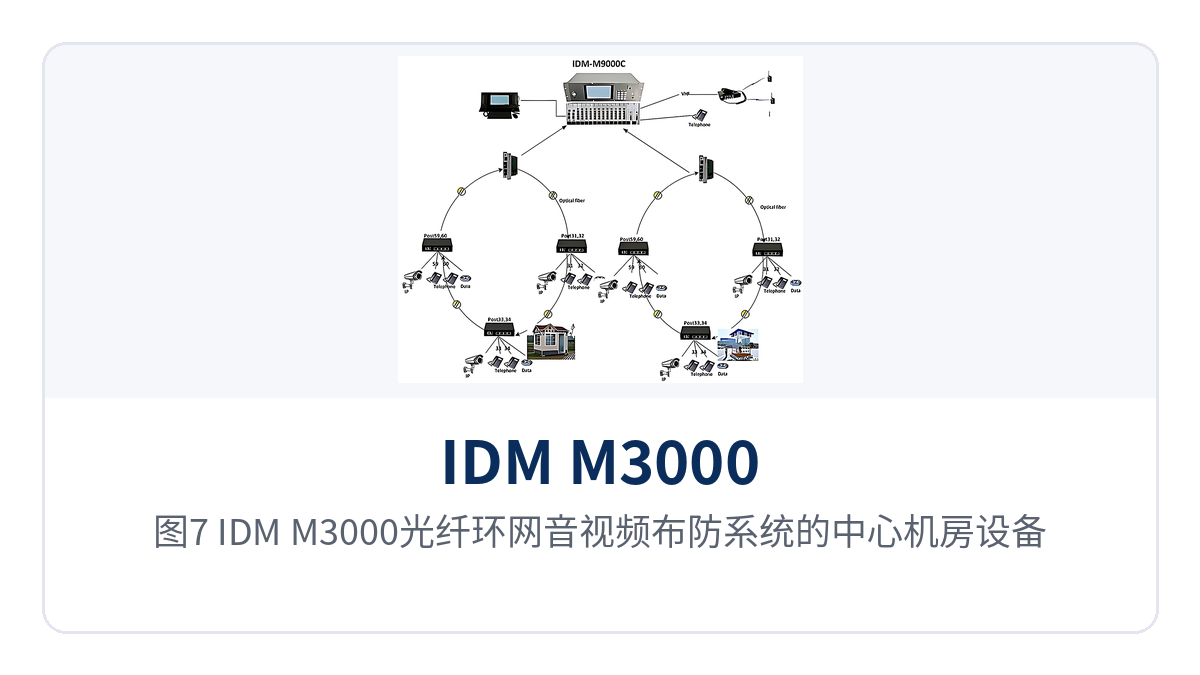
Figure 7: Central equipment room devices and dispatching seats of the IDM M3000 optical fiber ring network audio and video post deployment system
Compared with IP Dispatching, Which Sites Is This System Suitable For?
The dividing line in selection is not new versus old, but whether the site has a controllable IP transmission network. In an industrial park network that already has VLAN planning, port rate limiting and QoS guarantee, IP dispatching is easy to expand; in a command site without these conditions that also requires voice to be free of intermittent audio, a TDM time-slot switching dispatching exchange is more reliable.
| Differentiation Point | Value on Site |
|---|---|
| TDM time-slot switching, never meets a busy line | Reserved bandwidth for voice, strong anti-interference capability and low latency, unaffected by broadcast storms or other bursty IP traffic |
| 90-channel terminal access + 24-channel radio access | One 2U device aggregates telephones, magneto telephones, hotlines and radio sets of various frequency bands at the same time, without cascading multiple gateways |
| 2.5G optical fiber ring network | A single-point fiber break on the ring causes services to be rerouted, and the breakpoint does not affect communication; every two rings share 30 telephone channels, and audio and video can be transmitted on the same ring |
| AC and DC dual power supply | 11V |
Multi-format access also brings a deployment benefit: the device is not picky about terminals. Legacy magneto telephones, ordinary telephones, trunking handheld radios, HF radio sets and satellite phones can all find a corresponding interface, so when upgrading an old site there is no need to replace all terminals in use, and the investment is concentrated on the dispatch host and interface cards. As a command and dispatch system manufacturer, Raytrans also presents this multi-format compatibility and ring network redundancy as core capabilities in its product showcase.