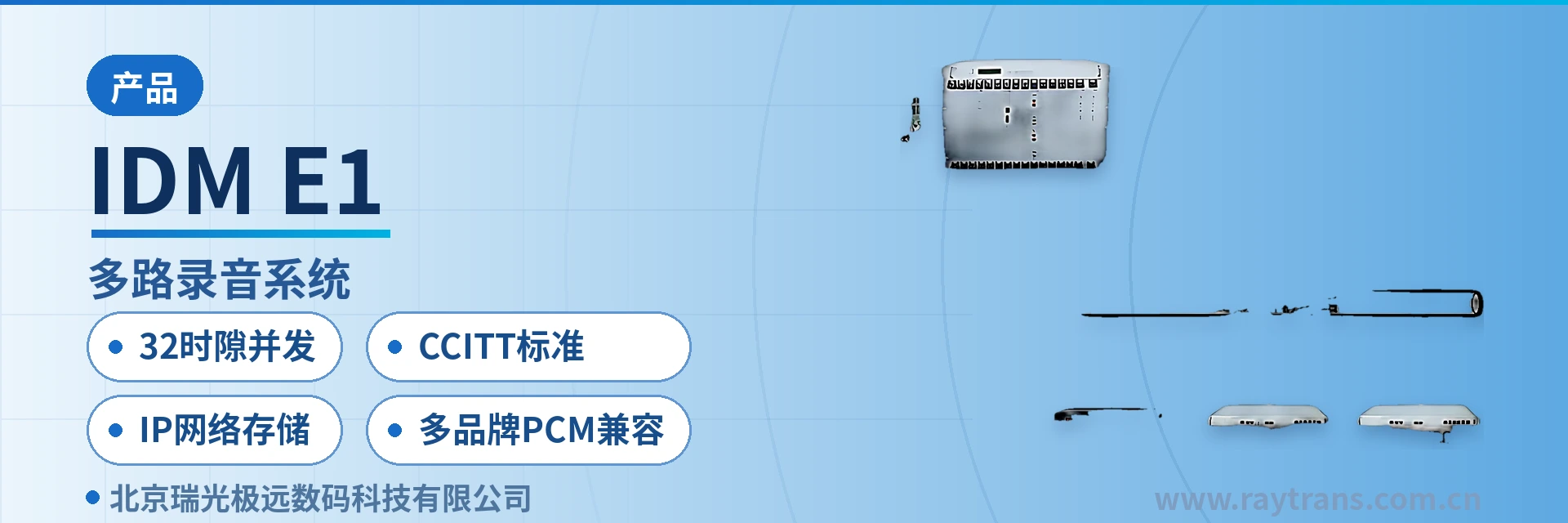
IDM E1 Multi-Channel Voice Logging Recorder
Single E1, all 32 time slots concurrent, simultaneous voice and data recording with restoration, compatible with multiple PCM brands
The IDM E1 Multi-Channel Voice Logging Recorder is an integrated hardware and software system that provides real-time automatic recording and real-time monitoring of calls on E1 lines. The recording adopts internationally accepted voice processing and compression technologies and complies with CCITT standards. Voice signals are sampled, digitized, and compressed, then stored on a computer disk via the network. The IDM E1 Multi-Channel Voice Logging Recorder is applicable to our company's IDM MCC multimedia dispatching exchange, IDM M9000C vehicle-mounted dispatch system, IDM M8000 multimedia dispatching exchange, and other equipment and systems. It can also be used for recording on PCM equipment from other manufacturers.
The IDM E1 Multi-Channel Recording System is an E1 recording system for private network dispatch, developed by Beijing Ruiguang Jiyuan Digital Technology Co., Ltd. It is used for real-time, automatic recording and real-time monitoring of calls on E1 lines. The system samples, digitizes, and compresses voice into IP data using internationally accepted voice processing and compression technology, and sends it over an IP network to a computer disk for centralized storage. On-duty personnel can complete the recording, query, and playback of multiple calls on a single computer, making it a practical supporting device for audio and video dispatching and command and dispatch system manufacturers in private network recording scenarios.
Key Specifications at a Glance: 32 time slot concurrency · CCITT standard voice compression · IP network storage · Full-line acquisition on a single E1 · Combined-condition retrieval · Multi-brand PCM compatibility
How does this E1 recording system work?
E1 lines use the PCM30/32 frame structure, with 32 time slots per frame, 8000 frames per second, and a bit rate of 2.048Mbps, following the ITU-T G.703 standard. TS0 carries frame alignment and alarms, TS16 carries channel-associated signaling, and the remaining time slots each carry one voice or data channel at 64Kbps, with the 32 time slots arranged by time division multiplexing within the same frame.
This frame structure determines that E1 recording must acquire the time slots of the entire line together, rather than wiring only a few selected channels separately. The IDM E1 Multi-Channel Recording System takes the information of all 32 time slots on the E1 channel and converts it uniformly into IP signals for transmission, providing underlying acquisition capability for voice traceability scenarios beyond audio and video dispatching and product showcase.
After recording is started, the system automatically records the specified E1, converts the information of 32 time slots on one E1 into IP signals sent to the computer, and stores and plays them on the computer. Voice is sampled, digitized, and compressed before being written to disk, using internationally accepted voice processing technology compliant with the CCITT standard.
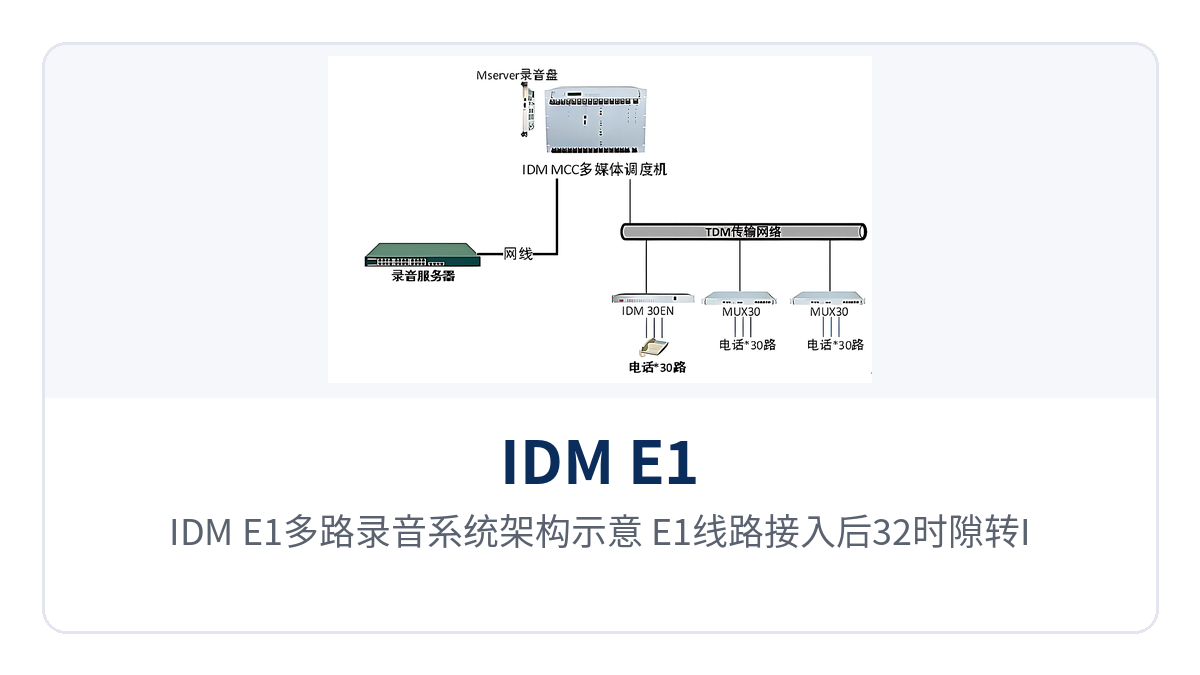
Figure 1: IDM E1 Multi-Channel Recording System architecture schematic; after E1 line access, 32 time slots are converted to IP and sent to the recording computer
Voice is not the only thing carried on an E1 channel. Data signals can likewise be sent to the computer and recorded, then sent back to the PCM equipment when restoration is needed, with the PCM equipment restoring the original data; both voice and data on one E1 can be traced, and post-event verification no longer depends on the device's local call records. For private network users adopting multimedia dispatching exchange and command and dispatch system manufacturer solutions, this acquisition method can directly interconnect with existing E1 links.
How many channels can a single E1 record: how 32 time slots record concurrently
One E1 corresponds to 32 recording channels. Each call occupies one 64K time slot on the E1. The IDM E1 Multi-Channel Recording System converts 32 time slots simultaneously into IP signals for transmission in a 32-time-slot concurrent recording manner. After recording is started, all voice channels on the entire E1 enter the recording state at the same time, and the recording start point is determined by the call itself, not by on-duty personnel starting recording channel by channel.
Real-time monitoring is available during recording. Monitoring and recording are performed on the same E1 channel; on-duty personnel hear the content of the call currently in progress, while the recording file is written to disk as usual. Abnormal calls can be handled on the spot, and afterwards the segment of recording can still be retrieved by channel number and time for verification.
The organization of multiple E1 lines is calculated on site before implementation. One E1 provides 32 time slots. When multiple E1 lines or multiple dispatching devices need to be covered on site, the number of recording channels, server disk capacity, and recording retention duration are calculated according to actual traffic, and the manufacturer provides the corresponding configuration list. The E1 access experience that Raytrans has accumulated in government private network optical fiber communication solutions and military emergency communications vehicle solutions can serve as a reference for channel planning of multi-line recording.
What the system can do: function overview
The IDM E1 Multi-Channel Recording System places online recording, real-time monitoring, file retrieval, and permission management in the same set of software and hardware. The actual use of each function item is shown in the table below, facilitating verification by duty, maintenance, and safety supervision job roles. Each function in the table corresponds to an operation entry point in the recording software.
| Function | Description |
|---|---|
| Online recording | After recording is started, the system automatically records the specified E1 without on-duty personnel operating channel by channel |
| 32-time-slot concurrent acquisition | Converts the information of 32 time slots on one E1 simultaneously into IP signals, so all voice channels on the entire line enter recording together |
| E1 signal to IP | The acquired time slot information is converted into IP signals and sent over the network to the recording computer |
| Data signal recording and restoration | Data services are likewise sent to the computer for recording, and restored to the original data through the PCM equipment when needed |
| Real-time monitoring | Real-time monitoring of channels during recording to track the current call status |
| Recording file query | Single or combined queries by channel number, date, time, and dialed telephone number |
| Recording file management | Statistics, deletion, and modification of recording records; recording materials are managed according to administrator permissions |
| Playback and listening | Retrieved recordings are played on the computer to verify call content one by one |
| System management and permissions | Add and delete system administrators and assign different operation permissions to different administrators |
| Device compatibility | Applicable to IDM MCC multimedia dispatching exchange, IDM M9000C vehicle-mounted dispatch system, and IDM M8000 multimedia dispatching exchange, and can also be used for recording of other manufacturers' PCM equipment |
Technical specifications and access conditions
The table below lists verifiable items by line side, recording side, and system side. The bit rate, frame structure, and interface standard of E1 are general line specifications; the number of recording channels, retrieval conditions, and compatible devices are taken from the function definitions of this system, and the server and installation conditions are confirmed before ordering.
| Item | Parameter/Specification | Description/Applicable Conditions |
|---|---|---|
| Access line type | E1, 2.048Mbps | Line side follows ITU-T G.703, frame structure PCM30/32 |
| Recording channels per E1 | 32 time slots | All 32 time slots of one E1 are acquired; voice channels are distinguished by 64K time slot |
| Voice processing and compression | Compliant with CCITT standard | Internationally accepted voice processing and compression technology; sampled, digitized, then compressed |
| Recording start mode | Automatic online recording | After recording is started, the system automatically records that E1 |
| Transmission and storage | Converted to IP signals and sent over the network to a computer disk | Recording files are stored on the recording computer's disk for centralized listening |
| Retrieval and playback conditions | Channel number, date, time, dialed telephone number | Supports single-condition queries and multi-condition combined queries |
| Data services | Recordable and restorable | Data signals are recorded and sent back to the PCM equipment, which restores the original data |
| Compatible devices | IDM MCC, IDM M9000C, IDM M8000, and other manufacturers' PCM equipment | Multi-brand PCM compatibility; recording of other manufacturers' PCM equipment is also supported, and existing E1 private networks and dispatch systems can be retained |
| Real-time monitoring | Supported | Real-time monitoring of channels during recording |
| System permission management | Multiple administrators, differentiated permissions | Query, delete, modify, and other operation permissions are assigned by job role |
| Recording server configuration | Subject to the documentation supplied with the product | Server specifications, disk capacity, and retention duration are calculated according to traffic |
| Power supply and installation method | Subject to the documentation supplied with the product | Rack installation and power supply conditions are confirmed with the manufacturer before ordering |
Three things need to be confirmed with the manufacturer before on-site implementation: the number of E1 channels to be accessed and the interface impedance (75 Ω coaxial or 120 Ω balanced), the configuration of the recording server and the recording retention duration, and the interfacing method with existing dispatching exchanges or other manufacturers' PCM equipment. Once these three items are settled, the configuration list and cabinet layout can be completed in one pass. As a command and dispatch system manufacturer, Raytrans can assist with the above interfacing calculations based on the actual link conditions of government private network optical fiber communication solutions and military emergency communications vehicle solutions.
Typical application scenarios
The E1 recording system targets private network dispatching scenarios that use E1 as the transmission medium. E1 call recording sites are usually located on the equipment room or command center side, acquiring calls from the E1 channel and then storing recording files centrally on a computer for listening by dispatch, safety supervision, and post-event verification alike.
Rail transit: train dispatch calls archived by channel and verifiable afterwards
Train dispatch, inter-station liaison, and equipment inspection calls in rail transit are mostly transmitted over E1 channels, and calls in parallel on one E1 can reach dozens of channels. The IDM E1 Multi-Channel Recording System records these time slots simultaneously and archives them by channel number and time, so every call handled at the dispatch console can afterwards be located to a specific channel and time point.
For train event reviews or passenger complaint verification, on-duty personnel perform combined queries by date, time period, and dialed telephone number and play back recordings directly on the computer, without collecting evidence station by station. Recording files are managed with permissions assigned by administrators, and query and delete operations can be traced to specific accounts.
Electric power and energy private network: dispatch telephone calls fully traced with evidence for verification
Dispatch telephone calls among substations, power plants, and dispatch centers often run on the same network as telecontrol channels. The IDM E1 Multi-Channel Recording System acquires on the E1 side, converting the issuance of dispatch orders and the acknowledgment process in real time into IP signals stored on the computer, with voice and data signals traced together.
When power grid accident investigations or operation ticket reviews require restoring the call content at the time, retrieval by time and channel number enables playback, and data signal records help verify whether orders and execution match. Recording materials are stored centrally, and teams and safety supervision departments listen according to permissions, reducing back-and-forth reporting level by level.
Vehicle-mounted mobile dispatch: centralized recording on the command center side, vehicle-ground calls traceable
Vehicle-mounted dispatch systems establish calls between the command center and vehicles; for dispatch systems whose vehicle-ground voice channels are transmitted over E1 channels, this system can record centrally on the central side. The recording device is deployed in the equipment room and records the E1 channel as a whole, so dispatch calls while vehicles are in transit form recording files as soon as the call ends. This mode matches the recording requirements of vehicle-ground links in military emergency communications vehicle solutions, and the command center can uniformly archive calls throughout a deployment.
When vehicle deployment records or emergency command processes need to correspond to call content, queries by dialed telephone number, date, and time period can locate a specific call. Recordings are stored centrally at the center, so vehicles themselves need no recording device; as long as the E1 channel access mode remains unchanged when vehicles are replaced or added, the recording scope stays consistent.
How are recording files queried and played back?
Recording file query and playback revolve around two main lines: channel and time. The system supports single queries by channel number, date, time, dialed telephone number, and other conditions, as well as combined queries with multiple conditions; retrieval results are listed record by record and can be played back with a click. As a supporting capability provided by Raytrans, an audio and video dispatching and command and dispatch system manufacturer, recording retrieval corresponds one-to-one with the voice channel records on the multimedia dispatching exchange.
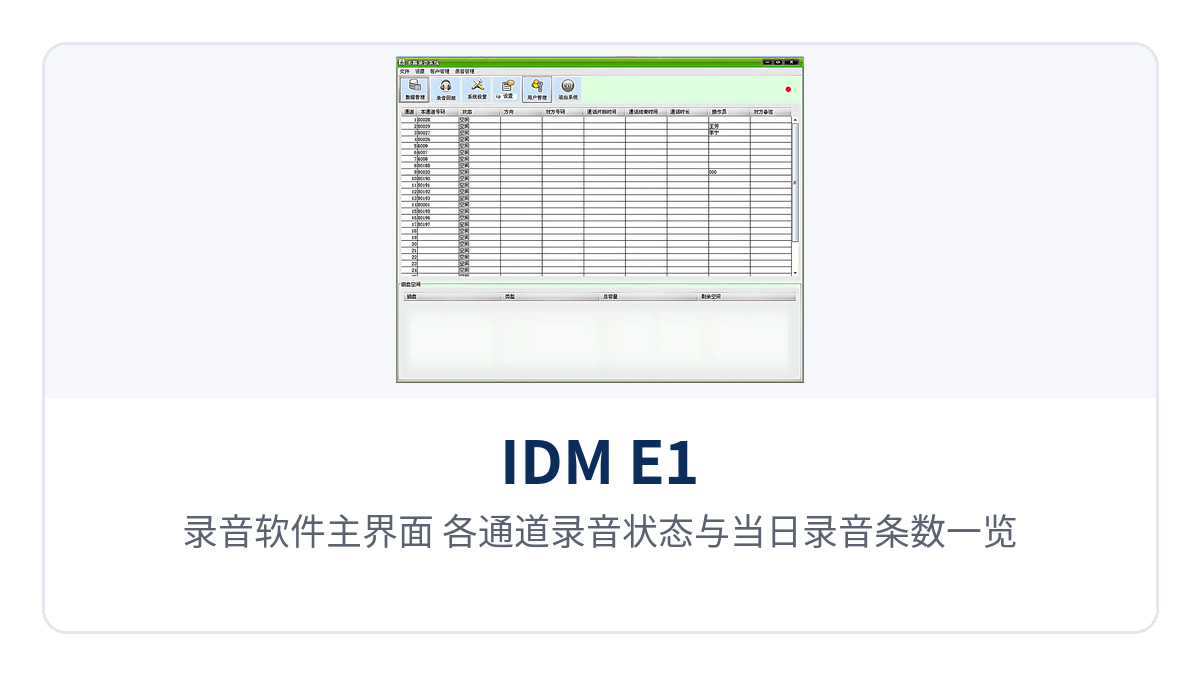
Figure 2: Recording software main interface, with recording status of each channel and the number of recordings for the day at a glance
The recording software main interface displays the recording status of each channel grouped by channel, with channels currently recording, the number of recordings for the day, and disk usage visible on one screen. The interface is divided into recording, query, and settings zones, and channel numbers correspond one-to-one with the voice channels on the dispatching exchange, so on-duty personnel enter retrieval and playback here without switching back and forth among multiple software programs. This audio and video dispatching interface incorporates recording status into a unified product showcase view, so the duty console can grasp the overall situation on one screen.
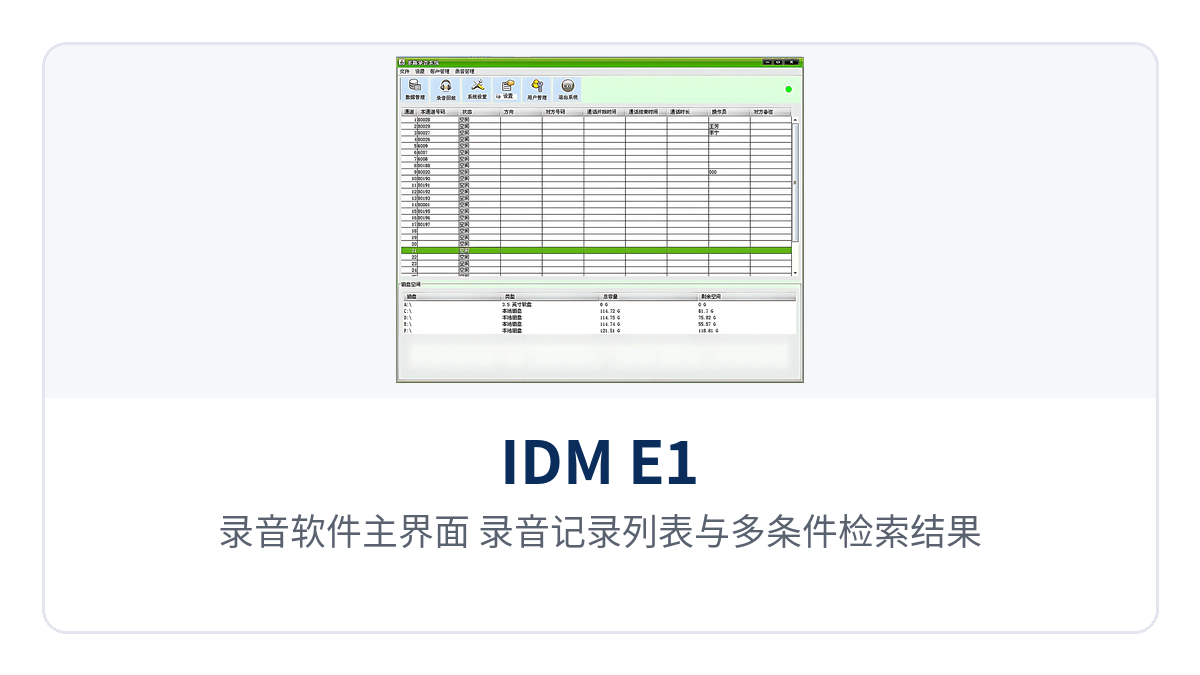
Figure 3: Recording software main interface, with the recording record list and multi-condition retrieval results
The recording record list arranges retrieval results by channel and time, with multiple calls on the same channel adjacent to each other; cross-day calls can be captured by time period. When a dispatch order needs to be verified, select the record from the list to enter the playback interface, where play, pause, and positioning are all completed on the same page.
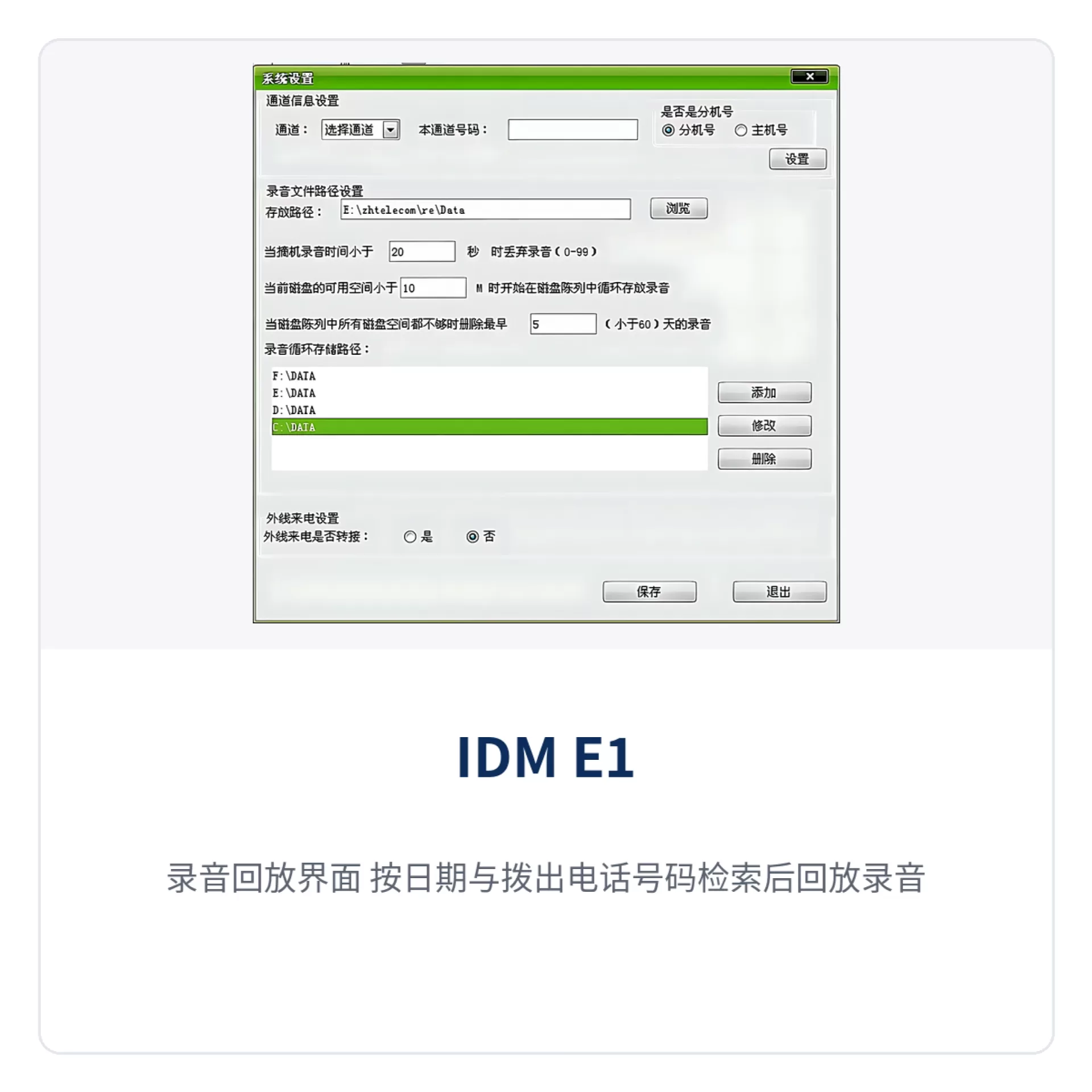
Figure 4: Recording playback interface, playing back recordings after retrieval by date and dialed telephone number
The system can also perform statistics, deletion, and modification on recording records, and sensitive operations such as deletion are controlled by administrator permissions. Administrators add or delete administrator accounts or modify the related permissions of accounts according to the organization's needs, authorizing query, playback, and deletion separately.
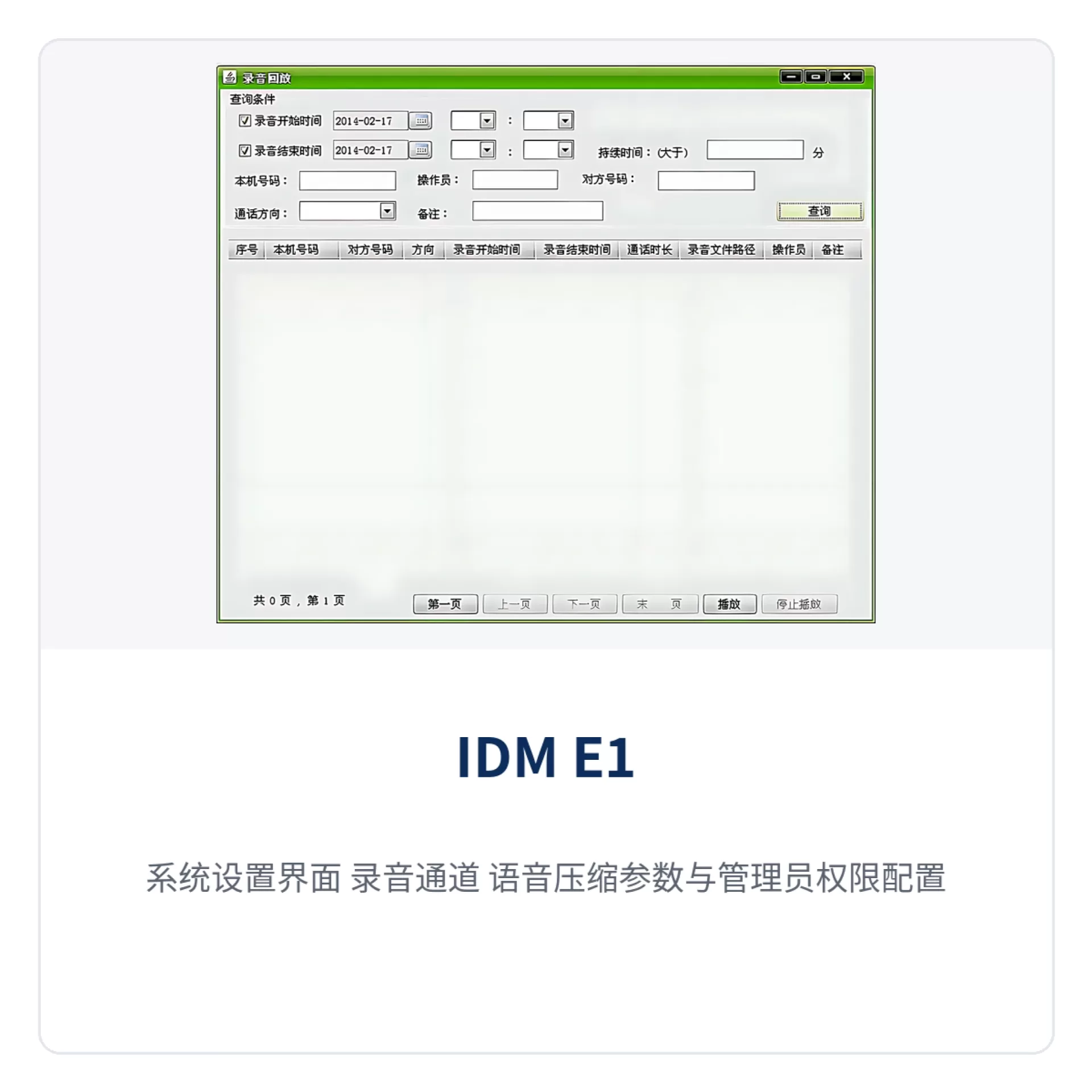
Figure 5: System settings interface, recording channels, voice compression parameters, and administrator permission configuration
The system settings interface is used to configure recording channels, voice compression parameters, and the storage path. Here, the administrator maps recording channels one-to-one to the voice channels on the dispatching exchange. Once the channel-to-service mapping is configured, daily duty work involves only query and playback. In its government private network optical fiber communication solution and military emergency communications vehicle solution, Raytrans incorporates recording channel configuration into the unified commissioning process of the multimedia dispatching exchange.
Conclusion
As an E1 recording system for private network dispatch, the IDM E1 multi-channel recording system collects all 32 time slots of one E1 simultaneously and converts them in real time into IP signals stored on the computer disk, making every dispatching call traceable from occurrence to archiving. The system follows the CCITT standard voice compression method, and recording files are retrieved and replayed by channel, date, time, and dialed number, so recording retention and viewing are well documented.
For private networks already running IDM MCC, M9000C, M8000, or third-party PCM equipment, adding this system requires no replacement of the existing dispatching exchange or transmission equipment; recording capability can be completed by access on the E1 side. When the number of channels, server configuration, and retention period need to be calculated, simply provide the on-site E1 line list to the manufacturer to obtain the corresponding configuration plan. In the delivery of its government private network optical fiber communication solution and military emergency communications vehicle solution, Raytrans completes recording channel calculation and multimedia dispatching exchange configuration interfacing according to the on-site E1 list.