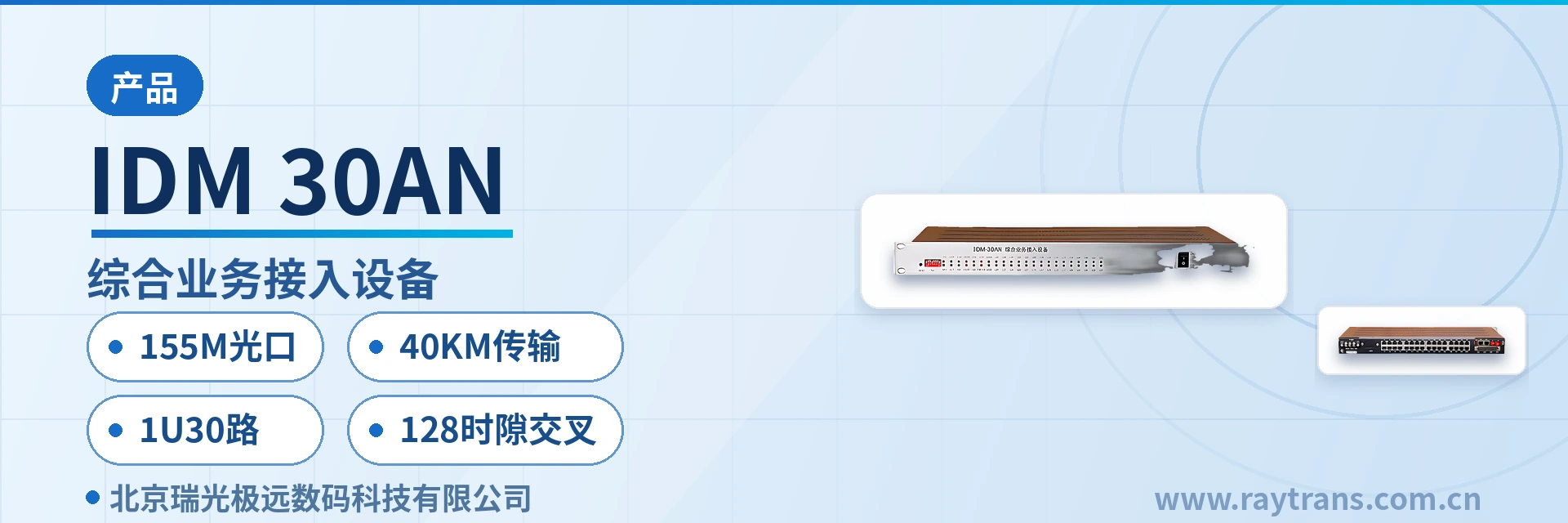
IDM-30AN Integrated Service Access Device
128 time slots two-stage cross-connect, 4xE1 transparent transmission, single fiber 40 km saving fiber cores
The IDM-30AN multi-service optical multiplexer has an optical fiber rate of 155 Mbps. The IDM-30AN multi-service optical multiplexer provides up to 4xE1 transparent transmission, and also provides 1-2 shared line-rate 100M Ethernet channels. The Ethernet interface has data frame filtering and MAC address auto-learning functions. The transmission distance is no less than 40 km, with optional SC/FC/ST interfaces, supporting single fiber transmission mode. It can provide 30 subscriber interfaces in a 1U chassis, with more than 20 optional services.
What Kind of Device Is a 155M Optical Port Integrated Service Access Device?
The IDM-30AN 155M optical port integrated service access device is a PDH integrated service optical fiber transmission equipment with a modular structure design, developed by Beijing Ruiguang Jiyuan Digital Technology Co., Ltd. It is used to aggregate and multiplex the integrated services of an access point, such as voice, data, and video surveillance, onto a 155Mbps optical fiber line for transmission, and is intended for integrated service dedicated line access in private networks such as electric power, public security, finance, and schools. As a typical integrated service access device, it integrates PCM and ADSL functions and uses dedicated large-scale integrated circuits to perform signal processing for optical ports, E1 interfaces, and subscriber interfaces.
Key specifications at a glance: 155M optical port · 40KM transmission · 1U 30-channel · 128 time-slot cross-connect · up to 4-channel E1 transparent transmission · 1-2 shared line-rate 100M Ethernet channels
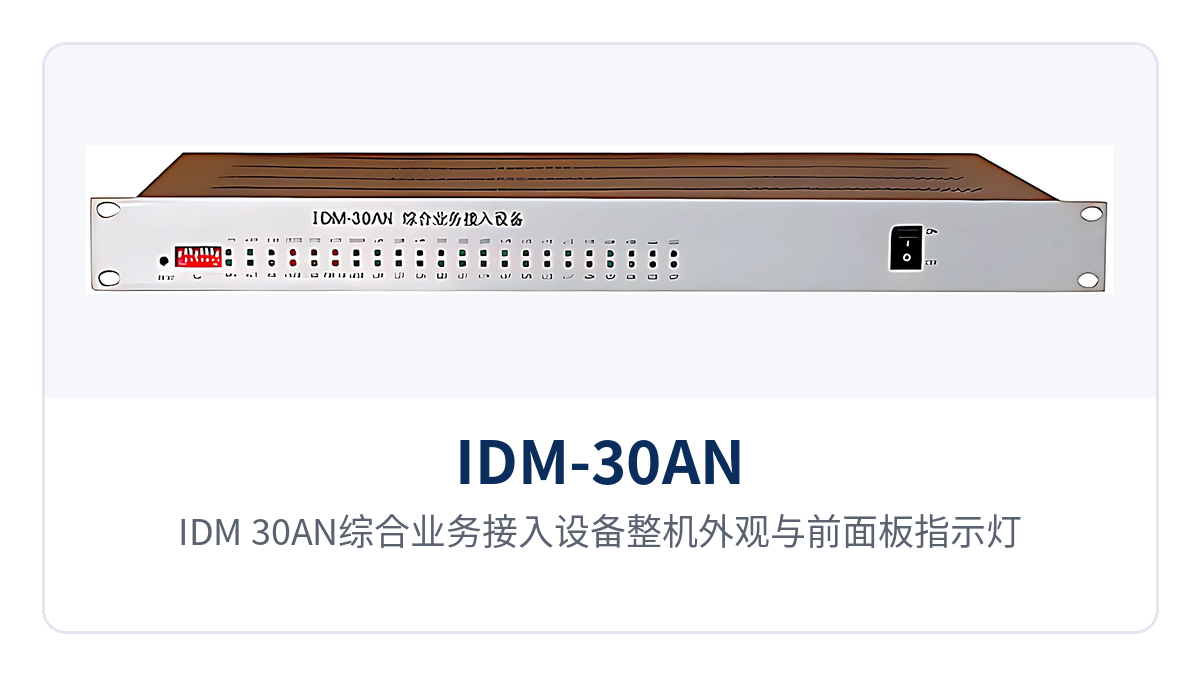
Figure 1: Overall appearance and front panel indicator LEDs of the IDM-30AN integrated service access device
The optical fiber rate of the IDM-30AN 155M optical port integrated service access device is 155Mbps, with a transmission distance of no less than 40KM. The optical interface is available in SC/FC/ST forms and supports single fiber transmission mode. Optical fiber resources in field private networks are often limited, and single fiber transmission mode allows services in one direction to occupy only a single optical fiber, making it suitable for private network sites with long line installation distances and scarce fiber cores.
E1 and Ethernet are the service backbone of the device. The device provides up to 4-channel E1 transparent transmission and 1-2 shared line-rate 100M Ethernet channels. The Ethernet interface has data frame filtering and MAC address auto-learning functions, so no additional protocol conversion is required when interfacing with switches and routers. The E1 transparent transmission channel is suitable for carrying the 2M channel services of existing private network equipment, while the Ethernet channel is suitable for carrying video surveillance and office data.
Core Functions and Performance Specifications
The functions of the IDM-30AN 155M optical port integrated service access device are organized along five lines: optical transmission, E1 and Ethernet access, time-slot cross-connection, subscriber interface access, and network management alarms. The individual functions and their purposes are shown in the table below.
| Function | Description |
|---|---|
| 155M optical port transmission | Optical fiber rate 155Mbps, transmission distance no less than 40KM, optical interface available in SC/FC/ST, supports single fiber transmission mode |
| 4-channel E1 transparent transmission | Provides up to 4-channel E1 transparent transmission, used to carry existing E1 (2M) channel services of private networks |
| Shared line-rate 100M Ethernet | Provides 1-2 shared line-rate 100M Ethernet channels; the Ethernet interface has data frame filtering and MAC address auto-learning functions |
| Two-stage time-slot cross-connection | Built-in 128 time-slot cross-connect matrix, enabling data and signaling cross-connection from user to user, user to line, and line to line |
| Integrated PCM and ADSL functions | Integrates PCM and ADSL functions; the PCM module uses a board-separated structure, and the ADSL module has two slots |
| Flexible subscriber interface configuration | Provides 30 subscriber interfaces in a 1U chassis, with more than 20 optional services; voice and data interfaces can be changed according to site requirements |
| Multi-time-slot card channels | Built-in 4 multi-time-slot card channels, which can accept N×64K bandwidth V.35 cards and 10BASE-T cards, and can also provide high-speed asynchronous RS232 or RS485 interfaces |
| Multiple clock modes | Can be set as master clock, external clock, line clock, or user clock; can be set as exchange interface or subscriber interface, compatible with central office and remote ends |
| Flexible networking | Provides optical fiber line receive/transmit in four transmission directions, and can be used in combination with the IDM-240 series, IDM-120 series, IDM-30 series, and IDM-mini series |
| Network management and monitoring alarms | Network management interfaces are available in RS232 and RS485 forms; when RS485 is used, multiple devices can be cascaded simultaneously; when the E1 status changes, an audible alarm is issued, the panel indicator LEDs show the alarm status, and rack alarm information is output |
| Compact structure, easy installation | The device is 1U high and can be placed in a 19-inch rack, or wall-mounted or desktop-placed; provides 220V/-48V power supply |
| Dual power supply and dual ringing current backup | Optional dual power supply and dual ringing current modules; the power supply operates in half-power mode, and the device can still work normally when one module is damaged |
The main technical specifications and applicable conditions of the device are shown in the table below, and each specification is taken from the product documentation.
| Item | Parameter/Specification | Description/Applicable Conditions |
|---|---|---|
| Optical fiber rate | 155Mbps | Optical port operating rate, forming the 155M optical port transmission backbone |
| Transmission distance | No less than 40KM | Related to the optical interface form and line conditions; long-distance sites are checked against on-site optical power |
| Optical interface form | SC/FC/ST optional | Supports single fiber transmission mode |
| E1 channel | Up to 4 channels | Transparent transmission |
| Ethernet channel | 1-2 shared line-rate 100M | Has data frame filtering and MAC address auto-learning functions |
| Time-slot cross-connect matrix | 128 time slots, two-stage time-slot cross-connection | Enables user-to-user, user-to-line, and line-to-line cross-connection |
| Subscriber interface capacity | 30 subscriber interfaces in a 1U chassis | More than 20 optional services |
| Multi-time-slot card channels | 4 built-in | Can accept N×64K V.35 cards, 10BASE-T cards, or provide high-speed asynchronous RS232/RS485 |
| Clock mode | Master clock/external clock/line clock/user clock | Can be set as exchange interface or subscriber interface, compatible with central office and remote ends |
| Network management interface | RS232, RS485 | When RS485 is used, multiple devices can be cascaded simultaneously, with rack alarm output |
| Power supply mode | ~220V or -48V power supply | Optional dual power supply and dual ringing current modules |
| Power supply capacity | Less than 40W | Overall power supply capacity of the unit, with low power consumption at full configuration |
| Chassis structure | 1U height | Can be placed in a 19-inch rack, or wall-mounted or desktop-placed |
Can the 128 Time-Slot Cross-Connect Matrix Be Used as E1 Time-Slot Cross-Connect Equipment?
Yes. The IDM-30AN 155M optical port integrated service access device has a built-in 128 time-slot cross-connect matrix with two-stage time-slot cross-connection functions, enabling data and signaling cross-connection from user to user, user to line, and line to line. Therefore, it can be used independently as 4-channel E1 time-slot cross-connect equipment.
Time-slot cross-connection moves circuit scheduling to the access point for local completion. After the telephones and data at the site side enter the device, they are first uniformly split into 64K time slots, and then cross-connected to the designated time slots of the target E1 channel according to the configuration. When adjusting service assignment, only the configuration needs to be changed, while the external lines and the opposite end devices remain unchanged. One E1 channel can simultaneously carry voice and low-speed data, reducing the number of private network lines.
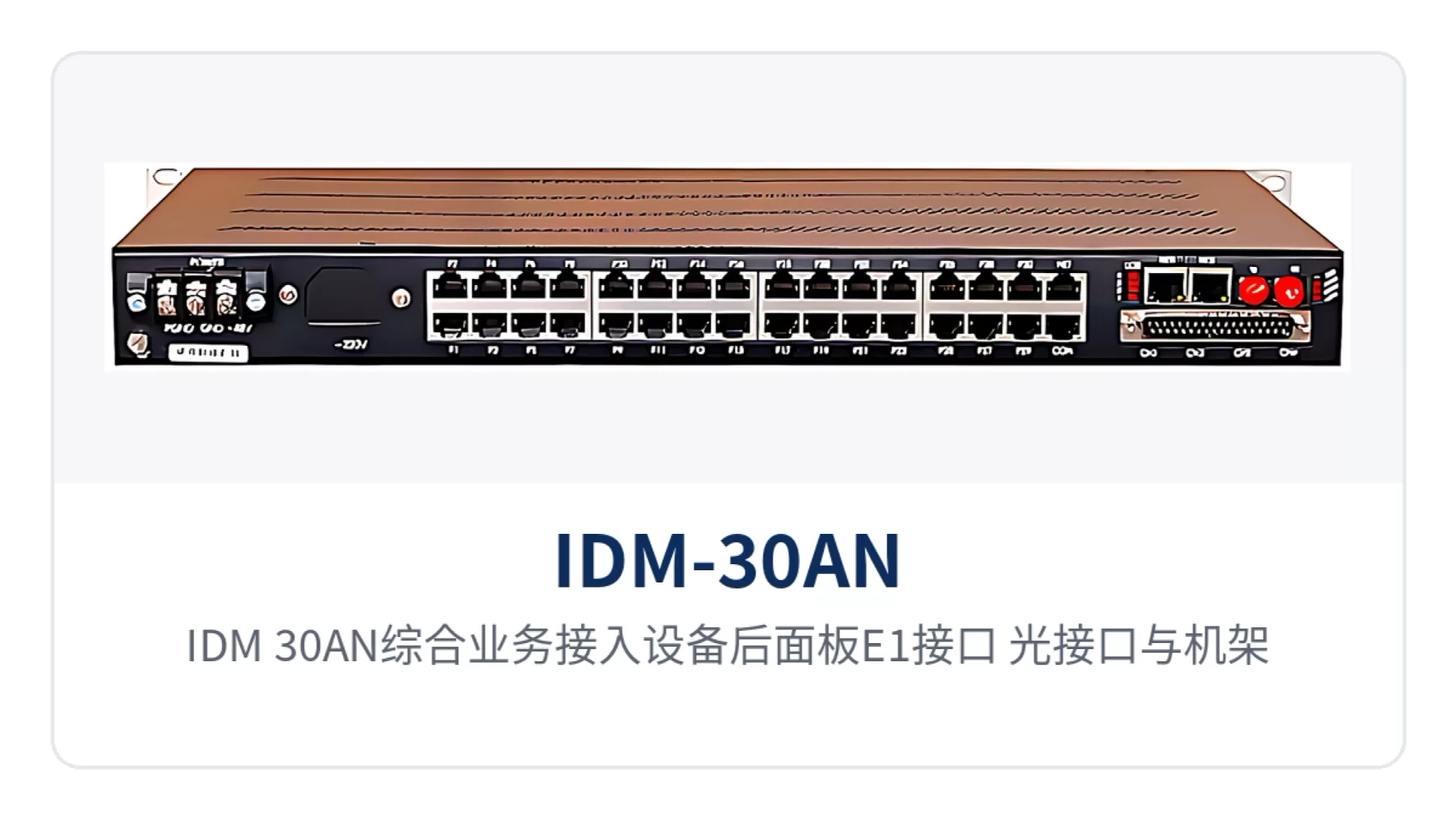
Figure 2: Close-up of the rear panel E1 interfaces, optical interfaces, and rack alarm terminal block of the IDM-30AN integrated service access device
What Services Can the 30 Subscriber Interfaces in a 1U Chassis Be Configured With?
The IDM-30AN 155M optical port integrated service access device provides 30 subscriber interfaces in a 1U chassis, with more than 20 optional services, and voice and data interfaces can be freely changed according to site requirements. Optional interfaces include 64K codirectional, V.24/V.28 (RS232/RS485), V.35 (N×64K), 10Base-T, polarity reversal and caller ID telephones (FXO, FXS), magneto, 2100 Hz carrier magneto, hotline, carrier, EM 2/4-wire audio, high-fidelity audio, baseband trunk interface card, Signaling System No. 1 card, telephone switching card, and more than 30 types of subscriber interfaces.
The PCM module uses a board-separated structure and can support a variety of integrated service sub-cards, allowing the original number of integrated services to be expanded to up to 30 integrated services. Sites only need to configure cards according to the service list, without replacing the complete unit. The ADSL module has two slots and can support a variety of network modules. A site using one module can smoothly upgrade to using two modules simultaneously.
The Ethernet multiplexer module supports hot-swappable operation, and two Ethernet multiplexer modules can be inserted into the ADSL slots at the same time. After each access module is connected to a G.SHDSL Ethernet multiplexer module, the traffic of 12 lines can be aggregated into one Ethernet port. ADSL allows broadband data services and conventional voice services to coexist on the same telephone line; the device can also have a built-in Ethernet module, using Ethernet as the backbone network to create a network that provides G.SHDSL or ADSL services for hundreds of users.
How to Select the Optical Interface and Networking Direction for Single Fiber Transmission Mode?
Single fiber transmission mode means that services in both receive and transmit directions share a single optical fiber, and sites can enable it by selecting SC, FC, or ST optical interfaces according to line resources. The IDM-30AN 155M optical port integrated service access device provides optical fiber line receive/transmit in four transmission directions and can be used in combination with the IDM-240 series, IDM-120 series, IDM-30 series, and IDM-mini series, allowing users to freely choose the networking topology according to capacity requirements and application scenarios. As a mature product from a professional optical multiplexer manufacturer, Raytrans continues to deepen its research and development in optical transmission equipment and integrated service access devices, and this device is exactly a product showcase solution launched for multi-service access scenarios.
During networking, first confirm the number of optical fibers at both end sites. For sites with scarce fiber cores or long-distance field locations, use single fiber transmission mode, where services in both receive and transmit directions at one end are carried by the same optical fiber; for sites with sufficient fiber cores, use conventional dual fiber access, using four-direction optical line receive/transmit to form a chain or ring topology, with sites along the line connected in series level by level. The device is 1U high and can be placed in a 19-inch rack, or wall-mounted or desktop-placed. The ~220V or -48V power supply and modules such as dual power supply and dual ringing current adapt to sites with different power supply conditions.
Differentiation Point
| Differentiation Point | Value to Users |
|---|---|
| 155M optical port | 155M optical port transmission no less than 40KM, single fiber optional, few-fiber long-distance access in field private networks |
| 40KM transmission | Single fiber optional, SC/FC/ST interfaces optional; field private network access points beyond 40KM do not need additional repeaters |
| 1U 30-channel | 30 subscriber interfaces in a 1U chassis, more than 20 optional services, multi-service integration in one device for private networks |
| 128 time-slot cross-connect | Built-in 128 time-slot cross-connect matrix, can be used independently as 4-channel E1 time-slot cross-connect equipment |
Typical Applications
The IDM-30AN 155M optical port integrated service access device is intended for private network scenarios that use optical fiber as the transmission medium and need to centrally access voice, data, and video surveillance into the same channel, and can use networking topologies such as point-to-point and chain network according to site distribution.
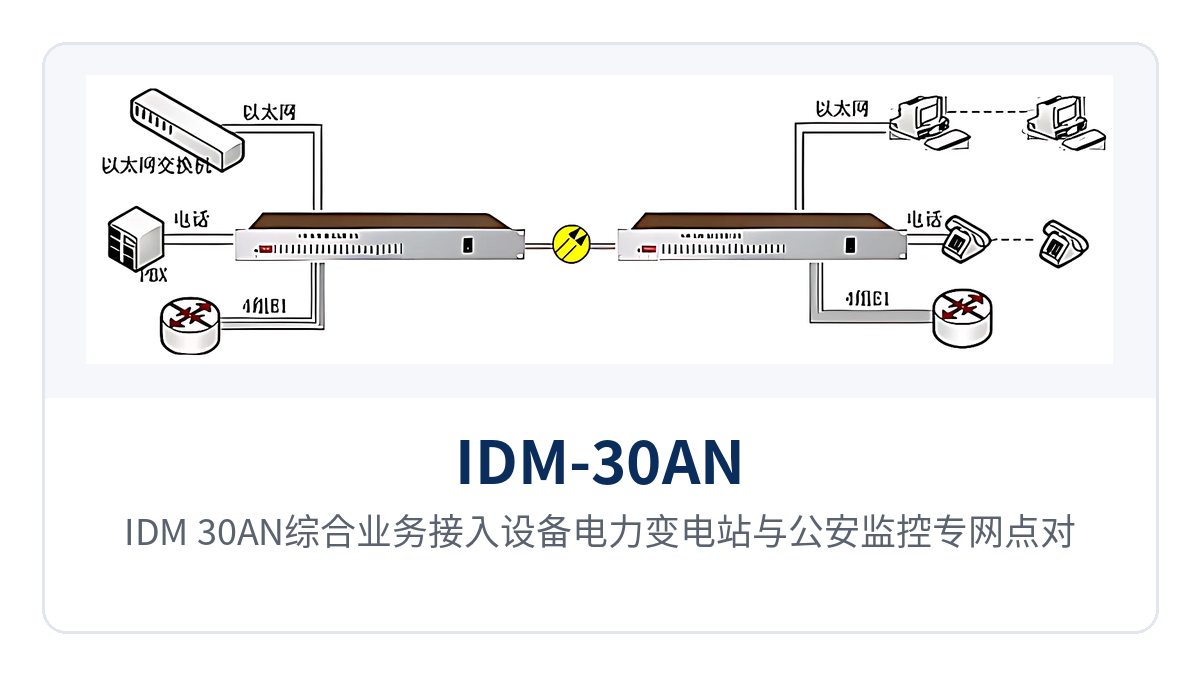
Figure 3: Point-to-point networking topology diagram of the IDM-30AN integrated service access device for electric power substations and public security surveillance private networks
Electric Power Private Network: Integrated Service Dedicated Line Access for Substations and Power Supply Stations
In electric power private networks, three types of services—dispatch telephone, telecontrol data, and video surveillance—operate simultaneously between substations, power supply stations, and the dispatch center. The IDM-30AN 155M optical port integrated service access device collects on-site voice, data, and surveillance video into a 155Mbps optical fiber line, transmits them to the upper-level station over a pair of optical fibers, and then restores the corresponding E1 channels and Ethernet channels. One access point no longer needs separate telephone optical multiplexers and data multiplexing equipment. The 4-channel E1 transparent transmission carries existing telecontrol and protection channels, while the 1-2 shared line-rate 100M Ethernet channels carry video surveillance and office data; optional interfaces such as 64K codirectional, EM 2/4-wire audio, magneto, and carrier adapt to dispatching exchanges and dedicated telephones. The device is 1U high and can be installed in a 19-inch rack in the station or wall-mounted, and the ~220V or -48V power supply with dual power supply and dual ringing current backup adapts to the power supply conditions of unattended sites. This solution is also a typical networking topology of Raytrans for government private network optical fiber communication solutions and smart mining communication solutions.
Public Security Video Surveillance Private Network: Surveillance Video and Command Voice Backhaul over a Single Fiber
Public security video surveillance private networks need to backhaul surveillance video between intersections, checkpoints, and police stations while retaining command voice and dedicated-line data. The IDM-30AN 155M optical port integrated service access device uses shared line-rate 100M Ethernet channels to carry video surveillance data; the Ethernet interface's data frame filtering and MAC address auto-learning functions facilitate direct connection to front-end cameras and back-end switches. Command voice and dedicated-line data run over E1 transparent transmission or optional voice channel interfaces, and a single optical fiber brings both types of services into the central equipment room at the same time. The transmission distance is no less than 40KM, covering the common distance between surveillance sites and police stations; field checkpoint sites can use single-fiber transmission mode to reduce fiber core usage and line investment, and are also suitable for incorporation into the rapid deployment links of military emergency communications vehicle solutions.
Financial and School Integrated Service Dedicated Lines: Multi-Service Access for Business Outlets and Campuses
Financial business outlets and school campuses need to run voice, service data, and video surveillance simultaneously over a single dedicated line. The IDM-30AN 155M optical port integrated service access device multiplexes the telephone, data, and surveillance services at the outlet side onto a 155Mbps optical fiber line. Optional interfaces such as polarity reversal and caller ID (CID) telephones (FXO, FXS), V.24/V.28 (RS232/RS485), and 10Base-T cover counter telephones, service terminals, and local area network (LAN) access. The 1U chassis with 30 subscriber interfaces suits the service scale of small and medium outlets and campuses, and more than 20 optional services allow the same device to adapt to different outlets; the same access mode can also be adopted for narrowband and broadband integrated service access in residential communities and intelligent buildings, as well as for the extension of the data networks of telecommunications, Netcom, and China Unicom. As a converged form of an integrated service access device and PCM equipment, this product can be flexibly combined with optical multiplexing equipment and time-slot cross-connect equipment for networking.
Conclusion
The IDM-30AN 155M optical port integrated service access device packs 155M optical port transmission, up to 4 channels of E1 transparent transmission, 1-2 shared line-rate 100M Ethernet channels, and 30 subscriber interfaces into a single 1U chassis. The optical port transmission distance is no less than 40KM and supports single-fiber transmission mode, and the built-in 128 time-slot cross-connect matrix can also be used independently as a 4-channel E1 time-slot cross-connect device. Voice, data, and video surveillance integrated service dedicated-line access for systems such as electric power, public security, finance, and schools can all rely on this single 155M optical port integrated service access device to complete service aggregation and transmission at the access point. Raytrans can also provide product showcase and technical support for private network users of all kinds, from optical multiplexer manufacturer selection to overall networking.