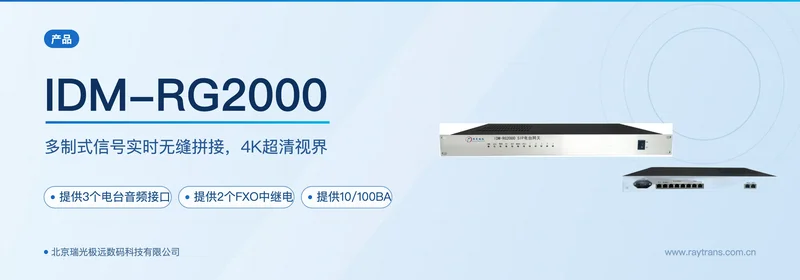
IDM-RG2000 SIP Radio Dispatch Gateway: Three-Radio Access with Flexible Channel Switching for Efficient Trunked Dispatch Communication
The IDM-RG2000 softswitch trunked dispatch gateway provides access for up to three base radios; each radio has a fixed SIP protocol voice channel connecting to the dispatch switch as a dedicated hotline, with an additional 1-2 SIP voice channels that can be switched to any radio at any time; when a base radio has multiple voice channels simultaneously, the radio and the multiple voice channels form a voice conference room. The gateway supports the dispatch console designating a working frequency for a specific radio, transmitted via the standard MQTT IoT protocol, and then changing the radio channel working frequency through voice or digital means. The trunked dispatch intercom gateway registers simultaneously to the SIP voice dispatch server and the IoT communication server. It supports the SIP softswitch protocol and the IoT MQTT protocol; the MQTT protocol supports PTT command transmission, serial radio frequency management, radio power setting, etc. On the dispatch console interface, station name, radio purpose name, radio model, radio frequency, and SIP hotline telephone number are displayed. The dispatch console icon also shows radio transmit/receive status, voice activity on the SIP hotline, etc. The IDM-RG2000 SIP VHF trunked radio gateway provides three groups of VHF radio audio interfaces and serial interfaces for radio parameter control. There are 5 groups of SIP telephone links that can connect to other SIP terminals through the dispatch server. Each radio has a corresponding voice conference room, supporting up to 6-party conferencing, meaning one radio allows 5 SIP telephone clients to speak online simultaneously.
IDM-RG2000 Softswitch Trunked Dispatch Gateway in Emergency Command Applications
In the construction of emergency command dispatch systems, integrating dispersed VHF base radios into an IP-based dispatch network is a key step toward unified wired-wireless command. The IDM-RG2000 SIP radio gateway is a softswitch dispatch gateway device designed precisely for this purpose. It registers simultaneously to the SIP voice dispatch server and the MQTT IoT server, enabling both voice bridging between radios and dispatch telephones and remote control of radio frequency and PTT commands via the MQTT protocol, making it a typical trunked dispatch gateway device.
Role of the SIP Radio Gateway in the Dispatch System
The SIP radio gateway is an access conversion device located between wireless base radios and the IP dispatch network. It is responsible for bringing radio voice into the softswitch dispatch system and converting dispatch-side calls into signals that radios can transmit and receive. In the emergency command dispatch system, the IDM-RG2000 SIP radio gateway sits between the dispatch switch, dispatch console, and base radios: on one side, it connects to the dispatch server and various SIP terminals through 5 groups of SIP telephone links; on the other side, it provides three groups of VHF radio audio interfaces and parameter control serial interfaces, completing the interworking between the wired telephone network and the wireless radio network.
In networking, the IDM-RG2000 assumes the role of a trunked dispatch intercom gateway, registering simultaneously to the SIP voice dispatch server and the IoT communication server. The SIP softswitch protocol handles voice call setup, transfer, and conferencing, while the IoT MQTT protocol handles control-plane services such as PTT command transmission, serial radio frequency management, and radio power setting. Voice channels and radio control are carried by the same gateway, eliminating the need to deploy separate devices for voice and control.
Dispatchers can view the station name, radio purpose name, radio model, radio frequency, and SIP hotline telephone number on the dispatch console interface. The dispatch console icon also displays real-time radio transmit/receive status and voice activity on the SIP hotline, enabling operators to quickly assess and switch between telephone traffic and radio communications. All this information and operations are aggregated and reported by the IDM-RG2000 SIP radio gateway through both the SIP and MQTT channels.
Device Access Capacity and Interface Configuration
A single IDM-RG2000 SIP radio gateway supports access for 3 base radios while providing 5 groups of SIP telephone links. The link capacity and radio channels are independent of each other and can be allocated on demand. Each connected radio has a fixed SIP protocol voice channel connecting to the dispatch switch, dedicated as a hotline; in addition, 1-2 SIP voice channels can be switched to any radio at any time, providing traffic flexibility across different time periods and radios.
Radio interfaces are provided in RJ45 form as radio interfaces 1-3, with each radio corresponding to an independent audio channel and parameter control serial channel. Telephone interfaces and network interfaces (NET1-NET2) are used to connect telephone lines and the IP dispatch network. The device also provides 2 FXO trunk telephone interfaces, allowing analog telephone lines to be connected to the system, expanding the wired telephone side's participation scope so external lines can also join radio dispatch calls.
Three Implementation Methods for Radio and SIP Telephone Intercom
Radio and SIP telephone intercom is implemented through three methods: hotline dedicated lines, switchable channels, and SIP intercom voice conference rooms. Dispatchers can choose direct calls or group conference broadcasting based on operational needs. The most direct method is the hotline: each radio has a fixed SIP hotline channel connecting to the dispatch switch, and the dispatch console can reach the designated radio immediately upon going off-hook, suitable for duty hotlines, emergency calls, and other conversations requiring immediate establishment.
When a radio occupies multiple voice channels simultaneously, the IDM-RG2000 SIP radio gateway forms a voice conference room with the radio and these channels, enabling one radio voice path to interwork with multiple SIP telephones simultaneously. Each radio corresponds to one voice conference room, supporting 6-party conferencing, meaning one radio allows 5 SIP telephone clients to speak online at the same time. Other SIP terminals can be connected through the 5 groups of SIP telephone links via the dispatch server, enabling multi-party intercom and collaborative listening.
The FXO trunk telephone interfaces further extend the intercom scope. After connecting telephone lines through the 2 FXO trunk interfaces, PSTN telephones or PBX users can also dial into radio channels to participate in dispatch intercom, forming converged communication among SIP terminals, wired telephones, and VHF radios.
Remote Radio Frequency Management via the MQTT Protocol
Remote radio frequency setting is implemented through the standard MQTT IoT protocol, eliminating the need for dispatchers to operate at the radio site. After the dispatch console designates a working frequency for a specific radio on the interface, the command is delivered to the IDM-RG2000 SIP radio gateway via the IoT communication server, where the gateway converts it into voice or digital control signals recognizable by the radio, changing the radio channel's working frequency. The same MQTT channel also supports PTT command transmission, serial radio frequency management, and radio power setting, allowing routine parameter adjustments of remote radios to be completed centrally.
To address the issue of inconsistent control commands across different manufacturers and radio models, the IDM-RG2000 SIP radio gateway provides a radio protocol self-learning function. The device can automatically learn radio transmit power increase/decrease commands, transmit and receive frequency change commands, and radio antenna pointing angle control commands, eliminating the need to modify the radio itself during integration and reducing the implementation difficulty of mixed multi-model radio deployments.
Device Structure, Panel Interfaces, and Indicators
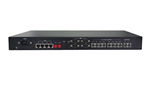
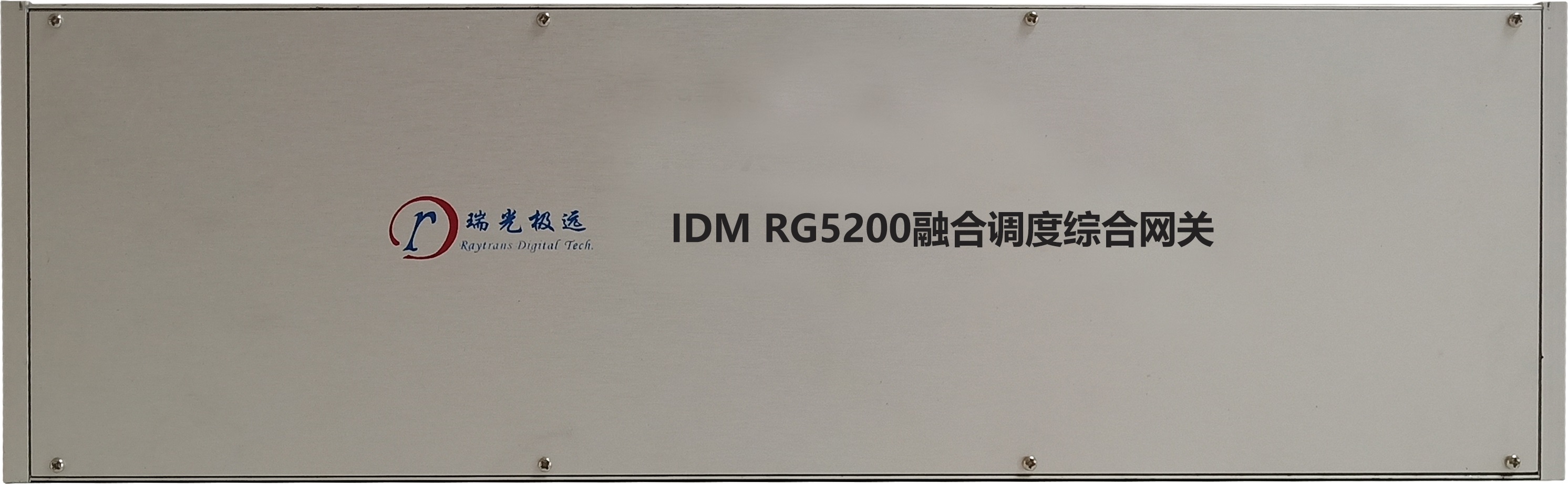
The IDM-RG2000 SIP radio gateway uses a 19-inch standard 1U chassis with dimensions of 170×437.6×44 (mm), powered by 220V AC, suitable for installation in standard racks. The front panel houses the power interface and indicators, providing power input and overall device operating status indication. The panel indicator definitions are shown in the table below.

Device service interfaces include the management interface (RJ45), radio interfaces (RJ45, 1-3), telephone interface (RJ45), and network interfaces (NET1-NET2). The radio interfaces are used to connect VHF base radio audio and parameter control lines, the management interface is used for local configuration and maintenance, and the network interfaces are used to access the IP dispatch network and complete SIP registration and MQTT connection.

| Indicator | Color | Function | Status Description |
|---|---|---|---|
| PWR | Green | Power indicator | On when system power is normal, off when power is abnormal |
| ACT | Green | Device operation indicator | Blinks at approximately 250ms intervals when CPU is operating normally; steady on or long off when abnormal |
| STU | Green, Red | Status indicator | Red steady on when WAN port has not obtained an IP address (no network cable connected, DHCP acquisition failure, IP address conflict, PPPoE dial failure, etc.); red/green alternating blink when connection is normal |
| WAN | Green | WAN port indicator | Steady on when WAN connection is established but no traffic; blinks when there is traffic |
| PC | Green | PC port indicator | Steady on when link is up with no traffic; blinks when there is traffic; off when link is down |
| WORK | Green | WORK indicator | Blinks when the device is operating normally |
| CALL | Green | CALL indicator | Blinks when the device is operating normally |
| 1-5 | Green | Channel voice indicator | On when the corresponding channel has voice; off when there is no voice |
Core Parameters and Performance Specifications
The interface and performance parameters of the IDM-RG2000 SIP radio gateway are subject to the manufacturer's product documentation. The table below summarizes the parameters specified in the product documentation for reference in product selection and network design.
| Item | Parameter/Specification | Description/Applicable Conditions |
|---|---|---|
| Radio audio interface | 3 channels, transformer coupling | Input/output impedance 600Ω; transmit/receive gain adjustable, default 0dB transmit, 0dB receive; balanced input, can be connected as unbalanced (one end grounded) |
| Telephone trunk interface | 2 channels FXO, transformer coupling | Interface impedance 200Ω+680Ω//0.1μF three-element impedance; 600Ω pure resistance available per user requirement |
| Ethernet electrical interface | 10/100BASE-T, full duplex/half duplex auto-negotiation | Compliant with IEEE 802.3, 802.1P, 802.1Q; RJ45 interface, 100M Category 5 twisted pair |
| Ethernet optical interface | 10/100BASE-FX, FS interface | Transmit power ≥-5dBm, receive sensitivity ≤-35dBm; wavelength 1310/1550nm; transmission distance 10km, 40km, up to 120km |
| Control interface | Asynchronous, 8 data bits, 1 stop bit, no parity | Baud rate 57600; used for radio parameter control and protocol self-learning |
| Signaling protocol | SIP softswitch protocol, MQTT IoT protocol | MQTT supports PTT command transmission, serial radio frequency management, radio power setting |
| Power supply | 220V AC | Rack-mount device, AC powered |
| Chassis | 19-inch standard 1U | Dimensions 170×437.6×44 (mm) |
| Operating environment, total power consumption | No relevant information currently available in the database | Subject to manufacturer technical documentation and commercial confirmation |
Typical Application Scenarios and Networking Solutions
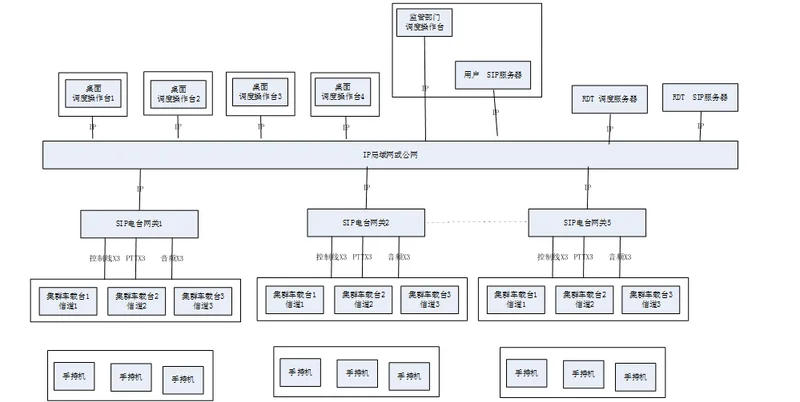
The typical application of the IDM-RG2000 SIP radio gateway is to connect base radios to the SIP dispatch network, forming a communication system with unified dispatch of telephones, softswitch terminals, and wireless radios. The typical networking is shown in the figure below: base radios are deployed at remote stations, the IDM-RG2000 is deployed in the dispatch equipment room or station building, and connects to the dispatch switch and dispatch console through 5 groups of SIP telephone links, achieving unified wired-wireless dispatch.
Integrated Telephone and Radio Dispatch at the Command Dispatch Center
After deploying the IDM-RG2000 SIP radio gateway at the command dispatch center, dispatchers can use SIP dispatch telephones to directly call any base radio, and radio duty personnel can reach the dispatch center with a single key press. Each radio's fixed hotline channel ensures priority direct access for dispatch calls, while the 1-2 switchable channels are used for temporary calls or emergency barge-in, ensuring duty calls and dispatch command do not interfere with each other.
Group Call Conference with Multiple Telephones Sharing One Radio
When multiple SIP telephones or external telephone lines need to communicate with the same radio simultaneously, the IDM-RG2000 SIP radio gateway automatically forms a voice conference room with these channels and the radio. The conference room supports 6-party conferencing, allowing one radio to speak online with 5 SIP telephone clients simultaneously. This is suitable for scenarios involving multi-department joint duty and multi-party emergency consultation, without requiring additional standalone conference bridge equipment.
Centralized Frequency and Power Management for Remote Radio Stations
For base radios installed at remote, unattended station buildings, dispatchers can remotely set working frequencies, adjust transmit power, issue PTT commands, and even control radio antenna pointing angles through the MQTT channel. The radio protocol self-learning function allows different radio models to be integrated into a unified management platform, reducing the workload of personnel traveling to station buildings for radio maintenance.
Frequently Asked Questions (FAQ)
What is a SIP radio gateway?
A SIP radio gateway is an access device that connects wireless base radios to a SIP softswitch dispatch network. The IDM-RG2000 SIP radio gateway, developed by Beijing Ruiguang Jiyuan Digital Technology Co., Ltd., registers simultaneously to the SIP voice dispatch server and the MQTT IoT communication server, bringing VHF base radio voice into dispatch telephones and dispatch consoles, and supporting remote control of radio frequency, power, and PTT via MQTT.
How many radios and telephone lines does the IDM-RG2000 support?
The IDM-RG2000 SIP radio gateway supports access for 3 base radios and provides 5 groups of SIP telephone links and 2 FXO trunk telephone interfaces. Each radio has 1 fixed SIP hotline channel, with an additional 1-2 SIP channels that can be switched to any radio. Each radio conference room supports 6-party conferencing, meaning 1 radio can speak online with 5 SIP telephone terminals simultaneously.
How are radio working frequency and power modified remotely?
Radio working frequency and power are modified remotely through the MQTT IoT protocol. The dispatch console designates the radio working frequency on the interface, the command is delivered to the IDM-RG2000 SIP radio gateway via the IoT communication server, and the gateway converts it into radio serial control signals to complete frequency, power, and PTT operations. The device supports radio protocol self-learning and can automatically recognize radio power increase/decrease, transmit/receive frequency switching, and antenna pointing control commands without modifying the radio.
Selection and Deployment Recommendations
When deploying the IDM-RG2000 SIP radio gateway, the device should be connected to the dispatch LAN. The network side can use the 10/100BASE-T electrical port or the 10/100BASE-FX optical port for uplink; the optical port supports transmission distances of 10km, 40km, and up to 120km, suitable for networking where station buildings and dispatch centers are far apart. On the radio side, connect the audio and parameter control lines of each base radio to radio interfaces 1-3, and connect telephone lines through the FXO trunk interfaces.
The differentiated capabilities of the IDM-RG2000 SIP radio gateway are reflected in: voice channels and radio control carried by the same gateway (dual registration of SIP and MQTT); radio protocol self-learning enabling modification-free integration of multiple radio models; each radio capable of independently organizing 6-party voice conferences; a single device covering 3 radio channels, 5 SIP links, and 2 FXO access simultaneously. If the project requires a larger number of radio channels, higher SIP concurrency, or expanded trunked access, it is recommended to confirm the model and configuration with Raytrans based on specific requirements. Engineering parameters such as device operating environment and total power consumption are not currently available in the database; please refer to the manufacturer's technical documentation and commercial confirmation.
Radio operating frequency and power are modified remotely via the MQTT IoT protocol. The dispatcher specifies the radio operating frequency on the interface, and the command is delivered through the IoT communication server to the IDM-RG2000 SIP radio gateway, which converts it into radio serial port control signals to complete frequency, power, and PTT operations. The device supports radio protocol self-learning and can automatically identify radio power increase/decrease, transmit/receive frequency switching, and antenna pointing control commands without requiring radio modification.
Selection and Deployment Recommendations
When deploying the IDM-RG2000 SIP radio gateway, the device should be connected to the dispatch LAN. The network side can uplink via 10/100BASE-T electrical ports or 10/100BASE-FX optical ports, with optical transmission distances supporting 10km, 40km, and up to 120km, making it suitable for networking scenarios where station buildings and dispatch centers are far apart. On the radio side, connect the audio and parameter control lines of each base station radio via radio interfaces 1–3, and telephone lines are connected through the FXO trunk interface.
The differentiated capabilities of the IDM-RG2000 SIP radio gateway are reflected in: voice channels and radio control are carried by the same gateway (dual registration of SIP and MQTT); radio protocol self-learning enables multiple radio models to be integrated without modification; each radio can independently organize a 6-party voice conference; a single device simultaneously covers 3 radio channels, 5 SIP links, and 2 FXO access ports. If the project requires a larger number of radio channels, more SIP concurrency, or cluster access expansion, it is recommended to confirm the model and configuration with Raytrans based on specific requirements; engineering parameters such as device operating environment and overall power consumption are not available in the current database, please refer to the manufacturer's technical documentation and commercial confirmation.
FAQs
What is the working principle and function of a media converter?
The rapid advancement of informatization has led to growing demand for multimedia communications such as data, voice…
View answerWhat Is the Definition of Communication?
Communication: the exchange and transmission of information between people, or between people and nature…
View answerWhat is an E1 line? What are the core knowledge points?
E1 Basics Frame Structure of the E1 Channel In an E1 channel, 8 bits form one timeslot (TS)…
View answerPQC-Based FreeSWITCH and PJSIP Quantum-Resistant Communication System Upgrade Solution
The PQC-Based FreeSWITCH and PJSIP Quantum-Resistant Communication System Upgrade Solution transforms FreeSWITCH and…
View answerFortifying VoIP Communication with Quantum-Safe Defense | FreeSWITCH Softswitch Quantum-Safe Communication Mode Analysis, Selection, and Implementation Path
With the rapid iteration of quantum computing technology, traditional cryptographic algorithms such as RSA and ECC face…
View answer