IDM Voice
IDM Voice
Some important remote dispatch and control sites (such as subways, airports, and military facilities) often require extremely high system reliability, and frequently use services over two or more transmission networks (e.g., leasing channels separately from China Unicom and China Mobile, or satellite and terrestrial network mutual backup). User terminals require a device capable of automatically selecting the normal transmission network and channel.
Some important remote dispatch and control sites (such as subways, airports, and military facilities) often require extremely high system reliability, and frequently use services over two or more transmission networks (e.g., leasing channels separately from China Unicom and China Mobile, or satellite and terrestrial network mutual backup). User terminals require a device capable of automatically selecting the normal transmission network and channel.
The IDM series products can meet the multi-path transmission and active optimal path selection requirements for E1 channels, telephone channels, pure audio channels, and RS232/RS485 channels.
The IDM Voice_DUP telephone channel mutual backup switching device splits one audio channel into two transmission paths (supporting more paths when cascaded), automatically detects the transmission link quality of these paths at the remote end, and then automatically selects one path with normal and healthy transmission. This is mainly designed to reduce service interruptions caused by transmission path failures or equipment faults.
The audio transmission path switcher monitors the signal level in the transmission paths, and through time alignment and content comparison, detects the transmission content of the voice channel to determine the integrity of the voice channel.
The audio channel mutual backup switching device can also serve as an audio line detection device at the remote end, and can act as an IoT terminal to report monitoring data.

Automatic switching, NMS switching, and manual switching are indicated by the mode indicator lights on the front panel. The mode can be set via the network management system, or controlled by the mode switching button on the front panel!
The IDM Voice_DUP is available in desktop and centralized configurations. The desktop device provides 4 sets of Voice mutual backup channel selectors. The 4-position DIP switch on the device controls manual switching for channels 1-4 respectively. Manual switching is only possible when the manual switching indicator light is illuminated.
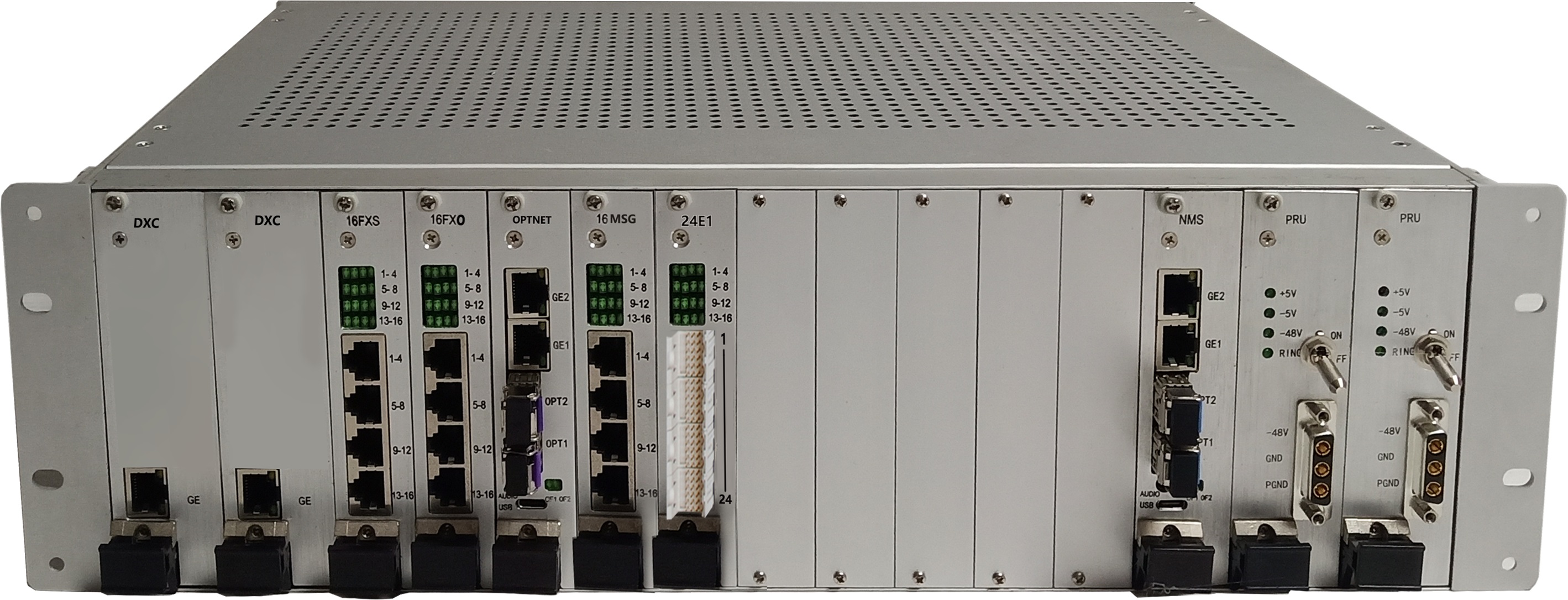
The centralized device features a 3U architecture, with a unified Ethernet NMS card, dual redundant power supply cards, and voice channel monitoring and switching can be implemented through the NMS. The switching conditions are configured via the NMS, allowing automatic switching, or manual forced switching via the NMS or DIP switches, with manual switching having higher priority.
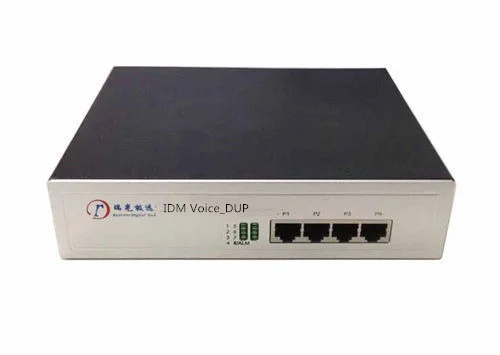
IDM Phone_DUP Desktop Device
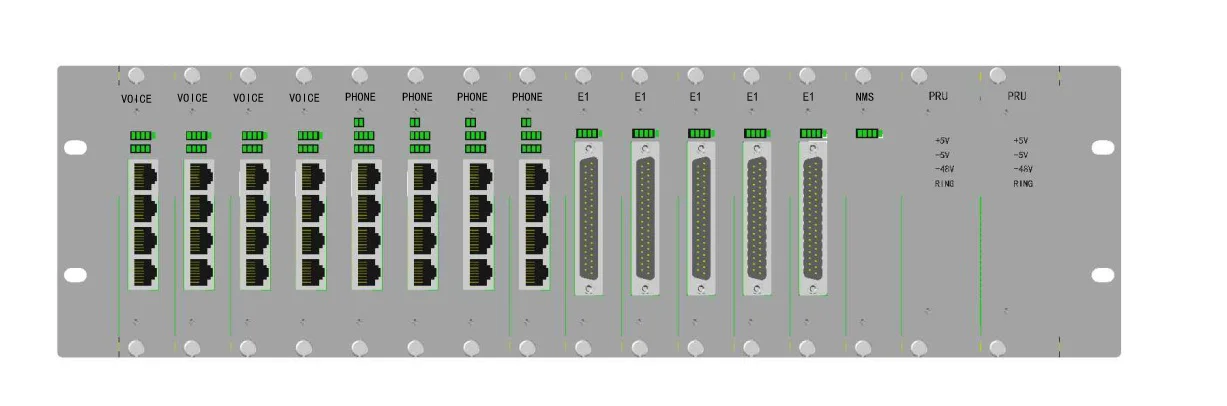
Centralized Device
FAQs
What are the features of SDH technology and MSTP products?
I. Development Directions of Next-Generation SDH Technology and Products Regarding the development direction of…
View answerWhat is the difference between PDH and SDH?
I. PDH PDH is the Plesiochronous Digital Hierarchy, which is divided into the European standard and the…
View answerWhat is an E1 line? What are the core knowledge points?
E1 Basics Frame Structure of the E1 Channel In an E1 channel, 8 bits form one timeslot (TS)…
View answerLow-Cost SDH Is an Inevitable Choice for Access Network Construction in the Near to Medium Term
The current status of metropolitan optical networks is that SDH/MSTP (DWDM) optical networks have become the mainstream…
View answerIntroduction to Ethernet Over SDH Technology
Interface specifications: On the SDH side, provides 1 x 155.52Mbps LVDS interface, supporting STM-1.
View answer