IDM OSW10
IDM OSW10
The IDM OSW10 Gigabit All-Optical Ethernet Switch is a Layer 2 wire-speed Ethernet switching product independently developed by Raytrans, designed as an intelligent switch for network environments requiring high performance and easy installation. The IDM OSW10 provides 2 Gigabit copper
Overview
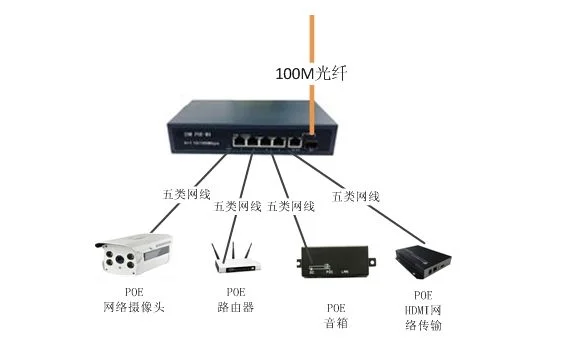
The IDM OSW10 Gigabit All-Optical Ethernet Switch is a Layer 2 wire-speed Ethernet switching product independently developed by Raytrans. It is an intelligent switch designed for network environments that require high performance and easy installation. The IDM OSW10 provides 2 Gigabit copper/SFP (mini GBIC) combo ports for flexible Gigabit copper or fiber backbone connections, allowing users to flexibly select various interface types such as 1000BASE-LX, 1000BASE-SX, and 1000BASE-T based on different transmission distance requirements. It also provides 8 x 10/100Mbps optical ports. This switch supports VLAN partitioning, port mirroring, port trunking, and QoS functions, and can be conveniently configured via a Web interface.
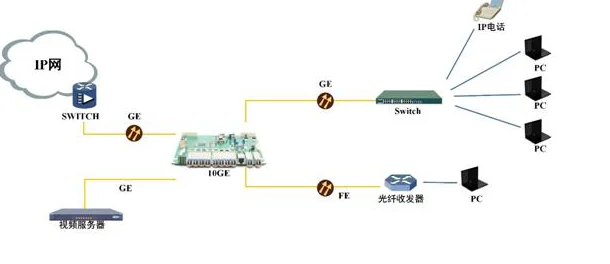
Product Features:
Item | Description |
Overview | |
Standards | IEEE802.3 10BASE-T Ethernet IEEE802.3u 100BASE-TX Fast Ethernet IEEE802.3ab 1000BASE-T Gigabit Ethernet IEEE802.3z Gigabit Ethernet (Fiber) ANSI/IEEE 802.3 NWay Auto-negotiation IEEE802.3x Flow Control |
Fixed Ports | 8 10/100Base-FX auto-negotiation Ethernet ports 2 Gigabit combo ports (optical/electrical) 1 Console port |
Fixed Port Attributes | Connector type: RJ-45 Supports 10/100/1000Mbit/s transmission rates Supports half-duplex, full-duplex, and auto-negotiation modes Supports MDI/MDI-X auto-sensing |
Cable Type | 100Base-TX: Category 5 twisted pair, supporting maximum transmission distance of 100m 1000Base-T: Category 5 twisted pair, supporting maximum transmission distance of 100m |
LED Indicators | Per port: Link/Act, Speed Per device: Power |
Performance | |
Switching Mode | Store-and-forward mode |
MAC Address Table | Supports automatic address learning and aging (aging time: 5 minutes) Supports up to 8K MAC (Medium Access Control) addresses |
Dimensions (L×W×H) | 440×230×44 mm Standard 19-inch rack-mount width, 1U height |
Input Voltage | 100–240V AC, 50/60Hz |
Power Consumption | Maximum 15W |
Operating Temperature | 0°C–40°C |
Operating Humidity | 5%–95%, non-condensing |
Cooling Method | Natural heat dissipation |
Software | |
VLAN | Port-based VLAN Maximum number of VLANs supported: 26 |
Supports 128 802.1Q VLANs, with configurable VLAN ID 1-4094 | |
Priority Queues (QoS) | Standard: 802.1p Number of queues: 4 |
Port Trunking | Supports up to 3 port trunk groups 2 10/100Mbps port trunks (2 to 4 ports per trunk) 1 Gigabit port trunk (2 Gigabit ports) |
Port Mirroring | N:1 |
Item | Description |
Item | Description |
Overview | Standards |
FAQs
What is the difference between an Optical Terminal and a Media Converter?
Optical Terminal is a device that converts multiple E1 (a data transmission standard for trunk lines…
View answerWhat are the characteristics and principles of fiber-optic transmission?
I. Background of Optical Communication In today's world, optical fiber communication has become the primary means of…
View answer