IDM NTD421 (DT) Elevator Five-party Intercom Telephone Optical Multiplexer
Dedicated Interface Card Matching Five-party Signaling; Dual-Channel Voice over Fiber Instead of Copper Cable Saves a Pair of Ordinary Optical Multiplexers
The IDM NTD421 (DT) elevator five-party intercom optical multiplexer is used in elevator five-party intercom telephone systems to transmit elevator intercom signals over optical fiber.
The IDM NTD421 (DT) elevator five-party intercom telephone optical multiplexer is an elevator five-party intercom optical fiber transmission device developed by Beijing Ruiguang Jiyuan Digital Technology Co., Ltd. As a professional optical multiplexer manufacturer, Raytrans applies this product to optical fiber transmission in elevator five-party intercom telephone systems, extending the intercom voice and signaling of the elevator machine room to the monitoring duty room at the remote end. This product shows a clear networking positioning: elevator five-party communication provides coverage of five locations — the duty room, the elevator machine room, the elevator car, the car top and the pit — among which the car, the car top and the pit are aggregated to the machine room electrical control box through the elevator traveling cable, while the duty room side is cabled separately. When the distance between the machine room and the duty room exceeds the transmission range of twisted pair, installing one IDM NTD421 (DT) at each end and switching the middle section to optical cable upgrades this link from copper cable to optical fiber, while the original call, answer and alarm modes of the intercom remain unchanged. As a dual-channel telephone optical multiplexer, it provides a stable and reliable point-to-point link for elevator five-party intercom optical fiber transmission solutions.
Key Specifications at a Glance: dual-channel intercom voice channels · optical fiber instead of copper cable · electrical isolation and anti-interference on the optical link · independent Ethernet channel · power drawn through a dedicated power supply from the elevator power source · machine room and duty room paired point-to-point
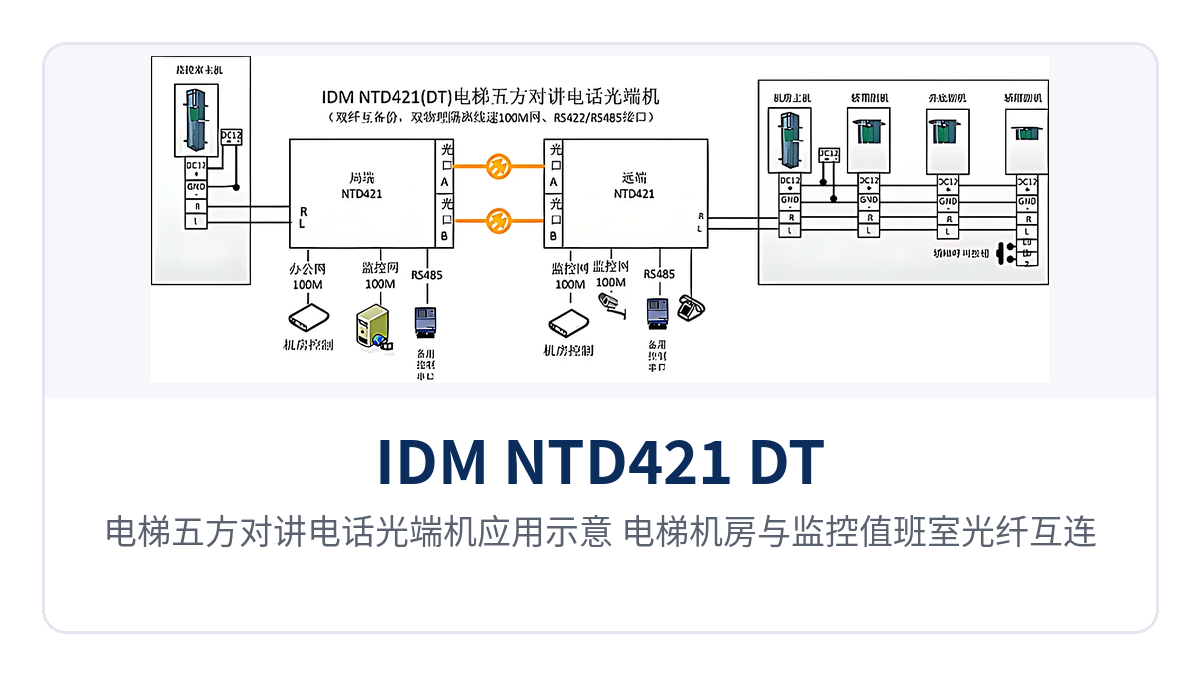
Figure 1: Elevator five-party intercom telephone optical multiplexer application diagram — optical fiber interconnection between the elevator machine room and the monitoring duty room
What Is an Elevator Five-party Intercom Optical Multiplexer? How Does Five-party Communication Run over Optical Fiber?
What is an elevator five-party intercom optical multiplexer? It is a transmission device that replaces the twisted pair link between the machine room side and the duty room side of an elevator five-party communication system with an optical fiber link. Elevator five-party communication refers to the intercom calls among five locations: the duty room, the elevator machine room, the elevator car, the elevator car top and the elevator pit. The first four locations are connected to the machine room electrical control box and the intercom master unit through the elevator traveling cable, while the duty room is cabled separately and connected to the management center master unit, commonly using four-core bus wiring (such as RVVP 4×0.75 cable). When the distance between the duty room and the machine room is too long and twisted pair loss and interference become a bottleneck, optical multiplexers need to be added at both ends and the middle section switched to optical fiber. As a professional optical multiplexer manufacturer, Raytrans has long provided elevator five-party intercom optical fiber transmission equipment and product showcase services.
One IDM NTD421 (DT) elevator five-party intercom telephone optical multiplexer is installed in the elevator machine room and one in the monitoring duty room, and the dual-channel intercom voice and signaling undergo transparent transmission over the optical fiber. The optical fiber link cuts off the voltage and current path between the two ends of the copper cable; the IDM NTD421 (DT) detects voltage and current changes at the electrical interface and restores them at the other end over the optical fiber, so that the duty room master unit can identify the call, busy line and on-hook state of each extension, enabling normal calls between the duty room and the machine room, car, car top and pit.
Why Can't an Ordinary Telephone Optical Multiplexer Be Used Directly for Elevator Five-party Intercom?
Elevator five-party intercom telephones and ordinary telephones work on different principles. Ordinary telephone optical multiplexers are designed for the power feeding, ringing and voice transmission of telephones and cannot match the dedicated signaling of elevator five-party intercom units, so they cannot be applied directly. The IDM NTD421 (DT) is equipped with a dedicated five-party intercom interface card that matches the signaling of the five-party intercom unit, thus enabling five-party communication over the two ends of the optical fiber between the central office and the machine room, car, car top and pit.
The brand and format of the intercom units on site directly affect the interface configuration: Mitsubishi systems mostly use audio signaling, while Otis-type systems mostly use audio and level signaling, and the two types of interfaces are different from each other; elevator intercom units in analog format and digital format also differ in their interfaces. During project selection, the elevator brand, the intercom model and the format must be provided; the specific interface card configuration of the IDM NTD421 (DT) is subject to the manufacturer's technical documentation.
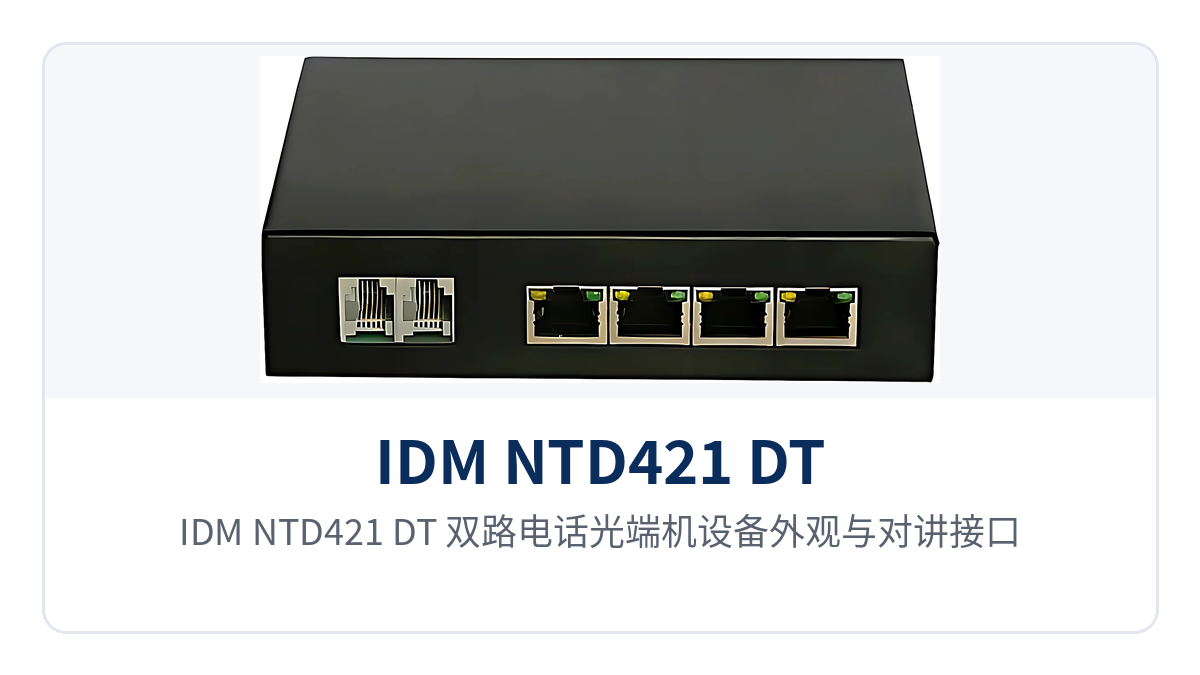
Figure 2: IDM NTD421 (DT) dual-channel telephone optical multiplexer appearance and intercom interfaces
IDM NTD421 (DT) Core Functions
The IDM NTD421 (DT) is designed around optical fiber transmission for elevator five-party intercom, and its functions are configured as shown in the table below.
Function | Description |
|---|---|
Five-party intercom signaling matching | Built-in dedicated five-party intercom interface card matches the signaling of the elevator five-party intercom unit and restores the call, answer and status signals at both ends of the optical fiber |
Voltage and current characteristic restoration | Detects voltage and current changes on the twisted pair side and restores them at the other end after transmission over the optical fiber, keeping the intercom master unit able to identify each extension status correctly |
Dual-channel voice channel access | Dual-channel telephone optical multiplexer form: one device accesses two elevator intercom voice channels, and a single unit covers the multiple voice channels of elevator five-party intercom |
Long-distance extension over optical fiber | Optical fiber replaces copper cable to carry voice, so the link is no longer limited by the transmission range of twisted pair and suits deployment up and down the hoistway and across buildings and parks |
Anti-interference and electrical isolation | The optical fiber link provides electrical isolation, is unaffected by electromagnetic interference along the route, and is free from the communication anomalies caused by ground potential difference between the two ends of the twisted pair |
Independent Ethernet channel | Provides an independent Ethernet channel that can carry Ethernet services such as car video surveillance; the bandwidth specification is subject to the manufacturer's technical documentation |
Coordination with centralized access | Can work with elevator intercom concentrators and splitters so that the intercom signals of multiple elevators aggregate at the central side over optical fiber for unified management |
Power supply from the elevator feed | Uses a dedicated power supply connected to the elevator power source, with power drawn locally on the machine room side for easy installation |
Five-party intercom signaling matching and voltage and current characteristic restoration are the key links that distinguish an elevator five-party intercom optical multiplexer from an ordinary telephone optical multiplexer. When the IDM NTD421 (DT) works with elevator intercom concentrators and splitters, it can aggregate the intercom signals of multiple elevators to the surveillance center over optical fiber for centralized duty. Raytrans can provide a complete elevator five-party intercom optical fiber transmission solution and product showcase, making it easy for the project owner to select a model according to site conditions.
IDM NTD421 (DT) Technical Parameters
The main technical parameters of the IDM NTD421 (DT) elevator five-party intercom telephone optical multiplexer are shown in the table below. The model is a dual-channel elevator intercom optical fiber transmission device, and the specific configuration is confirmed along with the project.
Item | Parameter/Specification | Description/Applicable Conditions |
|---|---|---|
Product name | IDM NTD421 (DT) elevator five-party intercom telephone optical multiplexer | Dedicated optical fiber transmission equipment for elevator five-party intercom systems, in the form of a dual-channel telephone optical multiplexer |
Application | Elevator five-party intercom telephone system | Used in pairs between the elevator machine room and the monitoring duty room |
Intercom channels | Dual-channel | Matches the signaling of elevator five-party intercom units; the number of channels and the interface format are subject to the manufacturer's technical documentation |
Transmission medium | Optical fiber | Replaces twisted pair to extend five-party intercom voice and signaling; the optical transmission distance is determined by the optical module and line conditions, subject to the manufacturer's technical documentation |
Ethernet channel | Independent Ethernet channel | Can carry Ethernet services such as car video surveillance; the bandwidth specification is subject to the manufacturer's technical documentation |
Power supply mode | A dedicated power supply connected to the elevator power source | Power is drawn locally on the machine room side; the voltage range is subject to the manufacturer's technical documentation |
Interface configuration | Intercom interface, optical interface | The intercom interface is configured with the corresponding interface card according to the on-site elevator brand and format; confirm with the manufacturer |
Operating environment | Elevator machine room, monitoring duty room | Temperature, humidity and other specifications are subject to the manufacturer's technical documentation |
For the performance specifications on this page, the manufacturer's technical documentation shall prevail; where project selection involves the number of channels, the transmission distance and the interface format, it is recommended that the optical multiplexer manufacturer prepare a configuration list according to site conditions, and Raytrans can provide the product showcase and technical documentation for the corresponding model.
How Far Can Elevator Five-party Intercom Transmit? When Is Optical Fiber Used Instead?
How far elevator five-party intercom can transmit depends on the transmission medium and the device configuration. For twisted-pair-based elevator five-party intercom systems, the transmission distance is generally limited to within 1 to 2 km and is constrained by the cabling conditions in the residential community; when the distance between the elevator machine room and the duty room exceeds this range, or the existing twisted pair cabling has aged and needs to be re-laid, switching to optical fiber transmission is more reasonable. The optical transmission distance of the IDM NTD421 (DT) is determined by the optical module and line conditions, and the specific specifications are subject to the manufacturer's technical documentation.
Besides optical fiber, there are two other remote approaches on the market, GSM mobile networks and FM wireless: the GSM approach is constrained by its charging model, so the cost of long-term operation is hard to control; the FM wireless frequency band is prone to interference and offers low bandwidth. The IDM NTD421 (DT) uses a fixed optical fiber link and does not rely on mobile networks or wireless frequency bands; voice reaches the duty room directly over the optical cable, and one installation can serve for the long term, making it suitable for elevator Internet of Things (IoT), smart community and centralized supervision projects. As an optical multiplexer manufacturer, Raytrans can support such projects with elevator five-party intercom optical fiber transmission solutions and product showcases.
Differentiated Value of the IDM NTD421 (DT) Elevator Five-party Intercom Telephone Optical Multiplexer
The value of the IDM NTD421 (DT) centers on three points, the link form, the channel configuration and the extension capability, as shown in the table below.
Differentiation Point | Value on Site |
|---|---|
Optical fiber instead of copper cable | The long-distance links in the elevator hoistway and the park no longer depend on twisted pair; the link is unaffected by electromagnetic interference and is free from the communication anomalies caused by ground potential difference between the two ends |
Dual-channel telephone optical multiplexer form | One device accesses two intercom voice channels, and a single unit covers the multiple voice channels of elevator five-party intercom, reducing the number of devices and the cabinet space usage |
Optical fiber link suited to long-distance extension | Voice extension along vertical hoistway cabling, across buildings and across parks can all be carried by optical cable, and the link moves with the optical cable when the machine room is relocated or monitoring rooms are merged |
Together these three points make the IDM NTD421 (DT) suitable for elevator intercom sites that twisted pair can hardly cover and that also require clear and stable voice; the specific number of sites and the link route need to be confirmed with the optical multiplexer manufacturer according to the actual project conditions, and Raytrans can provide the corresponding product showcase and selection support for elevator five-party intercom optical fiber transmission equipment.
How Is an Elevator Five-party Intercom Optical Multiplexer Installed and Wired?
How is an elevator five-party intercom optical multiplexer installed and wired? The installation and wiring of the IDM NTD421 (DT) use a point-to-point arrangement paired at both ends, and fall into three parts: machine room side access, duty room side access and the optical cable in between. Machine room side: connect the audio and signaling wires led out from the machine room five-party intercom master unit to the intercom interface of the IDM NTD421 (DT), and draw power for the device through a dedicated power supply connected to the elevator power source; the car, car top and pit sites are already connected to the machine room by the traveling cable and require no additional cabling. Duty room side: place the device at the other end in the monitoring duty room and connect its intercom interface to the duty master unit, and the duty operator can then call and monitor each elevator site. The optical cable in between is laid along the weak-current shaft or cable trunking, with termination at both ends and connected to the optical ports, and the link can then be enabled.
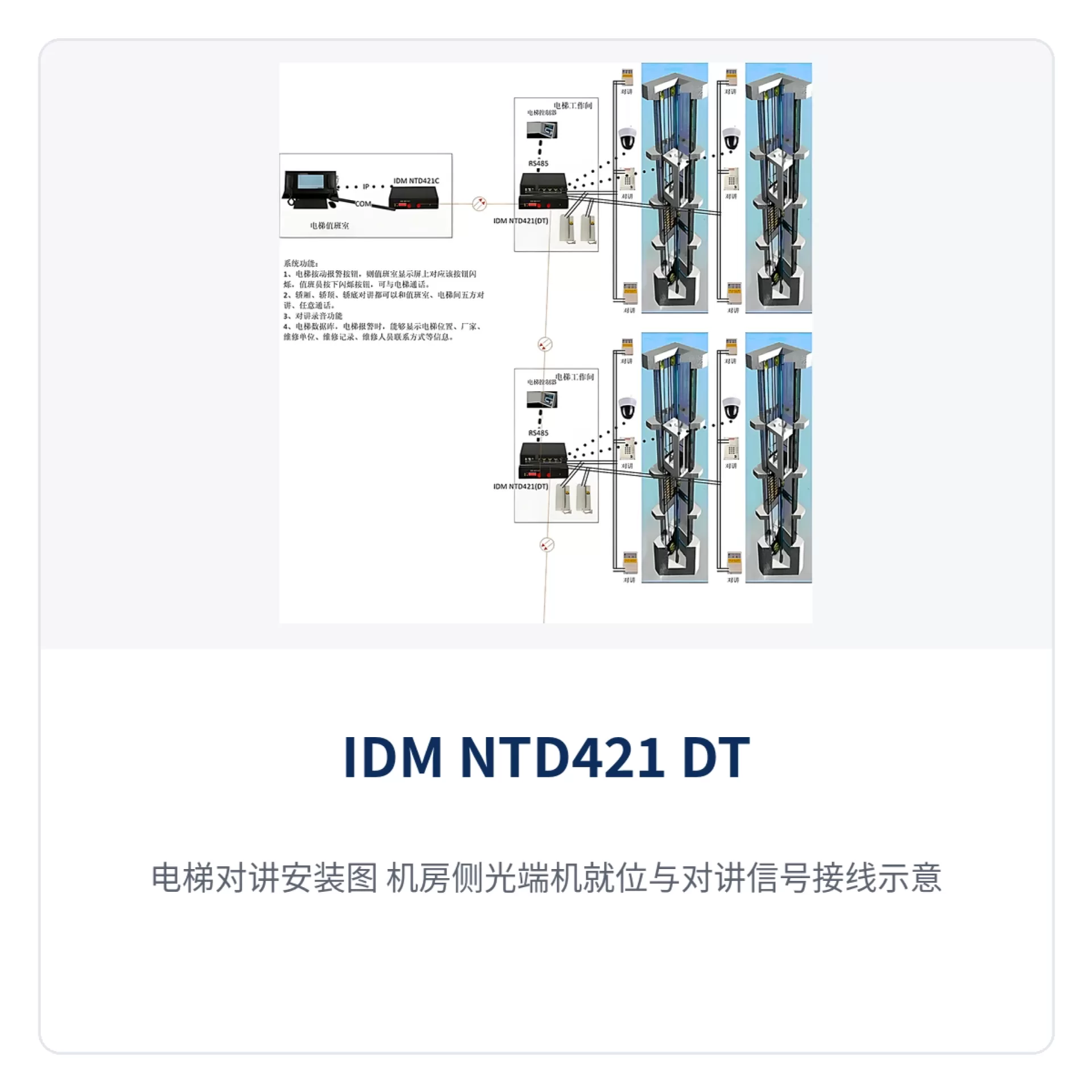
Figure 3: Elevator intercom installation diagram — optical multiplexer in position on the machine room side and intercom signal wiring
When multiple elevators are managed centrally, the multiple intercom signals can first be tandem-connected on the machine room side through elevator intercom concentrators and splitters and then connected to an optical multiplexer or aggregation equipment, extending the intercom of the elevator group to the surveillance center in a unified way. When the intercom brand differs, or the format is analog or digital, the interfaces and wiring sequence differ, so the interface card and wiring definition should be confirmed with the optical multiplexer manufacturer before installation to avoid rework on site.
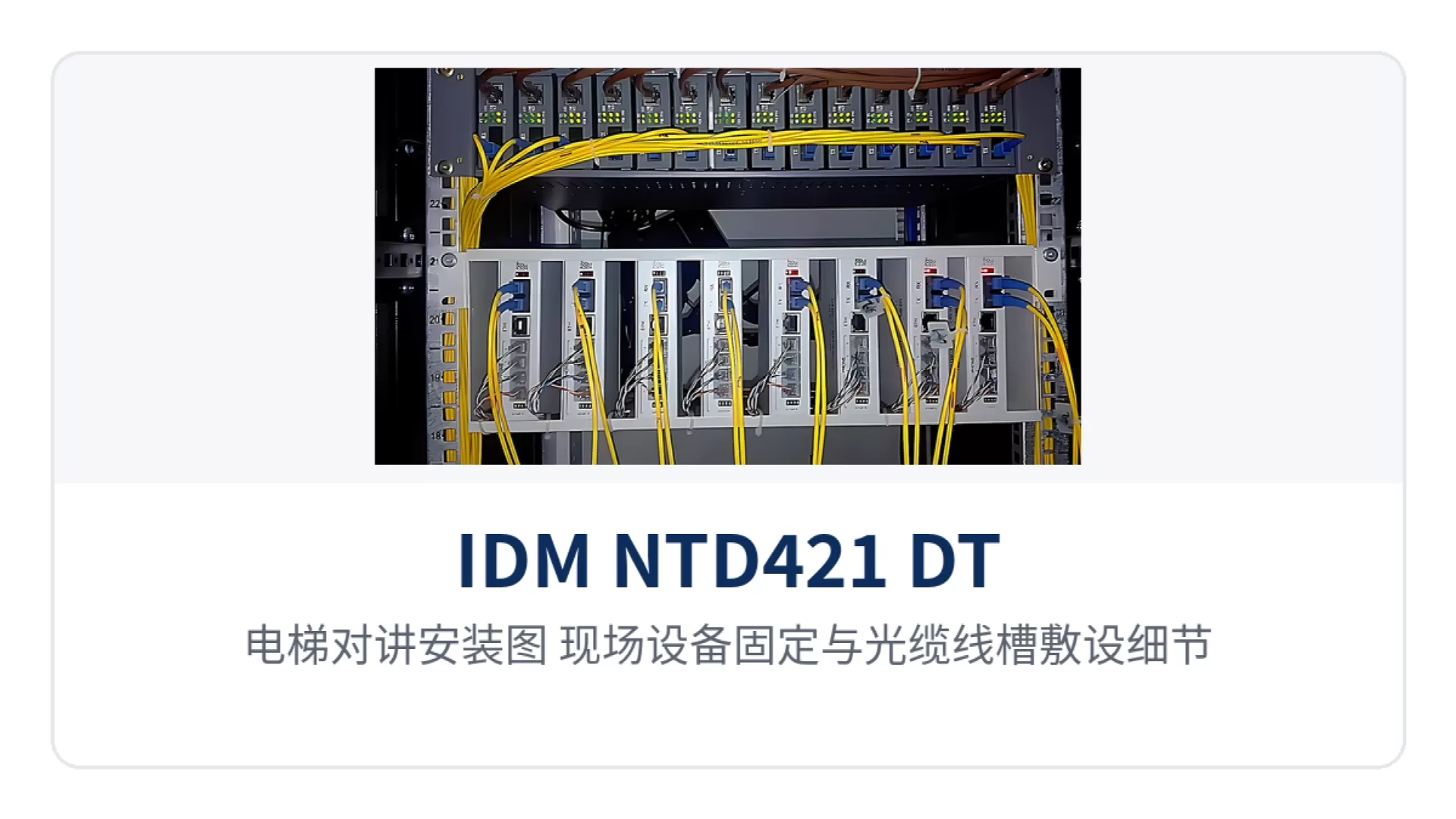
Figure 4: Elevator intercom installation diagram — on-site device fixing and optical cable trunking laying details
Typical Application Scenarios
Smart Community and Elevator IoT Integrators
The elevator machine rooms of residential communities are mostly on the top floor or the equipment floor, while the duty room is often in the ground-floor lobby or the park gatehouse, and the distance between the two usually exceeds the range of a direct connection over twisted pair. After an optical cable is laid between the machine room and the duty room and IDM NTD421 (DT) elevator five-party intercom telephone optical multiplexers are installed at both ends, a trapped passenger in the car can press the alarm button, and the duty operator can connect and keep reassuring the passenger while notifying maintenance and rescue personnel, shortening the time to handle the trapped passenger. Elevator IoT projects can also use the independent Ethernet channel provided by the device to carry services such as car surveillance, bringing intercom and video into the same optical cable resources.
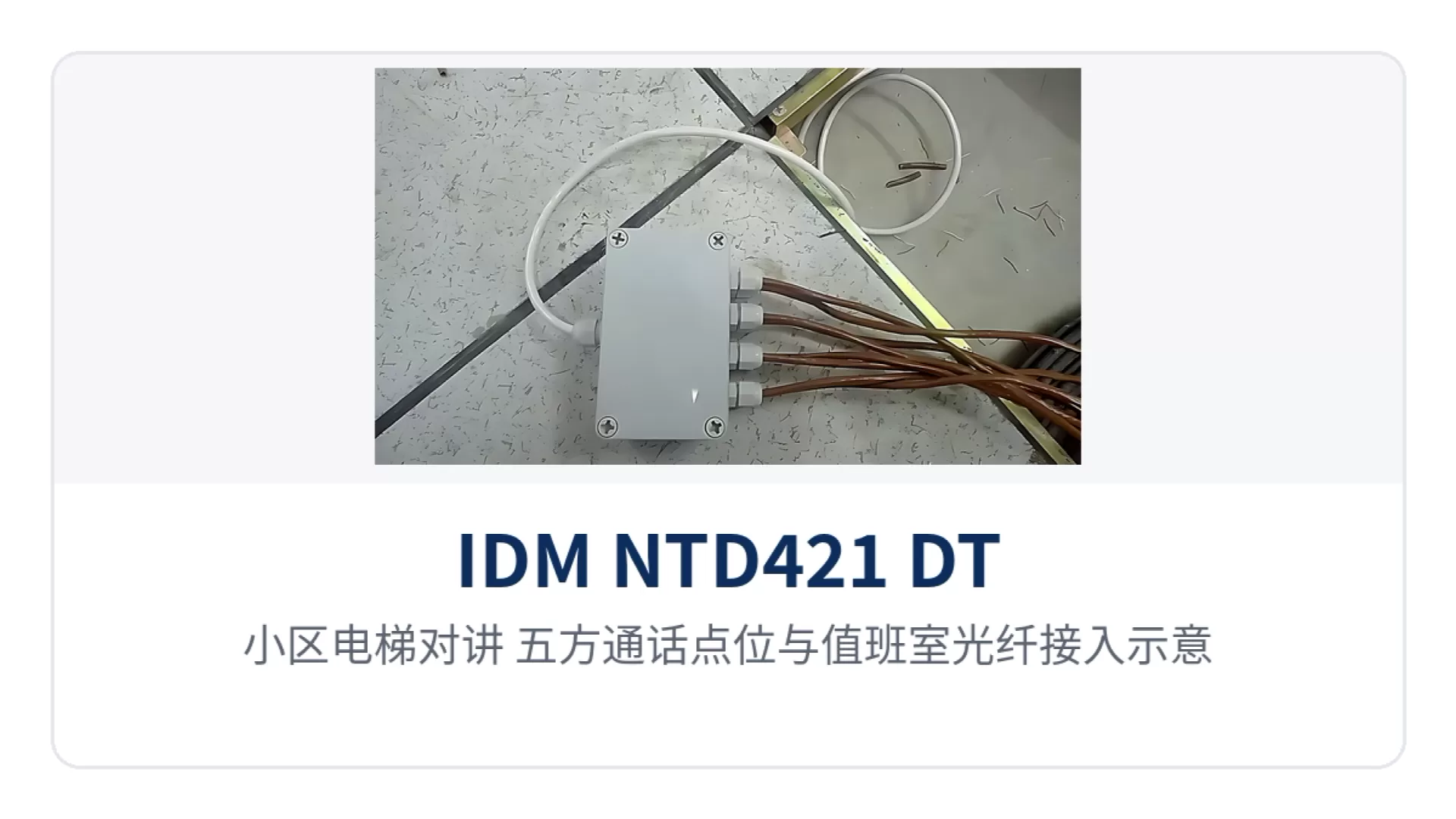
Figure 5: Community elevator intercom — five-party communication sites and optical fiber access to the duty room
Weak-Current Engineering for Public Facilities Such as Rail Transit and Airports
Rail transit stations and airport terminals have many elevators with machine rooms and duty rooms scattered apart, and their weak-current engineering requires stable links and a clear maintenance interface. The IDM NTD421 (DT) is deployed as a pair in the form of a dual-channel telephone optical multiplexer: one device carries two intercom voice channels, and multiple elevators can be configured in pairs and incorporated into centralized management at the duty room; the optical fiber link provides electrical isolation and is unaffected by the electromagnetic interference from power cables and traction power supply systems along the route, making it suitable for intercom voice transmission in such high-voltage environments.
Unattended Private Networks in Industrial Parks and Power Plants
The elevator machine rooms of industrial parks and power plants are scattered across workshops and auxiliary factory buildings, the duty room or central control room is far away, and some sites are unattended. The IDM NTD421 (DT) extends the intercom voice of the scattered machine rooms to the central control room over optical cable, so on-duty personnel can call each elevator site without going to the site; the optical cable can be laid in one pass along the park pipe trenches and cable trays, and voice extension across buildings and across the park requires no additional transmission channel.
Item | Parameter/Specification | Description/Applicable Conditions |
|---|---|---|
Product name | IDM NTD421 (DT) elevator five-party intercom telephone optical multiplexer | Dedicated optical fiber transmission equipment for elevator five-party intercom systems, in the form of a dual-channel telephone optical multiplexer |
Application | Elevator five-party intercom telephone system | Used in pairs between the elevator machine room and the monitoring duty room |
Intercom channels | Dual-channel | Matches the signaling of elevator five-party intercom units; the number of channels and the interface format are subject to the manufacturer's technical documentation |
Transmission medium | Optical fiber | Replaces twisted pair to extend five-party intercom voice and signaling; the optical transmission distance is determined by the optical module and line conditions, subject to the manufacturer's technical documentation |
Ethernet channel | Independent Ethernet channel | Can carry Ethernet services such as car video surveillance; the bandwidth specification is subject to the manufacturer's technical documentation |
Power supply mode | A dedicated power supply connected to the elevator power source | Power is drawn locally on the machine room side; the voltage range is subject to the manufacturer's technical documentation |
Interface configuration | Intercom interface, optical interface | The intercom interface is configured with the corresponding interface card according to the on-site elevator brand and format; confirm with the manufacturer |
Operating environment | Elevator machine room, monitoring duty room | Temperature, humidity and other specifications are subject to the manufacturer's technical documentation |
For the performance specifications on this page, the manufacturer's technical documentation shall prevail; where project selection involves the number of channels, the transmission distance and the interface format, it is recommended that the optical multiplexer manufacturer prepare a configuration list according to site conditions, and Raytrans can provide the product showcase and technical documentation for the corresponding model.
How Far Can Elevator Five-party Intercom Transmit? When Is Optical Fiber Used Instead?
How far elevator five-party intercom can transmit depends on the transmission medium and the device configuration. For twisted-pair-based elevator five-party intercom systems, the transmission distance is generally limited to within 1 to 2 km and is constrained by the cabling conditions in the residential community; when the distance between the elevator machine room and the duty room exceeds this range, or the existing twisted pair cabling has aged and needs to be re-laid, switching to optical fiber transmission is more reasonable. The optical transmission distance of the IDM NTD421 (DT) is determined by the optical module and line conditions, and the specific specifications are subject to the manufacturer's technical documentation.
Besides optical fiber, there are two other remote approaches on the market, GSM mobile networks and FM wireless: the GSM approach is constrained by its charging model, so the cost of long-term operation is hard to control; the FM wireless frequency band is prone to interference and offers low bandwidth. The IDM NTD421 (DT) uses a fixed optical fiber link and does not rely on mobile networks or wireless frequency bands; voice reaches the duty room directly over the optical cable, and one installation can serve for the long term, making it suitable for elevator Internet of Things (IoT), smart community and centralized supervision projects. As an optical multiplexer manufacturer, Raytrans can support such projects with elevator five-party intercom optical fiber transmission solutions and product showcases.
Differentiated Value of the IDM NTD421 (DT) Elevator Five-party Intercom Telephone Optical Multiplexer
The value of the IDM NTD421 (DT) centers on three points, the link form, the channel configuration and the extension capability, as shown in the table below.
Differentiation Point | Value on Site |
|---|---|
Optical fiber instead of copper cable | The long-distance links in the elevator hoistway and the park no longer depend on twisted pair; the link is unaffected by electromagnetic interference and is free from the communication anomalies caused by ground potential difference between the two ends |
Dual-channel telephone optical multiplexer form | One device accesses two intercom voice channels, and a single unit covers the multiple voice channels of elevator five-party intercom, reducing the number of devices and the cabinet space usage |
Optical fiber link suited to long-distance extension | Voice extension along vertical hoistway cabling, across buildings and across parks can all be carried by optical cable, and the link moves with the optical cable when the machine room is relocated or monitoring rooms are merged |
Together these three points make the IDM NTD421 (DT) suitable for elevator intercom sites that twisted pair can hardly cover and that also require clear and stable voice; the specific number of sites and the link route need to be confirmed with the optical multiplexer manufacturer according to the actual project conditions, and Raytrans can provide the corresponding product showcase and selection support for elevator five-party intercom optical fiber transmission equipment.
How Is an Elevator Five-party Intercom Optical Multiplexer Installed and Wired?
How is an elevator five-party intercom optical multiplexer installed and wired? The installation and wiring of the IDM NTD421 (DT) use a point-to-point arrangement paired at both ends, and fall into three parts: machine room side access, duty room side access and the optical cable in between. Machine room side: connect the audio and signaling wires led out from the machine room five-party intercom master unit to the intercom interface of the IDM NTD421 (DT), and draw power for the device through a dedicated power supply connected to the elevator power source; the car, car top and pit sites are already connected to the machine room by the traveling cable and require no additional cabling. Duty room side: place the device at the other end in the monitoring duty room and connect its intercom interface to the duty master unit, and the duty operator can then call and monitor each elevator site. The optical cable in between is laid along the weak-current shaft or cable trunking, with termination at both ends and connected to the optical ports, and the link can then be enabled.
Figure 3: Elevator intercom installation diagram — optical multiplexer in position on the machine room side and intercom signal wiring
When multiple elevators are managed centrally, the multiple intercom signals can first be tandem-connected on the machine room side through elevator intercom concentrators and splitters and then connected to an optical multiplexer or aggregation equipment, extending the intercom of the elevator group to the surveillance center in a unified way. When the intercom brand differs, or the format is analog or digital, the interfaces and wiring sequence differ, so the interface card and wiring definition should be confirmed with the optical multiplexer manufacturer before installation to avoid rework on site.
Figure 4: Elevator intercom installation diagram — on-site device fixing and optical cable trunking laying details
Typical Application Scenarios
Smart Community and Elevator IoT Integrators
The elevator machine rooms of residential communities are mostly on the top floor or the equipment floor, while the duty room is often in the ground-floor lobby or the park gatehouse, and the distance between the two usually exceeds the range of a direct connection over twisted pair. After an optical cable is laid between the machine room and the duty room and IDM NTD421 (DT) elevator five-party intercom telephone optical multiplexers are installed at both ends, a trapped passenger in the car can press the alarm button, and the duty operator can connect and keep reassuring the passenger while notifying maintenance and rescue personnel, shortening the time to handle the trapped passenger. Elevator IoT projects can also use the independent Ethernet channel provided by the device to carry services such as car surveillance, bringing intercom and video into the same optical cable resources.
Figure 5: Community elevator intercom — five-party communication sites and optical fiber access to the duty room
Weak-Current Engineering for Public Facilities Such as Rail Transit and Airports
Rail transit stations and airport terminals have many elevators with machine rooms and duty rooms scattered apart, and their weak-current engineering requires stable links and a clear maintenance interface. The IDM NTD421 (DT) is deployed as a pair in the form of a dual-channel telephone optical multiplexer: one device carries two intercom voice channels, and multiple elevators can be configured in pairs and incorporated into centralized management at the duty room; the optical fiber link provides electrical isolation and is unaffected by the electromagnetic interference from power cables and traction power supply systems along the route, making it suitable for intercom voice transmission in such high-voltage environments.
Unattended Private Networks in Industrial Parks and Power Plants
The elevator machine rooms of industrial parks and power plants are scattered across workshops and auxiliary factory buildings, the duty room or central control room is far away, and some sites are unattended. The IDM NTD421 (DT) extends the intercom voice of the scattered machine rooms to the central control room over optical cable, so on-duty personnel can call each elevator site without going to the site; the optical cable can be laid in one pass along the park pipe trenches and cable trays, and voice extension across buildings and across the park requires no additional transmission channel.