IDM NTD421 Elevator Five-Party Intercom Optical Multiplexer
Dedicated interface card, compatible with Mitsubishi and Otis signaling, dual-channel single unit covers five parties, no GSM billing
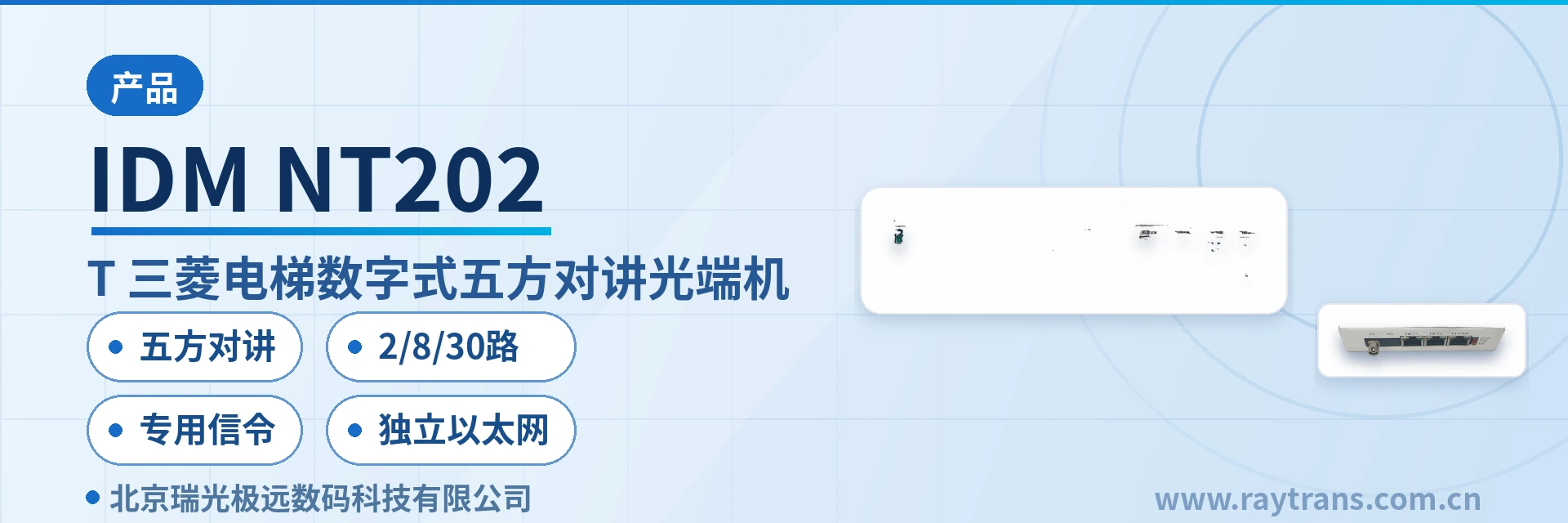
Because the five-party intercom telephone and the ordinary telephone work on different principles, an ordinary telephone optical multiplexer cannot be used. Raytrans' dedicated five-party intercom interface card matches the signaling of five-party intercom units, enabling five-party communication between the central office and the machine room, car, car top, and pit. Five-party intercom optical multiplexers include the 2-channel IDM NT202(DT), 4-channel IDM NT104(DT), 8-channel IDM ENT448(DT), 30-channel IDM 30EN(DT), and so on. They meet the signal transmission needs from elevator group machine rooms to the central office monitoring room at different capacities, and are also suitable for fiber optic connections during monitoring room relocation or consolidation.
The IDM NTD421 (DT) elevator five-party intercom telephone optical multiplexer is an elevator five-party intercom optical fiber transmission equipment developed by Beijing Ruiguang Jiyuan Digital Technology Co., Ltd., used to extend the intercom voice and signaling of the elevator machine room to the remote monitoring duty room. The core of the equipment is a dedicated elevator five-party intercom interface card: the interface card matches the dedicated signaling of the elevator intercom, transparently restoring call, answer and alarm status at both ends of the optical fiber. An ordinary telephone optical multiplexer is designed on the principle of a telephone and cannot replace this step.
The equipment adopts a dual-channel telephone optical multiplexer architecture, with a single unit covering all voice links of the elevator five-party intercom, and provides an independent Ethernet channel, powered from a dedicated elevator power source; the machine room and the duty room are used in pairs at both ends, connected by optical cable in between. As a professional optical multiplexer manufacturer, Raytrans presents this elevator five-party intercom optical multiplexer solution as a typical application in its product showcase for elevator terminal scenarios.
Key specifications at a glance: five-party signaling matching · 2-30 channels optional · independent Ethernet port · no GSM billing · powered from a dedicated elevator power source · electrical isolation and anti-interference over the optical link
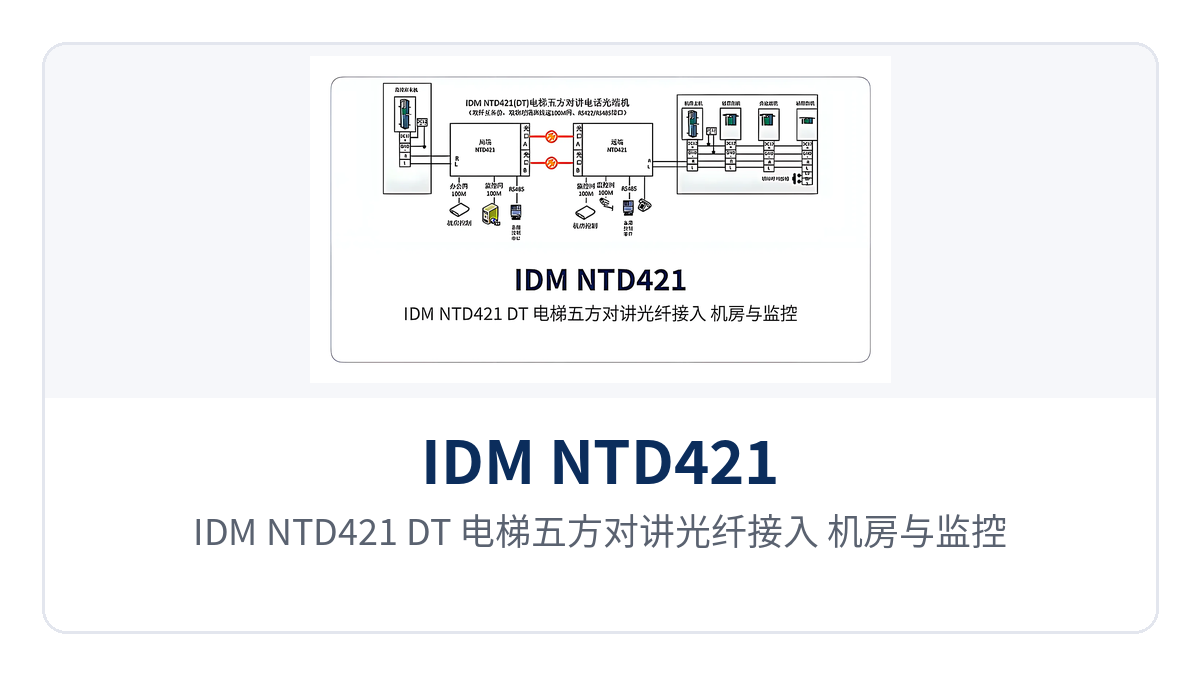
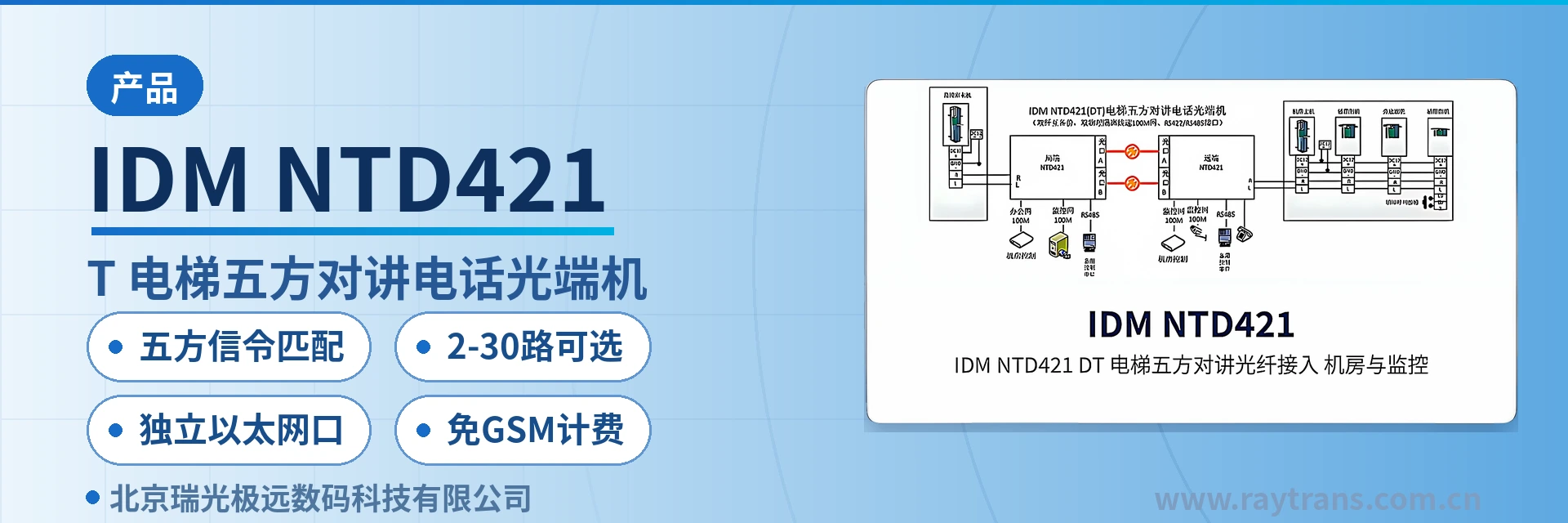
Figure 1: IDM NTD421 (DT) elevator five-party intercom optical fiber access — point-to-point networking diagram between the machine room and the monitoring duty room
As modern communities expand, the distance between the elevator machine room and the central office monitoring room exceeds the transmission range of the five-party intercom twisted pair. By installing one IDM NTD421 (DT) at each end — the machine room and the duty room — and routing the connection over optical cable in between, this link can be upgraded to optical fiber while the original call, answer and alarm modes of the intercom remain unchanged. This is the basic form of elevator five-party intercom optical fiber access, and also the way to replace the GSM mobile network in over-distance scenarios; the complete elevator five-party intercom optical fiber transmission solution is centered on the elevator five-party intercom optical multiplexer and works with the optical multiplexer and telephone optical multiplexer product lines, with Raytrans providing optical fiber link support from the elevator terminal to the duty room.
How does elevator five-party intercom optical fiber access match the dedicated intercom signaling?
What makes elevator five-party intercom optical fiber access work is the matching of the dedicated five-party intercom interface card to the elevator intercom signaling. The elevator five-party intercom telephone works on a different principle from an ordinary telephone; an ordinary telephone optical multiplexer is designed for the feeding, ringing and voice transmission of a telephone and cannot recognize the push-button alarm and busy-line signaling of an elevator five-party intercom, so it cannot be directly applied.
The IDM NTD421 (DT) has a built-in dedicated five-party intercom interface card. The interface card matches the signaling of the five-party intercom, detects voltage and current changes on the twisted pair side at the electrical interface, and restores them at the other end over the optical fiber. On this basis, the duty room master unit identifies the call, hang-up and alarm status of each extension, enabling five-party communication among the central office and the machine room, car, car top and pit. The optical fiber link cuts off the voltage and current path between the two ends of the copper cable, providing complete electrical isolation and immunity to strong electromagnetic interference along the line.
The brand and format of the five-party intercom directly affect the interface configuration. Before configuration, confirm which type the on-site system belongs to:
Mitsubishi systems mostly use audio signaling, and the interface is configured in audio mode;
Otis-type systems mostly use audio and level signaling, and the interface must handle level status as well;
Analog format and digital format intercoms also differ in interface, and their wiring sequence and signal definitions are not interchangeable.
For project selection, the elevator brand, intercom model and format must be provided; the specific interface card configuration of the IDM NTD421 (DT) is subject to the manufacturer's technical documentation.
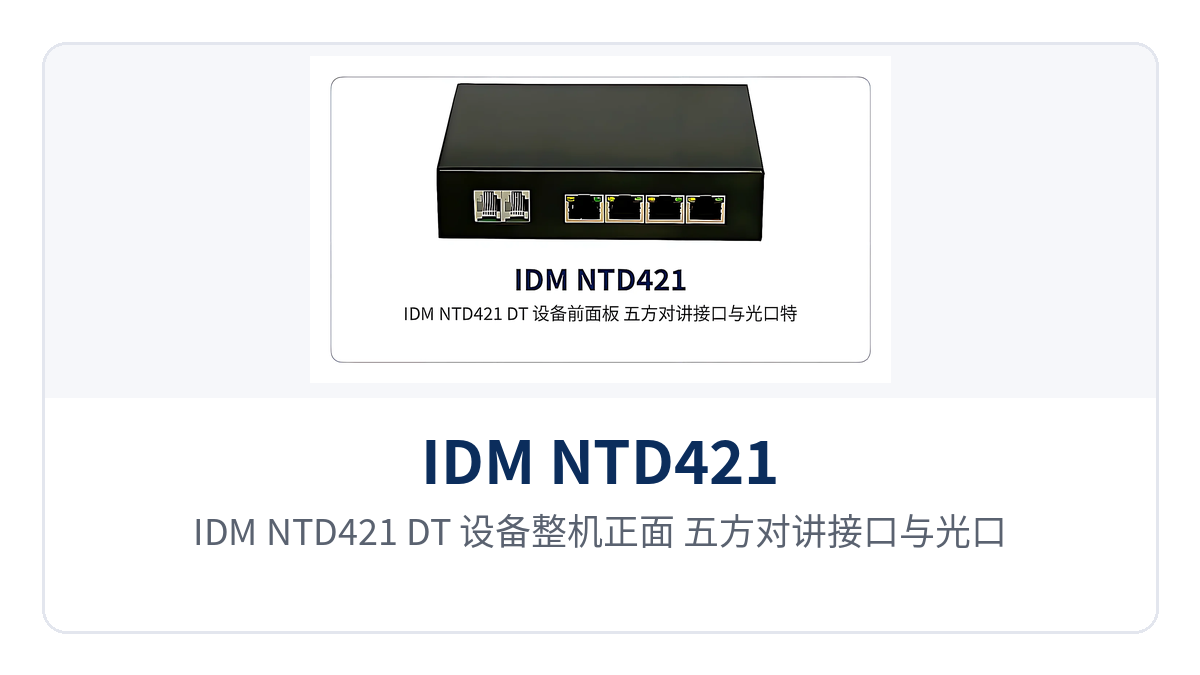
Figure 2: IDM NTD421 (DT) unit front view — five-party intercom interface and optical port layout
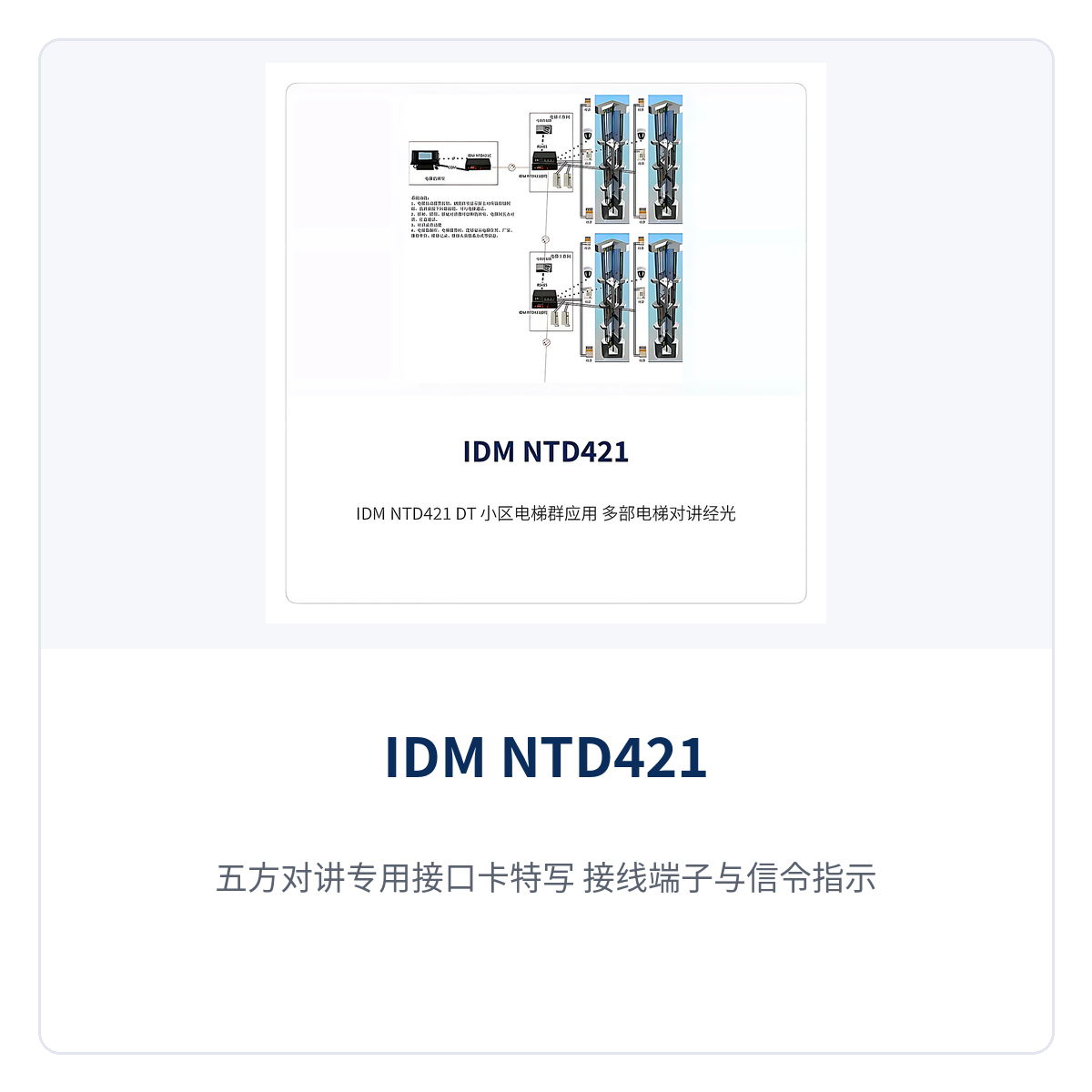
Figure 3: Close-up of the dedicated five-party intercom interface card — wiring terminals and signaling indicators
What is the dedicated elevator five-party intercom interface card? Why can't an ordinary telephone optical multiplexer replace it?
The dedicated elevator five-party intercom interface card is a dedicated interface module inside the IDM NTD421 (DT) for interfacing with the signaling of the elevator five-party intercom. The five-party intercom telephone and the ordinary telephone use different signal methods: an ordinary telephone optical multiplexer transmits standard telephone voice plus feeding and ringing signaling, whereas the elevator five-party intercom expresses calls and alarms through dedicated voltage and current characteristics; the two formats are not interoperable.
Only after the dedicated interface card is fitted can the optical multiplexer recognize the intercom signaling and transparently restore it at both ends of the optical fiber. The dedicated five-party intercom interface card matches the intercom signaling, and an ordinary telephone optical multiplexer cannot replace it; this is an indispensable step in the elevator five-party intercom optical fiber transmission solution.
The core functions of the IDM NTD421 (DT) elevator five-party intercom telephone optical multiplexer are designed around this step, as shown in the table below.
Function | Description |
|---|---|
Five-party intercom signaling matching | Built-in dedicated five-party intercom interface card matches the elevator five-party intercom signaling and restores call, answer and status signals at both ends of the optical fiber |
Voltage and current characteristic restoration | Detects voltage and current changes on the twisted pair side and restores them at the other end after optical fiber transmission, maintaining correct identification of each extension status by the intercom master unit |
Dual-channel voice channel access | Dual-channel telephone optical multiplexer architecture; one unit accesses two elevator intercom voice channels, with a single unit covering all communication links of the elevator five-party intercom |
Long-distance extension over optical fiber | Optical fiber replaces copper cable to carry voice, so the link is no longer limited by the transmission range of twisted pair and adapts to deployment up and down the hoistway, across buildings and across parks |
Anti-interference and electrical isolation | The optical fiber link provides electrical isolation, is immune to electromagnetic interference along the line, and eliminates communication anomalies caused by ground potential difference between the two ends of the twisted pair |
Independent Ethernet channel | Provides an independent Ethernet channel that can carry Ethernet services such as car video surveillance; bandwidth specifications are subject to the manufacturer's technical documentation |
Coordination with centralized access | Can work with the elevator intercom concentrator and splitter to aggregate the intercom signals of multiple elevators to the surveillance center over optical fiber for centralized management |
Powered from a dedicated elevator power source | Uses a dedicated power supply connected to the elevator power source, with nearby power supply access on the machine room side for easy installation |
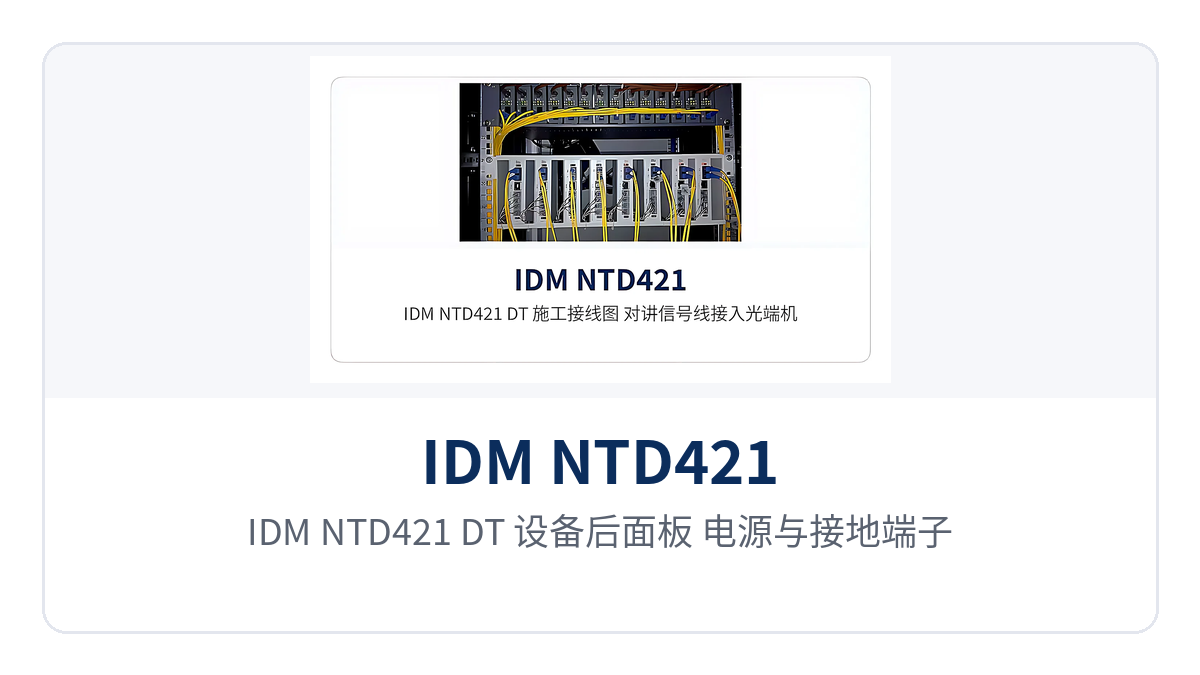
Figure 4: IDM NTD421 (DT) unit rear panel — power and grounding terminals
IDM NTD421 (DT) Technical Specifications
The main technical specifications of the IDM NTD421 (DT) elevator five-party intercom telephone optical multiplexer are shown in the table below. The model is a dual-channel elevator intercom optical fiber transmission equipment, and the specific configuration is confirmed per project.
Item | Parameter/Specification | Description/Applicable Conditions |
|---|---|---|
Product name | IDM NTD421 (DT) elevator five-party intercom telephone optical multiplexer | Dedicated optical fiber transmission equipment for elevator five-party intercom systems, dual-channel telephone optical multiplexer architecture |
Application object | Elevator five-party intercom telephone system | Used in pairs between the elevator machine room and the monitoring duty room |
Intercom channels | Dual-channel | Matches the signaling of elevator five-party intercom units; the number of channels and the interface format are subject to the manufacturer's technical documentation |
Capacity coverage | 2- to 30-channel series available | 2-channel IDM NT202(DT), 4-channel IDM NT104 (DT), 8-channel IDM ENT448 (DT), 30-channel IDM 30EN (DT), meeting the needs of elevator groups of different sizes |
Transmission medium | Optical fiber | Replaces twisted pair to extend five-party intercom voice and signaling; the optical transmission distance is determined by the optical module and line conditions, subject to the manufacturer's technical documentation |
Ethernet channel | Independent Ethernet channel | Can carry Ethernet services such as car video surveillance; the bandwidth specification is subject to the manufacturer's technical documentation |
Power supply mode | Dedicated power supply connected to the elevator power source | Power is taken nearby on the equipment room side; the voltage range is subject to the manufacturer's technical documentation |
Interface configuration | Intercom interface, optical interface | The intercom interface is configured with the corresponding interface card according to the on-site elevator brand and format; confirm with the manufacturer |
Operating environment | Elevator machine room, monitoring duty room | Indicators such as temperature and humidity are subject to the manufacturer's technical documentation |
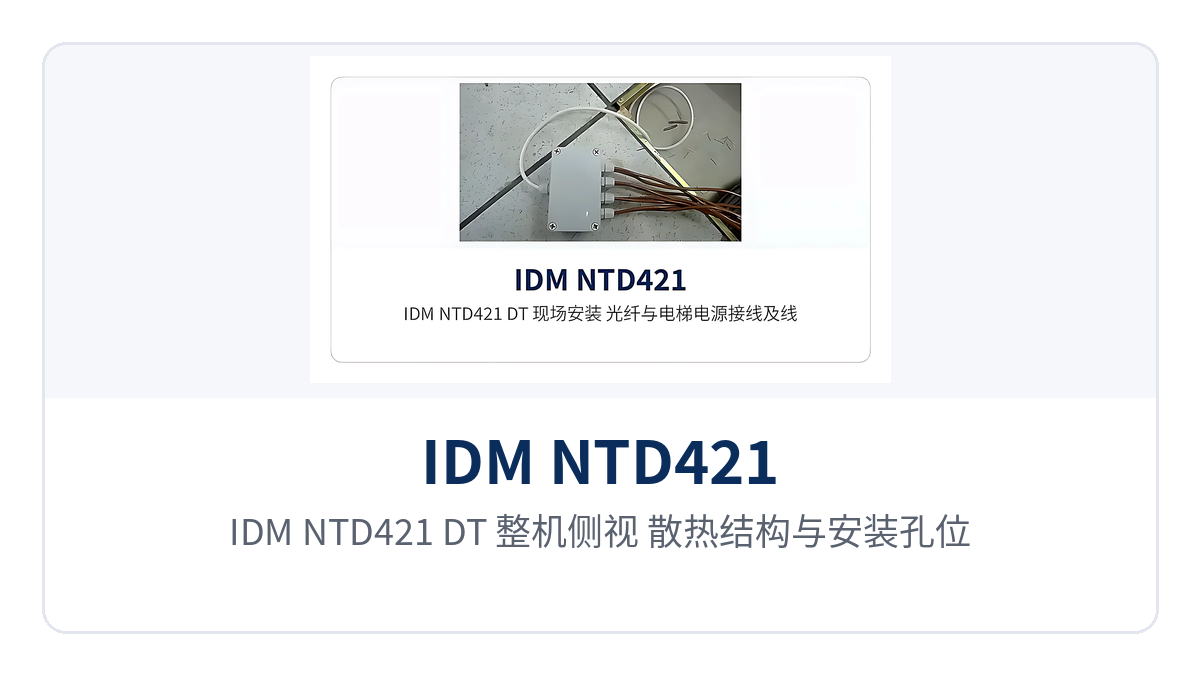
Figure 5: Side view of the IDM NTD421 (DT) unit — heat dissipation structure and mounting holes
The performance specifications on this page are subject to the manufacturer's technical documentation; when project selection involves the number of channels, transmission distance and interface format, it is recommended that the manufacturer provide a configuration list based on on-site conditions.
Differentiated Value of the IDM NTD421 (DT) Elevator Five-Party Intercom Telephone Optical Multiplexer
The value of the IDM NTD421 (DT) centers on four points: signaling matching, capacity coverage, Ethernet carried over the same cable, and the billing model, as shown in the table below.
Differentiation Point | Value on Site |
|---|---|
Five-party signaling matching: dedicated interface cards match five-party intercom signaling | An ordinary telephone optical multiplexer cannot replace this step; the original call, answer and alarm modes of the intercom units remain unchanged |
2-30 channels available: 2- to 30-channel series available | Elevator group capacity expansion and monitoring room relocation or consolidation are handled over one set of optical fibers, from the 2-channel IDM NT202(DT) to the 30-channel IDM 30EN (DT), selected according to the elevator group size |
Independent Ethernet port: independent Ethernet channel carries video over the same cable | Provides an independent Ethernet channel that can carry Ethernet services such as car video surveillance; the bandwidth specification is subject to the manufacturer's technical documentation |
No GSM billing: optical fiber replaces GSM, eliminating per-channel monthly billing | The optical cable is laid once and used long-term, with no per-channel monthly charge and no occupation of wireless frequency bands |
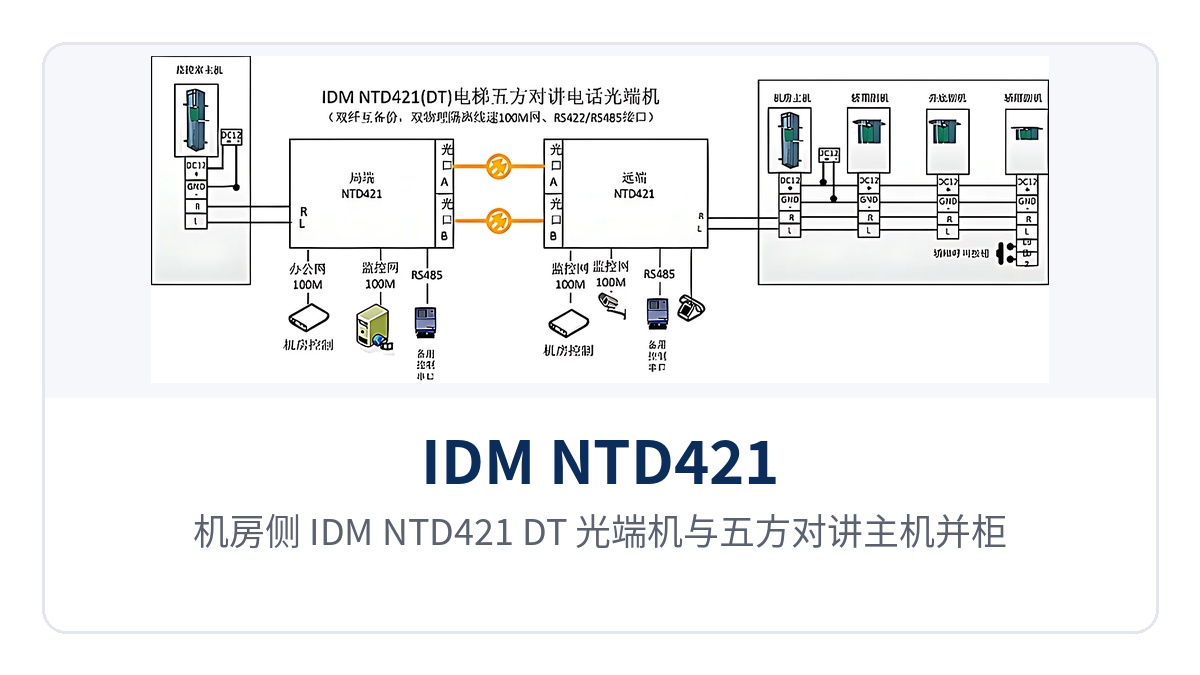
Figure 6: Equipment room side — IDM NTD421 (DT) optical multiplexer and five-party intercom master unit in cabinet-to-cabinet installation
These four points together determine that the IDM NTD421 (DT) is suitable for elevator intercom sites where twisted pair is difficult to cover and clear, stable voice is required. The specific number of sites and the link route must be confirmed with the manufacturer according to the actual project conditions.
How to Choose an Elevator Five-Party Intercom Optical Multiplexer from 2 to 30 Channels? How Does Capacity Match the Elevator Group?
How to choose an elevator five-party intercom optical multiplexer from 2 to 30 channels depends on the elevator group size and the number of access channels at the monitoring room. The five-party intercom optical multiplexers on the elevator terminal side are graded by the number of intercom channels, and the correspondence between capacity and on-site scale is as follows:
2-channel IDM NT202(DT): suitable for direct paired connection of a single elevator or a small number of elevators;
4-channel IDM NT104 (DT), 8-channel IDM ENT448 (DT): suitable for signal transmission from the machine room of a medium-capacity elevator group to the central office monitoring room;
30-channel IDM 30EN (DT): suitable for large-capacity elevator groups and for centralized fiber access when the monitoring room is relocated or consolidated.
A single unit covers a selectable capacity of 2 to 30 channels, adapting to signal transmission from the machine rooms of different elevator groups to the central office monitoring room, and is also suitable for fiber access transmission scenarios such as monitoring room relocation and consolidation.
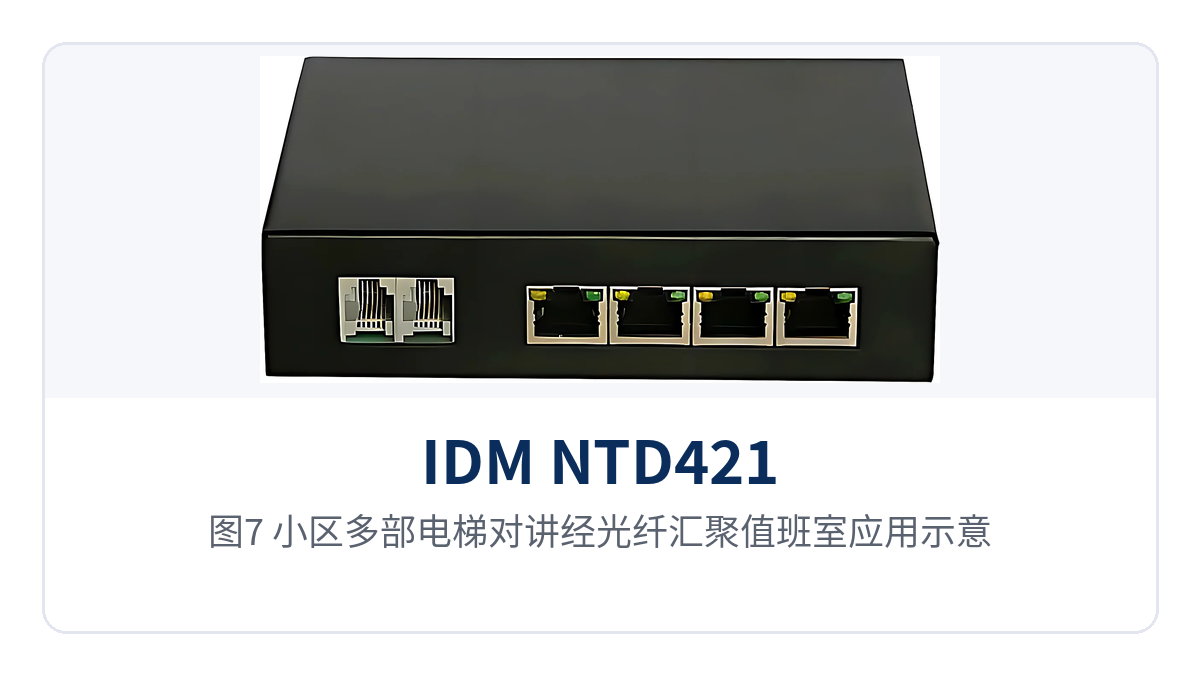
Figure 7: Application schematic of multiple elevator intercoms in a residential community aggregated over optical fiber to the duty room
Selection can be done in three steps:
Count the number of elevator sites and the number of access channels at the duty room to determine the required number of intercom channels;
Confirm the interface card type according to the elevator intercom unit brand and format; analog and digital format interfaces are not interchangeable;
Determine the optical cable route between the machine room and the duty room and the termination positions at both ends, then configure the equipment by machine room or elevator group.
As a dual-channel model, the IDM NTD421 (DT) is suitable for configuration by machine room or elevator group; when the dual-channel requirement is exceeded, the signals are first aggregated through an elevator intercom concentrator and splitter and then connected to the aggregation equipment. The high-capacity models are suitable for centralized access when an existing elevator management center is relocated, and also for central tandem connection in the urban 96333 elevator centralized smart management project. As a professional optical multiplexer manufacturer, Raytrans can provide the full series of elevator five-party intercom optical multiplexer products and selection support described above.
Optical Fiber vs. GSM for Elevator Five-Party Intercom: How Is GSM-Billing-Free Over-Distance Transmission Achieved?
The core difference between optical fiber and GSM for elevator five-party intercom lies in the transmission medium, operating cost and reliability. The GSM approach uses the mobile network to send intercom signals out of the machine room, free from twisted pair distance limits, but it is subject to the GSM charging model, with per-channel monthly billing; for multiple elevators in long-term operation, the cost accumulates with the number of channels, and it depends on public network signals, so buildings with weak coverage and underground hoistways are easily affected.
Optical fiber replaces GSM, eliminating GSM billing: an optical cable is connected directly to the duty room, laid once and used long-term, with no per-channel monthly fee and no occupation of wireless frequency bands. The IDM NTD421 (DT) uses a fixed optical fiber link, and voice reaches the duty room directly over the optical cable without setting up a wireless repeater.
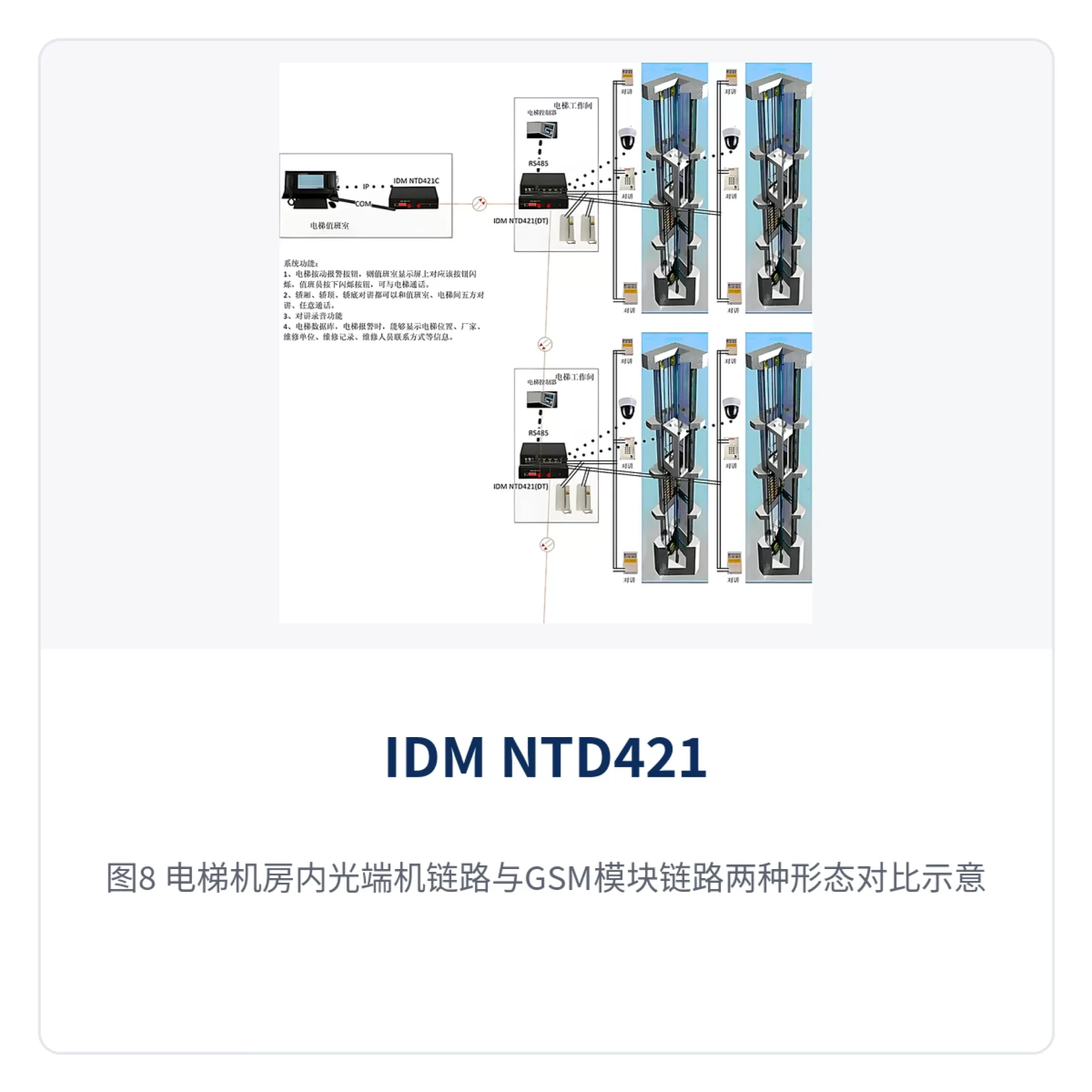
Figure 8: Comparison schematic of two forms — the optical multiplexer link and the GSM module link in the elevator machine room
Twisted-pair-based five-party intercom systems are generally limited to a transmission distance of 1~2km and are constrained by the cabling conditions of the residential community. When the distance between the machine room and the duty room exceeds this range, or when the existing lines are aged and need to be re-laid, switching to optical fiber is more reasonable; the optical transmission distance of the IDM NTD421 (DT) is determined by the optical module and line conditions, and the specific specifications are subject to the manufacturer's technical documentation.
Besides GSM, FM wireless is also available on the market, but its frequency band is susceptible to interference and its bandwidth is low. Optical fiber links offer greater advantages in anti-interference capability and bandwidth margin, making them suitable for intercom systems that require long-term stable operation.
How does an elevator intercom optical multiplexer connect to the elevator power supply? How is wiring and power access done on site?
How does an elevator intercom optical multiplexer connect to the elevator power supply? The IDM NTD421 (DT) uses a dedicated power supply connected to the elevator power source, with power taken locally on the equipment room side, so no separate power cabling is required on site. The overall wiring consists of three parts:
Equipment room side access: connect the audio and signaling lines from the five-party intercom master unit to the intercom interface of the IDM NTD421 (DT), and power the device through the dedicated power supply connected to the elevator power source; the car, car top, pit and other points are already connected to the equipment room via the traveling cable, so no additional cabling is needed.
Duty room side access: place the device at the other end in the monitoring duty room and connect its intercom interface to the duty master unit, so the duty operator can call through and monitor each elevator point.
Intermediate optical cable: lay it along the weak-current shaft or cable trunking, terminate both ends and connect them to the optical ports, and the link is ready for service.
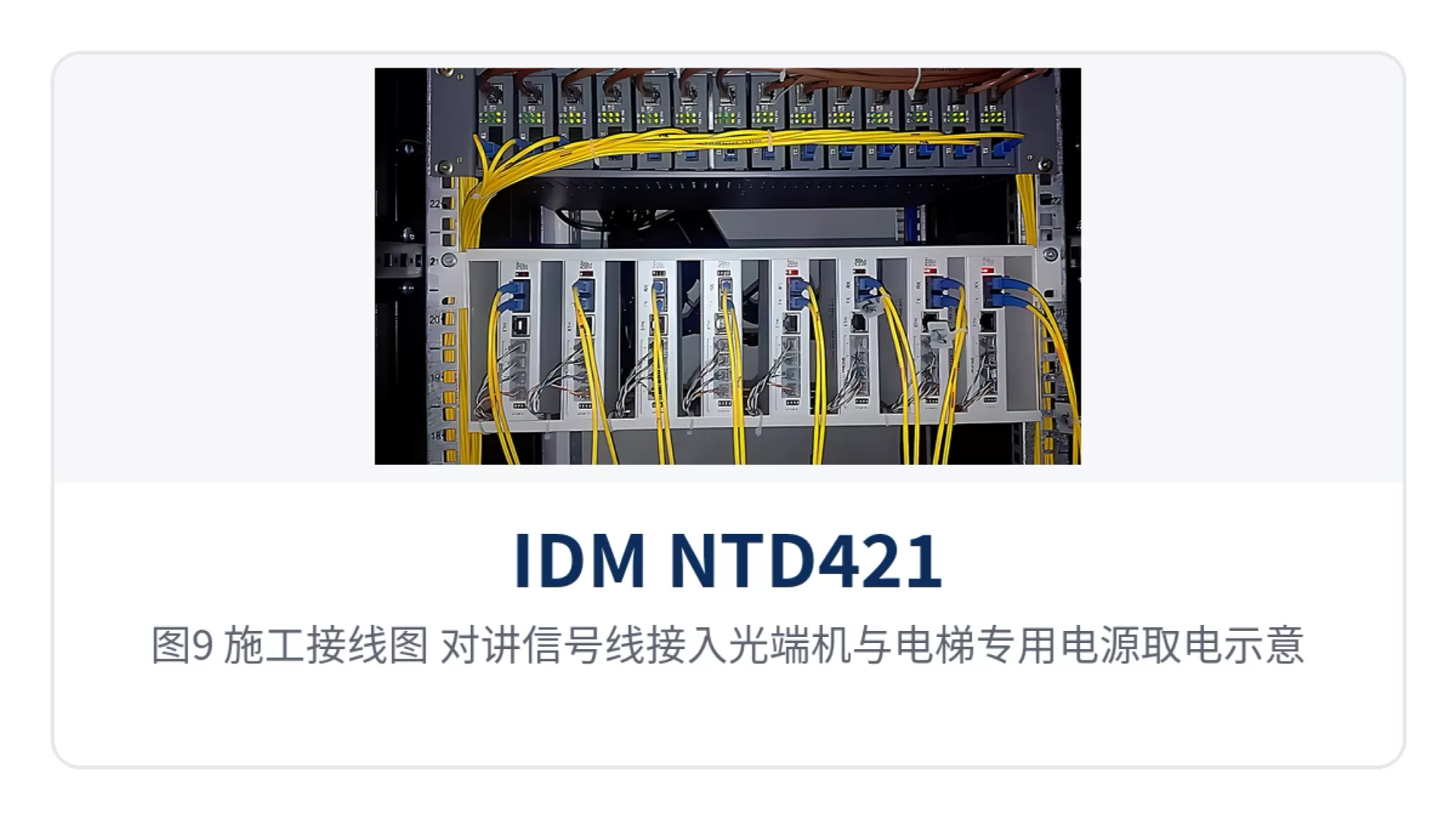
Figure 9: Installation wiring diagram — schematic of intercom signal lines connected to the optical multiplexer and power taken from the dedicated elevator power supply
When multiple elevators are managed centrally, the multiple intercom signals can first be aggregated on the equipment room side through the elevator intercom concentrator and splitter, and then connected to the optical multiplexer or aggregation equipment, extending the elevator group intercom uniformly to the surveillance center.
When intercom brands differ, or the format is analog versus digital, interfaces and wiring sequences vary. Before installation, confirm the five-party intercom dedicated interface card and wiring definition with the manufacturer to avoid rework on site.
Typical Application Scenarios
Elevator IoT and Smart Community Integrators
Elevator machine rooms in residential communities are mostly located on the top floor or the equipment floor, while the duty room is often in the ground-floor lobby, the industrial park gatehouse or the surveillance center, and the distance between them often exceeds the direct-connection range of twisted pair. After laying an optical cable between the machine room and the surveillance center and installing IDM NTD421 (DT) at both ends, a trapped passenger pressing the alarm button in the car can be connected by the duty operator, who can provide continuous reassurance and notify maintenance and rescue personnel, shortening the time to handle the trapped passenger.
The independent Ethernet channel can incorporate car surveillance into the same optical cable, reducing duplicate cabling and hoistway occupation; when the monitoring room is relocated or merged, the link migrates together with the optical cable.
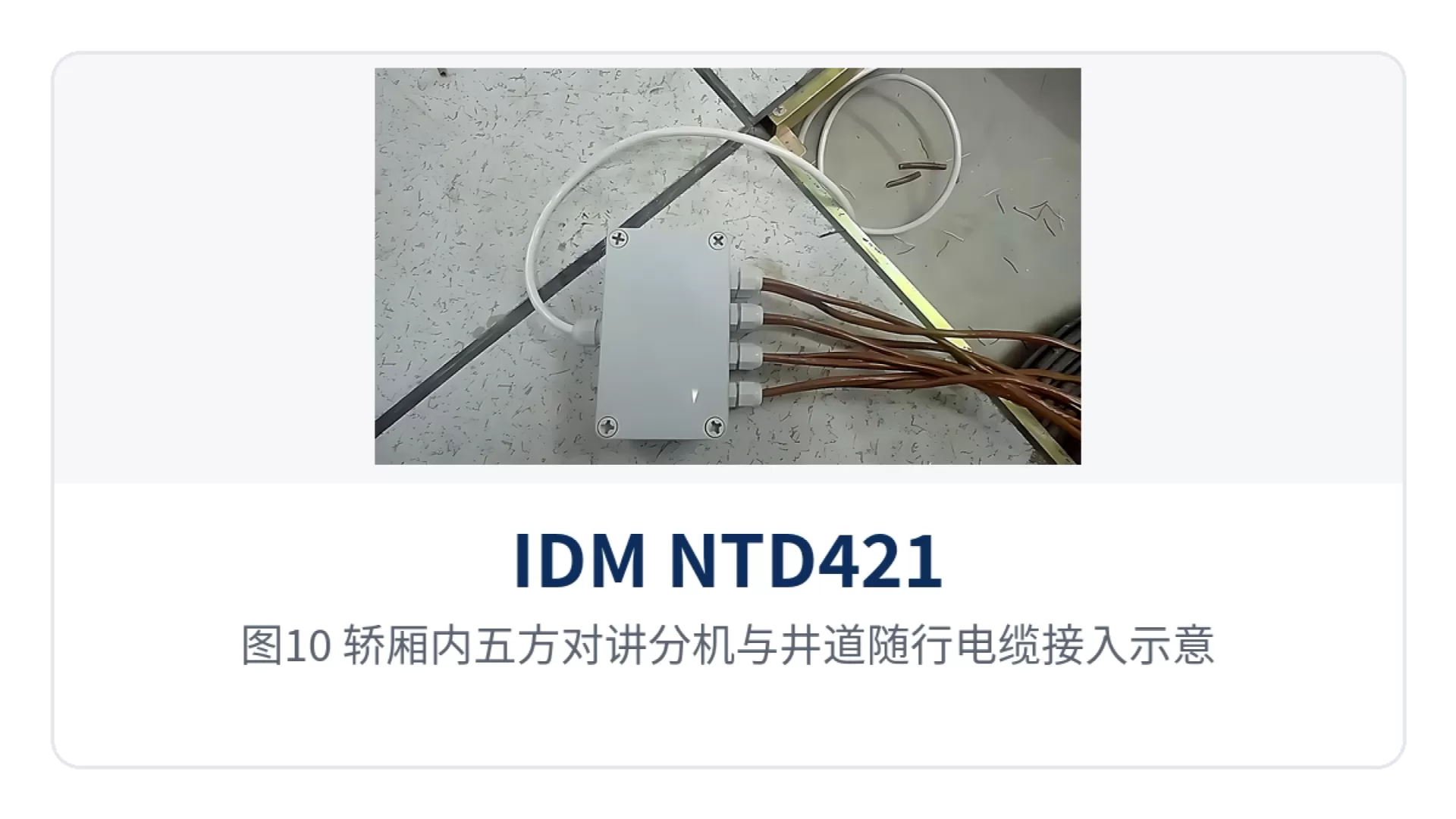
Figure 10: Schematic of the five-party intercom extension in the car and the hoistway traveling cable connection
Urban 96333 Elevator Centralized Smart Management Project
The urban 96333 elevator centralized smart management project needs to aggregate elevator intercoms scattered across multiple communities and multiple buildings to centralized duty points. The IDM NTD421 (DT) is configured by machine room or elevator group, sending dual-channel intercom voice upstream over optical fiber.
Hub nodes with a large number of elevators can instead use the 8-channel IDM ENT448 (DT) or the 30-channel IDM 30EN (DT) for centralized access. The optical fiber link provides electrical isolation and a clear maintenance interface, and the centralized duty point can confirm the status of the car, car top and pit points with a single call-through.
Elevator Maintenance and Property Management Monitoring Centers
Elevator maintenance companies and property management monitoring centers often need to provide centralized duty for elevators scattered across multiple industrial parks and multiple buildings. The IDM NTD421 (DT) feeds the intercom voice from each machine room over optical fiber into the industrial park elevator private network, and the surveillance center calls through the car, car top and pit points uniformly.
Maintenance personnel first contact and reassure the trapped passenger from the center, then dispatch the nearest team to the site, shortening response time. Fiber access eliminates the monthly GSM billing and avoids laying extra-long twisted pair inside the building.
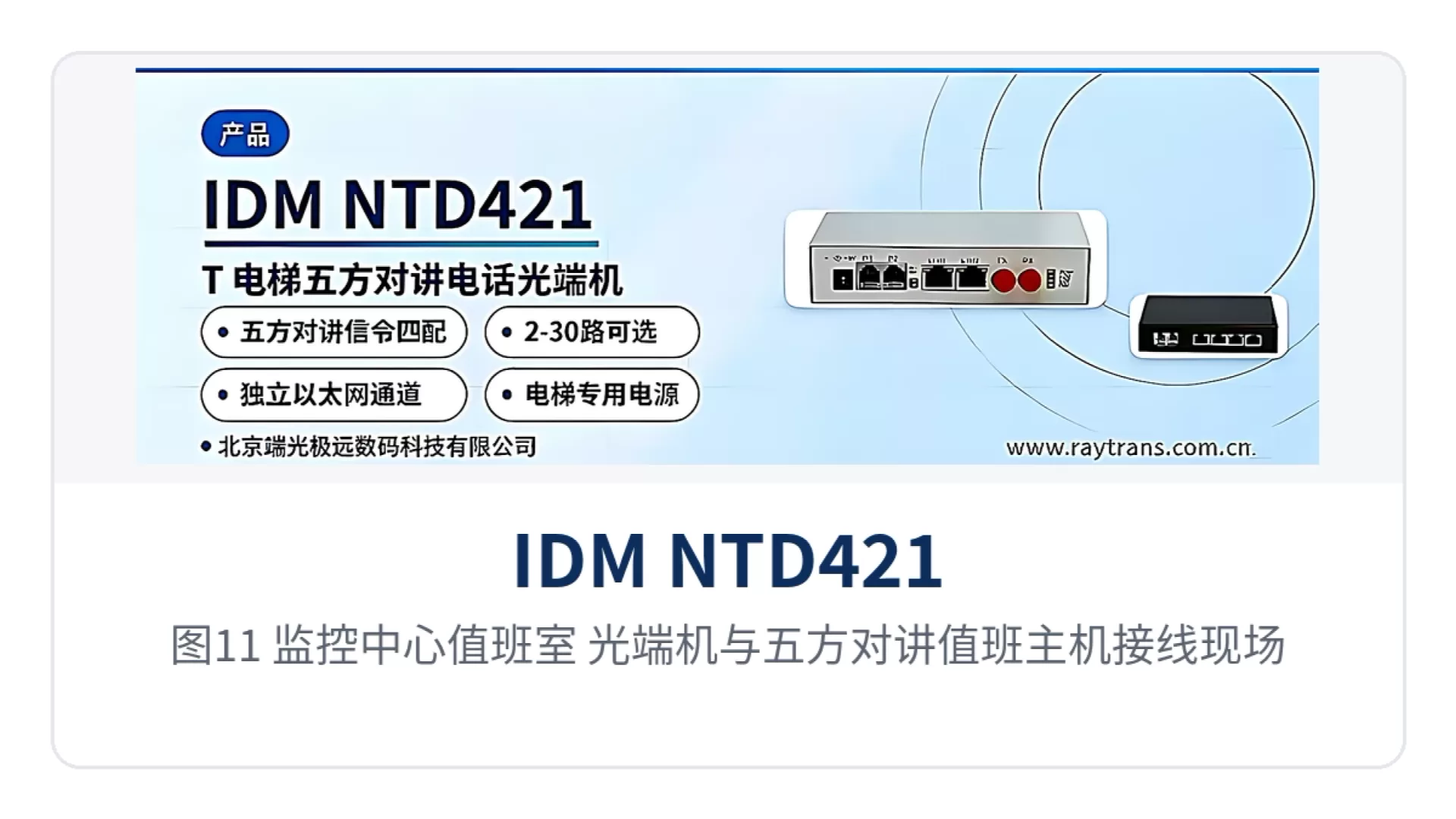
Figure 11: Surveillance center duty room — on-site wiring of the optical multiplexer and the five-party intercom duty master unit