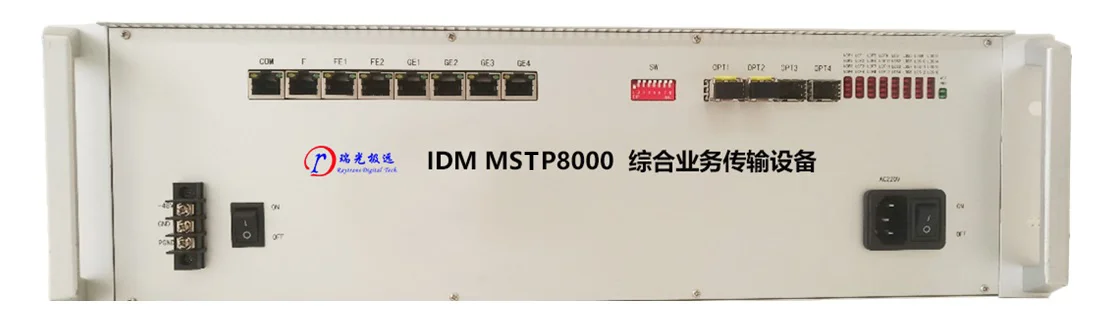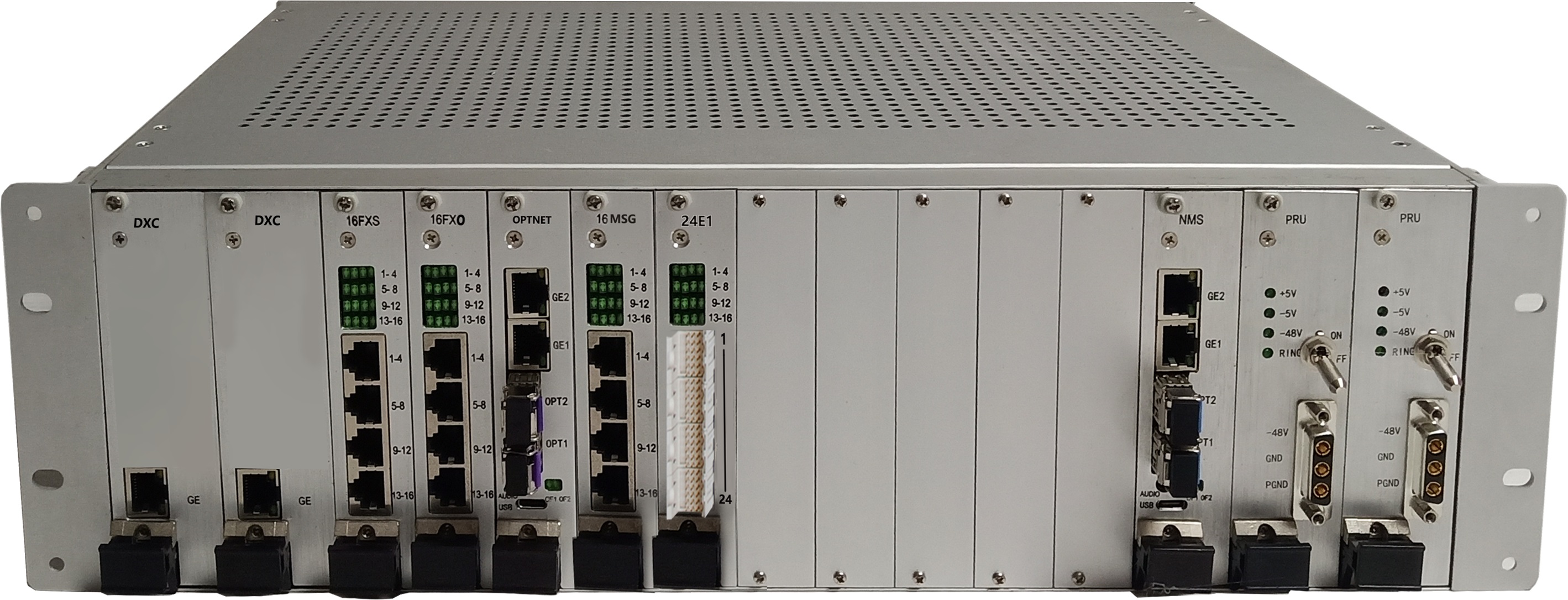
IDM MUX300
IDM MUX300
The SDH equipment is a new generation of optoelectronic integrated transmission equipment launched by our company, based on MSTP technology and PCM technology. It integrates MSTP transmission and PCM multi-service access functions, meeting the needs of users for fiber optic transmission and access of various broadband and narrowband services. With SDH ring network protection, it provides more reliable communication protection. The IDM MUX300 optoelectronic integrated equipment can directly connect remote terminals such as telephones, computers, and cameras, adapting to various network topologies.
I. Overview
The IDM MUX300 Integrated Access Platform is a new generation optical-electrical integrated transmission device developed by our company, based on MSTP and PCM technologies. It integrates MSTP transmission and PCM multi-service access functions, meeting user requirements for fiber-optic transmission and access of both broadband and narrowband services. With SDH ring network protection, it provides more reliable communication protection. The IDM MUX300 optical-electrical integrated device can directly connect remote telephones, computers, cameras, and other terminals, adapting to various network topologies.
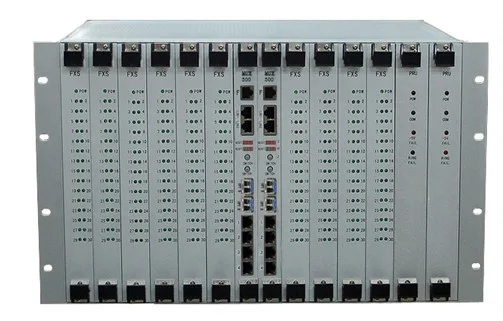
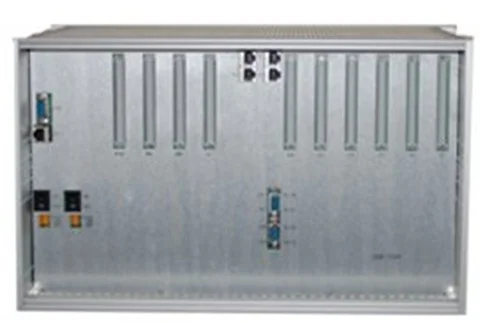
Figure 1 IDM MUX300 Front and Rear Panel Diagram
II. Product Features
The chassis adopts a 19-inch standard 6U rack-mount, plug-in card design; provides 10 6U user card slots;
The IDM MUX300 optical-electrical integrated device integrates SDH transmission and PCM service access technologies;
Provides 252×252 VC-12 level non-blocking cross-connect, supporting unidirectional, bidirectional, and broadcast services;
Supports 2 SFP interface STM-1 optical access ports, enabling ring, chain, star, and other network topologies;
Provides 4 groups of physically isolated EoS Ethernet channels, each with configurable bandwidth of N×VC12 (N=1~50); each group also reserves 1 extended Ethernet port; pairs with the 8FE card to expand the number of Ethernet interfaces;
Supports Synchronous Equipment Timing Source (SETS), with optional tracking of optical line timing source or external synchronization input/output (2.048Mbit/s or 2.048MHz), and automatic timing source switching based on fault conditions or SSM; clock sources can be selected from line clock, external clock, or free-running oscillation;
The standard model provides a non-repeatered transmission distance of 40 kilometers; custom configurations are available for distances exceeding this range;
Provides an F (10M/100M) network management interface, offering the five major functions recommended by ITU-T through the Netguard management system: configuration, alarm, performance, maintenance, and security; also provides a device network management cascade interface;
Supports SNMP simple network management protocol;
DC -48V and AC 220V power supply, with optional DC+DC, AC+AC, AC+DC dual backup power configurations;
III. Technical Specifications
Optical Interface
Interface Type | SFP | Fiber Mode | Single-mode (Multi-mode optional) |
Tx/Rx Rate | 155.52Mbps/155.52Mbps | Tx/Rx Wavelength | 1310nm/1550nm |
Optical Output Power | -12~-6dBm | Receiver Sensitivity | Better than -32dBm |
Transmission Distance | 20Km; long-distance optical modules can be optionally installed for extended fiber transmission | ||
E1 Interface
Line Rate | 2.048Mbps | Line Code | HDB3 |
Standard Protocol | SupportsITU-T G.703 | Impedance | 75Ω/120Ω |
Frame Structure | PCM30/32 | Signaling | Channel-associated signaling |
Ethernet
Interface Type | RJ-45 | Transmission Rate | N×VC12 (N≤50) |
Standard Protocol | Supports IEEE802.3 | Operating Mode | Full/Half Duplex/Auto-Negotiation |
FXO, FXS Interfaces
Audio Range | 300Hz~3400Hz | Compression | A-law per ITU G.711 |
Impedance | Three-element complex impedance 200Ω+560Ω//0.1μF | Loop Current | 20mA/channel |
Co-directional 64K Interface
Line Code | G.703 Standard | Line Rate | 64Kbps |
Impedance | Balanced 120Ω | Fully compliant with ITU G.703 Recommendation | |
EM2/4-Wire Interface
Audio Range | 300Hz~3400Hz | Impedance | Balanced600Ω |
Compression Rate | A-law per ITU G.711 | Return Loss | ≥18dB |
Magnetic Ring Interface
Audio Range | 300Hz~3400Hz | Impedance | Balanced600Ω |
Compression Rate | A-law per ITU G.711 | Return Loss | ≥18dB |
V.24 Interface
Transmission Rate | Asynchronous≤9600bps; Synchronous64Kbps | Electrical Characteristics | Compliant withCCITT V.28protocol |
V.35 Interface
Interface Type | RJ-45 | Electrical Characteristics | Compliant withITU-T V.35Recommendation |
Transmission Rate | n×64Kbps(n=0~31) | Terminal Interface | Compliant withISO2593Specification |
Power Supply and Consumption
Power Supply | AC220V/DC-48V | Power Consumption | ≤90W |
Environmental Conditions
Operating Temperature | -10oC ~+50oC | Relative Humidity | 0~95% (non-condensing) |
Product Dimensions
Length×Depth×Height | 482×266×270 (mm) |
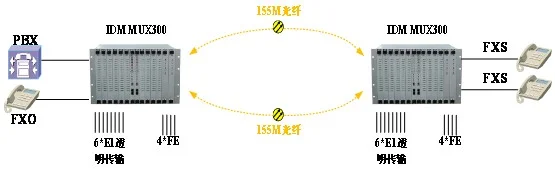
IV. Application Example 1: Point-to-Point Dual Optical Port Mutual Backup Application
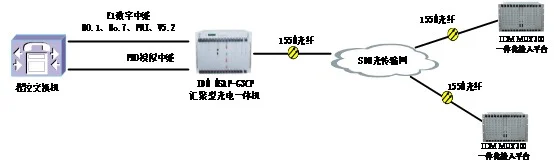
V. Application Example 2: Telephone Optical Transceiver Single-End Access Solution
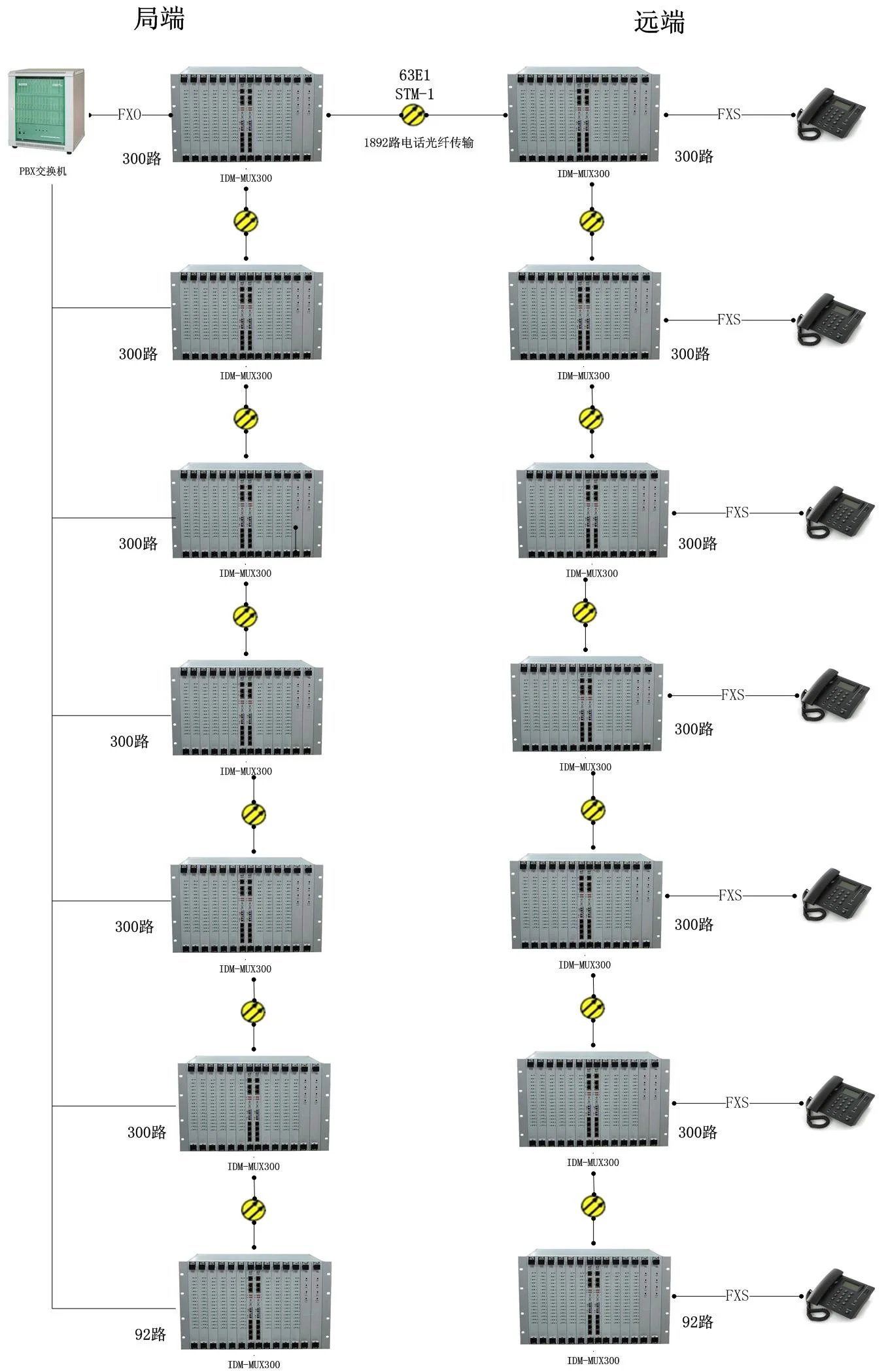
VI. Application Example 3: Cascaded 1890-Channel Telephone Application
FAQs
What are the features of SDH technology and MSTP products?
I. Development Directions of Next-Generation SDH Technology and Products Regarding the development direction of…
View answerWhat is the difference between PDH and SDH?
I. PDH PDH is the Plesiochronous Digital Hierarchy, which is divided into the European standard and the…
View answerLow-Cost SDH Is an Inevitable Choice for Access Network Construction in the Near to Medium Term
The current status of metropolitan optical networks is that SDH/MSTP (DWDM) optical networks have become the mainstream…
View answerIntroduction to Ethernet Over SDH Technology
Interface specifications: On the SDH side, provides 1 x 155.52Mbps LVDS interface, supporting STM-1.
View answerEthernet Switch Board Principle
The Ethernet switch board launched by Raytrans on the IDM MSTP155-24 platform is based on the Spanning Tree Protocol…
View answer