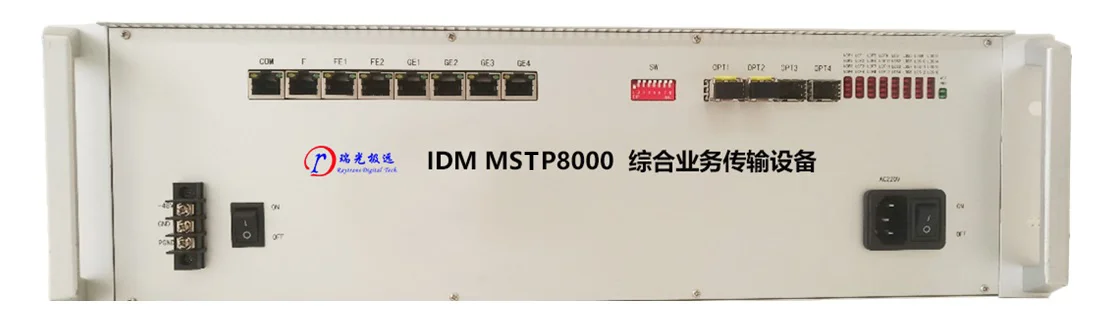
IDM MULTI1000
IDM MULTI1000
With the mature development of information transmission technology, significant improvements have been achieved in both equipment size and cost-effectiveness. Therefore, in many application scenarios such as military, emergency management, air traffic control communication and navigation, petroleum, and various engineering sites, a wide variety of transmission channels are encountered. To ensure flexible and convenient operation, equipment is typically required to support multiple transmission methods and multiple service access modes. The IDM MULTI1000 integrates multiple transmission technologies into one unit and provides access for dozens of narrowband and broadband subscriber services.
With the mature development of information transmission technology, significant improvements have been achieved in both equipment size and cost-effectiveness. Therefore, in many application scenarios such as military, emergency management, air traffic control communication and navigation, petroleum, and various engineering sites, a wide variety of transmission channels are encountered. To ensure flexible and convenient operation, equipment is typically required to support multiple transmission methods and multiple service access modes. The IDM MULTI1000 integrates multiple transmission technologies into one unit and provides access for dozens of narrowband and broadband subscriber services.
Transmission channels typically include IP-based transmission, E1-based transmission, V.35 broadband transmission, SDH-based transmission, and others.
IP-based transmission includes satellite IP channels, wireless bridge IP channels, troposcatter communication IP channels, fiber optic IP channels (including PON, Media Converter, and other technologies), 4G public network IP channels, twisted-pair DSL transmission, and more.
V.35 broadband networks typically provide broadband bandwidth of less than one E1, as offered by satellite or microwave channels.
E1 channels are typically provided by PDH optical terminals, microwave equipment, DSL equipment, or other E1 channels leased from carriers.
SDH channels are typically optical or electrical interfaces, commonly using 155.52M transmission bandwidth, also known as STM-1 interfaces. Services from different vendors' equipment can interoperate, making it a widely used communication interface.
When using bare fiber transmission technology, a 4E1 + line-rate 100M Ethernet PDH optical terminal is typically used to transmit services.
Considering that military and other application sites require the addition of encryption devices on E1 transmission channels, we typically first emulate E1 channels over IP networks using TDM OVER IP equipment, and then connect them to the multiplexer.
The IDM TOP series IP link emulation equipment features high clock precision and, when bandwidth is insufficient to emulate a full E1 channel, can provide stable fractional E1 output.
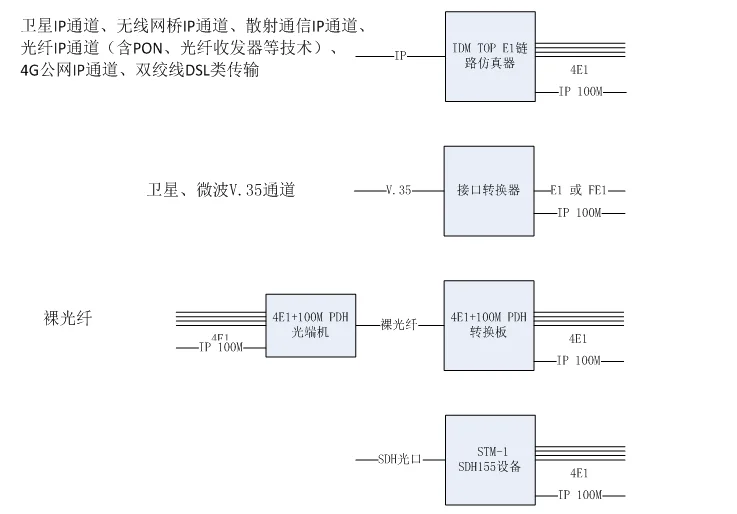
Multi-Transmission Technology Equipment
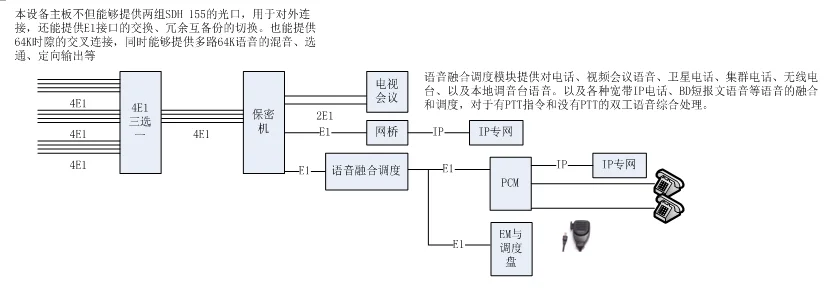
Multi-Service Transmission Equipment Diagram
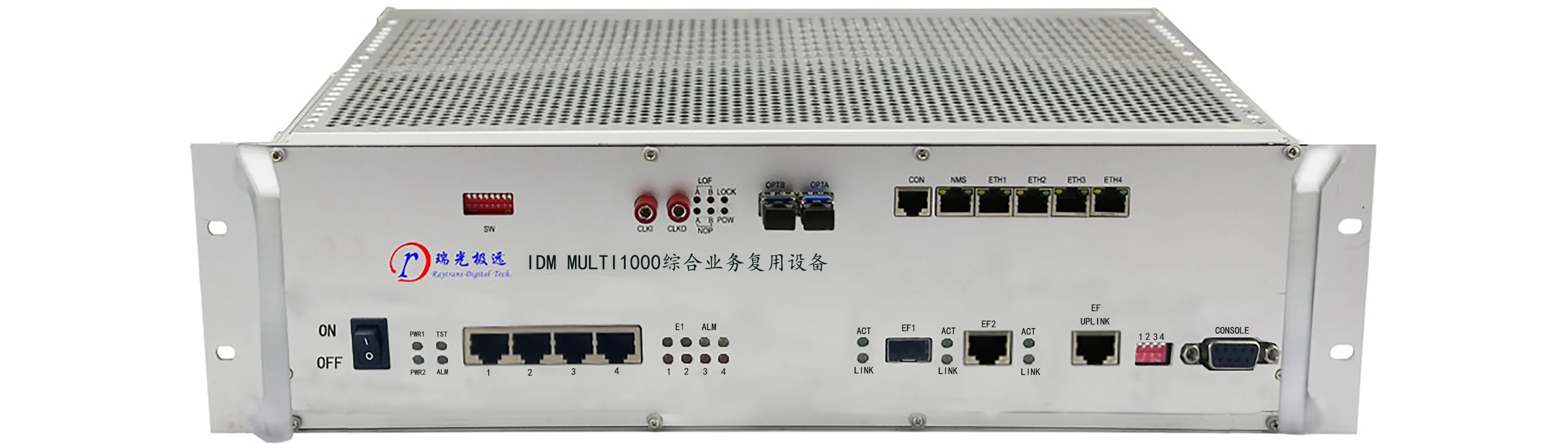
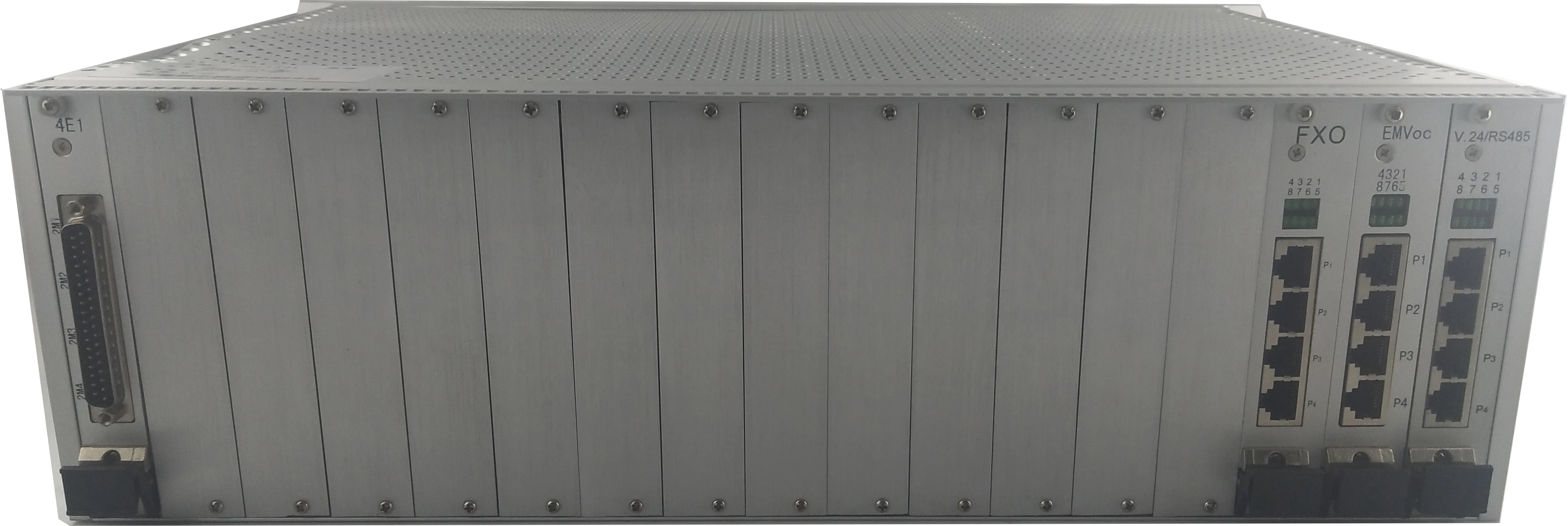
The features of this equipment are as follows:
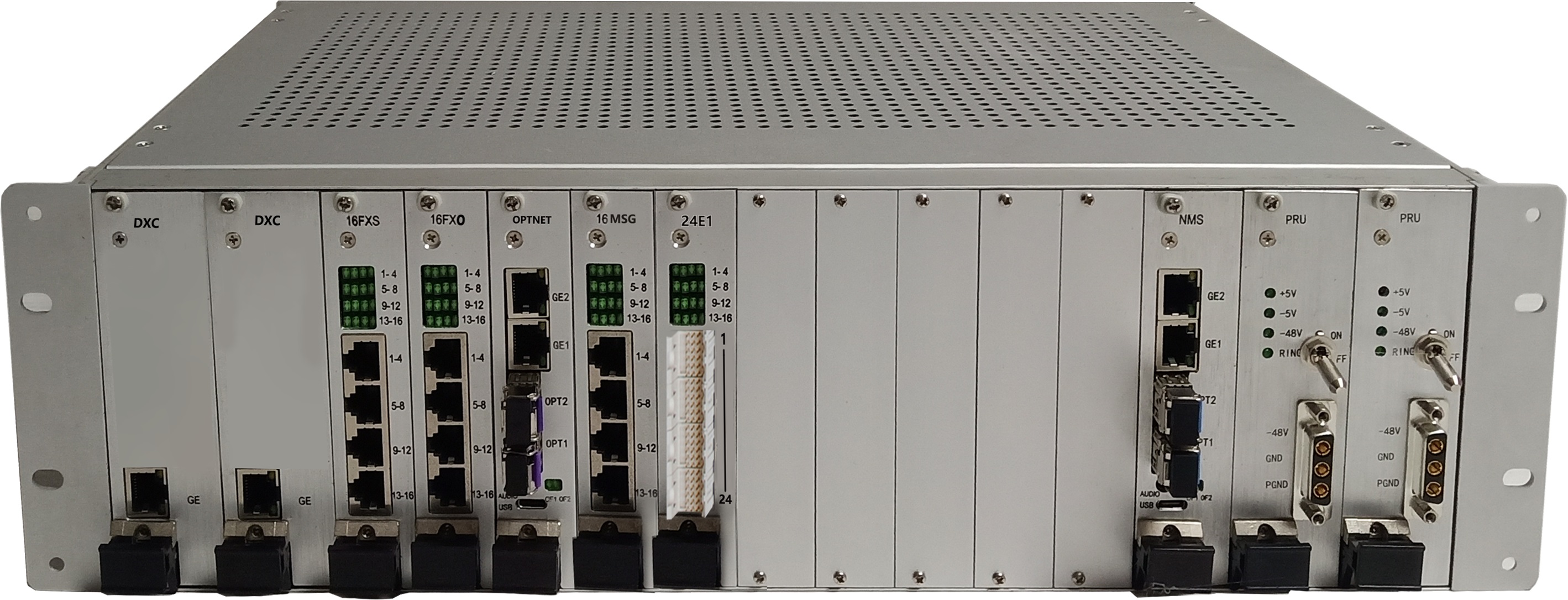
High security and reliability: Optional full-system redundancy, including power supply redundancy, main control board redundancy, and transmission link redundancy.
Multiple transmission links: Optional IP links, E1 links, bare fiber links, SDH links, or wireless 4G links.
Multi-link protection: When multiple uplink types are configured, automatic protection switching between different types of uplinks is supported. As long as one transmission link remains operational, normal service transmission is guaranteed.
Multiple service types: Optional FXO/FXS, 2-wire/4-wire audio (E&M), asynchronous/synchronous RS232, asynchronous/synchronous RS422, RS485, 10/100BASE-T, V.21, V.22, V.24, V.34, dry contact, CAN bus, magneto telephone, hotline telephone, V.35, G.703 co-directional 64K, etc.
Strong scalability: Modular design with 10 I/O slots, with no distinction between service and line slots, meeting current application requirements and future expansion needs. Modules can be replaced or added as required, providing an economical and efficient solution.
Easy installation and maintenance: Supports transmission over high-latency satellite links, with options for E1, V.35, or Ethernet satellite links.
Easy installation and maintenance: Built-in self-test signal insertion for verifying channel transmission status, assisting in equipment commissioning and convenient maintenance.
Centralized monitoring system: Optional network management functionality with automatic loading of network-wide configuration information, port parameter configuration, loopback testing, and other features.
Interface quantities: 4 Ethernet interfaces (FE1, FE2, FE3), 1 node clock interface (ECK), and 24 E1 interfaces.
FAQs
What are the features of SDH technology and MSTP products?
I. Development Directions of Next-Generation SDH Technology and Products Regarding the development direction of…
View answerWhat is the difference between PDH and SDH?
I. PDH PDH is the Plesiochronous Digital Hierarchy, which is divided into the European standard and the…
View answerWhat is an E1 line? What are the core knowledge points?
E1 Basics Frame Structure of the E1 Channel In an E1 channel, 8 bits form one timeslot (TS)…
View answerLow-Cost SDH Is an Inevitable Choice for Access Network Construction in the Near to Medium Term
The current status of metropolitan optical networks is that SDH/MSTP (DWDM) optical networks have become the mainstream…
View answerIntroduction to Ethernet Over SDH Technology
Interface specifications: On the SDH side, provides 1 x 155.52Mbps LVDS interface, supporting STM-1.
View answer