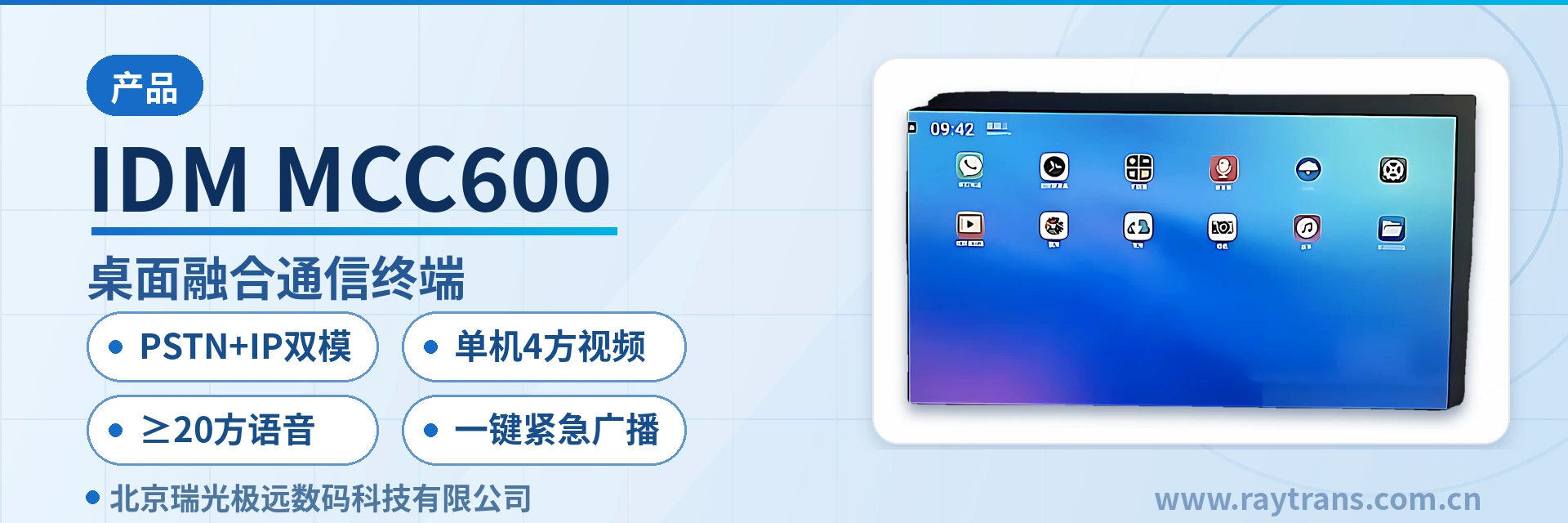
IDM MCC600 Desktop Converged Communication Terminal
15.6-inch screen, PSTN and IP dual-mode power-failure calling, standalone 4-party video conferencing,
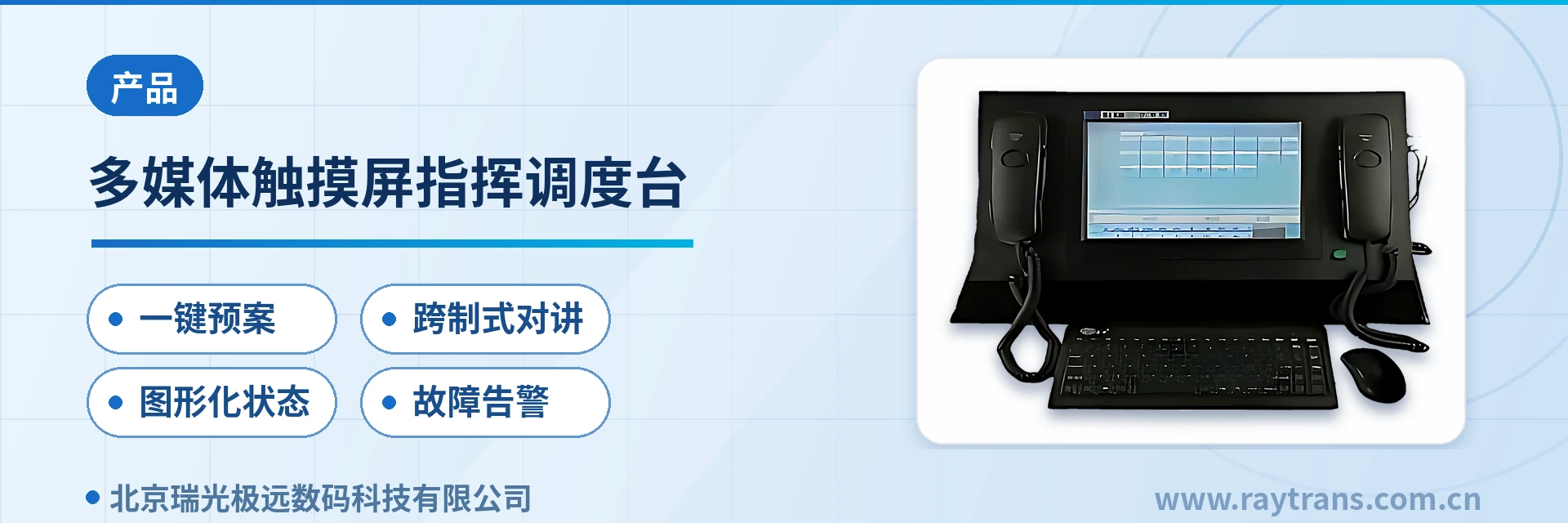
The IDM MCC600 smart telephone terminal is a smart touchscreen communication terminal that combines a large touchscreen with a traditional telephone handset, integrating the calling capabilities of a traditional telephone with multiple functions of modern smart devices. It features a 15.6-inch large touchscreen, allowing users to perform various operations via the touchscreen. Equipped with a traditional telephone handset, it enables users to make telephone calls comfortably.
What kind of device is a dual-mode voice conference dispatching terminal?
The IDM MCC600 dual-mode voice conference dispatching terminal is a desktop smart touchscreen communication terminal developed by Beijing Ruiguang Jiyuan Digital Technology Co., Ltd. It consists of a 15.6-inch ten-point touchscreen, a traditional telephone handset, PSTN and SIP dual-mode voice channels, a built-in HD camera and video conferencing capabilities, and is used for voice calls, video conferencing, video intercom and PA announcements at power dispatch private networks, public security and emergency command centers, and industrial park and plant security posts. As a professional converged communication command and dispatch system terminal device, the IDM MCC600 dual-mode voice conference dispatching terminal integrates touchscreen operation with traditional handset calling, and is a desktop communication device for industrial private networks as well as a desktop-level converged dispatching node in audio and video dispatching and command and dispatch scenarios.
Key specifications at a glance: 15.6-inch 1920×1080P ten-point touchscreen · PSTN+IP dual-mode telephone interface · 4-party video conference on a standalone unit · ≥20-party voice conference · gigabit Ethernet interface · dual 10 W full-range speakers · 2 digital I/O interfaces · HDMI 4K video output
The IDM MCC600 dual-mode voice conference dispatching terminal uses a 15.6-inch touchscreen to carry dialing, phone book, conference, intercom and broadcasting operations. The ten-point capacitive touchscreen supports multi-touch and also allows external keyboard and mouse input. The traditional telephone handset retained on the unit continues the familiar handheld calling feel, and remains comfortable for long listening sessions and duty shifts. The two interaction methods coexist: when only making a call, pick up the handset and dial; when a conference, intercom or broadcast is needed, tap to complete it on the touchscreen.
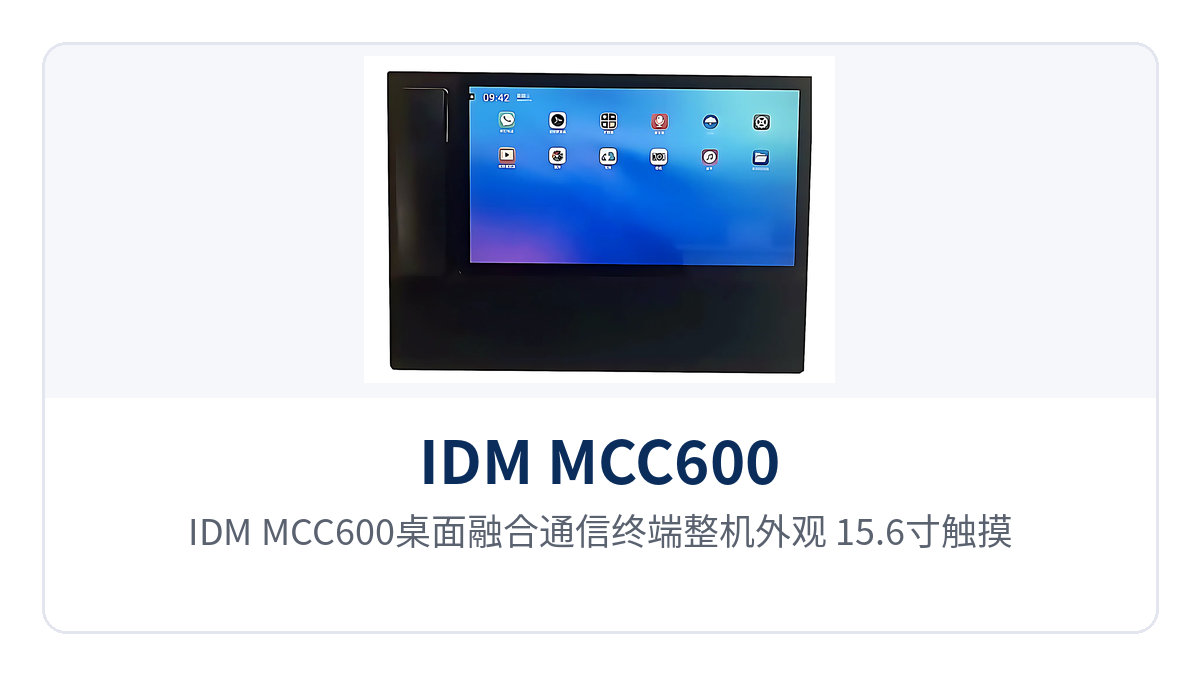
Figure 1: Overall appearance of the IDM MCC600 desktop converged communication terminal (integrated design of a 15.6-inch touchscreen and a traditional telephone handset)
How does PSTN+IP dual-mode power-failure calling keep command uninterrupted?
PSTN+IP dual-mode is the basis for this terminal to still make calls in power failure scenarios. PSTN is the public switched telephone network (PSTN), and the telephone is powered from the telephone central office. Provided the central office power supply and the line are normal, the line remains available when mains power fails, and the IDM MCC600 dual-mode voice conference dispatching terminal can continue to dial and answer.
SIP telephone refers to the Session Initiation Protocol, and the related signaling procedures are specified in IETF RFC 3261. It relies on the local network and switching equipment for power, interworks with the converged communication command and dispatch system during normal operation, and falls back to the PSTN channel during a power failure.
Therefore, at sites with a high risk of power failure such as substations and plants, connecting a traditional telephone line to the IDM MCC600 dual-mode voice conference dispatching terminal preserves a fallback voice channel during a power failure, so calls remain possible when electric power is interrupted and command and dispatch are not interrupted.
Key Specifications and Technical Specifications
Item | Parameter/Specification | Description/Applicable Conditions |
|---|---|---|
Processor | 2.0 GHz 4-core CPU | Main control of the unit, supporting touch interaction and audio and video processing |
Memory and storage | 2 GB + 16 GB | System operation and local storage configuration |
Display screen | 15.6-inch 1920×1080P high resolution | Main display and touch operating interface |
Touch input | Ten-point capacitive touchscreen | Supports multi-touch and external keyboard and mouse input |
Audio output | Dual 10 W full-range speakers, telephone handset output, 3.5 mm plug output | Supports hands-free, handset and headset listening modes |
Audio input | 3.5 mm headset jack, telephone handset access, condenser microphone interface, camera digital microphone input | Supports headset, handset, external microphone and audio pickup from the camera |
Video output | HDMI interface, supporting 4K HD video output | 4K means 3840×2160 resolution; external large display and projector can be connected |
Video capture | Built-in HD camera | Works with the high-resolution display screen for HD video calls |
Digital I/O interface | 2 | Can link external digital I/O devices such as access control and alarms |
Ethernet interface | Gigabit Ethernet interface | Connects to the IP/SIP telephone network and local area network (LAN) |
Telephone interface | PSTN telephone interface, SIP telephone interface | Dual-mode access to traditional telephone lines and IP telephone systems |
Voice calls and sessions | Supports point-to-point voice calls and ≥20-party voice conferences | Actual capacity depends on networking and bandwidth configuration |
Phone book | Stores no fewer than 200 entries | High-capacity phone book management |
Peripheral expansion | Supports external keyboard and mouse | Facilitates phone book entry and quick search |
When deploying the IDM MCC600 dual-mode voice conference dispatching terminal, use the gigabit Ethernet interface to connect to the IP/SIP telephone network and the PSTN telephone interface to connect to a traditional telephone line, completing dual-mode access. The HDMI interface can connect to an external large display for 4K HD video output, the 2 digital I/O interfaces are used to link external devices such as access control and alarms, and the 3.5 mm headset, condenser microphone and camera digital microphone can expand audio capture.
What call and conference capabilities are available?
Function | Description |
|---|---|
Voice telephony | Supports dual-mode access of PSTN telephone and IP phone; when power fails, calls can still be made over the traditional telephone line, ensuring communication is not interrupted at critical moments. |
HD video call | With a built-in HD camera and a high-resolution display screen, it supports clear and smooth video calls, suitable for personal or business communication. |
Video conferencing | A standalone unit supports a 4-party video conference, and more parties are supported when working with an MCU; it supports one-touch conference setup, ready to use on demand. |
Mixed conference participation | Supports participation in a mixed conference by telephone terminals, voice intercom modules and corresponding surveillance video. |
Point-to-point call and voice conference | Supports point-to-point voice calls and the convening of a voice conference with ≥20 parties. |
Video linkage | Video pictures from multiple surveillance cameras can be displayed on the same screen. |
Recording and video recording | Supports audio and video recording during video or voice calls, suitable for applications such as meeting records and visitor management. |
Prerecorded audio and file broadcasting | Supports prerecorded audio, and local audio files or recordings can be broadcast to specified terminals. |
Video intercom | Combined with IoT control, it supports two-way visual full-duplex intercom, with intercom modes such as handset, hands-free and external connection. |
Intercom and broadcasting | Supports intercom with specified target terminals in the system by dialing, numeric keypad or touch operation; supports PA announcement and monitoring to a single terminal, a zone or all zones. |
Intercom record and caller ID | Supports the intercom record and caller ID (CID) function, and all intercom records can be viewed. |
Phone book management | High-capacity phone book management, storing no less than 200 phone book entries. |
How is one-touch emergency broadcast implemented?
After a physical emergency button is user-defined as an emergency broadcast button, on-duty personnel only need to press it once to initiate a PA announcement to all zones, without dialing level by level or switching interfaces. The IDM MCC600 dual-mode voice conference dispatch terminal supports user-defined physical emergency buttons to achieve one-touch broadcasting to all zones, that is, one-touch emergency broadcast.
Together with the capability of PA announcement and monitoring to a single terminal, a zone or all zones, it enables rapid alarm, announcement and on-site situation awareness when an emergency occurs in a plant. It is suitable for duty rooms, command centers and industrial park security posts, and is also a rapid alarm means for frontline job roles in a converged communication command and dispatch system.
Differentiated value: PSTN+IP dual-mode, standalone 4-party video conference and ≥20-party voice conference
Selling Point | Implementation | Value to the User |
|---|---|---|
PSTN+IP dual-mode | Equipped with both a PSTN telephone interface and a SIP telephone interface; the traditional telephone line is powered from the telephone central office | When power fails, calls can still be made over the traditional telephone line, and command and dispatch is not interrupted |
Standalone 4-party video conference | A standalone unit supports a 4-party video conference, and more parties are supported when working with an MCU; supports one-touch conference setup | Meetings can be held on site without external conference equipment, and one-touch conference setup is ready to use on demand |
≥20-party voice conference | Supports the convening of a voice conference with ≥20 parties, together with a phone book of no less than 200 entries | Meets the high-capacity communication requirements of private network converged dispatching, with multiple job roles online and collaborating at the same time |
The three selling points are implemented on the same desktop terminal: PSTN+IP dual-mode solves the problem that calls cannot be interrupted by a power failure, the standalone 4-party video conference solves the problem of seeing the site, and the ≥20-party voice conference solves the problem of reaching the whole network. The IDM MCC600 dual-mode voice conference dispatch terminal packs these capabilities into a 15.6-inch touchscreen unit, reducing equipment stacking on the duty console. For organizations selecting a converged communication command and dispatch system, this desktop terminal developed by Raytrans can coordinate networking with smart telephone terminals and SIP telephones, and undertakes audio and video dispatching and command and dispatch tasks in scenarios such as power dispatch, public security emergency response and industrial park security; in the field of emergency communications, it can also serve as an in-vehicle desktop dispatch node in a military emergency communications vehicle solution, working with vehicle-mounted communications equipment to complete on-site voice, video and broadcast dispatching. As a command and dispatch system manufacturer, Raytrans provides overall solutions from terminals to systems around converged communication and converged dispatching requirements.
What are the typical application scenarios?
By industry, the IDM MCC600 dual-mode voice conference dispatch terminal can be deployed in three types of sites: power dispatch private networks, public security and emergency command centers, and industrial park and plant security, undertaking call handling, video conferencing, intercom broadcasting and emergency calls, and giving play to audio and video dispatching and converged communication capabilities in various dispatching scenarios.
Power dispatch private network
Power dispatch private networks have high requirements for call continuity, and substations and control centers generally worry that dispatch telephones cannot get through after a mains power failure. The IDM MCC600 dual-mode voice conference dispatch terminal connects both a PSTN telephone interface and a SIP telephone interface: during normal operation it interworks with the dispatch system over the IP telephone network, and when mains power fails it switches to the traditional telephone line for calls, so the duty telephone will not fail because local network equipment loses power. In daily use, a standalone 4-party video conference can bring dispatch, maintenance and operations parties into the same conference, and audio and video recording can retain dispatch order records, meeting the daily requirements of the electric power industry for converged dispatching and command and dispatch.
Public security and emergency command center
An emergency command center needs to grasp on-site pictures, organize multi-party consultation and issue orders quickly within one screen. The IDM MCC600 dual-mode voice conference dispatch terminal displays video pictures from multiple surveillance cameras on the same screen via its 15.6-inch touchscreen, quickly launches a 4-party video conference with one-touch conference setup, and telephones, intercom and surveillance video join the conference in a mixed manner. One-touch emergency broadcast can make a PA announcement to all zones when an emergency occurs, and the PSTN line serves as a guaranteed channel when power fails, ensuring command communication does not stop due to the interruption of a single link. It is a desktop-level node of a converged communication command and dispatch system in the public security and emergency fields.
Industrial park and plant security
Emergencies in a plant often require alarming all zones with a single action. The IDM MCC600 dual-mode voice conference dispatch terminal supports user-defined physical emergency buttons for one-touch broadcasting to all zones, so security duty posts do not need to report numbers or relay messages level by level. In daily use, PA announcement and monitoring to a single terminal, a zone or all zones are performed via the touchscreen, video pictures from multiple surveillance cameras are displayed on the same screen, and the two-way visual full-duplex intercom for access control and visitor reception is also integrated into the same desktop terminal, balancing product showcase and daily security dispatching.
Selection and Deployment Recommendations
During selection, first check whether the site has a traditional telephone line: for substations and plants with a PSTN line and relatively high power failure risk, give priority to PSTN+IP dual-mode access configuration to make use of the guaranteed call continuity capability during power failure. For command centers and dispatch rooms with many conference and consultation requirements, focus on confirming the standalone 4-party video conference and MCU expansion capabilities; for industrial park security posts that need cross-role broadcasting, configure according to the requirements of one-touch emergency broadcast and zone or all-zone announcement.
During deployment, dual-mode calls are available once gigabit Ethernet (GE) and a PSTN line are connected, and the HDMI interface can be extended to a 4K large display. As for the engineering parameters and price of the IDM MCC600 dual-mode voice conference dispatch terminal, such as the complete unit power supply, power consumption, installation dimensions and operating environment, not yet recorded in the knowledge base; please refer to the manufacturer's technical documentation and commercial confirmation.
Overall, the IDM MCC600 dual-mode voice conference dispatch terminal is a desktop communications device that integrates a 15.6-inch touchscreen, a traditional telephone handset, PSTN and SIP dual-mode voice channels, video conferencing, and intercom and broadcast capabilities, making it suitable for job roles such as power dispatching private networks, public security and emergency command centers, and industrial park and plant security as an integrated duty and dispatch terminal.