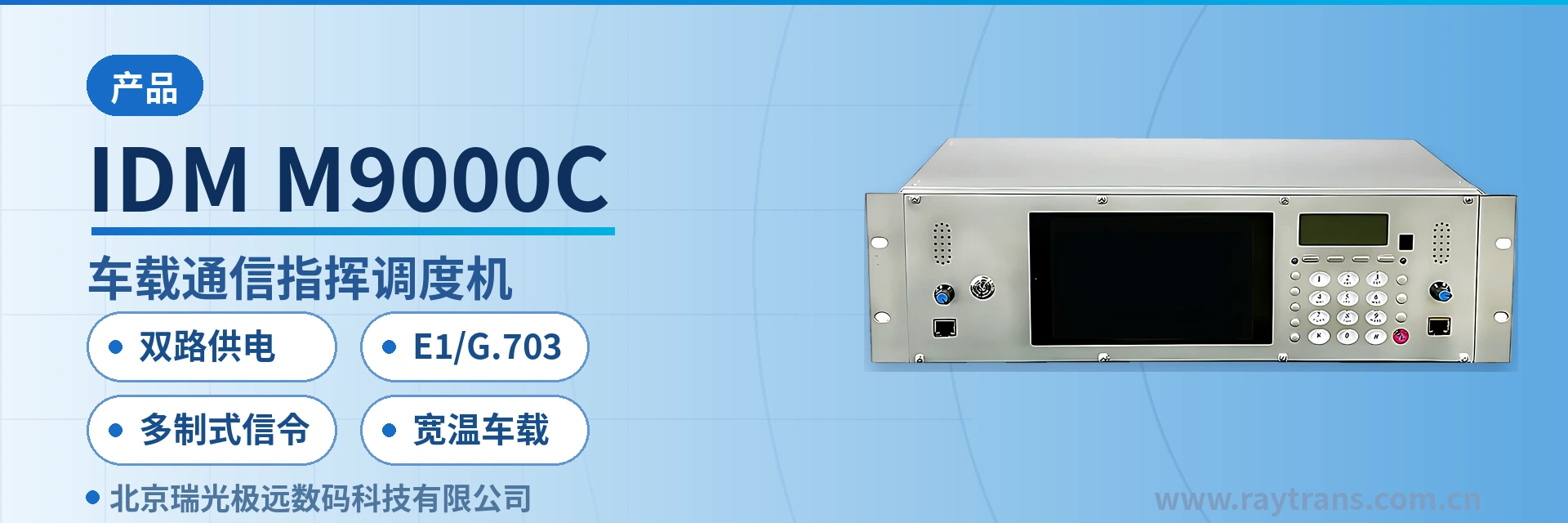
IDM M9000C Vehicle-Mounted Communication Command and Dispatch Exchange
48 radio channels and 120 telephone channels mixed in one unit, 12 hot-swappable card slots, dual power supply, wide temperature range
The IDM M9000C vehicle-mounted communication command and dispatch exchange adopts advanced digital signal processing technology and large-scale integrated circuit technology. It can connect wireless communication terminals of different frequencies, different standards, and different types to the same voice platform, achieving interconnection of entirely different wireless communication systems. It can also connect to the fixed telephone network, cellular mobile communication network, Internet (IP) network, wireless local area network (WLAN), trunking mobile communication system, satellite communication (SATCOM) system, and more.
The IDM M9000C vehicle-mounted communication command and dispatch unit is a multi-standard vehicle-mounted communication command and dispatch unit developed by Beijing Ruiguang Jiyuan Digital Technology Co., Ltd. (Raytrans). It is used to connect wireless communication terminals of different frequencies, different standards, and different types to the same voice platform, achieving audio and video dispatching and unified command and dispatch, and interconnecting with the fixed-line telephone network, cellular mobile communication network, IP network, wireless local area network (WLAN), trunking mobile communication system, and satellite communication system.
Communication resources at a vehicle-mounted command site are usually pieced together: HF radio sets, VHF radio sets, 350M and 800M trunking intercom, satellite phones, and public network phones each form their own networks, and dispatchers have to switch back and forth among multiple microphones and gateways. As a converged communication command and dispatch system, the IDM M9000C packs switching, interface card slots, and dispatch control into a single 482×309×132 (mm) chassis. Once on site, it can be powered and cabled up for dispatching. One device undertakes the interconnection tasks that previously required cascading multiple gateways, providing an integrated dispatch console operating experience for on-site product showcase and command and dispatch.
Key Specifications at a Glance: 48 radio set access · 120 telephone terminals · 2 groups of E1/G.703 trunks · AC220V/DC-48V dual power supply · overall power consumption ≤150W · -10~+50℃ wide-temperature vehicle-mounted
As a professional command and dispatch system manufacturer, Raytrans can provide a mature military emergency communications vehicle solution, meeting the deployment requirements of audio and video dispatching and converged communication command and dispatch systems in vehicle-mounted scenarios.
What kind of equipment is the multi-standard vehicle-mounted communication command and dispatch unit?
The overall structure of the IDM M9000C consists of a main control and switching card and 12 user card slots. The slots are populated in a mixed manner according to on-site terminal types with VHF radio interface cards, FXS subscriber telephone cards, FXO central office telephone cards, Hot hotline phone cards, and MAG magneto telephone cards. The interface cards are hot-swappable, so capacity expansion only requires inserting cards without replacing the whole unit. As a converged communication command and dispatch system designed for audio and video dispatching scenarios, the device can undertake command and dispatch tasks in both vehicle-mounted and fixed command post environments.
The main control and switching card provides switching and conferencing resources: 64-party conference call (expandable to 128 parties), up to 32 simultaneous conference calls, 64-channel DTMF detection, and 2 built-in E1 interfaces that can be configured for China SS7 signaling or PRI signaling, or configured as 60 subscriber interfaces.
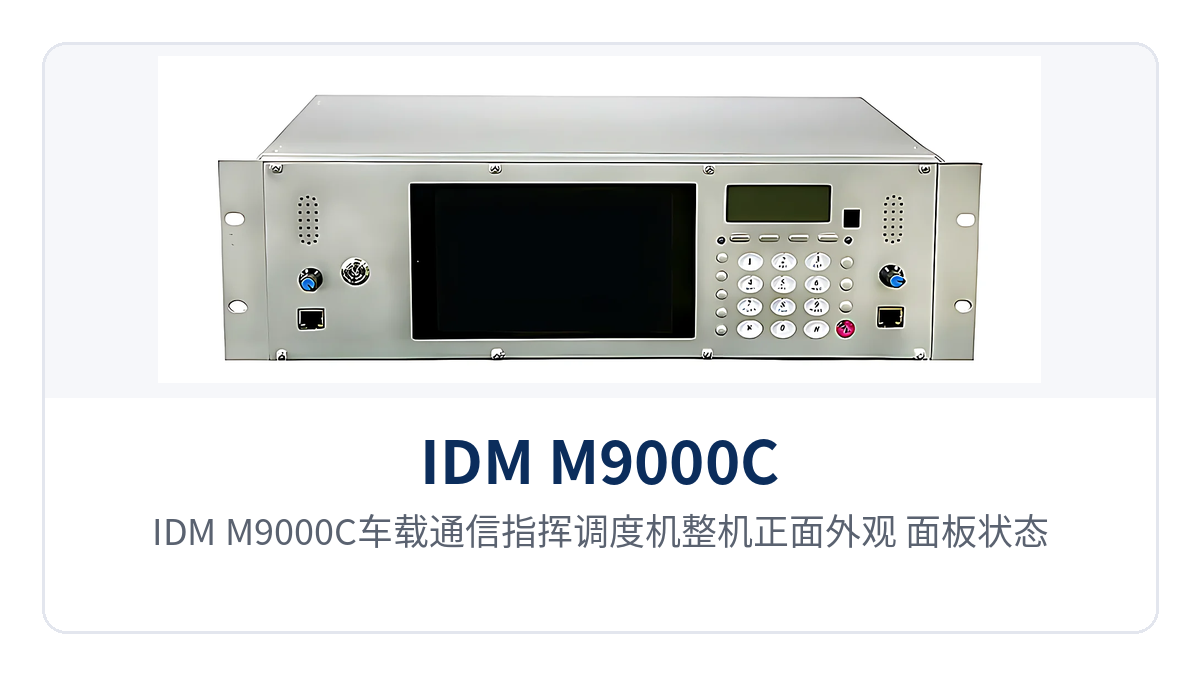
Figure 1: IDM M9000C vehicle-mounted communication command and dispatch unit front view — panel status indicator LEDs and interface labels
In terms of equipment form factor, the IDM M9000C is a rack-mounted vehicle-mounted device with dimensions of 482×309×132 (mm). It can be secured inside a communication vehicle cabin according to standard cabinet width, and can also be installed in the same way in fixed command posts and temporary camps. The dispatch console connects to the unit over Ethernet, and dispatchers complete calls, conferences, and radio talk right control at their seats without having to operate item by item on the host panel. As a command and dispatch system manufacturer, Raytrans includes this model in its military emergency communications vehicle solution product lineup, making it easy for users to intuitively understand the equipment form factor and interface layout during audio and video dispatching and product showcase.
Core Specifications and Interface Specifications Overview
The access capacity of the IDM M9000C is jointly determined by the main control and switching card and the 12 user card slots. Which interface cards are inserted determines how many radio sets and how many telephones the vehicle can connect. Functional configuration, switching capacity, interface specifications, and power supply environment are listed in four tables for item-by-item verification against on-site terminal quantities during projects.
| Function | Description |
|---|---|
| Radio set access | A standalone unit can connect 48 radio sets, including HF radio sets, VHF single sideband (SSB) radio sets, and 350M and 800M trunking intercom |
| Multi-party conferencing | The main control and switching card provides 64-party conference call, expandable to 128 parties, with up to 32 simultaneous conference calls |
| DTMF detection | 64-channel dual-tone multi-frequency (DTMF) detection simultaneously, and the telephone keypad can issue commands to control radio channel transmission and reception |
| Subscriber interface | 12 user card slots for mixed insertion of VHF radio interface cards, FXS subscriber cards, FXO central office cards, Hot hotline cards, and MAG magneto cards |
| Telephone expansion | A standalone unit connects 120 ordinary telephones or wired intercom terminals, expandable to 180 lines via 2 E1 interfaces |
| Voice recording | Up to 30 channels of voice can be recorded simultaneously; E1 voice can be sent to a computer over Ethernet for storage |
| IP access | SIP server cards and IP gateway cards can be inserted; the WAN port supports RJ45 electrical ports or FC optical ports |
| Trunk interface | GSM/CDMA interface, ordinary telephone trunk, magneto and 2100 Hz magneto interface, satellite phone interface, E1 digital trunk |
| Operating mode | Four basic modes — multi-party conferencing, ordinary telephone intercom, PTT terminal intercom, and PA — which can be used in combination |
The first two items in the table determine how many terminals the whole vehicle can carry, while the trunk interface and IP access determine which type of network can be connected. In actual configuration, first determine the number of VHF interface cards according to the number of radio channels, then determine the number of FXS, FXO, and MAG cards according to the number of telephones and intercom terminals, and leave the remaining slots for SIP server cards and IP gateway cards.
| Item | Parameter/Specification | Description/Applicable Conditions |
|---|---|---|
| Radio set access | 48 channels | Including HF radio sets, VHF SSB radio sets, and 350M and 800M trunking intercom |
| Telephone and wired intercom terminals | 120 lines | Expandable to 180 lines via 2 E1 interfaces |
| User card slots | 12 | VHF cards provide 4 channels each; FXS, FXO, and MAG cards provide 10 lines each |
| Conference call | 64 parties, expandable to 128 parties | Up to 32 simultaneous conference calls |
| DTMF detection | 64 channels | Used in conjunction with telephone keypad control of radio transmission and reception |
| Voice recording | 30 channels | E1 voice can be sent to a computer over Ethernet for recording |
| E1 interface | 2 groups | Configurable for China SS7, PRI signaling, or as 60 subscriber interfaces |
| Item | Parameter/Specification | Description/Applicable Conditions |
|---|---|---|
| E1 bit rate and line code | 2.048 Mbps, HDB3 | Standard protocol supports ITU-T G.703 |
| E1 impedance | 75 Ω/120 Ω | Selected according to peer device and cable type |
| E1 frame structure | PCM30/32 | 32 64K time slots per frame, with 30 time slots carrying voice channels |
| E1 signaling | Channel-associated signaling (CAS), China No.1, China SS7, PRI | Configured according to the signaling type of the peer exchange |
| Ethernet interface | RJ-45, N×64K (N≤32) | Supports IEEE802.3, full/half duplex/adaptive |
| FXO, FXS interface | Audio 300 Hz~3400 Hz, G.711 A-law | Three-element complex impedance 200 Ω+560 Ω//0.1 μF, loop current 20 mA/channel |
| EM2/4-wire and magneto interface | Audio 300 Hz~3400 Hz, balanced 600 Ω | G.711 A-law companding, return loss no less than 18 dB |
| Item | Parameter/Specification | Description/Applicable Conditions |
|---|---|---|
| Power supply mode | AC220V/DC-48V | Dual power supply; mains power when parked, DC power distribution from the communication vehicle while moving |
| Overall power consumption | ≤150W | Power draw and heat dissipation for long-duration vehicle-mounted duty are calculated on this basis |
| Operating temperature | -10℃~+50℃ | Wide-temperature vehicle-mounted, covering northern winter parking and summer cabin high temperatures |
| Relative humidity | 0~95% (non-condensing) | Ventilation must be ensured when used in humid cabin environments |
| Dimensions | 482×309×132 (mm) | Standard cabinet width, can be fixed-installed in a communication vehicle cabin |
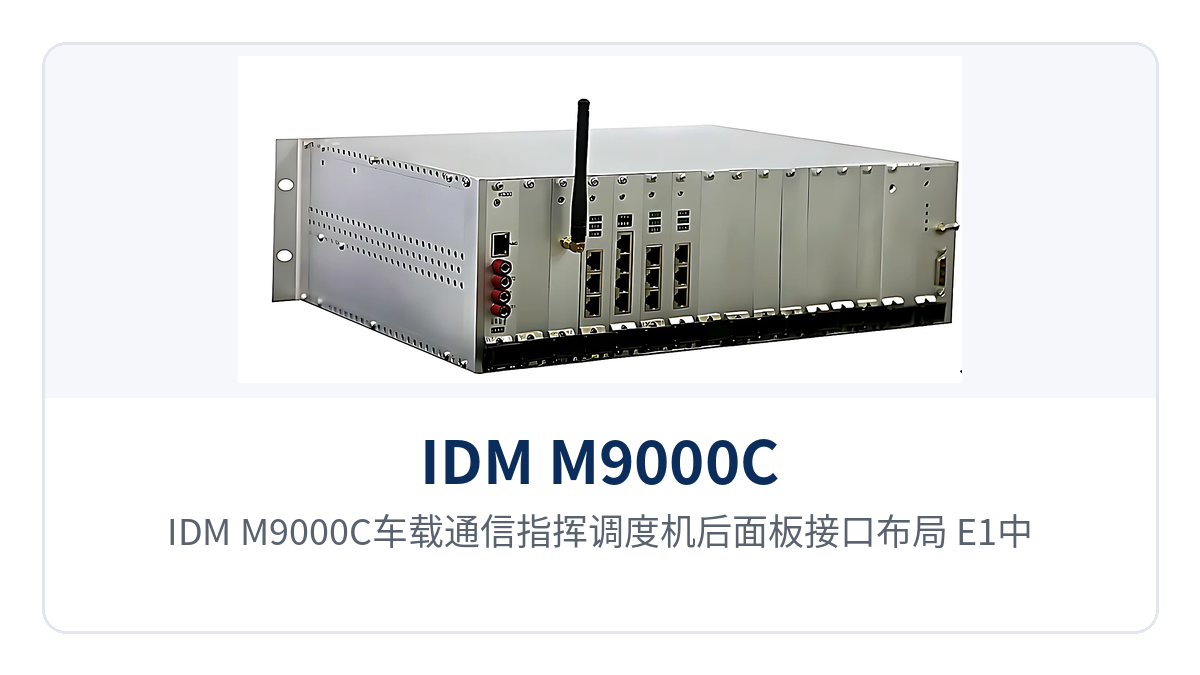
Figure 2: IDM M9000C vehicle-mounted communication command and dispatch unit rear panel interface layout — E1 trunk and subscriber interface area
How do dual power supply and ≤150W power consumption of the vehicle-mounted command and dispatch unit support long-duration duty?
The power conditions for long-duration vehicle-mounted duty differ from those of an equipment room: after the vehicle engine is shut off, mains power is interrupted, and command vehicles usually rely on a DC distribution panel or a vehicle-mounted auxiliary battery to continue supplying power, so the equipment must be able to start up under both power conditions. The IDM M9000C adopts AC220V/DC-48V dual power supply with overall power consumption ≤150W. DC-48V is drawn from the communication vehicle's DC power distribution, and AC220V is used for mains power when parked; the two power feeds cover both moving and stationary states. This power supply design is also one of the reasons Raytrans recommends this model in its military emergency communications vehicle solution; combined with dispatch console seat operations, it keeps the command and dispatch link uninterrupted during audio and video dispatching.
Calculated at ≤150W overall power consumption, the theoretical power consumption for 10 hours of continuous duty does not exceed 1.5 kWh, leaving ample margin when equipped with a DC distribution panel or vehicle-mounted auxiliary battery. The wide-temperature vehicle-mounted specifications are an operating temperature of -10℃+50℃ and relative humidity of 095% (non-condensing), so the unit can be powered up for dispatching both when parked in northern winter and inside a closed cabin in summer, without additional air conditioning or insulation measures.
There is also an engineering practice on the power supply side: when DC-48V is drawn from the vehicle's DC power distribution, a fuse and power switch matched to the overall power consumption should be installed at the distribution end to prevent the surge at vehicle startup from affecting the dispatch host. The two power supply modes, AC220V and DC-48V, are selected according to on-site conditions, and the same set of equipment can be used in vehicles, fixed command posts, and temporary camps. This is also the deployment method repeatedly verified by command and dispatch system manufacturers in converged communication command and dispatch system deliveries.
How are E1 trunks and multi-standard signaling connected to the vehicle-mounted dispatch unit?
The 2 E1 interfaces of the IDM M9000C are designed according to ITU-T G.703, with a bit rate of 2.048 Mbps, HDB3 line code, selectable 75 Ω/120 Ω impedance, and a PCM30/32 frame structure. These interfaces can directly connect to existing PCM multiplexers and SDH transmission links in industries such as electric power, railways, and energy, so the dispatch unit can join the existing private network without separately modifying the transmission network, providing stable trunk channels for audio and video dispatching and command and dispatch services.
Knowledge Block: What Are G.703 and PCM30/32 Signaling
G.703 is the ITU-T recommendation on the physical layer of the 2.048 Mbps interface, specifying electrical parameters such as line code, impedance, and jitter; PCM30/32 divides an E1 frame into 32 64K time slots, of which 30 carry voice channels and 2 are used for synchronization and signaling. Channel-associated signaling carries signaling within the voice channel time slots, while China SS7 and PRI signaling use a common channel to carry signaling separately, which determines the interconnection form between the E1 and the peer exchange or dispatch unit.
On the signaling side, the IDM M9000C supports channel-associated signaling, China No.1 signaling, China SS7 signaling, and PRI signaling. China No.1 signaling is commonly found in legacy SPC switching networks in electric power and railways, while China SS7 and PRI signaling are used for digital SPC exchanges and private network tandem connections; during selection, simply configure according to the signaling type of the peer exchange. The ability of heterogeneous wireless terminals and public network telephones to communicate on the same platform relies on this set of trunks and signaling, which is also the key to maintaining interconnection of the converged communication command and dispatch system in multi-standard environments.
In addition to E1 digital trunks, the IDM M9000C also provides GSM/CDMA interfaces, ordinary telephone trunk interfaces, ordinary magneto interfaces and 2100 Hz magneto interfaces, and satellite phone interfaces. Voice from the fixed-line telephone network, cellular mobile communication network, and satellite communication system can all enter the dispatch platform through these interfaces, and external lines can also monitor VHF radio sets through FXO interfaces.
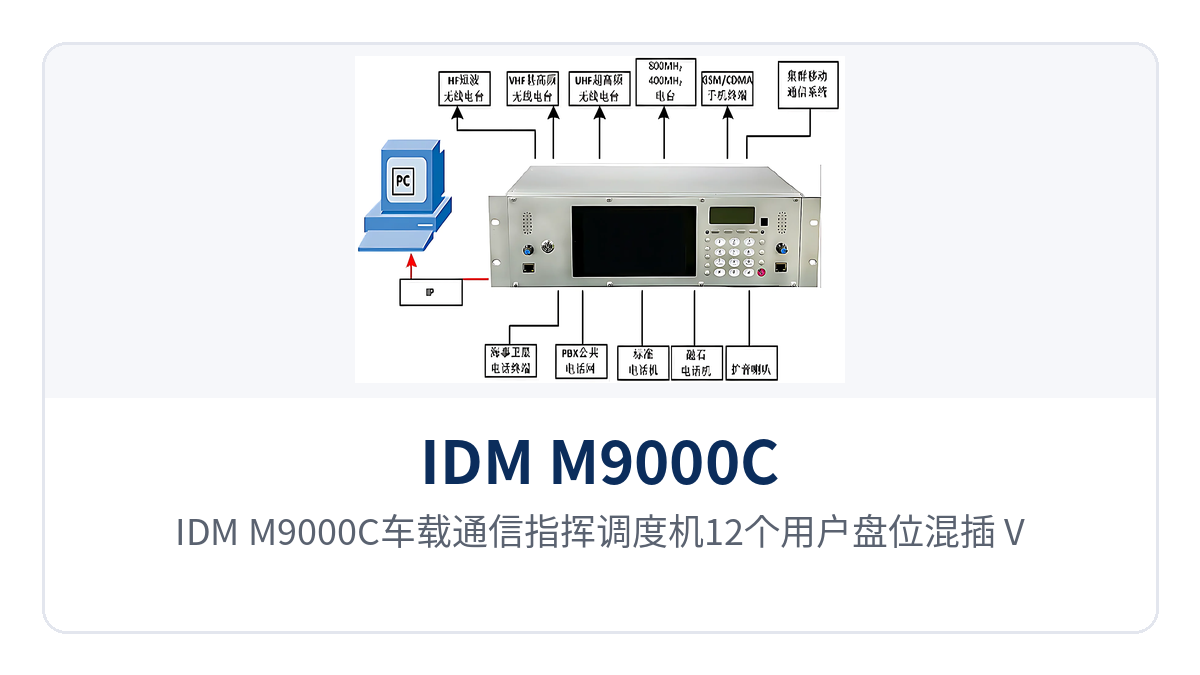
Figure 3: IDM M9000C vehicle-mounted communication command and dispatch unit 12 user card slots with mixed insertion — VHF radio cards and telephone cards layout
How does the vehicle-mounted communication command and dispatch unit connect to radio sets?
The radio set access method for IDM M9000C is to insert VHF radio interface cards, with 4 channels per card; each channel corresponds to the audio and PTT control signals of one radio set, and can connect to the radio transmitter, receiver, and remote control console. The unit can access 48 radio set devices, covering HF shortwave, VHF/UHF single sideband (SSB) radio sets, and 350M/800M trunking intercom, meeting the on-site command and dispatch requirements for multi-format wireless access.
The receive/transmit control of wireless channels has three modes: audio interfaces with PTT function use PTT control mode first; terminals without PTT function, such as conference microphones, use DSP volume control mode, determining receive/transmit by sound level; telephones and mobile phones can use the DTMF keyboard to send control commands to the dispatching exchange. Each radio interface only needs to select one control mode.
The intercommunication between radio sets and telephones has four basic operating modes. Multi-party conferencing and ordinary telephone intercom are suitable for daily duty, while PTT terminal intercom and PA mode are suitable for on-site announcement. In actual use, PA mode can be combined with the other three modes. The following describes each mode by operation method:
- Multi-party conferencing mode: each VHF radio set is assigned one conference number. Listening telephones dial into the conference room and then talk freely. The continuous transmit time of the VHF is limited to within 2 minutes.
- Ordinary telephone intercom mode: a telephone dials the radio access number to listen. Press the telephone flash key or hook switch to obtain a 20-second talk right. The talk right duration can be set by the system, and a prompt tone is played when it is obtained.
- PTT terminal intercom mode: the terminal normally listens and presses the PTT key to speak. The speaking time is determined by the terminal. Ordinary telephones require an additional PTT adapter.
- PA mode: the radio sound is broadcast one-way to all listening telephones, with no limit on the number of listening telephones. It is suitable for issuing instructions and emergency evacuation announcements.
Multiple VHF radio sets can also be operated in parallel: bridge 2 or more radio sets to the same conference room, and the voice received by one radio set can be forwarded to other radio sets or telephone terminals; one telephone can also join multiple radio sets for listening at the same time, and its speech is sent to multiple radio sets simultaneously.
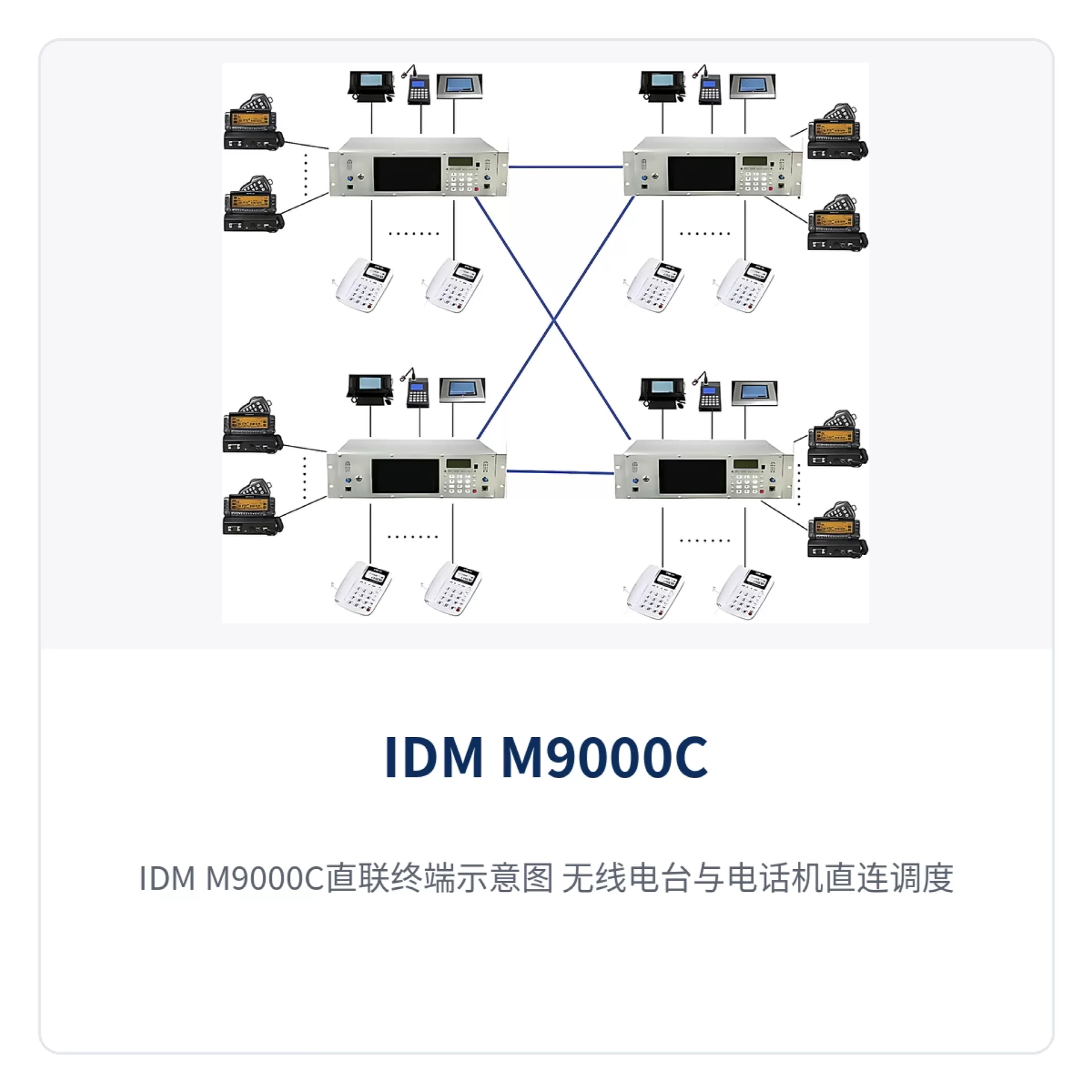
Figure 4: IDM M9000C Direct-Connected Terminal Diagram - Radio Sets and Telephones Directly Connected to the Dispatch Host
How Is Vehicle-Mounted Deployment and Multi-Unit Networking Designed?
IDM M9000C is installed in a vehicle-mounted rack-mounted manner. The 482×309×132 (mm) chassis is fixed inside the communication vehicle cabin, and the radio sets, telephones, and dispatch console are wired nearby. Dispatching can begin once the unit is powered on. When the command vehicle is parked, it connects to AC220V mains power; while moving, it draws DC-48V DC distribution. The two power supply formats share the same main unit and interface configuration, providing flexible power supply adaptation for vehicle-mounted deployment in military emergency communications vehicle solutions.
For multi-unit networking, IDM M9000C can connect to other devices of the same series through twisted pair, E1, or IP routing. The number of similar devices that can be connected at the remote end depends on the number of trunk ports; with two E1 ports configured, it does not exceed 110 loop-start trunk FXO ports. The link between the prefecture-level command center and the on-site command vehicle is selected according to existing transmission conditions: use E1 when the private network has an E1 channel, and use routing when only an IP channel is available.
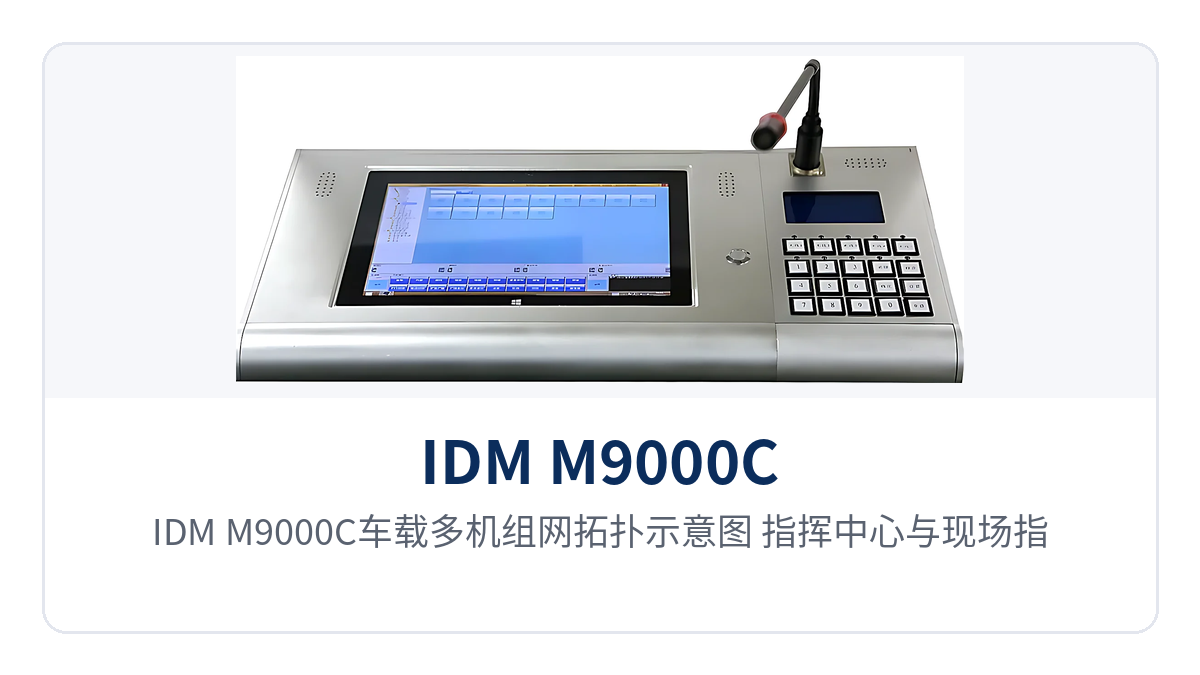
Figure 5: IDM M9000C Vehicle-Mounted Multi-Unit Networking Topology Diagram - Command Center Cascaded with On-Site Command Vehicle
Networking scale is considered in three levels: for standalone command by a single vehicle, only local card slots and local voice channels are used; for two-level command, E1 or IP connects the on-site vehicle with the superior command center, and remote operator seats share local radio set resources; for multi-vehicle collaboration or multi-detachment echeloned command, cascading is performed by level according to the number of trunk ports, and each level retains local independent dispatching capability.
Typical Application Scenarios
On-site command for emergency command, firefighting and rescue, rail transit, and electric power and energy all require integrating multiple communication means into one voice network under limited space and limited power supply conditions. The mixed insertion of card slots and dual power supply design of IDM M9000C are prepared precisely for the conditions of these three types of sites. The implementation methods are described below by scenario.
Emergency Command and Firefighting and Rescue Sites
Firefighting and rescue and emergency command sites need communication as soon as they arrive, and the site often simultaneously has 350M trunking, VHF/UHF radio sets, satellite phones, and public network telephones. IDM M9000C is deployed in a vehicle-mounted manner, integrating trunking intercom, HF and VHF/UHF radio sets, and satellite terminals into the same voice platform. The commander uses one-touch direct, group call, and group call to initiate group command on the dispatch console. Terminals of different formats converse in the same conference room, and the voice dispatching capability shown in the product showcase is fully demonstrated in real combat scenarios.
When the site loses power or mains power is not connected, the main unit switches to DC-48V vehicle-mounted DC distribution for power supply. The overall power consumption is ≤150W, making the power pressure of continuous duty for one command vehicle controllable. The dispatch console provided with the equipment supports pre-defined plan dispatching. Pre-defined plans for flood control, drought relief, explosion, and fire can be edited in advance. When an event occurs, clicking the plan button automatically broadcasts alarms, initiates a conference with the corresponding responsible persons, and sends SMS messages.
Rail Transit Operations and Track Maintenance Emergency Repair
Rail transit operation command and track maintenance emergency repair are distributed across stations, sections, and depots, and existing stored program control (SPC) switching networks mostly use Chinese No.1 or PRI signaling. The two E1 interfaces of IDM M9000C access existing transmission links according to G.703 75Ω/120Ω and PCM30/32, integrating the VHF/UHF radio sets at section emergency repair points, in-station telephones, and the dispatch console into the same platform, so that the emergency repair site and the operation control center can communicate directly.
Section work is characterized by scattered sites and limited cabling. The dispatch host is installed on the rail car or emergency repair vehicle, and radio sets and telephones are connected nearby to VHF cards and FXS cards. Voice channels are backhauled to the control center through existing E1 channels. The operating temperature of the equipment is -10℃~+50℃, and it can be powered on both in winter open-air parking and in summer high-temperature in-vehicle environments, without the need for a separate constant-temperature equipment room for the equipment.
Electric Power and Energy On-Site Emergency Repair Command
Emergency repair command in the electric power and energy industry has high requirements for channel determinism, and PCM and SDH transmission resources usually already exist between substations and line inspection points. IDM M9000C uses two E1 interfaces to connect to existing private network links, integrating trunking intercom, satellite phones, and dispatch telephones used for inspection into the same voice platform, so that calls between the site and the prefecture-level dispatch center do not depend on the public network.
Substations often experience temporary power failure during inspection and maintenance. The main unit can be powered by the DC-48V DC distribution panel, with overall power consumption ≤150W, matching the capacity of the in-station DC system. When multiple groups of personnel need to collaborate at the emergency repair site, the dispatch console organizes calls in group and hierarchical collaboration modes. The team leader, duty operator, and on-site work group each occupy one voice channel, and instruction issuance and feedback do not interfere with one another.
Selection and Deployment Recommendations
IDM M9000C is suitable for vehicle-mounted command scenarios that need to integrate multi-format wireless terminals and public network telephones into one voice network. During selection, check the four items of number of radio channels, number of telephone channels, trunk mode, and power supply conditions one by one, and the configuration list can then be determined. As a professional command and dispatch system manufacturer, Raytrans can provide targeted product showcase and selection support according to on-site requirements.
- Number of radio channels: divide the total number of HF, VHF/UHF, and trunking radio sets to be accessed on site by 4 to obtain the number of VHF radio interface cards; the total shall not exceed 48 channels.
- Number of telephone channels: divide the number of ordinary telephones and wired intercom terminals by 10 to obtain the number of FXS, FXO, and MAG cards; direct access by a standalone unit shall not exceed 120 channels.
- Trunk and signaling: check whether the opposite-end switch uses channel-associated signaling (CAS), Chinese No.1, Chinese No.7, or PRI, and configure the two E1 interfaces according to the type; when intercommunication with the public network or satellite is required, confirm the GSM/CDMA, magneto, and satellite interfaces at the same time.
- Power supply and environment: check whether the communication vehicle has DC-48V DC distribution and AC220V mains power access, calculate the backup power capacity according to ≤150W power consumption, and confirm that the in-cabin temperature is within the range of -10℃~+50℃.
As a multi-format vehicle-mounted communication command and dispatch exchange, IDM M9000C incorporates 48 radio channels, 120 telephone channels, two E1 trunks, and multi-format signaling into one rack-mounted main unit. AC220V/DC-48V dual power supply and ≤150W power consumption make long-term vehicle-mounted field duty more power-efficient, and also allow existing private network transmission links to be reused as they are. Raytrans can combine the actual requirements of military emergency communications vehicle solutions to provide overall design of dispatch console configuration and command and dispatch system. The specific card slot combination, number of interfaces, and project quotation will be provided in a configuration plan after commercial confirmation based on the on-site terminal list.