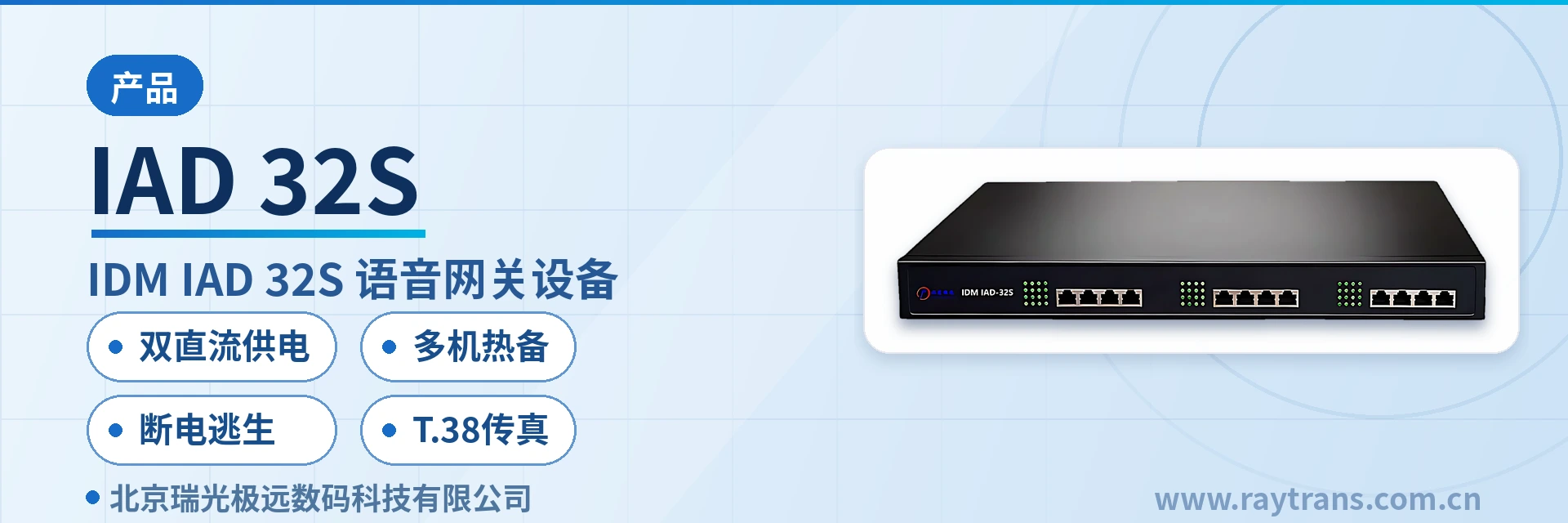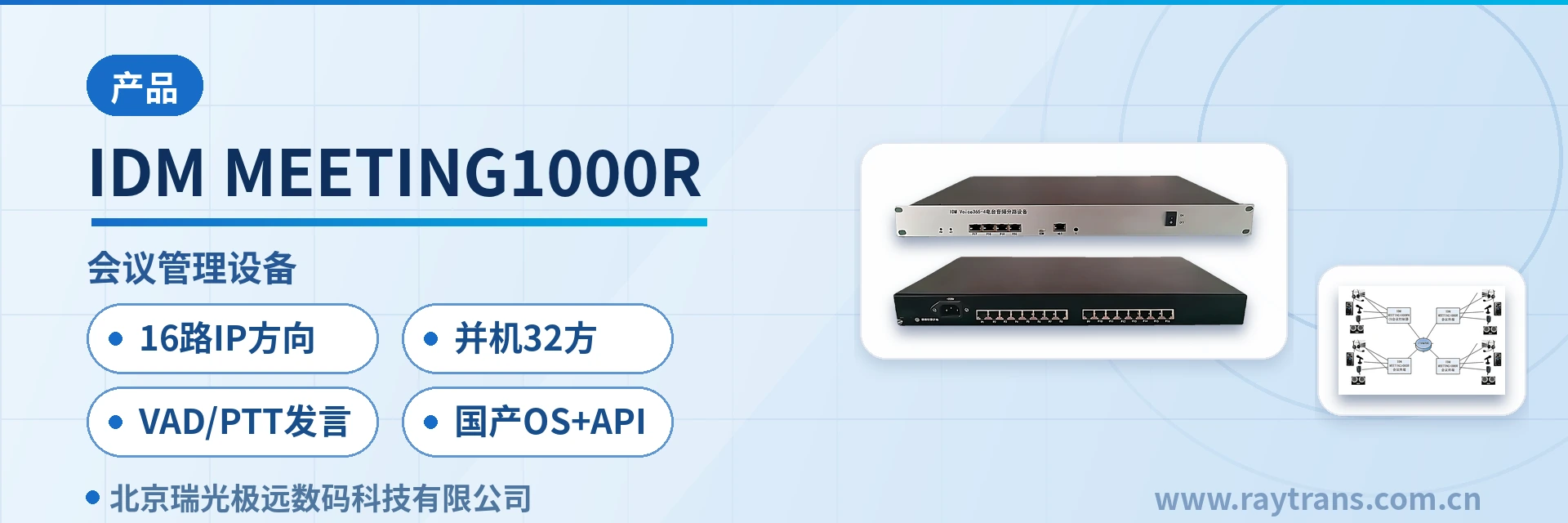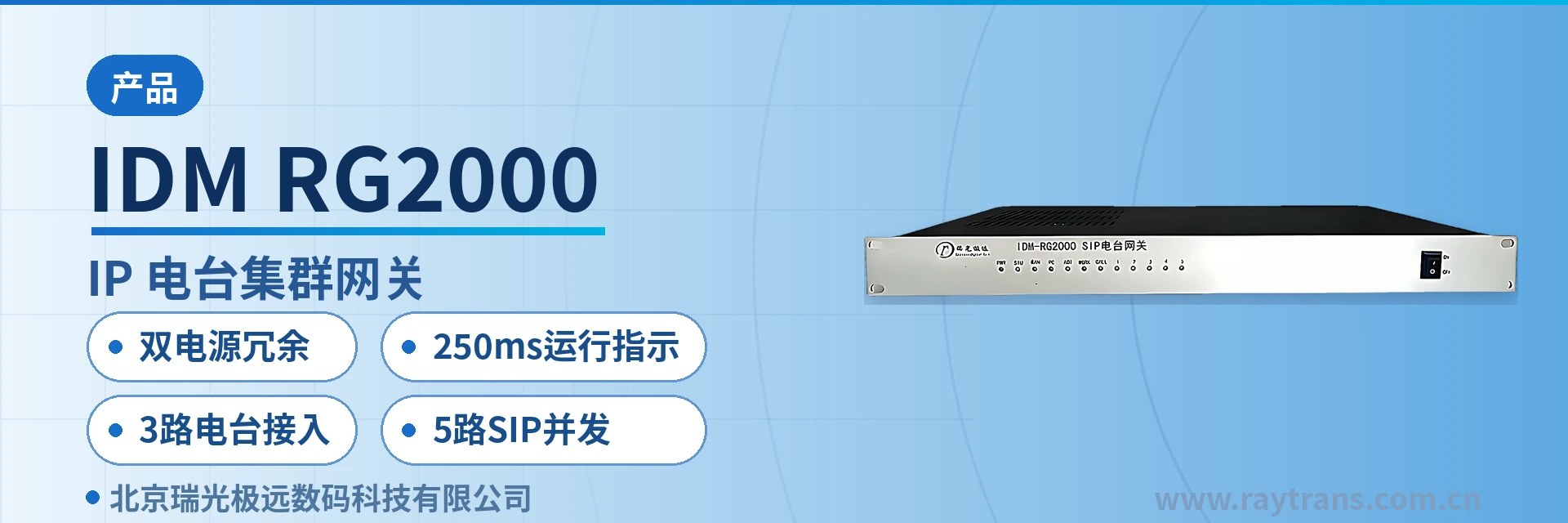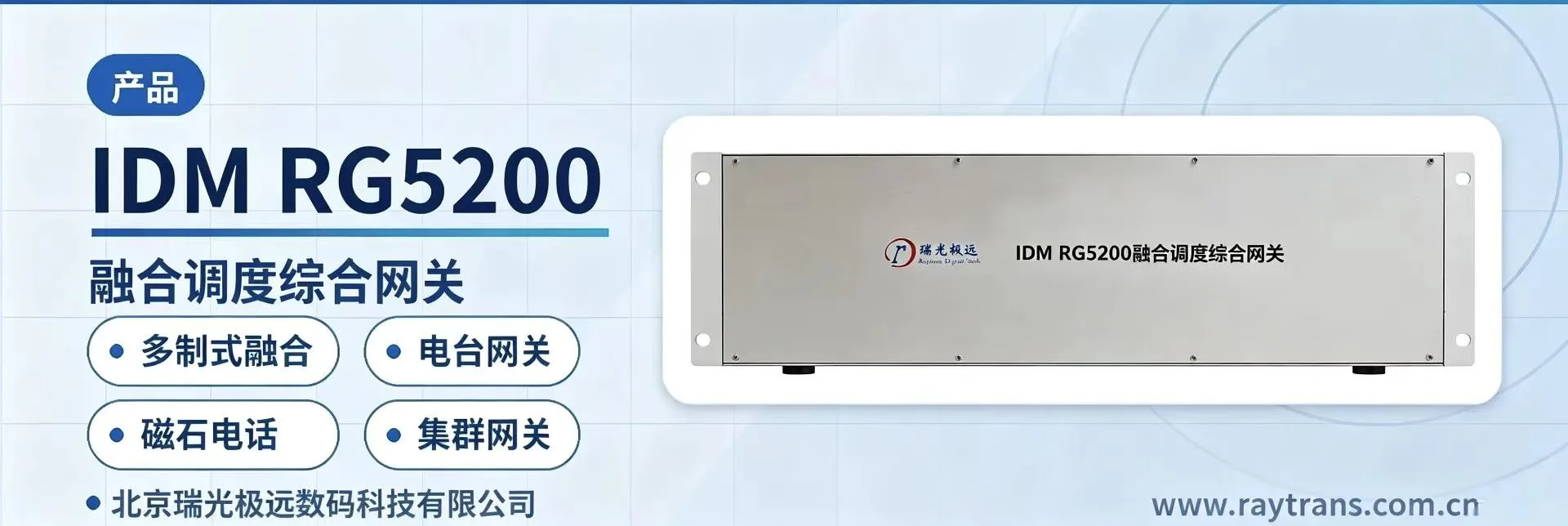
IDM IV2000 Video Converged Access Gateway
2000-channel access
IDM IV2000 Video Converged Access Gateway I. Overview The IDM IV2000 video converged access gateway is a device that establishes connections between video surveillance systems and softswitch systems supporting SIP trunks, such as video conferencing systems, video command and dispatch systems, and instant messaging systems.
IDM IV2000 Video Converged Access Gateway is a video converged access gateway developed by Beijing Ruiguang Jiyuan (Raytrans). As an IP access gateway product, it is used to establish video channels between video surveillance systems and softswitch systems that support SIP trunks, such as video conferencing, video command and dispatch, and instant messaging. The device accesses the monitoring platform through protocols such as GB28181, and then enters the consultation system as a SIP trunk, enabling bidirectional intercommunication between GB28181 and SIP, so that commanders can view one or multiple on-site video images directly on the conference terminal. The product is widely used in scenarios such as government private network optical fiber communication solutions and military emergency communications vehicle solutions, and is a common component in the selection by converged dispatching gateway and command and dispatch system manufacturers. Raytrans also provides supporting devices such as SIP radio gateways, completing the product showcase system.
Key Specifications at a Glance: no fewer than 2,000 surveillance site accesses · no fewer than 32 concurrent 1080P forwarding channels · bidirectional conversion between GB28181/RTSP/RTMP/ONVIF and SIP · platform interconnection with Hikvision/Dahua/Uniview · PTZ control via SIP INFO and RFC2833 · two-way voice intercom
What Problem Does the Video Converged Access Gateway Solve: How Do Surveillance Video Images Enter the Consultation System?
Surveillance and consultation are two independent protocol systems: the surveillance side runs GB28181, RTSP, and ONVIF, while the consultation side only recognizes SIP trunks. The video converged access gateway performs exactly the translation work between the two, turning video streams from the surveillance side into calls and media streams that the consultation system can retrieve. All the difficulties of video surveillance access to SIP dispatching are concentrated in three things: signaling translation, stream adaptation, and site arrangement.
Without this gateway, viewing one on-site video image at the command center usually requires two people working together: one finds the site in the surveillance client, and the other shares the image in the conference. After access, the commander selects the corresponding surveillance site by number on the conference terminal, and the image enters the conference or dispatch console.
Equipment Form Factor and Panel: Front Panel for Status, Rear Panel for Cabling
IDM IV2000 uses a rack-mounted complete unit. The front panel centrally houses operating indicator LEDs and network interfaces, so on-duty personnel can judge power supply, link, and service operation status from the front of the cabinet without walking around to the back. The rear panel is the service and network interface area, where the surveillance network, consultation network, and O&M terminals are connected separately. The line zones are clear, facilitating wiring and troubleshooting.
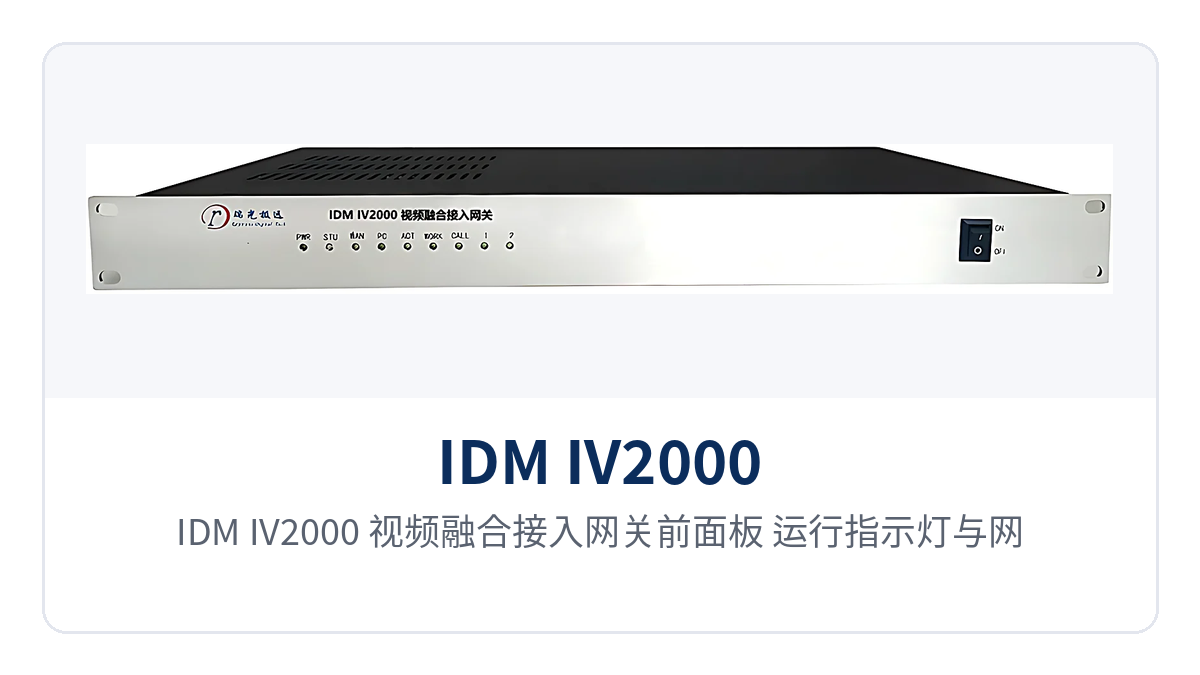
Figure 1: IDM IV2000 Video Converged Access Gateway Front Panel - Operating Indicator LEDs and Network Interface Layout
Which Surveillance Platforms and Video Protocols Are Supported?
Protocol compatibility on the surveillance side is the first item to confirm during selection. IDM IV2000 supports platform interconnection with Hikvision, Dahua, and Uniview surveillance platforms through the GB28181 protocol, while retaining three stream retrieval and access modes: RTSP, RTMP, and ONVIF. Both new and existing platforms can be incorporated into the same consultation system.
- GB28181 platform interconnection: access Hikvision, Dahua, Uniview, and other surveillance platforms through national standard signaling, and select sites according to the platform directory.
- RTSP/RTMP stream retrieval: directly retrieve streams from encoders, NVRs, and streaming media services that support RTSP and RTMP.
- ONVIF device access: compatible with network cameras and encoding devices that conform to the ONVIF specification.
- Device directory synchronization: automatically synchronize and obtain device directory information of 28181 protocol devices, so site additions and deletions need not be entered manually one by one.
- Non-standard stream conversion: supports conversion from non-standard streams such as Dahua and legacy surveillance streams to standard H264 streams, so early devices can also output standard streams.
Protocol conversion is bidirectional: standard RTSP/RTMP/GB28181/ONVIF to SIP and SIP to RTSP/RTMP/GB28181/ONVIF are both completed inside the gateway, so GB28181-to-SIP and SIP-to-GB28181 no longer require an additional third-party transcoding or signaling conversion device in series.
The output side supports RTSP/RTMP/GB28181/ONVIF protocol video output. The same video image can be used simultaneously by the consultation system and the surveillance client, the existing surveillance video recording link is unaffected, and there is no need to build a separate stream retrieval channel for consultation during project acceptance.
How Many Video Channels Can One Gateway Access: How Are Capacity and Concurrency Calculated
Capacity must be viewed from two perspectives: access sites determine how many video channels can be managed, and concurrent forwarding determines how many video images can enter the consultation at the same time. IDM IV2000 supports no fewer than 2,000 video site accesses and supports simultaneous forwarding and distribution of no fewer than 32 1080P video streams. The two figures correspond respectively to "how many can be seen" and "how many can be viewed simultaneously."
During capacity planning, work backward from the actual requirements of the consultation side to determine the number of concurrent channels: the number of venues holding multi-level consultation meetings simultaneously, the number of video images each venue needs for on-screen display, and the number of branch venues that need to listen in. The product of the three is the concurrency requirement. The number of sites is calculated according to the site scale on the surveillance platform side, with margin reserved for subsequent access, avoiding the need to replace equipment when sites are expanded.
What Functions Does the Video Converged Access Gateway Provide?
Functions are divided into four groups: access, conversion, distribution, and control. The four groups of capabilities are carried by the same complete unit rather than four independent models: the access group collects surveillance and mobile devices, the conversion group translates protocols and streams, the distribution group delivers one stream to multiple viewers, and the control group handles PTZ and voice intercom. The functions are listed item by item in the table below for checking against project requirements and tendering technical clauses.
| Function | Description |
|---|---|
| National standard platform interconnection | Platform interconnection with Hikvision, Dahua, and Uniview surveillance platforms through the GB28181 protocol, supporting no fewer than 2,000 video site accesses and simultaneous forwarding and distribution of no fewer than 32 1080P video streams |
| Bidirectional protocol conversion | Seamless conversion from standard RTSP/RTMP/GB28181/ONVIF protocols to SIP and from SIP to RTSP/RTMP/GB28181/ONVIF, with RTSP/RTMP/GB28181/ONVIF protocol video output |
| Mobile device access | Supports video image access from mobile devices such as UAVs and deployable surveillance cameras from mainstream manufacturers, so on-site aerial footage and temporary surveillance images can enter the consultation |
| Individual soldier and mobile phone access | Supports access to video captured by individual soldier terminals, mobile phones, and similar devices, allowing frontline personnel to backhaul on-site video images with mobile terminals |
| Device directory synchronization | Automatically synchronize and obtain device directory information of 28181 protocol devices, so site additions and deletions on the platform side are automatically reflected in the gateway |
| Automatic stream conversion | Supports automatic conversion from various surveillance device streams to SIP-negotiated streams, and conference terminals receive streams according to their own capabilities |
| Non-standard stream conversion | Supports conversion from non-standard streams such as Dahua and legacy surveillance streams to standard H264 streams, so old devices need not be replaced entirely |
| One stream, multiple viewers | Supports forwarding one surveillance video channel to multiple viewers, so the same video image can be watched simultaneously by multiple venues and branch venues |
| One stream, multiple stream outputs | Supports converting one surveillance video channel into streams of different standards, so conference terminals, surveillance clients, and mobile ends each obtain what they need |
| PTZ control | Supports PTZ control, with control signaling carried over SIP INFO and RFC2833, allowing cameras to be turned on the conference terminal to view the site |
| Two-way voice intercom | Supports two-way voice intercom, allowing the command end to talk with audio and video terminals at the surveillance site, with command and announcement completed in the same channel |
Key Specifications and Performance Specifications
The table below summarizes the specifications explicitly stated in the product documentation, for product showcase, selection, and networking design. The protocols, site capacity, concurrent channels, stream processing, and PTZ control on the surveillance and consultation sides are confirmed items; for engineering parameters such as the number of interfaces on the complete unit, power consumption, dimensions, and operating environment, any item not given in the knowledge base is marked as missing, subject to the accompanying technical documentation and ordering confirmation, and no speculative entries are made, avoiding writing nonexistent specifications into bid responses.
| Item | Parameter/Specification | Description/Applicable Conditions |
|---|---|---|
| Model | IDM IV2000 | Video converged access gateway, categorized under IP access gateway |
| Surveillance-side access protocols | GB28181, RTSP, RTMP, ONVIF | Interconnection with Hikvision, Dahua, and Uniview surveillance platforms and front-end devices supporting the above protocols |
| Consultation-side interconnection protocol | SIP trunk | Interconnection with softswitch systems such as video conferencing, video command and dispatch, and instant messaging |
| Video site access | No fewer than 2,000 | Site capacity for interconnection with surveillance platforms via GB28181, calculated according to platform scale and networking conditions |
| Concurrent forwarding capability | No fewer than 32 1080P | Number of 1080P video streams forwarded and distributed simultaneously, matching consultation concurrency requirements |
| Protocol conversion direction | Bidirectional between GB28181/RTSP/RTMP/ONVIF and SIP | Bidirectional conversion completed inside the gateway, with output supporting RTSP/RTMP/GB28181/ONVIF |
| Stream processing | Non-standard streams to standard H264; surveillance streams to SIP-negotiated streams | Compatible with non-standard streams such as Dahua and legacy surveillance streams |
| PTZ control | SIP INFO and RFC2833 | Control signaling delivered with the SIP session, allowing conference terminals to control the PTZ |
| Voice channel | Two-way voice intercom | Calls between the command end and surveillance site terminals |
| Device directory | Automatic synchronization of 28181 device directories | No manual entry required after site additions and deletions |
| Number of interfaces on the complete unit | Not yet recorded in the knowledge base | Front and rear panel layouts are shown in Figure 1 and Figure 3; the number of interfaces is subject to the accompanying technical documentation |
| Power supply and overall power consumption | Not yet recorded in the knowledge base | Subject to the accompanying technical documentation and ordering confirmation |
| Dimensions and operating environment | Not yet recorded in the knowledge base | Confirmed at ordering according to equipment room and command center environmental conditions |
Differentiated Value: 2,000-Channel Access, 32-Channel 1080P, Bidirectional SIP Conversion, and Non-Standard-to-H264 Conversion
The four capabilities correspond to four types of on-site pain points: too many sites to view on one screen, insufficient video images during meetings, incompatible protocols between two systems, and old devices unable to output standard streams. The four capabilities coexist on the same IP access gateway complete unit; some or all of them can be enabled, with no need to stack additional devices to assemble the full feature set. The on-site value of each item is listed in the table below, which can be used during selection to judge which capabilities truly matter to the organization.
| Differentiation Point | On-Site Value |
|---|---|
| 2,000-channel access | A single unit supports access to 2,000 surveillance sites, so the front-end sites of a prefecture-level city or a large industrial park are uniformly addressed by one gateway, with no need to stack multiple devices by area |
| 32-channel 1080P | Supports 32 concurrent 1080P forwarding channels, so multiple venues can view high definition images simultaneously without lowering the bit rate in exchange for channel count |
| Bidirectional SIP conversion | Seamless bidirectional conversion between GB28181/RTSP/RTMP/ONVIF and SIP, so the surveillance system and the SIP consultation system each retain their original protocols, and neither platform needs to be modified |
| Non-standard-to-H264 conversion | Conversion from non-standard streams such as Dahua and legacy surveillance streams to standard H264 streams, so devices in service continue to operate and front-end replacement due to protocol incompatibility is avoided |
Typical Applications
The common point of the three scenarios is "video images exist on site, and the consultation needs video images," yet the image sources are in another surveillance network. The video converged access gateway is deployed at the boundary between the two networks, delivering surveillance video images into consultation and dispatch. The networking relationship is shown in the figure below.
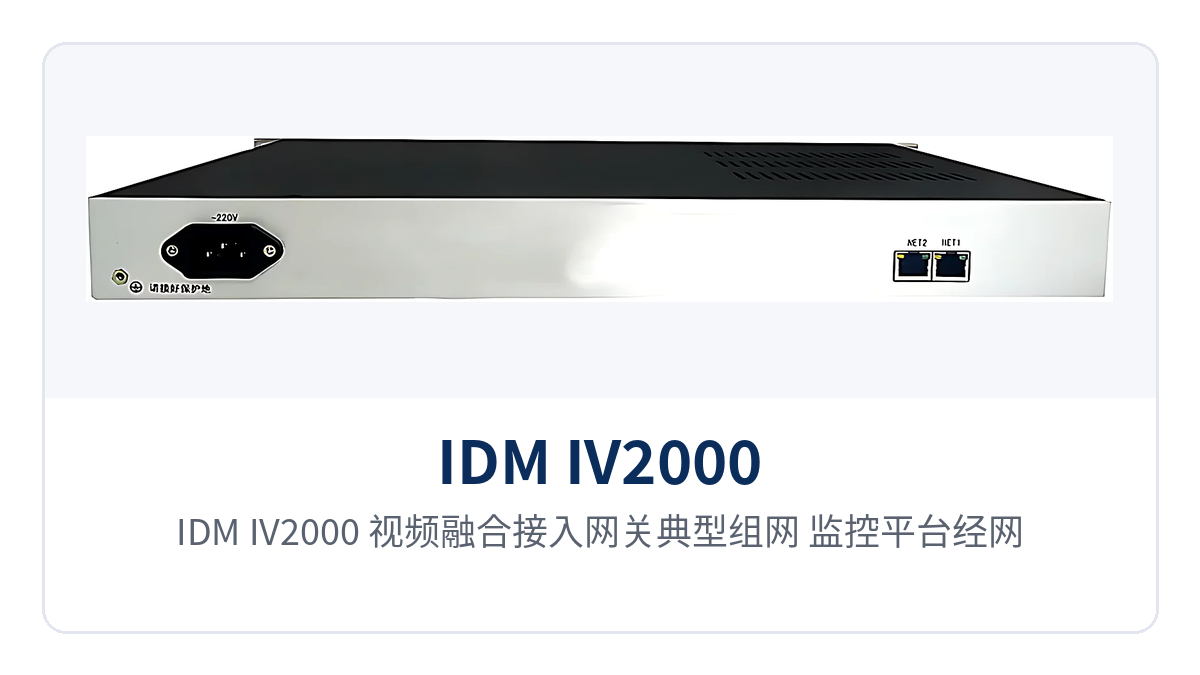
Figure 2: IDM IV2000 Video Converged Access Gateway Typical Networking - Surveillance Platform Accesses Video Conferencing and Command and Dispatch Systems via the Gateway
Emergency Command and Dispatch: One-Touch Access of UAV, Deployable Surveillance Camera, and Individual Soldier Video Images to the Consultation
The available footage at an emergency site often comes from temporarily set up equipment: UAV aerial video, deployable surveillance cameras watching intersections, and individual soldier terminals moving with the team. These devices come from different manufacturers, and their protocols and streams are not unified. IDM IV2000 supports video input from mainstream manufacturers' UAVs and deployable surveillance cameras, as well as video input from individual soldier terminals and mobile phones. On-site video is uniformly converted into SIP sessions and brought into the consultation system at the command center, interfacing smoothly with the existing platforms of command and dispatch system manufacturers.
Commanders select by site on the consultation terminal, and UAV, deployable surveillance camera, and individual soldier video can be displayed on screen. Combined with the capability to forward one channel of surveillance video to multiple viewers, the forward command post, rear command center, and branch venues can watch the same channel of video without each pulling a dedicated line. This capability also applies to coordinated viewing between vehicle-mounted equipment and the rear command post in military emergency communications vehicle solutions.
Electric Power and Energy Private Network: Substation Surveillance Integrated into Dispatch Consultation
Substations, converter stations, and power plants on the electric power and energy private network generally already have video surveillance systems, and their platforms mostly run GB28181; the video consultation and command and dispatch systems on the dispatch side run SIP. The platforms on both sides are built by different manufacturers and put into operation at different times, their protocols are not interoperable, and dispatchers still have to switch to the surveillance client to view the site.
IDM IV2000 interfaces with the existing monitoring platform through GB28181, mapping camera sites in the station to numbers that the consultation system can call. Dispatchers can directly view in-station video on the consultation terminal and use SIP INFO and RFC2833 to control the PTZ toward the equipment area. Non-standard streams from old station buildings can also be displayed in consultation after standard H264 conversion, so front-end devices do not need to be replaced wholesale. This networking approach can also be incorporated into government private network optical fiber communication solutions and deployed in coordination with existing optical fiber transmission links.
Public Security and Armed Police Video Consultation: Surveillance Sites Access Consultation and Incident Response Dispatch
Video consultation and incident response dispatch for public security and armed police require commanders to hold meetings and view the site within the same system. A common practice in real operations is to first view by site on the monitoring platform and then push the video to the consultation system; this involves many steps and takes a long time, and in emergencies it is easy to miss the response window.
IDM IV2000 brings 2000 surveillance sites into unified orchestration. The consultation terminal directly recalls site video by number, one channel of video can be distributed to multiple viewers at the same time, and multiple command operator seats and higher-level units watch the same site together. Two-way voice intercom lets commanders and the site complete announcements over the same channel, reducing back-and-forth communication across systems.
How to Deploy: Access, Configuration, and Commissioning in Three Steps
On-site implementation proceeds in three steps: access, configuration, and commissioning. Each step has corresponding items to verify, and the next step begins only after the previous one is confirmed correct, which avoids repeated rework on the day of consultation support. The man-hours for the three steps are mainly spent on site verification and channel-by-channel commissioning on the monitoring platform side.
- Access: connect the surveillance network port to the network where the monitoring platform resides, and the consultation network port to the network where the SIP softswitch and dispatch system reside. The two networks are accessed through separate ports, avoiding mutual contention between surveillance traffic and consultation signaling. For the rear panel interface zones, see Figure 3, and label each wiring run.
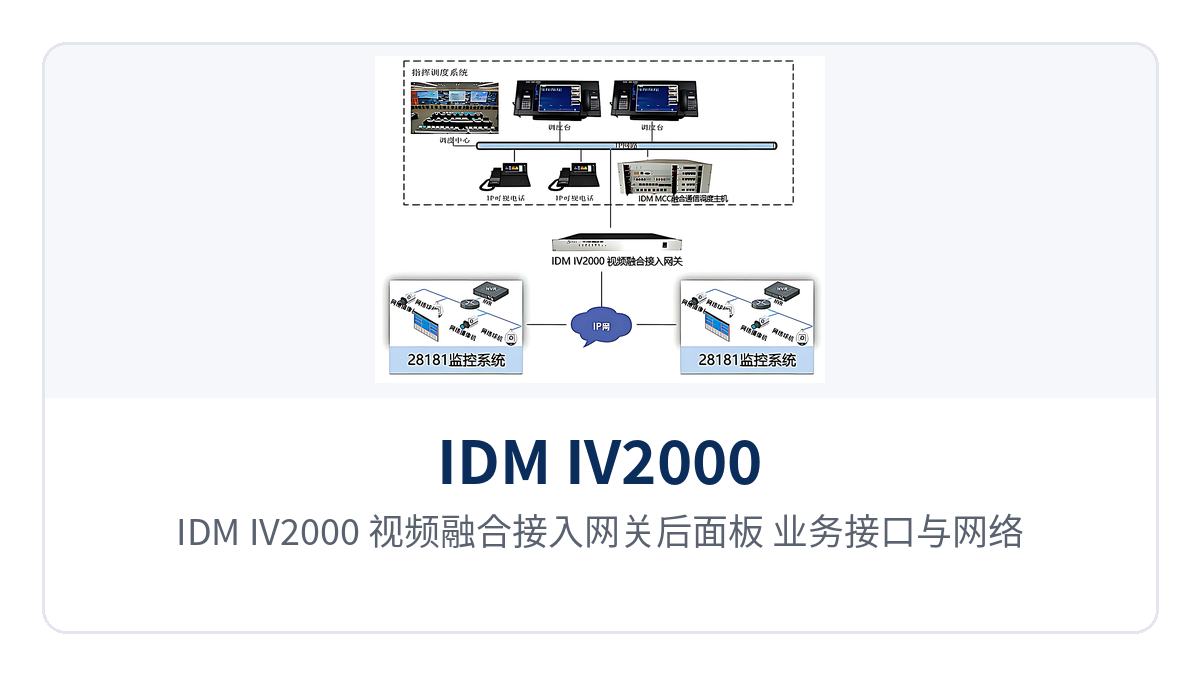
Figure 3: IDM IV2000 Video Convergence Access Gateway Rear Panel Service Interface and Network Interface Wiring Layout
- Configure the platform: enter the GB28181 access parameters of the monitoring platform in the gateway; after registration is complete, the device directory is automatically synchronized. Add RTSP, RTMP, and ONVIF devices one by one by address, and for non-standard stream devices specify standard H264 output in the transcoding policy.
- Orchestrate sites: number the sites according to the calling habits on the consultation side, and group frequently viewed sites. For sites that multiple venues need to watch together, plan the distribution relationships according to the number of concurrent channels, avoiding exceeding the upper limit of 32-channel 1080P concurrency.
- Commissioning: test site viewing, PTZ control, and voice intercom channel by channel, and confirm that the consultation terminal can recall video by number. Also verify that multi-viewer distribution and multi-stream output work as expected before delivery for use.
Conclusion: The Video Convergence Access Gateway Connects Two Systems into One Workflow
The value of the IDM IV2000 video convergence access gateway lies not in adding another video system, but in letting the existing surveillance system and SIP consultation system continue to run as they are while opening a path between them for viewing video by number. The commander's action is simplified from "switching between two systems" to "selecting a site." As a member of the converged dispatching gateway family, it together with devices such as the SIP radio gateway and IP access gateway forms the product showcase matrix of Raytrans for command and dispatch scenarios, providing a complete reference for selection by command and dispatch system manufacturers.
2000-site access and 32-channel 1080P concurrent forwarding support the scale, bidirectional conversion between GB28181 and SIP resolves protocol barriers, non-standard-to-H264 conversion preserves in-service devices, and the three scenarios of emergency response, electric power, and public security and armed police can thus fold "viewing the site" and "holding a consultation" into a single action.