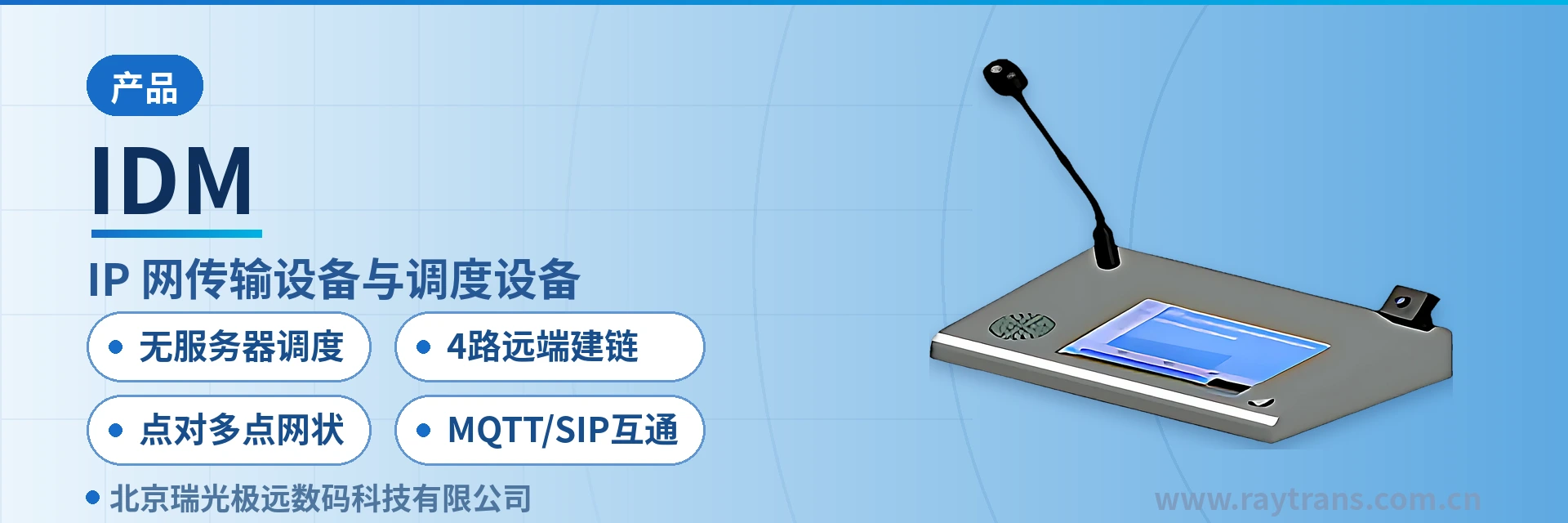
IDM Radio IP Network Transmission and Dispatch Equipment
No IP dispatch server; dispatch console with built-in time-slot cross-connection and conference room; a single unit manages 4 remote ends
IP dispatch gateway, IP radio gateway, radio IP trunking, radio IP interconnection, radio access gateway, integrated access gateway
IDM Voice365 radio-over-IP transmission and dispatch equipment is a radio-over-IP trunking and dispatch device developed by Beijing Ruiguang Jiyuan Digital Technology Co., Ltd. It consists of two parts: the integrated service dispatch console and the IDM Voice365-4 IP access gateway. It is used to connect radio audio scattered across various locations to an IP network and perform centralized dispatching at one location. It is an integrated IP access gateway and dispatch console product for command and dispatch scenarios.
The device builds hardware time-slot cross-connection and a hardware conference room directly into the dispatch console, so no separate IP dispatch server is required, and it can be powered on and used immediately in the field or at a temporary command post. Only the IP network runs between the dispatch console and the gateway; radio-side audio, status, and control information are carried together, and on-site cabling can follow the site's existing Ethernet conditions. As a professional command and dispatch system manufacturer, Raytrans also adopts this architecture in its military emergency communications vehicle solution, facilitating rapid deployment and centralized command and dispatch.
Key Specifications at a Glance: hardware time-slot cross-connection and hardware conference room · 4 remote links per unit · 4 local audio interfaces · dual fiber and RJ45 uplink · point-to-point and point-to-multipoint mesh networking · MQTT/SIP intercommunication
Without an IP Dispatch Server, How Does a Radio Dispatch System Network on Its Own?
The traditional approach is to deploy a SIP-based softswitch dispatch system, which requires an IP dispatch server to handle signaling and conferencing centrally. The structure is complex and bulky, making it inconvenient to carry in the field or in temporary command scenarios. Raytrans IDM Voice365 takes a server-free ad-hoc networking approach: the PAD dispatch terminal of the dispatch console directly manages multiple remote IP access gateways, and status reading and service connection are completed between the devices without going through a server.
The direct change brought by server-free dispatching is that the entire system can be packed up and moved. On site there is only one dispatch console and several gateways; once they arrive, configuring addresses for the gateways establishes the channels, with no need to set up a server first or wait for the equipment room to activate ports. Once the channels are established, what the dispatcher sees on the PAD dispatch terminal is the real-time interface status of each gateway, not a relayed status.
What Two Parts Make Up the Radio-over-IP Transmission and Dispatch Equipment?
This equipment consists of an integrated service dispatch console and an IDM Voice365-4 IP access gateway, with a clear division of labor: the dispatch console handles dispatch operations, conference organization, and channel control, while the gateway connects radio-side audio to the IP network and performs multiplexing and transmission. One dispatch console can manage multiple gateways distributed across different sites, and the number of gateways is configured according to the number of radio channels to be connected.
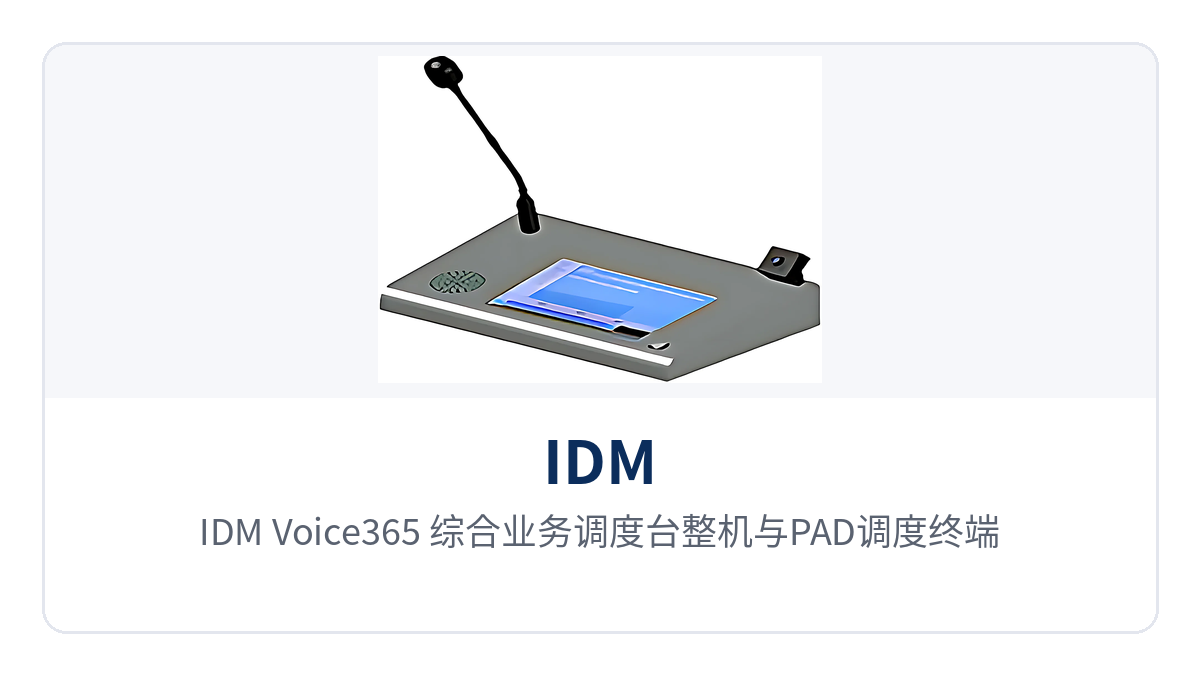
Figure 1: IDM Voice365 integrated service dispatch console unit and PAD dispatch terminal operating interface
Integrated Service Dispatch Console: Access and Operation in One Device
The dispatch console integrates the IDM Voice365-4 IP access gateway and the PAD dispatch terminal, bringing access and operation into a single device. On the PAD dispatch terminal, parameters for multiple IP access gateways can be set and stored on the device; gateway status information can also be received directly, the interface status of each gateway can be read, and active queries can be made when necessary—all without server involvement.
IDM Voice365-4 IP Access Gateway: Fiber or Single RJ45 Uplink
The gateway uses fiber or RJ45 to access the IP local area network. Sites along the line can also use a single RJ45 Ethernet interface to connect directly to the Ethernet passing along the route, eliminating a dedicated cabling run. The gateway's configuration information can be set by logging in over the IP network. The central-end console can store the IP addresses and radio interface numbers of multiple radio access gateways, so the dispatcher can locate the corresponding radio by number.
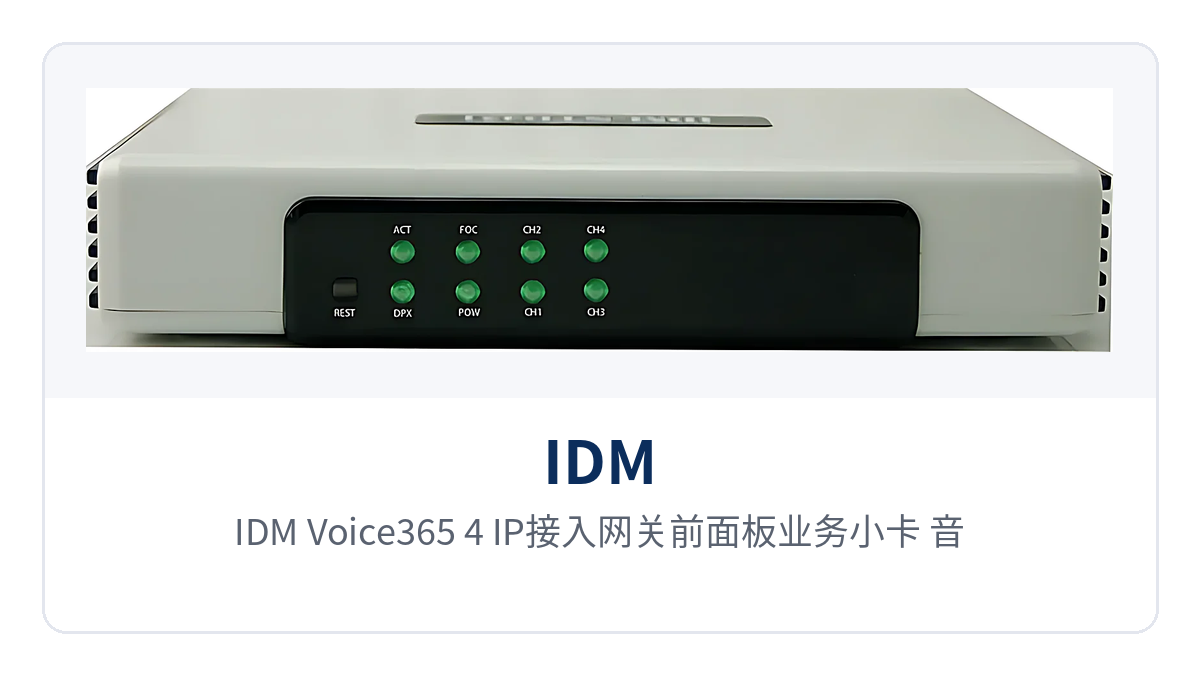
Figure 2: IDM Voice365-4 IP access gateway front panel layout of service sub-cards, audio interfaces, and indicator LEDs
What Functions Does This Equipment Provide?
The functions are split between the dispatch console and the gateway: the dispatch console handles operation and conferencing, while the gateway handles access and distribution, and the two ends work together within the same IP network. The table below lists specific capabilities by function item for item-by-item checking against the on-site configuration; the entries for both ends can also serve directly as a checklist for acceptance on delivery.
Integrated Service Dispatch Console Function List
| Function | Description |
|---|---|
| Dispatch terminal integration | Integrates the IDM Voice365-4 IP access gateway and the PAD dispatch terminal, completing access and operation in one device |
| Multi-gateway parameter management | Sets parameters for multiple IP access gateways on the PAD dispatch terminal and stores them on the device, still available after a power cycle |
| Direct gateway status reading | Directly receives gateway status information and reads the interface status of each gateway, and can also query actively, without server involvement |
| One-touch connection of remote services | Connects services on a remote gateway with one touch on the dispatch terminal, with separate receive and transmit enable operations for each port |
| Hardware conference room | Multiple subscriber interfaces can join a conference room for a conference, with operations such as join, delete, mute, and listen inhibit |
| Recording and playback | Provides recording and playback for the voice of a channel, for later playback and verification by channel |
| Call control | Provides functions such as answer, call, forced release, barge-in, monitoring, and transfer |
| Hardware time-slot cross-connection | Comes with a hardware time-slot cross-connection function, and under coordination of the dispatch console can operate on any channel in the IP network |
IP Access Gateway Function List
| Function | Description |
|---|---|
| Dual uplink access | Uses fiber or RJ45 to access the IP local area network, selected according to the on-site optical cable or Ethernet conditions |
| Single RJ45 along-the-line access | Uses a single RJ45 Ethernet interface to connect directly to the Ethernet passing along the route |
| Configurable reception | The reception of each service sub-card can be configured to the transmission of any IP address sub-card |
| Multicast distribution | When each service card has multiple receivers, transmission uses multicast |
| Address and number storage | The central-end console can store the IP addresses and radio interface numbers of multiple radio access gateways |
| Point-to-point and mesh networking | An access multiplexing device for IP transmission, supporting point-to-point applications as well as point-to-multipoint mesh applications |
| Remote configuration | Gateway configuration information can be configured by logging in over the IP network |
| Networking conditions | Used in a local area network with fixed IP addresses; a VPN router is required when used over the Internet |
Key Specifications and Interface Capabilities
Interface and capability parameters are subject to the product documentation. The table below summarizes the definite specifications on both the dispatch console and gateway sides for reference in selection and networking design. The number of interfaces and the number of links determine how many radio channels can be connected on site, and the network conditions determine how the uplink medium is chosen; the two are listed separately in the table. Power supply, dimensions, and environmental specifications not given in the documentation are listed in separate rows and are subject to the manufacturer's technical documentation.
| Item | Parameter/Specification | Description/Applicable Conditions |
|---|---|---|
| Device composition | Integrated service dispatch console + IDM Voice365-4 IP access gateway | The dispatch console integrates the IP access gateway and the PAD dispatch terminal |
| Remote audio links | A single dispatch console can establish 4 remote audio links simultaneously | Implemented by hardware time-slot cross-connection and hardware conference room |
| Local audio interfaces | 4 channels, connectable to microphone, speaker, monitoring headset, and fixed-line links | Connected fixed-line and other links can participate in dispatching |
| Conference capability | Multiple subscriber interfaces join a conference room, with join, delete, mute, and listen inhibit supported | The conference room is implemented in hardware and does not occupy a server |
| Dispatch operations | Answer, call, forced release, barge-in, monitoring, transfer, recording, playback | Operates on any channel in the IP network under coordination of the dispatch console |
| Gateway uplink interface | Fiber or RJ45; or a single RJ45 to access the Ethernet along the route | Selected according to on-site optical cable and Ethernet conditions |
| Networking approach | Point-to-point, point-to-multipoint mesh | Multiple gateways distributed across different sites for networking |
| Service distribution | Receivers can be configured across IP address sub-cards; multiple receivers use multicast | The same voice channel can be sent to multiple operator seats simultaneously |
| Protocol support | MQTT IoT protocol, SIP protocol | Can intercommunicate with MQTT devices or register with a SIP server |
| Network conditions | Local area network with fixed IP addresses; a VPN router is used over the Internet | Gateway configuration can be performed by logging in over the IP network |
| Power supply and power consumption | Not yet recorded in the knowledge base | Subject to the manufacturer's technical documentation and commercial confirmation |
| Dimensions and weight | Not yet recorded in the knowledge base | Subject to the manufacturer's technical documentation and commercial confirmation |
| Operating environment | Not yet recorded in the knowledge base | Subject to the manufacturer's technical documentation and commercial confirmation |
One-Touch Connection of Remote Services: How Does the Dispatch Console Manage Multiple Gateways?
In operation, server-free dispatching means the dispatcher selects channels by gateway zone on the PAD dispatch terminal and connects services on a remote gateway with one touch. Each port has separate receive and transmit enable operations, so a given channel can be set to listen only or transmit only at this layer, without changing the gateway-side wiring or the radio-side microphone.
On the gateway side, the reception of each service sub-card can be configured to the transmission of any IP address sub-card, and when a service card has multiple receivers, transmission uses multicast. The same radio voice can therefore be sent to multiple dispatch seats simultaneously, and bandwidth utilization does not grow multiplicatively as the number of listeners increases; the dispatch console also does not need to request channels repeatedly for each one.
How Many Audio Links Can a Single Dispatch Console Establish Simultaneously? How Are Conferencing and Recording Used?
The structure of hardware time-slot cross-connection and a hardware conference room allows a single dispatch console to support 4 remote links, and the local end provides another 4 audio interfaces that can connect microphones and speakers, monitoring headsets, and fixed-line and other links. Conferencing and channel switching are completed in hardware, and the number of dispatch seats is arranged by shift, with no need to expand servers for each additional listener. As a typical product form of a command and dispatch system manufacturer, Raytrans packages the dispatch console and IP access gateway into one overall solution; the product showcase shows the matching relationship between the dispatch console and the gateway.
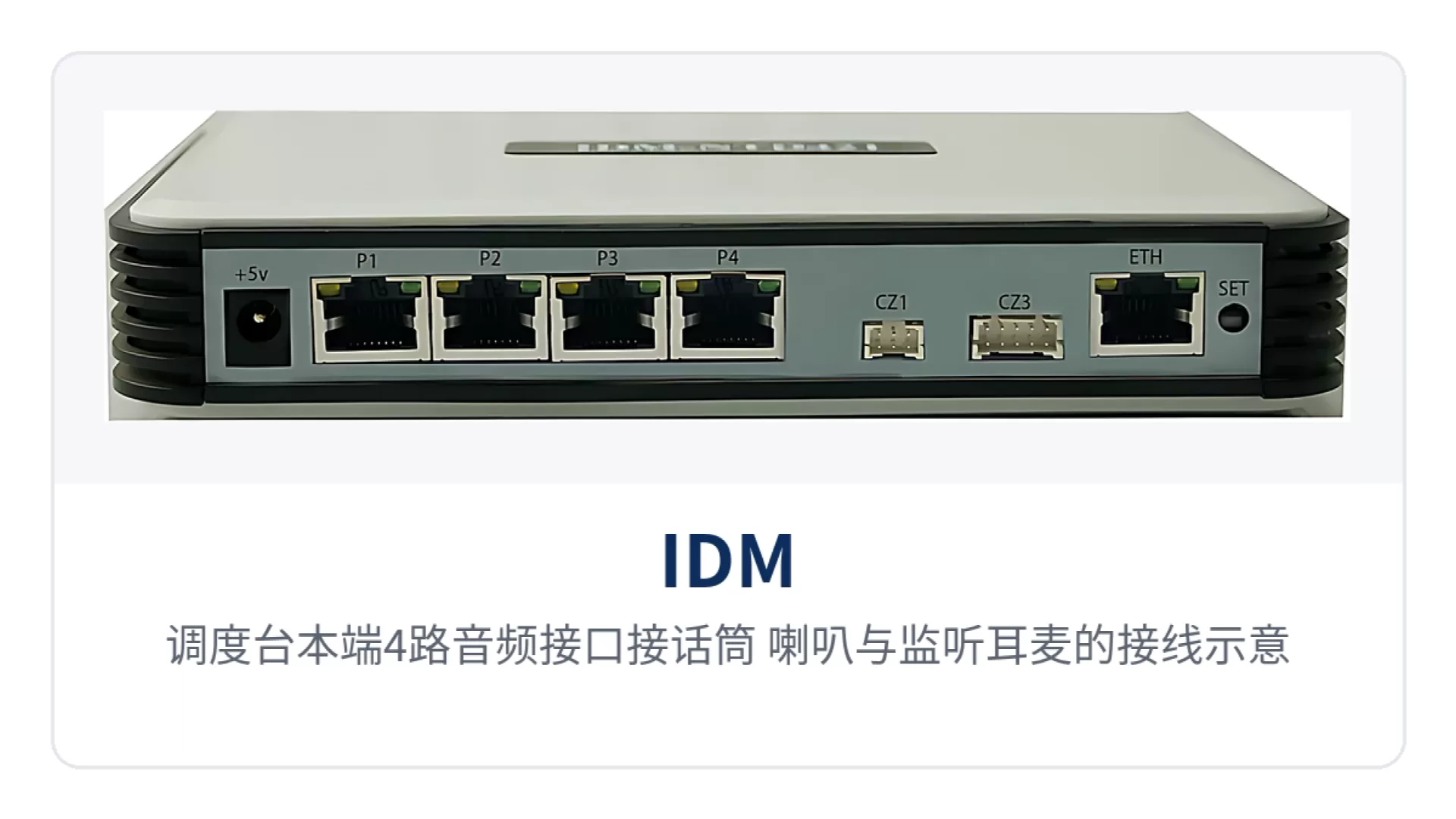
Figure 3: Wiring diagram of the dispatch console's 4 local audio interfaces connected to microphone, speaker, and monitoring headset
Conference capability is organized by subscriber interface. Multiple subscriber interfaces can join a conference room for a conference, with operations such as join, delete, mute, and listen inhibit; recording and playback are provided for the voice of a channel; and the dispatch seats also provide operations such as answer, call, forced release, barge-in, monitoring, and transfer. Under coordination of the dispatch console, any channel in the IP network can be operated on, and the daily operations of command and dispatch are all completed on the dispatch console.
How Are Point-to-Point and Point-to-Multipoint Mesh Networks Connected?
The gateway is an access multiplexing device for IP transmission, and both its transmission modes and access modes are flexible: it supports point-to-point applications as well as point-to-multipoint mesh applications. In point-to-point mode, a pair of gateways directly connects the radio audio at both ends; in mesh mode, multiple gateways are distributed across different sites, and the transmission of any one can be configured to the reception of other gateways, with the central dispatch console only handling operations and not forwarding. Raytrans IP access gateways are deployed in this way in military emergency communications vehicle solutions, with the vehicle-mounted gateway connecting nearby radios and the dispatch console providing command on board.
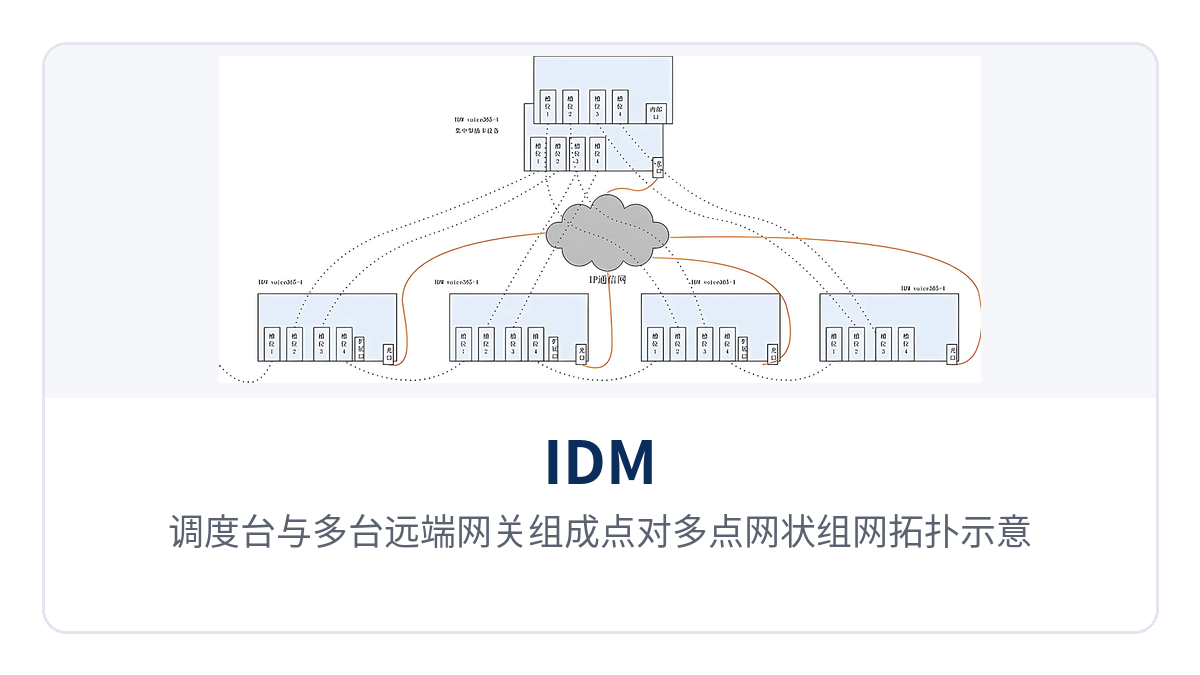
Figure 4: Topology diagram of a point-to-multipoint mesh network formed by a dispatch console and multiple remote gateways
The uplink mode is selected according to on-site conditions. If optical cable is available on site, use fiber uplink; if only the Ethernet along the route is available, use a single RJ45 connection. The device is used in a local area network with fixed IP addresses; when used over the Internet, a VPN router is required. Plan the addresses of each site before networking, and verify the model and number of interfaces against the number of on-site radio channels to avoid changing parameters midway and affecting channels already activated.
Intercommunication with MQTT/SIP: Ad-Hoc Networking and Softswitch Registration
Besides standalone ad-hoc networking, the device can also run IoT protocols to intercommunicate with MQTT-based IoT devices; it can also run SIP to register with a SIP server. In this way, it can form a dispatch system on its own at a server-free site, and can also serve as an IP dispatch gateway, IP radio gateway, radio access gateway, or integrated access gateway in an equipment room with an existing softswitch network. Raytrans series devices support both operating modes, distinguished by protocol configuration in the product showcase.
The two operating modes can be selected according to the project phase. When no softswitch platform is available in the early stage, deploy in ad-hoc networking mode; after the platform is built later, register the devices with the SIP server. The existing dispatch console operating habits and gateway cabling need not be rebuilt from scratch, and the upgrade involves only the protocol configuration layer.
Typical Application Scenarios
The common requirement of the three scenarios for radio dispatching is less dependence on equipment room facilities and communication on arrival. The devices are deployed as a combination of a dispatch console plus several gateways, with gateways installed near the radio sets and the dispatch console placed at the command operator seat. The following describes the access mode and configuration points according to on-site conditions.
Emergency Command Communications: Connecting Remote Radios Without a Server on Site
An emergency command site often has no usable equipment room and no time to set up a softswitch server. The dispatch console is carried with the command vehicle, and remote gateways are installed in the radio equipment room or vehicle-mounted cabinet. After arrival, configure addresses for the gateways, and the PAD dispatch terminal can read the interface status of each gateway and connect remote services with one touch, completing announcement, intercom, and telephone dispatching at the same seat. The Raytrans military emergency communications vehicle solution uses this combination: IP access gateways are installed near the radio sets, and command and dispatch are completed at the dispatch console in the vehicle.
When on-site channels need evidence, the recording and playback functions of the dispatch console for a channel's voice can be used directly, and the command delivery process can be checked by channel playback afterwards without additional recording equipment; a temporarily added landline link connected to the local end's 4-channel audio interface can also participate in dispatching.
Petrochemical Industrial Park: Multiple Sites' Radios Unified to One Dispatch Point
Ground radios, firefighting radios, and inspection radios in a petrochemical industrial park are distributed across different process areas and gatehouses, and often rely on manual relay between them. Multiple IP access gateways are installed nearby at each site and connected via the park's existing Ethernet, with the dispatch console set up in the emergency command center. The audio of any radio in the park can be listened to and controlled at the central seat, and joint handling across process areas no longer relies on telephone relay.
The park Ethernet usually already has a fixed address plan, and gateways can run long-term once configured with fixed IP addresses; when backhaul across plants is required over the Internet, add a VPN router as required by the device to avoid address and security policy conflicts and to ensure dispatch channels do not interfere with office traffic.
Electric Power and Rail Transit Private Networks: Point-to-Multipoint Mesh Coverage of Sites Along the Line
Substations and station buildings along rail transit lines have many radios at scattered locations, and pulling audio cables point by point is costly. Gateways connect nearby to the station Ethernet or optical ports along the line, and multiple gateways form a point-to-multipoint mesh structure. One operation at the dispatch console can read the interface status of gateways at each station along the line and set receive/transmit enable separately for a specified channel.
Substations and station buildings are mostly unattended, and the devices use hardware cross-connect and hardware conference structures, with no server requiring separate duty and maintenance; centralized operation at the dispatch console lets on-duty personnel complete cross-station calls, barge-in, and transfer at the center, reducing site trips and allowing temporarily added channels without changing existing cabling.
Selection and Deployment Points
Selection starts with three numbers: the number of radio channels to be accessed, the number of remote audio channels to be linked simultaneously, and the number of dispatch seats to be set up. The first two determine the number of gateways and network zones, and the number of seats determines how the local audio interfaces of the dispatch console are allocated. Once these three are fixed, device configuration and on-site cabling can be aligned in one pass.
During deployment, first confirm whether each site has a fixed IP address and an available uplink medium, then decide on optical fiber or RJ45 access according to equipment room conditions. Address planning and gateway numbering should be finalized once before work starts; adding channels later only requires adjusting receive/transmit enable on the dispatch terminal, without changing site cabling or radio wiring.
As a radio IP network transmission device and dispatching device for private network scenarios, IDM Voice365 pairs a dispatch console with IP access gateways into a system that can be moved as a whole. The three capabilities—server-free ad-hoc networking, single-unit 4-channel remote linking, and point-to-multipoint mesh networking—correspond to three practical on-site constraints: no equipment room, limited seats, and scattered sites. As a command and dispatch system manufacturer, Raytrans provides the specific interface configuration and protocol parameters of the Raytrans series in the product showcase, subject to the manufacturer's technical documentation and commercial confirmation.