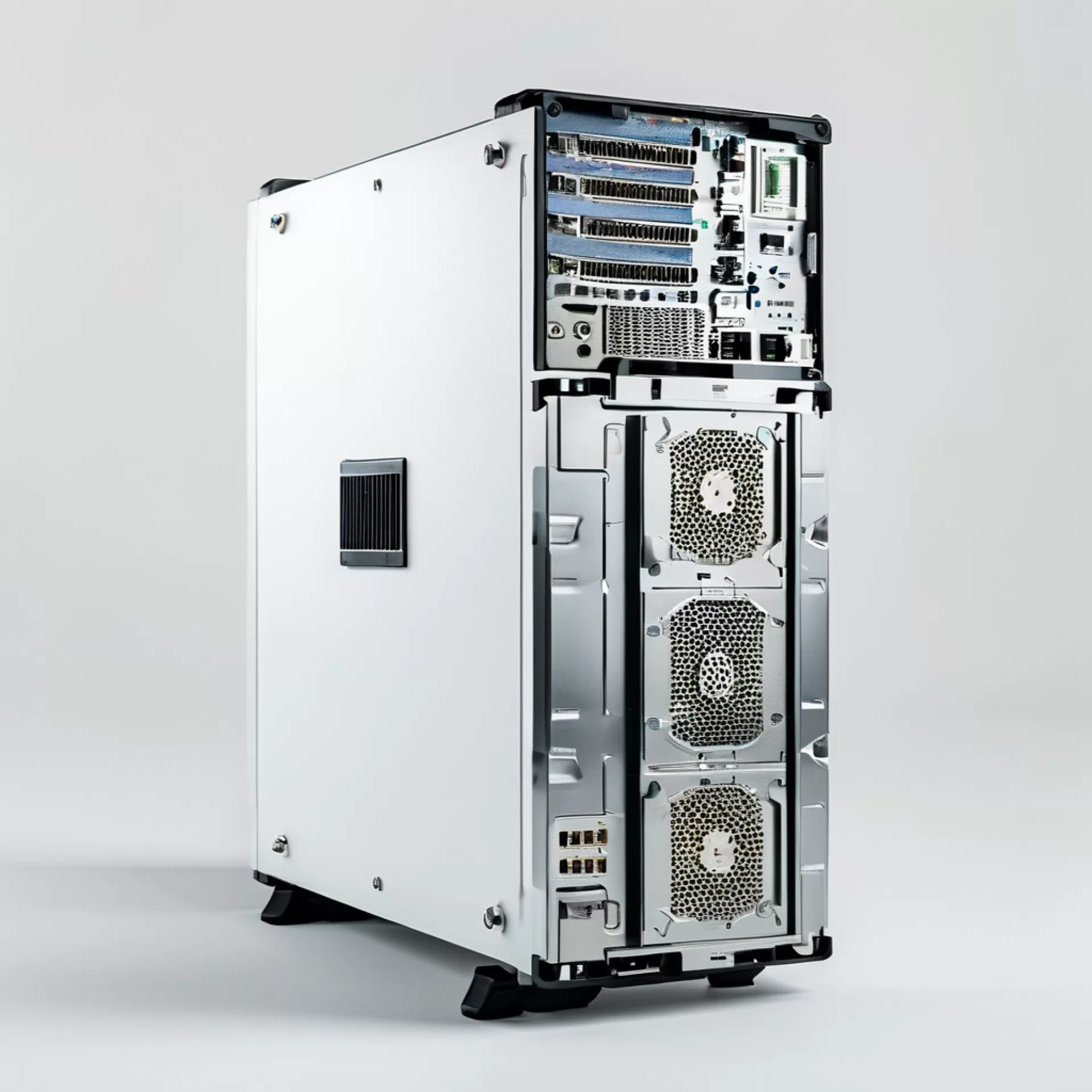
IDM-3500
IDM-3500
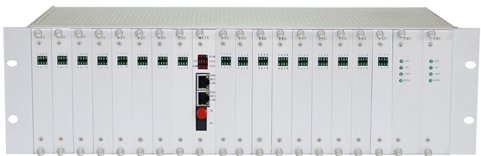
IDM OMP3500 2.5G Integrated Service Access Platform (IDM-3500, official full name IDM OMP3500 Integrated Service Access Platform) is a multiplexing device introduced by RayTrans: it transmits up to 16 groups of transparent E1 and 2 groups of physically isolated wire-speed Gigabit Ethernet through 2.5G optical fiber...
Product Overview
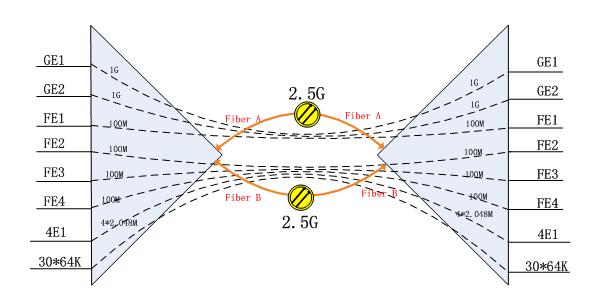
The IDM OMP3500 2.5G Integrated Service Access Platform (IDM-3500, official full name IDM OMP3500 Integrated Service Access Platform) is a comprehensive multiplexing device introduced by RayTrans. It can transmit up to 16 transparent E1 channels, 2 physically isolated wire-speed Gigabit Ethernet channels, 4 physically isolated wire-speed 100M Ethernet channels, and 30 narrowband PCM channels over 2.5Gbps optical fiber, and supports mutual backup of 2 2.5G optical fibers. This device integrates telephone, leased line data, and Ethernet access, making it suitable for power, transportation, mining, public security, and campus dedicated networks that require simultaneous transmission of voice and broadband services, effectively replacing multiple devices.
The narrowband PCM service provides various user interfaces for voice, data, and images. The platform also features non-blocking timeslot cross-connect between 2 E1 channels and all user interfaces, and supports multiple clocking modes to meet the clocking requirements of different application environments. It can be powered by both AC220V and -48V.
Knowledge Block: Working Principle of the 2.5G Integrated Service Access Platform
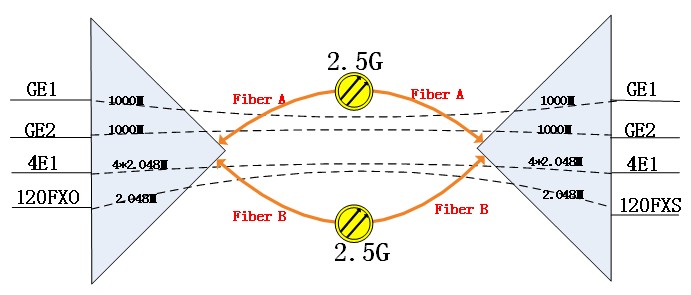
The 2.5G Integrated Service Access Platform is a device that multiplexes E1, Ethernet, and narrowband PCM services onto a pair of 2.5Gbps optical fibers. Taking the IDM OMP3500 as an example, the 2.5G bandwidth supports 2 Gigabit Ethernet channels, 4 100M Ethernet channels, 16 transparent E1 channels, and 30×64K narrowband PCM services. The 16 E1 channels are transmitted transparently, while the narrowband PCM services are accessed through non-blocking timeslot cross-connect with 2 E1 channels and all user interfaces. The 2 2.5G optical ports (Fiber A/Fiber B) provide mutual backup, switching to the other fiber in case of a single fiber failure, allowing for the setup of point-to-point, chain, ring, or 1+1 protection networks.
Main Functions
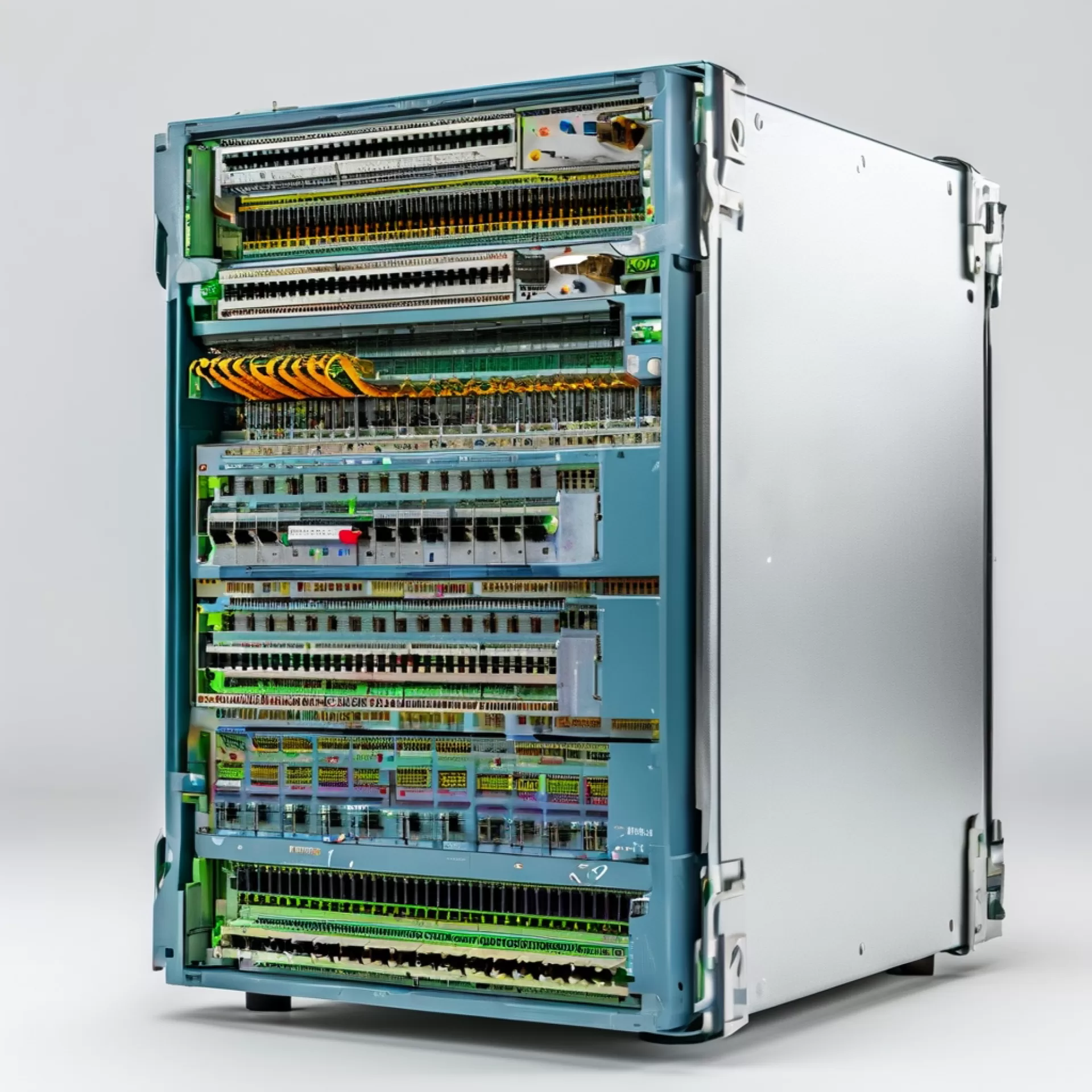
The functions of the IDM OMP3500 are categorized into optical transmission, TDM access, Ethernet access, and network management and protection. Details are as follows:
| Function Item | Function Description |
|---|---|
| 2.5G Optical Transmission | Up to 2 SFP 2.5G optical transmission interfaces, single-mode (optional multi-mode), transmission distance options of 20km/40km/80km, supports point-to-point, chain, ring, or 1+1 protection networks |
| E1 Transparent Transmission | Up to 16 transparent E1 channels, physical interface options of CC3-16 or CC3-8, compliant with ITU-T G.703, code type HDB3 |
| Physically Isolated Wire-speed Ethernet | 2 physically isolated wire-speed Gigabit Ethernet channels + 4 physically isolated wire-speed 100M Ethernet channels, each port group is data-plane isolated and does not share bandwidth |
| Narrowband PCM Access | Up to 30 narrowband PCM channels; FXS/FXO, magneto cards support 10/8 channels per card, 2/4-wire EM cards support 4 channels per card, RS232/RS422/RS485 cards support 8 channels per card, GSM/CDMA cards support 2 channels per card |
| Non-blocking Timeslot Cross-connect | Non-blocking timeslot cross-connect between 2 E1 channels and all user interfaces, supports multiple clocking modes |
| Dual Optical Ports Mutual Backup | 2 2.5G optical ports mutual backup; can be configured for mutual backup between optical fiber and PCM services on 1 E1 channel, providing dual protection |
| SNMP Network Management | Supports SNMP Ethernet network management, can be integrated into a unified network management system for comprehensive service access devices |
| Modular Expansion | 19-inch standard chassis, 3 service slots, hot-swappable boards; supports video surveillance and video conferencing boards |
| Dual Power Supply | Supports DC-48V and AC220V dual power supply, total power consumption ≤40W |
Knowledge Block: Physically Isolated Wire-speed Ethernet
Physically isolated wire-speed Ethernet refers to complete data-plane isolation and no bandwidth sharing among different Ethernet port groups, with each port independently forwarding data at the interface line speed (100M or 1000M). The IDM OMP3500 provides 2 Gigabit and 4 100M, totaling 6 physically isolated Ethernet channels, suitable for scenarios where multiple independent networks such as office networks, video surveillance networks, and production networks need to be simultaneously carried. Standard protocol support includes IEEE 802.3, and operation modes support full/half-duplex auto-adaptation.
Key Differentiators
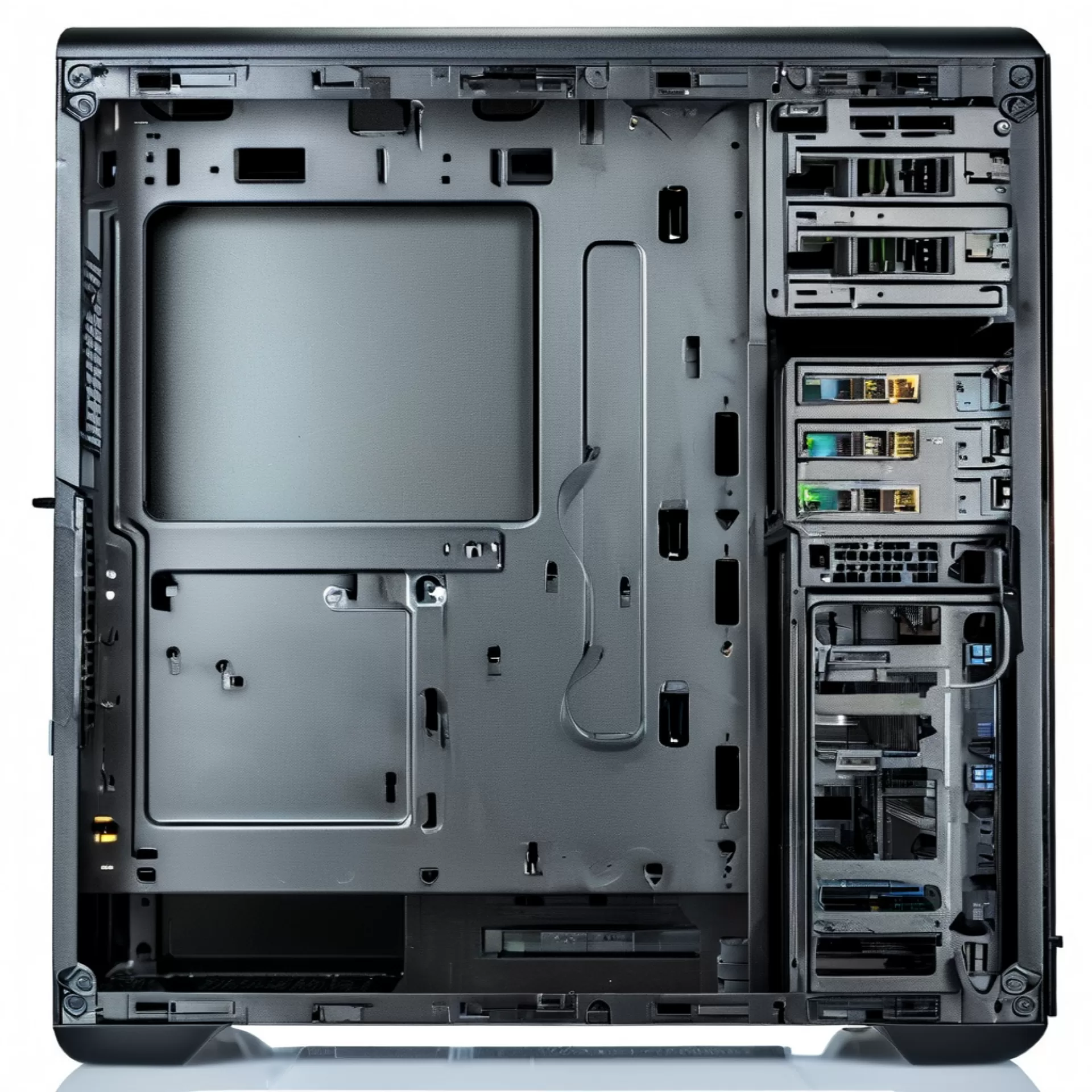
The key differentiators of the IDM OMP3500 are summarized based on product documentation. Specific capabilities should be confirmed with the manufacturer according to project requirements:
| Differentiator | Description |
|---|---|
| Integrated PCM+E1+Ethernet | 30 narrowband PCM channels, 16 transparent E1 channels, and 6 physically isolated Ethernet channels are transmitted on the same 2.5G platform, reducing the need for multiple devices and saving rack space |
| Dual 2.5G Optical Ports Mutual Backup | 2 2.5G optical ports mutual backup, and can be configured for mutual backup between optical fiber and PCM services on 1 E1 channel, providing dual protection |
| Non-blocking Timeslot Cross-connect and Multiple Clocking Modes | Non-blocking timeslot cross-connect between 2 E1 channels and all user interfaces, with multiple clocking modes to adapt to complex network clocking environments |
| Board-level Hot-swappable Expansion | 3 service slots with hot-swappable capability, supporting FXS/FXO, magneto, EM, RS232/422/485, GSM/CDMA, USER universal interface cards, and video boards |
| Suitable for Industrial Environments | Operating temperature -20℃ ~ +50℃, dual power supply DC-48V/AC220V, total power consumption ≤40W, suitable for unattended machine rooms |
Technical Specifications
The technical specifications of the IDM OMP3500 are listed in the table below. Specifications are based on product documentation, and specific configurations should be confirmed through business negotiations:
| Item | Parameter/Indicator | Description/Applicable Conditions |
|---|---|---|
| Optical Interface Type | SFP | Up to 2 2.5G SFP optical ports, dual fiber mutual backup |
| Optical Fiber Mode | Single-mode (optional multi-mode) | Select based on line distance |
| Optical Rate | 2.5Gbps | Wavelength 1310/1490/1550nm |
| Optical Power | -1~-10dB | Typical value for single-mode, actual measurement with an optical power meter |
| Receiver Sensitivity | Better than -24dBm | Long-distance applications require link budget verification |
| E1 Code Rate | 2.048Mbps | Code type HDB3, compliant with ITU-T G.703 |
| E1 Impedance | 75Ω/120Ω | Frame structure PCM30/31, transparent mode |
| Ethernet Rate | 10M/100M/1000M | Supports IEEE 802.3, full/half-duplex auto-adaptation |
| FXO/FXS Interface | Audio 300Hz~3400Hz | ITU G.711 A-law compression, three-element composite impedance 200Ω+560Ω//0.1μF, loop current 25mA/channel |
| EM 2/4-wire Interface | Audio 300Hz~3400Hz | Balanced 600Ω, echo loss no less than 18dB |
| V.24 Interface | Asynchronous ≤9600bps; Synchronous 64Kbps | Compliant with CCITT V.28 protocol |
| V.35 Interface | n×64Kbps (n=0~31) | Interface type RJ-45, compliant with ITU-T V.35, terminal interface compliant with ISO2593 |
| Power Supply | DC-48V / AC220V | Dual power supply |
| Total Power Consumption | ≤40W | Typical value |
| Operating Temperature | -20℃ ~ +50℃ | Relative humidity 0~95% (no condensation) |
Typical Network Applications
How to network the OMP3500: It supports point-to-point, chain, ring, or 1+1 protection networks. The product documentation provides three typical network configurations.
Point-to-Point Application
One OMP3500 is deployed at each end, connected directly via 2.5G SFP optical interfaces, with dual optical interfaces for mutual backup. A single end can simultaneously provide 2 GE, 4 FE, 8 E1, and 8 telephone circuits, managed uniformly by the Integrated Service Access Equipment network management system (SNMP).
Centralized Point-to-Multipoint Application
A centralized IDM OMP device is deployed in the central room, with up to 9 IDM OMP3500 devices connected downstream. This simplifies the configuration and management of the central room, suitable for the centralized aggregation of services from multiple remote sites.
Hybrid Networking with IDM OMP / IDM G3CP
E1 services from remote devices are aggregated to an E1 access board, and telephone services are aggregated to a PBX switching board. The digital trunking method is used, connecting to the higher-level program-controlled switch (PBX) via Signaling System No. 1, Signaling System No. 7, or PRI signaling. This is suitable for the renovation and expansion of existing PBX networks.

Selection Guide: How to Choose Between OMP3500 and Other Models in the Series
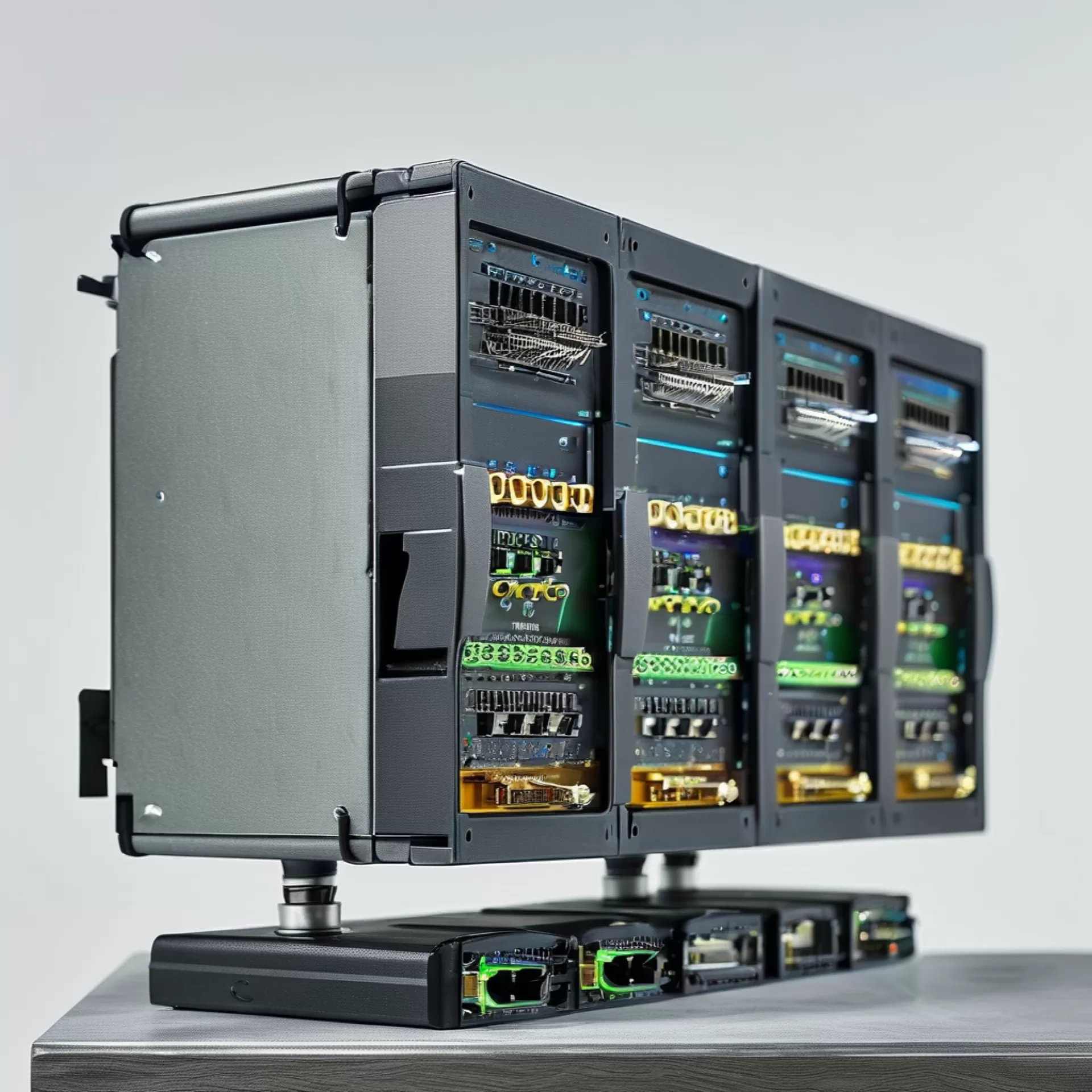
The series also includes models such as IDM OMP3500-30, IDM OMP3500E, and IDM OMP8000. The selection primarily depends on the scale and ratio of E1, Ethernet, and telephone services:
| Model | E1 | Ethernet | PCM/Telephone | Chassis | Main Positioning |
|---|---|---|---|---|---|
| IDM OMP3500 | Up to 16 transparent E1 | 2 Gigabit + 4 Fast Ethernet | Up to 30 narrowband PCM | 19-inch 3-slot | Balanced voice, data, and broadband access |
| IDM OMP3500-30 | Up to 24 E1 | 2 Gigabit + 4 Fast Ethernet | Up to 3 8/10-channel PCM boards | 19-inch 1U | High-capacity E1 |
| IDM OMP3500E | Up to 24 E1 | 2 Gigabit + 4 Fast Ethernet | Up to 6 8/10-channel PCM boards | 19-inch 2U | High-capacity PCM |
| IDM OMP8000 | Up to 16 transparent E1 | Up to 8 Gigabit + 4 Fast Ethernet | FXS/FXO, magneto, each card 10/8 channels | 19-inch 1U 3-slot | Gigabit Ethernet focused |
Data source: IDM OMP3500-30 Integrated Service Fiber Transmission Equipment, IDM OMP3500E Integrated Service Fiber Transmission Equipment, IDM OMP8000 Multi-Service Gigabit Network Telephone Optical Terminal.
The main differences between OMP3500 and OMP8000 are in the number of Ethernet ports: OMP3500 has 2 Gigabit + 4 Fast Ethernet, while OMP8000 can have up to 8 Gigabit + 4 Fast Ethernet. Selection guide: Choose OMP3500 for telephone/PCM services, balancing E1 and Ethernet; consider OMP3500-30 or OMP3500E for more E1 capacity; and OMP8000 for a higher number of Ethernet ports. For transmission distance, OMP3500 supports 20km, 40km, and 80km single-mode SFP optical modules, with a receive sensitivity better than -24dBm. For applications over 40km, it is recommended to verify the optical power budget and test the SFP module during acceptance.
FAQ
What is the OMP3500, and how many service channels can it support?
The OMP3500 (IDM-3500) is a 2.5G Integrated Service Access Platform that can support up to 16 transparent E1, 2 physically isolated wire-speed Gigabit + 4 wire-speed Fast Ethernet, and 30 narrowband PCM (FXS/FXO, magneto, EM, RS232/422/485, GSM/CDMA interface cards). A single device can simultaneously carry telephone, dedicated line data, and Ethernet services.
What are the differences between OMP3500 and OMP8000, and how to choose?
Both are 2.5G integrated access devices with dual-fiber mutual backup. The OMP3500 is configured with 2 Gigabit + 4 Fast Ethernet, 16 transparent E1, and 30 narrowband PCM, offering a balanced service ratio. The OMP8000 focuses on Gigabit Ethernet (up to 8 Gigabit + 4 Fast Ethernet + 16 transparent E1), with telephone interfaces available on demand. Choose OMP8000 for more Ethernet ports, OMP3500 for a balanced mix of telephone, E1, and Ethernet services. Specific selection should be based on the manufacturer's recommendations. (Source: IDM OMP8000 Multi-Service Gigabit Network Telephone Optical Terminal)
What is the maximum transmission distance supported by OMP3500, and how is it protected?
It supports three ranges of single-mode SFP optical modules: 20km, 40km, and 80km. It has 2 2.5G optical interfaces for mutual backup, allowing the setup of point-to-point, chain, ring, or 1+1 protection networks. It can also configure mutual backup between the optical fiber and the PCM service on one of the E1 interfaces. For long-distance applications, it is recommended to verify the link budget and conduct real-time testing during acceptance.
What is the price of OMP3500?
There is no public price information in the database. The price of IDM OMP3500 is related to the configuration (optical module transmission distance, number of service boards, network management authorization, etc.). It is recommended to obtain a formal quote from RayTrans Business.
Summary
The IDM OMP3500 (IDM-3500) 2.5G Integrated Service Access Platform integrates 30 narrowband PCM, 16 transparent E1, and 2 Gigabit + 4 Fast Ethernet physically isolated wire-speed Ethernet into a single device. It is equipped with 2 2.5G optical interfaces for mutual backup and SNMP network management, making it a reliable choice for multi-service access over a single fiber in specialized networks such as power, transportation, public security, and parks. For complete network solutions and selection quotes, please contact Beijing RuiGuang JiYuan Digital Technology Co., Ltd. (www.rdtcom.com, tel:010-51668966).
FAQs
Top 10 Common Questions About Telephone Optical Terminals
Based on years of experience in the production and R&D of telephone optical terminals…
View answerHow to Troubleshoot Common Faults of Telephone Optical Terminal?
Device cannot be powered on Check whether the power cable is connected correctly.
View answerWhat is an Optical Terminal?
Many people are unfamiliar with the optical terminal, but in essence, it is a dedicated device for optical-electrical…
View answer