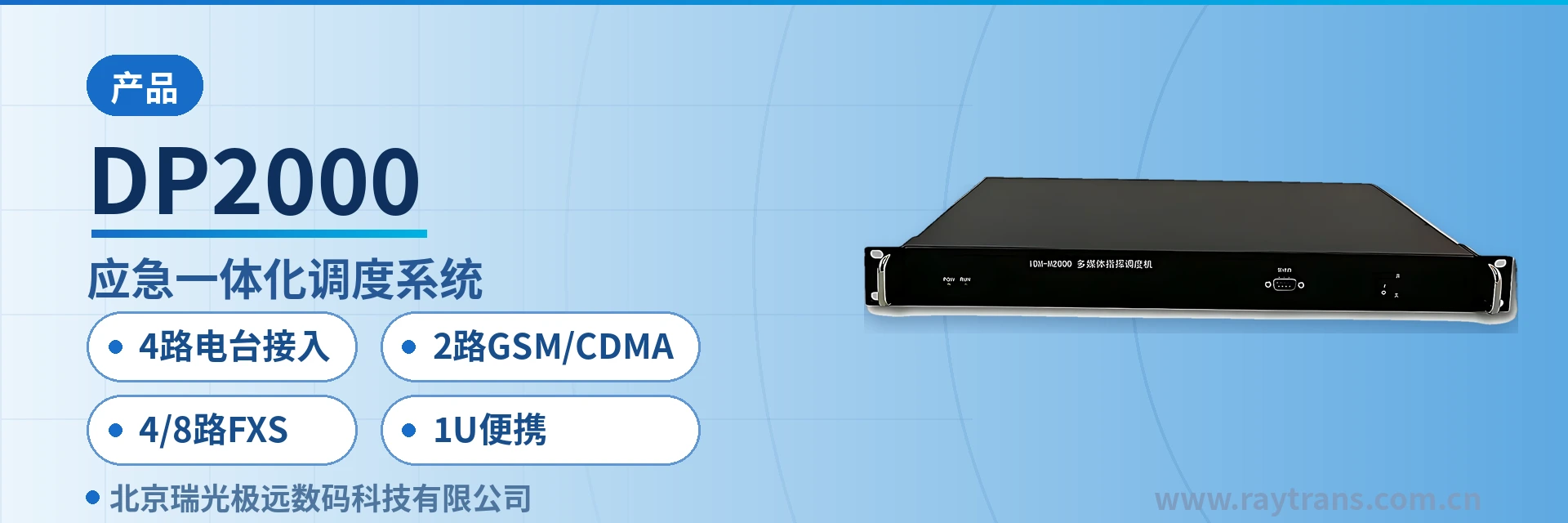
DP2000 Emergency Integrated Dispatching System
4-channel radio access
The IDM-DP2000 is a compact portable multimedia dispatching exchange that can converge multiple communication means such as mobile phone communications, radio communications, subscriber telephones (FXS) and loop-start trunks (FXO). Through advanced digital voice processing technology and encrypted network transmission technology, devices such as intercom radios of different frequency bands, VHF/UHF radio sets, HF radio sets, traditional PSTN telephones (public switched telephone network), IP softphones and traditional IP phones are seamlessly connected to the dispatch system network. It can be used standalone directly, or used with a dispatch console, or used as a remote trunking access gateway of a large dispatch system. It achieves long-distance
The DP2000 Emergency Integrated Dispatching System is a compact portable multimedia dispatching exchange developed by Beijing Ruiguang Jiyuan Digital Technology Co., Ltd. It connects mobile phones, HF and VHF/UHF radio sets, 350M and 800M trunking intercom, FXS subscriber telephones and FXO loop-start trunks to the same dispatch network, providing integrated audio and video dispatching capability for on-site command and dispatch.
The device adopts all-digital information processing technology and encrypted network transmission technology, so that radio sets on different frequency bands, PSTN telephones, IP softphones and traditional IP phones all enter the dispatch system by voice, achieving two-way voice intercommunication between wireless terminals and wired terminals and meeting the product showcase requirements of unified access for multiple formats in converged dispatching scenarios.
Key Specifications at a Glance: 19-inch 1U desktop structure · 4-channel radio access · 2-channel GSM/CDMA · 4/8-channel FXS · 2-channel PSTN trunk · WAN port RJ45 or FC optical port
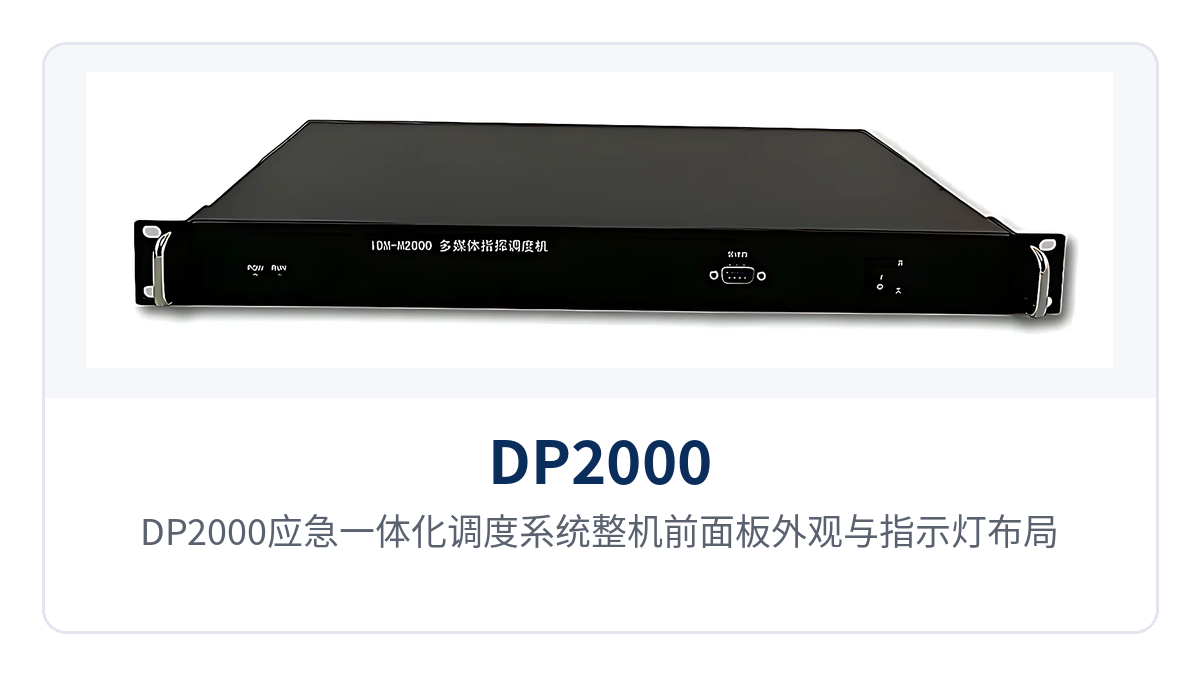
Figure 1: Overall front panel appearance and indicator LED layout of the DP2000 Emergency Integrated Dispatching System
What Kind of Device Is the DP2000 Emergency Integrated Dispatching System?
In a network, the DP2000 Emergency Integrated Dispatching System sits as the tandem point between on-site terminals and transmission links: on one side it connects radio sets, mobile phones, telephones and trunk lines, and on the other side it feeds voice into the audio and video dispatching system. The device adopts a 19-inch 1U desktop structure with a single chassis, moving with the vehicle, the outpost or the temporary command post, and calls can begin once terminals and power are connected on arrival.
Three usage modes determine its scope of application. Used standalone, a single device can form a small-scale product showcase and command and dispatch system, suitable for temporary emergency dispatching. Used with a portable dispatch console, it forms an on-site command operator seat that can initiate calls, group calls and barge-in to various terminals. Used as a remote trunking access gateway to a large converged dispatching system, it brings radio sets and mobile phones at remote sites under the unified management of the central dispatch console.
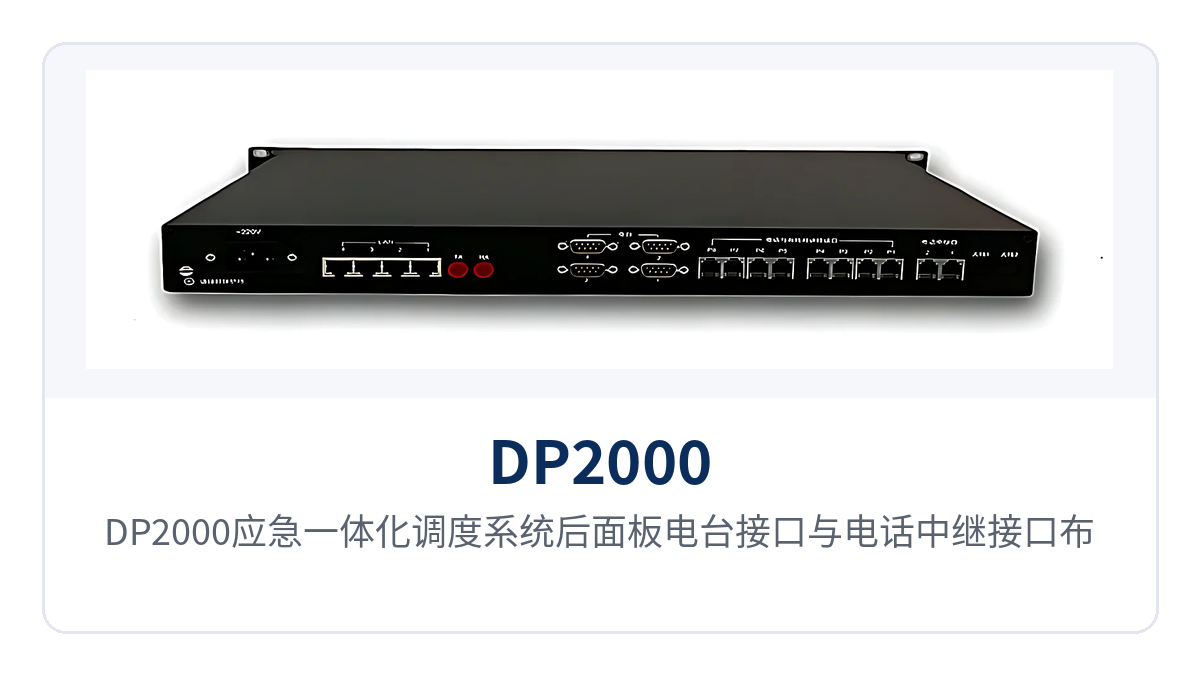
Figure 2: Rear panel radio interface and telephone trunk interface layout of the DP2000 Emergency Integrated Dispatching System
How Are Four Types of Terminals Connected to One 1U Device?
The access capability of the DP2000 is implemented on three sides: the wireless side handles radio sets and trunking, the wired side handles telephones and loop-start trunks, and the trunk side connects mobile phones and outside lines. The interfaces of all three sides are housed in the same 1U chassis, so there is no need to equip a separate gateway device for each type of terminal on site; wiring and configuration are completed in one place.
Wireless Side: 4 Radio Channels Bring Different Frequency Bands onto One Dispatching Plane
The wireless side supports 4 radio channels, covering HF radio sets, VHF/UHF single sideband (SSB) radio sets, and 350M and 800M trunking intercom. After access, intercoms and radio sets on different frequency bands can listen to and talk with each other, and any two or more radio sets or trunking systems can be bridged directly; differences in frequency band and format are converted inside the device, so on-site staff no longer need to relay frequency content manually.
Wired Side: 4 or 8 FXS Channels for Telephones and Wired Intercom Terminals
The wired side provides 4 or 8 FXS subscriber interfaces for ordinary telephones and wired intercom terminals, with 4 channels per module. All wired intercom terminals can talk directly with each other; wired terminals are usually assigned a higher priority than inside line telephones, and high-priority users can interrupt the trunking talk right of low-priority users, so duty posts and patrol posts do not talk over each other.
Trunk Side: 2 GSM/CDMA Channels and 2 PSTN Channels for External Calls
The trunk interfaces can be configured with 2 GSM/CDMA channels or connected to ordinary telephone trunks (FXO loop-start trunks, no fewer than 2), so extensions can dial external numbers through the ordinary telephone interface, GSM/CDMA or IP trunk. The WAN port supports an RJ45 electrical interface or an FC optical interface as the access channel for IP phones, allowing 2 IP phones to be connected, compatible with both the SIP standard protocol and the H.323 protocol.
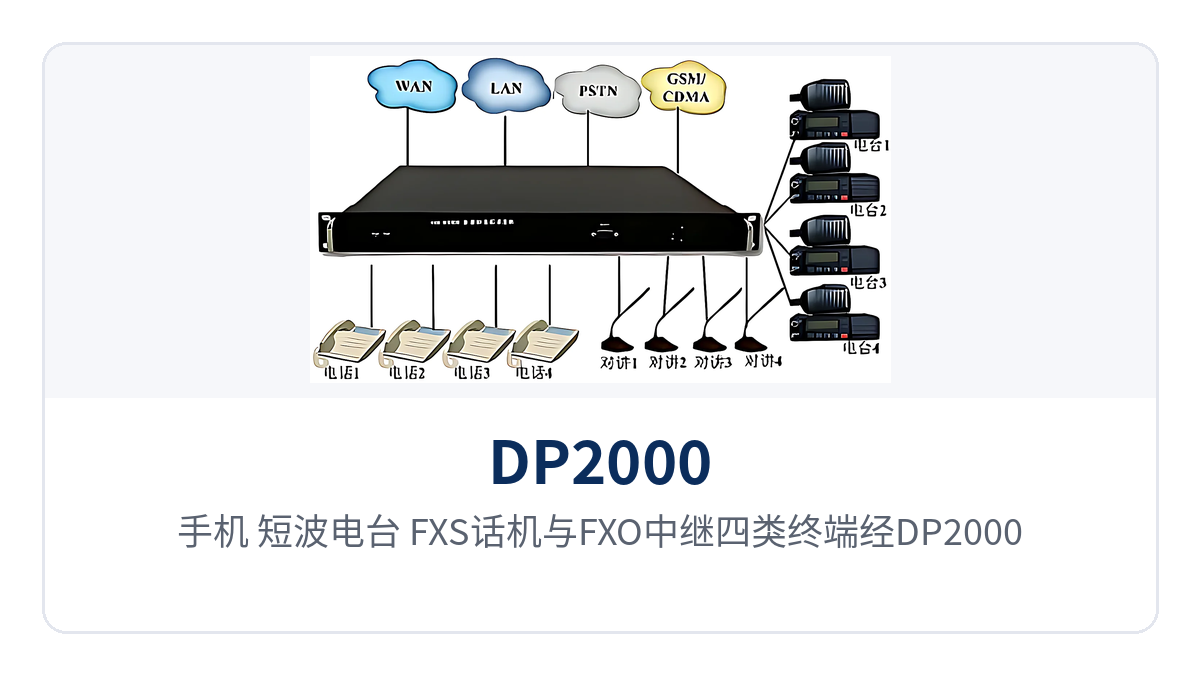
Figure 3: Networking schematic of mobile phones, HF radio sets, FXS telephones and FXO trunks converging into the dispatch network through the DP2000
How Do Group Calls, Priority and Traffic Bridging Work in On-Site Command?
Group calls solve the problem of "one call, many recipients at the same time." When an outside line dials in, telephone extensions in the same group call ring simultaneously; once any extension goes off-hook, the others stop ringing, so the duty operator does not need to relay the message one by one. Group members are called in parallel and do not queue up waiting for the previous speaker to finish.
Priority solves the problem of "who is answered first when multiple calls come in at once." When two or more outside lines call in simultaneously, any telephone that goes off-hook is first connected to the outside line with the higher priority, while the other extensions continue ringing; lines of equal priority are answered in the order in which they rang. Wired intercom terminals are usually assigned a higher priority than inside line telephones, and high-priority users can interrupt the trunking talk right of low-priority users.
Bridging solves the problem of "how two wireless networks become one." Any two or more radio sets or trunking systems can be bridged: a call on an HF radio set can be transferred to the 350M trunking system, and a trunking call can also reach the HF side, so cross-band broadcast no longer requires a repeater plus an operator.
How Are Function and Performance Specifications Verified?
Functions and performance should be verified item by item against the on-site interface list, which fits actual needs better than purchasing by overall model. The function table describes the role of each service on site, and the parameter table describes interface quantities and applicable conditions; for power supply, power consumption, dimensions and operating environment specifications not listed in the tables, not yet recorded in the knowledge base — confirm with the command and dispatch system manufacturer before ordering and then add them to the list.
Function Overview
| Function | Description |
|---|---|
| Multi-means converged access | Mobile phones, radio sets, FXS subscriber telephones, FXO loop-start trunks, IP softphones and traditional IP phones access the same multimedia dispatching exchange dispatch network |
| Wired terminal intercom | All wired intercom terminals can talk directly with each other without going through outside lines |
| Radio listening and talking | Any wired intercom terminal or telephone can select any one or more wireless trunking systems for listening and talking |
| Radio and trunking bridging | Any two or more radio sets or trunking systems can be bridged, enabling intercommunication between terminals on different frequency bands |
| Extension outgoing calls | Extensions dial external numbers through the ordinary telephone interface, GSM/CDMA or IP trunk |
| Group call simultaneous ringing | When an outside line dials in, extensions in the same group ring simultaneously, and the others stop ringing once any one goes off-hook |
| Priority answering | When multiple outside lines call in simultaneously, calls are answered by priority, and lines of equal priority in the order in which they rang |
| Talk right preemption | Wired intercom terminals have a higher priority than inside line telephones, and high-priority users can interrupt the trunking talk right of low-priority users |
Interface and Performance Specifications
| Item | Parameter/Specification | Description/Applicable Conditions |
|---|---|---|
| Equipment form factor | 19-inch 1U desktop structure | Can be used standalone, with a dispatch console, or as a remote trunking access gateway |
| Radio interface | 4 channels | Includes HF radio sets, VHF/UHF SSB radio sets, and 350M and 800M trunking intercom |
| Wired terminal interface | 4 or 8 channels | FXS interfaces connect ordinary telephones or wired intercom terminals, with 4 channels per module |
| GSM/CDMA trunk | 2 channels | Connects to the mobile network, enabling intercommunication between mobile phones and the dispatch network |
| Ordinary telephone trunk | No fewer than 2 channels | FXO loop-start trunks connect to the PSTN and upper-level switches |
| WAN port | RJ45 electrical interface or FC optical interface | Serves as the IP phone access channel, allowing 2 IP phones to be connected |
| IP phone protocol | SIP standard protocol, H.323 protocol | Compatible with access of IP softphones and traditional IP phones |
| Voice processing | All-digital information processing | Achieves two-way voice intercommunication between wireless terminals and wired terminals |
| Transmission security | Encrypted network transmission | Voice is transmitted over encrypted channels, and services are closed within the private network |
| Power supply, power consumption, dimensions, operating environment | Not yet recorded in the knowledge base | Subject to the accompanying technical documentation and commercial confirmation |
Four Capability Labels: 4-Channel Radio Access, 2-Channel GSM/CDMA, 4/8-Channel FXS, 1U Portable
The four capability labels correspond to four types of on-site problems. The following explains the technical focus and applicable conditions item by item, so that projects can turn selling points into acceptance items in the requirements list rather than leaving them at the promotional level. Interface quantities are determined by the ordering configuration and should be verified item by item against the actual number of terminals on site.
- 4-channel radio access: 4 interfaces for HF, VHF/UHF, 350M and 800M trunking radio sets; a single unit forms small-scale emergency audio and video dispatching, so outposts and patrol groups no longer need to relay orders verbally.
- 2-channel GSM/CDMA: 2 GSM/CDMA trunks bring mobile phones into the dispatch network, achieving two-way voice intercommunication between mobile phones, radio sets and telephones, with one channel reserved for the public network and one for the private network.
- 4/8-channel FXS: 4 or 8 FXS subscriber interfaces connect ordinary telephones and wired intercom terminals, with 4 channels per module, so existing telephones in the station can be used directly without additional subscriber boards.
- 1U portable: The 19-inch 1U desktop structure supports three deployment modes — standalone, with a dispatch console, or as a remote trunking access gateway — and is easy to carry in vehicles, move with outposts and fix in cabinets, and also meets the mobility requirements of military emergency communications vehicle solutions; Raytrans can provide supporting technical support.
Typical Application Scenarios
The three types of sites differ in interface variety, activation speed and continuous operation requirements. During configuration, each item should be positioned according to radio format, number of telephones and trunk conditions, which fits actual needs better than purchasing by overall model. The following three scenarios are the more common uses of the DP2000 in audio and video dispatching and command and dispatch projects.
Border Defense Outposts and Field Emergencies: A Single Device Forms a Small-Scale Dispatch Network
Communications at border defense outposts and field temporary command posts are characterized by few terminals, mixed formats and no fixed equipment room. With 4 HF and VHF/UHF radio channels and a few FXS telephones connected, a single DP2000 can form a small-scale dispatch system for temporary emergency dispatching; routine listening, temporary announcements and relaying orders to patrol groups in border defense emergency dispatching are all completed in one place, and the device can be loaded into a vehicle or moved into a tent, meeting the converged dispatching requirements of field scenarios.
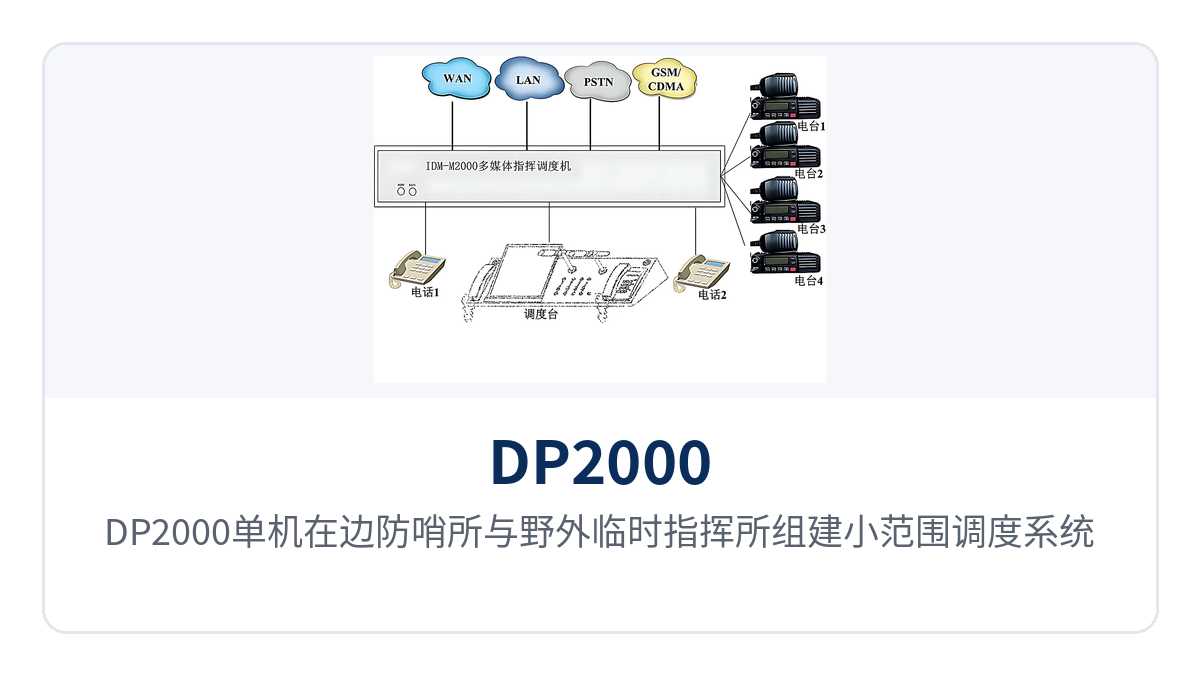
Figure 4: A standalone DP2000 forming a small-scale dispatch system at a border defense outpost and field temporary command post
Mobile Emergency Communications Vehicles and Vehicle-Mounted Command: A Mobile Command Center Deployed with the Vehicle
Vehicle-mounted command and dispatch requires equipment to be fixed within limited vehicle space and to start up on arrival. The DP2000 can be deployed in a mobile emergency communications vehicle and used with a portable dispatch console to form a mobile command center, connecting mobile phones, radio sets, HF radio sets and other terminals; the on-site commander can call all terminals from one place, and temporary conferences and barge-in announcements in vehicle-mounted command and dispatch are also completed on the same device, making it a typical deployment of a multimedia dispatching exchange in military emergency communications vehicle solutions.
Remote Access to Large Private Network Dispatch Systems: Bringing Remote Sites into the Central Dispatch Console
In large dispatch systems, the DP2000 can work with a central dispatching exchange (PBX/IPPBX) as a remote trunking access gateway to dispatch remote trunking radio sets, HF radio sets, WiFi terminals, mobile phones and other media terminals. Remote sites do not need to build a separate dispatch host; voice returns to the center over IP channels or optical ports and is brought under the management of the unified dispatch console, achieving cross-region interconnection of command and dispatch systems.
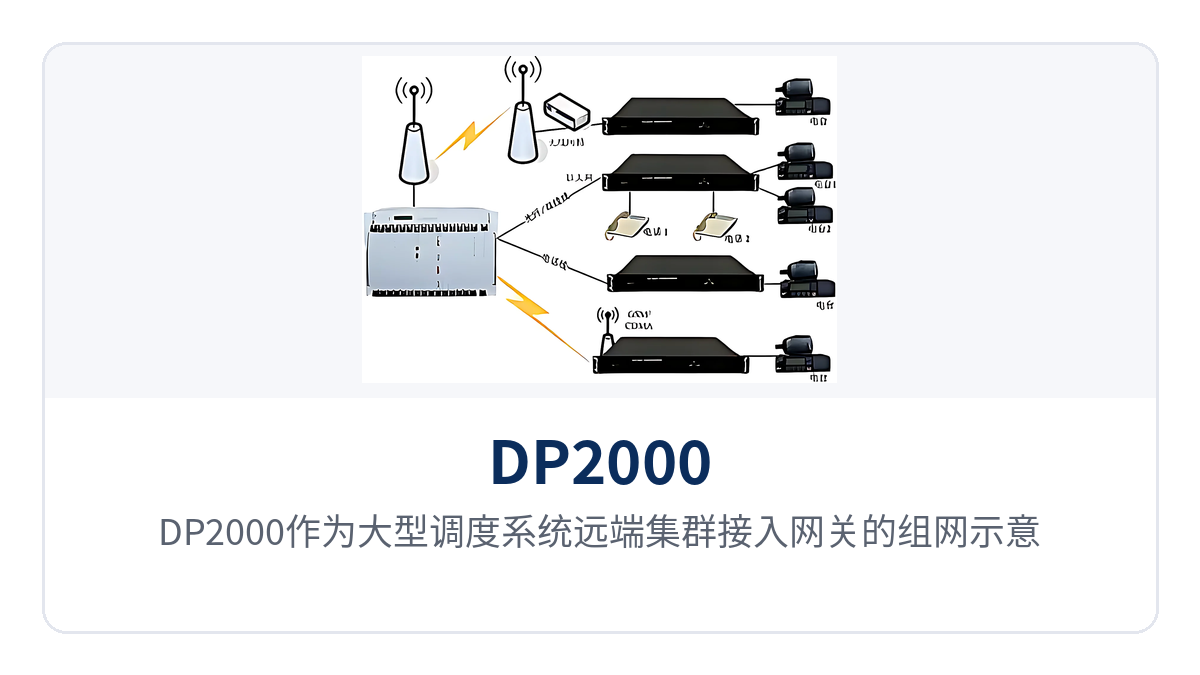
Figure 6: Networking schematic of the DP2000 as a remote trunking access gateway in a large dispatch system
Conclusion
The DP2000 emergency integrated dispatch system packs 4-channel radio access, 2-channel GSM/CDMA, 4/8-channel FXS, and 2-channel PSTN trunk into a single 19-inch 1U chassis, eliminating the hassle of provisioning separate equipment for wireless networks, wired networks, and public networks in field and vehicle-mounted conditions. One device manages three types of terminals, and one less commissioning task on site means one less point of failure.
For border defense outposts, mobile emergency communications vehicles, and remote stations of large private networks, the configuration can be finalized by checking the interface list item by item during selection: how many radio channels, how many telephones, how many trunks, and whether a dispatch console is needed. Reporting all of this to Raytrans in one go is far simpler than choosing a model first and coming back to add interfaces later.