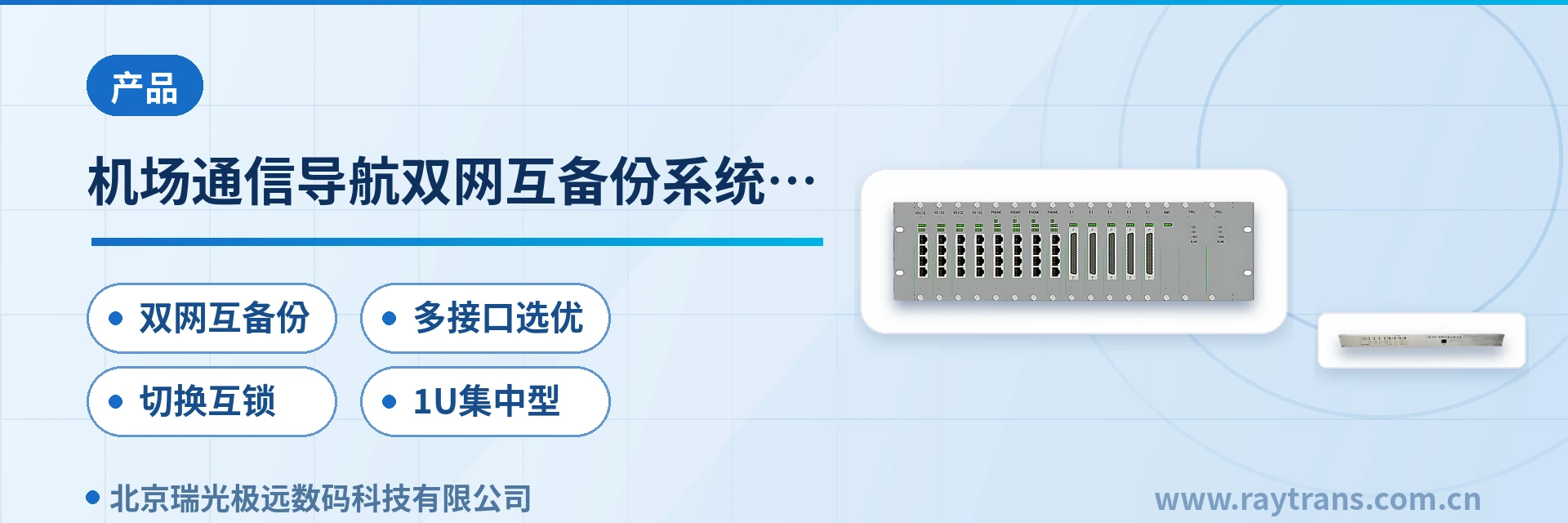
Airport Communication and Navigation Dual-Network Mutual Backup Switching Device
High reliability, multi-network interlock to prevent mis-switching, single-network failure halves bandwidth without service interruption
Airport Communication and Navigation Dual-Network Mutual Backup System Switching Device. In some important remote dispatch and control sites (such as metro, airports, and military), very high system reliability is often required, and services are frequently transmitted over two or more networks, with subscriber terminals able to automatically select a normal transmission network and channel.
The airport communication and navigation dual-network mutual backup automatic optimal selection and switchover device is a user-side service optimal selection and switchover device for remote dispatch and control sites such as airport communication and navigation, metro/rail transit dispatch, and military remote command. It adopts a dual-network mutual backup automatic optimal selection and switchover mechanism, transmitting the same service over two or more networks simultaneously and automatically selecting the normal transmission network and channel at the receiver, so that critical services remain uninterrupted when a single network fails. The device has a 1U centralized architecture with an integrated multi-function design, covering optimal selection and switchover as well as manual forced switchover for subscriber service interfaces such as Ethernet, V.24, V.35, RS422, RS485, audio, and telephone. The device can be widely used in PDH communication systems, product showcase platforms, command and dispatch centers, and other scenarios. It is a key optimal selection and switchover node for command and dispatch system manufacturers when building military emergency communications vehicle solutions and government private network optical fiber communication solutions, and is especially suited to the deployment requirements of airport communication and navigation dual-network mutual backup switchover devices, ensuring service continuity through an Ethernet dual-network optimal selection and switchover mechanism.
Key Specifications at a Glance: Dual-network mutual backup · Multi-interface optimal selection · Switchover interlock · 1U centralized · Simultaneous receive/transmit on both networks with bandwidth automatically halved on single-network failure · Optimal selection and switchover for Ethernet/V.24/V.35/RS422/RS485/audio/telephone interfaces
How Is Dual-Network Mutual Backup Automatic Optimal Selection and Switchover Implemented?
The basic idea of airport communication and navigation dual-network mutual backup automatic optimal selection and switchover is to send the same subscriber service over two or more networks simultaneously, with the receiver automatically selecting the normal network and channel. Sites such as airport communication and navigation, metro/rail transit dispatch, and military remote command have high requirements for system reliability. Transmitting services over two or more networks simultaneously and having subscriber terminals automatically select the normal transmission channel is a common practice for enhancing reliability, and it is also a mature mechanism repeatedly verified by command and dispatch system manufacturers in PDH product showcase and product showcase solutions.
Common methods for enhancing system reliability fall into four categories: dual-interface mutual backup, dual-board mutual backup, dual-equipment mutual backup, and dual-network mutual backup. Dual-interface mutual backup means a device has dual optical ports or optical-electrical mutual backup; dual-board mutual backup is mostly used inside equipment, such as dual power cards and dual main control cards; dual-equipment mutual backup is divided into cold standby and hot standby; dual-network mutual backup transmits every service over two networks and performs optimal selection at the receiver, usually requiring subscriber interfaces to be completed through an optimal selection and switchover device.
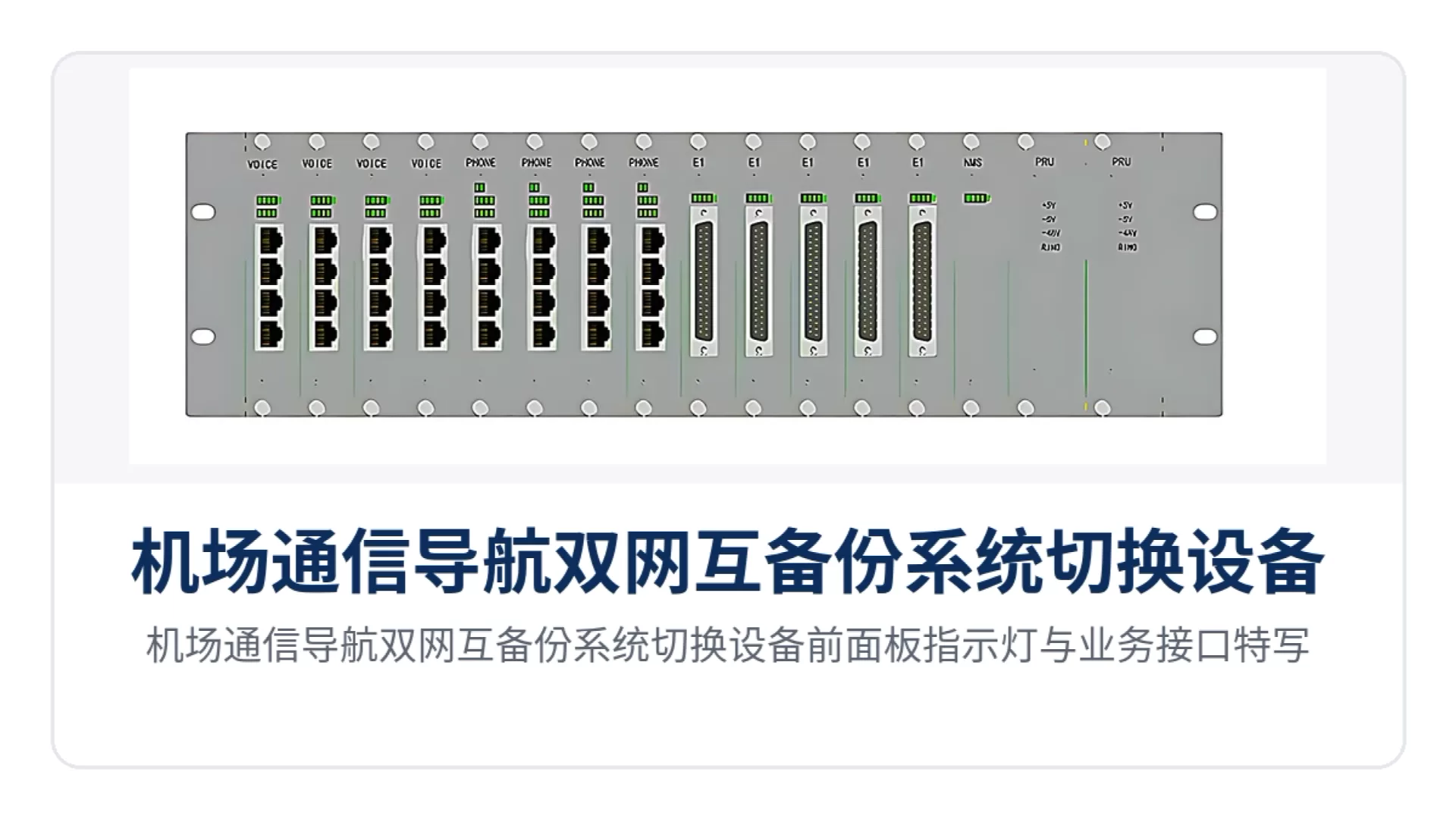
Figure 1: Close-up of the front panel indicator LEDs and service interfaces of the airport communication and navigation dual-network mutual backup system switchover device
The switchover device itself must also be reliable: the device should use as few active components as possible to reduce the failure rate of the switchover device itself from the source and prevent the switchover stage from becoming a new point of failure; at the same time, it provides multi-network switchover interlock to prevent multiple networks from being bypassed simultaneously and causing false switchover. When carrying Ethernet-type services, the device receives and transmits on both networks simultaneously, and bandwidth is automatically halved on single-network failure while services remain uninterrupted—halved bandwidth is a predictable degraded operation rather than channel loss. Voice channels are judged by a three-level decision of signaling status, voice data, and default network, achieving intelligent optimal selection on digital lines so that dispatch voice preferentially falls on the normal network when the link degrades.
Why Do Airport Communication and Navigation Need Dual-Network Mutual Backup Switchover Devices?
Airport communication and navigation and remote dispatch and control are typical service-continuity-sensitive scenarios: navigation signals, airport voice dispatch, meteorological and air traffic control data, metro train dispatch voice, and military command instructions—interruption of any channel directly affects operations and command. Once a single network and single link experiences line failure, equipment failure, or route degradation, services are interrupted accordingly; the dual-network mutual backup switchover device sends the same service to multiple networks simultaneously, and the receiver performs automatic optimal selection, so that when a single network fails, the remaining channels continue to carry services.
Such sites require the service switchover system to have high reliability and strong maintainability: the device can receive independent control from the network management systems of several networks and can also switch automatically according to service interface status; for maintenance personnel, a manual forced switchover entry point is retained, allowing direct switchover by command when network status and network management criteria diverge. The equipment form factor is 1U centralized rack-mounted, with centralized deployment and centralized management, simple maintenance, and suitability for floor installation in equipment rooms or cabinets.
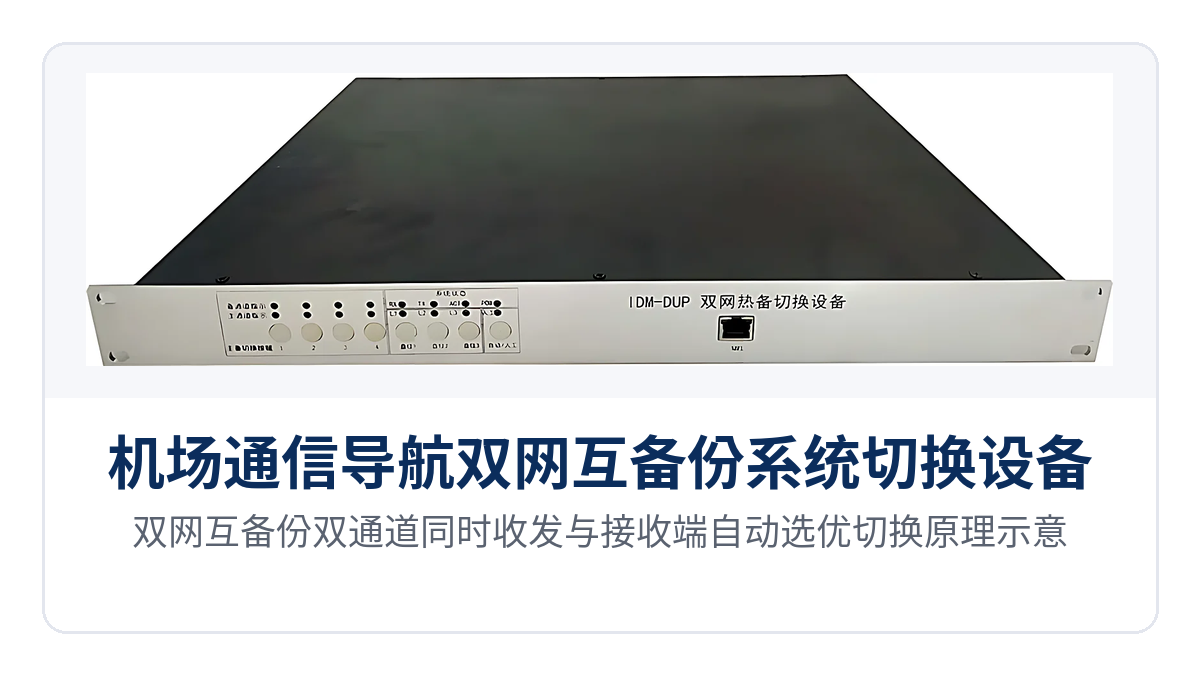
Figure 2: Schematic of dual-network mutual backup dual-channel simultaneous receive/transmit and receiver-side automatic optimal selection and switchover
How Are Optimal Selection and Switchover Performed Separately for Ethernet, Narrowband Data, Voice, and Telephone Interfaces?
Common subscriber service interfaces include Ethernet interfaces, narrowband data ports (V.24/V.35/RS422/RS485), audio interfaces, and telephone interfaces. The device supports optimal selection and switchover as well as manual forced switchover for multiple types of service interfaces such as Ethernet, V.24/V.35/RS422/RS485, audio, and telephone. Different categories of interfaces have different handling methods, jointly achieving multi-interface optimal selection and switchover.
Ethernet interfaces usually adopt the method of simultaneous transmission and simultaneous reception over dual networks; when one network fails, bandwidth is automatically halved while services remain uninterrupted. For narrowband data, the same content is sent over both networks simultaneously, and the receiver automatically receives from the side where data arrives normally, achieving low-latency data optimal selection.
For data channels, switchover is generally not considered based on line bit errors; when bit errors occur on the line, a switchover command is issued through the network management system, handing the bit error risk over to a human-controllable operations and maintenance process. Voice channels are judged by a three-level decision of signaling status, voice data, and default network, achieving intelligent optimal selection on digital lines: first judge the signaling status; when signaling status is the same, judge whether there is voice data; if both signaling and data are the same, preferentially use the default network. These judgments are all completed on digital lines.
System Functions and Performance Specifications
Function | Description |
|---|---|
Dual-network mutual backup | The same service is transmitted over two or more networks simultaneously, with optimal selection at the receiver, so services remain uninterrupted on single-network failure |
Automatic optimal selection and switchover | The receiver automatically selects the normal network and channel according to service interface status, without manual intervention |
Independent network management control | Can receive switchover commands independently issued by the network management systems of several networks, and also supports automatic switchover according to service interface status |
Manual forced switchover | Maintenance personnel can issue forced switchover commands to subscriber interfaces as a fallback for automatic switchover |
Multi-network switchover interlock | Multi-network redundant switchover provides an interlock function to prevent multiple networks from being bypassed simultaneously and causing false switchover |
Multi-interface optimal selection and switchover | Covers optimal selection and switchover for Ethernet, V.24/V.35/RS422/RS485 narrowband data, audio, and telephone interfaces |
Communications equipment mutual backup | Supports coordinated use of dual-interface mutual backup, dual-board mutual backup, dual-equipment mutual backup, and dual-network mutual backup |
High reliability with few active components | Uses as few active components as possible to reduce the failure rate of the switchover device itself from the source |
Item | Parameter/Specification | Description/Applicable Conditions |
|---|---|---|
Equipment form factor | 1U centralized rack-mounted | Suited to centralized deployment in equipment rooms and cabinets |
Applicable sites | Airport communication and navigation, metro/rail transit dispatch, military remote command | Remote dispatch and control sites |
Ethernet interface | Simultaneous receive/transmit over dual networks | Bandwidth is automatically halved when a single network fails, with services uninterrupted |
Narrowband data interface | V.24/V.35/RS422/RS485 | Both networks transmit the same content; the receiver selects the side with data arriving normally |
Voice and telephone interface | Audio interface, telephone interface | Optimal selection by three-level arbitration: signaling status, voice data, default network |
Switchover modes | Automatic optimal selection and switchover, independent network management control, manual forced switchover | The three modes coexist, with manual operation as a fallback |
Backup mechanism | Dual-interface/dual-board/dual-unit/dual-network mutual backup | Compatible with existing reliability enhancement measures |
Power supply and power consumption | Not yet recorded in the knowledge base | The manufacturer's technical documentation shall prevail |
Typical Application Scenarios
Airport Communication and Navigation Private Network
An airport communication and navigation private network is usually built by an integrator as multiple parallel networks for navigation, voice dispatch and air traffic control data, with high requirements on channel continuity. The dual-network mutual backup switching device gives airport navigation services dual-network hot standby with simultaneous receive/transmit over both networks; when a single network fails, bandwidth is automatically halved and services remain uninterrupted. The receiver performs automatic optimal selection and switchover, the network management system can control independently and manual forced switchover is supported, so that navigation signals, control tower voice and air traffic control data continue to be transmitted when a single network fails. This approach also applies to the deployment of airport communication and navigation dual-network mutual backup switching devices, as well as to the strict channel continuity requirements in government private network optical fiber communication solutions.
Subway and Rail Transit Dispatch Private Network
Subway dispatch communications carry train operation dispatch, power dispatch and environmental control voice and data, and multi-network redundancy is a standard requirement. The device covers Ethernet, narrowband data, audio and telephone interfaces with multi-interface optimal selection and switchover; the receiver performs automatic optimal selection and switchover, the network management system can control independently and manual forced switchover is supported. When a link degrades or fails, the dispatch and command channel switches over automatically, avoiding loss of contact on the train operation command channel and providing a stable and reliable bearer foundation for command and dispatch.
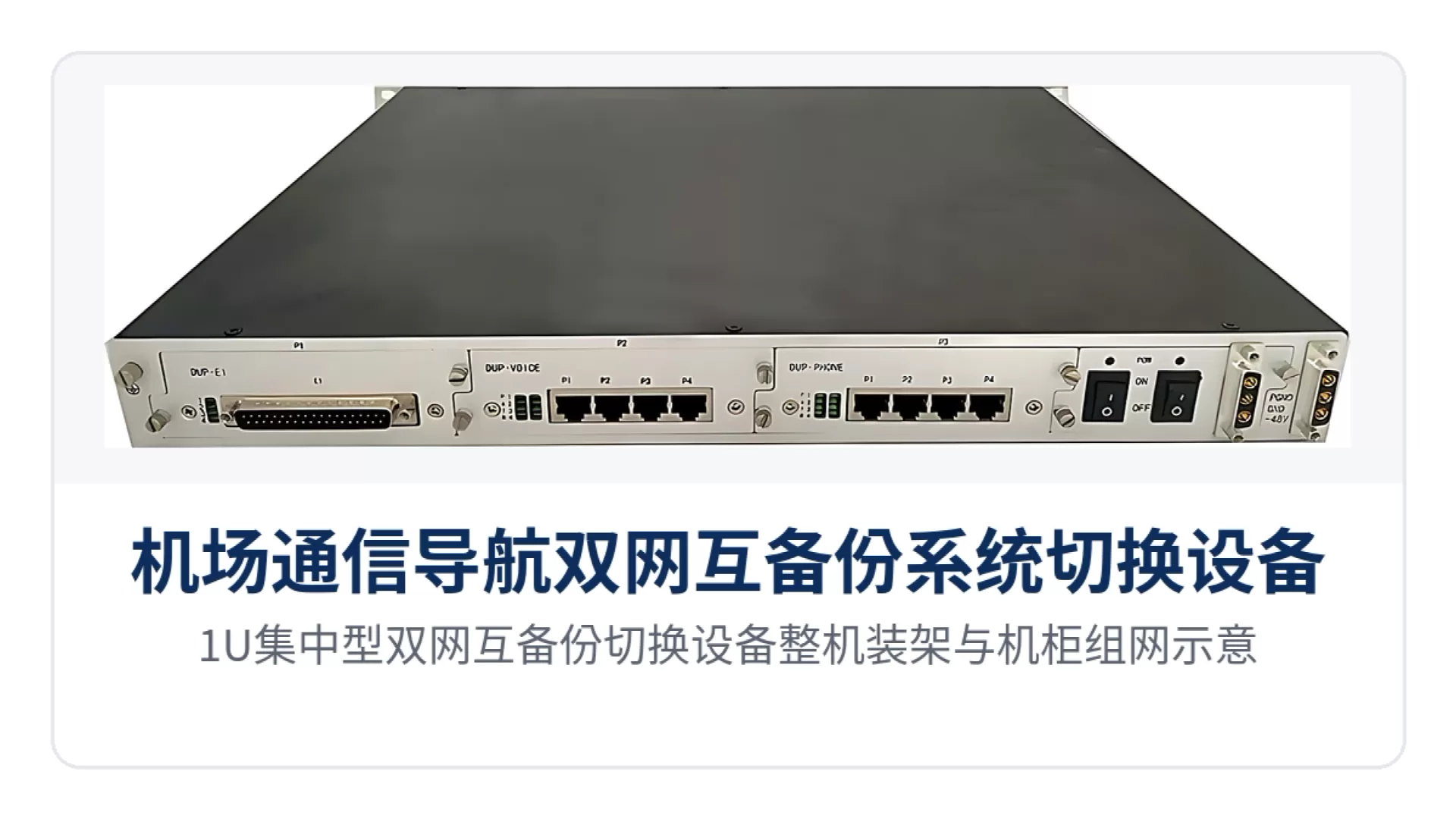
Figure 3: Overall rack installation and cabinet networking of the 1U centralized dual-network mutual backup switching device
Military Remote Command Private Network
Military remote command has high requirements on redundancy and controllability, and communications equipment must operate reliably at both field and fixed sites. The device is deployed in a 1U centralized form factor, implementing multi-network switching interlocking and multi-interface optimal selection and switchover; the network management system can control independently and manual forced switchover is supported. The design with few active components reduces its own failure rate, and together with dual-unit mutual backup, dual-board mutual backup and dual-network mutual backup, it forms hot standby assurance for military remote command communications and often serves as a key switching element in military emergency communications vehicle solutions.
FAQs
What is the difference between PDH and SDH?
I. PDH PDH is the Plesiochronous Digital Hierarchy, which is divided into the European standard and the…
View answerCommunication Transmission Products
PDH Equipment Physically Isolated Gigabit Multi-service Optical Terminal IDM GP2400 Series Optical Terminal IDM…
View answerIntroduction to EoPDH Technology
Ethernet-over-PDH is a set of technologies and standards used to transport local Ethernet frames over established…
View answerPrinciples and Application Scenarios of PDH Optical Terminal Equipment
Optical terminal equipment consists of a transmitter and a receiver. The transmitter amplifies, converts (A/D)…
View answerThe Relationship between PDH, SDH and PCM
PDH (Plesiochronous Digital Hierarchy) is a system in which high-precision clocks are respectively set at each node of…
View answer