IDM-24E1 Integrated Service Cross-Connect Multiplexing Equipment
Dual power supply and dual CMU hot standby, two-stage time-slot cross-connection, wideband and narrowband multiplexing in the same chassis
The IDM-24E1 integrated service cross-connect multiplexing equipment uses a 19-inch 6U standard chassis and is a PCM multiplexer capable of processing up to 24 E1 signals. Its 15 slots (6 CMU slots, 6 USER slots, 2 PRU slots, and 1 expansion slot) can provide 180 channels of 64K plus 24 channels of n×64K subscriber interfaces. User cards can be configured with more than 20 types of interface cards as required.
The IDM-24E1 24-channel E1 Integrated Service Cross-Connect Multiplexing Equipment is a PCM multiplexer developed by Beijing Ruiguang Jiyuan Digital Technology Co., Ltd. It is used to aggregate narrowband services such as voice, data, and video surveillance onto 24 E1 directions for transmission, and is a typical PCM product showcase for multi-service access scenarios in private networks. The equipment adopts a 19-inch 6U standard chassis and card-based structure. A single chassis provides 180 channels of 64K and 24 channels of n×64K subscriber interfaces, suitable for multi-service access and time slot scheduling in electric power, public security, and military private networks. It can be deployed together with integrated service access devices and optical multiplexing equipment to meet the narrowband service aggregation requirements of government private network optical fiber communication solutions and military emergency communications vehicle solutions, and plays the core scheduling role of time-slot cross-connect equipment in the construction of military multi-service access networks.
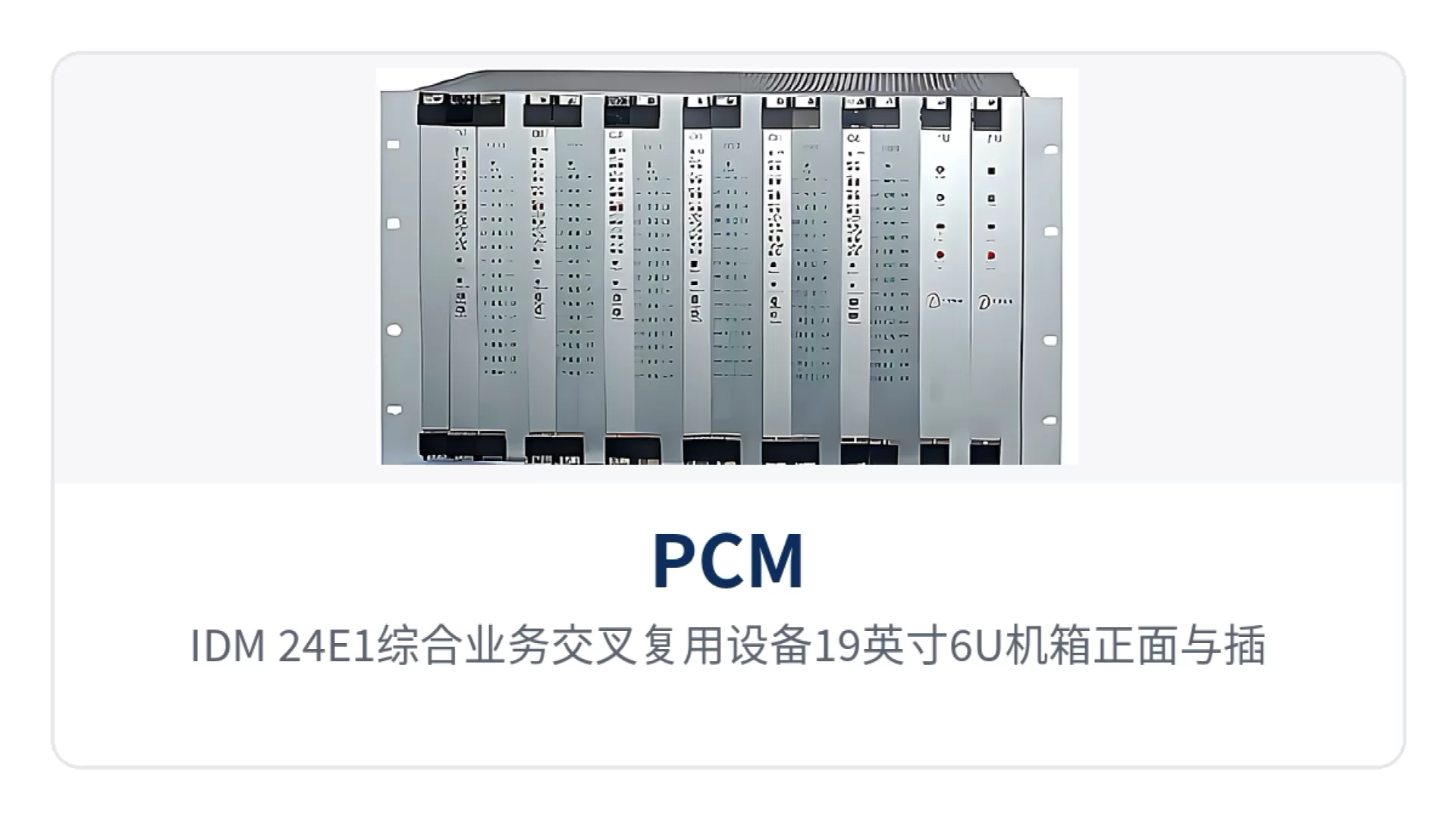
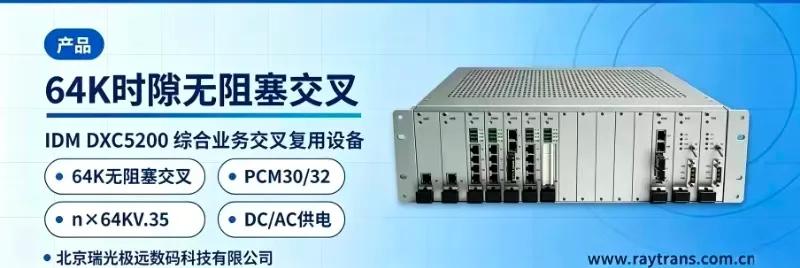
Figure 1: Front view and card slot close-up of the 19-inch 6U chassis of the IDM-24E1 Integrated Service Cross-Connect Multiplexing Equipment
Key Specifications at a Glance: 24 E1 directions · 180 channels of 64K interfaces · 6 CMU multiplexing cards · Two-level 1024×1024 cross-connect · Dual power supply and dual CMU hot standby · NetGuard network management
What is the 24-channel E1 Integrated Service Cross-Connect Multiplexing Equipment?
The IDM-24E1 24-channel E1 Integrated Service Cross-Connect Multiplexing Equipment is a centralized card-based PCM multiplexing platform. The 15 slots in the chassis are divided into 6 CMU slots, 6 USER slots, 2 PRU slots, and 1 expansion slot, with multiplexing cards and interface cards selected according to service scale. The 180 channels of 64K services can be distributed across 24 E1 directions for transmission, and the number of directions and access capacity are jointly determined by the number of CMU cards and user cards.
The equipment adopts dedicated large-scale integrated circuits and an independent subscriber module design. Each subscriber interface card provides 15 card slots, and typically each card carries 2 channels of 64K access services. User cards are configured according to the on-site service list. Modular card configuration allows the same chassis to serve both traffic-intensive dispatch centers and substation access points dominated by data interfaces, and spare parts only need to be configured by card. As an integrated service access device, its product showcase focuses on the scenario adaptability brought by the card-based structure and on-demand card configuration.
What can this equipment do: core functions at a glance
The IDM-24E1 24-channel E1 Integrated Service Cross-Connect Multiplexing Equipment integrates E1 multiplexing, time-slot cross-connection, and multi-service access in the same chassis. The following table lists the main function items and their roles. During selection, capacity and redundancy requirements can be checked item by item against the project service list.
| Function | Description |
|---|---|
| Two-level time-slot cross-connection | The first-level cross-connection contains two groups of 256×256 full cross-connect matrices, completing full cross-connection of two groups of four 2M, i.e., 120 channels of 64K; the second-level cross-connection contains a 1024×1024 full cross-connect matrix, corresponding to 32 2M |
| E1 multiplexing capability | 6 E1 interface multiplexing processing cards (CMU) provide 24 E1 direction connections, and can also connect to high-capacity cross-connect cards such as 32E1, improving E1 resource utilization |
| Subscriber interface configuration | A single unit provides 180 channels of 64K plus 24 channels of n×64K subscriber interfaces; 6 user cards each have 15 card slots and can be configured as required with more than 20 types of interface cards |
| Broadband and narrowband multiplexing in the same chassis | The multi-function slot can accommodate a PDH optical interface module or an 8-port Ethernet switching card with gigabit uplink optical ports, so broadband IP services and narrowband E1 services are multiplexed in the same chassis |
| Dual power supply and dual CMU hot standby | 2 PRU power cards and 2 CMU multiplexing processing cards back up each other; in the event of a single board failure, services continue to be carried by the standby board |
| NetGuard network management | NetGuard network management software enables intelligent configuration management of service networking, flexible allocation of time slots at each station, and real-time monitoring of equipment operating status |
| Multiple clock modes | Can be set as master clock, external clock, line clock, or user clock, and can be set as exchange interface or subscriber interface, compatible with both central office and remote end |
| Flexible networking | Combined with the IDM-120 series, IDM-30 series, and IDM-mini series to form chain networks, star networks, tree networks, and other structures |
| Structure and heat dissipation | The chassis uses mature craftsmanship and is equipped with a body heat dissipation system and an electromagnetic interference shielding system, adapting to long-term operation under complex equipment room conditions |
How does dual power supply and dual CMU hot standby ensure uninterrupted private network services?
Dual power supply and dual CMU hot standby means that 2 PRU power cards and 2 CMU multiplexing processing cards back up each other. When any board fails, services continue to be carried by the standby board, and the chassis does not need to be shut down. Power supply and multiplexing processing are the two links with the greatest failure impact at private network access nodes. Making these two items board-level redundancy means that maintenance or replacement of a single board does not affect the voice channels and data in operation.
In unattended equipment rooms such as electric power substations and public security branch stations, O&M personnel visit infrequently, so the equipment's own redundancy design directly determines service availability duration. The dual power supply hot standby and dual CMU hot standby of the IDM-24E1, together with panel alarm indications, allow the location of a faulty board to be determined on site, and replacement is completed as a card insertion operation without returning the entire unit to the factory. This feature enables it to undertake continuous operation tasks as an access layer node in government private network optical fiber communication solutions and military emergency communications vehicle solutions.
How are 180 channels of 64K interfaces configured across 15 slots?
The 180 channels of 64K interfaces are shared by 6 user cards. Each user card has 15 card slots, and typically each card carries 2 channels of 64K services, so full configuration provides 180 channels. Interface types are selected by card type. The 6 CMU multiplexing processing cards are responsible for multiplexing subscriber interface services into E1 channels and providing non-blocking time-slot cross-connection among 4 groups of E1 and among all 120 channels of subscriber interfaces.
The optional interfaces cover both voice and data categories, and more than 20 card types can be freely combined in the chassis. The following card types appear frequently at private network access nodes. Actual configuration is determined by checking the on-site service list against the manufacturer's technical documentation. One E1 can simultaneously carry voice and low-speed data.
- 64K codirectional interface: bit rate 64Kbps, used for protection signals and leased-line data
- V.24/V.28 (RS232/RS485): carries asynchronous low-speed data such as telecontrol and monitoring
- V.35 (n×64K): interfaces with routers and synchronous data services, with rate configured as n×64K
- Telephone interface (FXO, FXS): supports polarity reversal and caller ID (CID), interfaces with exchanges and telephones
- Magneto, 2100 Hz carrier magneto, hotline, and carrier interfaces: dedicated-line voice channels that do not depend on an exchange
- EM 2/4-wire audio and high-fidelity audio: dispatch telephone and public address (PA) audio services
- Baseband trunk, Signaling System No. 1 card, telephone switching card: trunk interfacing and small-capacity switching
- 10Base-T: Ethernet service access
How does the two-level 1024×1024 cross-connect matrix adapt to a central station serving multiple substations?
The second-level cross-connection internally contains a 1024×1024 full cross-connect matrix, i.e., the full cross-connection capability of 32 2M, and can allocate voice channels in any direction to target E1 time slots according to service planning. The first-level cross-connection contains two groups of 256×256 matrices, completing full cross-connection of two groups of four 2M, i.e., 120 channels of 64K. The two levels together form a complete scheduling path from the access side to the line side.
In a network structure where a central station corresponds to multiple substations, services from each substation are first aggregated by subscriber interface within the first-level matrix, and then reallocated by the second-level matrix to different E1 directions within the range of 32 2M. Cross-substation voice channel adjustments only require configuration changes, not cabling changes. NetGuard network management software delivers time slots by configuration, allowing flexible allocation of time slots at each station and real-time monitoring of equipment operating status. In the construction of military multi-service access networks, this two-level cross-connect structure facilitates centralized management of time slot resources by direction at the central station, and works with optical multiplexing equipment to achieve centralized scheduling of services from multiple substations.
Technical Specifications
The following parameters are taken from the public technical documentation of the IDM-24E1 24-channel E1 Integrated Service Cross-Connect Multiplexing Equipment. The E1 interface complies with the ITU-T G.703 standard and the PCM30/32 frame structure. Specific configurations and redundancy schemes are subject to the manufacturer's technical documentation and commercial confirmation.
| Item | Parameter/Specification | Description/Applicable Conditions |
|---|---|---|
| Chassis structure | 19-inch 6U standard chassis | Centralized card-based structure, suitable for standard racks and desktop installation |
| Number of slots | 15 | 6 CMU slots, 6 USER slots, 2 PRU slots, 1 expansion slot |
| E1 processing capability | 24 E1 channels | A single unit can perform PCM multiplexing with 24-channel E1 signal processing |
| Subscriber interface capacity | 180 channels of 64K plus 24 channels of n×64K | 180 channels of 64K services can be transmitted over 24 E1 directions |
| Subscriber interface cards | More than 20 types of interface cards | Each user card has 15 card slots, typically 2 channels of 64K services per card |
| Cross-connect capability | First level: two groups of 256×256; second level: 1024×1024 | First level corresponds to two groups of four 2M, totaling 120 channels of 64K; second level corresponds to 32 2M |
| Clock mode | Master clock/external clock/line clock/user clock | Can be set as exchange interface or subscriber interface, compatible with both central office and remote end |
| Network management mode | NetGuard network management software | Flexible allocation of time slots at each station and real-time monitoring of operating status |
| Redundancy configuration | Dual PRU power cards, dual CMU multiplexing cards hot standby | In the event of a single board failure, services are carried by the standby board |
| Broadband expansion | PDH optical interface module or 8-port gigabit uplink Ethernet switching card | Plugged into the multi-function slot to achieve broadband and narrowband service multiplexing in the same chassis |
| E1 interface standard | 2.048Mbps, HDB3, PCM30/32 | Complies with ITU-T G.703 recommendations |
This time-slot cross-connect equipment and optical multiplexing equipment provided by Raytrans can serve as an access layer choice in government private network optical fiber communication solutions and military emergency communications vehicle solutions. Its PCM multiplexing platform product showcase covers a variety of interface forms from voice dedicated lines to low-speed data.
Typical Application Scenarios
The IDM-24E1 24-channel E1 Integrated Service Cross-Connect Multiplexing Equipment targets private network scenarios that use E1 as the transmission medium and need to centrally connect voice and data into the same channel. Chain networks, star networks, and tree networks can all be organized according to site distribution, and electric power, public security, and military multi-service access networks are the main deployment directions. As an integrated service access device with both PCM multiplexing and product showcase capabilities, this model undertakes the centralized aggregation of voice and data at the private network access layer.
Electric power private network: simultaneous voice and data transmission between substations and dispatch centers
Between substations, switching stations, and dispatch centers in electric power private networks, both dispatch telephones and low-speed telecontrol and monitoring data are carried. The IDM-24E1 centrally connects the E1 channels uploaded from each site and cross-connects voice channels and data to the corresponding directions at the 64K time slot level, so one E1 simultaneously carries voice and data, reducing the number of private network lines. The equipment is essentially a time-slot cross-connect device for E1 links, performing directional allocation of voice channels and data within the PCM frame structure.
When adding a new bay or adjusting service assignment, only the time slot configuration is changed, while external cabling and opposite-end equipment remain unchanged, reducing on-site workload. Dual power supply and dual CMU hot standby allow unattended substations to continue operating services in the event of a single board failure, and O&M personnel can restore redundancy by arriving on site to replace the board.
Public security private network: aggregation of voice and video surveillance services from multiple substations
In public security private networks, branch offices, police stations, and command centers mainly exchange voice dispatching and video surveillance backhaul. The IDM-24E1 can insert an 8-port Ethernet switching card with gigabit uplink optical ports or a PDH optical interface module into the multi-function slot, multiplexing broadband IP services and narrowband E1 services in the same chassis and reducing the number of equipment room devices and supporting power supplies. With the built-in optical multiplexing equipment capability, remote stations can directly uplink through optical interface modules, saving independent transmission devices.
When the number of substations increases, capacity can be expanded by adding user cards and interface cards according to service volume, without replacing the entire unit and chassis. On the command center side, NetGuard network management allocates time slots at each station, and cross-station voice channel adjustments are completed by configuration without on-site rewiring.
Military multi-service access network: single-chassis cross-connection scheduling for a central station serving multiple substations
Military multi-service access networks are often organized in a structure where a central station corresponds to multiple forward sites, with service types spanning voice, data, and images. The second-level 1024×1024 cross-connect matrix of the IDM-24E1 corresponds to 32 2M, enabling centralized cross-connection and directional allocation of services from multiple substations within one chassis at the central station, reducing intermediate aggregation links. Raytrans has accumulated mature experience in military emergency communications vehicle solutions in this field, and the IDM-24E1 can serve as a common platform for vehicle-mounted and fixed-station access nodes.
The equipment can be used in combination with the IDM-120 series, IDM-30 series, and IDM-mini series. The model and card configuration are selected according to the capacity requirements of each site, the networking topology is adjusted among chain, star, and tree topologies according to on-site conditions, and capacity expansion is completed by adding multiplexing cards and interface cards. Raytrans also provides a supporting government private network optical fiber communication solution, making it easy for users to plan and deploy a multi-service access network under a unified network management system.