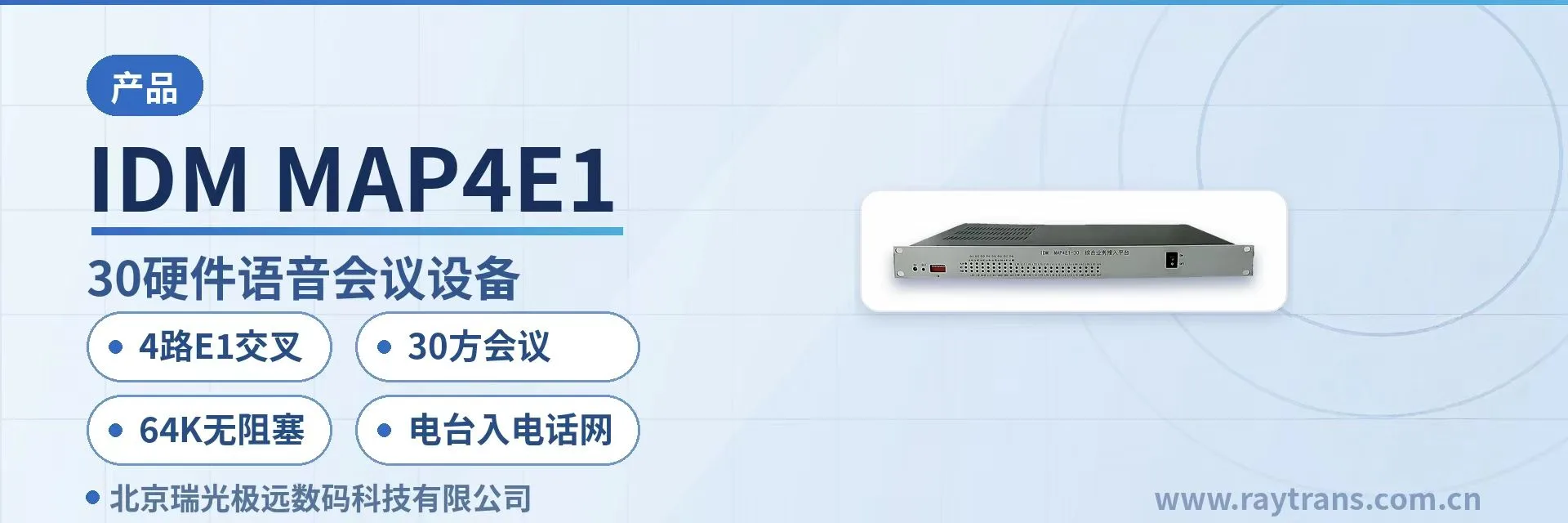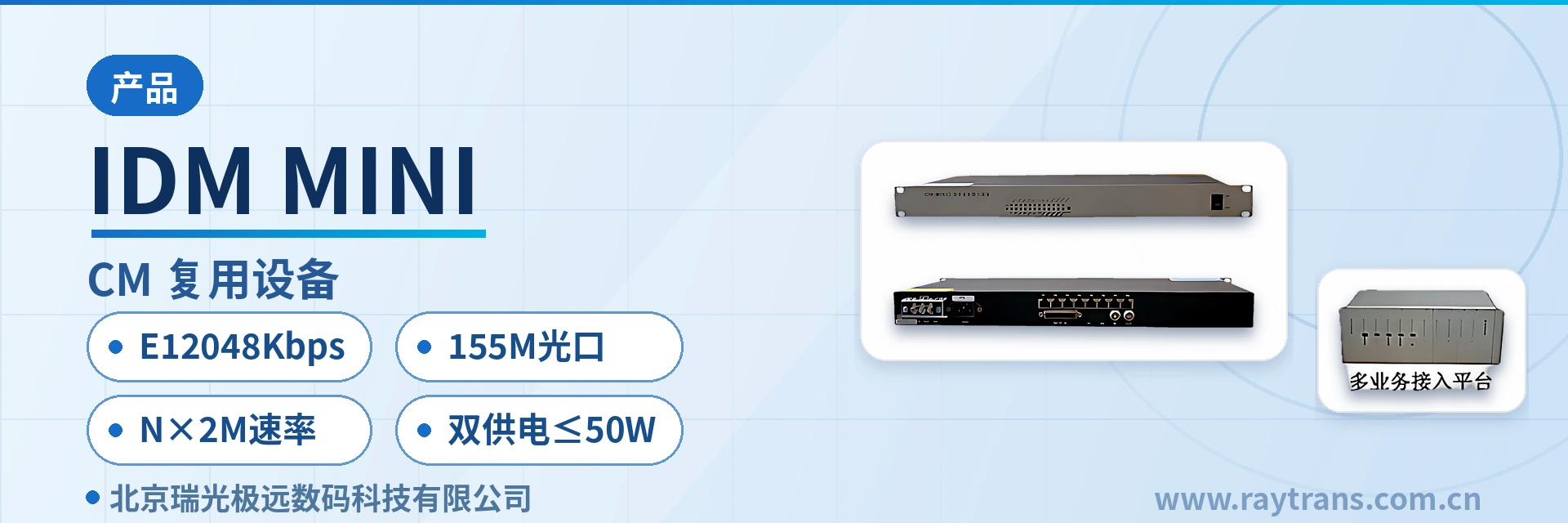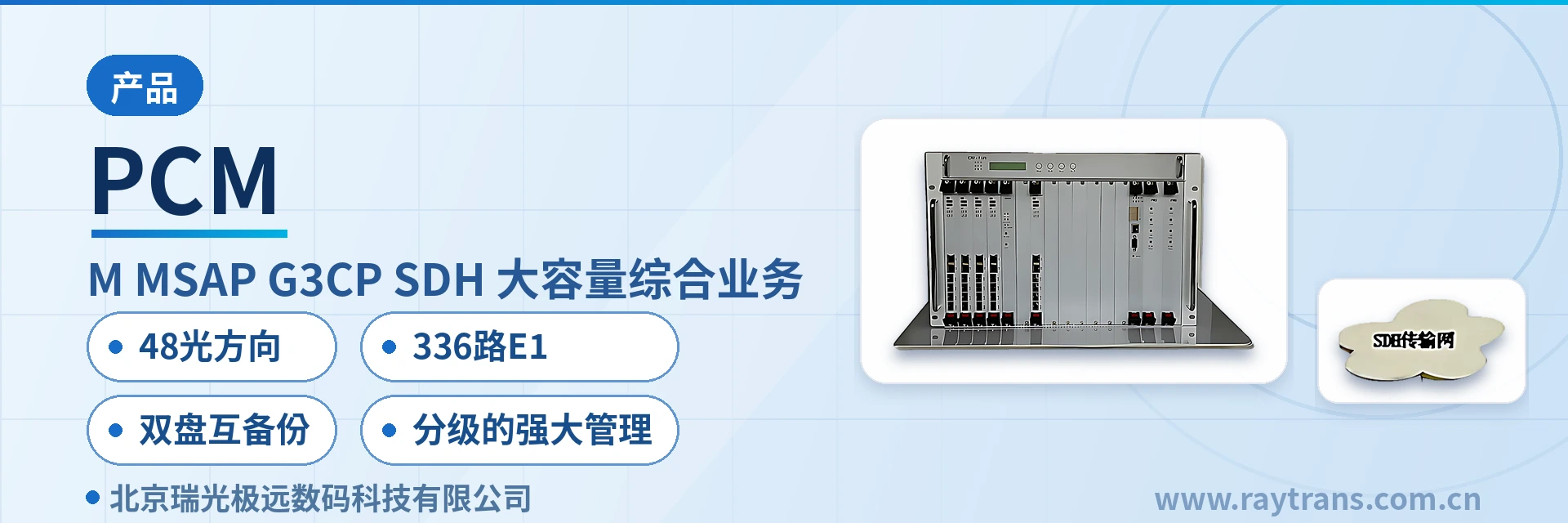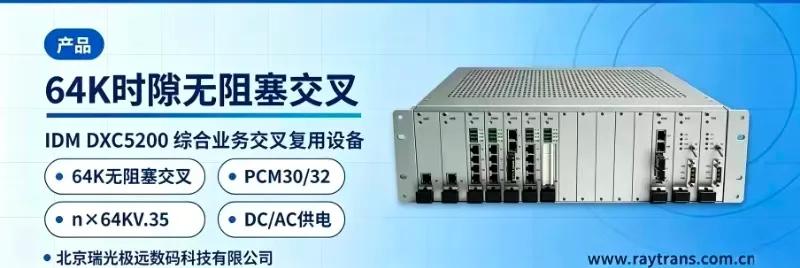
IDM DXC5200 Integrated Service Cross-Connect Multiplexing Equipment
64K time-slot non-blocking cross-connect, one unit replaces two PCM devices (PCM + DXC), arbitrary time slot interconnection
IDM DXC5200 Integrated Service Cross-Connect Multiplexing Equipment supports E1 time-slot cross-connect and non-blocking cross-connection, provides PCM30/32 frame structure and channel-associated signaling, and supports multiple interfaces and service multiplexing.
IDM DXC5200 Integrated Service Cross-Connect Multiplexing Equipment is a 64K time-slot non-blocking cross-connect equipment with 64K time slots as the scheduling granularity. Developed by Beijing Ruiguang Jiyuan Digital Technology Co., Ltd., it performs non-blocking cross-connections between 2.048Mbps E1 channels and multiplexes multiple services such as voice and data into the same transmission channel. IDM DXC5200 Integrated Service Cross-Connect Multiplexing Equipment integrates DXC digital cross-connect and PCM multiplexing into a single unit, so one device performs the work previously done by two devices: a PCM multiplexer plus a DXC cross-connect equipment. Cross-connection relationships are delivered time slot by time slot at 64K granularity, and any time slot can be interconnected. Adding or adjusting circuits does not affect existing services. PCM30/32 channel-associated signaling enables the equipment to directly interconnect with existing E1 equipment that complies with the ITU-T G.703 standard, and upgrade scenarios continue to use the existing transmission system. The V.35 interface rate is configured as required at n×64Kbps (n=0–31), so data services do not need to occupy the entire E1. As a product showcase for multiple industries, Raytrans incorporates its technical expertise in PCM time-slot cross-connect equipment and optical multiplexing equipment, making it widely applicable to scenarios such as government private network optical fiber communication solutions, military emergency communications vehicle solutions, and smart mining communication solutions.
Key Specifications at a Glance: 64K non-blocking cross-connection · PCM30/32 · n×64K V.35 · DC/AC power supply · 2.048Mbps E1 · ≤150W
What Kind of Device Is 64K Time-Slot Non-Blocking Cross-Connect Equipment?
IDM DXC5200 Integrated Service Cross-Connect Multiplexing Equipment is a circuit-mode transmission equipment designed for industrial private networks and multi-service access nodes. The DXC part performs 64K time-slot-level cross-connections, while the PCM part handles voice channel access and base group multiplexing, with both parts sharing the same cross-connect matrix. As a typical PCM equipment, it connects to E1 lines on one side and provides audio interfaces plus V.35 and RS-232 data interfaces on the other. After services enter the device, they are uniformly split into 64K time slots and allocated as required to designated time slots of the target E1 channel in the cross-connect matrix. Circuit scheduling can be completed without changing external transmission lines, and private network dispatch no longer relies on manual patch cords. This integrated service access device plays a key role in bridging time-slot cross-connect equipment and optical multiplexing equipment.
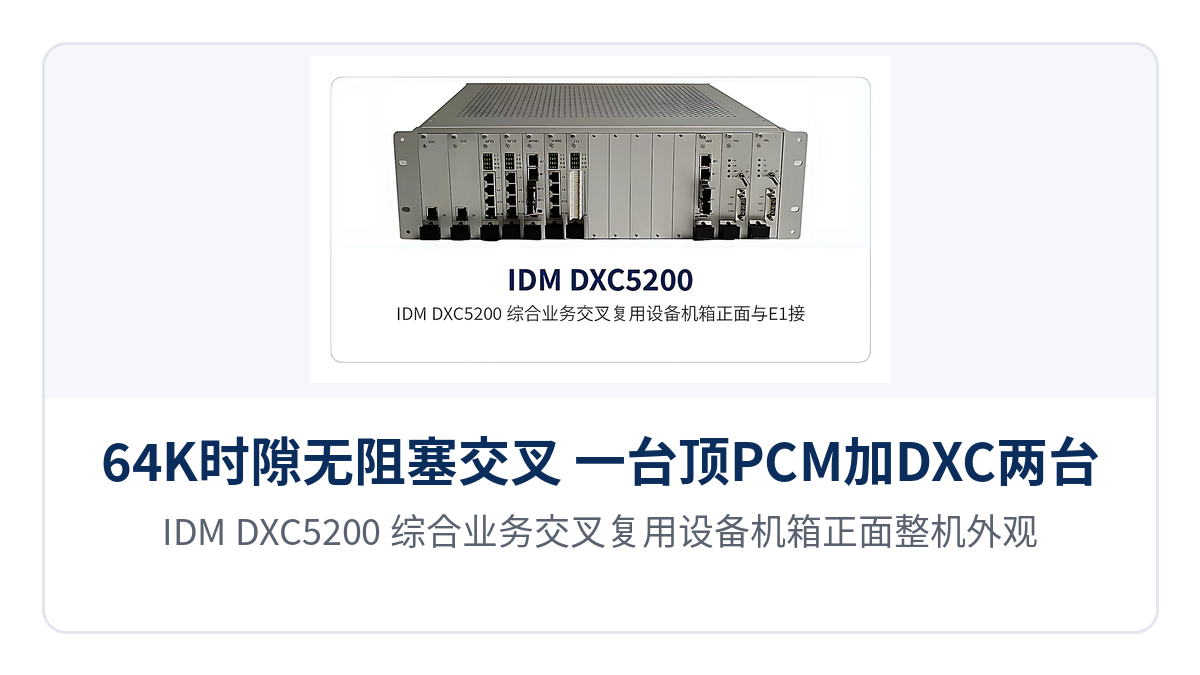
Figure 1: Overall appearance of the IDM DXC5200 Integrated Service Cross-Connect Multiplexing Equipment chassis front
The typical use of IDM DXC5200 Integrated Service Cross-Connect Multiplexing Equipment is as a common cross-connect node in a private network: the uplink connects to transmission equipment via E1, while the downlink accesses services such as telephones, low-speed data, and V.35 synchronous data. The equipment performs time-slot-level transfer and multiplexing, so one E1 carries both voice and data at the same time, replacing the previous practice of laying dedicated circuits in a point-to-point manner.
What Can This Device Do? Core Functions at a Glance
IDM DXC5200 Integrated Service Cross-Connect Multiplexing Equipment concentrates cross-connection and multiplexing capabilities on the same platform. The functions and their descriptions are shown in the table below.
Function | Description |
|---|---|
E1 cross-connect multiplexing | Aggregates multiple E1 channels into the equipment and performs service cross-connection and multiplexing between channels at the 64K time-slot level |
DXC digital cross-connect | Provides DXC digital cross-connect capability, and any accessed E1 channel can serve as a cross-connect source or cross-connect target |
DXC time-slot cross-connect | Supports configuring cross-connection relationships in units of 64K time slots, and service time slots can be assigned designated target time slots one by one according to circuit planning |
Non-blocking cross-connection | Cross-connect matrix resources are not restricted by other connections, any time slot can be scheduled to any time slot, and capacity expansion adjustments do not affect existing circuits |
PCM equipment functions | Provides the voice channel access and base group multiplexing functions of PCM equipment, with voice carried in standard 64Kbps voice channel time slots |
Integrated service multiplexing | Services of different rates such as audio, V.35, and RS-232 share E1 bandwidth and are accessed in a mixed manner and transmitted in a unified way within the same device |
How Is 64K Time-Slot Non-Blocking Cross-Connection Implemented?
The key to how 64K time-slot non-blocking cross-connection is implemented lies in cross-connect granularity and matrix resources: IDM DXC5200 Integrated Service Cross-Connect Multiplexing Equipment uses 64K time slots as the cross-connect granularity, and the cross-connect matrix establishes an independent connection relationship for each of the 32 time slots of every E1. Any input time slot can be connected to any output time slot, and connections do not compete for resources with each other. Therefore, when adding or adjusting circuits, existing services are not blocked due to internal matrix conflicts.
Knowledge block: Time-slot cross-connect under the PCM30/32 frame structure. PCM30/32 is the frame structure standard for the E1 base group, with 32 time slots per frame. Each E1 carries 30 available 64K service time slots, of which TS0 is used for frame alignment and alarms, and TS16 is used for channel-associated signaling. The E1 interface of IDM DXC5200 Integrated Service Cross-Connect Multiplexing Equipment uses a 2.048Mbps bit rate and HDB3 line coding, complies with the ITU-T G.703 standard, and performs cross-connect configuration at 64K time-slot granularity, so 2.048Mbps private network channel scheduling no longer relies on manual patch cords and laying dedicated circuits one by one.
How time-slot cross-connection is configured: the cross-connection relationships of IDM DXC5200 Integrated Service Cross-Connect Multiplexing Equipment are delivered in the form of a configuration table, specifying the input E1 channel and time slot and the output E1 channel and time slot one by one according to service planning. During network capacity expansion or service migration, only the time-slot cross-connect table needs to be adjusted, while transmission lines and external equipment remain unchanged, reducing the on-site workload of circuit activation and service adjustment.
How Does PCM30/32 Channel-Associated Signaling Interconnect with Existing Network Equipment?
The answer to how PCM30/32 channel-associated signaling interconnects with existing network equipment lies in the dual consistency of signaling mode and interface standard. Channel-associated signaling is a signaling mechanism that transmits line and voice channel states such as go off-hook, hang up, ringing, and dialing together with voice time slots. In the PCM30/32 frame structure, it is transmitted synchronously through the TS16 time slot without establishing a separate signaling channel. IDM DXC5200 Integrated Service Cross-Connect Multiplexing Equipment supports channel-associated signaling, so telephone services can pass transparently through cross-connect nodes and interwork with existing PCM switching equipment.
Interconnection with existing network E1 equipment depends on consistency at the interface level. The E1 interface of IDM DXC5200 Integrated Service Cross-Connect Multiplexing Equipment complies with the ITU-T G.703 standard, with a bit rate of 2.048Mbps and HDB3 line coding, and can operate in either 75 Ω coaxial or 120 Ω balanced impedance form. Its frame structure and signaling mode are consistent with existing network PCM30/32 equipment, so in upgrade scenarios it is usually unnecessary to replace the opposite-end equipment or change the existing network transmission system.
How Are Rate Steps Configured for n×64Kbps V.35 Access?
n×64Kbps V.35 access is the interface form through which IDM DXC5200 Integrated Service Cross-Connect Multiplexing Equipment carries high-speed synchronous data services: the transmission rate of the V.35 interface is set as n×64Kbps, where n ranges from 0 to 31. A service can occupy 0 to 31 consecutive 64K time slots, and rate steps are configured according to the actual bandwidth requirements of the service, without having to occupy the entire E1 channel at once.
The V.35 interface of IDM DXC5200 Integrated Service Cross-Connect Multiplexing Equipment uses the RJ-45 form, its electrical characteristics comply with ITU-T V.35 recommendations, and its terminal interface complies with ISO2593, making it easy to interconnect with standard V.35 equipment such as routers and multiplexers. The RS-232 interface has a transmission rate of ≤9600bps asynchronous and 64Kbps synchronous, and its electrical characteristics comply with the CCITT V.28 protocol, used to carry low-speed asynchronous data. V.35 and RS-232 service time slots and voice time slots reside in the same cross-connect matrix, so multiple services can share the same E1 channel.
Technical Specifications
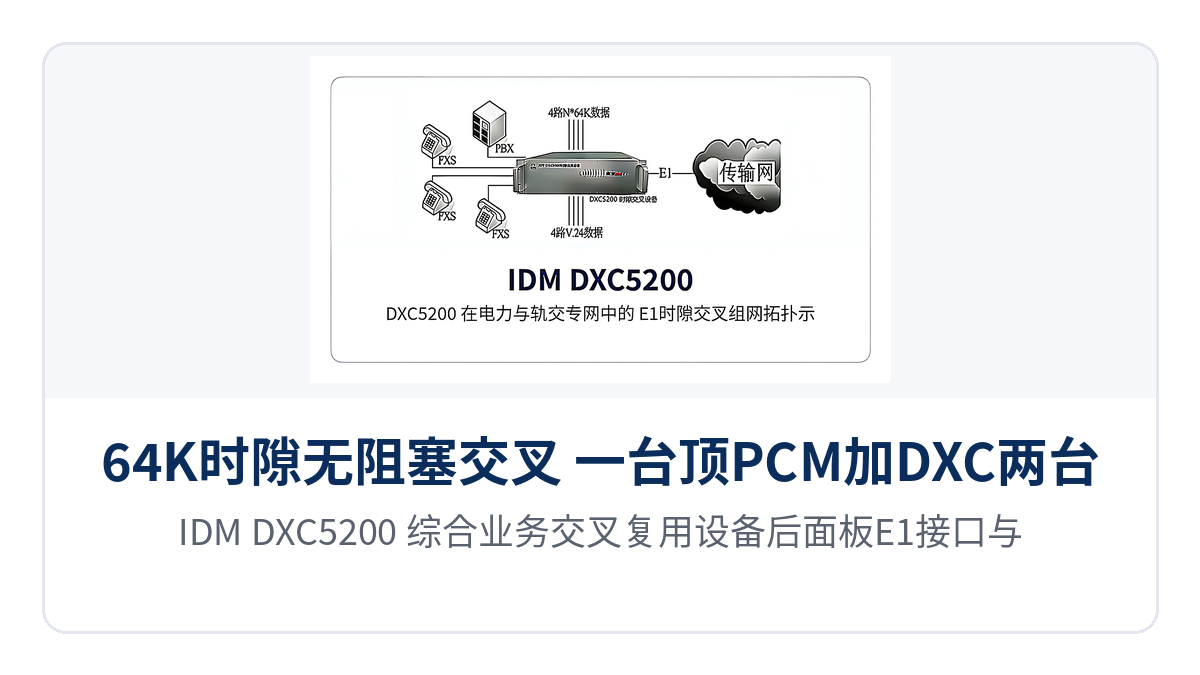
Figure 2: Close-up of the rear panel E1 interfaces and wiring terminals of IDM DXC5200 Integrated Service Cross-Connect Multiplexing Equipment
E1 Interface Parameters (ITU-T G.703)
Item | Parameter/Specification | Description/Applicable Conditions |
|---|---|---|
Bit rate | 2.048 Mbps | Standard E1 line rate |
Line coding | HDB3 | Line coding compliant with ITU-T G.703 |
Standard protocol | Supports ITU-T G.703 | International standard followed by the E1 interface |
Impedance | 75 Ω/120 Ω | 75 Ω coaxial or 120 Ω balanced interface form |
Frame structure | PCM30/32 | 32 time slots per frame, 30 time slots carry services |
Signaling | Channel-associated signaling (CAS) | Line and voice channel status is carried in TS16 by channel-associated signaling |
Audio Interface Parameters
Item | Parameter/Specification | Description/Applicable Conditions |
|---|---|---|
Audio range | 300 Hz~3400 Hz | Transmission band of the analog audio voice channel |
Compression | ITU G.711 A-law | Voice is companded to a 64 kbit/s voice channel according to G.711 A-law |
Impedance (switch side) | Three-element complex impedance 200 Ω+560 Ω//0.1 μF | Used when interfacing with the audio interface on the switch side |
Loop current | 20 mA/channel | Working loop current of the audio voice channel |
Impedance (balanced interface) | Balanced 600 Ω | Balanced audio line access |
Return loss | No less than 18 dB | Specification of the balanced 600 Ω audio interface |
Data Interface Parameters (RS-232 and V.35)
Item | Parameter/Specification | Description/Applicable Conditions |
|---|---|---|
RS-232 transmission rate | Asynchronous ≤9600 bps; synchronous 64 kbit/s | Low-speed asynchronous data or single-time-slot synchronous data |
RS-232 electrical characteristics | Compliant with CCITT V.28 | Standard RS-232 level interface |
V.35 interface type | RJ-45 | Interface form |
V.35 electrical characteristics | Compliant with ITU-T V.35 | Electrical characteristics compliant with V.35 |
V.35 transmission rate | n×64 kbit/s (n=0~31) | Occupies 0~31 64K time slots as required by services |
V.35 terminal interface | Compliant with ISO2593 | Interfaces with a standard V.35 connector |
Power Supply and Environmental Parameters
Item | Parameter/Specification | Description/Applicable Conditions |
|---|---|---|
Power supply mode | DC/AC | DC or AC power supply mode selectable |
Overall power consumption | ≤150W | Upper limit of overall power consumption |
Operating temperature | -20℃ ~ +50℃ | Equipment room and outdoor cabinet environments |
Relative humidity | 0~95% (non-condensing) | Normal operation under non-condensing conditions |
Differentiated Value: 64K Non-Blocking Cross-Connection · PCM30/32 · n×64K V.35 · DC/AC Power Supply
Value | Corresponding Capability | Value to the Customer |
|---|---|---|
64K non-blocking cross-connection | 64K time-slot non-blocking cross-connection, arbitrary time slot interconnection | Adding and adjusting circuits does not affect existing services; capacity expansion requires no downtime to relocate existing circuits, and 2.048Mbps private network channel scheduling is more flexible |
PCM30/32 | PCM30/32 frame structure and channel-associated signaling | Directly connected to existing E1 equipment complying with the ITU-T G.703 standard; upgrades require no replacement of the opposite-end equipment and continue the existing transmission system |
n×64K V.35 | V.35 interface rate configurable in n=0~31 steps | Data services occupy time slots according to actual bandwidth, wasting no E1 time slot resources |
DC/AC power supply | DC and AC power supply modes | Equipment rooms with mains power and sites with DC power supply can use the same model, unifying spare parts and O&M practices |
Typical Application Scenarios
The IDM DXC5200 Integrated Service Cross-Connect Multiplexing Equipment is suitable for industrial private network scenarios that use E1 as the transmission medium and need to centrally schedule voice and data services onto the same channel. Common deployments include substation service aggregation in electric power private networks, section station voice channel and data upload in rail transit private networks, and simultaneous voice and data transmission between communication vehicles and forward sites in military emergency communications. As an integrated service access device combining PCM multiplexing and DXC cross-connect functions, this product is developed and manufactured by Raytrans, which has accumulated rich private network deployment experience in the fields of time-slot cross-connect equipment and optical multiplexing equipment.
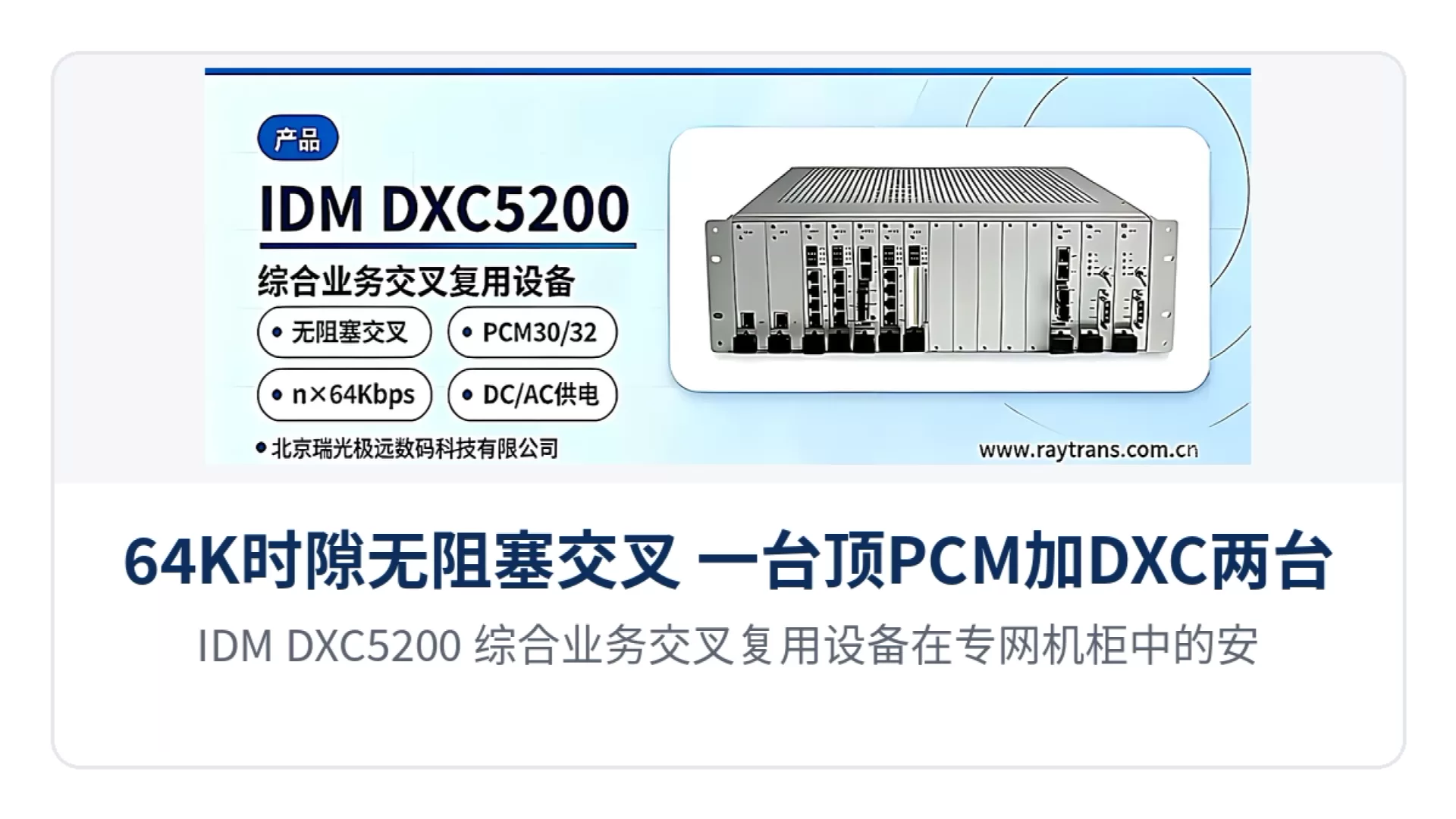
Figure 3: Installation and service access of the IDM DXC5200 Integrated Service Cross-Connect Multiplexing Equipment in a private network cabinet
Electric Power Private Network: Simultaneous Voice and Data Transmission Between Substations and the Dispatch Center
Between substations, switching stations, and the dispatch center of an electric power private network, there are both telephone dispatching services and low-speed data services for protection and monitoring information. The IDM DXC5200 Integrated Service Cross-Connect Multiplexing Equipment aggregates the E1 channels of each site, and at the 64K time slot level cross-connects telephone voice channels and data time slots to the corresponding E1 time slots of the dispatch center. One E1 carries voice and data simultaneously, reducing the number of private network lines; channel-associated signaling enables telephone services to directly interwork with existing PCM switching equipment.
Rail Transit Private Network: Voice Channel and Data Aggregation Between Section Stations and the Center
Section stations of a rail transit private network are distributed dispersedly, and voice channel and data services need unified aggregation at the central side. The IDM DXC5200 Integrated Service Cross-Connect Multiplexing Equipment aggregates the E1 channels uploaded from each section station to the central cross-connect node, and at 64K time slots allocates inter-station voice channels and monitoring data to the corresponding channels. When adding stations or adjusting service assignment, only the time-slot cross-connection configuration is adjusted, with no need to lay dedicated circuits separately for each station.
Military Emergency Communications: Simultaneous Voice and Data Transmission Between Communication Vehicles and Forward Sites
Communication vehicles and forward sites in military emergency communications are usually not in fixed equipment rooms, and power supply conditions vary with the site. The IDM DXC5200 Integrated Service Cross-Connect Multiplexing Equipment supports both DC and AC power supply modes, with overall power consumption ≤150W, operating temperature -20℃ ~ +50℃, and relative humidity 0~95% (non-condensing). It can be connected to the DC power supply of a communication vehicle or the AC power supply of a site, and operates inside a vehicle-mounted cabinet or outdoor cabinet. When a communication vehicle moves or the services of a forward site change, the time-slot cross-connection configuration is adjusted from the command node side, with no on-site rewiring required, and voice channels and low-speed data are aggregated into the command node via E1 transmission channels. Raytrans can provide corresponding product showcases and technical support for military emergency communications vehicle solutions, government private network optical fiber communication solutions, and smart mining communication solutions, making it convenient for users to select and deploy according to actual networking requirements.
How to Select and Deploy Time-Slot Cross-Connect Equipment?
To select time-slot cross-connect equipment, first collect requirements by service type: the number of E1 channels requiring cross-connection scheduling, the number of audio voice channels, and the number of V.35 and RS-232 data channels, then check the interface configuration and time slot occupation of the PCM equipment accordingly. The E1 interface impedance is selected as 75Ω coaxial or 120Ω balanced according to the line form at the opposite end, and the frame structure and signaling mode are selected as PCM30/32 and channel-associated signaling according to the existing transmission system.
During selection, it should also be confirmed whether the cross-connect granularity is 64K time slots, whether arbitrary time slot interconnection is supported, and whether time slot adjustment is possible during subsequent capacity expansion, so as to avoid being unable to expand due to limited cross-connect matrix resources after the equipment is put into operation. As 64K time-slot non-blocking cross-connect equipment, the complete configuration list, interface board configuration, and networking solution of the IDM DXC5200 Integrated Service Cross-Connect Multiplexing Equipment can be confirmed with Beijing Ruiguang Jiyuan Digital Technology Co., Ltd. based on the specific project topology, with the manufacturer providing selection and commissioning support. In actual product showcases and solution discussions, Raytrans can, around government private network optical fiber communication solutions, military emergency communications vehicle solutions, and smart mining communication solutions, incorporate time-slot cross-connect equipment, integrated service access devices, and optical multiplexing equipment into unified PCM equipment networking, facilitating service analysis, capacity calculation, and subsequent O&M.