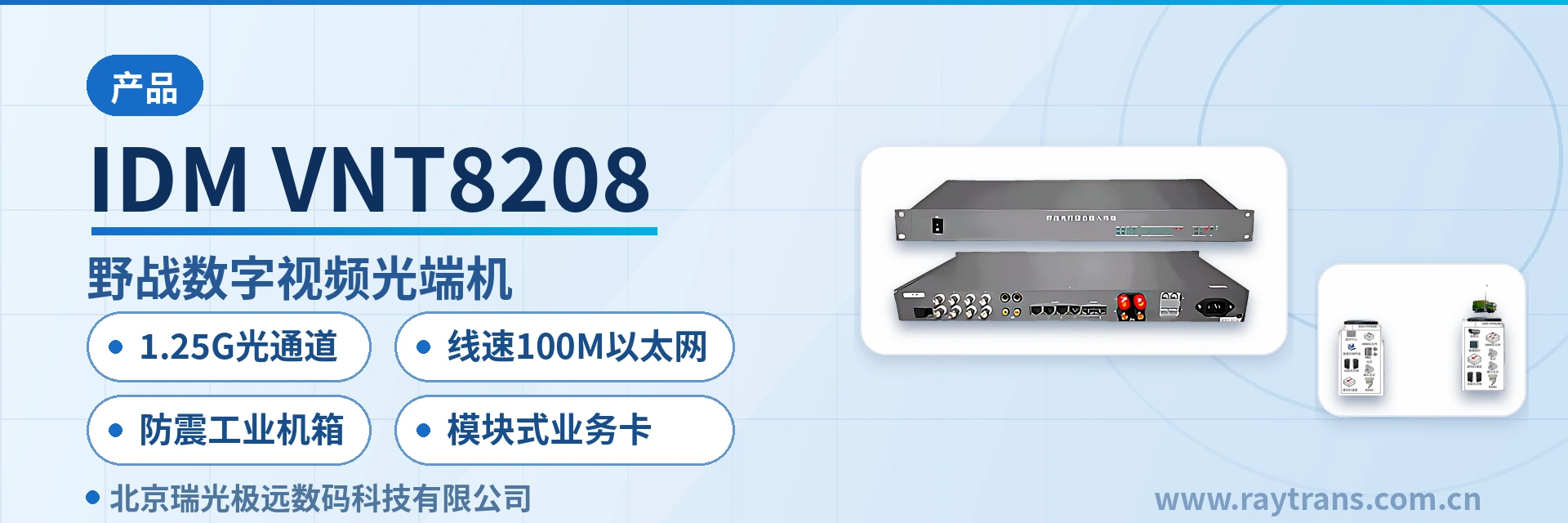
IDM-VNT8208 Field Digital Video Optical Multiplexer
Video, Telephone, E1 and Ethernet over a Single Fiber; Modular Cards Inserted as Required; On-Site Link Alarm Indication
The IDM-VNT8208 field digital video optical multiplexer is developed by our company using internationally advanced integrated circuits, programmable logic circuits and high-speed microprocessors. Through various service interface cards, signals such as voice, low-speed data and images are aggregated into standard 2M interfaces, and then time division multiplexing technology is used to multiplex 2M signals, video signals, transparent E1 signals and wire-speed 100M Ethernet signals onto a 1.25G optical transmission channel for transmission.
The IDM-VNT8208 field digital video optical multiplexer is a field multi-service composite optical multiplexer developed by Beijing Ruiguang Jiyuan Digital Technology Co., Ltd. specifically for military field communications. It is designed with standard integrated circuits, programmable logic circuits and high-speed microprocessors, aggregates voice, low-speed data and image signals to a standard 2M interface through various service interface cards, and then uses time division multiplexing to multiplex the 2M signal, video signal, transparent E1 signal and wire-speed 100M Ethernet signal into a 1.25G optical transmission channel for transmission. As a professional optical multiplexer manufacturer, Beijing Ruiguang Jiyuan Digital Technology Co., Ltd. has been deeply engaged in the fields of emergency communications and military emergency communications vehicle solutions for many years, and this device is precisely the core access equipment built for the needs of field communications solutions.
The core value of the field multi-service composite optical multiplexer is to let a single field site device carry four types of services — video surveillance, voice calls, data backhaul and network interconnection — over one optical fiber at the same time, eliminating the repeated investment in multiple single-function devices and multiple optical cables. This design concept of a field optical fiber integrated service access device effectively improves deployment efficiency in emergency communications scenarios, and also provides a consolidated product showcase solution for military emergency communications vehicle solutions.
Key specifications at a glance: 1.25G optical channel · 2-channel bidirectional video · 2-channel E1 + 2-channel magneto · 4-channel telephone + 2-channel RS485 · wire-speed 100M Ethernet · shock-resistant industrial enclosure · modular service cards
What Kind of Device Is a Field Multi-Service Composite Optical Multiplexer
A field multi-service composite optical multiplexer is a field optical fiber integrated service access device that multiplexes video, PCM telephone, transparent E1 and Ethernet onto one optical fiber for transmission, and the IDM-VNT8208 field digital video optical multiplexer is one such device. This type of field optical fiber integrated service access device consists of an optical transmission unit and a PCM multiplexing unit, adopts a shock-resistant enclosure design, uses standard components for the optical module and core circuits, and has all optical and electrical interfaces compliant with international standards, so it can both meet the temporary setup needs of military emergency communications and field communications solutions and be deployed long-term at field industrial sites such as electric power and oilfield sites.
Within the 1.25G optical channel, the IDM-VNT8208 field digital video optical multiplexer aggregates multiple types of services onto one fiber through time division multiplexing: 2-channel bidirectional video, 2-channel E1, 2-channel bidirectional high-fidelity audio, 4-channel shared wire-speed 100M Ethernet, 4-channel ordinary telephone, 2-channel magneto telephone and 2-channel RS485 data. A single device can complete the combined access of video surveillance, voice dispatching and data acquisition at a field point, which is exactly where the field multi-service composite optical multiplexer differs from an ordinary single-service video optical multiplexer.
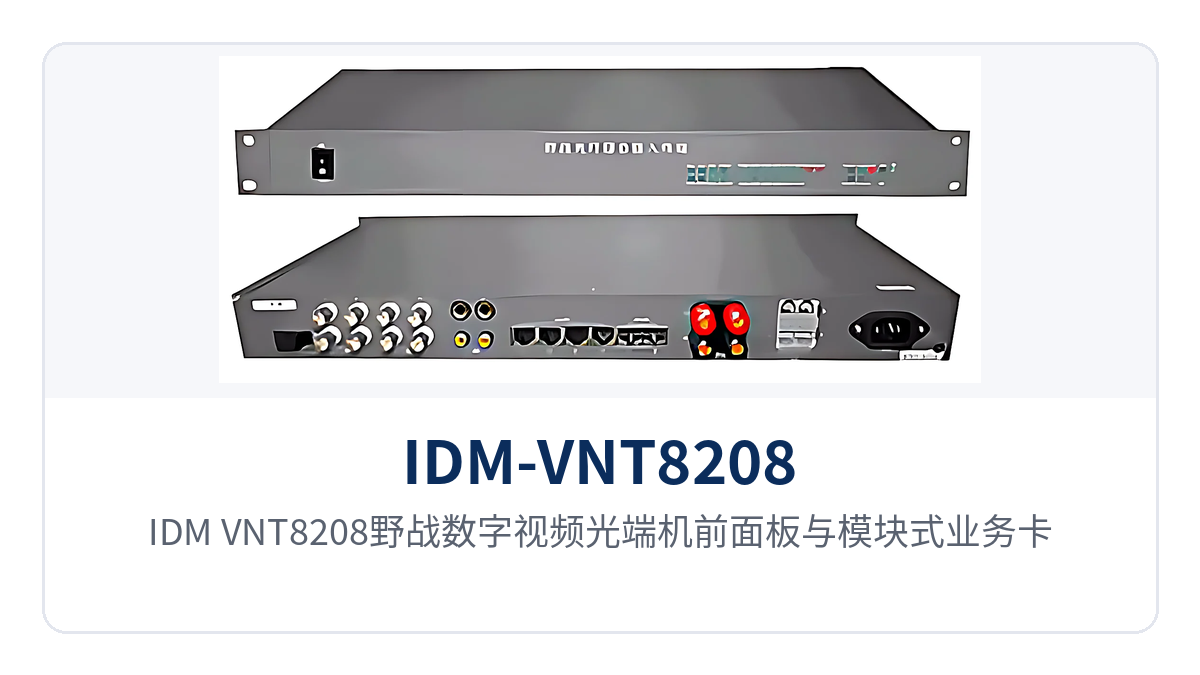
Figure 1: Close-up of the front panel and modular service card slots of the IDM-VNT8208 field digital video optical multiplexer
The functions of the IDM-VNT8208 field digital video optical multiplexer revolve around optical transmission, video transmission, PCM access and device monitoring. The main function items are shown in the table below.
| Function | Description |
|---|---|
| PDH optical transmission and video transmission | One 1.25G optical channel simultaneously performs PDH optical transmission, uncompressed video transmission and PCM access |
| Voice and low-speed data access | Voice, low-speed data and image signals are aggregated to a standard 2M interface through service interface cards, then sent into the optical channel via time division multiplexing |
| Uncompressed video encoding | Video signals use compression encoding, unidirectional or bidirectional optional, compatible with PAL, NTSC and SECAM formats |
| Wire-speed 100M Ethernet | 4-channel shared wire-speed 100M Ethernet interface, supporting auto-negotiation, capable of working in full-duplex/half-duplex |
| Modular service cards | Service cards are inserted as required, making it easy to tailor services to user needs, saving cost and facilitating maintenance |
| Line and device monitoring alarms | Comprehensive line and device monitoring alarm functions; link and device alarms can be indicated locally |
| Industrial-grade design | Shock-resistant enclosure combined with industrial-grade components, safe and reliable, suitable for field and field site environments |
How to Configure the Service Interfaces of a Field Video Optical Multiplexer
The service interfaces of a field video optical multiplexer are fully provisioned at once according to the standard list. A single end of the IDM-VNT8208 field digital video optical multiplexer can provide four types of interfaces — video, voice, data and network — and can continue to add more through expansion service cards. The standard interface configuration is shown in the table below:
| Service type | Description |
|---|---|
| 2-channel bidirectional video | Uncompressed encoding, unidirectional or bidirectional optional, compatible with PAL, NTSC and SECAM formats |
| 2-channel E1 | Transparent E1 signal, bit rate 2048Kbps, HDB3 line coding, compliant with ITU-T G.703 |
| 2-channel bidirectional high-fidelity audio | Command call handling and monitoring backhaul, high audio SNR |
| 4-channel shared wire-speed 100M Ethernet | Supports auto-negotiation, capable of working in full-duplex/half-duplex, compliant with IEEE802.3 |
| 4-channel ordinary telephone | FXS subscriber port, connecting ordinary telephones |
| 2-channel magneto telephone | Magneto telephone interface, suitable for field telephones and hotline call handling |
| 2-channel RS485 | Low-speed data acquisition and control |
Beyond the standard configuration, the IDM-VNT8208 field digital video optical multiplexer can also provide service interfaces such as V.24 (RS232), V.35, 10Base-T, codirectional 64K, 2/4-wire audio and hotline phone, and can continue to add some service interfaces without changing the optical fiber capacity. Modular service cards are inserted as required, so field sites with many service types but a low number of channels per type need not pay for ports they do not use.
How Do Wire-Speed 100M Ethernet Ports Work with the 1.25G Optical Channel
Wire-speed 100M Ethernet ports work in shared mode within the 1.25G optical channel, support auto-negotiation, and can automatically negotiate rate and duplex mode according to on-site device capabilities. The 4 Ethernet ports of the IDM-VNT8208 field digital video optical multiplexer are compliant with IEEE802.3 and can work in full-duplex or half-duplex, each going its own way within the same optical channel alongside video, E1 and telephone services without interfering with one another.
The key to multi-service over a single fiber is time division multiplexing. The device first multiplexes the 2M signal, video signal, transparent E1 signal and wire-speed 100M Ethernet signal into the 1.25G optical transmission channel; once the two ends are deployed as a pair and the service cards correspond one to one, bidirectional transmission is possible. The 1.25G channel capacity leaves margin for video and Fast Ethernet to be carried in parallel, and capacity expansion only requires adding service cards without changing optical fiber resources.
How to Wire and Deploy a Field Optical Multiplexer On Site
The core of on-site deployment of a field optical multiplexer is plug-and-play and no on-site adjustment. The IDM-VNT8208 field digital video optical multiplexer is designed around the plug-and-play concept: service cards are inserted directly and the link comes up once the optical cable at the opposite end is connected, with no complex signal adjustment required at the field site. The optical module and core circuits all use standard components, making the device stable and reliable.
The one-fiber connection procedure can be completed in three steps; before starting, confirm that the power supply and optical cable at both ends are ready:
- Connect service lines: connect the local end's video, telephone, magneto, RS485 data and Ethernet to the corresponding service ports respectively.
- Connect the optical cable: interconnect with a device of the same model at the opposite end via one optical fiber.
- Power on and verify: after the service cards at both ends correspond one to one, power on and check the indicator LEDs and alarm indications of each service port to complete commissioning.
The field environment places higher demands on device protection. The IDM-VNT8208 field digital video optical multiplexer adopts a shock-resistant enclosure and industrial-grade design, with strong shock resistance and anti-interference performance, suitable for long-term use in military emergency communications, military emergency communications vehicle solutions and unattended field sites.
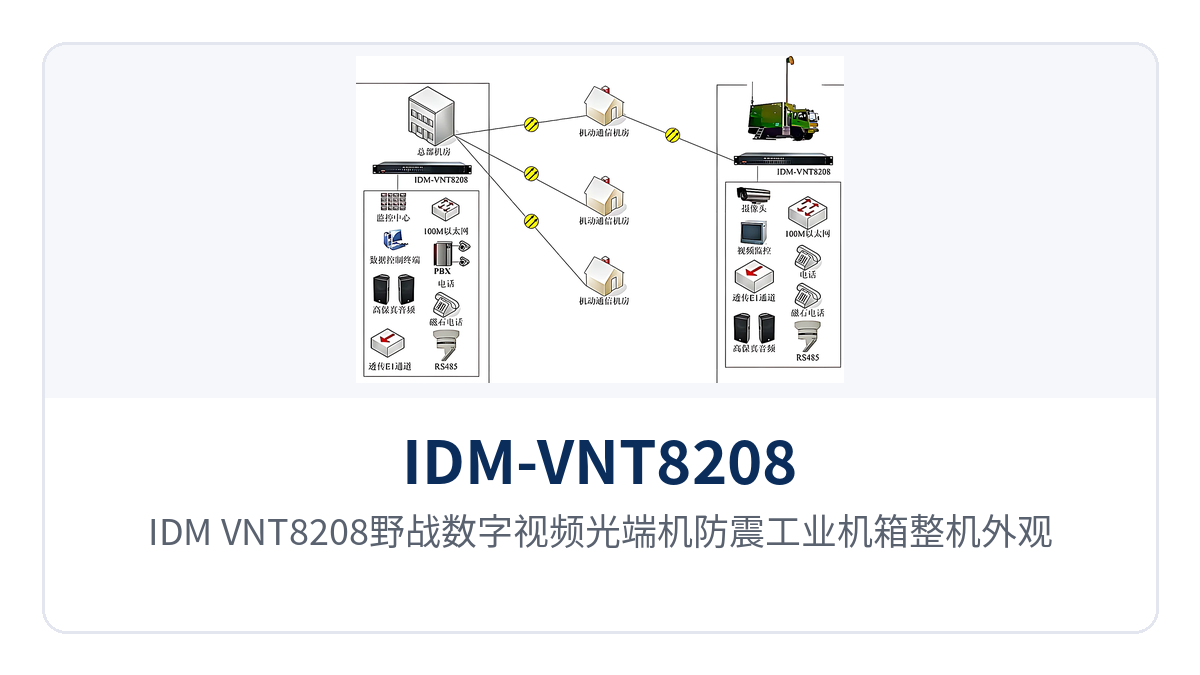
Figure 2: Overall appearance of the shock-resistant industrial enclosure of the IDM-VNT8208 field digital video optical multiplexer
Core Performance Specifications of the Field Video Optical Multiplexer
The following are the key technical specifications of the IDM-VNT8208 field digital video optical multiplexer. The optical interface, E1 and Ethernet specifications all comply with the corresponding international standards; for items not given in the documentation, the optical multiplexer manufacturer's technical documentation and commercial confirmation shall prevail.
| Item | Parameter/Specification | Description/Applicable Conditions |
|---|---|---|
| Optical transmission channel | 1.25G | Composite of PDH optical transmission, video transmission and PCM access |
| Optical interface | Standard optical interface, single-mode | Optical and electrical interfaces all comply with international standards |
| Video signal | 2-channel bidirectional, uncompressed encoding | Unidirectional or bidirectional optional, compatible with PAL/NTSC/SECAM |
| E1 interface | 2-channel transparent E1 | 2048Kbps, HDB3 line coding, compliant with ITU-T G.703 |
| Ethernet | 4-channel shared wire-speed 100M | Auto-negotiation, full-duplex/half-duplex, compliant with IEEE802.3 |
| Voice | 4-channel ordinary telephone + 2-channel magneto telephone | FXS subscriber port; magneto interface suitable for field call handling |
| Data | 2-channel RS485 | Additional expansion interfaces such as V.24/V.35 optional |
| High-fidelity audio | 2-channel bidirectional | Command call handling and monitoring backhaul |
| Enclosure | Shock-resistant enclosure, industrial-grade design | Suitable for military emergency communications and field industrial sites |
| Power supply and power consumption | Not yet recorded in the knowledge base | Subject to the optical multiplexer manufacturer's technical documentation |
| Transmission distance | Not yet recorded in the knowledge base | Determined according to the on-site optical cable and the selected optical module, subject to commercial confirmation |
Differentiated Value: Multi-Service over a Single Fiber and Shock-Resistant Plug-and-Play
The differentiated capabilities of the IDM-VNT8208 field digital video optical multiplexer are concentrated in three aspects: multi-service over a single fiber, Ethernet auto-adaptation and field environment adaptability. The corresponding user value of each is shown in the table below:
| Differentiation Point | Value to Users |
|---|---|
| A 1.25G optical channel aggregates multiple services over a single fiber, including 2-channel video, 2-channel E1 and 4-channel 100M Ethernet | One optical fiber carries video surveillance, telephone dispatching, data acquisition and the office network; field sites need not set up separate devices and optical paths for each type of service, reducing wiring and points of failure at the same time |
| Wire-speed 100M Ethernet ports support auto-negotiation, with full-duplex/half-duplex switching as required | No manual setting of rate and duplex mode is needed when connecting on-site cameras, switches or computers; the device automatically adapts to existing network equipment, minimizing on-site commissioning |
| Shock-resistant enclosure + industrial-grade design, plug-and-play with no on-site adjustment, suitable for field environments | It can still work stably under vibration and shock in military emergency communications and military emergency communications vehicle solutions; service cards are inserted and the link comes up once the optical cable is connected, with no on-site signal adjustment required |
What Scenarios Is the Field Multi-Service Composite Optical Multiplexer Suitable For
Military Field Communications
Military field communications is the core scenario of the field multi-service composite optical multiplexer. Temporary communications setup by combat troops requires equipment that is quick to install, shock-resistant and easy to maneuver. The IDM-VNT8208 field digital video optical multiplexer, with its shock-resistant enclosure and 1.25G multi-service over one fiber, enables a command post to simultaneously open video consultation, voice switchboard, data networking and telephone dispatching over a pair of optical fibers, reducing on-site field wiring and setup time and providing reliable support for military emergency communications vehicle solutions and field communications solutions.
Field Industrial Private Networks Such as Electric Power/Oilfield
Sites of field industrial private networks such as electric power and oilfield are far from the central equipment room and often have only a pair of optical fibers and limited rack positions. The IDM-VNT8208 field digital video optical multiplexer can backhaul the site's video, dispatch telephone, telecontrol RS485 data and office network to the center all together, replacing multiple single-function devices and reducing the number of devices and points of failure at field sites. As a professional field optical fiber integrated service access device, it is equally suitable for the product showcase needs of various field industrial private networks.
Unattended Sites and Emergency Communications
Unattended sites pursue sparse maintenance, while emergency communications sites require rapid commissioning. The modular service cards and plug-and-play design of the IDM-VNT8208 field digital video optical multiplexer make on-site wiring simple, and the comprehensive line and device monitoring alarm functions allow the duty center to promptly detect link failures, making it suitable for networking at unattended monitoring points and emergency rescue sites in water conservancy, transportation, environmental protection and other fields.
What Factors Should Be Considered When Selecting a Field Optical Multiplexer
When selecting a field optical multiplexer, first determine how many types of services and how many interface channels a single unit needs to consolidate, then define the configuration against the service interface table. The IDM-VNT8208 field digital video optical multiplexer provides, at a single end, 2-channel video, 2-channel E1, 4-channel telephone, 2-channel magneto, 2-channel RS485 and 4-channel Fast Ethernet, making it suitable for field sites with many service types but a low channel count per service (2–4 channels); if more video channels are required, consider higher-channel field models in the same series and recheck the optical port bandwidth. Whether it is a video optical multiplexer, a multi-service optical multiplexer, a PDH optical multiplexer or a telephone optical multiplexer, the selection must be comprehensively evaluated against actual service requirements.
Then verify the deployment location and protection conditions. For outdoor unattended, vehicle-mounted mobile or field open-air sites, models with shock-resistant enclosures and industrial-grade design should be preferred over ordinary equipment room optical multiplexers; at the same time, confirm the power supply mode, operating temperature range and the optical cable cores available on site, and determine whether the transmission distance can provide coverage. These items are subject to the manufacturer's technical documentation and commercial confirmation.