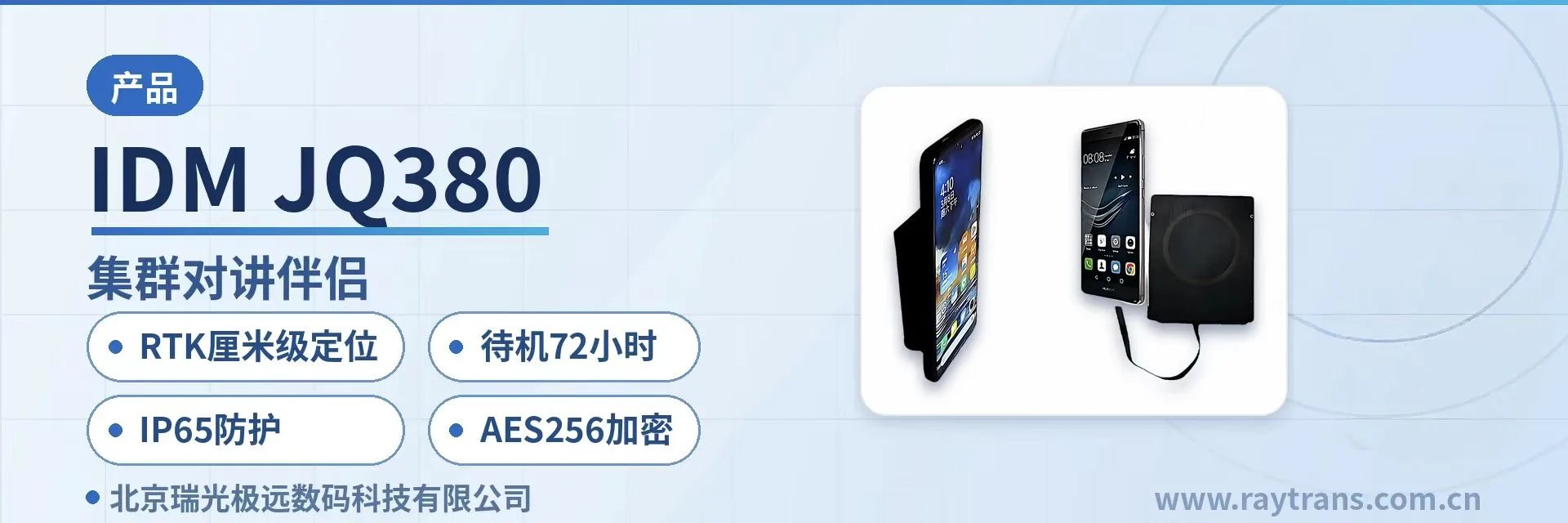
IDM JQ380 Trunking Intercom Companion
Magnetic attachment to a phone, visible personnel during network outage, centimeter-level positioning, encrypted short message
The Trunking Intercom Companion is an intelligent communication device designed for extreme environments. It connects quickly to a phone via magnetic USB and, in areas without network coverage, still delivers stable and reliable intercom communication over a 400MHz PDT trunking system. It not only supports the private call and group call functions of traditional intercoms, but also works closely with a smartphone to enable visualized member positioning, status management and encrypted short message transmission, while retaining professional trunking intercom capability for standalone use without a phone. It perfectly addresses critical communications needs when the public network is interrupted in scenarios such as outdoor operations, emergency rescue and industrial dispatching, making it a professional user's answer to
IDM JQ380 Trunking Intercom Companion is an intelligent communication terminal developed by Beijing Ruiguang Jiyuan Digital Technology Co., Ltd. (Raytrans). It integrates RTK centimeter-level positioning, trunking intercom capabilities and public network collaboration elements into one unit, and is designed specifically for public network outage scenarios, enabling stable intercom, real-time personnel positioning and encrypted short message transmission for emergency communications needs at emergency rescue, industrial dispatching and fleet transportation sites even in areas without network coverage. As a command and dispatch system manufacturer, Ruiguang Jiyuan has incorporated into this product multiple application considerations for military emergency communications vehicle solutions and smart mining communication solutions, while accommodating the practical requirements of intrinsically safe mining communication and PDT digital trunking intercom.
Key Specifications at a Glance: RTK centimeter-level positioning · VHF/UHF dual frequency bands · AES 256-bit encryption · 72-hour standby · IP65 protection · RS-232 + Type-C dual interfaces
Intercom in no-network areas on the IDM JQ380 is not just about "being heard" — it also lets you "see people and deliver commands". The device connects quickly to a phone via magnetic USB for deep collaboration, using the phone screen for product showcase-grade positioning visualization, status management and short message transmission and reception; it can also work independently of the phone, retaining the private call and group call capabilities of professional trunking intercom and supporting personnel positioning in no-network environments. This dual-mode form of "phone collaboration + standalone intercom" is exactly where the name "Companion" comes from — it borrows the screen and computing power of a smartphone for dispatching interaction, yet does not depend on a public network foundation, so core communications on site remain uninterrupted during a network outage.
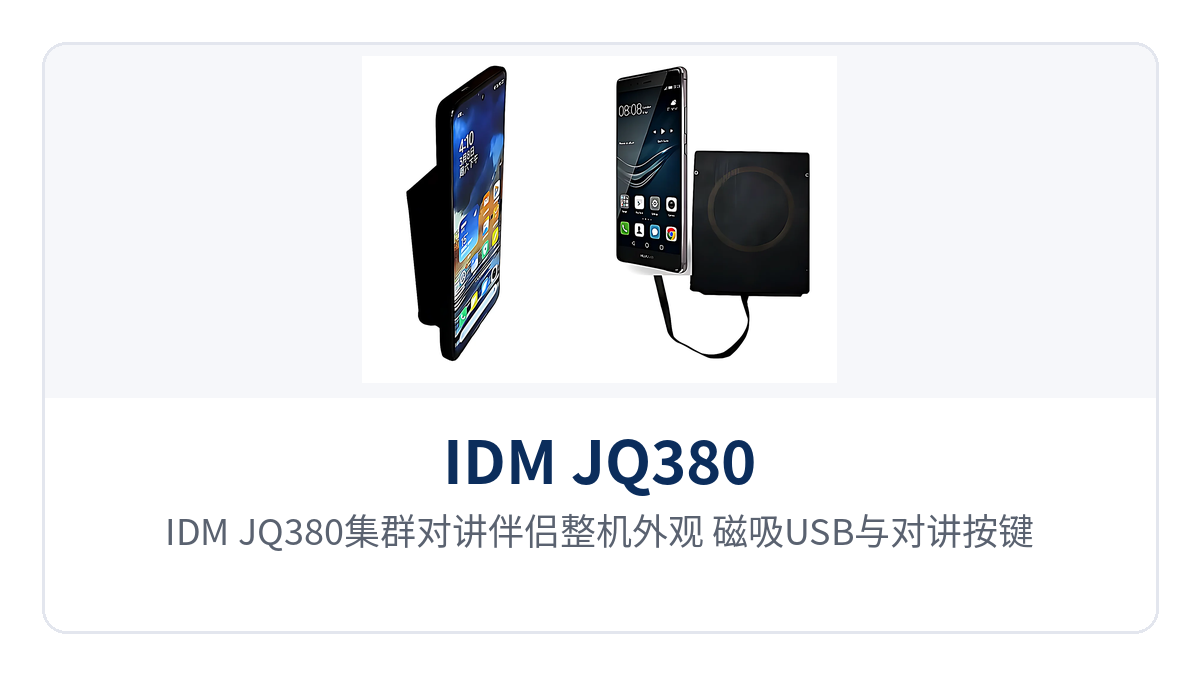
Figure 1: Overall appearance of the IDM JQ380 Trunking Intercom Companion, with close-ups of the magnetic USB and intercom buttons
What Kind of Device Is the IDM JQ380 Trunking Intercom Companion?
The IDM JQ380 Trunking Intercom Companion is an intelligent intercom terminal designed for extreme operating environments. Its core is the integration of RTK high-precision positioning, PDT digital trunking intercom, encrypted short messages and smartphone collaboration into a single magnetic portable device. Traditional intercoms only handle voice calls; beyond voice, the JQ380 brings positioning, short messages and remote management into the intercom system, enabling the command center to "see people, make calls and receive commands" even without a public network. As a professional product showcase under Ruiguang Jiyuan (Raytrans), it targets emergency communications and industrial dispatching scenarios, extending trunking intercom capabilities into personnel positioning in no-network environments and command and dispatch system manufacturer-grade solutions.
What Are the Core Functions of the IDM JQ380?
The JQ380 organizes its functions around four categories of capabilities: "positioning visualization, secure intercom, short messages and power management", all of which operate on PDT digital trunking intercom in no-public-network environments.
Function | Description |
|---|---|
RTK high-precision positioning | Receives differential data to achieve centimeter-level positioning; positions are output in NMEA 0183 format and can be fed into third-party software for analysis |
Position sharing and map interaction | Periodically reports the position of this terminal and receives the positions of other terminals; the map displays terminals that are speaking or sending short messages and supports click-to-call |
PDT digital trunking intercom | Supports private call, group call, all call and broadcast call, with flexible switching between digital and analog channels |
AES 256-bit voice and data encryption | Voice and short messages are encrypted end to end, preventing eavesdropping and data leakage |
Remote management | Remote monitoring of the site; lost devices can be killed remotely (Kill) and reactivated remotely (Revive) |
Encrypted short messages | Private call/group call/all call short messages, IP acknowledged and unacknowledged short messages, supporting small files and transparent data transmission |
Power management | Graduated low-battery alarms (30%/20%/10%), configurable sleep time, and transmission interruption protection (TOT) to prevent long-time channel occupation |
How Does RTK Centimeter-Level Positioning Trunking Intercom Make Personnel Positions Real-Time Visible Without a Network?
In no-network environments, personnel positions are made real-time visible through "RTK centimeter-level positioning + map interaction" — this is the personnel positioning capability in no-network environments provided by the IDM JQ380. After receiving differential data to complete centimeter-level RTK positioning, the IDM JQ380 periodically uploads the position of this terminal to the dispatch end over the PDT channel while receiving positioning information from other terminals; the command-end software marks the positions of all terminals on a map, and terminals that are speaking or sending short messages are highlighted, so the dispatcher can directly click a terminal icon on the map to initiate a call or send a short message. This closed loop does not depend on the phone's public network, so personnel positions remain visible even when base stations are damaged or the network is congested. For smart mining communication solutions, this personnel positioning capability in no-network environments is likewise a key part of bringing underground workers into the unified management of a command and dispatch system manufacturer.
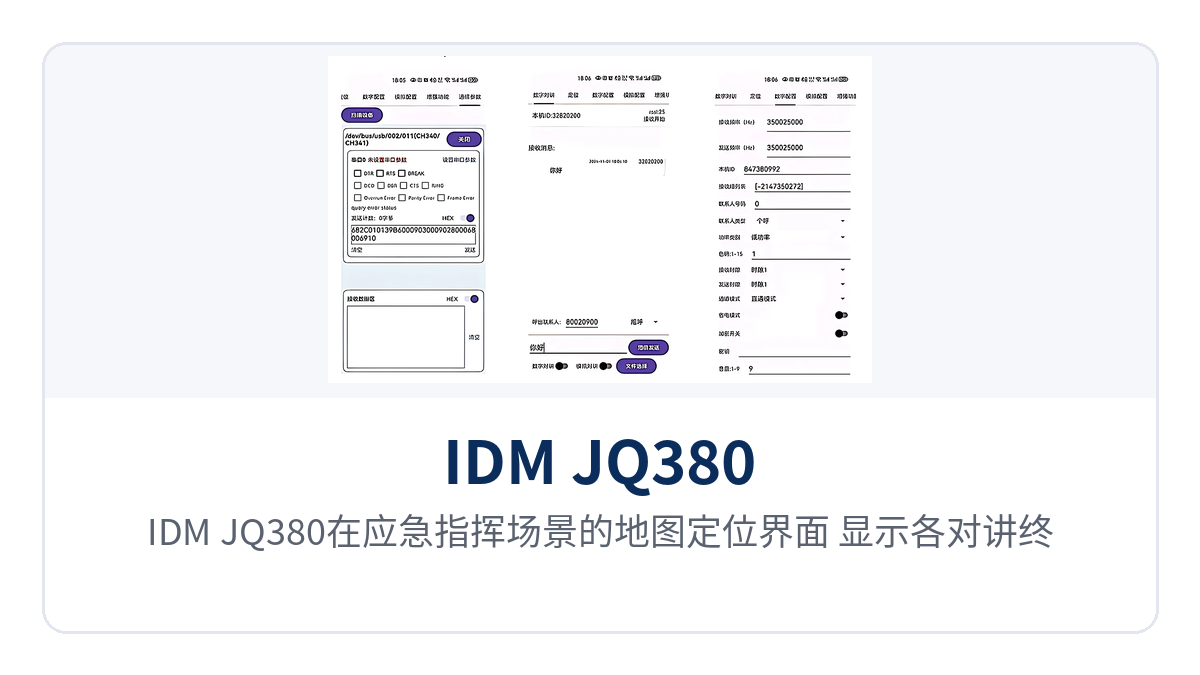
Figure 2: Map positioning interface of the IDM JQ380 in an emergency command scenario, showing the real-time positions of each intercom terminal
The centimeter-level accuracy of RTK positioning is particularly valuable for emergency and surveying tasks. Disaster sites require precise positions of personnel and equipment, and UAV inspection and surveying require coordinate-level sites; public network GPS or base station positioning can only reach meter-level or coarser. The RTK differential positioning of the JQ380 reduces the error to centimeter level, so the command center can judge whether a rescue team is approaching the target point and at which coordinate supplies should be dropped, making both navigation and dispatching more accurate. In military emergency communications vehicle solutions, this accuracy directly determines the efficiency of emergency communications collaboration between the front line and the command vehicle.
What Kind of Core Parameter Configuration Does It Have?
The interfaces, protection and endurance of the JQ380 are designed for extreme field environments. The key parameters are as follows.
Item | Parameter/Specification | Description/Applicable Conditions |
|---|---|---|
Positioning system | RTK | Requires reception of differential data to achieve centimeter-level positioning accuracy |
Positioning accuracy | Centimeter level (RTK) | Suitable for high-precision tasks such as surveying, UAV inspection and emergency rescue |
Communication frequency bands | VHF (136-174 MHz), UHF (400-470 MHz) | Digital/analog channels can be switched flexibly |
Data interfaces | RS-232, Type-C | RS-232 facilitates connection to sensors, vehicles and dispatching platforms; NMEA 0183 standard output |
Operating temperature | -20℃ to +60℃ | Adapts to severe cold and high-temperature field environments |
Ingress protection (IP) rating | IP65 (dust-proof and waterproof) | Suitable for harsh sites such as outdoor areas, underground mines and mountainous-area fleets |
Battery endurance | 72-hour standby, 10-hour continuous call | Meets all-weather long missions |
Encryption method | AES 256-bit voice and data encryption | AES256 encrypted intercom ensures end-to-end encryption of voice and short messages, preventing eavesdropping and data leakage |
The RS-232 and Type-C dual interfaces make the JQ380 more than just an intercom. RS-232 can connect to vehicle-mounted radio sets, sensors, and existing dispatch platforms, and outputs positioning data in accordance with the NMEA 0183 standard, making integration into third-party systems easy; Type-C is used for connecting to phones, charging, and firmware upgrades. The combination of these two types of interfaces allows the JQ380 to be used as a communication terminal mounted on vehicles, UAVs, or industrial control links, rather than being limited to a handheld intercom. In the deployment of intrinsically safe mining communication and smart mining communication solutions, this flexible interface provides convenience for underground equipment access.
How are they used in emergency rescue, industrial dispatching, and fleet transportation respectively?
Emergency rescue command: the command center grasps frontline positions when the public network is interrupted
In disaster rescue, law enforcement operations, and firefighting and emergency response, base stations often fail due to damage or network congestion. After rescue teams are equipped with the JQ380, RTK positioning uploads the centimeter-level positions of frontline team members to the command platform in real time, and group calls and all calls ensure that the command center can perform unified dispatching and issue instructions to multiple rescue teams.
When there is no signal on site, short messages are used to send casualty information and material requirements, and the remote monitoring function allows the command center to understand the on-site environment and respond quickly in critical moments. Real-time position tracking reduces the risk of team members getting lost, and rescue efficiency improves accordingly. This capability is particularly critical in military emergency communications vehicle solutions. After an emergency communications vehicle is equipped with the JQ380, it can quickly build a PDT digital trunking intercom link in areas where the public network is interrupted, ensuring that emergency communications between the frontline and the command vehicle are not interrupted.
Industrial dispatching and unattended operation: underground mining area production dispatching without link interruption
Industrial sites such as mines and oil drilling platforms have complex environments and long distances, and Wi-Fi and mobile networks are often insufficient in coverage. After the JQ380 is deployed underground, PDT digital trunking intercom and short messages ensure stable communication between underground and surface; the squelch function suppresses mine environmental noise and improves voice clarity.
Workers report safety hazards in real time, and the surface command center responds quickly. The positioning function visualizes the positions of underground personnel, and emergency rescue efficiency improves accordingly. IP65 protection and an operating range of -20℃ to +60℃ withstand underground dust, humidity, and temperature differences, making it suitable for long-term hang up use at unattended sites. Combined with intrinsically safe mining communication requirements and the overall design of smart mining communication solutions, the JQ380 can serve as a stable link between underground and surface and be incorporated into the unified management platform of command and dispatch system manufacturers.
Outdoor operations and fleet transportation: fleet position sharing in mountainous areas without signal
In remote mountainous areas and canyon sections, mobile phone signal coverage is uneven, and communication during fleet travel is prone to interruption. After fleets are equipped with the JQ380, PDT digital trunking intercom enables communication among fleet members, and RTK positioning allows the positions of each vehicle to be shared in real time.
The group call function allows the fleet to share road condition information and avoid congestion. When a vehicle breaks down suddenly, a short message can be sent to request help, and support vehicles behind can quickly find the breakdown site based on positioning. IP65 protection and an operating temperature of -20℃ to +60℃ are equally suitable for outdoor operations environments with high altitude, rain, snow, and dust.
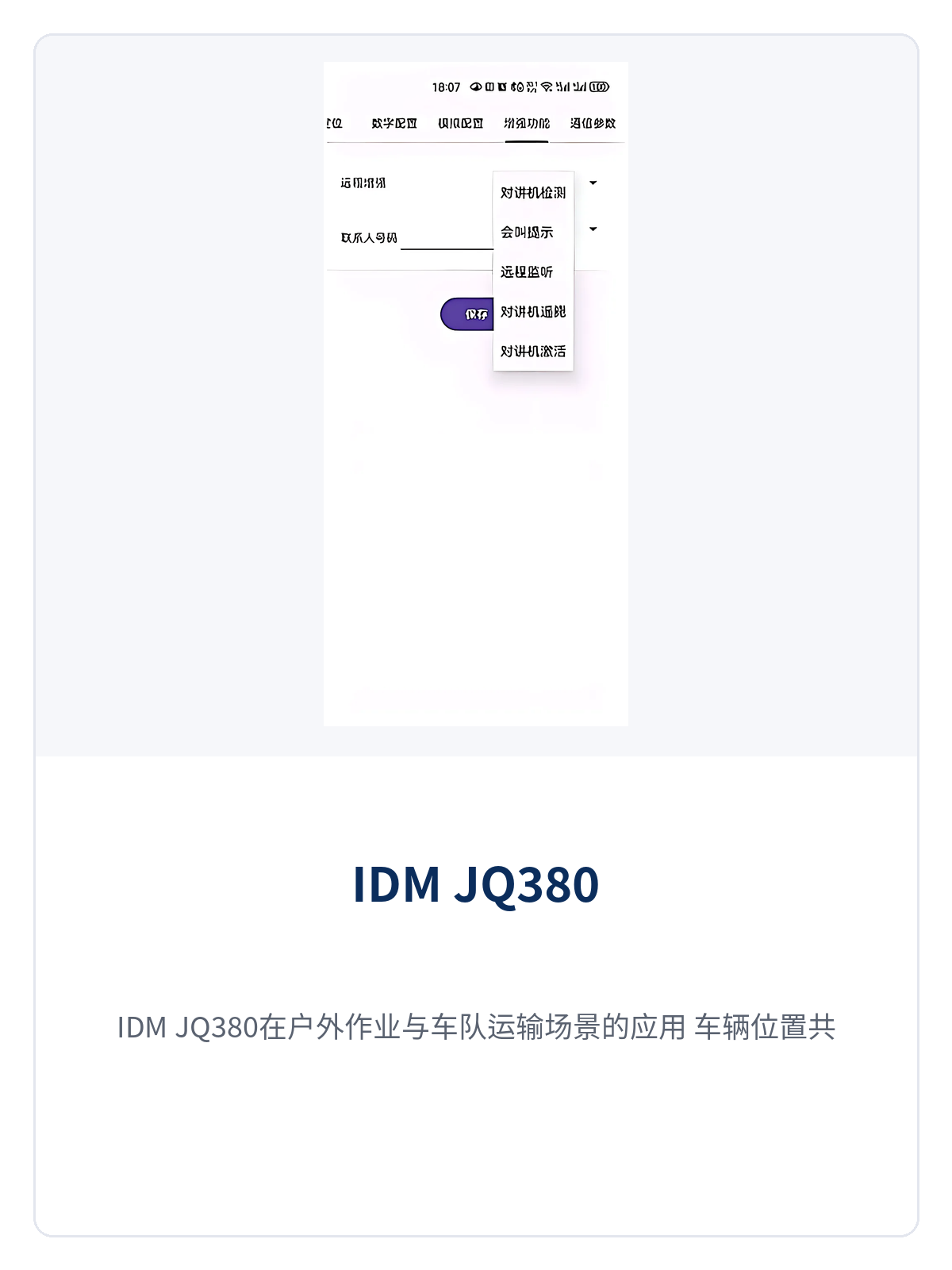
Figure 3: Application of the IDM JQ380 in outdoor operations and fleet transportation scenarios, showing vehicle position sharing and personnel carrying