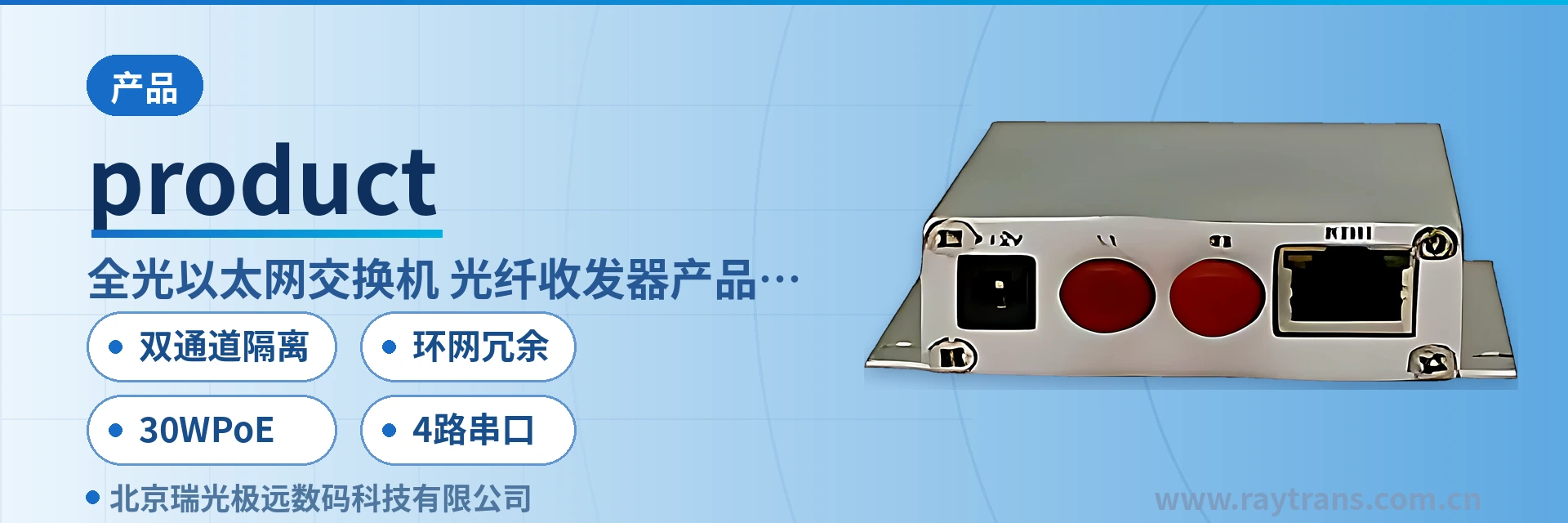
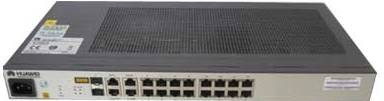
IDM S111F-3GC8S Fiber Aggregation Switch
8 Fast Ethernet optical ports aggregated, 3 Gigabit Combo uplinks, one unit replaces two, latency <
The S100F series fiber optic Ethernet switch is a switch product specially developed by our company for building automation, security surveillance, smart city, Tianwang system, electronic police, factory automation and other application environments. The S100F series provides 8 100Mbps FX optical fiber interfaces, SC connectors, single-mode/multi-mode and single-fiber/dual-fiber options...
IDM S111F-3GC8S 100M optical port fiber aggregation switch is a rack-mounted fiber optic Ethernet switch developed by Raytrans (Beijing Ruiguang Jiyuan Digital Technology Co., Ltd.) for building automation, security surveillance, smart city, Tianwang system, electronic police, factory automation and other application environments. A single device provides 8 x 100Base FX 100M optical ports and 3 x 1000Base Combo optical-electrical multiplexing ports, and complies with IEEE 802.3 standards. As a fiber optic switch product showcase solution for the aggregation layer, the 100M optical port fiber aggregation switch operates on the aggregation side of a distributed network: the optical fiber links of front-end cameras, access controllers, building controllers and PLCs are aggregated at the equipment room in one pass, and then uplinked to the central switch or core network through Gigabit Combo ports. It is the key device for centralized backhaul of distributed sites in industrial park and metropolitan private networks. As a professional media converter manufacturer and industrial Ethernet switch manufacturer, Raytrans has long provided reliable industrial Ethernet switches and media converter products for various industries, and can tailor government private network optical fiber communication solutions for users, meeting diverse needs such as building automation and security surveillance optical fiber aggregation. The Raytrans brand has always been committed to technological innovation and product showcase in the fields of optical fiber communication and industrial Ethernet, providing stable support for devices such as the 100M optical port fiber aggregation switch.
Key Specifications at a Glance: 8 optical ports · 3 Gigabit Combo · transmission distance 20KM200KM · switching latency <1us · AC 90264V / 25W · 1U rack-mounted metal enclosure -20°C~70°C

What kind of device is a 100M optical port fiber aggregation switch?
The IDM S111F-3GC8S 100M optical port fiber aggregation switch is a rack-mounted fiber optic Ethernet switch that integrates 8 x 100Base FX optical interfaces and 3 x 1000Base Combo (RJ45 + SFP) optical-electrical multiplexing interfaces in the same device. The data switching mechanism is store-and-forward, the MAC address table capacity is 8K, the packet buffer is 1Mb, the dimensions are 440mm (W) × 43.6mm (H) × 150mm, the height corresponds to 1U rack space, the weight is 2.3KG, and it uses a metal enclosure and a GB standard D-type power connector, supporting desktop installation and rack-mounted installation. The role of the 100M optical port fiber aggregation switch in networking is the aggregation node at the equipment room side for distributed network access: the 8 100M optical ports face the optical cables of distributed front-end sites, and the 3 Gigabit Combo ports face the core uplink. One device undertakes both aggregation and uplink, so the equipment room no longer needs to configure a separate media converter or small switch for each front-end fiber link. As a professional media converter manufacturer and industrial Ethernet switch manufacturer, this product launched by Raytrans (Beijing Ruiguang Jiyuan Digital Technology Co., Ltd.) showcases its deep accumulation in the fiber optic switch field.
How do 8 100M optical ports plus 3 Gigabit Combo ports complete aggregation and uplink in one device?
The IDM S111F-3GC8S 100M optical port fiber aggregation switch uses a port composition of 8 100M downlink and 3 Gigabit uplink integrated in the same device, with the access side and the uplink side connected within the same device. The 8 x 100Base FX optical ports use SC connectors, with single-mode/multi-mode and single-fiber/dual-fiber options, directly undertaking the optical fiber links of front-end cameras, access controllers, building controllers and PLCs; the 3 Combo ports are optical-electrical multiplexing ports, each providing both an RJ45 10/100/1000BaseT(X) electrical port and a 1000Base SFP optical port, and the interfaces support 10/100/1000Mbps adaptive, full-duplex/half-duplex adaptive and MDI/MDIX polarity adaptive. All ports provide non-blocking, wire-speed packet forwarding. The 8 front-end traffic streams are aggregated within the device and then uplinked through the Gigabit ports, so the equipment room side no longer needs to configure a separate device for aggregation and uplink. This fiber optic switch from Raytrans (Beijing Ruiguang Jiyuan Digital Technology Co., Ltd.) showcases a highly integrated design concept.
How does optical port transmission distance of 20KM to 200KM cover industrial park to metropolitan private networks?
The IDM S111F-3GC8S 100M optical port fiber aggregation switch uses fixed optical fiber interfaces and SFP optical module optical fiber interfaces, with SC/FC interface options on the SFP side, and provides six transmission distance grades: 20KM, 40KM, 60KM, 80KM, 120KM and 200KM. The key to 100M optical port 200KM long-distance networking is matching optical modules according to link length: for building interconnection within the same industrial park, a 20KM single-mode module is selected; for long-distance links across parks and across districts and counties, modules are selected from 40KM, 60KM, 80KM, 120KM and 200KM according to the actual length. The module and optical fiber type are determined once during the planning stage, and no additional optical-to-electrical conversion device needs to be connected in series on the link, so industrial park-level networks can be connected with metropolitan private networks over the same optical fiber link. In government private network optical fiber communication solutions, this 100M optical port fiber aggregation switch demonstrates excellent long-distance coverage capability.
What does switching latency <1us mean for real-time forwarding in industrial private networks?
Switching latency of less than 1us means the forwarding latency of packets within the device is low enough, so real-time services and control commands with high low-jitter requirements can pass through faster. The IDM S111F-3GC8S 100M optical port fiber aggregation switch uses a store-and-forward mechanism, with switching latency of less than 1us, and implements non-blocking, wire-speed packet forwarding among all ports; in factory automation and building automation scenarios, PLC control commands, visual inspection results and access control events need to be uploaded in a timely manner, and controllable forwarding latency is the prerequisite for real-time services not to accumulate. The configuration of a 1Mb packet buffer and an 8K MAC address table allows multiple front-end devices to still forward normally by port under burst traffic, and the stringent requirements of industrial private networks for real-time forwarding and low jitter can be met on the aggregation side. As an industrial Ethernet switch manufacturer, Raytrans (Beijing Ruiguang Jiyuan Digital Technology Co., Ltd.) reflects continuous optimization of real-time performance in its product showcase.
In which industry scenarios is the 100M optical port fiber aggregation switch used?
The 100M optical port fiber aggregation switch is located on the aggregation side of the network in building automation, security surveillance, smart city and factory automation scenarios, undertaking the work of centrally aggregating the optical fibers of distributed sites and uplinking to the center.
Equipment room aggregation for building automation and security surveillance
The front-end sites of security surveillance and building automation projects are distributed across buildings, floors and perimeters, and cameras, access controllers and building controllers aggregate signals to weak-current rooms or surveillance centers through optical cables. The IDM S111F-3GC8S 100M optical port fiber aggregation switch aggregates 8 front-end uplink fibers with one device through 8 x 100Base FX optical ports on the equipment room side, and then uplinks to the core network through Gigabit Combo ports; SC connectors and single-mode/multi-mode and single-fiber/dual-fiber options allow different optical cable conditions between buildings to be connected to the same aggregation equipment, forming a clearly layered security surveillance optical fiber aggregation network. This fiber optic switch from Raytrans (Beijing Ruiguang Jiyuan Digital Technology Co., Ltd.) showcases good adaptation capability in building automation and security surveillance optical fiber aggregation scenarios.

Industrial park to metropolitan aggregation for smart city and Tianwang system
The front-end sites of smart city and Tianwang system projects are distributed across intersections, communities and industrial parks, and the trunk optical cables of each area aggregate signals to branch bureaus or central equipment rooms. The IDM S111F-3GC8S 100M optical port fiber aggregation switch undertakes area uplink fibers through 8 100M optical ports and uplinks to the core switch through Gigabit Combo ports; the optical port transmission distance is selectable from 20KM to 200KM, so that area sites across districts and counties can also be incorporated into the same aggregation layer, and industrial park to metropolitan private networks can be connected with one device. In government private network optical fiber communication solutions, this 100M optical port fiber aggregation switch is an ideal fiber optic switch choice.
Industrial private network aggregation for factory automation and electronic police
In factory automation scenarios, PLCs, robot control cabinets, visual inspection and energy consumption collection equipment make extensive use of Ethernet interfaces, and the distance between workshops and floors often exceeds the reliable transmission range of twisted pair. The IDM S111F-3GC8S 100M optical port fiber aggregation switch replaces long-distance copper cable with optical fiber; the metal enclosure and -20°C~70°C operating temperature adapt to temperature fluctuations in workshops and power distribution rooms, and switching latency of less than 1us makes the forwarding latency of production line control commands and electronic police checkpoint video controllable, so it can serve as the aggregation node of factory automation and electronic police private networks. As an industrial Ethernet switch manufacturer, Raytrans (Beijing Ruiguang Jiyuan Digital Technology Co., Ltd.) showcases professional strength in the industrial Ethernet switch field through its product showcase.

Core Functions
| Function | Description |
|---|---|
| 100M optical port aggregation | Provides 8 x 100Base FX optical interfaces, SC connectors, single-mode/multi-mode and single-fiber/dual-fiber options, undertaking the uplink fibers of distributed front-end sites |
| Gigabit Combo uplink | Provides 3 x 1000Base Combo (RJ45 + SFP) optical-electrical multiplexing ports, supporting both RJ45 electrical ports and 1000Base SFP optical ports, for core uplink |
| Port adaptive | Combo ports support 10/100/1000Mbps adaptive, full-duplex/half-duplex adaptive and MDI/MDIX polarity adaptive |
| Wire-speed forwarding | Non-blocking, wire-speed packet forwarding among all ports, with switching latency of less than 1us |
| Store-and-forward | The data switching mechanism is store-and-forward, ensuring the integrity and order of forwarding |
| Selectable distance | SFP optical modules provide six transmission distance grades: 20KM, 40KM, 60KM, 80KM, 120KM and 200KM |
| MAC address table | MAC address table capacity of 8K, meeting the address learning needs of multi-terminal access |
| Packet buffer | 1Mb packet buffer, buffering burst traffic |
| LED status indication | Power LED; Link/ACT indication for 100Base FX ports, Link/Act and Speed indication for 1000Base Combo ports |
| Power protection | GB standard D-type power connector with fuse, protecting the device when the AC input is abnormal |
Technical Specifications and Performance Specifications
Data ports and switching parameters are listed as stated in the original product documentation. Port rates and switching capability related indicators are shown in the table below.
| Item | Parameter/Specification | Description/Applicable Conditions |
|---|---|---|
| Optical interface | 8 x 100Base FX | SC connectors, single-mode/multi-mode and single-fiber/dual-fiber options |
| Combo interface | 3 x 1000Base Combo (RJ45 + SFP) | Optical-electrical multiplexing ports, electrical ports are RJ45 |
| Interface rate | 10/100/1000 | Complies with IEEE 802.3 standards |
| Communication standard | Complies with IEEE 802.3 standards | Ethernet switching standard |
| MAC address table | 8K | As stated in the original product documentation |
| Switching latency | <1us | Under the store-and-forward mechanism |
| Packet buffer | 1Mb | As stated in the original product documentation |
| Data switching mechanism | Store-and-forward | As stated in the original product documentation |
Optical port distance determines the range a project can cover. SFP optical modules provide six selectable transmission distance grades.
| Item | Parameter/Specification | Description/Applicable Conditions |
|---|---|---|
| Optical port type | Fixed optical fiber interfaces, SFP optical module optical fiber interfaces | SC/FC interface options on the SFP side |
| Interface form | Dual fiber: SC; single fiber: SC; SFP: SC, LC | Selected according to on-site optical cables and modules |
| Transmission distance | 20KM, 40KM, 60KM, 80KM, 120KM, 200KM | Selected according to on-site link length |
| Electrical port form | 1000Base Combo: RJ45 | Polarity adaptive MDI/MDIX |
Power supply, mechanical and environmental indicators determine whether the device can be deployed in power distribution rooms and unattended equipment rooms.
| Item | Parameter/Specification | Description/Applicable Conditions |
|---|---|---|
| Power input | AC 90~264V | Wide-range AC input |
| Power consumption | 25W | Power consumption of the unit |
| Power connector | GB standard D-type power connector (with fuse) | Provides protection when the input is abnormal |
| Enclosure | Metal enclosure | Desktop or rack-mounted installation |
| Dimensions | 440mm × 43.6mm × 150mm | As stated in the original product documentation; height corresponds to 1U |
| Weight | 2.3KG | Easy for one person to rack-mount |
| Installation method | Desktop installation, rack-mounted installation | Selected according to equipment room conditions |
| Operating temperature | -20°C ~ 70°C | Wide temperature operation |
| Storage temperature | -40°C ~ 85°C | Transportation and storage |
| Operating humidity | 5% ~ 95% (non-condensing) | Equipment room and power distribution room environments |
Differentiation Point
| Differentiation Point | Value to the Project |
|---|---|
| 8 optical ports + 3 Gigabit Combo | 8 Fast Ethernet optical ports + 3 Gigabit Combo ports; a single device completes optical fiber aggregation and Gigabit uplink: the access side and the uplink side are integrated in the same rack-mounted device, reducing investment in equipment room cabinets and supporting power supplies |
| Optical port 20KM to 200KM | Optical port transmission distance covers 20KM to 200KM, suitable for networking from industrial parks to metropolitan private networks: the same aggregation equipment can interface with nearby buildings and long-distance links across districts and counties, eliminating the need to cascade additional transmission devices on the link |
| Switching latency <1us | Switching latency <1us, meeting the stringent requirements of industrial private networks for real-time forwarding and low jitter: the forwarding latency of PLC control commands and video services is controllable, providing a basis for real-time service uplink |
Why Is Wide Temperature Important for Industrial Ethernet Switches?
The wide temperature capability of an industrial Ethernet switch determines whether the device can operate over the long term in power distribution rooms, workshops and unattended equipment rooms. The metal enclosure and -20°C70°C operating temperature of the Raytrans IDM S111F-3GC8S Fast Ethernet optical port fiber optic aggregation switch cover high-temperature summer and low-temperature winter environments, with a storage temperature of -40°C85°C and operating humidity of 5%95% non-condensing, while the AC 90264V wide-range input adapts to power grid fluctuations. Indicators such as wide temperature for industrial Ethernet switches directly affect the deployment scope of a project: when the temperature range is insufficient, power distribution rooms and field sites require additional temperature control cabinets or air conditioning, and cabinet space and O&M costs rise accordingly. As a professional media converter manufacturer and industrial Ethernet switch manufacturer, Raytrans clearly marks wide temperature parameters in its product showcase, making it easy for integrators to quickly verify environmental adaptability in government private network optical fiber communication solutions.
How to Select a Fiber Optic Aggregation Switch?
When selecting a fiber optic aggregation switch for a project, simply check four items: the number of optical ports, the uplink method, the transmission distance and the environmental conditions. For how to select a fiber optic aggregation switch, first look at the number of downlink optical ports: the number of optical fibers to be aggregated at the front end determines the number of Fast Ethernet or Gigabit optical ports, and a configuration such as 8 optical ports + 3 Gigabit Combo suits equipment room aggregation in small and medium-sized areas; then look at the uplink method. When the core side is planned for Gigabit, uplink through the SFP optical port of the Combo port, and a nearby equipment room can also uplink through the Combo electrical port; third is the transmission distance, selected on site from six levels between 20KM and 200KM according to the link length, with single-mode/multi-mode and single-fiber/dual-fiber options confirmed; fourth is the operating environment. Power distribution rooms and unattended equipment rooms need to be checked item by item against the -20°C70°C operating temperature, AC 90264V wide-range input and metal enclosure. The Raytrans IDM S111F-3GC8S Fast Ethernet optical port fiber optic aggregation switch is configured on the above four items according to the common conditions of equipment room aggregation and power distribution room deployment, and can serve as a starting point for selection on the aggregation side of building automation security surveillance optical fiber aggregation, security surveillance, smart city and factory automation projects. If the front end of the project consists of scattered cameras or controllers, a media converter can also be used to complete edge access, and then uplink to the core through a fiber optic switch.