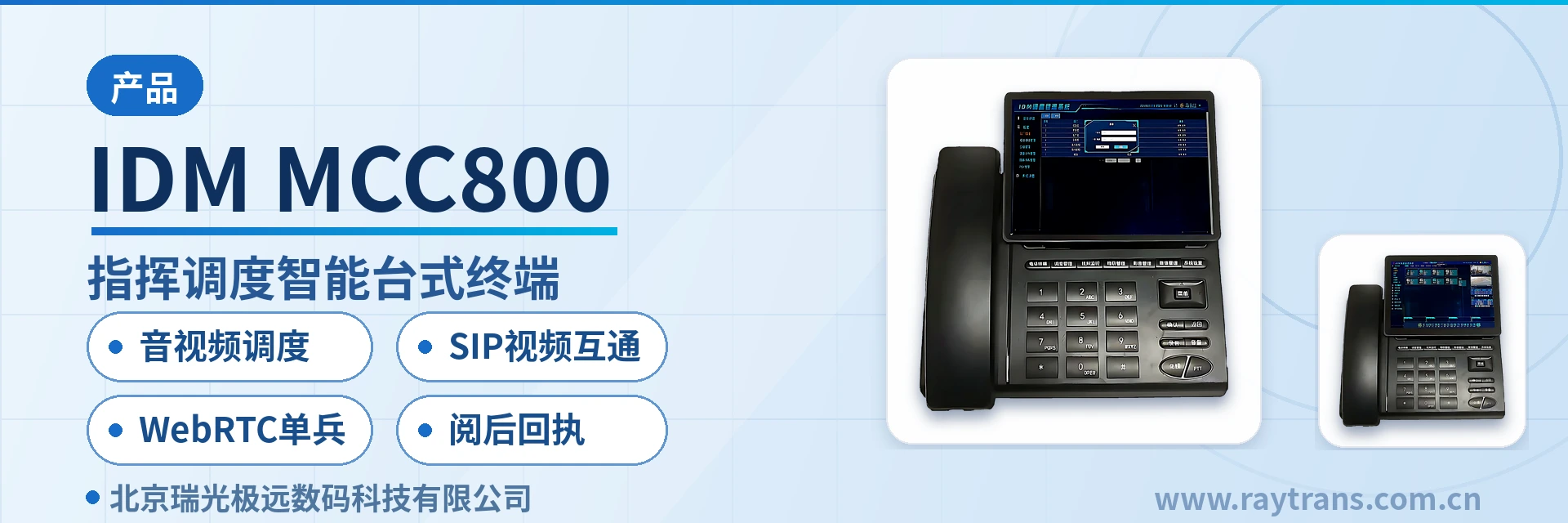
IDM MCC800 Command and Dispatch Smart Desktop Terminal
One terminal integrating voice, video, surveillance, IM and IoT control
The audio and video dispatching desktop smart terminal provides voice telephone dialing, group intercom calls, external calls, internal calls, and PTT group intercom; it provides video telephone intercommunication: point-to-point video calls via SIP, and individual soldier terminal calls via WebRTC. It includes transfer, monitoring, video recording, etc.; audio and video conferencing, consultation, and video intercom — the smart terminal provides multi-party audio and video intercommunication, conferencing, and free intercom; surveillance video: it provides monitoring and surveillance intercom for images compliant with GB.28181, ONVIF and other formats; IoT management functions: voice control system, providing common infrared control, blue
What Kind of Device Is an Audio and Video Dispatching Desktop Smart Terminal?
The IDM MCC800 audio and video dispatching desktop smart terminal is a desktop audio and video dispatching smart device developed by Beijing Ruiguang Jiyuan Digital Technology Co., Ltd. It is composed of five capabilities: voice dispatching, video intercommunication, surveillance access, IM instant messaging, and IoT control, and is used to bring voice calls, PTT group intercom, SIP point-to-point video calls, WebRTC individual soldier intercommunication, surveillance intercom, and group IM into the same command operator seat terminal. This IP access terminal replaces multiple sets of telephones, intercoms, and surveillance terminals at a command operator seat with a single device. Its product showcase covers private network dispatching scenarios such as emergency command and public safety, energy and electric power and petrochemicals, and rail transit and airports and ports, and it is also a representative desktop product of Raytrans among command and dispatch system manufacturers.
Key Specifications at a Glance: SIP point-to-point video call · WebRTC individual soldier intercommunication · GB28181 and ONVIF surveillance access and surveillance intercom · PTT group intercom · audio and video conferencing and consultation · IM multi-modal group interaction · read receipt statistics · infrared and Bluetooth voice control
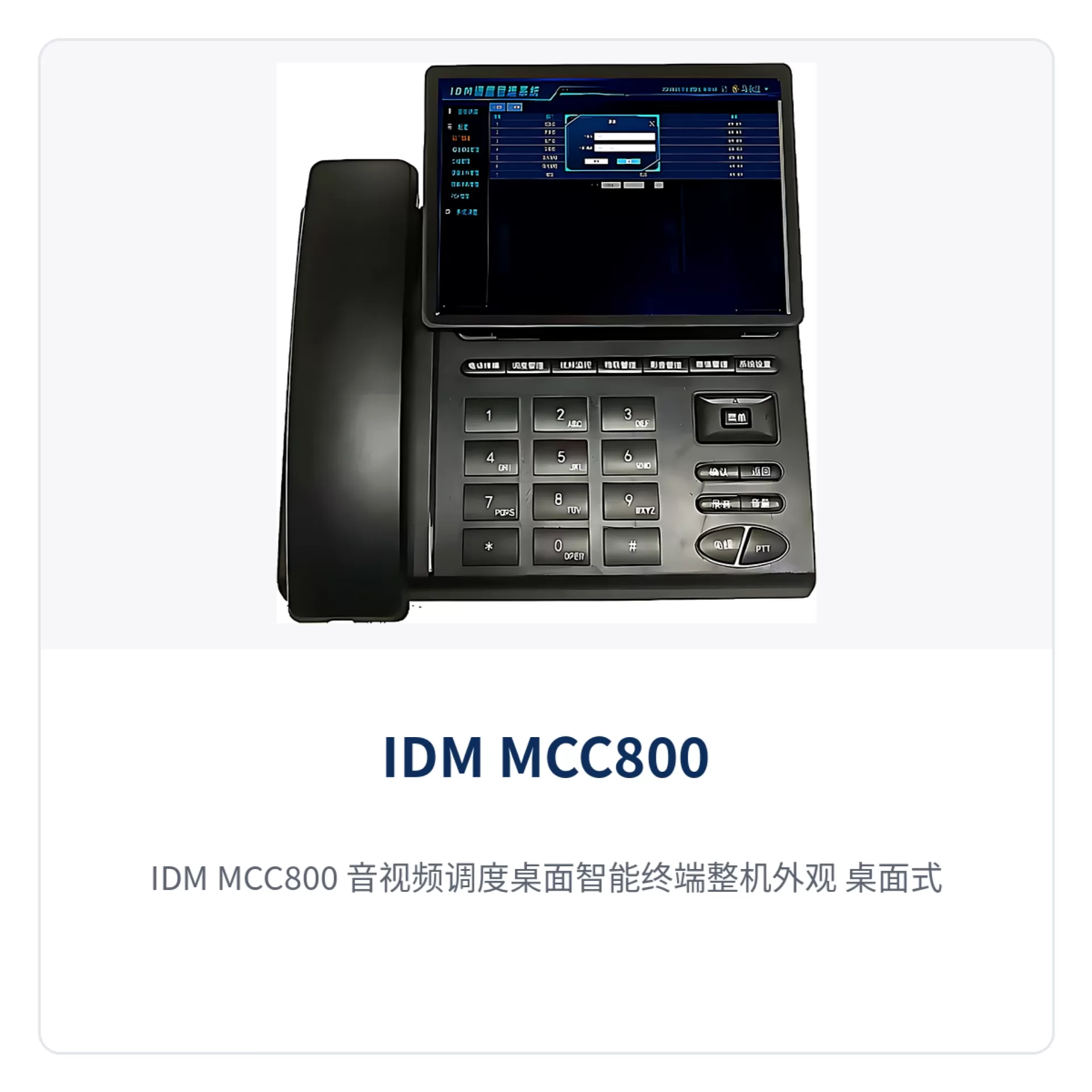
Figure 1: IDM MCC800 Audio and Video Dispatching Desktop Smart Terminal Overall Appearance — Desktop Chassis and Touch Display Screen
The voice capabilities of the IDM MCC800 audio and video dispatching desktop smart terminal cover internal and external voice channels: it can make voice calls and initiate group intercom calls, and can also connect telephones in different networks through external telephone and internal telephone, while PTT group intercom is used for one-to-many on-site group calls. Calls, status, and operations are concentrated on the same desktop interface, so the duty operator does not have to switch back and forth among multiple telephones and intercoms.
How Do SIP Video Intercommunication and WebRTC Individual Soldier Intercommunication Achieve Front-and-Rear Visualized Dispatching?
The conclusion first: SIP video intercommunication connects the command console and standard video terminals into point-to-point video calls, and WebRTC individual soldier intercommunication pulls front-line handheld individual soldiers directly into the command view. Together, the two channels complete front-and-rear visualized dispatching. The IDM MCC800 uses SIP to make point-to-point video calls, with signaling following the RFC 3261 framework, and can interconnect with existing call platforms; for on-site individual soldiers, it uses WebRTC to call individual soldier terminals, directly connecting the on-site perspective of handheld individual soldiers to the dispatching seat without going through an extra platform in between.
Incoming video calls support transfer, monitoring, and video recording. The commander can transfer the individual soldier view to other seats for coordinated handling, can monitor important calls, and can record them and keep them on file. A direct video channel that can be transferred, monitored, and traced is thus formed between the command console and the front line; the more urgent the scene, the more timeliness is gained by one less layer of transfer.
How Do Surveillance Access, Consultation Intercom, and IM Read Receipts Form a Command Loop?
A single terminal completes the whole process from seeing the view, to calling the scene, to confirming receipt. Surveillance video access supports the GB28181 and ONVIF surveillance access specifications, enabling monitoring and surveillance intercom for images that meet these two formats. Private network cameras can be incorporated into the dispatching seat without modification, and when an abnormal view is seen, on-site personnel can be called on the spot.
The coordinated handling stage is undertaken by audio and video conferencing, consultation, and video intercom. The IDM MCC800 provides multi-party audio and video intercommunication, conferencing, and free intercom. Multi-department consultation is completed in the same conference room, with parties speaking freely, which suits cross-department coordination during the emergency handling stage.
The closing stage is undertaken by IM instant messaging and read receipt statistics. IM provides group interaction of voice, text, files, pictures, images, data, and location. Commands, reports, and on-site records are all retained in the group, and IM content can also be classified and organized for subsequent big data analysis; for text and attachments that require receipts, the terminal uses a command sending and receiving method with read receipt statistics management, based on which the commander confirms whether the target unit has read them. For customers on the Internet, the terminal also provides the function of quickly launching WeChat intercom.
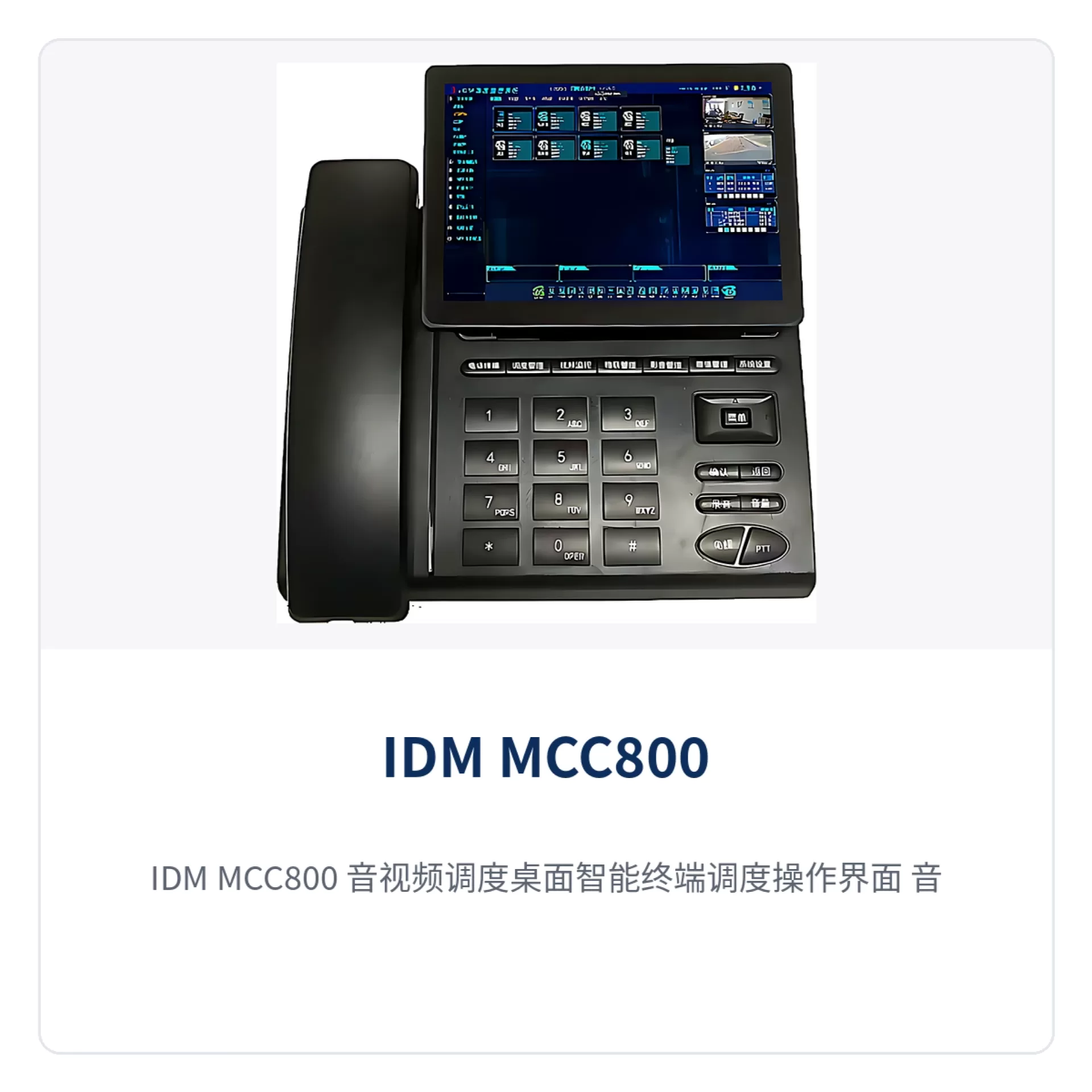
Figure 2: IDM MCC800 Audio and Video Dispatching Desktop Smart Terminal Dispatching Operating Interface — Audio and Video Dispatching and Surveillance Intercom View
Which Devices Can One Terminal Replace? Function Overview
Function | Description |
|---|---|
Voice calls and intercom | Voice call dialing, group intercom calls, external telephone, internal telephone, and PTT group intercom, with internal and external voice channels received on the same terminal |
SIP point-to-point video call | Use SIP to make point-to-point video calls, with signaling following the RFC 3261 framework, intercommunicating with standard video terminals |
WebRTC individual soldier intercommunication | Use WebRTC to call individual soldier terminals, connecting the front-line on-site view to the command operator seat |
Video call control | Incoming video supports transfer, monitoring, and video recording, and important calls can be kept on file for review |
Audio and video conferencing and consultation | Multi-party audio and video intercommunication, conferencing, consultation, video intercom, and free intercom |
Surveillance video access | Supports GB28181 and ONVIF surveillance access, enabling monitoring and surveillance intercom for images that meet these two formats |
IoT management | Voice control system, providing management of common infrared control and Bluetooth control |
IM instant messaging | Group interaction of voice, text, files, pictures, images, data, and location, with content that can be classified and organized for big data analysis |
Command sending and receiving management | Text and attachments that require receipts are sent and received with read receipt statistics management |
Quick WeChat management | Provides the function of quickly launching WeChat intercom for customers on the Internet |
Key Specifications and Protocols
Item | Parameter/Specification | Description/Applicable Conditions |
|---|---|---|
Model | IDM MCC800 Command and Dispatch Intelligent Desktop Terminal | Desktop audio and video dispatching intelligent terminal, one unit for local termination |
Video telephone protocol | SIP (RFC 3261) | Used for SIP point-to-point video telephone intercommunication |
Individual soldier intercommunication method | WebRTC | Call individual soldier terminals with WebRTC for direct connection to live on-site video |
Surveillance access protocol | GB28181, ONVIF | Surveillance and surveillance intercom for images that meet these two formats |
Dispatch communication method | Voice telephone, PTT group intercom, external telephone, internal telephone | Covers internal and external voice channels and group intercom calls |
Conference and intercom | Audio and video conferencing, consultation, video intercom | Multi-party audio and video intercommunication, conferencing and free intercom |
IM interaction content | Voice, text, files, pictures, images, data, location | Group-based interaction, content can be classified and organized for big data analysis |
Instruction receipt | Read receipt statistics management | Statistics of reading status for texts and attachments requiring receipts |
IoT management | Voice control, infrared control, Bluetooth control | Unified management of common infrared and Bluetooth devices |
Performance Specifications | Subject to the product documentation | Detailed hardware parameters are not yet recorded in the knowledge base; subject to the manufacturer's technical documentation |
Differentiated value: three on-site benefits of the audio and video dispatching desktop intelligent terminal
Differentiated capability | On-site problem addressed | User value |
|---|---|---|
One terminal integrates voice, video, surveillance, IM and IoT control | At the command operator seat, telephone, intercom, surveillance, IM and IoT control are scattered across multiple devices, making the desktop crowded with frequent switching | Replaces multiple devices; one desktop seat completes audio and video dispatching and IoT control |
SIP point-to-point video and WebRTC individual soldier intercommunication | Between the command console and frontline individual soldiers there are platforms and transfers, so on-site video cannot get through | Enables visualized dispatching between the front and rear, with on-site video reaching the command operator seat directly |
Instruction read receipt statistics and IM classification and organization | Whether instructions are delivered and read is difficult to verify, and process records are scattered | Ensures dispatch orders are traceable and analyzable, and group records can be used for big data analysis |
Typical application scenarios
Emergency command and public safety
An emergency response site requires commanders to simultaneously keep track of telephones, intercom, individual soldiers and surveillance, and to pass instructions to the frontline as soon as an incident occurs. As a professional command and dispatch system manufacturer, Raytrans presents the IDM MCC800 audio and video dispatching desktop intelligent terminal, which brings GB28181 surveillance video, SIP point-to-point video telephones, WebRTC individual soldier intercommunication and PTT group intercom into the same command operator seat, providing integrated product showcase capability for command and dispatch. Commanders can initiate intercom the moment they spot a hazard on the surveillance, use WebRTC to directly connect to the on-site view of frontline personnel, and issue disposal instructions with read receipt statistics via group IM. In public safety scenarios, location, pictures and on-site data can be synchronized in the group, and the next step of disposal proceeds only after important instructions are confirmed as read.
Energy and electric power, and petrochemicals
Dispatch duty in energy and electric power and petrochemical private networks revolves around surveillance and the closed loop of instructions. IDM MCC800 supports surveillance and surveillance intercom for private network surveillance that meets GB28181 and ONVIF, so duty operators who see abnormal images of substations, pipeline networks or plant areas can call the site directly; PTT group intercom covers operation teams, internal and external telephones connect maintenance and external collaboration links; IM and read receipt statistics make the delivery status of maintenance instructions verifiable and outstanding issues traceable. Petrochemical plant areas have clear requirements for communication traceability and dispatch response, and one IP access terminal unifies surveillance, intercom and instruction records at the same seat.
Rail transit, and airports and ports
Production dispatching in rail transit and at airports and ports faces long-cycle continuous operation, with train operation, station service, rolling stock and port area operation job roles all online at the same time. IDM MCC800 uses internal and external telephones to access existing dispatch voice channels, uses PTT group intercom to cover platforms, hangars and port area operation teams, and uses SIP point-to-point video telephones and WebRTC individual soldier intercommunication to view key sites; surveillance access lets dispatchers view platform, runway and wharf images on the same interface and make announcements to those sites. Daily dispatching and emergency response are completed on the same desktop terminal, and dispatch records and instruction receipts are available for review.
Conclusion
The IDM MCC800 audio and video dispatching desktop intelligent terminal coordinates voice dispatching, SIP video intercommunication, WebRTC individual soldier intercommunication, surveillance access, audio and video consultation and IM read receipt statistics into one desktop terminal, solving three types of problems: switching among multiple systems at the command operator seat, on-site video not getting through, and difficulty in verifying whether instructions have been read. In emergency command and public safety, energy and electric power and petrochemicals, and rail transit and airports and ports scenarios, when one terminal is needed to complete audio and video dispatching and make the instruction loop traceable, selection and configuration can be made according to the number of seats and the number of surveillance channels; the specific networking and hardware parameters are subject to the manufacturer's technical documentation and on-site survey.