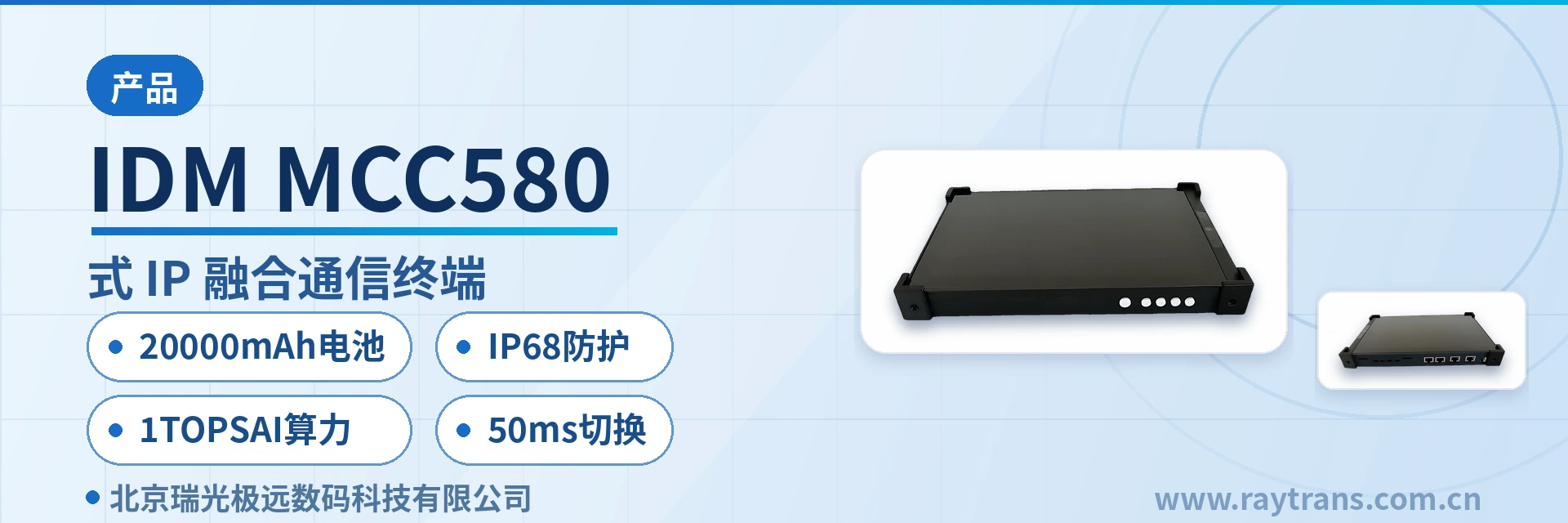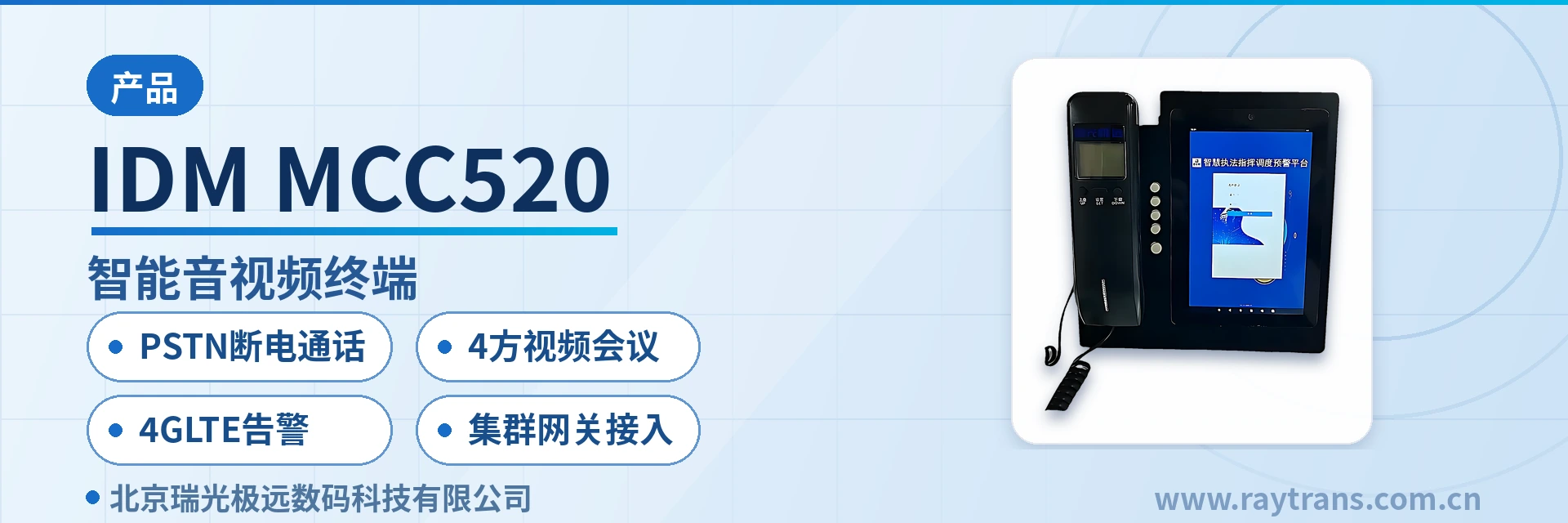
IDM MCC520 Intelligent Audio and Video Terminal
PSTN and IP dual-channel telephone, dialing during power failure, standalone 4-party video conferencing, trunking gateway
The MCC520 intelligent audio and video terminal is a device that integrates telephony, IoT management, and video calls. It features a bread-slice form factor that is easy to install on a wall or desktop, supports PSTN and IP telephone functions, and is equipped with a high-performance CPU (RK2568J) supporting Linux and Android systems, allowing users to install third-party applications such as WeChat and Douyin. The device provides USB and HDMI interfaces, supports 4K video output, and offers wireless connectivity including WIFI and Bluetooth, making it suitable for managing IoT devices. The MCC520 also features speech recognition, environmental control, video intercom, and voice wake-up
The dual-channel telephone intelligent audio and video terminal is a desktop IP access terminal that integrates PSTN and IP telephony, 4-party video conferencing, IoT control, and trunking gateway access into a single unit. It is developed by Beijing Ruiguang Jiyuan Digital Technology Co., Ltd. (Raytrans), model IDM MCC520, and is used in duty rooms, dispatch centers, and surveillance centers for daily calls, remote consultation, and on-site device management. As an intelligent audio and video terminal built for command and dispatch scenarios, it often appears in product showcases as a multi-function converged smart telephone terminal, and is frequently selected by command and dispatch system manufacturers as a desktop-side communication node.
Key Specifications at a Glance: PSTN + IP dual-channel telephony · 4-party video conferencing on a standalone unit (expandable with an MCU) · 4G LTE SMS alarm · trunking gateway access · Bluetooth/WiFi IoT control · USB + HDMI 4K output
The PSTN interface of the IDM MCC520 can still complete calls over a traditional telephone line during a power failure, while the IP side supports SIP telephones and video conferencing, the two channels complementing each other. The Bluetooth, WiFi, and 4G LTE modules allow the same terminal to manage IoT devices such as lights, curtains, and temperature control, and also to serve as a SIP radio gateway. The unit has a built-in HD camera and a high-resolution display screen, provides USB and HDMI interfaces, and supports 4K video output. Raytrans has long been deeply engaged in the field of smart telephone terminals and IP access terminals, and this product also reflects the complete understanding of multi-network convergence communication held by command and dispatch system manufacturers.
What Kind of Device Is the Dual-Channel Telephone Intelligent Audio and Video Terminal?
The IDM MCC520 is an IP access terminal for command and dispatch scenarios. It adopts a bread-slice type body, can be wall-mounted, or placed directly on a desktop, and features an HD camera, a high-resolution display screen, and physical telephone dialing keys on the front. As an intelligent audio and video terminal, its body occupies little space with concentrated cabling, making it suitable for duty rooms, surveillance centers, and control rooms where duty desk space is tight. The unit is equipped with a high-performance RK2568J CPU and supports both Linux and Android systems.
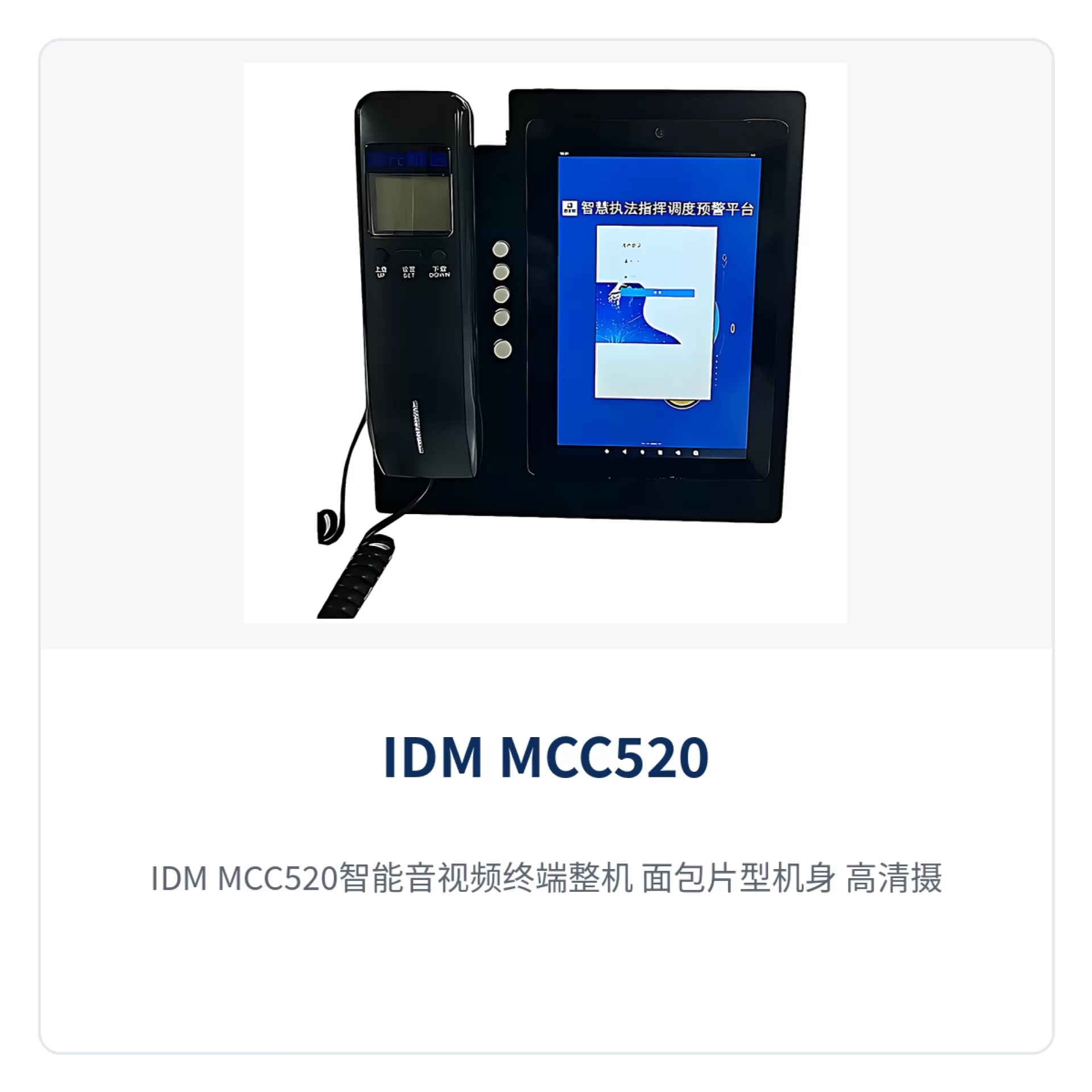
Figure 1: IDM MCC520 intelligent audio and video terminal unit — bread-slice type body, close-up of the front with HD camera and physical telephone dialing keys
The system supports on-demand installation of third-party applications. Intelligent assistant capabilities such as voice wake-up, voice-assisted operation, and environment control are provided with the system, so users can make calls, launch applications, or adjust the volume by voice. Raytrans provides complete product showcase and technical support for this product.
How Is Uninterrupted Telephone Communication Ensured During a Power Failure?
With the PSTN interface and physical telephone dialing keys, the IDM MCC520 can still complete calls over a traditional telephone line during a power failure. PSTN power-failure calling is the core value of the IDM MCC520 in duty room scenarios, and is also the main difference between a dual-channel telephone terminal and a pure IP phone.
PSTN interface connected to a traditional telephone line: calls do not depend on local power supply or the IP network, and incoming and outgoing calls proceed as usual when mains power is interrupted.
Physical dialing keys: no dependence on touchscreen operation, so calls can be dialed directly by key in power-failure scenarios.
Dual-channel operation: PSTN and IP (SIP) telephony are available at the same time; daily calls go over the IP network, and in emergencies the system switches back to PSTN as a fallback.
Applicable conditions: on the premise that central office power supply and the telephone line are normal, critical calls in the duty room remain unobstructed.
Key Specifications
Item | Parameter/Specification | Description/Applicable Conditions |
|---|---|---|
Model | IDM MCC520 | Intelligent audio and video terminal, IP access terminal category |
Main control chip | RK2568J | High-performance CPU |
Operating system | Linux / Android | Supports on-demand installation of third-party applications |
Telephone interface | PSTN + IP (SIP) | Dual-channel telephony, PSTN side supports calls during a power failure |
Video conferencing | 4 parties on a standalone unit | Can be expanded to more participants with an MCU |
Video output | HDMI, supports 4K | External large display |
Image capture | Built-in HD camera | Video calls, video intercom, and conferences |
Display | High-resolution display screen | Call images, speech-to-text transcripts, and information display |
Wireless connection | WiFi, Bluetooth, 4G LTE modules | IoT device connection and SMS alarm |
Data interface | USB, HDMI | Peripheral access and video output |
Trunking interfacing | Trunking gateway interface | Access to the internal trunking intercom network |
Installation method | Wall-mounted / desktop placement | Bread-slice type structure |
Power supply and power consumption | Not yet recorded in the knowledge base | Subject to the manufacturer's technical documentation and commercial confirmation |
Operating environment | Not yet recorded in the knowledge base | Subject to the manufacturer's technical documentation and commercial confirmation |
Price | Subject to commercial quotation | Determined by project scale and configuration |
Features
Function | Description |
|---|---|
Voice telephony | Supports PSTN and IP phone; calls can still be made over traditional telephone lines during a power failure |
HD video call | Built-in HD camera with a high-resolution display screen for personal and business communication |
Video conferencing | A standalone unit supports 4-party video conferencing; with an MCU, more parties can be supported |
Video intercom | Combined with IoT control, used in access control, visitor reception, and similar scenarios |
Speech recognition and transcription | Recognizes speech in real time during a call and displays it as text on the screen for easy recording and review |
Audio and video recording | Video or voice calls can be recorded for meeting records and visitor management |
Voice wake-up | Wakes up the device by voice command and starts a specified function or application |
Voice-assisted operation | Voice control for making calls, launching applications, adjusting volume, and other operations |
Environmental control | Controls lighting, curtains, temperature adjustment, and other environmental equipment by voice or IoT protocols |
Meeting scheduling | Sets meeting times, sends notifications, and manages conference room resources |
Schedule reminders | Synchronizes schedules across multiple platforms to reduce missed important matters |
Reception arrangements | Provides reception reminders for important visitors to keep reception work orderly |
Telephone appointment and reminder | Supports telephone appointment, call transfer, and incoming call reminder |
News push | Pushes political and industry news |
Intelligent customer service | Automatically answers frequently asked questions through natural language processing |
Device connection and control | Connects to and manages smart devices such as lighting, curtains, and temperature control over Bluetooth and WiFi |
Synchronized control | Adjusts environmental settings in real time by voice command or on the device interface |
How many parties does the intelligent audio and video terminal support in a video conference?
IDM MCC520 supports 4-party video conferencing as a standalone unit, and with an MCU it can support more participants, making it suitable for remote dispatching consultation and cross-site duty handover within a private network. As a fully featured intelligent audio and video terminal and smart telephone terminal, it combines the basic calling capability of a SIP telephone with video consultation requirements.
The built-in HD camera with a high-resolution display screen presents meeting video and voice clearly; video or voice calls support audio and video recording, so meeting records and visitor reception can be kept for future reference. Remote team collaboration, customer meetings, and multi-point duty consultation can all be completed on the same terminal.
How does the intelligent audio and video terminal connect to IoT and the trunking gateway?
IDM MCC520 connects to and manages smart devices such as lighting, curtains, and temperature control over Bluetooth and WiFi, accesses the internal trunking intercom network through the trunking gateway interface, and uses the 4G LTE module for SMS alarms, so IoT control and trunking dispatch are completed on the same terminal.
IoT control: Bluetooth, WiFi, and customized interfaces connect to access control, lighting, curtains, and temperature control systems, and environmental settings can be adjusted in real time by voice or on the device interface.
SMS alarm: the 4G LTE module sends SMS notifications to management personnel when events such as elevator rescue calls occur.
Trunking gateway access: after connecting to the internal trunking communication network, it provides voice intercom and data transmission, facilitating dispatch management in areas such as factories and construction sites.
Video intercom: combined with IoT control, used in access control and visitor reception scenarios.
Typical application scenarios
Electric power and energy duty rooms and dispatch centers
Electric power and energy duty rooms have high requirements for communication continuity. The PSTN interface of IDM MCC520 still allows calls during a power failure, so on-duty personnel need not worry about losing contact when mains power and the intranet fail at the same time. Daily duty uses IP phone and video calls, horizontal coordination can be completed with 4-party video conferencing, and the IoT capability can connect to environmental equipment in the duty room, so one terminal covers calls, consultation, and environmental management.
Smart elevator monitoring and emergency rescue centers
After the elevator monitoring center receives a rescue signal, IDM MCC520 can automatically connect to the elevator intercom system and learn about conditions inside the cable car cabin through video and voice calls. The 4G LTE module simultaneously sends SMS to management personnel to notify them of the rescue event; after trunking voice intercom is enabled, rescue personnel and the monitoring center can coordinate dispatch within the same group, shortening response time.
Factory and construction site trunking intercom dispatch areas
In areas such as factories and construction sites that use trunking intercom systems, IDM MCC520 can connect to the internal communication network through a SIP radio gateway or trunking gateway, serving as a voice and data node on the dispatch side. Management personnel can issue instructions to intercom groups, receive information backhauled from the site, and when needed initiate a video conference to upgrade voice dispatching to visualized consultation.
Differentiated value
Selling point | Differentiated capability |
|---|---|
PSTN calls during power failure | PSTN + IP dual-channel telephony; calls still possible during a power failure, so the duty room stays connected at critical moments |
4-party video conferencing | 4-party video conferencing as a standalone unit, with MCU capacity expansion, suitable for remote dispatching consultation in private networks |
4G LTE alarm | 4G LTE module SMS notification; alarms on event occurrence, driving rescue dispatch faster |
Trunking gateway access | Bluetooth/WiFi/4G LTE + trunking gateway; one unit manages IoT and trunking intercom |
As a professional command and dispatch system manufacturer, Raytrans provides complete product showcases and solutions ranging from IP access terminals, intelligent audio and video terminals, SIP telephones, and smart telephone terminals to SIP radio gateways, meeting the communication needs of various command and dispatch scenarios.
Selection and Deployment Recommendations
The dual-channel telephone intelligent audio and video terminal is suitable for sites that converge calls, consultation, and IoT control into one desktop device. During selection, first confirm whether the site has a PSTN telephone line and an IP network and whether intercom group access is required, then check the number of conference parties and the types of environmental devices. Desktop placement and wall-mounted installation can be selected according to duty desk conditions. For parameters such as power supply, power consumption, and operating environment, please refer to the manufacturer's technical documentation and commercial confirmation.
⚠️ File-mutation verifier: 1 file edit(s) FAILED this turn despite any wording above that may suggest otherwise. Run git status or read_file to confirm what actually landed. • /home/ubuntu/rag-cms/refs/fetch_mcc520_1012.py — [write_file] Refusing to overwrite /home/ubuntu/rag-cms/refs/fetch_mcc520_1012.py: /home/ubuntu/rag-cms/refs/fetch_mcc520_1012.py exists but this task has not seen its full current content (ne…