IDM-M2000
IDM-M2000
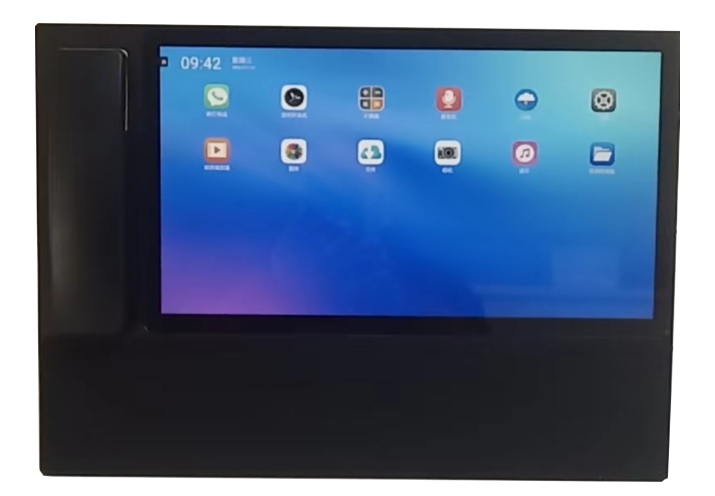
The IDM-M2000 is a compact portable multimedia dispatch console that integrates multiple communication methods including mobile phone communication, radio communication, subscriber telephone (FXS), and loop trunk (FXO). Through advanced digital voice processing technology and network encryption transmission technology, it enables seamless access of devices such as two-way radios of different frequency bands, VHF/UHF radios, HF radios, traditional PSTN telephones (Public Switched Telephone Network), IP softphones, and traditional IP phones into the dispatch system network.
I. Overview
The IDM-M2000 is a compact portable multimedia dispatch console that integrates multiple communication methods including mobile phone communication, radio communication, subscriber telephone (FXS), and loop trunk (FXO). Through advanced digital voice processing technology and network encryption transmission technology, it enables seamless access of devices such as two-way radios of different frequency bands, VHF/UHF radios, HF radios, traditional PSTN telephones (Public Switched Telephone Network), IP softphones, and traditional IP phones into the dispatch system network. It can be used standalone, or with a dispatch console, or as a remote trunking access gateway for a large dispatch system. It enables long-distance wireless two-way radio communication as well as full-duplex voice interworking between wireless devices and wired terminals, conveniently solving the difficulties in interworking, dispatching, management, and large-scale networked dispatching of wireless communication networks. It is suitable for the integration of multiple communication methods in environments such as border posts, vehicles, and ships, and can also be easily connected to existing dispatch systems for long-distance large-scale wireless networked communication.
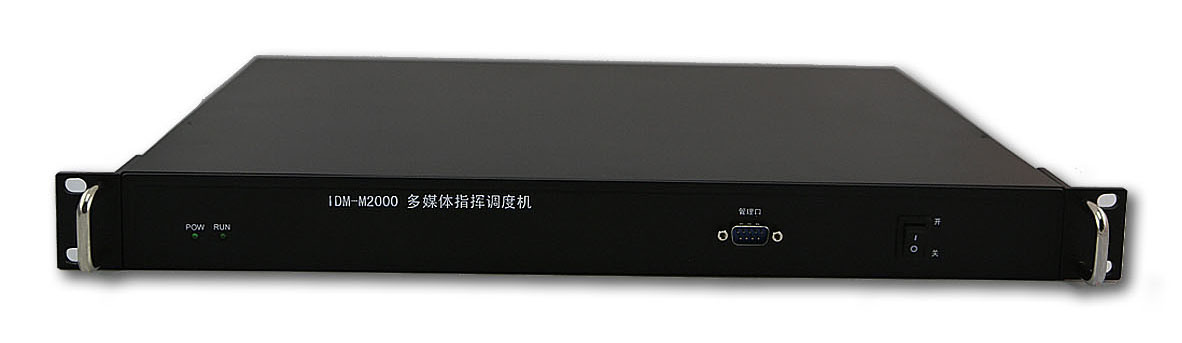
The IDM-M2000 adopts all-digital information processing technology, with performance superior to relevant national standards. It supports both traditional PSTN telephone interfaces and IP phones with SIP standard protocol and H.323 protocol. It offers strong flexible configuration capability and is applicable to a wide range of environments. It adopts a 19-inch 1U desktop structure design.
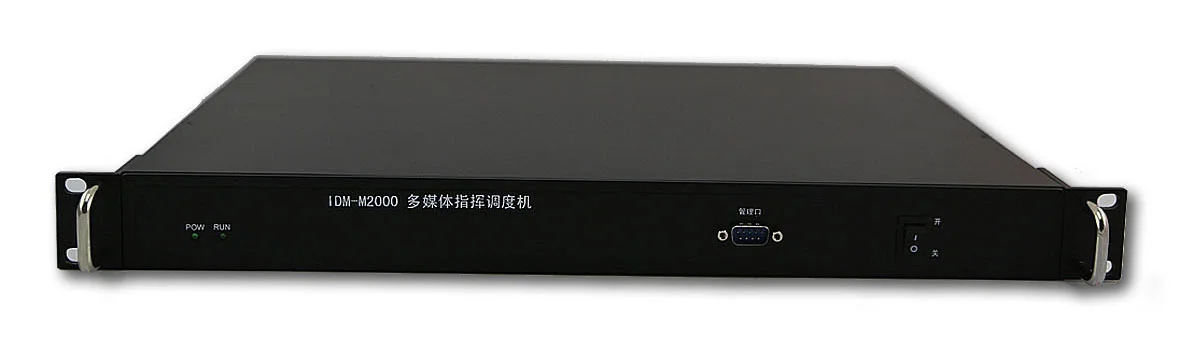
Device Front Panel Diagram
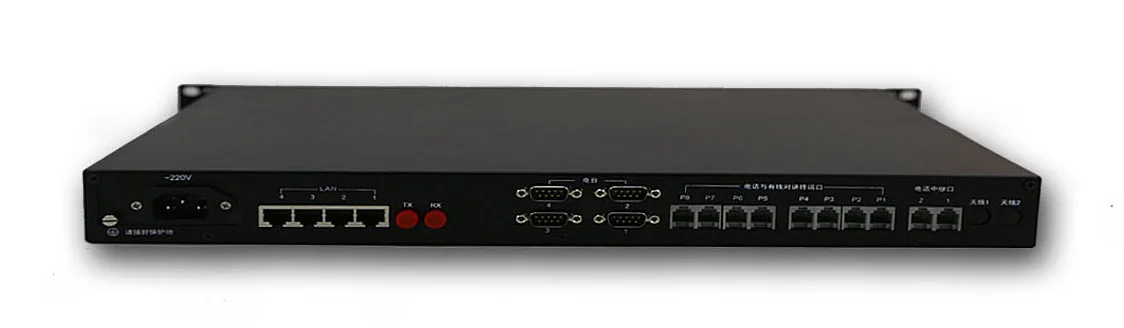
Device Rear Panel Diagram
II. Device Configuration:
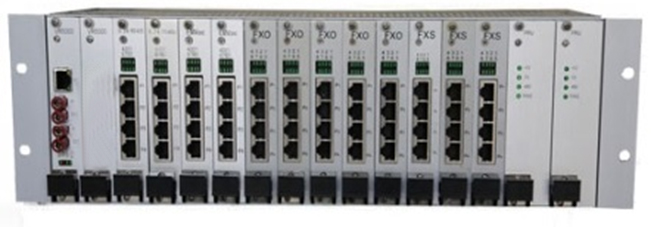
The IDM-M2000 can connect up to 4 radio transceiver units, including HF (shortwave), VHF (ultra-shortwave) single-sideband radios, 350M and 800M trunking two-way radios, etc.
The trunk interfaces of the device can be:
GSM/CDMA interfaces (up to 2 channels);WAN port supports electrical interface (RJ45) or optical interface (FC) (as the access channel for IP phones, up to 2 IP phones can be connected);Ordinary telephone trunk interfaces (minimum 2 channels);
The number of interfaces for connecting ordinary telephones or wired intercom terminals is 4 or 8 channels (4 channels per module).
III. Function Description:
Intercom can be achieved between all wired intercom terminals;All wired intercom terminals and telephones can select any one or more wireless trunking groups for monitoring and speaking;Extensions can make external calls through ordinary telephone interfaces, GSM/CDMA, IP trunk, etc.;Any two or more radio transceivers or trunking groups can be bridged.
Supports group call function. When an external line dials in, all telephone extensions in the same group call group ring simultaneously, and when any extension goes off-hook, the others stop ringing. If more than 2 external lines call in simultaneously, when any telephone goes off-hook, the external line with higher priority is connected first, while other extensions continue ringing;
For simultaneously incoming external calls, they are always answered according to priority, and calls with the same priority are answered in order of ringing sequence.
Typically, wired intercom terminals have higher priority than internal telephones, and users with higher priority can interrupt the trunking transmission rights of lower-priority users.
Supports [recording-to-text transcription](http://www.newrocktech.com/solutionss/1136.html)Provides traversal services for applications such as external network extension registration, branch networking, and mobile officeIP phones are plug-and-playCan directly interface with operator IMS networksProvides open API interfaces for integration with third-party application systemsSupports multi-level voice navigation, intelligent duty, and mobile extensionsSupports IDM network management system and third-party network management systems (TR-069, SNMP)
Feature List
Call Control | SIP/UDP and SIP/TCP (RFC3261), IMS platform, (3GPP), MGCP (RFC3435) |
Network | Telnet, SSH, HTTP, HTTPS, DHCP client, PPPoE client, DNS (NSRV record), STUN, 802.1X |
Caller ID | Multiple caller ID standards: Bellcore Type 1&2, ETSI, BT, NTT, DTMF |
Encoding | G.711 (a/µ), G.729a, G.722.2, G.722 |
DTMF Transmission | In-band voice transparent transmission, RFC2833, IP-INFO |
Fax | G.711 transparent fax, T.38 fax, compatible with G3 fax machines, max rate 33.6kbps (transparent/T.38 V3) |
Disconnection Method | Busy tone detection, reverse polarity detection, power-off disconnection |
Audio Enhancement Technology | Echo cancellation (G.168-2004, tail length 64ms), automatic jitter buffer adjustment |
Call Features | Call hold, call park, call waiting, three-way calling, simultaneous ring, distinctive ring, do not disturb, barge-in / barge-in prevention, monitor / monitor prevention, secretary, hotline (immediate / delayed), call pickup / pickup prevention, call forwarding, call transfer, one-number dual terminal, call restriction, extension lock, extension group, caller ID, external-to-external transfer, etc. |
SIP Trunk | IMS, multi-platform registration / calling, Skype Connect |
Analog Trunk | Caller ID, busy tone detection, reverse polarity detection |
IV. Application Examples:
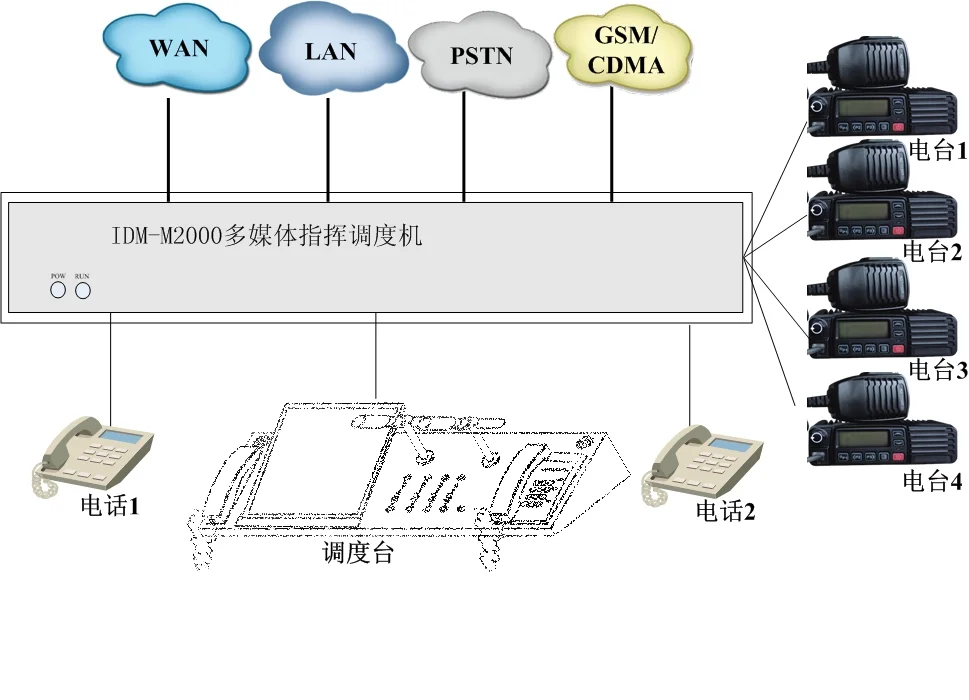
Figure 1 Mobile Portable Dispatch Console Application
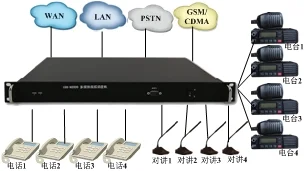
A single unit can form a small-scale dispatching system for temporary emergency dispatch, playing a significant role in military emergency training, vehicle-mounted command systems, border sentry posts, and temporary field applications. Meanwhile, this dispatching system can be connected to a higher-level dispatching system.
Figure 2 Mobile Vehicle-Mounted Dispatching System Application
This dispatching system can be deployed on a mobile emergency communication vehicle, used in conjunction with our portable dispatch console to form a mobile command center, capable of interfacing with mobile phones, radio stations, shortwave radios, and various other terminals, greatly improving on-site command efficiency.
Figure 3 Remote Trunking Gateway for Large Dispatching Systems
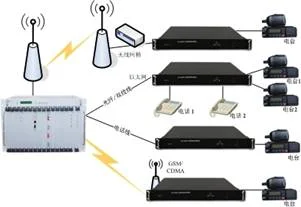
In large-scale dispatching systems, this device can be used in conjunction with the central dispatch switch (PBX/IPPBX) as a remote trunking gateway, enabling dispatching functions for various media terminals such as remote trunking radios, shortwave radios, WIFI terminals, and mobile phones.
FAQs
What Are the Functions and Advantages of Video Optical Terminals?
The function of a video optical terminal is to convert one or multiple channels of analog video signals into optical…
View answerWhat is the difference between a Video Optical Terminal and a Network Video Server?
Composition and Function of Video Optical Terminal and Network Video Server An optical terminal is a device used to…
View answerWhat are common issues when using optical terminals in security surveillance?
Fiber optic technology is increasingly used in security surveillance projects to transmit images, audio, data…
View answerWhat is IPTV and Its Key Technologies
IPTV, or Interactive Network Television, is an innovative technology that utilizes broadband cable TV networks…
View answer