IDM M9000B
IDM M9000B
The IDM M9000B Communication Command & Dispatch System is a voice dispatch system suitable for group command. It supports the digital signaling standards of multiple telephone exchanges and provides a variety of narrowband and broadband voice and data interface capabilities. The IDM M9000B Communication Command & Dispatch System can be used for air defense artillery position command operations, training exercises, counter-terrorism and stability maintenance, as well as emergency rescue and disaster relief. It provides an emergency interoperability platform for vehicle-mounted, fixed, portable, and mobile communication methods during natural disasters or emergencies. It also rapidly provides a collaborative voice platform for emergency interoperability communication systems covering public and private, wired and wireless, cross-regional, and cross-departmental networks.
I. IDM Communication Command & Dispatch System
The IDM M9000B Communication Command & Dispatch System employs advanced digital signal processing technology and large-scale integrated circuit technology. It can connect wireless communication terminals of different frequencies, standards, and types onto a single voice platform, achieving interoperability among disparate wireless communication systems. It can also connect to the fixed telephone network, cellular mobile communication network, Internet (IP) network, wireless LAN, as well as trunked mobile communication systems and satellite communication systems. The IDM M9000B Communication Command & Dispatch System is a voice dispatch system suitable for group command. It supports the digital signaling standards of multiple telephone exchanges and provides a variety of narrowband and broadband voice and data interface capabilities.
The IDM M9000B Communication Command & Dispatch System can be used for air defense artillery position command operations, training exercises, counter-terrorism and stability maintenance, as well as emergency rescue and disaster relief. It provides an emergency interoperability platform for vehicle-mounted, fixed, portable, and mobile communication methods during natural disasters or emergencies. It also rapidly provides a collaborative voice platform for emergency interoperability communication systems covering public and private, wired and wireless, cross-regional, and cross-departmental networks.
II. IDM M9000B Communication Command & Dispatch System - Development Background
Currently, **dispatch switches** are essentially wireless trunked dispatch systems that operate as independent systems, sometimes with a separate telephone conversion interface. Wired dispatch systems, on the other hand, are only responsible for dispatching fixed telephones. The original postal and telecommunications standards or power industry dispatch switch standards only define the wired telephone portion. In recent years, with the proliferation of IP telephony, IP-based dispatch switches have also achieved integrated dispatch of wireless trunking and wired telephones. IP technology has also solved many interface gateway issues for various communication methods, such as GSM/CDMA (GOIP) gateways and wireless trunking gateways (ROIP). However, the variety of gateways is limited, and they are typically cascaded from multiple devices rather than being integrated into a single unit.
The command dispatch switches currently available on the market stack various technologies together, resulting in bulky equipment, complex management, limited capacity, long software startup times, and few interface types. This makes them inconvenient for portable emergency applications. In particular, when connected to field-grade military telephones, full signaling access cannot be achieved (e.g., 2100Hz in-band signaling, DCP signaling, etc.).
Emergency communication command terminals require extensive group conference operations. Existing IP-based dispatch switches require significant computational resources to implement more conference room features, placing high demands on the processor. The more conference room members, the worse the voice quality.
III. IDM M9000B Communication Command & Dispatch System - System Performance Advantages
The current development trend of dispatch switches is toward IP-based solutions. The International Civil Aviation Organization (ICAO) has also introduced specifications for IP dispatch in air traffic control. However, IP dispatch in critical domains imposes specific requirements on the IP transport network's performance, such as port traffic limiting and VLAN partitioning, which are fundamental guarantees for reliable IP dispatch applications. These are essentially IP private networks. Transmitting IP voice over office networks without IP transport planning still presents many security risks.
The M9000B is a voice dispatch system based on traditional TDM timeslot switching. It offers a wide variety of traditional voice interface cards and features fast switching response, large hardware-based voice conference capacity, and rapid module startup. It remains the preferred choice in applications requiring high security levels.
Its dispatch control is TDM-based, but it provides VoIP channels for voice transmission and access. It can utilize wireless IP networks for flexibility and convenience.
IV. IDM M9000B Communication Command & Dispatch System - Product Series

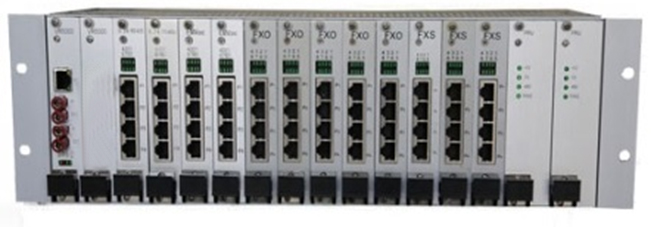
The IDM M9000B can accommodate a WG300 card, providing 120 channels of 64K PCM voice (FXO, FXS, E&M voice, Mag, etc.). It also provides radio interfaces and VHF radio interfaces that support multiple control standards, and offers an Ethernet interface for the dispatch console. It provides 2 E1 interfaces for No.1, No.7, and PRI signaling access, which can also be used to connect PCM for expanding user interface channels.
1. IDM M9000B Communication Command & Dispatch System - Maximum Host Configuration
The IDM-M9000B can connect up to 48 radio devices, including HF (shortwave), VHF (ultra-shortwave) single-sideband radios, and 350M and 800M trunked two-way radios.
The trunk and user interfaces of the equipment can be:
ØGSM/CDMA interfaces;
ØWAN ports supporting electrical (RJ45) or optical (FC) interfaces for IP telephone access channels;
ØOrdinary telephone trunk interfaces;
ØOrdinary magneto interfaces or 2100Hz magneto interfaces;
ØSatellite telephone interfaces;
ØChina No.1 signaling, China No.7 signaling, PRI signaling, etc.
ØThe equipment supports up to 120 ordinary telephone or wired intercom terminal interfaces, expandable by 60 channels via 2 E1 interfaces.
2. IDM M9000B Communication Command & Dispatch System - Host User Card Introduction
The main control switching card supports conference calls, with the ability to host up to 32 simultaneous conferences and perform 64 channels of DTMF detection simultaneously. The main control card provides 2 E1 interface groups, which can be configured for China No.7 signaling or PRI signaling, or configured as 60 user interfaces.
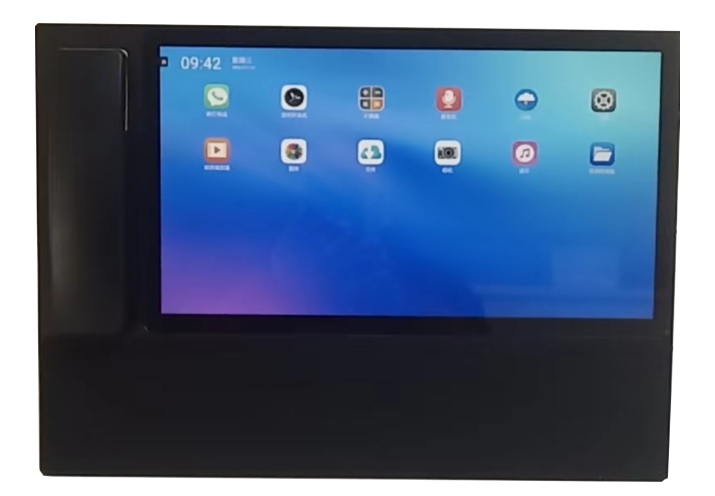
The M9000B can be directly connected to dispatch telephones and other terminals, or used in conjunction with a dispatch console to achieve flexible dispatch functions.
The equipment provides real-time recording of up to 30 voice channels simultaneously. E1 voice to be recorded can also be sent to a computer for recording via Ethernet.
The entire unit provides 12 user card slots, each of which can accommodate a VHF interface card, FXS subscriber telephone card, FXO central office telephone card, Hotline telephone card, MAG magneto telephone card, etc.
When a VHF radio interface card is inserted into a user slot, each card provides 4 channels and can connect to radio transmitters, receivers, and remote control consoles.
When FXS, FXO, or MAG cards are inserted, each card provides 10 channels.
The FXO interface allows external lines to access dispatch resources on the M9000B through the exchange subscriber line. That is, external lines can also monitor VHF radio interfaces via FXO.
The FXS user interface can connect ordinary telephones, PTT intercom terminals, etc. It can also be extended to more remote operating sites via PCM transmission.
3. IDM M9000B Communication Command & Dispatch System - Host Operating Modes
1) Multi-party conference mode: Intercom with ordinary telephones uses a multi-party conference mode. Each VHF radio is assigned a conference number, and all telephones monitoring that radio can dial into the conference room. Within the conference room, voice from any party (including both radio and telephone) is sent to all other telephones and also to the VHF radio. The VHF continuous transmission time is limited to 2 minutes. Due to limited conference room capacity, the number of telephone terminals that can freely converse is limited. However, additional receive-only terminals can be added.
2) Ordinary telephone intercom mode: In this mode, the number of telephones joining a VHF intercom session is unlimited. After dialing the VHF access number, a telephone can monitor the radio's voice. To speak to the radio, the user must press the flash key on the telephone or tap the hook switch to obtain 20 seconds of talk time (20 seconds is the system default and can be configured). To prevent contention, the telephone that obtains talk rights receives an audible talk indication tone.
3) PTT terminal intercom mode: In this mode, terminals are normally in a radio monitoring state. When a user wishes to speak, they press the PTT key (ordinary telephones require a PTT adapter; our company provides telephones with PTT switching functionality). Talk time is determined by the terminal user!
4) Broadcast mode: VHF radio audio is broadcast one-way to all telephones monitoring the channel. Terminals only receive VHF audio. This mode imposes no limit on the number of telephones monitoring each VHF voice channel.
4. IDM M9000B Communication Command & Dispatch Operating Modes
--- Wireless Channel Access Control Modes
1) PTT control mode: Audio interfaces with PTT functionality should prioritize PTT control mode when interfacing with radios and trunked systems.
2) DSP volume control mode: Some audio terminals lack PTT functionality (e.g., conference microphones). In such cases, dynamic voice level monitoring is required, using audio level to control the receive and transmit states of the wireless interface.
3) Dual-tone telephone keypad control mode: Telephones and mobile phones can send commands via DTMF (Dual-Tone Multi-Frequency) keypads to the dispatch console to control the receive and transmit functions of the wireless interface.
5. IDM M9000B Communication Command and Dispatch System — Typical Terminal Classification

IDM M9000B Communication Command and Dispatch System — Directly Connected Terminal Diagram

IDM M9000B Communication Command and Dispatch System — Communication Medium Diagram
6. IDM M9000B Communication Command and Dispatch System — Connection to IP Network Access Terminals

7. IDM M9000B Communication Command and Dispatch System — Connection to Raytrans Transmission and Access Equipment

8. IDM M9000B Communication Command and Dispatch System — Fiber-Optic Networking with Various Raytrans TDM Dispatch Consoles

9. IDM M9000B Communication Command and Dispatch System — Intercom Process with IDM MCC IP Keypad Dispatch Console


10. IDM M9000B Communication Command and Dispatch System — Networking with Various Raytrans IP Dispatch Consoles

V. IDM M9000 Series Communication Command and Dispatch System Application 1 — Multi-Node Networking Application

Each IDM M9000C can be connected to other IDM 9000C devices via twisted pair, E1, or IP routing. Each IDM M9000C can connect up to 48 radio transceivers, or up to 120 telephone terminals.
Each IDM M9000C can connect up to 60 intercom terminals (including local and remote audio terminals). The number of similar devices that can be connected to the remote end of the IDM 9000C depends on the number of trunk ports provided. With two E1 ports, it supports up to 110 loop trunk FXO ports.
VI. IDM M9000 Communication Command and Dispatch System — Multi-Unit Cascade Expansion

Each IDM M9000C can be expanded via E1. Since the radio interface card provides 4 channels per card, each E1 interface can expand the system by 30 radio channels.
The M9000C used as an expansion cascade unit serves only as a PCM expansion interface, without dispatch switching functionality or an operator panel.
VII. IDM M9000 Communication Command and Dispatch System — Fiber-Optic Ring Network Audio/Video Surveillance System

The IDM M9000C can accommodate 120 wired and wireless channels. It can also implement audio/video surveillance and command via a fiber-optic ring network.
The advantage of the ring network is that if the fiber is broken at any intermediate point, normal communication is not affected.
Remote stations can achieve instant communication upon off-hook, with synchronized image display. Broadcasting and transfer can also be performed to various positions, while telephones and trunking radios can monitor simultaneously. This enables the combination of mobile and fixed posts.
The system can support up to 8 fiber-optic rings, with every two rings sharing 30 telephone channels.
The ring network interface card is the IDM MPconv card, with remote ends connected to IDM NTD421.
IDM M9000B Communication Command and Dispatch System Functions
1) Provides multiple standard communication interfaces
2) Provides automatic and manual connection modes
3) Provides one-key direct-connect dispatch functionality
4) Provides tablet remote-control synchronized operation
5) Provides command recording and playback functionality
VIII. IDM M9000B Communication Command and Dispatch System — System Advantages
1. The TDM-based dispatch system features reserved bandwidth, never busy, strong anti-interference capability, and low voice latency, whereas IP soft-switching is susceptible to IP broadcast storms or other burst IP traffic.
2. Supports a wide variety of terminal types; user terminal communication methods are diverse, meeting various emergency requirements.
3. The command console provides multiple means of accessing external communication resources, directly offering various communication methods.
4. The most frequently used command operations are completed with a single key press.
5. Group command (conference command) is flexible with multiple functions, operated with a single key press.
6. Compact size, portable, with built-in battery, suitable for field operations and rapid field deployment.
7. System status and user status are indicated by multi-color LED indicators, while system settings and functional operations are assisted by an LCD display.
IDM M9000B CommunicationCommand and Dispatch System — System Advantages (Continued)
• Baseband audio cross-connection provides reliable confidentiality. (No receive/transmit function)
• Unified dispatch functionality is operated from authorized consoles, ensuring safety and reliability.
• Modular structure supports hot-swapping for real-time replacement of other universal modules.
• Module configuration parameters can be saved, eliminating the need to change operating frequency ranges when replacing similar modules.
• Quickly and flexibly forms temporary communication networks and priority communication networks. Has cross-connect and interworking capabilities, supporting multi-network switching and intercommunication.
• Rapid establishment/teardown of temporary unattended monitoring functions.
• The equipment is powered by 11V15V DC, and can be powered by lightweight rechargeable batteries, vehicle power, or 110V220V AC power.
• The equipment features time-domain noise reduction and transmit/receive audio delay.
• Voice-operated transmit detection. (VOX)
• Voice modulation recognition. (VMR)
• Dual-tone multi-frequency detection and generation. (DTMF)
• Adaptive hybrid for the public switched telephone network. (PSTN)
• Transmitter monitoring tone.
• Radio signal transmission over IP networks (RoIP).
• Voice signal transmission over IP networks (VoIP).
IX. IDM M9000B Communication Command and Dispatch System — Dispatch Console Introduction 1
Basic functions: click-to-call, call transfer, call forwarding, parking, call answering, barge-in, hold/resume, do-not-disturb, blocking, night and holiday service strategy settings, etc.
Dispatch functions: single-click calling, forced insertion, forced disconnection, call answering, monitoring, call barring, manual/automatic transfer, group paging, group calling, conferencing, dynamic grouping, hierarchical collaborative dispatch, etc.
Broadcast function: Includes broadcasting, public address, and environmental monitoring. Broadcasting comprises instant broadcast and scheduled broadcast, with broadcast audio sources selectable from internal audio files, external audio sources, or TTS files for playback.
Trunked intercom: Capable of dispatching intercom radios of different frequency bands, models, and standards (digital/analog); talk rights can be controlled via the dispatch software interface.
Conference function: Conference initiation, conference scheduling, conference member identity authentication, multiple simultaneous conference groups, conference process monitoring, and other operations.
SMS function: Messages can be sent to internal IP phones, WIFI phones, multimedia terminals, and GPS terminals by click, and can also be sent to external mobile network cell phones.
Electronic fax: Import fax files, batch send, and upon receiving faxes, save the images and automatically send them to a designated email address.
Emergency response plan: Supports communication emergency response plan management, with pre-edited communication emergency plans based on the usage environment (e.g., flood control, drought relief, explosion, fire, etc.); when an event occurs, clicking the corresponding emergency plan button on the dispatch console can quickly initiate the pre-configured communication dispatch operations (e.g., automatic public address broadcast alarm, automatic initiation of a conference with the responsible personnel, and automatic sending of event notification SMS).
Monitoring function: Missed calls, unregistered devices, and call queue status are all displayed, along with communication fault alarms and fault log management.
System management: Group management, account management, multi-level permission management, and hotline management.
IDM M9000B Communication Command and Dispatch System --- Dispatch Console Introduction 2

IDM M9000B Communication Command and Dispatch System --- Dispatch Console Introduction 3

IDM M9000B Communication Command and Dispatch System --- Dispatch Console Introduction 4

IDM M9000B Communication Command and Dispatch System --- Dispatch Console Introduction 5

IDM M9000B Communication Command and Dispatch System --- Dispatch Console Introduction 6

IDM M9000B Communication Command and Dispatch System --- Dispatch Console Introduction 7,

IDM-MCC21 Multimedia Dispatch Console

IDM-MCC12 Multimedia Dispatch Console

IDM-MCC10 Portable Dispatch Console

IDM-MCC Telephone LineDispatch Console

IDM-MCC Danish Key IP AudioDispatch Console

IDM-MCC7 Multi-functionDispatch Console X. IDM M9000B CommunicationCommand and DispatchSystem --- 3. SIP Magneto Telephone Access Gateway
Provides the interface between M9000B and magneto telephones over the IP network, compliant with SIP protocol standards
The service interfaces provided by the IDM-MAGgate telephone gateway have the following interface characteristics:
1) Magneto telephone interface characteristics:
Equipment provides: 2 magneto telephone interfaces;
Supports line fault detection function.
2) Ethernet electrical interface:
10/100BASE-T, full duplex, half duplex, auto-negotiation;
Standards compliance: IEEE 802.3, 802.1P, 802.1Q;
Connector: RJ45 (100M Cat5 twisted pair cable);
3) Ethernet optical interface:
10/100BASE-FX;
Standards compliance: IEEE 802.3, 802.1P, 802.1Q;
Connector: FC

IDM-MAGgate Single-Channel IP Magneto Gateway

IDM-MAGgate Dual-Channel IP Magneto Gateway Front Panel

IDM-MAGgate Dual-Channel IP Magneto Gateway Rear Panel
IDM M9000B CommunicationCommand and DispatchSystem --- 4. SIP Telephone Access Gateway
Provides the interface between M9000B and analog telephones over IP networks, compliant with SIP protocol standards
The IDM IAD02 is an integrated access gateway providing transmission of two analog telephone lines to IP networks. It uses standard SIP protocol and can interconnect with standard SIP softswitch systems, delivering VoIP/FoIP solutions for carriers, enterprises, and residential community users.


System Features
Provides 1 WAN port and 4 LAN ports; the WAN port supports both electrical (RJ45) and optical (FC) interfaces. In optical interface mode, it can interoperate with 100M fiber optic transceivers;
Provides 2 analog telephone interfaces (FXS) and 1 lifeline interface (FXO). The first telephone can dial "0" to connect to the PSTN (or connect to PSTN via the configured method in network management). In the event of power failure, the first telephone automatically connects to the PSTN network.
XI. IDM M9000B CommunicationCommand and DispatchSystem --- Video Transmission Terminal

The IDM-MCCCommand and Dispatchsystem enables coordinated audio and video dispatching. Telephone numbers or wireless walkie-talkie ID numbers can be bound to corresponding video feeds, enabling rapid acquisition of audio and video information from target areas. That is, the target customer's voice and image are displayed synchronously. Video transmission is available in two modes: IP private network video transmission and IP public network video transmission. The IP private network has sufficient bandwidth to transmit high-definition images. Audio and video dispatch information can be displayed synchronously on the IDM MCCdispatch console.

XII. IDM M9000C - Deployment of Wireless IP Private Network and IP Public Network
VHF Panel
The IP public network uses WiFi access. The portable video terminal can be configured with a wireless router that supports direct SIM card insertion and provides wired-to-WiFi conversion. This wireless router supports 3G/4G access for all three major carriers. Current urban 3G/4G networks can easily achieve rates of several hundred Kbps.
The IP private network can be covered using wireless bridges operating in the 450M, 900M, 2.4G, and 5.8G bands. The 450M COFDM wireless bridge offers non-line-of-sight long-distance transmission (1080KM) and strong penetration capability; the 900M wireless bridge provides non-line-of-sight transmission capability with line-of-sight transmission up to 35Km
The 2.4G band has many users, resulting in severe bandwidth interference, with line-of-sight range of 3~5KM; the 5.8G band has fewer users and greater bandwidth, but long-distance transmission is susceptible to interference from rain and snow.
When using wireless bridges, the equipment selection should generally be based on an analysis of the application environment, as airport and firefighting applications, for example, represent two entirely different categories of use.
XIV. IDM M9000B CommunicationCommand and DispatchSystem --- Board Description
The VHF radio audio signal is a 600Ω balanced output or input, adjustable from -30dBm to +10dBm.
The VHF radio control signal PTT (PUSH TO TALK) is normally a DC positive voltage to ground when idle. When activated, the positive voltage is grounded, and the line current is negligible.
Interface connection between VHF equipment and access equipment
Interface standard: Requirements for E&M signaling
Based on actual VHF usage, the E&M signaling must be Type II or Type V, and must comply with China's telecommunications industry standard D610-93.
As an air traffic control VHF interface, there are additional special requirements, such as: line transmission bit errors must not affect radio operation, E1 line loopback alarm and release, multiple E&M interfaces controlling the same radio without mutual interference, and VHF radio continuous transmission time must not exceed 2 minutes!
The M9000C employs special algorithms including line signaling filtering and port voltage difference elimination modules!
When multiplePCM devicescontrol the same VHF interface, the supply voltages of different devices may vary, and the E&M control circuits may also differ. To prevent false activation of control lines, the M9000B's E&M interface adopts voltage difference threshold redundancy technology or anti-backfeed components.

Trunking Control Panel
The trunking control panel is similar to the VHF interface panel, both being E&M type interfaces. However, trunking radios come in many varieties with diverse interface voltages. Therefore, an interface voltage module that is polarity-insensitive and voltage-level-independent was developed.


FAQs
What Are the Functions and Advantages of Video Optical Terminals?
The function of a video optical terminal is to convert one or multiple channels of analog video signals into optical…
View answerWhat is the difference between a Video Optical Terminal and a Network Video Server?
Composition and Function of Video Optical Terminal and Network Video Server An optical terminal is a device used to…
View answerWhat are common issues when using optical terminals in security surveillance?
Fiber optic technology is increasingly used in security surveillance projects to transmit images, audio, data…
View answerWhat is IPTV and Its Key Technologies
IPTV, or Interactive Network Television, is an innovative technology that utilizes broadband cable TV networks…
View answer