IDM MCC600
IDM MCC600
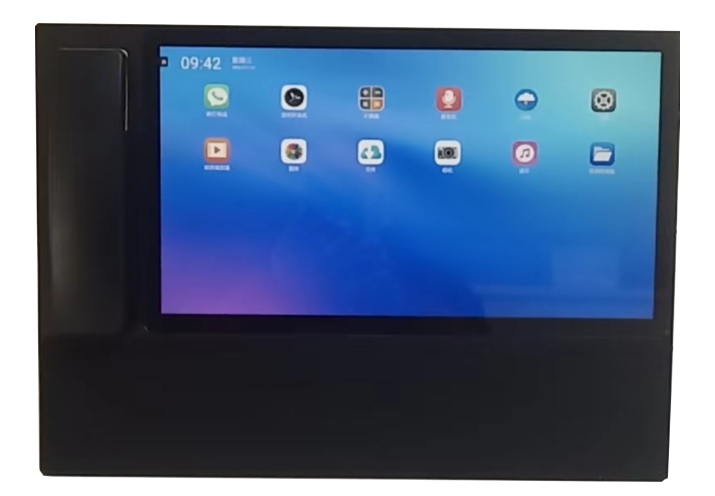
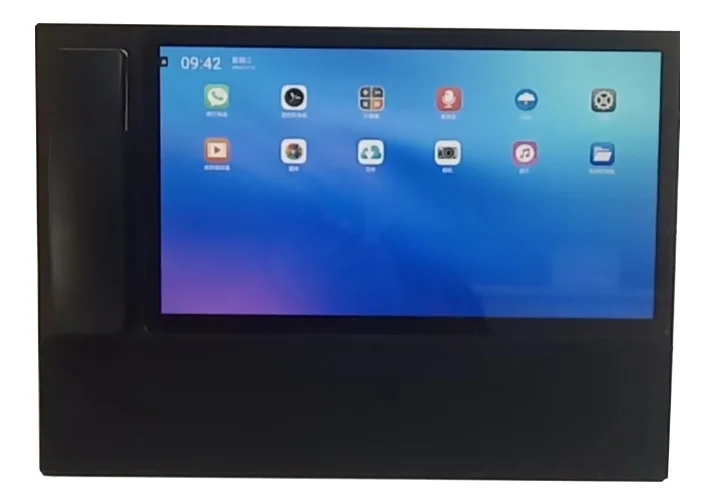
The IDM MCC600 smart phone terminal is an intelligent touchscreen communication terminal that combines a large touchscreen with a traditional telephone handset, integrating the calling functions of a traditional phone with multiple features of modern smart devices. It features a 15.6-inch large touchscreen, allowing users to perform various operations via touch. Equipped with a traditional telephone handset, it enables comfortable phone conversations.
1. Overview
The IDM MCC600 smart phone terminal is an intelligent touchscreen communication terminal that combines a large touchscreen with a traditional telephone handset, integrating the calling functions of a traditional phone with multiple features of modern smart devices. It features a 15.6-inch large touchscreen, allowing users to perform various operations via touch. Equipped with a traditional telephone handset, it enables comfortable phone conversations.
2. Product Specifications
• 2.0 GHz quad-core CPU, 2 GB RAM + 16 GB storage;
• 15.6-inch 1920×1080P high-resolution display;
• Ten-point capacitive touchscreen input, plus computer keyboard and mouse input;
• Audio output: dual 10 W full-range speakers, telephone handset output, 3.5 mm jack output;
• Audio input: 3.5 mm headset interface, telephone handset input, condenser microphone interface, camera digital microphone input;
• HDMI output for 4K high-definition video;
• Two switch signal interfaces;
• Gigabit Ethernet interface;
• PSTN telephone interface and SIP telephone interface;
• Supports point-to-point voice calls; supports voice conference with ≥20 parties;
• Large-capacity contact management, storing no less than 200 contacts;
• Supports external keyboard and mouse.
3. Functional Features
• Voice calls: Supports PSTN and IP telephony, ensuring calls can still be made via traditional telephone lines during power outages, guaranteeing uninterrupted communication at critical moments.
• HD video calls: Built-in HD camera paired with high-resolution display supports clear and smooth video calls, suitable for personal or business communication.
• Video conferencing: Supports 4-party video conference on a single unit; with an MCU device, more parties can be supported for a better conference experience; supports one-click conference setup in simple mode, ready to use immediately; participants can join via terminal phone, voice intercom module, and corresponding surveillance in a mixed conference mode.
• Video intercom: Combined with IoT control, supports video intercom function, suitable for access control, visitor reception, and other scenarios. Supports two-way visual full-duplex intercom, with handset, hands-free, and external intercom modes.
• Recording and video recording: Supports audio and video recording during video or voice calls, suitable for meeting minutes, visitor management, and other applications. Supports pre-recording and file broadcasting, allowing local audio files or recordings to be broadcast to designated terminals.
• Supports video linkage, displaying multiple surveillance camera video feeds on the same screen.
• Supports intercom with designated target terminals in the system via dialing, numeric keypad, touch selection, etc.; supports broadcast paging and monitoring to individual terminals, zones, or the entire area.
• Supports custom physical emergency buttons for one-touch broadcast to the entire area, enabling one-touch emergency broadcast.
• Supports intercom record caller ID display, allowing viewing of all intercom records.
4. Applications
• Office smart phone
• Command center smart phone terminal
• Call center smart phone terminal
FAQs
What Are the Functions and Advantages of Video Optical Terminals?
The function of a video optical terminal is to convert one or multiple channels of analog video signals into optical…
View answerWhat is the difference between a Video Optical Terminal and a Network Video Server?
Composition and Function of Video Optical Terminal and Network Video Server An optical terminal is a device used to…
View answerWhat are common issues when using optical terminals in security surveillance?
Fiber optic technology is increasingly used in security surveillance projects to transmit images, audio, data…
View answerWhat is IPTV and Its Key Technologies
IPTV, or Interactive Network Television, is an innovative technology that utilizes broadband cable TV networks…
View answer