IDM IAD04
IDM IAD04
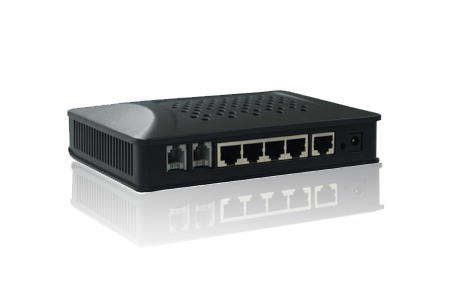
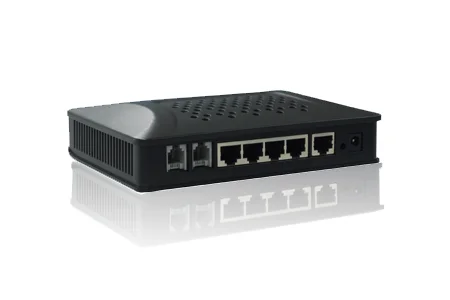
The IDM IAD04 is developed based on the latest IP telephony technology and Layer 2 Ethernet switching technology, adopting the MIPS 4KEC microprocessor and an SoC integrating DSP, CODEC, and SLIC. It supports the SIP (IMS-compatible) protocol and provides 4*10/100Mbps and 2*POTS interfaces. The product features high integration, flexible networking, good interoperability, rich interfaces, strong protocol scalability, and high cost-effectiveness.
The IDM IAD04 is developed based on the latest IP telephony technology and Layer 2 Ethernet switching technology, adopting the MIPS 4KEC microprocessor and an SoC integrating DSP, CODEC, and SLIC. It supports the SIP (IMS-compatible) protocol and provides 4*10/100Mbps and 2*POTS interfaces. The product features high integration, flexible networking, good interoperability, rich interfaces, strong protocol scalability, and high cost-effectiveness. It can be widely applied in telecom operators, SOHO, home, and other scenarios.
Product Parameters
► Microprocessor: MIPS SoC GC3210R, maximum clock frequency 266MHz
► Memory: 4MBytes NOR Flash, 32MBytes SDRAM
► Embedded Operating System: Linux 2.6.1.2 or above
► Telephone Interface: 2 FXS, RJ11 interface, for connecting telephones, fax machines, or modems
► Network Interface: 5 RJ45, including 1 WAN port and 4 LAN ports
► Indicators: 8, 1 for power status, 2 for telephone status, 5 for network port status
► Button: 1, for reset and restoring default configuration
► Power Supply: DC +12V, from AC-DC power adapter
► Power Consumption: Maximum operating power consumption 6W at full configuration
► Operating Temperature: -5°C to +55°C
► Operating Humidity: 10% to 90%, non-condensing
► Device Dimensions: 160mm*32mm*115mm (W*H*D)
► Weight: 0.5kg
Product Features
► IP telephony call control protocol: SIP, with good interoperability with mainstream softswitch platforms from Huawei, ZTE, Alcatel-Lucent Shanghai Bell, etc., and compatible with IMS platforms;
► Network protocols: TCP/IP, UDP, RTP/RTCP, ARP, FTP/TFTP, HTTP, Telnet, ICMP, IGMP, NTP/SNTP, etc.;
► Powerful Layer 2 data switching functions: including VLAN, port rate control, 4-level QoS;
► Voice codecs: ITU-T G.711 (A/m-law), G.723 (5.3K/6.3K), G.729A/B, automatically negotiated with the SIP Server;
► Echo canceller: compliant with ITU-T G.168-2002, 128ms (Max);
► IP address assignment: static or dynamic (PPPoE and DHCP);
► Network management: supports English CLI and multilingual Web management, built-in IVR, supports configuration of device parameters via telephone keypad;
► Software can be remotely upgraded via the Ethernet interface (WAN);
► Supports voice gain adjustment, -31dB to +31dB;
► Supports silence compression, Voice Activity Detection (VAD), and Comfort Noise Generation (CNG);
► Supports T.30 and T.38 fax, and fax pass-through;
► Supports modem dial-up and large file transfer;
► Supported POTS services include: reverse polarity, caller ID, caller ID restriction, distinctive ringing, abbreviated dialing, hotline service, do-not-disturb, call forwarding on no answer, unconditional call forwarding, call forwarding on busy, call return on busy, call waiting, three-way calling, etc.
► Supports adaptive jitter buffer;
► Supports ToS (Type of Service) and QoS (Quality of Service);
► Supports RFC2833 and redundant RFC2833;
► Supports packet loss concealment (PLC).
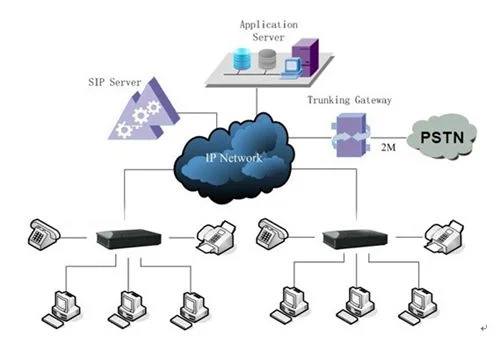
Application Example
FAQs
What Are the Functions and Advantages of Video Optical Terminals?
The function of a video optical terminal is to convert one or multiple channels of analog video signals into optical…
View answerWhat is the difference between a Video Optical Terminal and a Network Video Server?
Composition and Function of Video Optical Terminal and Network Video Server An optical terminal is a device used to…
View answerWhat are common issues when using optical terminals in security surveillance?
Fiber optic technology is increasingly used in security surveillance projects to transmit images, audio, data…
View answerWhat is IPTV and Its Key Technologies
IPTV, or Interactive Network Television, is an innovative technology that utilizes broadband cable TV networks…
View answer