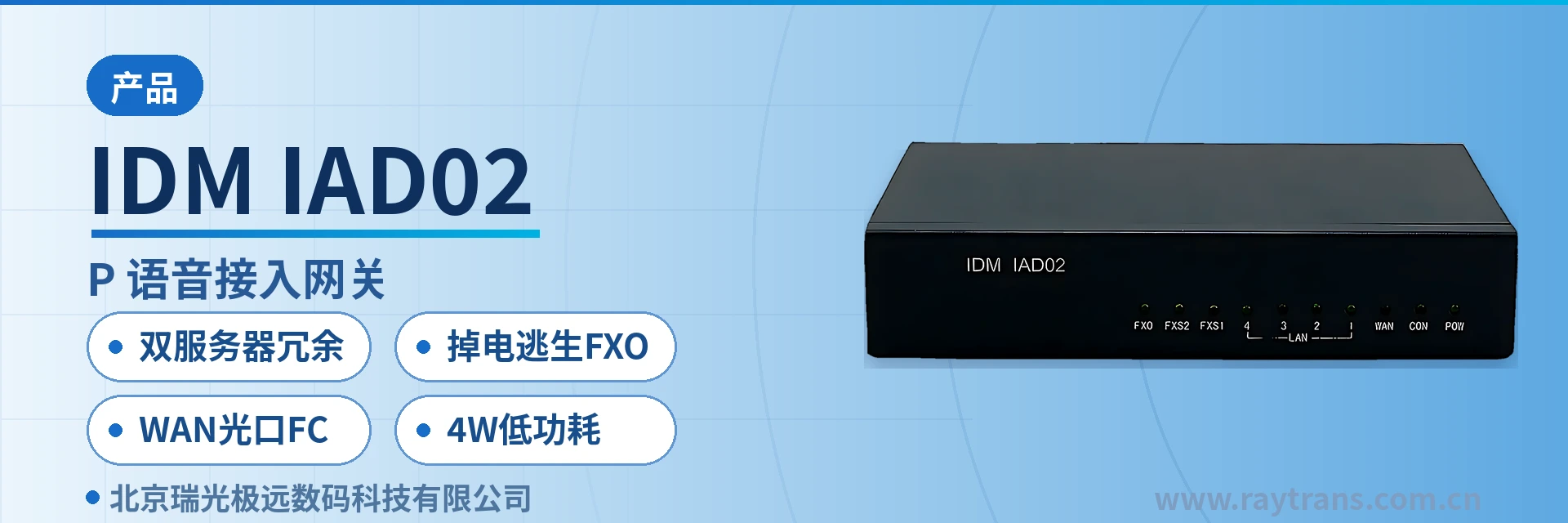
IDM IAD02 IP Voice Access Gateway
Dual-server registration redundancy, power failure FXO escape, internal call fallback during uplink interruption, optical port
The IDM IAD02 is an integrated access gateway that transmits two analog telephone lines over an IP network. It uses the standard SIP protocol and can interconnect with standard SIP softswitch systems. It provides VoIP/FoIP solutions for carriers, enterprises, and residential community users.
IDM IAD02 Dual-Server Redundant IP Voice Access Gateway (IP access gateway) is an integrated access gateway for private network edge sites, developed by Beijing Ruiguang Jiyuan Digital Technology Co., Ltd. It connects 2 analog telephones to the IP voice network and preserves external calls when the uplink is interrupted or mains power fails. The device registers with the softswitch over standard SIP, connects to ordinary analog telephones downstream, and accesses the private network through the WAN port upstream. It is a product showcase from Raytrans for edge voice access scenarios.
2-channel FXS voice access and 1-channel FXO escape port form the service backbone of this device: the two analog ports connect duty telephones and fax machines, and the FXO port connects a PSTN outside line. Telephone 1 can dial "0" to seize the FXO and place a local call; when power fails, this telephone automatically falls back to the PSTN, so voice services are not entirely interrupted by device downtime. For office and duty environments dominated by SIP telephones, the device can directly interface with existing telephone terminals.
The unit dimensions are 190mm×120mm×40mm, it is powered directly by AC220V mains, and overall power consumption is 4W, so it can be placed on a duty desk or installed in a small cabinet. Low power consumption means long-term online operation adds no extra heat dissipation load to the cabinet, and the ordinary mains circuit of a township site or unattended equipment room meets the power supply conditions. As a member of the product line of a media converter manufacturer, Raytrans can pair this gateway with optical fiber transmission equipment for edge voice access in government private network optical fiber communication solutions, incorporate it into the voice channel design of military emergency communications vehicle solutions, and coordinate with the SIP radio gateway to achieve voice intercommunication between radio sets and telephones.
Key Specifications at a Glance: 2-channel FXS + 1-channel FXO escape · 1 WAN port (RJ45 electrical port/FC optical port) + 4 LAN ports · dual-server redundancy · power failure escape FXO · WAN optical port FC · 4W low power consumption · AC220V power supply
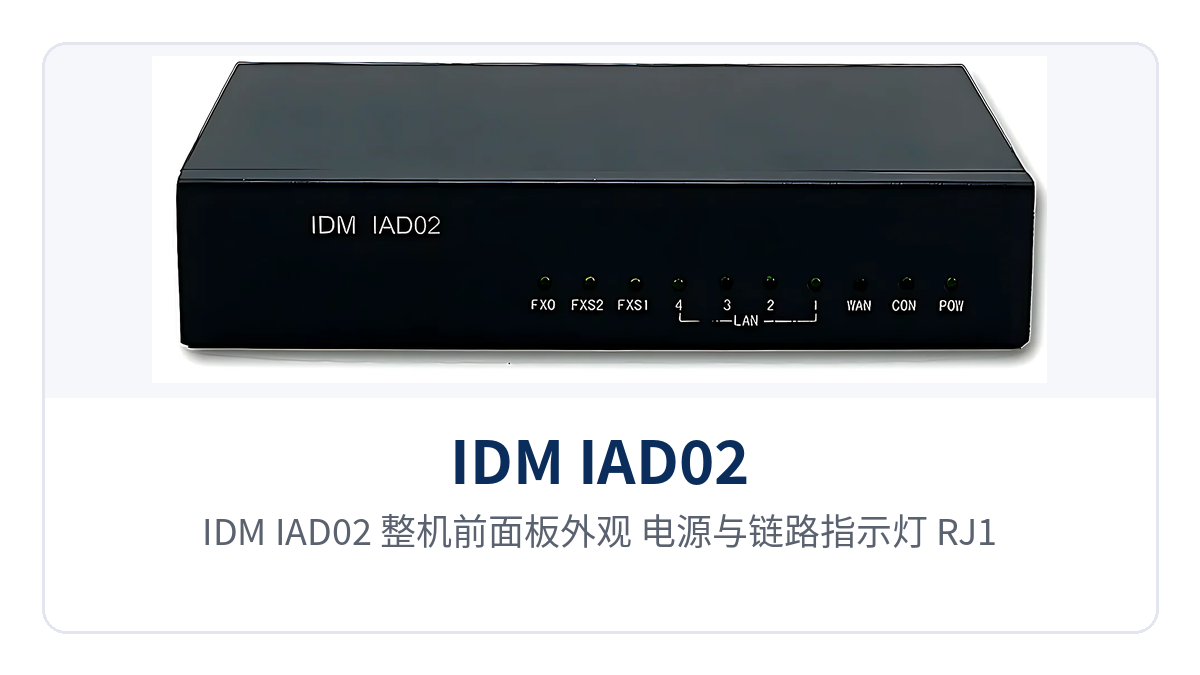
Figure 1: IDM IAD02 front panel appearance, close-up of power and link indicator LEDs and RJ11 telephone port and network port layout
What kind of device is the dual-server redundant IP voice access gateway?
As an IP access gateway, IDM IAD02 divides its interfaces into a voice side and a network side. The voice side provides 2 analog telephone interfaces (FXS) and 1 escape interface (FXO); the network side provides 1 WAN port and 4 LAN ports. The WAN port comes in electrical and optical forms: the electrical port is RJ45 and the optical port is FC, and in the optical form it can interoperate with a 100M media converter.
In a SIP voice network, this IP access gateway sits between SIP telephones and the softswitch: downstream it reproduces off-hook, dialing and ringing, and upstream it hands calls to the SIP platform for processing. SIP telephones need no replacement, numbers and permissions remain centrally managed on the platform side, and the site side only handles wiring and registration, keeping the scope of modification within the device itself.
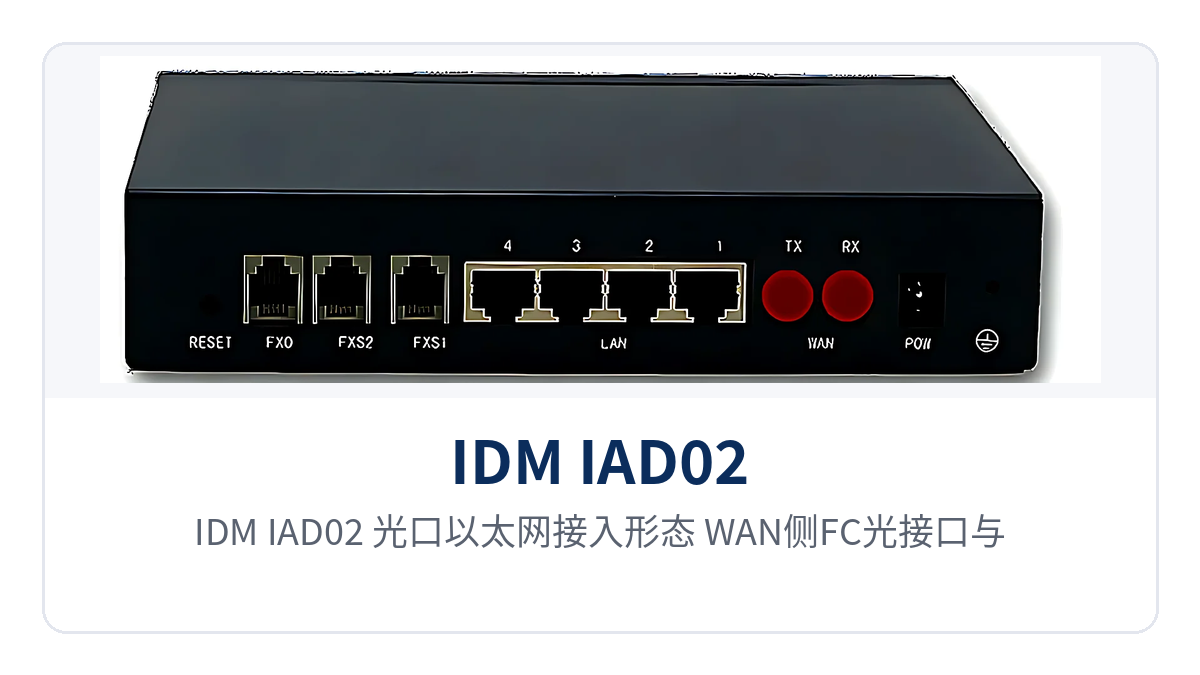
Figure 2: IDM IAD02 optical-port Ethernet access form, close-up of the WAN-side FC optical interface and optical patch cord wiring position
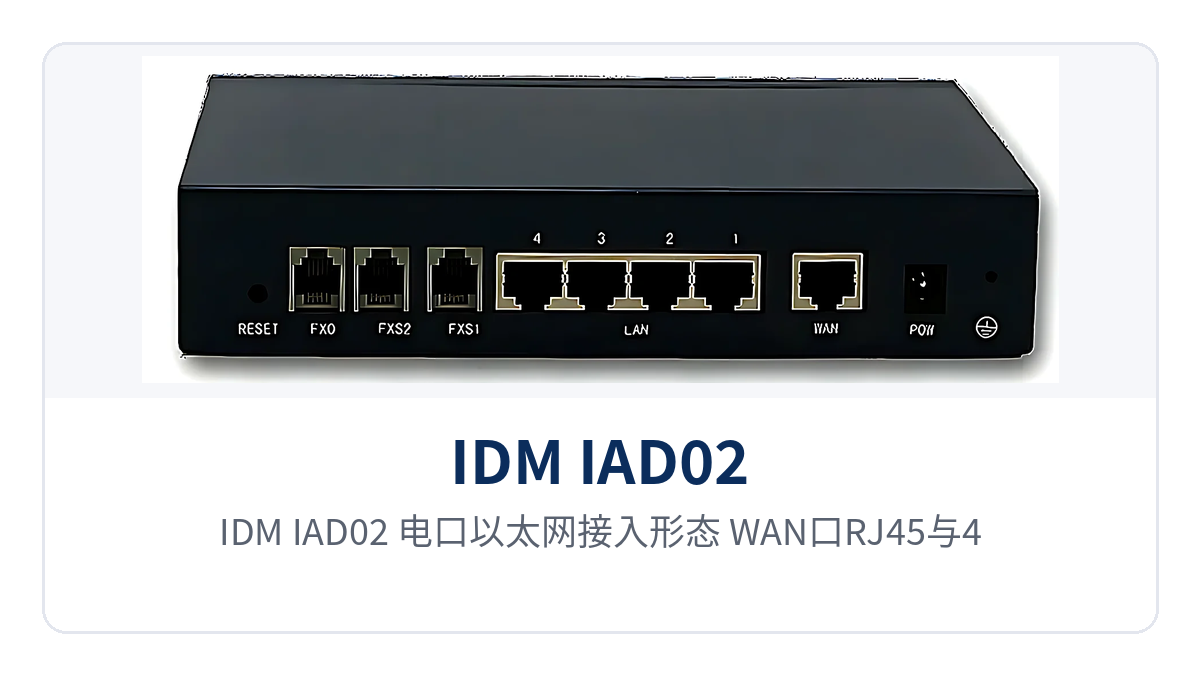
Figure 3: IDM IAD02 electrical-port Ethernet access form, close-up of the WAN RJ45 port and the arrangement of the 4 LAN ports
What functions and voice quality assurance does the device provide?
The functions fall into four groups: call and registration, voice processing, Layer 2 networking, and network management, covering SIP telephone access, call switchover and link fallback. The table below lists the role of each capability by function item, making it easy to check the enabled scope item by item against the existing softswitch platform; the descriptions are taken from the product technical documentation.
| Function | Description |
|---|---|
| Standard SIP interconnection | Uses standard SIP and can interconnect with standard SIP softswitch systems, registering with a self-built or carrier voice platform |
| Dual-server registration | Supports dual-SIP-server registration settings, with dual backup at the call control center and fast switchover on network failure |
| Power failure escape FXO | Telephone 1 connects to a PSTN outside line through the FXO interface and automatically joins the PSTN when power fails |
| Internal call fallback | When the uplink Internet interface is interrupted, the 2 telephones can still call each other internally and can dial in and out through the PSTN |
| VLAN and priority | Supports 802.1q VLAN partitioning and 802.1p priority, and can tag voice streams with service priority and VLAN tags |
| VPN tunnel | The system supports PPTP and L2TP VPN |
| T.38 fax | Supports T.38 real-time fax; the fax machine connects to an FXS port |
| Voice encoding and decoding | Supports ITU-T decoding standards such as G.711, G.729A and G.723.1 |
| Voice quality processing | Dynamic jitter buffer management, echo cancellation (compliant with ITU-T G.168/165), packet compensation, voice activity detection (VAD), comfort noise generation (CNG) |
| Addressing and dialing | Supports DHCP and DNS clients for automatic IP address acquisition; runs PPPoE automatically behind an ADSL modem and redials automatically after interruption |
| Network management | Supports WEB network management; the terminal can be configured from either the WAN port or a LAN port |
The parameter table covers interfaces, protocols, power supply and mechanical environment. The number of interfaces and the power supply mode determine the deployment form of an edge site; when comparing with existing patch panels and cabinets on site, the supplied technical documentation and the device nameplate prevail. Confirm the WAN port form together with the number of SIP telephones before ordering, and the wiring method follows.
| Item | Parameter/Specification | Description/Applicable Conditions |
|---|---|---|
| Analog telephone interface | 2 FXS | Connects ordinary analog telephones and fax machines |
| Escape interface | 1 FXO | Connects a PSTN outside line; Telephone 1 dials "0" to seize an outside line |
| WAN port | 1, RJ45 electrical port or FC optical port | The optical form can interoperate with a 100M media converter |
| LAN port | 4 RJ45 | Connects site terminals or a downstream switch |
| Call protocol | Standard SIP, supports dual-server registration | Interconnects with standard SIP softswitches |
| Voice codec | G.711, G.729A, G.723.1 | Selected by negotiation according to link bandwidth |
| Fax | T.38 real-time fax | The fax machine connects to an FXS port |
| Layer 2 features | 802.1q VLAN, 802.1p priority | Voice streams are tagged and prioritized separately |
| VPN | PPTP, L2TP | Forms tunnels across networks |
| Network management | WEB | Log in from the WAN port or a LAN port |
| Power input | AC220V | Powered directly by mains |
| Power consumption | 4W | Long-term online operation |
| Operating temperature | 0℃~45℃ | Indoor equipment room and duty room environments |
| Storage temperature | -20℃~80℃ | Transportation and storage conditions |
| Humidity | 10%~90% non-condensing | Conventional indoor humidity |
| Dimensions | 190mm×120mm×40mm | Desktop placement or installation in a small cabinet |
How do dual-server registration and power failure escape preserve calls?
Dual-server registration addresses the single point of failure at the call control center. The device can be configured with two SIP server addresses at the same time; the call control center has dual backup, and when the registration link is abnormal the device registers with the other server and restores service. The switchover is completed on the device side, so O&M personnel do not need to travel to the site to change the configuration.
Power failure escape addresses device power loss and outside line fallback. Telephone 1 is connected to the PSTN outside line through the FXO interface; when the device is working normally, calls seize the SIP line, and when the device loses power, this telephone connects directly to the PSTN and external calls are completed over the local line.
When the uplink Internet interface is interrupted but the device still has power, internal calls between the 2 telephones do not traverse the external network and remain available as usual; externally, calls can still be dialed in and out through the traditional PSTN. Voice streams are prioritized per 802.1p and partitioned by VLAN, so voice still has a separate forwarding queue during data bursts.
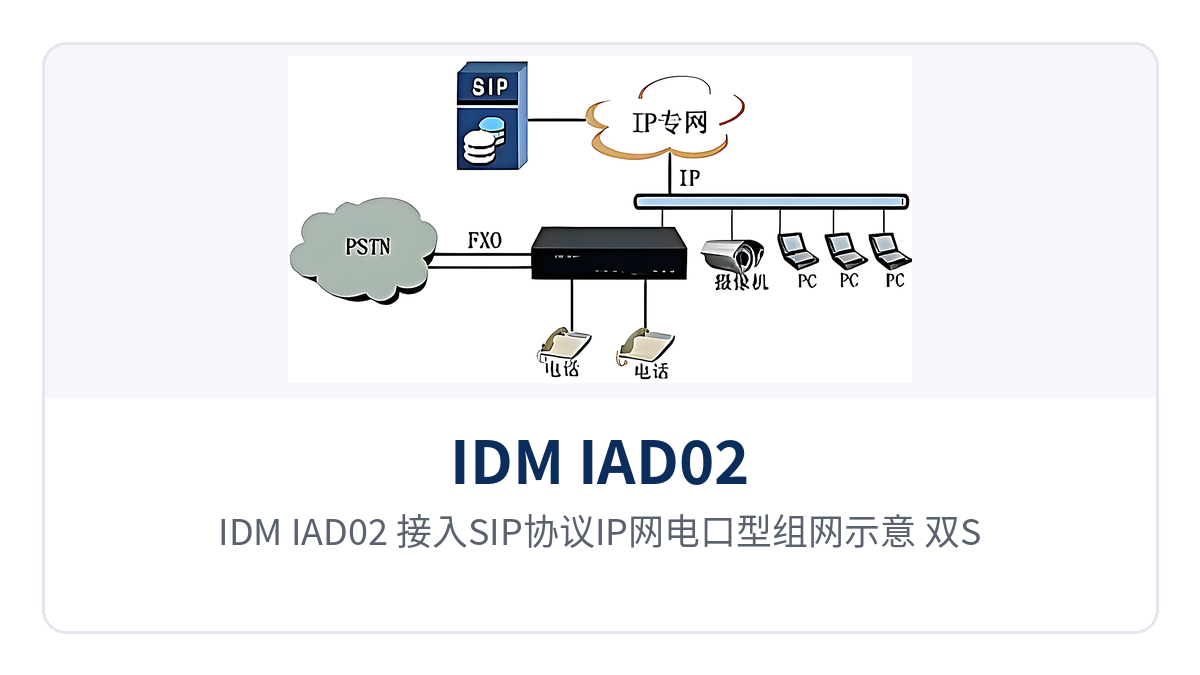
Figure 4: IDM IAD02 electrical-port networking over a SIP IP network, showing the connections between the dual SIP servers and the PSTN outside line
How to choose between the optical-port WAN and the four networking approaches?
The WAN port form and the central-side device determine the networking approach; the site side only needs to select one according to the existing optical cable, transmission distance and the frame height of the central equipment room. All four approaches share the same SIP registration and numbering scheme, so changing the networking approach does not change the platform-side data.
Electrical port registration with an existing SIP server to expand IP phones
The device accesses the site switch through the WAN electrical port and registers directly with an existing SIP server, for IP phone expansion of the original system. The analog trunk interface can connect to the traditional PSTN, adapting to sites with a complex existing network environment.
Optical port interfacing with a 6U all-optical switching device for a high-capacity center
With the 6U chassis IDM MSAP-G3CP as the core switching center, providing SIP registration services and softswitch functions, it directly interfaces with multiple remote IAD02 units through Ethernet optical interfaces, enabling access applications for IP telephony and Ethernet data services.
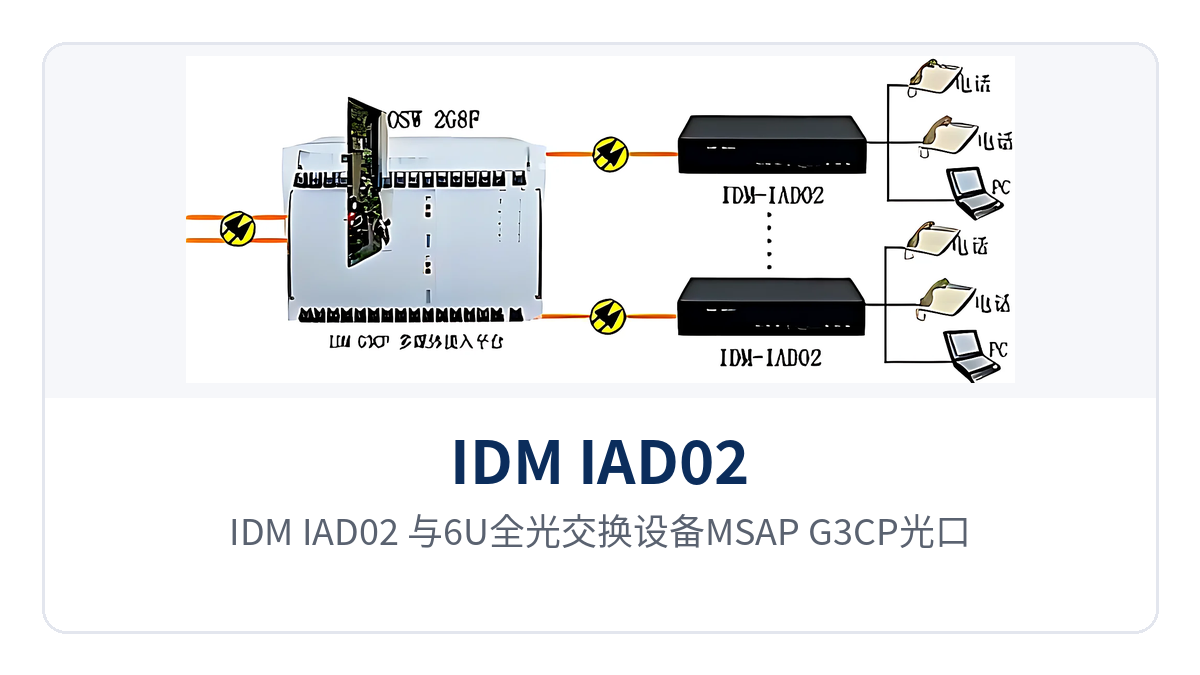
Figure 5: IDM IAD02 optical port interfacing with the 6U all-optical switching device MSAP-G3CP, showing multi-site star access
Optical port interfacing with a 1U all-optical switching device for a small-capacity center
With the 1U chassis IDM 2GE8FE as the core switching center, providing SIP registration services and softswitch functions, it likewise interfaces with multiple remote IAD02 units through Ethernet optical interfaces. When there are few sites and the central equipment room space is tight, this option saves rack positions.
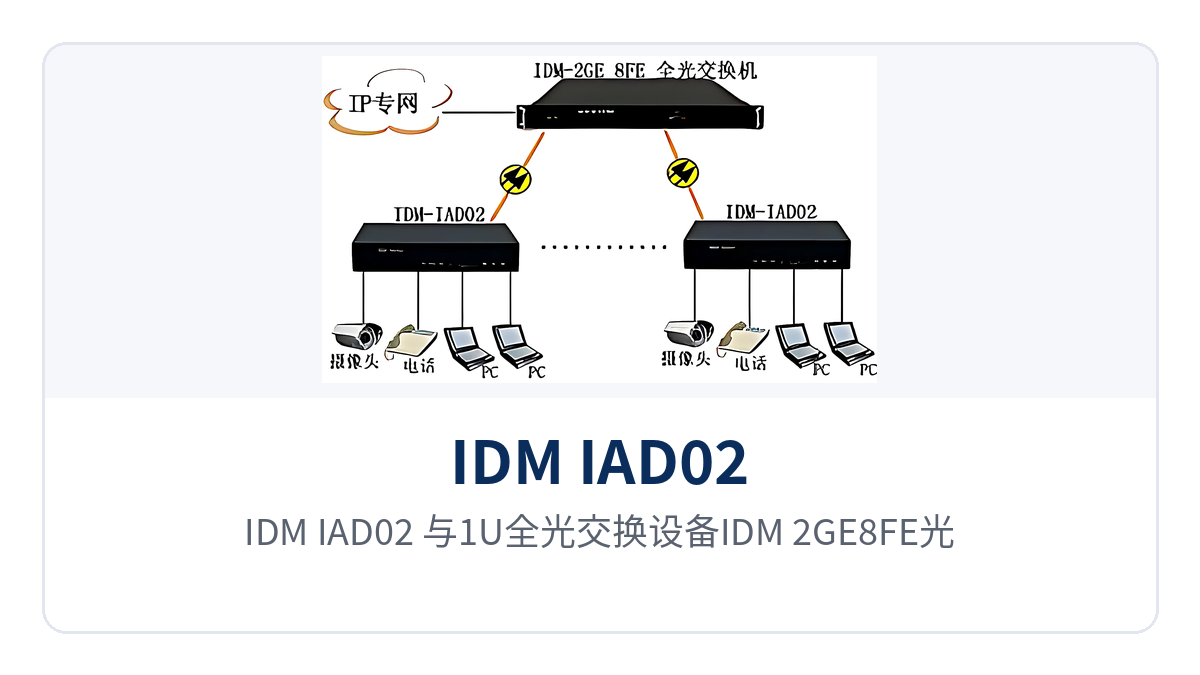
Figure 6: IDM IAD02 optical port interfacing with the 1U all-optical switching device IDM 2GE8FE
Optical port cascading with media converters for edge long-distance access
For edge sites at a longer transmission distance, the device can cascade directly through its optical port with devices such as media converters, extending IP telephone access to wherever optical fiber reaches. The WAN FC optical port interoperates with 100M media converters, so edge sites do not need to lay separate network cables for voice. As a media converter manufacturer, Raytrans can provide matching media converter products for such edge access as well as overall selection support for government private network optical fiber communication solutions and military emergency communications vehicle solutions; devices such as the SIP radio gateway can also coordinate networking with the IP access gateway. For specific products, refer to the official materials.
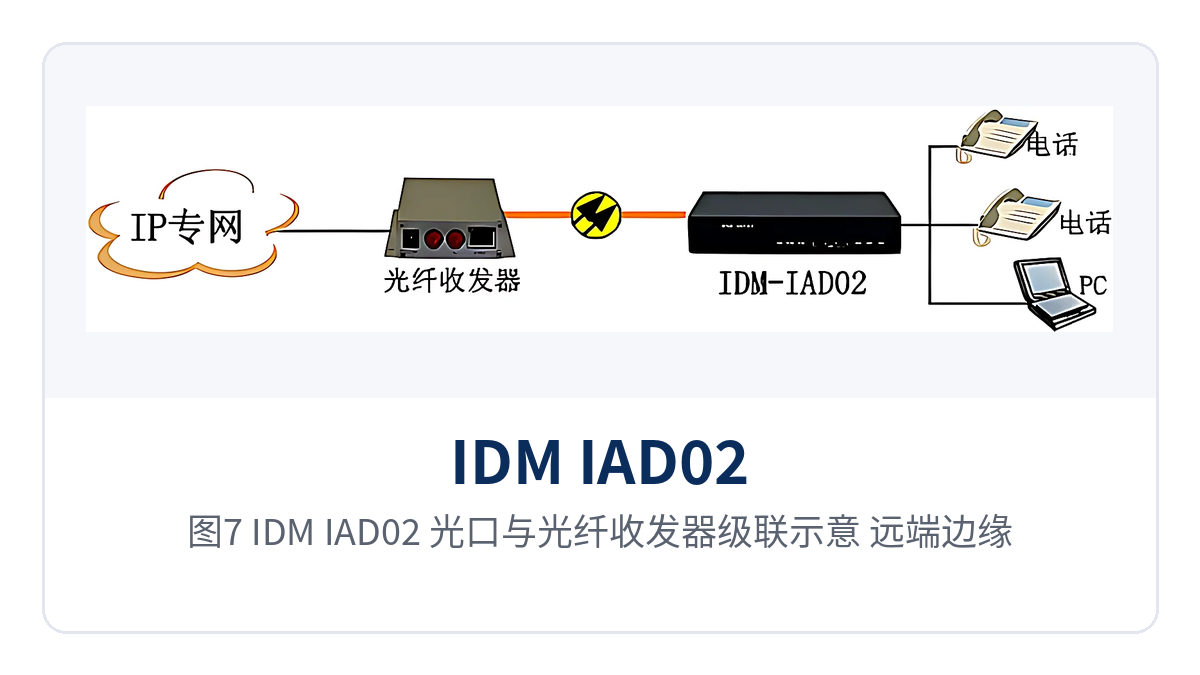
Figure 7: IDM IAD02 optical port cascading with a media converter, showing IP telephone access at a remote edge site
Typical Application Scenarios
What the three types of private network sites have in common is limited space, few on-duty personnel, and only one channel to the outside world, so the voice equipment must handle registration, switchover, and fallback on its own. The following describes the deployment approach and commissioning conditions by industry; the wiring and addressing steps are common to all scenarios.
Electric Power Private Network
The duty telephones in substations and distribution rooms carry dispatching liaison and administrative calls, and the site usually already has optical cables feeding the centralized control center. As an IP access gateway, the IDM IAD02 uses 2 FXS ports for the duty telephone and fax machine and its WAN optical port for uplink over the on-site optical cable, with voice and data sharing one channel.
When mains power and communications are both interrupted at the site, the power-failure escape FXO lets telephone 1 automatically connect to the PSTN, so on-duty personnel can still dial out for help and reporting; dual-server registration writes both the active and standby softswitch addresses into the device, so switchover on the centralized control center side requires no one to be sent to the site to change parameters.
Rail Transit Private Network
Station duty rooms and trackside equipment rooms are scattered, maintenance windows are short, and the site side wants one less device and one less point of failure. The device accesses the line transmission channel through its optical port, uses 2 FXS ports for duty telephones, and provides 4 LAN ports for on-site monitoring terminals.
After the telephones register with the line softswitch, adjacent station duty rooms can dial each other directly, and abbreviated dialing and hotline modes reduce keystrokes; parameter adjustments are made remotely through the WAN port without entering the track area; on power failure, telephone 1 falls back to the PSTN, so the duty post's external contact is not tied to device status.
Military/Government Private Network
Field command posts and temporary duty points require rapid voice commissioning, and there is often only one link. The device uses its WAN electrical port for the private network link, 2 FXS ports for field telephones or ordinary telephones, and the FXO for the local outside line at the station as a fallback channel.
Dual SIP server registration puts the voice service on two softswitches at the same time, and when the primary link fails, registration with the standby server restores it; in cross-network scenarios, PPTP or L2TP tunnels can bring voice streams into unified addressing, so after a site relocation only the address changes, not the numbering plan.