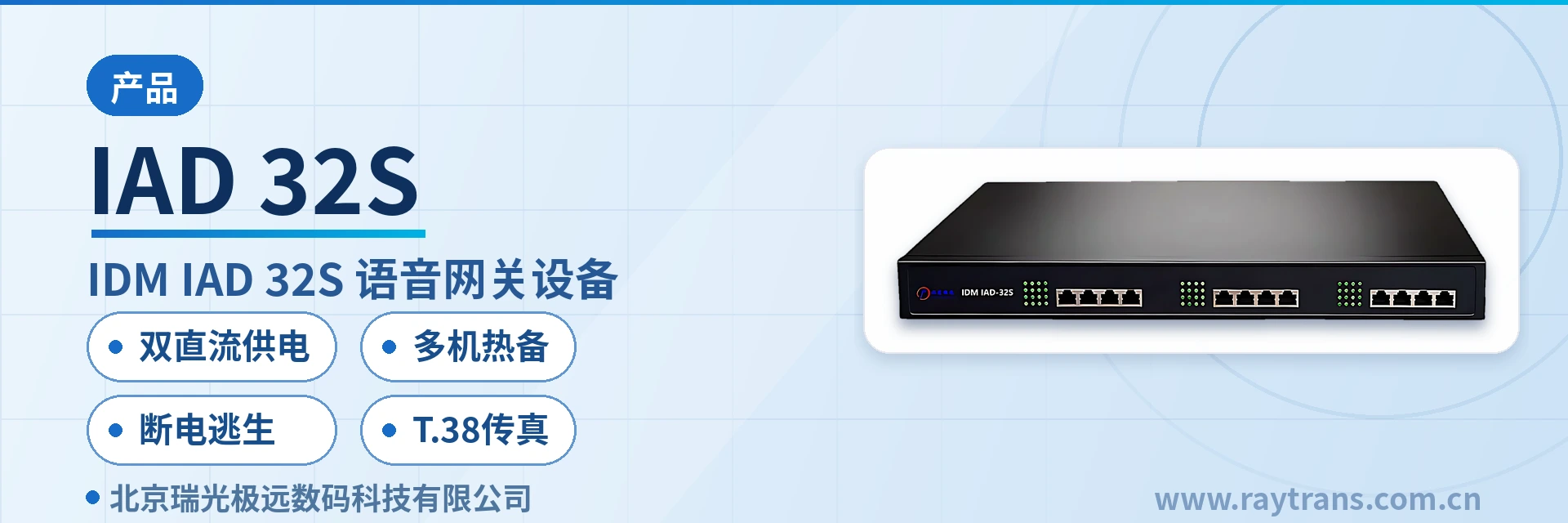
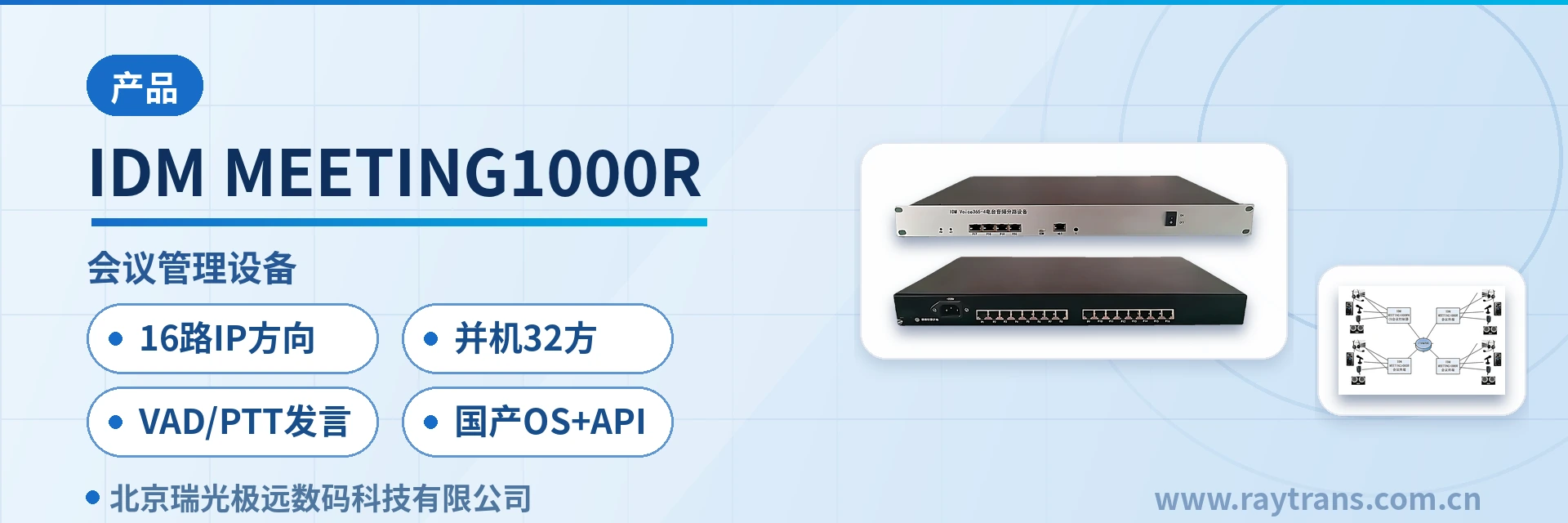
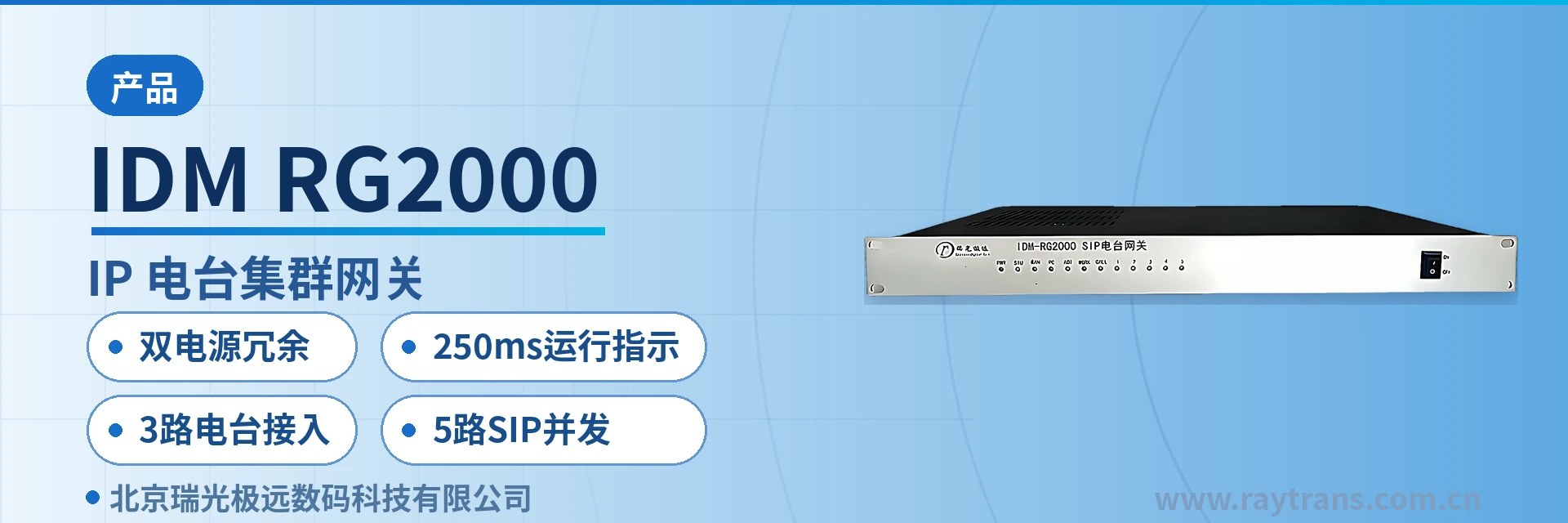
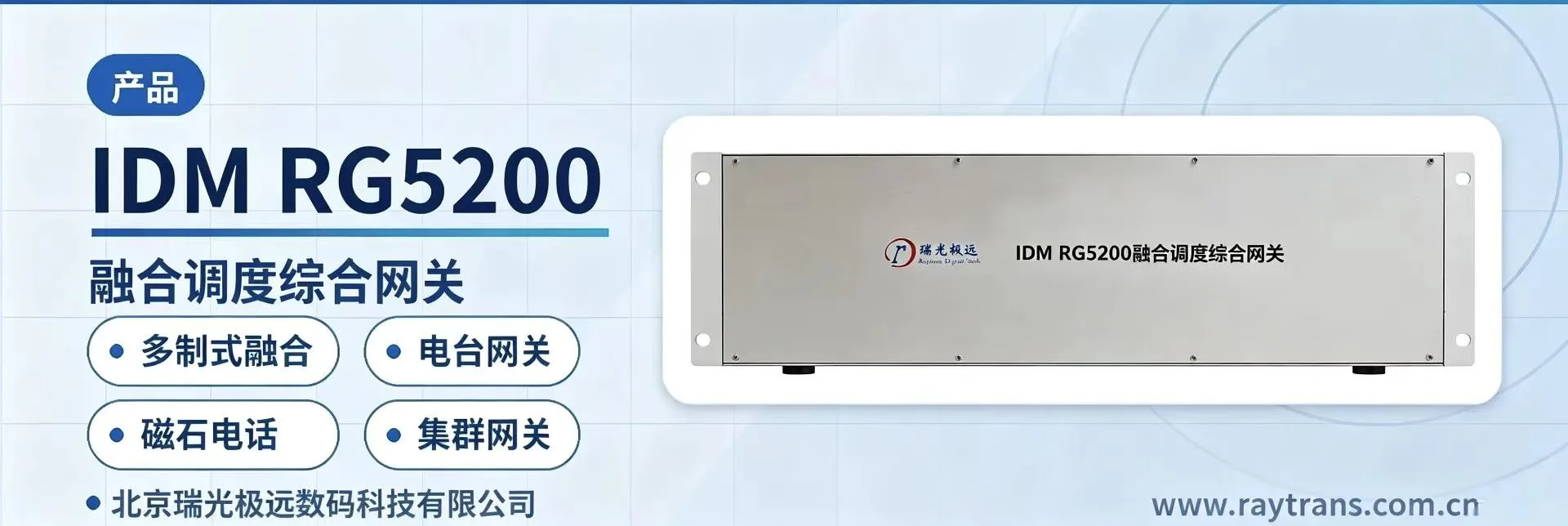
IDM IAD-EX4O Lightning-Protected IP Telephone Exchange
64 ms echo cancellation T.38 fax 24-channel analog ports with recording 3.5
The IDM IAD-EX4O lightning-protected IP telephone exchange is used in the Product Showcase field, providing communication/transmission/dispatch equipment for industry customers (to be further detailed based on documentation)
IDM IAD-EX4O is a new-generation 64ms echo cancellation IP telephone exchange developed by Raytrans. As an IP access gateway designed for multi-industry scenarios, it is used to uniformly connect analog telephones, fax machines, and computer softphones at the site side to the IP voice network, supports carrier IMS access, and integrates telephone, fax, recording, customer management, and mobile extensions.
IDM IAD-EX4O provides 24 built-in analog ports, 20 IP outside line licenses, and 20 concurrent agent clients in a standalone unit, and can carry the voice switching and dispatch of an entire work site. The device features built-in G.168-2004 echo cancellation (64ms tail length) and T.38 fax, making it suitable for long-distance link scenarios such as electric power and energy private networks, rail transit communication, and unattended field sites. With this product, Raytrans provides stable and reliable voice access capabilities for command and dispatch system manufacturers, government private network optical fiber communication solutions, military emergency communications vehicle solutions, and smart mining communication solutions, and can work with SIP telephones and intrinsically safe mining communication terminals to complete end-to-end product showcase and deployment verification.
Key Specifications at a Glance: 24 analog ports · 20 IP outside line licenses · 20 concurrent agent clients · 24 simultaneous calls (with recording) · 64ms echo cancellation (G.168-2004) · T.38 fax 33.6kbps (G3 compatible) · 3.5kV lightning protection

What Kind of Device Is a 64ms Echo Cancellation IP Telephone Exchange?
A 64ms echo cancellation IP telephone exchange is an integrated switching device that converts analog telephone resources at the site side into IP voice services. It assumes the extension and trunk functions of a traditional SPC exchange and accesses carrier IMS platforms or proprietary IP voice platforms through SIP and MGCP protocols. As a typical IP access gateway, IDM IAD-EX4O uses SIP/UDP and SIP/TCP (RFC3261), IMS platform (3GPP), and MGCP (RFC3435) as call control protocols, and can interface with carrier IMS networks, IP-PBX, and third-party softswitch platforms, making it directly deployable in both office environments and industrial private networks.
In terms of access capacity, IDM IAD-EX4O provides a 20-user capacity, 24 built-in analog ports, 4 IP extension licenses, and 20 IP outside line licenses, and supports concurrent login of computer agent clients within the local area network. Voice codecs cover G.711 (a/u), G.729B, G.722.2, and G.722. Caller ID supports multiple standards including Bellcore Type 1&2, ETSI, BT, NTT, and DTMF. DTMF transmission supports three methods: in-band voice transmission, RFC2833, and SIP-INFO.
In terms of network access and remote management, IDM IAD-EX4O supports Telnet, SSH, HTTP, and HTTPS management channels, and provides DHCP client, PPPoE client, DNS, STUN, OpenVPN client, and 802.1X capabilities, enabling cross-public-network access to private networks, branch networking, and mobile office. Fax services support G.711 transparent transmission and T.38 fax, are compatible with G3 fax machines, and operate at 33.6kbps (transparent transmission/T.38 V3).
Core Functions and Performance Specifications
IDM IAD-EX4O integrates protocol intercommunication, network access, media processing, and voice optimization into a single device. The functions are listed by category in the table below, and performance specifications are subject to the manufacturer's technical documentation and commercial confirmation.
| Category | Function | Description |
|---|---|---|
| Protocol | Call control | SIP/UDP and SIP/TCP (RFC3261), IMS platform (3GPP), MGCP (RFC3435) |
| Network | Access and management | Telnet, SSH, HTTP, HTTPS, DHCP client, PPPoE client, DNS, STUN, OpenVPN client, 802.1X |
| Media | Caller ID | Bellcore Type 1&2, ETSI, BT, NTT, DTMF multiple caller ID standards |
| Media | Voice codec | G.711 (a/u), G.729B, G.722.2, G.722 |
| Media | DTMF transmission | In-band voice transmission, RFC2833, SIP-INFO |
| Media | Fax | G.711 transparent transmission, T.38 fax, G3 fax machine compatible, 33.6kbps (transparent transmission/T.38 V3) |
| Voice | Line release | Busy tone detection, reverse polarity detection, line release on power failure |
| Voice | Voice quality enhancement | Echo cancellation (G.168-2004, 64ms tail length), automatic jitter buffer adjustment |
| Item | Parameter/Specification | Description/Applicable Conditions |
|---|---|---|
| User capacity | 20 | Maximum number of users registrable on a standalone unit |
| Built-in analog ports | 24 | Directly connect ordinary telephones, fax machines, and other analog terminals |
| IP extension licenses | 4 | Remote IP telephone and softphone registration |
| IP outside line licenses | 20 | Access carrier IMS or IP-PBX outside lines |
| Number of simultaneous calls (with recording) | 24 | Concurrent channels for calls with full recording |
| Concurrent agent clients | 20 | Concurrent login of computer agent clients |
| Echo cancellation | G.168-2004, 64ms tail length | For long-distance links and cross-network calls |
| Lightning protection | 3.5kV | Built into power and voice interface sides |
| Processor/Memory/Flash | Dual-core 860MHz / 256MB / 16MB | Voice processing and program storage |
| Built-in storage | 16GB | Local recording retention, caching during network outage |
| Power supply | 12VDC/1.5A | Powered by adapter included in the package |
| Power consumption | 9W | Overall power consumption |
| Installation method | Desktop/rack-mounted | Desktop placement or cabinet installation |
| Operating environment | 0~40℃, 10%~90% (non-condensing) | Indoor and protected cabinet environments |
| Storage environment | -40~70℃, 5%~90% (non-condensing) | Transportation and storage conditions |
How 24 Analog Ports and 20 IP Outside Lines Carry Private Network Dispatch on a Single Device
The capacity bottleneck of private network dispatch usually lies in the number of analog ports and outside lines: if site telephones cannot all be connected and outside lines are insufficient, multiple voice devices must be stacked. With 24 analog ports plus 20 IP outside line licenses, 20 concurrent agent clients, and 24 simultaneous calls with recording, IDM IAD-EX4O covers all voice switching needs of a small-to-medium site with a single device. For command and dispatch system manufacturers, this type of IP access gateway effectively simplifies system layers, and with SIP telephones, a dispatch call handling system can be quickly set up.
The 24 analog ports can directly connect ordinary telephones, fax machines, and dispatch telephones. The 20 IP outside lines are used to interface with carrier IMS or existing IP-PBX. Agent clients log in concurrently as softphones within the local area network. Extensions, outside lines, and agent seats—three types of resources—complete switching and recording within the same device, reducing cabinet space and spare parts simultaneously. Such devices provided by Raytrans can be flexibly embedded into government private network optical fiber communication solutions, military emergency communications vehicle solutions, and smart mining communication solutions as core nodes of the voice access layer.
In terms of reliability details, IDM IAD-EX4O supports three line release methods: busy tone detection, reverse polarity detection, and line release on power failure. With 8-level log management and Syslog, unattended sites can quickly recover and trace back during power failure or link interruption. Port voice capture and packet capture can be used for call review and fault location.
How to Solve Voice Echo on Long-Distance Field Links: G.168-2004 Echo Cancellation
Echo is a typical problem of long-distance voice links: the four-wire to two-wire conversion point generates impedance mismatch echoes. The longer the link and the more cross-network segments, the later the echo returns, and the more it sounds like "echo." The core specification for solving this is the tail length of the echo canceller—the longer the tail length, the more margin for suppressing echo paths.
IDM IAD-EX4O uses G.168-2004 standard echo cancellation with a 64ms tail length and features automatic jitter buffer adjustment. The 64ms tail window is sufficient to cover echo delay generated when field sites backhaul through optical multiplexers, microwave, or public network links, keeping voice clear without dropped syllables on long-distance links. In military emergency communications vehicle solutions and smart mining communication solutions, field links are often complex, and this echo cancellation capability ensures call quality of the IP access gateway in long-distance backhaul scenarios. Intrinsically safe mining communication equipment from Raytrans can also benefit from this voice optimization mechanism.
How to Configure T.38 Fax Without Dropping the Line
Fax is prone to speed reduction and page drops on IP links, rooted in voice codec compression and packet loss. IDM IAD-EX4O supports both G.711 transparent transmission and T.38 fax: T.38 converts T.30 fax signaling and image data into IP-side data packets, bypassing distortion caused by voice compression, so G3 fax machines can send and receive stably at 33.6kbps over private networks. Whether interfacing with SIP telephones or dispatch console terminals, fax services can run in parallel with voice services on the same IP access gateway.
During deployment, it is recommended to fix the codec of the voice channel where the fax port resides to G.711 and confirm that both devices have T.38 enabled. If there is a firewall or NAT on the link, the media ports associated with T.38 need to be opened to avoid interruption of fax negotiation. In government private network optical fiber communication solutions, Raytrans can combine intrinsically safe mining communication equipment and IP access gateways for unified deployment, meeting voice and fax requirements in multiple scenarios.
Typical Application Scenarios
Electric Power and Energy Private Network Substation Dispatch
Dispatch telephones, maintenance telephones, and faxes at substations and energy sites need to be online for long periods, and many sites are located in outdoor environments where lightning strikes and induced overvoltage occur frequently. As an IP access gateway for private network scenarios, IDM IAD-EX4O provides 3.5kV lightning protection. Its 24 analog ports can directly connect dispatch telephones and fax machines, and its 20 IP outside lines connect to carrier IMS or electric power private network IP-PBX, achieving unified bearing of dispatch and office voice. The device supports network management systems and third-party network management (TR-069, SNMP), enabling remote configuration and alarm handling from the prefecture-level side.

Rail Transit Communication and Pipe Gallery Equipment Rooms
Rail transit station sections and integrated pipe gallery equipment rooms have tight rack positions and limited inspection windows, so voice devices need to be small, low-power, and easy to maintain remotely. IDM IAD-EX4O is dual-use for desktop and rack mounting, with overall power consumption of 9W, suitable for embedding into existing cabinets. It supports plug-and-play rapid deployment of IP telephones and can interface with monitoring, alarm, and dispatch platforms. Voice extensions, section telephones, and fax services at the equipment room side are carried by a single device. The device supports traversal service and open API interfaces for easy linkage with third-party application systems.
Voice Access at Unattended Field Sites
Unattended field sites usually have no equipment room shielding or permanent O&M personnel, and lightning strikes, power supply fluctuations, and link interruptions are the norm. The 3.5kV lightning protection, line release on power failure, and reverse polarity detection capabilities of IDM IAD-EX4O can preserve voice channels and enable rapid recovery under abnormal conditions. The built-in 16GB storage allows call recordings to be retained locally during network outage, and 24 concurrent calls with recording can fully record dispatch and safety calls, providing evidence for later verification.

How to Select an IP Telephone Exchange: First Look at Analog Ports, IP Outside Lines, and Concurrency
Selection starts with a clear count of on-site resources: the number of analog telephones and fax machines determines the required built-in analog ports, the outside line access mode determines the number of IP outside line licenses, and the number of agent seats determines the number of concurrent clients. With 24 analog ports, 20 IP outside lines, and 20 concurrent agent seats, the IDM IAD-EX4O covers small and medium-sized sites with a user capacity of up to 20.
| Selection Dimension | IDM IAD-EX4O Configuration | Description |
|---|---|---|
| Number of analog telephones and fax machines | 24 built-in analog ports | A standalone unit covers sites with up to 20 users |
| Outside line access mode | 20 IP outside line licenses, supporting IMS and IP-PBX | Interconnects with both carrier outside lines and private network outside lines |
| Agent seats and call concurrency | 20 concurrent agent clients, 24 concurrent calls with recording | No capacity expansion needed for call-intensive sites |
| Call quality requirements | Echo cancellation G.168-2004, tail length 64ms | For long-distance links and cross-network calls |
| Fax service | T.38 fax, compatible with G3 fax machines, rate 33.6kbps | Private network fax does not go down or drop speed |
| Deployment environment | 3.5kV lightning protection, desktop/rack-mounted, power consumption 9W | Field sites and unattended equipment rooms |
| O&M approach | Network management system and third-party network management (TR-069, SNMP) | Remote O&M for unattended sites |
Next, confirm the protocol and security requirements: during selection, check whether carrier IMS, common codecs such as G.711/G.729, and T.38 fax are supported, and confirm whether capabilities such as signaling and media encryption, anti-intrusion, and access whitelist are complete. Finally, consider the deployment environment: for field and outdoor sites, give priority to lightning protection level and remote O&M capability to avoid frequent on-site maintenance later.