IDM GP2400
IDM GP2400
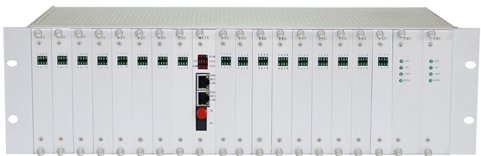
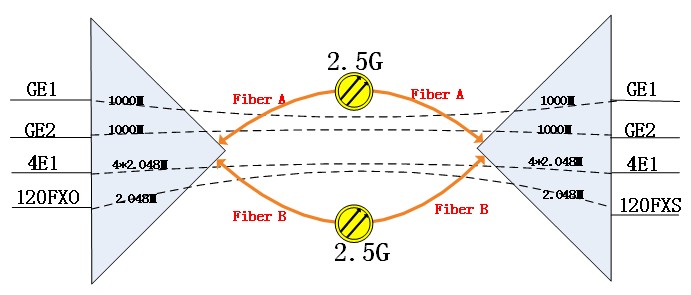
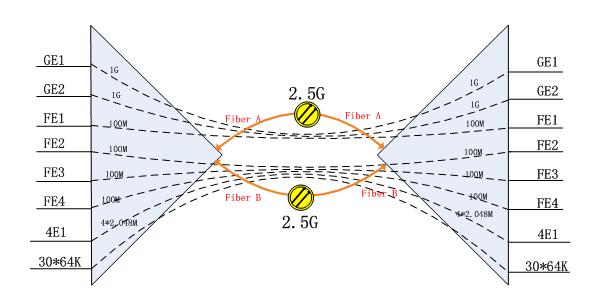
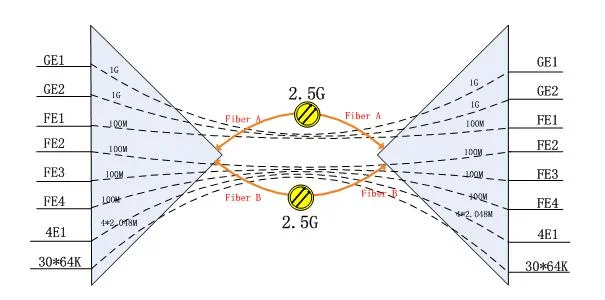
The IDM GP2400-30E multi-service optical terminal utilizes 2.5G optical fiber transmission bandwidth (G.703 standard) with PCM30/31 format, providing dual-fiber mutual backup, direct telephone service interfaces (30 channels of FXO, FXS, or magneto), 4 groups of physically isolated wire-speed 100M Ethernet (400M total), 2 groups of physically isolated wire-speed 1000M Ethernet (2000M total), E1 (1-4 E1 channels), HDMI HD video transmission, and various other user interfaces. The IDM GP2400-30E multi-service optical terminal provides dual-fiber mutual backup and can also be combined with other equipment to form multiple groups of physically isolated Ethernet ring network telephone optical terminals.
I. Overview
The IDM GP2400-30E ultra-broadband integrated service optical multiplexer utilizes 2.5G optical fiber transmission bandwidth (G.703 standard) with PCM30/31 format, providing dual-fiber mutual backup, direct telephone service interfaces (30 channels of FXO, FXS, or magneto), 4 groups of physically isolated wire-speed 100M Ethernet (400M total), 2 groups of physically isolated wire-speed 1000M Ethernet (2000M total), E1 (1-4 E1 channels), HDMI HD video transmission, and various other user interfaces. Meanwhile, the equipment features easy installation and can meet the requirements of various application environments.
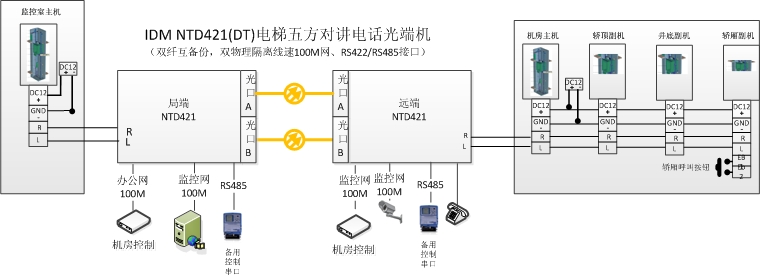
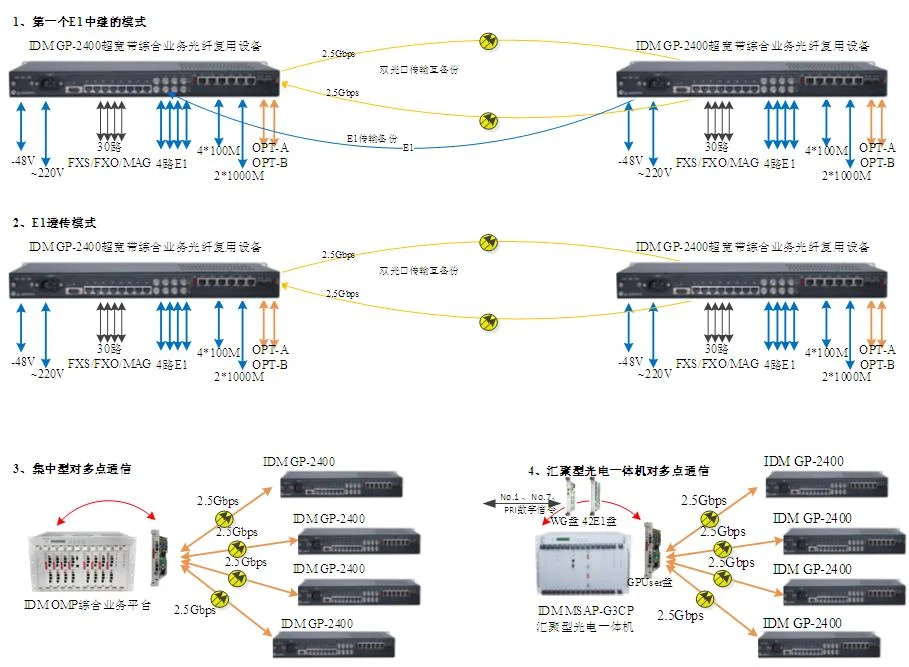
It provides dual-fiber mutual backup and can also be combined with other equipment to form multiple groups of physically isolated Ethernet ring network telephone optical terminals, ring network telephone optical terminals, and point-to-multipoint star network telephone optical terminals.


II. Product Features
Standard 19-inch 1U chassis design for easy installation;
Provides 2 2.5Gbps SFP optical interfaces with optical port 1+1 protection;
Provides 30 standard telephone interfaces;
Provides 2 independent wire-speed 1000M Ethernet interfaces;
Provides 4 independent wire-speed 100M Ethernet interfaces;
Provides 4 groups of E1 interfaces supporting transparent transmission mode;
Provides standard SNMP network management interface;
Equipped with comprehensive function control switches and alarm indication features.
III. Technical Specifications
Optical Interface
Interface Type | SFP | Fiber Mode | Single-mode (Multi-mode optional) |
Fiber Rate | 2.5Gbps | Wavelength | 1310nm/1550nm |
Optical Output Power | -1~-3dBm | Receiver Sensitivity | Better than -24dBm |
E1 Interface
Line Rate | 2048Kbps | Line Code | HDB3 |
Standard Protocol | Supports ITU-T G.703 | Impedance | 75Ω/120Ω |
Frame Structure | PCM30/31 | Mode | Transparent |
Ethernet
Interface Type | RJ45 | Transmission Rate | 10M/100M/1000M |
Standard Protocol | SupportsIEEE802.3 | Operating Mode | Full/Half Duplex/Auto-Negotiation |
FXO/FXS Interfaces
Audio Frequency Range | 300Hz~3400Hz | Impedance | Three-element composite impedance200Ω+560Ω//0.1μF |
Compression Ratio | A-law per ITU G.711 | Loop Current | 25mA/channel |
Power Supply and Power Consumption
Power Supply | DC-48V / AC 220V / Dual Power Supply | Power Consumption | ≤100W |
Environmental Conditions
Operating Temperature | 0ºC~40ºC | Humidity | ≤90%(non-condensing) |
IV. Application Examples
FAQs
Top 10 Common Questions About Telephone Optical Terminals
Based on years of experience in the production and R&D of telephone optical terminals…
View answerHow to Troubleshoot Common Faults of Telephone Optical Terminal?
Device cannot be powered on Check whether the power cable is connected correctly.
View answerWhat is an Optical Terminal?
Many people are unfamiliar with the optical terminal, but in essence, it is a dedicated device for optical-electrical…
View answer