
IDM 60N
IDM 60N
The IDM 60N Wired/Wireless Integrated Dispatch Gateway is a dedicated communication device developed with digital technology, designed to interconnect radio stations, wired terminal boxes, wired telephone networks, and GSM trunking equipment. This switching system features comprehensive functionality and excellent wired/wireless switching performance, with a wide range of applications. Additionally, the platform supports long-distance wireless communication and offers low equipment costs, serving a command and dispatch role in communication operations across railways, military, public security, civil aviation airports, ports and docks, and large/medium-sized enterprises, with broad application prospects in the communications field.
1. Introduction
The IDM 60N Wired/Wireless Integrated Dispatch Gateway is a dedicated communication device developed with digital technology, designed to interconnect radio stations, wired terminal boxes, wired telephone networks, and GSM trunking equipment. This switching system features comprehensive functionality and excellent wired/wireless switching performance, with a wide range of applications. Additionally, the platform supports long-distance wireless communication and offers low equipment costs, serving a command and dispatch role in communication operations across railways, military, public security, civil aviation airports, ports and docks, and large/medium-sized enterprises, with broad application prospects in the communications field.
2. Features


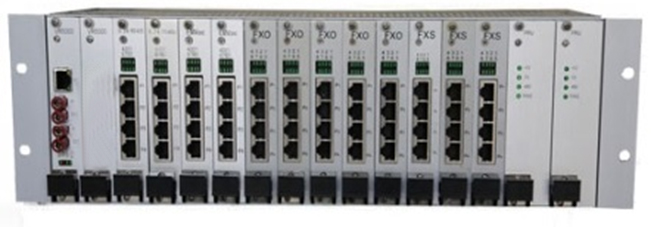
IDM-60N Front Panel IDM-60N Rear Panel
Utilizes digital signal processing technology, employing echo cancellers to overcome interference caused by 2-wire/4-wire conversion on wired voice detection from wireless signals, improving wired voice detection sensitivity and switching performance;
Microcontroller control technology enables automatic switching between wired terminals and radio stations, changing the traditional monitoring and standby mode of radio stations, and simultaneously supporting multiple control terminals;
The transmission distance between the platform and terminal controllers can reach 6km over twisted pair, enabling remote control;
Through E1 or fiber optic transmission, multiple devices can operate in parallel over long distances, increasing coverage area;
Provides telephone interfaces, offering remote dial-in command/monitoring capabilities for fixed phones and mobile phones;
Supports real-time intercommunication between radio stations operating on different frequency bands;
Equipped with GSM module cards, enabling connectivity with mobile terminals such as cell phones;
Provides recording services for all digital terminals;
Radio interfaces, telephone interfaces, and wired terminal interfaces are expandable.
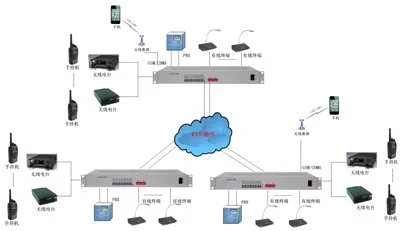
3. Typical Applications
FAQs
What Are the Functions and Advantages of Video Optical Terminals?
The function of a video optical terminal is to convert one or multiple channels of analog video signals into optical…
View answerWhat is the difference between a Video Optical Terminal and a Network Video Server?
Composition and Function of Video Optical Terminal and Network Video Server An optical terminal is a device used to…
View answerWhat are common issues when using optical terminals in security surveillance?
Fiber optic technology is increasingly used in security surveillance projects to transmit images, audio, data…
View answerWhat is IPTV and Its Key Technologies
IPTV, or Interactive Network Television, is an innovative technology that utilizes broadband cable TV networks…
View answer