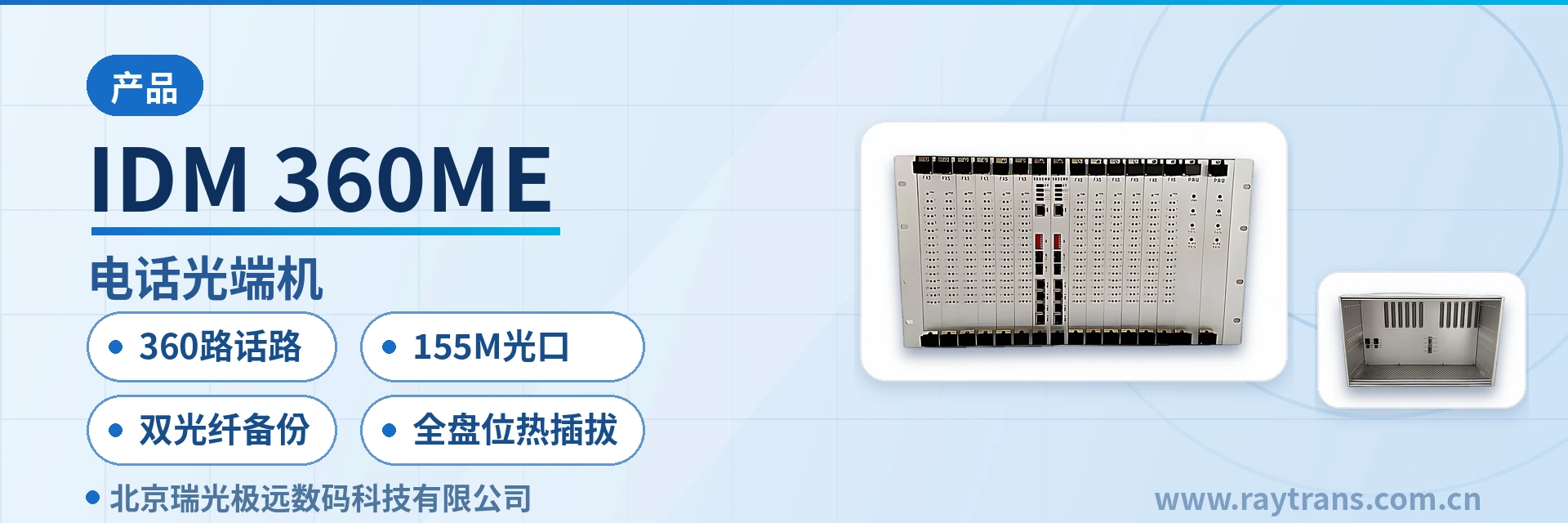
IDM-360ME Telephone Optical Multiplexer
360 voice channels, dual-fiber mutual backup, 12 hot-swappable cards, one fiber pair replaces multiple devices
The IDM-360ME telephone optical multiplexer provides 4 shared line-rate 100M Ethernet interfaces (which can also be partitioned for VLAN isolation) and 4 groups of E1 transparent transmission interfaces, along with FXO and FXS interfaces featuring caller ID (CID), and supports a full configuration of 360 user voice channels. It offers 15 card slots, with 1+1 mutual backup for the CMU main control card and 1+1 mutual backup for the power supply, plus 12 service cards, and all card slots support hot-swappable operation. It multiplexes narrowband and broadband services into a 155M optical transmission channel. With a card-based structural design, each service card provides 30 telephone lines, making the equipment simple to install and easy to maintain.
IDM-360ME telephone optical multiplexer is a high-capacity dual-fiber mutual backup multi-service optical multiplexer developed by Beijing Ruiguang Jiyuan Digital Technology Co., Ltd. It multiplexes analog telephone, E1 leased line and 100M Ethernet onto one 155Mbps optical transmission channel, and a single unit can be fully configured with 360 voice channels. The equipment adopts a 6U centralized chassis and card-based structure, with 12 service cards each carrying 30 channels of 64K telephone audio service, the CMU main control card and power supply designed with 1+1 mutual backup, and all card slots supporting hot-swappable. As a mature multi-service optical multiplexer and PDH optical multiplexer product, the IDM-360ME telephone optical multiplexer is aimed at integrated voice and data backhaul for electric power, rail transit, military and government private networks. It is a mature solution for replacing large-pair-count audio cables, and one of the representative models of Raytrans in its optical multiplexer product showcase.
Key Specifications at a Glance: 360 voice channels · 155M optical port · dual-fiber backup · 4-channel 100M wire-speed Ethernet (VLAN isolation supported) · 4 groups of 75Ω E1 transparent transmission · CMU main control 1+1 mutual backup + power supply 1+1 mutual backup · 6U chassis with 12 service cards, all card slots hot-swappable
What is this equipment?
The IDM-360ME telephone optical multiplexer is a centralized multi-service access device that combines narrowband and broadband services for transmission over a single optical fiber. Telephone and low-speed data are encoded by PCM into 64K time slots, while Ethernet and E1 are multiplexed as broadband channels over the same 155M optical link. A pair of optical fibers simultaneously carries 360 voice channels, 4-channel 100M Ethernet and 4 groups of E1. Only a pair of optical cables needs to be laid on site to simultaneously enable voice and data leased lines, eliminating the rack positions and optical fiber resources occupied by the stacking of multiple single-service devices. The equipment is fully configured with 12 service cards of 30 channels each, so a single unit can cover the telephone and network access requirements of a medium-sized site. It is a representative product showcase launched by Raytrans for the private network market.
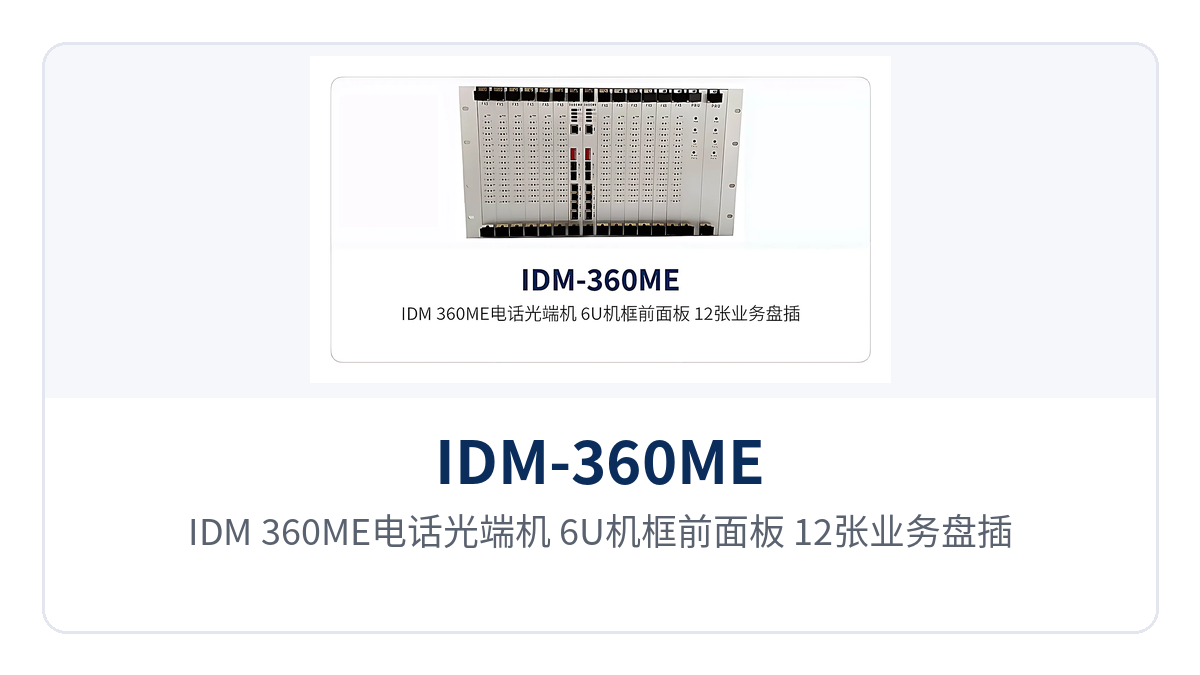
Figure 1: IDM-360ME telephone optical multiplexer 6U chassis front panel close-up of 12 service card slots and 4-channel Ethernet interface layout
How a 360-channel voice optical multiplexer organizes services: 12 service cards of 30 channels each
The voice channel capacity of a 360-channel voice optical multiplexer is determined by the number of service cards, and the card-based structure allows voice capacity expansion to proceed card by card. The chassis has 15 card slots in total, of which 12 service cards each provide 30 channels and each accesses 30 channels of 64K telephone audio service, reaching 360 user voice channels at full configuration. Both FXO and FXS interfaces provide caller ID (CID), and service cards can be selected according to the exchange side or telephone side direction. As a PDH optical multiplexer, the equipment implements centralized multiplexing of narrowband voice channels over a 155M optical link.
Voice capacity expansion: add service cards as voice traffic grows; one card provides 30 channels of 64K voice channels, with no need to replace the complete unit.
Service direction: FXO faces the exchange side and FXS faces the user side; determine the ratio according to the on-site switching equipment and telephones.
Live maintenance: all card slots are hot-swappable, and a faulty card can be replaced directly while the equipment is running, without affecting the remaining voice channels.
Dual-fiber mutual backup multi-service optical multiplexer: how reliability design is implemented
A link interruption in a private network directly causes dispatch interruption, so the dual-fiber mutual backup multi-service optical multiplexer provides multiple layers of protection on the link. The CMU main control card uses 1+1 mutual backup, with the active and standby units online at the same time; when the main control or optical path is abnormal, switchover is automatic and the private network link is not interrupted. The main control card provides dual-fiber transmission mutual backup, switching to the standby fiber when the main optical path is abnormal. The power supply is also designed with 1+1 mutual backup, with one path taking over when the other fails. Sites with higher reliability requirements can be configured with dual CMU cards to further reinforce the control layer.
The maintenance side is also incorporated into the redundancy design: the 12 service cards and all card slots support hot-swappable, so a faulty card can be replaced with the power on, and replacement of a single card does not affect the remaining user voice channels and data. Multi-level redundancy of main control, power supply, optical path and service cards, together with hot-swappable maintenance, forms a reliability loop for continuous operation of the private network.
Typical application scenarios
Electric power private network: dispatch telephone and in-station data backhaul over the same fiber
Electric power substations and power supply stations usually require both dispatch telephone and in-station service data, while the distance between sites is long and equipment room space is limited. The IDM-360ME telephone optical multiplexer carries 360 dispatch voice channels and 4-channel 100M Ethernet over one 155M optical channel. FXO interfaces connect to the exchange side and FXS interfaces face user telephones, so dispatch telephone, administrative telephone and office network are transmitted over the same cable. Dual-fiber backup provides a standby optical path during line abnormalities such as maintenance and lightning strikes, reducing the impact of communication interruption on dispatch.
Rail transit private network: centralized access of station trunked voice traffic and dispatch channels
The voice channel requirements of metro station trunking and industrial and mining plant areas usually range from dozens to hundreds of channels, and the communications equipment room is relatively centralized. As a 6U card-based multi-service optical multiplexer, the IDM-360ME allocates cards flexibly according to station voice traffic, with 30 channels per card; when services grow, additional cards can be added for capacity expansion without replacing the complete unit. The 4 groups of 75Ω E1 transparent transmission interfaces can directly carry dedicated dispatch channels and interconnect with existing PCM and SDH equipment for networking.
Military and government private networks: centralized transmission of high-reliability voice and leased-line data
Military and government leased lines have high requirements for security and continuous operation, and the equipment is mostly deployed centrally in equipment rooms. CMU main control 1+1 mutual backup, power supply 1+1 mutual backup and dual-fiber transmission mutual backup form multi-level redundancy; together with all card slots hot-swappable, service card replacement does not interrupt communication, making the equipment suitable for long-term stable administrative, emergency and command and dispatch private networks. The caller ID (CID) function facilitates number verification and duty management, and the 6U standard chassis complies with telecom and carrier standards for unified installation in cabinets.
Large-pair-count audio cable replacement solution
Traditional site voice backhaul often involves laying large-pair-count audio cables of more than 300 pairs. Long-distance cable laying is costly, cable tray space is tight, and troubleshooting after line damage is difficult. The IDM-360ME digitizes voice channels and transmits them over optical fiber. A single unit replaces the laying workload of hundreds of meters to thousands of pairs of audio cables. Optical cables are small in size and resistant to electromagnetic interference (EMI), while also carrying Ethernet and E1, achieving multiple uses over one cable. For capacity expansion sites, voice channels can be added simply by adding service cards on the existing optical path, reducing secondary cabling investment.
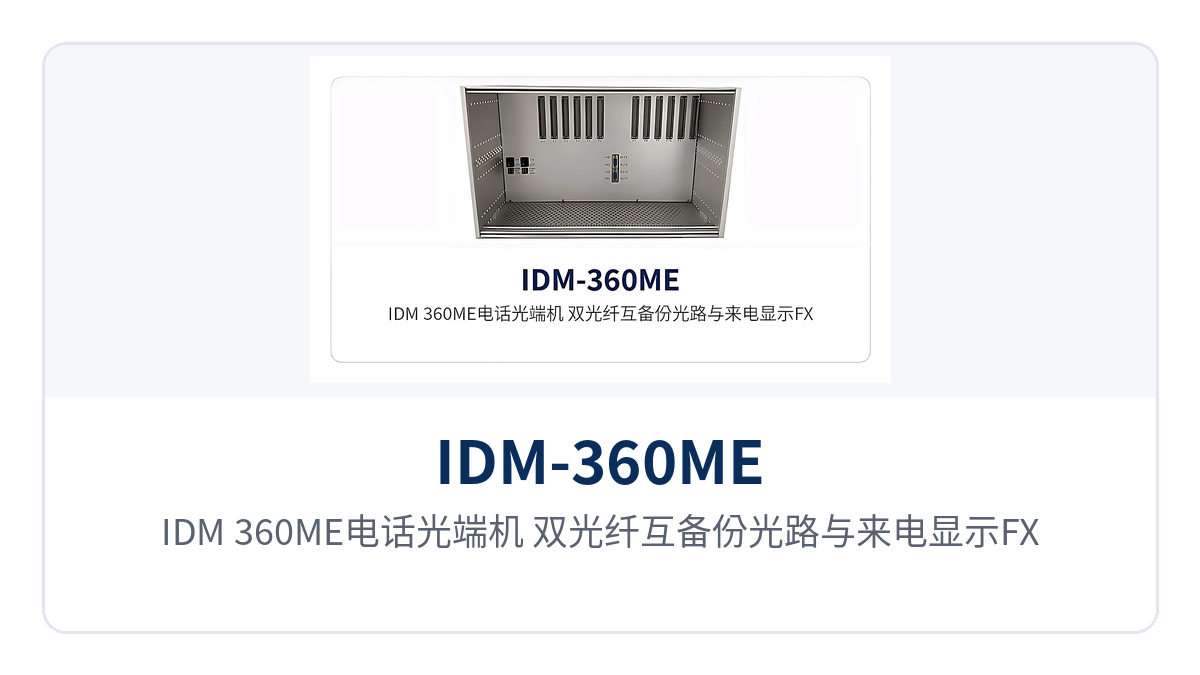
Figure 2: IDM-360ME telephone optical multiplexer networking diagram of dual-fiber mutual backup optical paths and caller ID (CID) FXO/FXS interface applications
IDM-360ME Differentiation Point
Differentiation Point | Value Description |
|---|---|
360 voice channels: a single unit fully configured with 360 telephones | 12 service cards of 30 channels each; voice capacity expansion proceeds card by card, and voice growth is met by adding cards |
155M optical port: a pair of optical fibers carries all services | A pair of optical fibers simultaneously carries 360 voice channels, 4-channel 100M Ethernet and 4 groups of E1, with narrowband and broadband multiplexed over one fiber |
Dual-fiber backup: CMU main control 1+1 and dual-fiber mutual backup | Automatic switchover without interruption when the main control or optical path is abnormal, ensuring continuous operation of the private network link |
All card slots hot-swappable: live maintenance of 12 service cards in a 6U chassis | The 12 service cards and all card slots support hot-swappable; replacing a faulty card does not affect the remaining voice channels and data |
IDM-360ME Technical Specifications
The IDM-360ME is a 155M optical port multi-service optical multiplexer. The following parameters cover optical interfaces, Ethernet, E1, telephone interfaces and power supply and environment. They are subject to product documentation and are provided for networking design and equipment selection verification.
Function
Function | Description |
|---|---|
360-channel voice access | 12 user cards each access 30 channels of 64K telephone audio service, 360 channels at full configuration; FXO/FXS interfaces support caller ID (CID) |
4-channel 100M wire-speed Ethernet | 4 adaptive 100M RJ-45 interfaces, wire-speed 100Mbit/s, compliant with IEEE-802.3u, supporting VLAN partitioning to isolate services |
4 groups of E1 transparent transmission interfaces | 4 groups of E1 transparent transmission, 75Ω unbalanced, bit rate 2048Kbps, HDB3 line coding, supporting ITU-T G.703, PCM30/31 frame structure |
1+1 redundant mutual backup | CMU main control card 1+1 mutual backup, power supply 1+1 mutual backup, main control card dual-fiber transmission mutual backup |
Hot-swappable card slots | The 12 service cards and all card slots support hot-swappable; replacing a faulty card does not interrupt services |
Unified optical transmission | Narrowband and broadband services multiplexed onto a 155M optical channel, saving cables and rack positions |
Interface and Performance Specifications
Item | Parameter/Specification | Description/Applicable Conditions |
|---|---|---|
Optical interface | FC (SC and other interfaces can be customized); single-mode (multi-mode optional) | Optical fiber rate 155Mbps, wavelength 850nm/1310nm/1550nm |
Transmit optical power | -2~-11dBm | Factory optical power range |
Receiver sensitivity | Better than -36dBm | Optical receive performance specification |
Ethernet | RJ-45, 100M wire-speed 100Mbit/s | Compliant with IEEE-802.3u, 10/100M adaptive |
E1 interface | Bit rate 2048Kbps, line coding HDB3 | Supports ITU-T G.703, impedance 75Ω/120Ω, PCM30/31 transparent transmission |
FXO/FXS interface | Audio range 300Hz~3400Hz | Three-element complex impedance 200Ω+560Ω//0.1μF, A-law in ITU G.711, loop current 25mA/channel |
Power supply and power consumption | DC-48V/DC48V | Overall power consumption ≤400W, 1+1 mutual backup power supply |
Environmental conditions | Operating temperature 0℃~+40℃ | Humidity ≤90% (35℃) non-condensing |
Product dimensions | Length × depth × height 440×375×265(mm) | Standard 6U chassis, centralized chassis design |
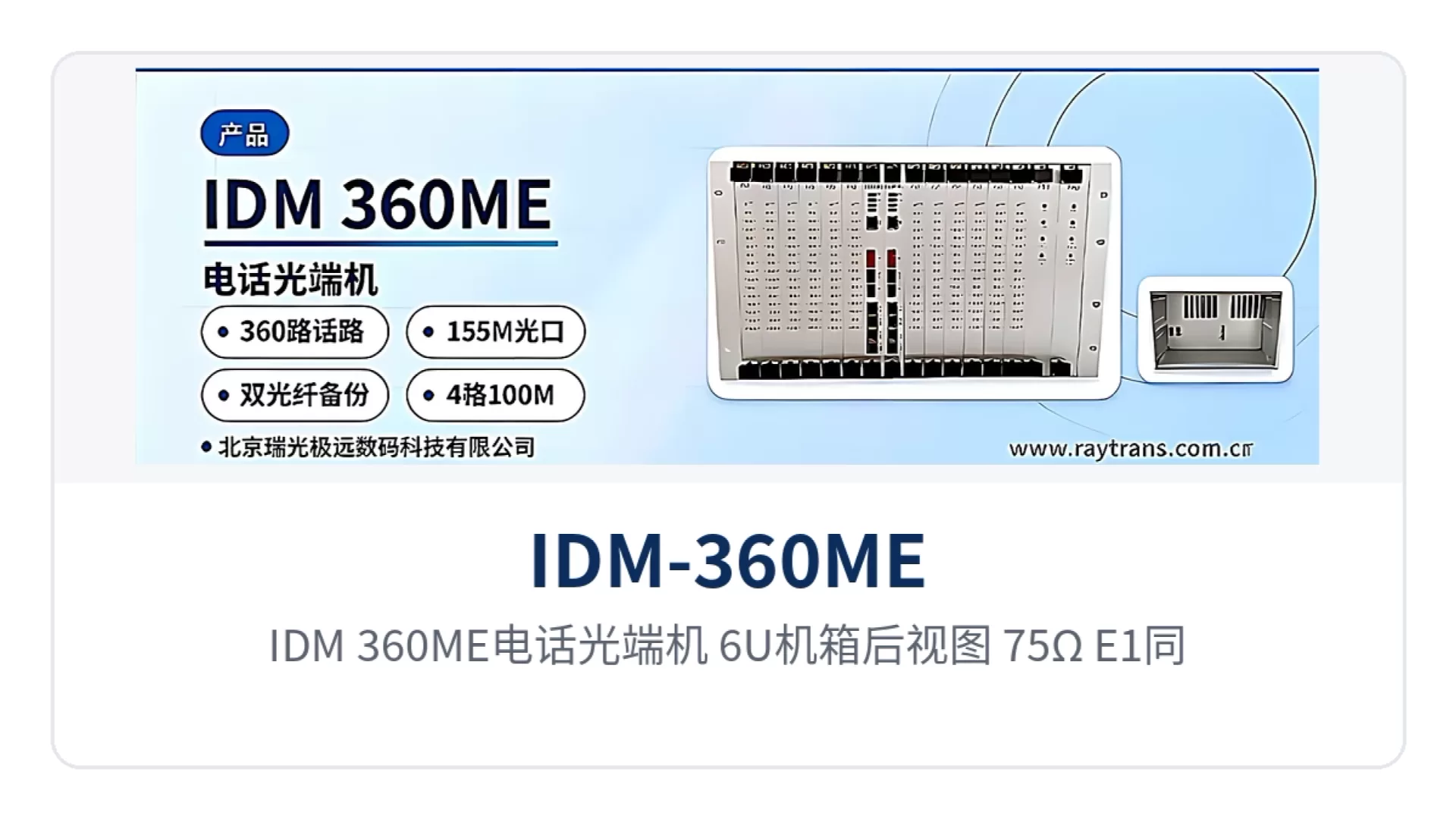
Figure 3: Close-up of the rear view of the IDM-360ME telephone optical multiplexer 6U chassis, 75Ω E1 coaxial interfaces, Ethernet network ports and dual power supply modules