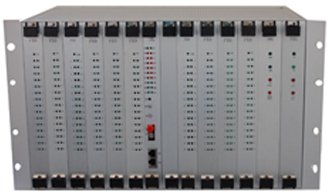
IDM-300ME
IDM-300ME
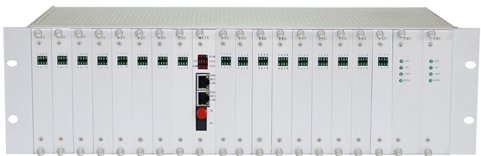
The IDM-300ME multi-service optical terminal provides 2 shared wire-speed 100M Ethernet interfaces and 6 groups of transparent E1 interfaces. It also provides FXO and FXS interfaces with Caller ID functionality, supporting up to 300 subscriber voice channels.
Friendly Reminder:
This high-capacity telephone optical terminal is the best alternative to copper cables. The price of one pair of 300-channel telephone optical terminals is equivalent to the price of 600 meters of 64-core cable!
Overview:
The IDM-300ME telephone optical terminal provides 2 shared wire-speed 100M Ethernet interfaces and 6 groups of transparent E1 interfaces. It also provides FXO and FXS interfaces with Caller ID functionality, supporting up to 300 subscriber voice channels.
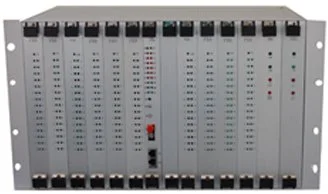
The IDM-300ME offers 13 card slots with 1+1 redundant power supplies, 10 service cards, and 1 main control card. All card slots support hot-swapping.
The IDM-300ME multiplexes narrowband and broadband services onto a 155M optical transmission channel, achieving both simplified transmission lines and cost savings. The device features a plug-in card structure design, with each service card providing 30 telephone channels, making installation easy and maintenance convenient.
Product Features:
Optical line rate of 155Mbps;
1 CMU central control management card, 10 user card slots, each user interface card supports 30 channels of 64K telephone audio services, with a maximum user interface capacity of 300 channels;
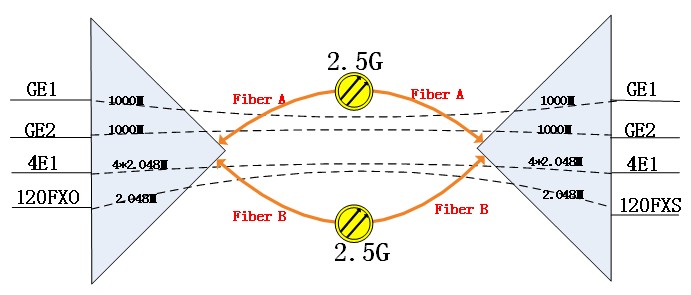
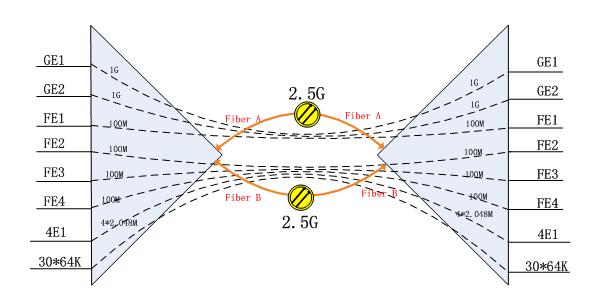
2 100M auto-negotiation Ethernet channel interfaces, supporting VLAN partitioning;
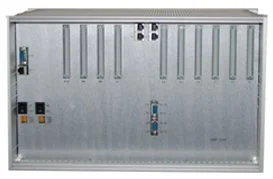
6 groups of transparent E1 interfaces, 4 groups in 75-ohm unbalanced mode and 2 groups in 120-ohm balanced mode, allowing customers to select based on their environment;
The entire unit features a centralized chassis design, standard 6U chassis, compliant with telecom and carrier standards;
Simple installation and easy maintenance.
Technical Specifications:
Optical Interface
Connector Type | FC (SC etc. customizable) | Fiber Mode | Single-mode (multi-mode optional) |
Optical Line Rate | 155Mbps | Wavelength | 850nm/1310nm/1550nm |
Transmit Power | -2~-11dBm | Receiver Sensitivity | Better than -36dBm |
Ethernet
Connector Type | RJ-45 | Transmission Rate | 100M wire-speed, 100Mbit/s |
Standard Protocol | Compliant with IEEE-802.3u standard | Port Mode | 10/100M auto-negotiation |
E1 Interface
Line Rate | 2048Kbps | Line Code | HDB3 |
Standard Protocol | Supports ITU-T G.703 | Impedance | 75Ω/120Ω |
Frame Structure | PCM30/31 | Mode | Transparent |
FXO/FXS Interface
Audio Range | 300Hz~3400Hz | Impedance | Triple complex impedance 200Ω+560Ω//0.1μF |
Compression Rate | ITU G.711 A-law | Loop Current | 25mA/channel |
Power Supply and Consumption
Power Supply | DC-48V/AC220V (External) | Total Power Consumption | ≤400W |
Environmental Conditions
Operating Temperature | 0℃~+40oC | Humidity | ≤90% (35℃) Non-condensing |
Product Dimensions
Width × Depth × Height | 482×266×270 (mm) |
FAQs
Top 10 Common Questions About Telephone Optical Terminals
Based on years of experience in the production and R&D of telephone optical terminals…
View answerHow to Troubleshoot Common Faults of Telephone Optical Terminal?
Device cannot be powered on Check whether the power cable is connected correctly.
View answerWhat is an Optical Terminal?
Many people are unfamiliar with the optical terminal, but in essence, it is a dedicated device for optical-electrical…
View answer