
Introduction to Common Connectors for Raytrans Multi-Service Optical Terminals
A detailed description of several common fiber optic connectors used in network engineering for Raytrans Multi-Service…
Raytrans Multi-Service Optical Terminal provides a detailed description of several common fiber optic connectors used in network engineering:
① FC-type fiber optic connector: round with thread, commonly known as round head, with external reinforcement using a metal sleeve and screw-type fastening. FC connectors are generally used in telecommunications networks, with a nut screwed onto the adapter. The advantages are reliability and dust resistance; the disadvantage is a slightly longer installation time. They are typically used on the ODF side (most commonly on distribution frames).
② SC-type fiber optic connector: snap-in square type, commonly known as large square head, a connector for GBIC optical modules on Multi-Service Optical Terminals. Its housing is rectangular, and the fastening method is push-pull latching, requiring no rotation. SC connectors are directly plugged and unplugged, making them very convenient to use; the disadvantage is that they can easily fall out. (Most commonly used on routers and switches.)
③ ST-type fiber optic connector: snap-in round type, commonly used on fiber distribution frames, with a round housing and screw-type fastening. After insertion, the ST connector is rotated half a turn and secured by a bayonet catch; the disadvantage is that it can easily break. (For 10Base-F connections, the connector is typically of the ST type. Commonly used on fiber distribution frames.)
④ LC-type fiber optic connector: commonly known as small square head, a connector for SFP modules on Multi-Service Optical Terminals, manufactured with a convenient modular jack (RJ) latching mechanism. (Commonly used on routers.)
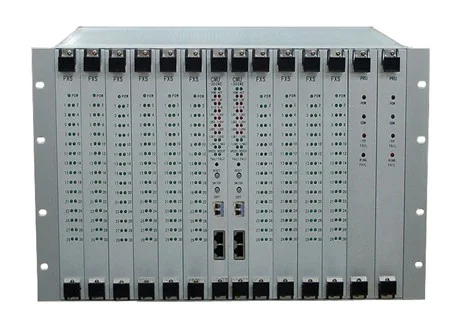
⑤ MT-RJ: a square fiber optic connector with integrated transmit and receive, featuring dual fibers for both transmission and reception in one head. It consists of two high-precision molded plastic connectors and an optical cable. The external parts of the connector are precision plastic components, including a push-pull plugging and clamping mechanism. Suitable for indoor applications in telecommunications and data network systems (used on Raytrans Multi-Service Optical Terminals).
FAQs
What Is the Definition of Communication?
Communication: the exchange and transmission of information between people, or between people and nature…
View answerWhat is the working principle and function of a media converter?
The rapid advancement of informatization has led to growing demand for multimedia communications such as data, voice…
View answerWhat is the difference between an Optical Terminal and a Media Converter?
Optical Terminal is a device that converts multiple E1 (a data transmission standard for trunk lines…
View answerPCM30 Working Principle: What Is PCM30/32
PCM30 Equipment Working Principle The 30-channel PCM equipment refers to equipment that provides 30 user interfaces and…
View answerWhat is E1? How to Use E1
What is E1 The European 30-channel pulse code modulation PCM is abbreviated as E1, with a rate of 2.048Mbit/s.
View answer