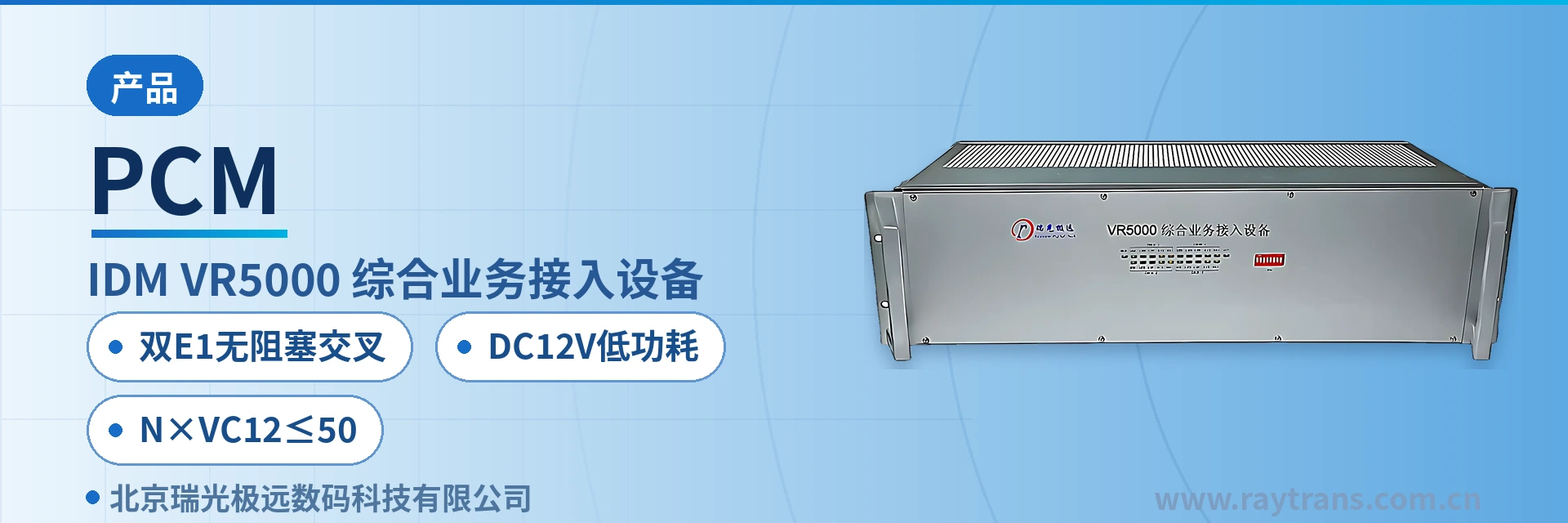
PCM Equipment IDM VR5000
Dual-E1 time-slot non-blocking cross-connection, one unit aggregates voice, data, and images, can be directly supplied by field solar power and storage batteries
The IDM VR5000 integrated service access device uses two standard E1 transmission channels (G.703 standard) and adopts the PCM30/31 format to directly provide various subscriber interfaces such as voice, data, and image. It also features time-slot non-blocking cross-connection between the two E1 groups and among all subscriber interfaces. In addition, the device supports multiple clock modes to meet the clock requirements of various application environments.
IDM VR5000 Integrated Service Access Device is a PCM integrated service access device that carries voice, data, and image services over 2 E1 channels. Developed by Beijing Ruiguang Jiyuan Digital Technology Co., Ltd. (Raytrans), it multiplexes services from dispersed subscriber terminals into E1 channels and performs service scheduling at the time slot level. It is a typical integrated service access device for product showcase at endpoint sites.
The device adopts the PCM30/32 frame structure and channel-associated signaling (CAS). Its 2 standard E1 channels comply with ITU-T G.703, with a bit rate of 2.048 Mbps and HDB3 line coding, and selectable 75 Ω or 120 Ω impedance. As time-slot cross-connect equipment, it provides 64K time-slot non-blocking cross-connection between the 2 E1 channels and among all subscriber interfaces. The E1 time-slot non-blocking cross-connect capability enables any subscriber circuit to be assigned to any E1 time slot.
The unit is powered by DC 12 V with power consumption ≤12 W, operates at -20℃ to +50℃ and 0-95% relative humidity (non-condensing), and can be powered directly by field solar power and storage batteries. The device targets electric power private networks, rail transit communication, and unattended sites in the field, providing voice, data, and image service access at endpoint sites, and can serve service termination in rail transit communication access solutions and government private network optical fiber communication solutions.
Key Specifications at a Glance: 2 E1 · 2.048 Mbps HDB3 · 64K time-slot non-blocking cross-connection · DC 12 V/≤12 W · -20℃~+50℃ · N×VC12≤50
What kind of device is a PCM integrated service access device?
A PCM integrated service access device is an access device that encodes analog voice into 64 Kbps streams through pulse code modulation (PCM) and then aggregates them onto E1 channels according to time division multiplexing (TDM) rules. The IDM VR5000 from Raytrans belongs to this product category. On one side, the device connects to subscriber equipment such as telephones, dispatch consoles, and data terminals; on the other side, it interfaces with the transmission network or SPC switching network through 2 E1 channels, enabling bidirectional communication between subscriber terminals and between subscriber terminals and the switching network. It is a typical integrated service access device form factor in product showcase.
Knowledge block: the time slot structure of PCM30/32. PCM30/32 is the frame structure standard for the E1 base group. Each frame is divided into 32 time slots of 64 Kbps each, where TS0 is used for frame alignment and alarms, TS16 is used for channel-associated signaling, and the remaining 30 time slots carry services. Under this structure, 2 E1 channels provide a total of 60 64 kbit/s service time slots. The cross-connect matrix of the IDM VR5000 establishes connections between these time slots at 64K granularity, achieving E1 time-slot non-blocking cross-connection.
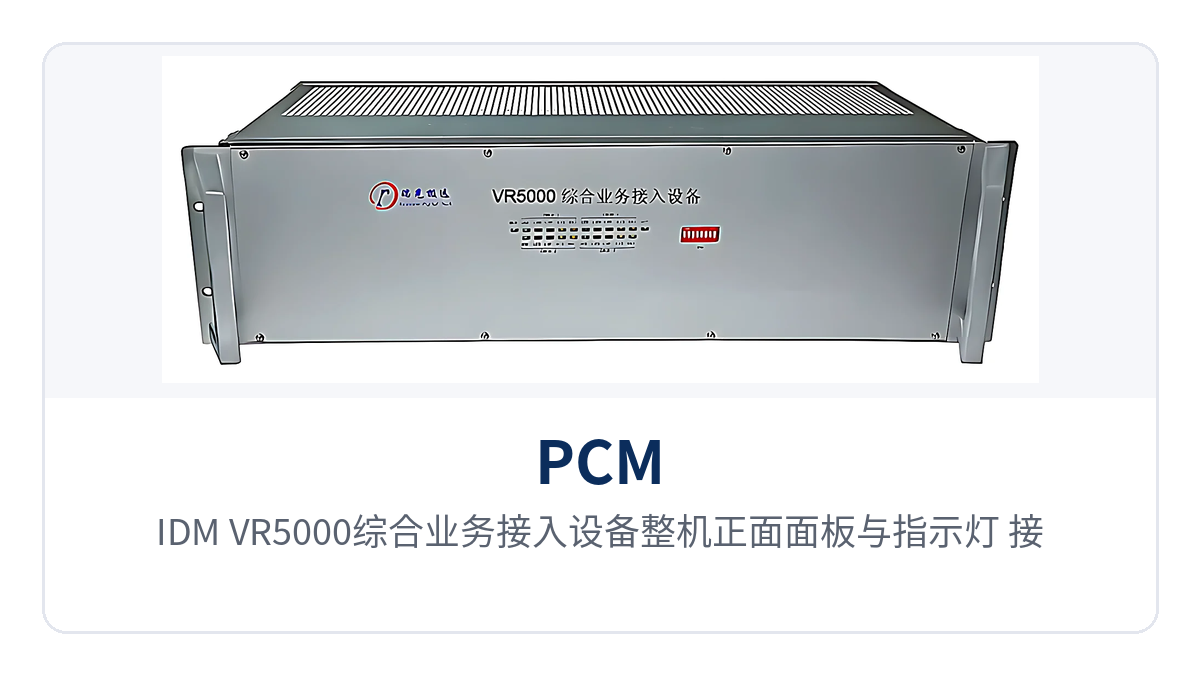
Figure 1: Front panel, indicator LEDs, and interface layout of the IDM VR5000 integrated service access device
Which service interfaces can this PCM integrated service access device provide?
The IDM VR5000 directly provides three types of subscriber interfaces: voice, data, and image. The service types and quantities are configured according to the site list, and after mixed access, they are allocated by the cross-connect matrix to the target E1 time slots. The interfaces cover analog voice channels, magneto voice channels, E&M trunks, low-speed data, and synchronous data. A site does not need a separate transmission device for each service type; one integrated service access device can complete multi-service aggregation.
Function | Description |
|---|---|
Dual E1 transmission channels | Provides 2 E1 channels compliant with ITU-T G.703, with a bit rate of 2.048 Mbps, HDB3 line coding, and selectable 75 Ω/120 Ω impedance |
Time-slot non-blocking cross-connection | Establishes 64K time-slot connections between the 2 E1 channels and among all subscriber interfaces; any input time slot can be scheduled to any output time slot |
FXO/FXS voice access | Analog trunk and analog subscriber interfaces, with an audio range of 300 Hz to 3400 Hz, ITU G.711 A-law compression, and a loop current of 20 mA per channel |
E&M 2/4-wire interface | 2-wire or 4-wire E&M trunk access, with balanced 600 Ω impedance and return loss of no less than 18 dB |
V.24 data interface | Asynchronous ≤9600 bps, synchronous 64 Kbps; electrical characteristics comply with the CCITT V.28 protocol |
V.35 data interface | RJ-45 interface, rate n×64 Kbps (n=0–31), compliant with ITU-T V.35; terminal interface complies with ISO2593 |
Ethernet interface | Supports IEEE802.3, full/half duplex/adaptive, with bandwidth allocated by N×VC12 |
Multiple clock modes | Provides multiple clock modes; the timing source can be selected according to the application environment to meet synchronization requirements for private network and switching network interconnection |
How to check the technical specifications
The technical specifications of the IDM VR5000 are divided into three groups: E1 line, voice and data interfaces, and power supply and environment. Check them item by item against the opposite-end device and on-site conditions. When interface impedance, frame structure, and supply voltage are inconsistent, services often present as one-way audio, slips, or failure to start up. Item-by-item comparison of specifications saves time compared with troubleshooting afterwards.
Item | Parameter/Specification | Description/Applicable Conditions |
|---|---|---|
Bit rate | 2.048 Mbps | Standard E1 line rate |
Line coding | HDB3 | Line coding compliant with ITU-T G.703 |
Standard protocol | Supports ITU-T G.703 | International standard followed by the E1 interface |
Impedance | 75 Ω/120 Ω | 75 Ω coaxial or 120 Ω balanced, selected according to the line form at the opposite end |
Frame structure | PCM30/32 | 32 time slots per frame, of which 30 carry services |
Signaling | Channel-associated signaling | Line and voice channel status is transmitted together with the voice time slots |
Ethernet transmission rate | N×VC12 (N≤50) | Bandwidth allocated at VC12 granularity |
Ethernet protocol | Supports IEEE802.3 | Operating mode: full/half duplex/adaptive |
The specifications of the voice and data interfaces determine which terminals can be directly connected: FXO connects to the exchange side, FXS connects to telephones, and E&M connects to dispatch trunks. Rate and impedance are configured according to the interface type at the opposite end. The following specifications are taken from the public technical documentation of the IDM VR5000; actual configurations are subject to the manufacturer's technical documentation and commercial confirmation.
Item | Parameter/Specification | Description/Applicable Conditions |
|---|---|---|
FXO/FXS audio range | 300 Hz~3400 Hz | Transmission band of the analog voice channel |
Compression | ITU G.711 A-law | Voice codec |
Impedance (exchange side) | Three-element complex impedance 200 Ω+560 Ω//0.1 μF | Interfacing with the audio interface on the exchange side |
Loop current | 20 mA/channel | Operating current of the analog voice channel |
EM2/4-wire impedance | Balanced 600 Ω | Balanced audio trunk access |
EM2/4-wire return loss | No less than 18 dB | Specification of the balanced 600 Ω interface |
V.24 transmission rate | Asynchronous ≤9600 bps; synchronous 64 Kbps | Electrical characteristics comply with the CCITT V.28 protocol |
V.35 interface | RJ-45, n×64 Kbps (n=0~31) | Complies with ITU-T V.35 recommendation; terminal interface complies with ISO2593 |
Power supply and environmental parameters directly determine whether a site can operate on power sources other than the grid; the 12 V DC input and low power consumption are the selection basis for field scenarios. The following parameters follow the technical specification of the IDM VR5000; check the bus voltage and polarity before connecting the site power supply.
Item | Parameter/Specification | Description/Applicable Conditions |
|---|---|---|
Power supply mode | DC 12 V | 12 V DC input, can be taken directly from the site DC bus |
Overall power consumption | ≤12 W | Upper limit at full configuration workload |
Operating temperature | -20 ℃~+50 ℃ | Equipment room and outdoor cabinet environments |
Relative humidity | 0~95% (non-condensing) | Normal operation under non-condensing conditions |
How does dual-E1 non-blocking cross-connection enable flexible scheduling of private network links?
Dual-E1 non-blocking cross-connection solves the problem of time slot resources contending with each other: the cross-connect matrix establishes connections in units of 64K time slots, all time slots of the two E1 groups can participate, and any input time slot can be connected to any output time slot. Connections do not share the same matrix resources, so adding a circuit does not push existing circuits out of their time slots; this is exactly how E1 time-slot non-blocking cross-connection manifests as the core capability of time-slot cross-connect equipment.
Service adjustment changes only the configuration, not the cabling. As E1 time-slot cross-connect equipment, when a site adds services or changes service assignment, you only need to specify the input E1 channel and time slot and the output E1 channel and time slot one by one in the time-slot cross-connect table, while the on-site lines and the opposite-end equipment remain untouched, so the cutover workload falls on the configuration side rather than the construction side. This feature enables the IDM VR5000 to flexibly adjust time slot allocation according to site service changes in rail transit communication access solutions, and also facilitates smooth capacity expansion of government private network optical fiber communication solutions on the existing transmission system.
The 2.048 Mbps, HDB3 E1 channel follows the existing network transmission system, so upgrade scenarios usually do not require replacing the opposite-end PCM equipment. The device also provides multiple clock modes, and the master-slave timing relationship can be set according to the conditions of the equipment at both ends, avoiding slips caused by clock wander when a private network interconnects with an exchange network, and providing synchronization assurance for the stable operation of rail transit communication access solutions and government private network optical fiber communication solutions.
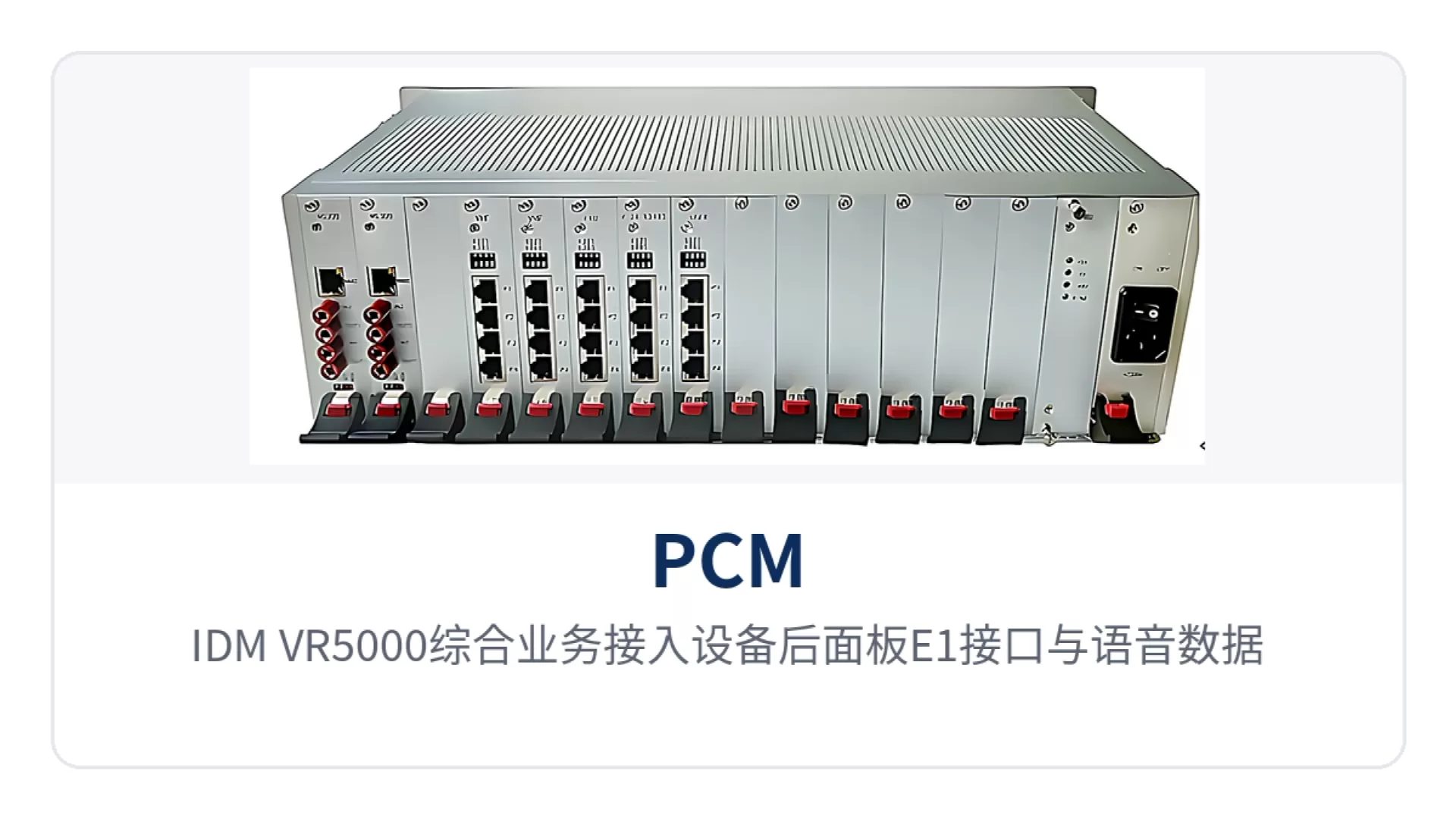
Figure 2: Close-up of the E1 interfaces and voice/data service wiring terminals on the rear panel of the IDM VR5000 integrated service access device
How do DC12V low power consumption and wide-temperature design adapt to field sites?
The DC12V low power consumption design simplifies the power supply of the unit into a single 12 V DC input: as a low power consumption PCM multiplexer, the overall power consumption is ≤12 W and can be taken directly from solar panels and battery banks, so the site does not need dedicated AC power distribution and an inverter for the device. The fewer the power supply stages, the fewer the points of failure and the less maintenance workload at field sites.
Knowledge block: power budget of a 12 V DC site. Estimated at the upper limit of overall power consumption ≤12 W, the device consumes about 0.29 kWh when running continuously for 24 hours; a 100 Ah/12 V storage battery can theoretically support several days, and the actual backup time must be converted according to the battery discharge depth and the number of consecutive rainy days. The lower the power consumption limit, the smaller the configured capacity of solar panels and storage batteries, and the site construction cost decreases accordingly.
The operating temperature of -20 ℃+50 ℃ and the humidity requirement of 095% non-condensing cover the common conditions of unattended equipment rooms and outdoor cabinets. Once installed in a cabinet, the device can stay online for a long time with natural heat dissipation, without air conditioning or heating devices, so the site environmental control expenses can be saved.
Differentiation Point | Value to Users |
|---|---|
Dual-E1 non-blocking cross-connection | Any 64K time slot interconnection between the two E1 groups; private network links in electric power, rail transit and other sectors can be scheduled online as services change, and capacity expansion does not require moving existing circuits |
DC12V low power consumption | 12 V DC direct access, the unit ≤12 W; field sites can be powered by solar and storage batteries, eliminating the inverter stage |
-20 ℃~+50 ℃ | Wide-temperature operation together with 0~95% non-condensing humidity allows deployment in unattended equipment rooms and outdoor cabinets |
N×VC12≤50 | Ethernet bandwidth is allocated in N×VC12≤50 granularities, so data services do not need to occupy the entire E1 channel |
Typical Application Scenarios
IDM VR5000 is suitable for private network scenarios that use E1 as the transmission medium and require multi-service access and time slot allocation at endpoint sites. Electric power private networks, rail transit communication, and unattended sites in the field are three typical deployments. The same device uses interface configuration and the time-slot cross-connect table to adapt to the service list of different sites, while spare parts and O&M practices remain unified.
Electric Power Private Network: Voice and Data Access on One Device at Substations
Between substations and the dispatch center of an electric power private network, dispatch telephone, telecontrol, and monitoring data run simultaneously, with many service types and scattered site distribution. IDM VR5000 provides access to FXO/FXS voice channels and V.24 and V.35 data within one chassis, and then sends them to the dispatch center over two E1 links. One E1 link carries voice and data at the same time, reducing the number of private network lines.
When a new bay is added or service assignment is adjusted, the central side only needs to modify the time-slot cross-connection configuration, and no rewiring is required at the substation. Channel-associated signaling (CAS) allows telephone services to interconnect directly with existing PCM switching equipment, and the upgrade does not affect calls on the existing network. This is also an important reason why electric power private networks continue to use the E1 system.
Rail Transit Communication: Voice Channels and Data Aggregation in Trackside Equipment Rooms
Sites along the rail transit line are mostly distributed in trackside equipment rooms and section equipment rooms, which are hot in summer and cold in winter. Inter-station liaison telephone and monitoring data need to be aggregated uniformly at the central side. IDM VR5000 operates at -20℃+50℃ and 095% non-condensing humidity, and can be installed in trackside cabinets for long-term operation.
The voice channels, broadcast control, and monitoring data of section stations are allocated to different E1 channels by 64K time slot. Adding a site or adjusting service assignment only requires changing the time-slot cross-connect table. Two E1 links can form a point-to-point or chain structure, and services of sites along the line are dispatched by direction, so the central side does not need to lay a dedicated circuit for each site.
Unattended Sites in the Field: Direct Power Supply from Solar Panels and Storage Batteries
Unattended sites in the field often have no mains power and rely on solar panels and battery banks for power supply. The supply voltage and power consumption of the equipment directly determine the system scale. IDM VR5000 uses DC 12V power supply with overall power consumption ≤12W and can be connected directly to the 12V DC bus, greatly simplifying the power distribution structure of the site.
Another constraint for such sites is the environment and maintenance cost: the sites are unattended, and the equipment needs to stay online for long-term operation under wide-temperature and non-condensing conditions. IDM VR5000 has an operating temperature of -20℃+50℃ and a relative humidity of 095% (non-condensing). Together with natural heat dissipation enabled by low power consumption, no additional environmental control equipment is required in the cabinet.
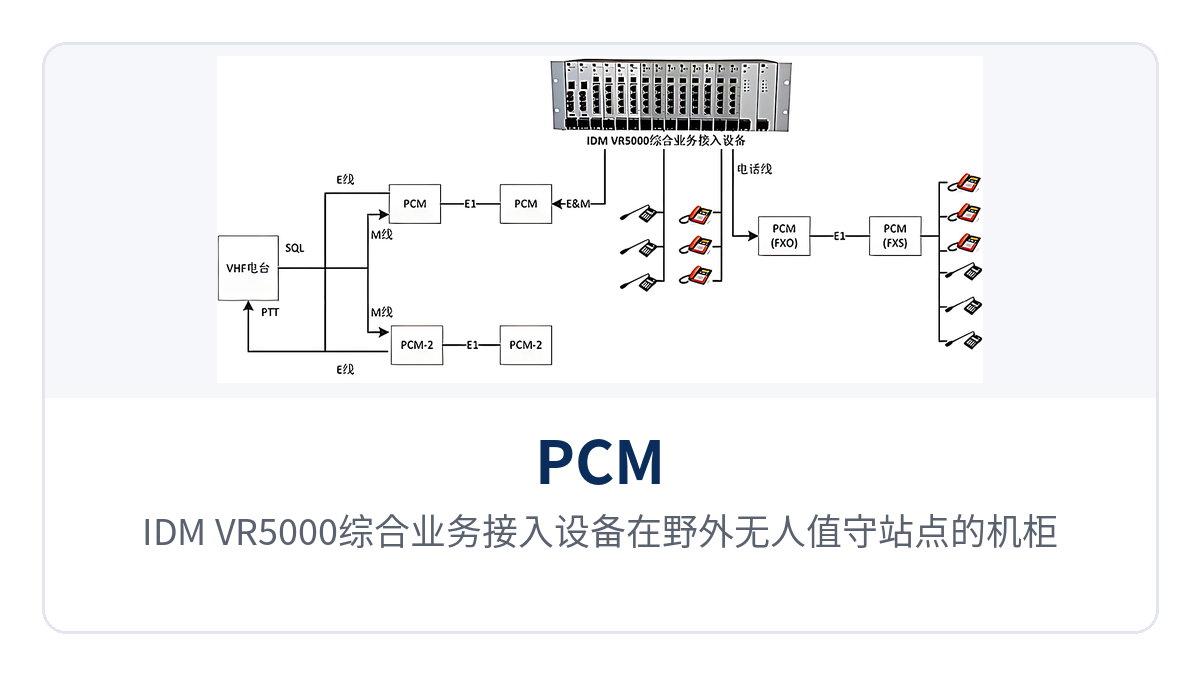
Figure 3: Cabinet installation and DC power supply wiring of the IDM VR5000 integrated service access device at an unattended site in the field