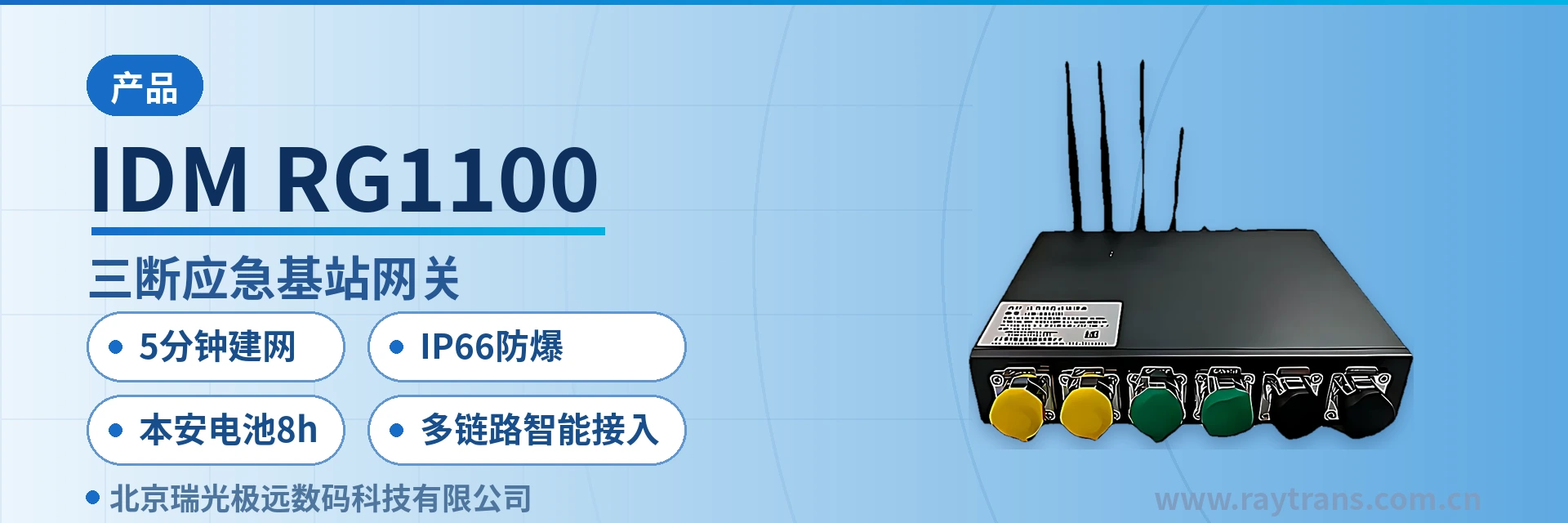
IDM RG1100 Three-Disconnection Emergency Base Station Gateway
Five-link AI scheduling, local SIP ad-hoc network when the center is down, network setup by hand in 5 minutes
The IDM RG1100 converged communication wireless base station is a waterproof emergency base station gateway that integrates multi-mode communication, softswitch, and IoT access. It supports multiple communication methods such as optical fiber, field wire, Wi-Fi HaLow, and UAV relay, and can rapidly build an independent communication network under extreme "three-disconnection" (network outage, power failure, road blockage) environments, enabling stable transmission of voice, data, and video.
The IDM RG1100 three-disconnection on-site emergency communication base station is a waterproof emergency base station that integrates multi-mode communication, softswitch, and IoT access capabilities. Developed by Raytrans, it is used to rapidly build an independent on-site communication network under the extreme "three-disconnection" conditions of network outage, power failure, and road blockage, enabling stable transmission of voice, data, and video and providing a reliable on-site foundation for emergency communications. The device simultaneously provides five types of access links: optical fiber, field wire, Wi-Fi Halow, Wi-Fi Mesh, and UAV relay. It is handheld and portable with a foldable antenna, and can establish a communication network within 5 minutes, meeting the stringent rapid deployment requirements of scenarios such as military emergency communications vehicle solutions and field video communications. For emergency rescue and firefighting, military and police border defense and field training, and chemical industrial parks and electric power inspection, the positioning of this device is not to replace the public network, but to first connect the on-site voice and video when the public network is unavailable, serving as a three-disconnection emergency communication base station that fulfills the overall solution implementation role of a command and dispatch system manufacturer.
Key Specifications at a Glance: IP66 waterproof and dustproof · explosion-proof construction · -40℃~+60℃ wide temperature · built-in intrinsically safe battery ≥8 hours · built-in SIP softswitch · optical fiber/field wire/Halow/Wi-Fi Mesh/UAV relay · network established in 5 minutes
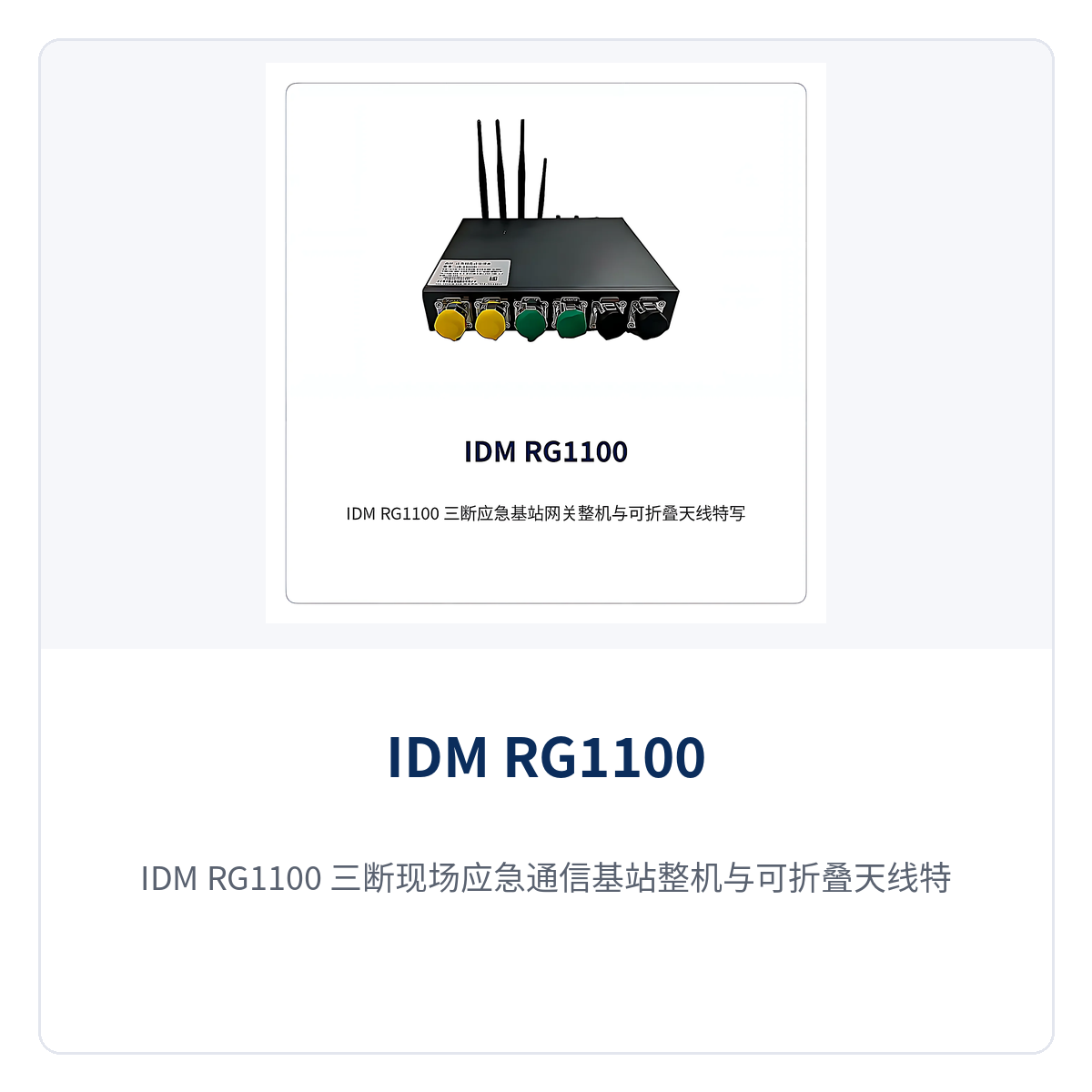
Figure 1: Close-up of the IDM RG1100 three-disconnection on-site emergency communication base station unit and foldable antenna
Which links does the three-disconnection on-site emergency communication base station rely on to build an on-site network within 5 minutes?
Whether on-site communication can be established under three-disconnection conditions depends on which usable links remain on site. As a product showcase for emergency scenarios, the IDM RG1100 simultaneously provides five types of access: optical fiber, field wire, Wi-Fi Halow, Wi-Fi Mesh, and UAV relay. Whichever link is available on site is used, without waiting for a particular link to recover. The link selection principle of this three-disconnection emergency communication base station solution works backward from on-site resources: use optical fiber where optical cable is available, field wire where wired pairs exist, Halow where obstruction is severe, Mesh where sites are scattered, and UAV relay for locations that personnel and vehicles cannot reach.
What on-site conditions does each of the five link types suit?
Optical fiber links offer high bandwidth and low latency, suitable for occasions where optical cable can be quickly laid or already exists, with voice and video running simultaneously over the same optical cable. Field wire uses existing on-site wire pairs and field twisted pair cable; when optical cable cannot be laid in time, it is used first to connect calls, quick to lay and quick to recover. Wi-Fi Halow operates in the sub-1GHz frequency band (IEEE 802.11ah), with diffraction and penetration capability superior to conventional 2.4GHz Wi-Fi, suitable for environments with dense obstruction and metal structures such as tunnels, tank farms, and underground. Wi-Fi Mesh supports peer-to-peer networking between terminals, suitable for occasions where rescue detachments deploy in a scattered manner and sites need lateral intercommunication. UAV relay extends coverage to areas inconvenient for personnel and vehicles to reach, filling coverage behind landslide masses, across river valleys, and deep in gorges, and also provides backhaul support for field video communications.
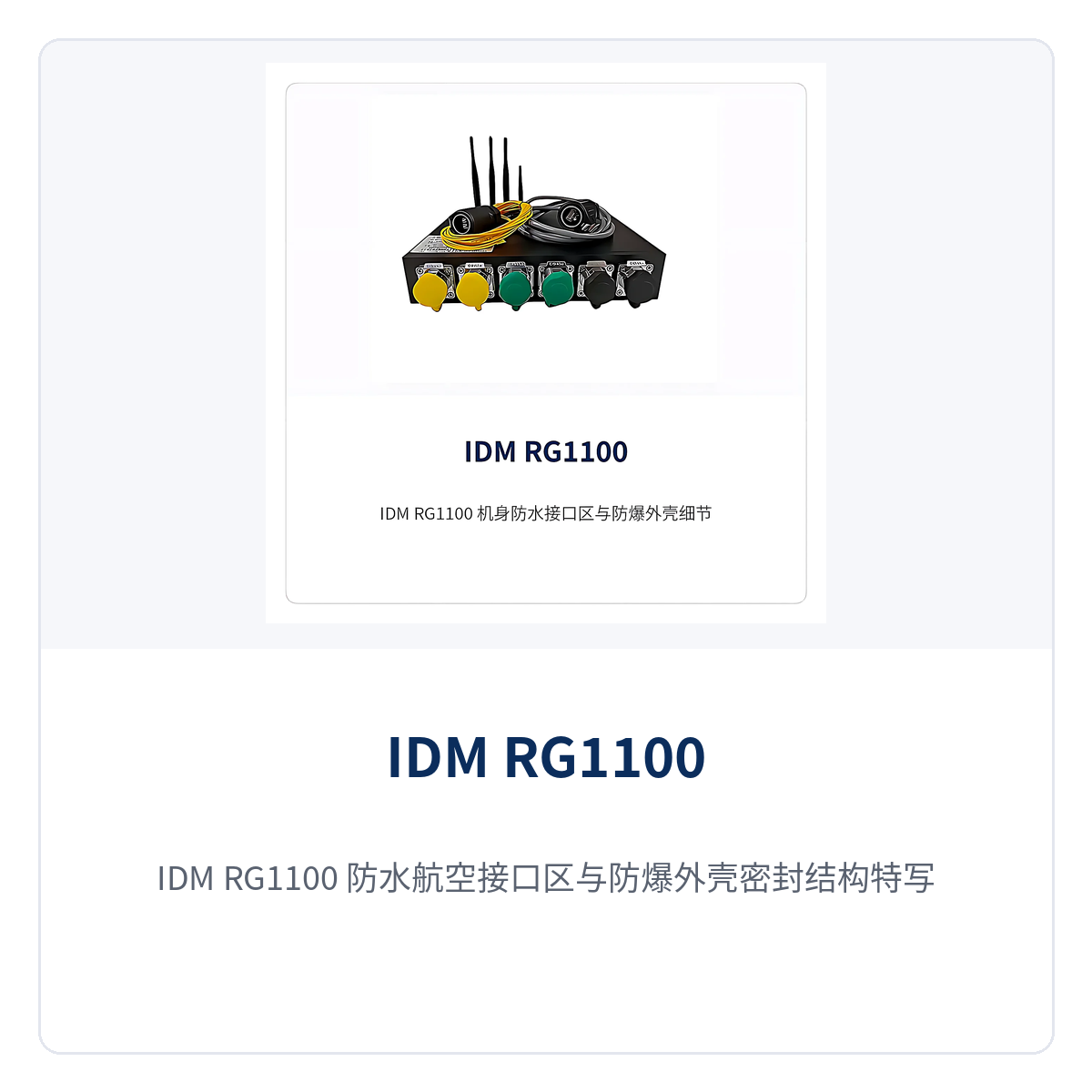
Figure 2: Close-up of the IDM RG1100 waterproof aviation interface area and explosion-proof enclosure sealing structure
How does AI automatic dispatching make multiple links truly usable?
For multi-link access to be truly usable, the difficulty lies not in the number of interfaces, but in who judges and who switches after a link fails. The IDM RG1100 monitors the bandwidth and latency of each link in real time and automatically switches to an available, better link according to policy, with no need for manual rewiring or configuration changes on site. The significance of multi-link intelligent access to users is direct: operators simply press the intercom key, and the device determines which link the service travels over. Voice, video, and data are carried on a single handheld device, so after arriving on site there is no need to wait for the external network to recover before setting up the on-site network, providing a rapidly deployable on-site foundation for military emergency communications vehicle solutions.
Can on-site calls still be made after the center is disconnected? Local networking mechanism of the built-in SIP softswitch
On-site calls can still be made after the center is disconnected, relying on the built-in SIP softswitch and redundant backup mechanism of the IDM RG1100, which is also the key difference between the three-disconnection on-site emergency communication base station and ordinary wireless coverage equipment. In conventional networking, on-site terminals send voice, video, and data uniformly to the central server for switching; once the central server or backhaul link is unavailable, the IDM RG1100 independently assumes the role of SIP server, registering and networking the on-site voice terminals and video terminals locally, with calls switched locally without relying on the central platform. For private network users, local SIP networking remains possible after the center is disconnected, and communication is not interrupted.
This layer of mechanism allows emergency communication base station networking to maintain basic dispatching capability under network outage conditions: the forward command post and rescue detachments can dial each other, the commander's voice can reach forward operating points, and the local registration relationships of video terminals are not all lost due to backhaul interruption. After on-site withdrawal, once links recover, the system returns to conventional networking without rebuilding numbers and permissions configuration.
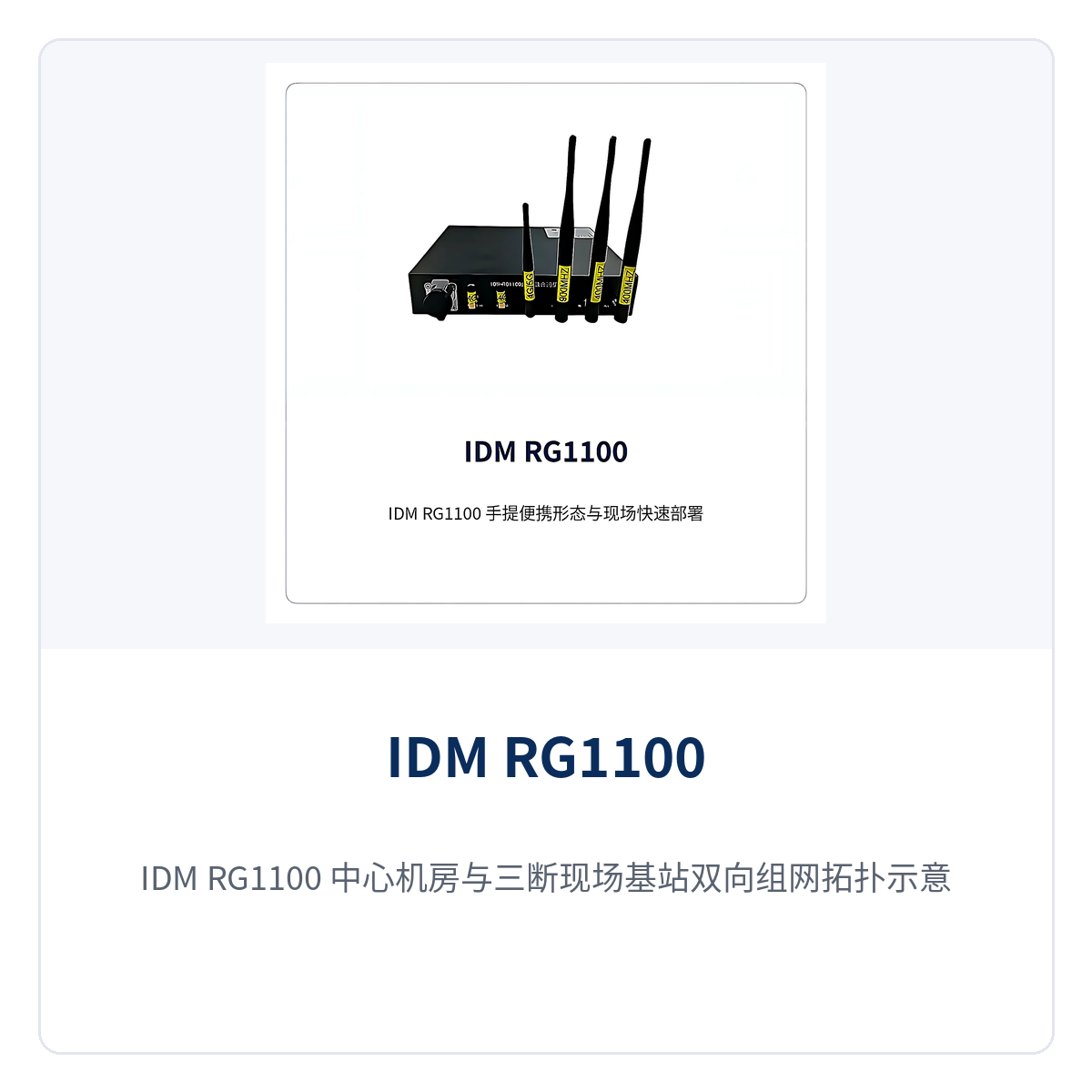
Figure 3: Schematic of bidirectional networking topology between the IDM RG1100 central equipment room and the three-disconnection on-site base station
Voice switching follows the SIP protocol (RFC 3261) and can interface with video surveillance compliant with the GB/T 28181 (Chinese video surveillance standard) and existing command and dispatch systems. On-site terminals and the rear platform intercommunicate via standard interfaces, with no need to separately modify service systems for emergency scenarios. The device supports SM (Chinese national cryptographic) algorithms SM2/SM3/SM4 encryption and link aggregation transmission; link aggregation combines the bandwidth of multiple available links to carry services, meeting the encryption and independently controllable requirements of high-security scenarios such as military, police, and government affairs.
How are digital trunking, broadcast intercom, and IoT connected into the same network?
The converged communication gateway brings voice of different formats into the same network, so existing on-site intercoms can enter the command system without replacement. The IDM RG1100 supports digital trunking intercom and broadcast intercom access, enabling intercommunication between trunking voice and SIP voice: calls between trunking terminals can be converted via the gateway into SIP calls delivered to the forward command post, and broadcast terminals can directly receive evacuation instructions and dispatch notifications. Trunking, broadcast, and telephony run simultaneously on one on-site network, so commanders do not need to switch back and forth among multiple devices.
IoT and industrial protocol access give the site not only voice but also data for judgment. The IDM RG1100 has built-in LoRa, MQTT, and Modbus gateways, supports IoT sensor device access and edge computing, and can aggregate tank farm gas concentration, underground environmental parameters, and electric power equipment telemetry nearby on site, backhauling them together with voice over the same link. Data is first aggregated and judged locally, and only key quantities are sent out when backhaul bandwidth is tight—this is the practical value of edge computing at emergency sites.
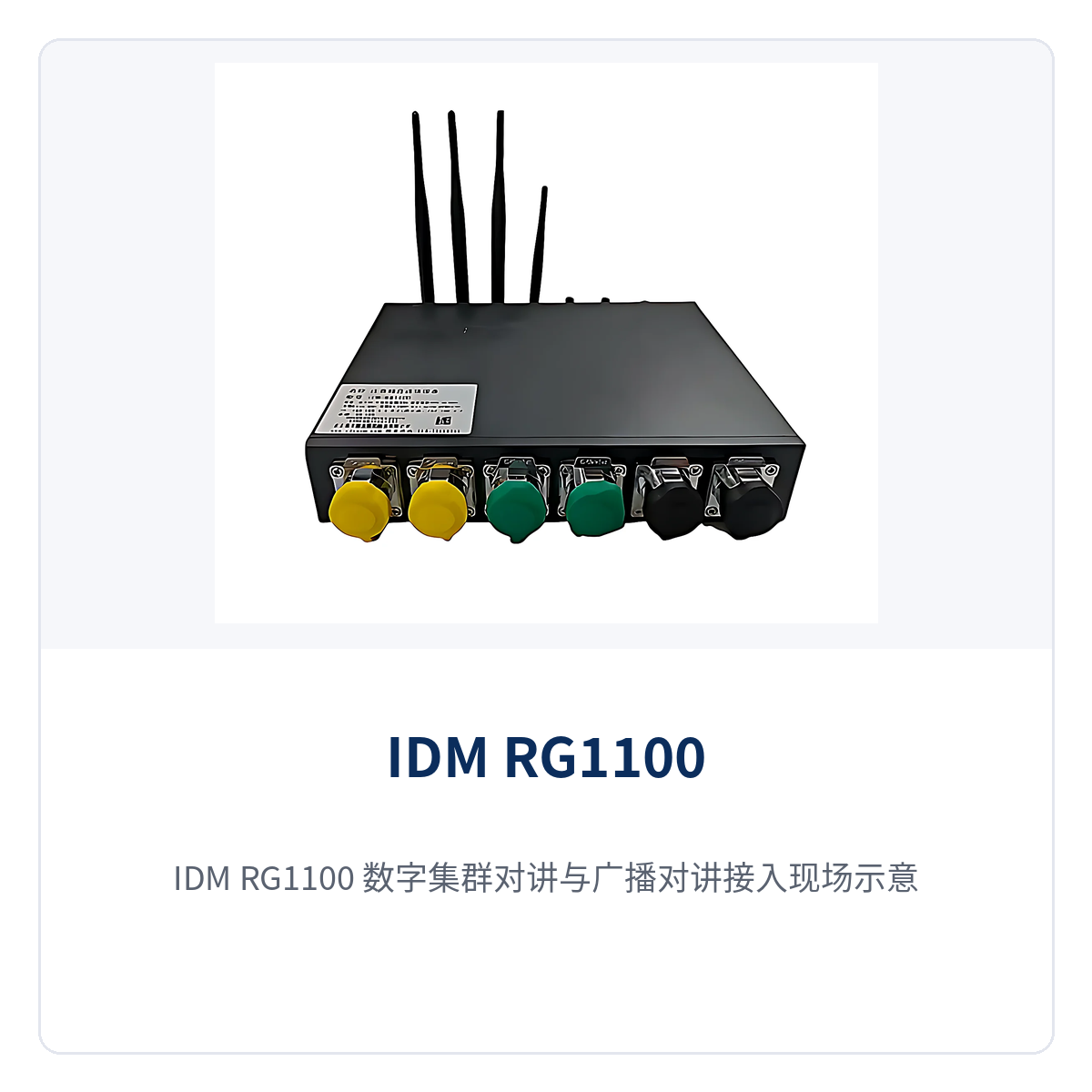
Figure 4: On-site schematic of IDM RG1100 digital trunking intercom and broadcast intercom access
IDM RG1100 Function List
Function | Description |
|---|---|
Multi-link intelligent access | Supports optical fiber, field wire, Halow, Wi-Fi Mesh, and UAV relay access; AI automatically switches to available links based on bandwidth and latency |
Softswitch and redundant backup | Built-in SIP server; local networking after the central server or backhaul link is interrupted, with on-site calls uninterrupted |
Converged communication gateway | Access for digital trunking intercom and broadcast intercom, enabling intercommunication between trunking voice and SIP voice |
IoT and industrial protocol access | Built-in LoRa, MQTT, and Modbus gateways, supporting IoT sensor device access and edge computing |
Strong environmental adaptability | IP66 waterproof and dustproof, explosion-proof construction, -40℃~+60℃ wide-temperature operation |
Long-endurance power supply | Built-in intrinsically safe battery ≥8 hours, supports solar and external power expansion |
Domestically produced and independently controllable | Adopts domestic chips, meets domestic IT innovation requirements, supports SM (Chinese national cryptographic) algorithms encryption |
Interconnection | Complies with GB/T 28181 (Chinese video surveillance standard), SIP, RFC 3261 and other standards, interfacing with existing command systems |
Rapid deployment | Handheld and portable, foldable antenna, communication network established within 5 minutes |
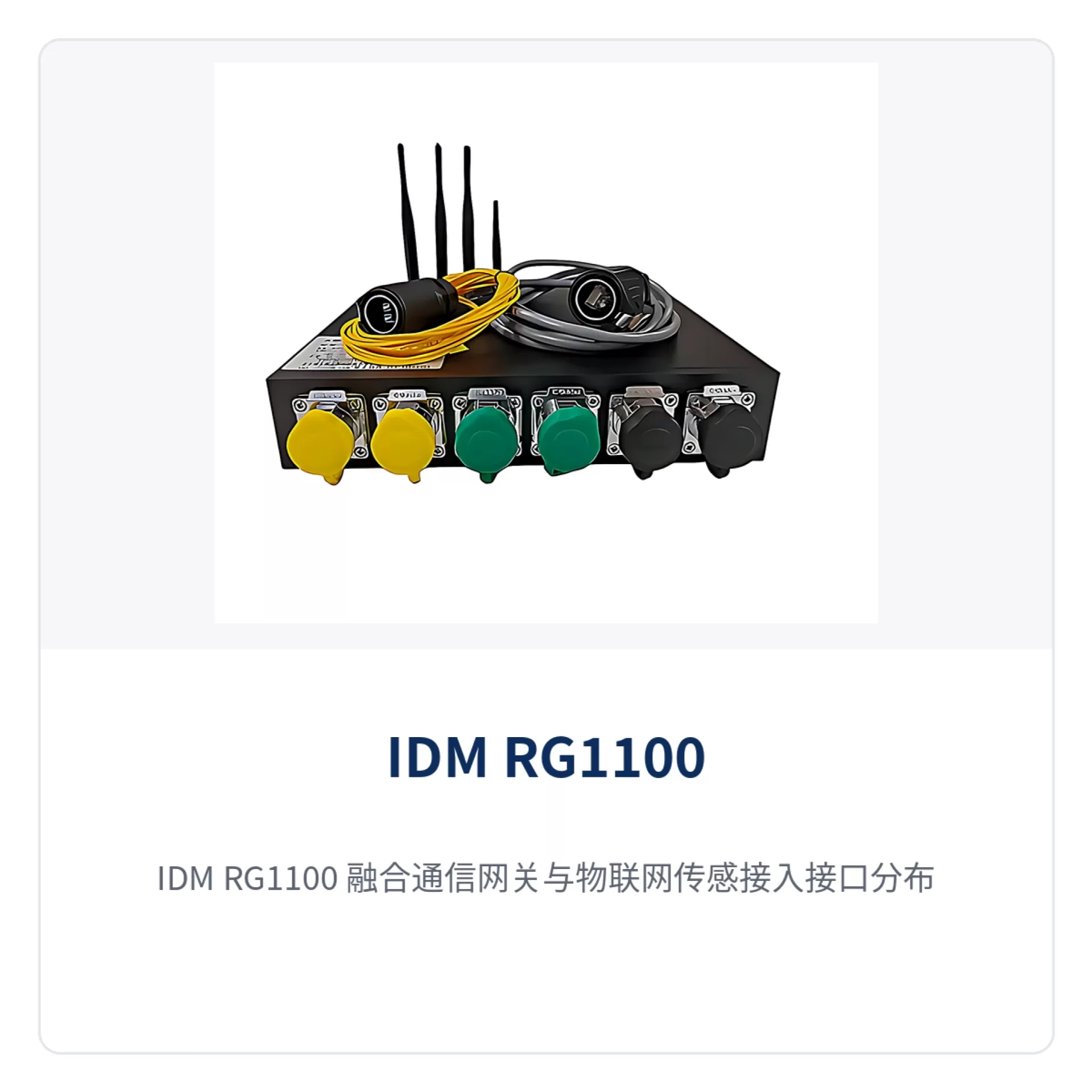
Figure 5: Interface layout of the IDM RG1100 converged communication gateway and IoT sensor access
IDM RG1100 Three-Disconnection On-Site Emergency Communication Base Station Technical Specifications and Performance Specifications
Item | Parameter/Specification | Description/Applicable Conditions |
|---|---|---|
Device type | Waterproof emergency communications base station (handheld and portable) | A single unit can form an on-site base station |
Communication link | Optical fiber, field wire, Wi-Fi HaLow, Wi-Fi Mesh, UAV relay | Selected according to available on-site links, with automatic AI switchover |
Switching capability | Built-in SIP server | On-site local networking and calls after the center is disconnected |
Intercom and IoT access | Digital trunking intercom, broadcast intercom, LoRa, MQTT, Modbus | Trunking voice and IoT data carried on the same network |
Ingress protection (IP) rating | IP66 waterproof and dustproof | Explosion-proof construction, suitable for chemical industrial parks, underground sites and similar occasions |
Operating temperature | -40℃~+60℃ | Wide temperature covers underground and extremely cold environments |
Power supply and endurance | Built-in intrinsically safe battery ≥8 hours | Supports solar power and external power supply expansion |
Deployment time | Within 5 minutes | Handheld and portable, foldable antenna |
Encryption and domestic production | SM (Chinese national cryptographic) algorithms encryption, domestically produced chip | Complies with domestic IT innovation requirements, for high-security scenarios such as law enforcement and government affairs |
Protocols and standards | GB/T 28181 (Chinese video surveillance standard), SIP, RFC 3261 | Interfacing with existing command systems |
Optical interface rate, dimensions and weight, wireless transmit power, number of concurrent dispatch channels | Not yet recorded in the knowledge base | Subject to the manufacturer's technical documentation and commercial confirmation |
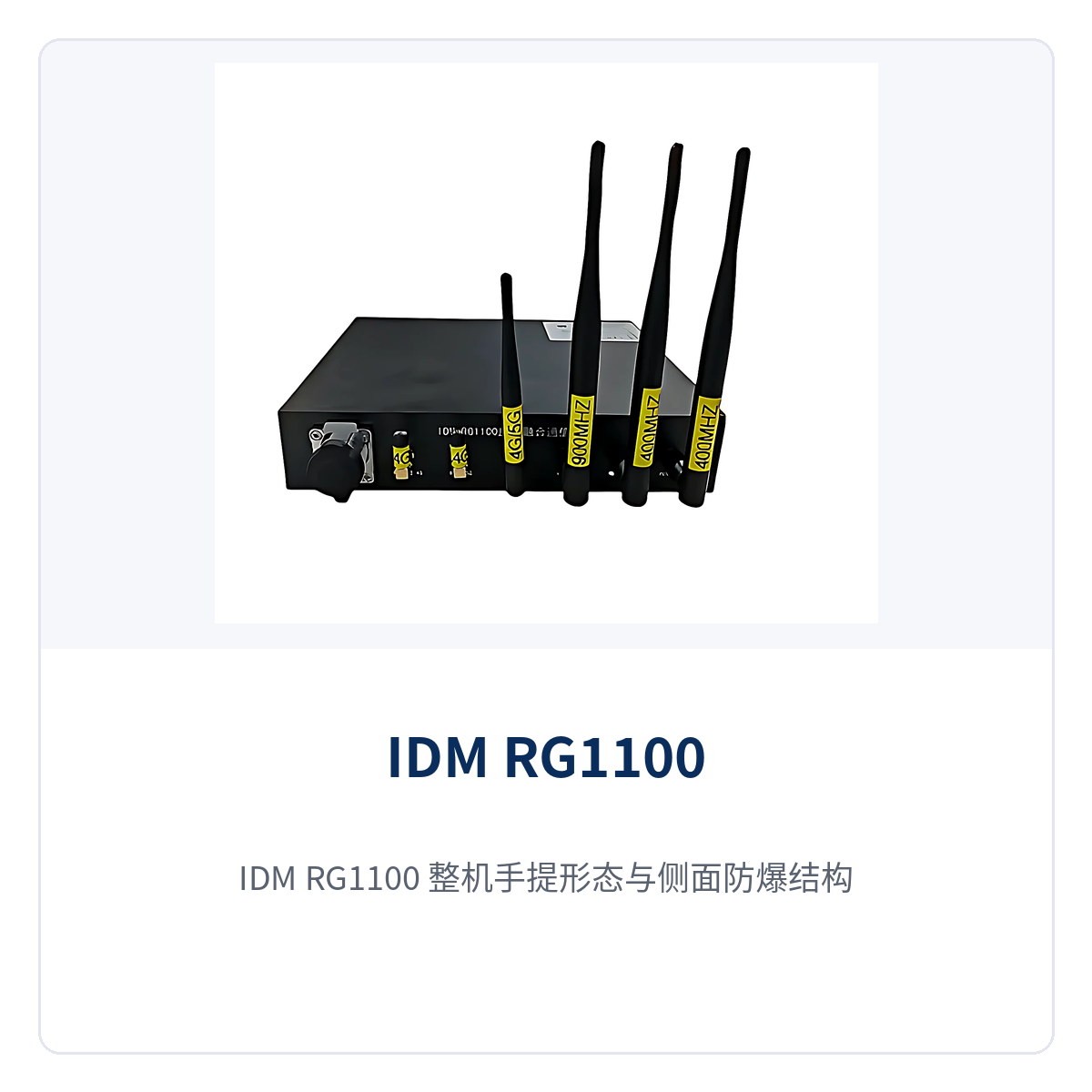
Figure 6: IDM RG1100 handheld form factor and side explosion-proof construction
Differentiated value: which on-site problems do the four hard metrics address?
Selling Point | Corresponding differentiated capability | On-site value to the customer |
|---|---|---|
Network in 5 minutes | Handheld network setup in 5 minutes under three-disconnection conditions, with AI self-scheduling across multiple links: optical fiber, HaLow and UAV relay | An independent communication network is established upon arrival, and link selection is completed automatically by the device |
IP66 explosion-proof | IP66 explosion-proof enclosure supports a wide temperature range of -40℃~+60℃, with a built-in intrinsically safe battery providing ≥8 hours of endurance | Deployable in harsh environments such as chemical tank farms, underground mines and low-temperature field sites |
-40~60℃ | -40℃~+60℃ wide-temperature operation | Covers underground and extremely cold environments, staying online all year round without seasonal temperature difference restrictions |
Intrinsically safe battery 8h | Built-in intrinsically safe battery ≥8 hours, supporting solar power and external power supply expansion | Core base station modules keep running after mains power failure, leaving margin for emergency repair and battery replacement |
How to use it after arriving at a three-disconnection site? Deployment steps for a network in 5 minutes
A network in 5 minutes is not just a slogan; it corresponds to a sequence of actions that can be followed. As a product showcase for emergency communications, IDM RG1100 is handheld and portable with a foldable antenna. After arrival, proceed in the following order: first get on-site internal calls through, then backhaul to the rear.
Site selection and setup: place the device at the forward command post or on higher ground, unfold the foldable antenna, and check whether the interface dust caps are reseated.
Power-on self-test: after the device is powered on, confirm the intrinsically safe battery level and the status of each link. Connect an external power supply when mains power is available, and connect a solar panel for long-term presence.
Link access: connect optical fiber or field wire according to on-site resources, enable HaLow or Wi-Fi Mesh on the wireless side, and use UAV relay to fill in remote coverage gaps.
Terminal registration: SIP telephones and video conference endpoints register with the built-in SIP server; dial-test whether calls between the forward command post and detachments are reachable in both directions.
Service connectivity: connect digital trunking and broadcast intercom, bring LoRa and Modbus sensor data online, and interface with the rear command center via GB/T 28181 (Chinese video surveillance standard) and SIP.
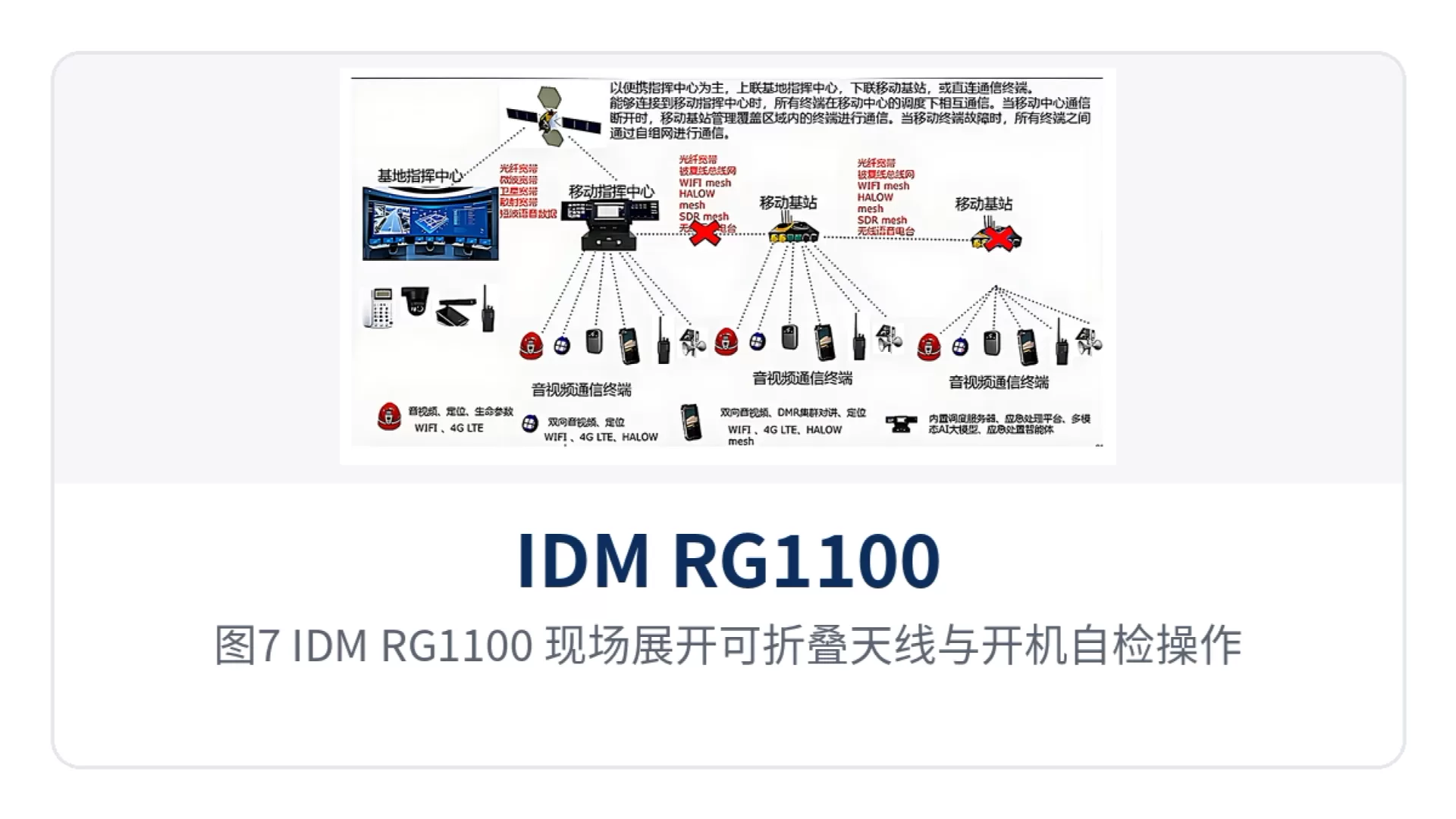
Figure 7: IDM RG1100 on-site deployment of the foldable antenna and power-on self-test operations
Teardown follows the reverse order: first confirm that services have been migrated or the task is complete, then disconnect links, retract the antenna, fasten the dust caps, and return the device to its transport state. The whole procedure does not require professional installation personnel; an on-site communications operator who has received one training session can complete it independently, which is also the prerequisite for portable equipment to be truly put to use in emergency teams.
Typical application scenarios
Emergency rescue and firefighting command
The on-site characteristic of emergency rescue and firefighting command is that the "three disconnections" often occur simultaneously, and the forward command post needs to establish voice and video channels immediately after arrival. Rescue detachments and command headquarters at earthquake, flood and fire scenes rely on real-time images and instructions, while public network base stations may be damaged and mains power may fail. IDM RG1100 is handheld and portable with a foldable antenna and can establish a communication network within 5 minutes, backhauling over optical fiber, field wire or UAV relay to connect the forward command post, rescue detachments and the rear command center into an independent emergency communications network; the IP66 explosion-proof enclosure and the -40℃~+60℃ wide operating temperature keep the device continuously available in rain, snow, dust and low-temperature sites.
Law enforcement border defense and field training
Law enforcement border defense and field training scenarios impose high requirements on the independent controllability and security of communications. Border patrol, counter-terrorism and emergency response, and field training are often conducted in mountainous areas, jungles and gobi without public network coverage, where communications must both reach detachments and ensure that links and voice are not eavesdropped. IDM RG1100 uses a domestically produced chip, complies with domestic IT innovation requirements, and supports SM (Chinese national cryptographic) algorithms encryption and link aggregation transmission; multi-link intelligent access enables patrol detachments to switch automatically among optical fiber, wireless and UAV relay, and UAV relay extends coverage behind complex terrain, meeting private network requirements for redundancy and security.
Chemical industrial parks and electric power inspection
Explosion protection and wide temperature are the key constraints in chemical industrial park and electric power inspection scenarios. Flammable and explosive gas is present in chemical tank farms, strong electromagnetic interference exists around substations and transmission lines, and the portable communication devices carried by inspection personnel must have explosion-proof construction and wide-temperature operating capability. The IDM RG1100, built on IP66 waterproof and dustproof protection, explosion-proof construction, and a wide operating temperature of -40℃ to +60℃, provides on-site coverage within the industrial park and station area, with inspection personnel accessing it through intercom terminals. The device has built-in LoRa and Modbus gateways, backhauling on-site sensor data and voice over the same link to meet the data backhaul requirements of unattended sites.
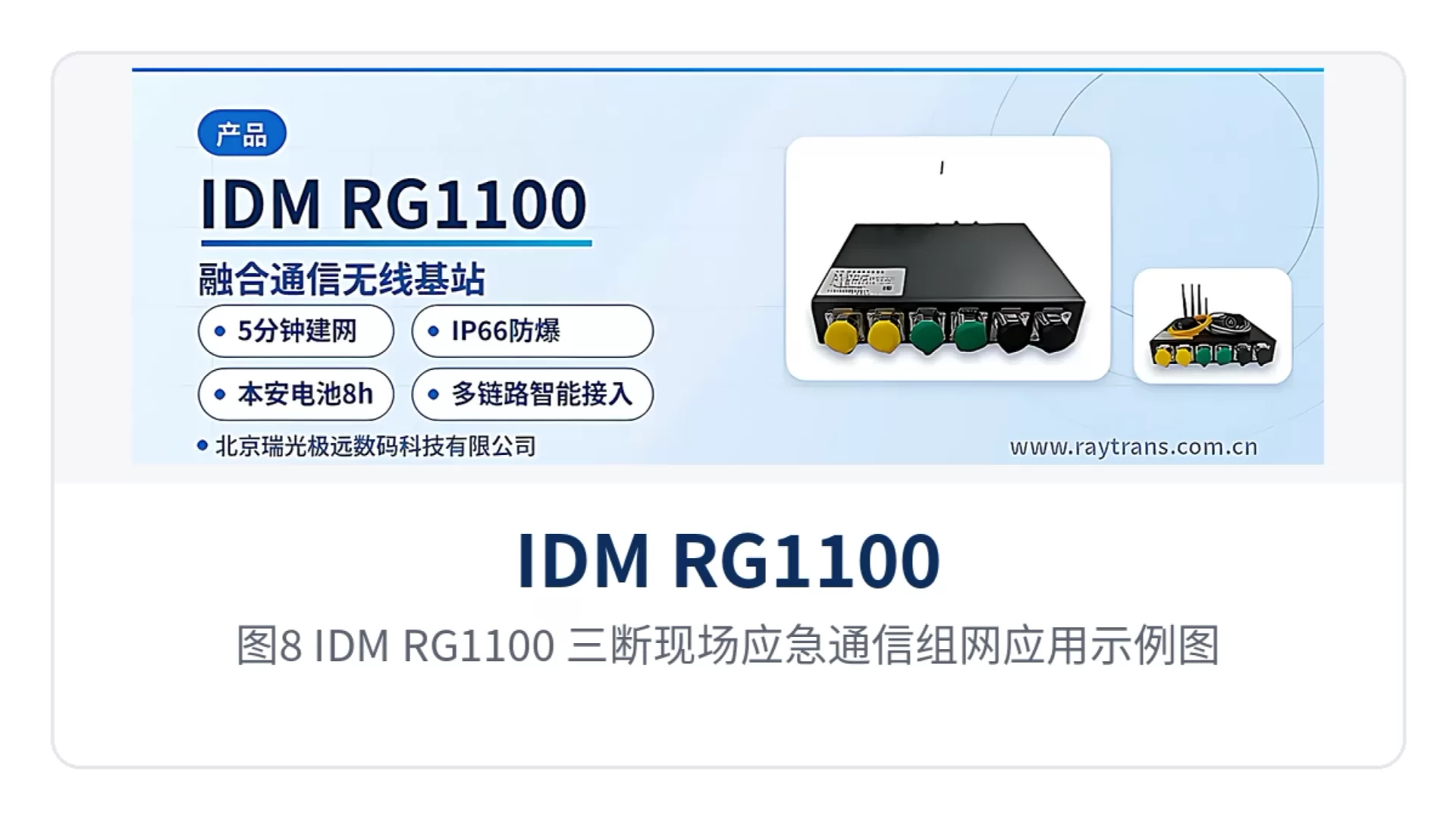
Figure 8: IDM RG1100 Three-Disconnection On-Site Emergency Communications Networking Application Example