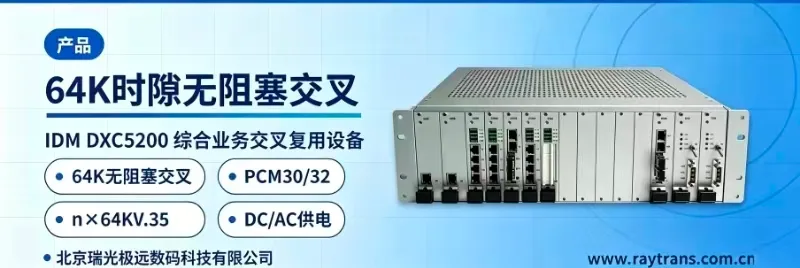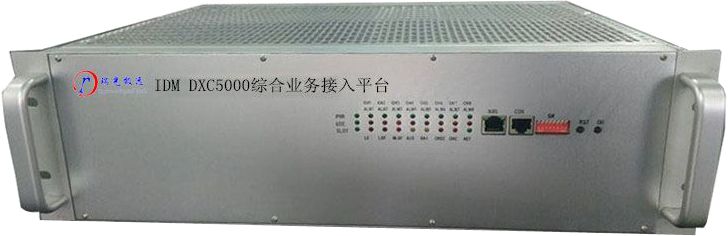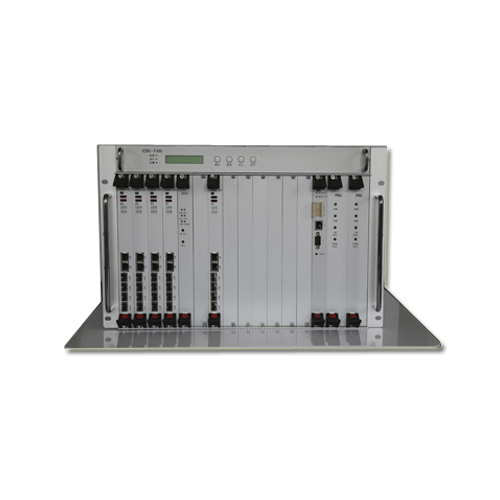
IDM MUX180
IDM MUX180
The IDM MUX180 Integrated Service Cross-Connect Multiplexer is a comprehensive service multiplexing platform that integrates 64K narrowband service access, PCM multiplexing, 64K timeslot cross-connection, and SDH optical transmission. The IDM MUX180 is primarily used for service access and cross-connection at the access layer of data communication networks. It features complete synchronization and timing functions, providing up to 24 E1 channels with non-blocking 64K-level cross-connection, while supporting up to 180 channels of 64K services, including telephone, magneto telephone, common battery telephone, and V.24 data services.
I. Introduction
The IDM MUX180 Integrated Service Cross-Connect Multiplexer is a comprehensive service multiplexing platform that integrates 64K narrowband service access, PCM multiplexing, 64K timeslot cross-connection, and SDH optical transmission.
The IDM MUX180 is primarily used for service access and cross-connection at the access layer of data communication networks. It features complete synchronization and timing functions, providing up to 24 E1 channels with non-blocking 64K-level cross-connection, while supporting up to 180 channels of 64K services, including telephone, magneto telephone, common battery telephone, and V.24 data services.
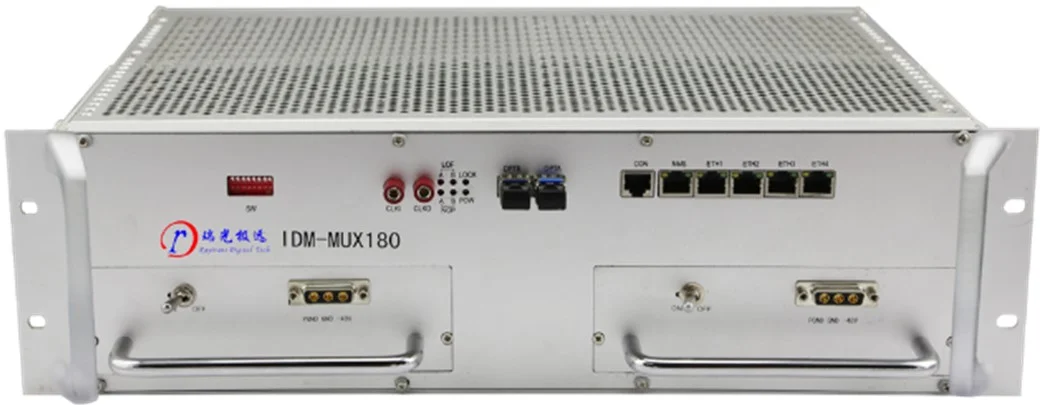
Figure 1 Front Panel Diagram of IDM MUX180
II. Product Features
Ø Adopts 19-inch standard 3U chassis with plug-in card design; provides 17 slots for 3U user cards;
Ø Two SFP-type STM-4/1 optical interfaces, supporting SDH ring and chain topologies, with 1+1 tributary channel protection;
Ø Provides 252×252 VC-12 level non-blocking cross-connection between TDM interface services, supporting unidirectional, bidirectional, and broadcast services;
Ø Provides up to 24 E1 channels with non-blocking 64K timeslot cross-connection;
Ø Supports access of up to 180 channels of 64K timeslot services;
Ø Provides 4 groups of physically isolated EoS Ethernet, each with configurable bandwidth of N×VC12 (N=1~50); each group also provides 1 reserved extended Ethernet port; works with the 8FE card to expand the number of extended Ethernet interfaces;
Ø Provides a 5-in-1 2-wire audio card: 3U-8MVOICE; each card provides 8 channels of 2-wire audio; each 2-wire audio channel can be configured as FXO/FXS/hotline/magneto/2100Hz magneto mode;
Ø Supports insertion of radar data access card, providing 4 channels of radar data service interfaces per card, supporting synchronous and asynchronous operating modes; in synchronous mode, transmission rates support 300bps/600bps/1.2kbps/2.4kbps/4.8kbps/9.6kbps/19.2kbps/38.4kbps/57.6kbps/64kbps/115.2kbps/128kbps; in asynchronous mode, the maximum transmission rate is 38.4kbps, with automatic adaptation for rates below 38.4kbps;
Ø Clock source can be selected from line clock, external clock (2Mbit/s or 2MHz), and free-running oscillation;
Ø Provides 17 user slots, compatible with multiple service cards, supporting access of voice and data services including PDH, E1, FXO/FXS, V.24/V.28/V.35, EM2/4, hotline telephone, magneto telephone, high-fidelity audio, X.50, and 10M/100M Ethernet;
Ø Supports insertion of 3UMPCONV user optical port expansion card and WG300 signaling switching card;
Ø Standard model provides a repeaterless transmission distance of 40 kilometers; custom configurations are available for distances exceeding this range;
Ø Provides Ethernet management channels based on DCC, E1, N*64K, and TCP/IP, with SNMP simple network management protocol support;
Ø DC -48V and AC 220V power supply, with optional DC+DC, AC+AC, AC+DC dual backup power configurations;
III. Technical Specifications
Optical Interface
Interface Type | SFP | Fiber Mode | Single-mode(Multi-mode optional) |
Tx/Rx Rate | 155.52Mbps/155.52Mbps | Tx/Rx Wavelength | 1310nm/1550nm |
Output Power | -12~-6dBm | Receiver Sensitivity | Better than-32dBm |
Transmission Distance | |||
E1 Interface
Bit Rate | 2.048Mbps | Line Code | HDB3 |
Standard Protocol | Supports ITU-T G.703 | Impedance | 75Ω/120Ω |
Frame Structure | PCM30/32 | Signaling | Channel-Associated Signaling |
Ethernet
Interface Type | RJ-45 | Transmission Rate | N×VC12 (N≤50) |
Standard Protocol | Supports IEEE802.3 | Operating Mode | Full/Half Duplex/Auto-Negotiation |
FXO, FXS Interfaces
Audio Range | 300Hz~3400Hz | Compression | A-law per ITU G.711 |
Impedance | Three-element complex impedance 200Ω+560Ω//0.1μF | Loop Current | 20mA/channel |
EM2/4 Line Interface
Audio Range | 300Hz~3400Hz | Impedance | Balanced600Ω |
Compression Rate | ITU G.711A-law | Return Loss | ≥18dB |
Magnetic Ring Interface
Audio Range | 300Hz~3400Hz | Impedance | Balanced600Ω |
Compression Rate | ITU G.711A-law | Return Loss | ≥18dB |
Radar Data Interface
Operating Mode | Asynchronous Mode | Synchronous Mode |
Transmission Rate | Supports a maximum transmission rate of 38.4kbps, with automatic adaptation for rates below 38.4kbps. | Supports 300bps/600bps/1.2kbps/2.4kbps/4.8kbps/9.6kbps/19.2kbps/38.4kbps/57.6kbps/64kbps/115.2kbps/128kbps. |
Electrical Characteristics | Complies with CCITT V.28 protocol | Complies with CCITT V.28 protocol |
V.35 Interface
Interface Type | RJ-45 | Electrical Characteristics | Compliant with ITU-T V.35 Recommendation |
Transmission Rate | n×64Kbps (n=0–31) | Terminal Interface | Compliant with ISO2593 specifications |
Power Supply and Power Consumption
Power Supply Mode | AC220V/DC- 48V | Total Power Consumption | ≤90W |
Environmental Conditions
Operating Temperature | -20oC ~+50oC | Relative Humidity | 0~95% (non-condensing) |
Product Dimensions
Length×Depth×Height | 482×309×132(mm) |
IV. Application Examples
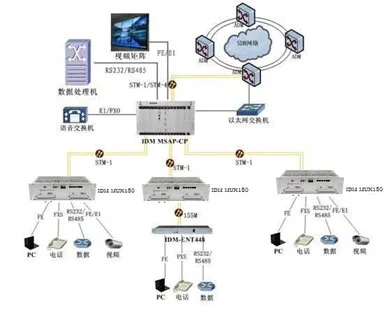
Figure 2 Star Network Application Diagram
The IDM MUX180 can form a star network with other SDH equipment to provide users with telephone, data, IP, and video services.
FAQs
What is the working principle of Pulse Code Modulation (PCM)?
Working Principle Pulse Code Modulation is the process of converting a time-continuous…
View answerPCM30 Working Principle: What Is PCM30/32
PCM30 Equipment Working Principle The 30-channel PCM equipment refers to equipment that provides 30 user interfaces and…
View answerWhat are the common problems of PCM equipment in enterprise applications?
At present, PCM equipment has become basically ubiquitous in enterprise network applications.
View answerWhat is E1? How to Use E1
What is E1 The European 30-channel pulse code modulation PCM is abbreviated as E1, with a rate of 2.048Mbit/s.
View answerFrame Structure of 30/32-Channel PCM Primary Group
A communication system consists of transmitting equipment, receiving equipment, and transmission equipment.
View answer