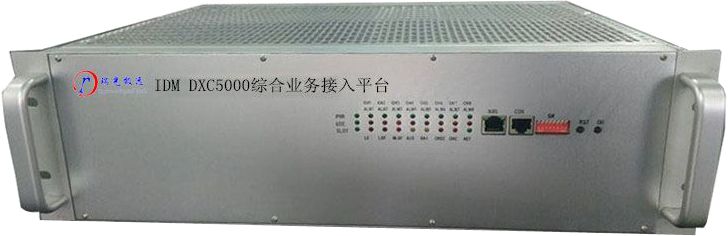
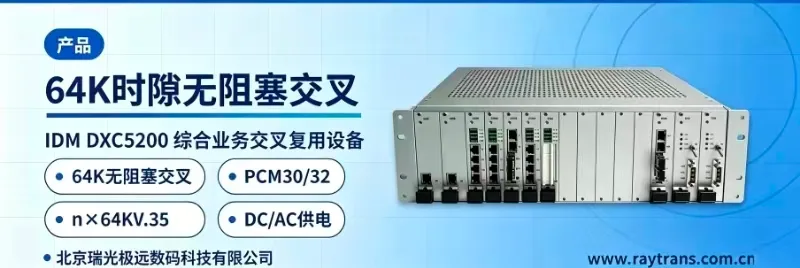
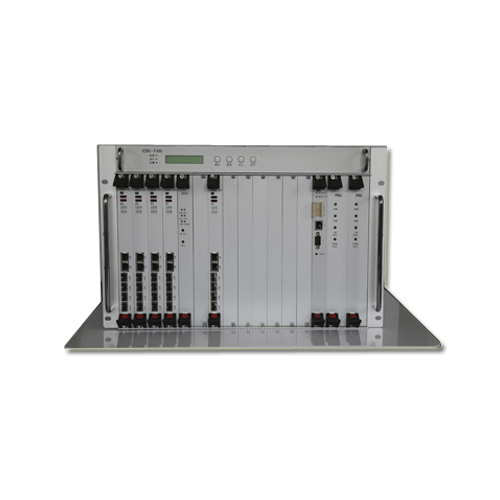
IDM MAP4E1
IDM MAP4E1
The IDM MAP4E1-30 Integrated Service Cross-Connect Multiplexer is a comprehensive service platform that integrates 64K narrowband service access, PCM multiplexing, and 64K timeslot cross-connection. The IDM MAP4E1-30 device is mainly used for service access and cross-connection at the access layer in data communication networks. It features complete synchronization and timing functions, providing non-blocking cross-connection at 64K level across 4 E1 channels, and can simultaneously provide 30 channels of 64K services, including telephone, magneto telephone, common battery telephone, and V.24 data services.
Overview
The IDM MAP4E1-30 Integrated Service Cross-Connect Multiplexer is an integrated service platform that combines 64K narrowband service access, PCM multiplexing, and 64K timeslot cross-connect.
The IDM MAP4E1-30 is mainly used for service access and cross-connect at the access layer of data communication networks. It features complete synchronization and timing functions, providing non-blocking 64K-level cross-connect across 4 E1 channels, while supporting up to 30 channels of 64K services, including telephone, magneto telephone, common battery telephone, and V.24 data services.

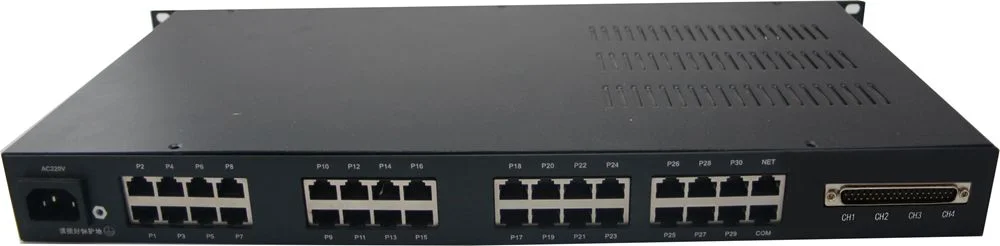
IDM MAP4E1-30 Integrated Service Cross-Connect Multiplexer image
Product Features
Adopts a 19-inch 1U standard chassis for easy installation.
Full-timeslot non-blocking cross-connect across 4 E1 groups;
The main unit provides 30 channels of 64K (or Nx64K) user narrowband service access;
The main board provides 15 service card slots, with up to two service channels per card;
Voice interfaces can be FXO central office automatic telephone, FXS remote automatic telephone, or MAG magneto telephone; data services include V.24/RS232/RS485/RS422, X.50/X.58, co-directional 64K, V.35/V.36 with Nx64K bandwidth, and Ethernet bridge;
Supports serial port network management or Ethernet SNMP network management;
Supports AC 220V power supply or DC -48V power supply;
4 E1 groups can form point-to-point, chain network, star network, and other topologies.
Technical Specifications
1) E1 Interface
Line Rate | 2.048Mbps | Line Code | HDB3 |
Standard Protocol | Supports ITU-T G.703 | Impedance | 75Ω/120Ω |
Frame Structure | PCM30/32 | Signaling | Channel Associated Signaling |
2) Ethernet (FE)
Interface Type | RJ-45 | Transmission Rate | N×VC12 (N≤50) |
Standard Protocol | Supports IEEE802.3 | Operating Mode | Full/Half Duplex/Auto-negotiation |
3) Ethernet (GE)
Interface Type | RJ-45 | Transmission Rate | N×VC12 (N≤63) |
Standard Protocol | Supports IEEE802.3 | Operating Mode | Full/Half Duplex/Auto-negotiation |
4) FXO、FXS Interface
Audio Range | 300Hz~3400Hz | Compression Rate | A-law per ITU G.711 |
Impedance | Triple complex impedance 200Ω+560Ω//0.1μF | Loop Current | 20mA/channel |
5) Co-directional 64K Interface
Line Code | G.703 Standard | Line Rate | 64Kbps
|
Impedance | Balanced 120Ω | Fully compliant with ITU G.703 recommendation | |
6) EM2/4 Wire Interface
Audio Range | 300Hz~3400Hz | Impedance | Balanced 600Ω |
Compression Rate | A-law per ITU G.711 | Return Loss | ≥18dB |
7) Magneto Interface
Audio Range | 300Hz~3400Hz | Impedance | Balanced 600Ω |
Compression Rate | A-law per ITU G.711 | Return Loss | ≥18dB |
8) V.24 Interface
Transmission Rate | Asynchronous ≤9600bps; Synchronous 64Kbps | Electrical Characteristics | Compliant with CCITT V.28 protocol |
9) V.35 Interface
Interface Type | RJ-45 | Electrical Characteristics | Compliant with ITU-T V.35 recommendation |
Transmission Rate | n×64Kbps (n=0~31) | Terminal Interface | Compliant with ISO2593 |
10) Power Supply and Consumption
Power Supply Mode | AC220V/DC-48V | Power Consumption | ≤150W |
11) Environmental Conditions
Operating Temperature | -10°C ~ +50°C | Relative Humidity | 0~95% (non-condensing) |
12) Product Dimensions
Length × Depth × Height | 482×309×44(mm) |
Application Examples
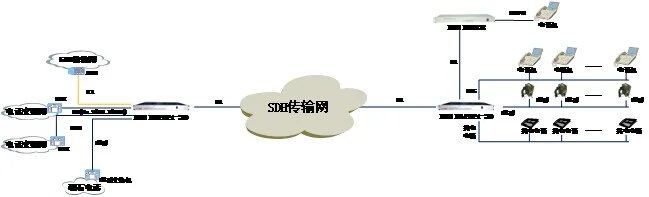
Typical networking topology
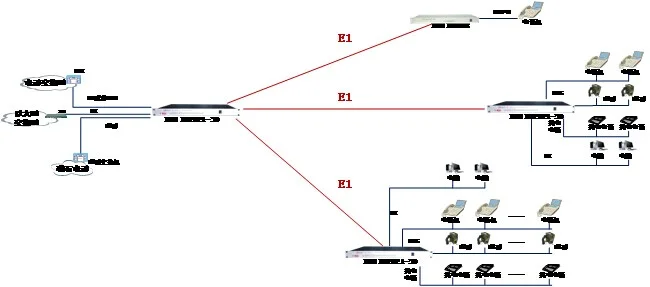
E1 transmission link primary/backup protection application
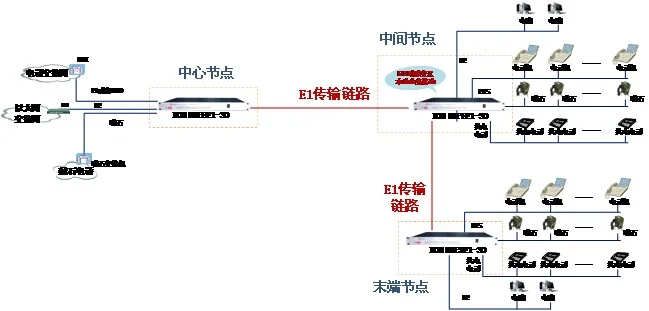
DXC timeslot cross-connect function application
FAQs
What is the working principle of Pulse Code Modulation (PCM)?
Working Principle Pulse Code Modulation is the process of converting a time-continuous…
View answerPCM30 Working Principle: What Is PCM30/32
PCM30 Equipment Working Principle The 30-channel PCM equipment refers to equipment that provides 30 user interfaces and…
View answerWhat are the common problems of PCM equipment in enterprise applications?
At present, PCM equipment has become basically ubiquitous in enterprise network applications.
View answerWhat is E1? How to Use E1
What is E1 The European 30-channel pulse code modulation PCM is abbreviated as E1, with a rate of 2.048Mbit/s.
View answerFrame Structure of 30/32-Channel PCM Primary Group
A communication system consists of transmitting equipment, receiving equipment, and transmission equipment.
View answer