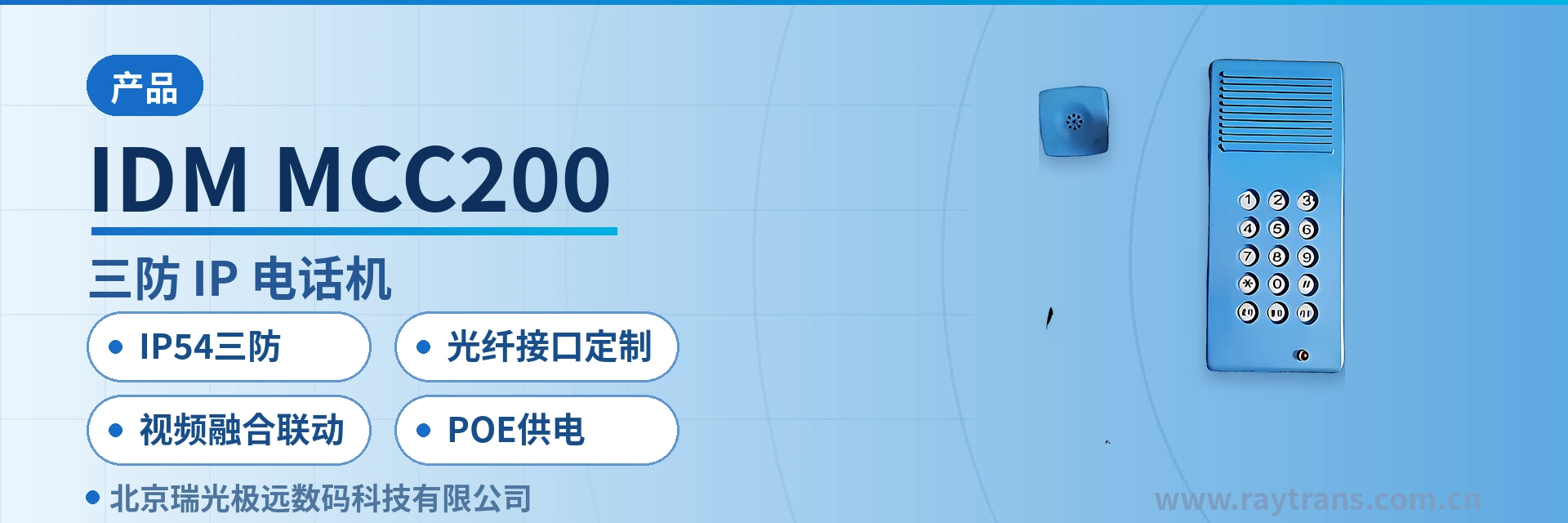
IDM MCC200 Tunnel Rugged IP Telephone
IP54 rugged housing, fully sealed keypad with no moving parts, desktop/wall-mounted dual use without protective enclosure
The telephone housing is made of antistatic ABS plastic, waterproof, dustproof, and corrosion-resistant, with an ingress protection (IP) rating of IP54. The telephone is designed for both desktop and wall-mounted use, adopts a newly developed hook switch mechanism, and has no moving parts. The keypad is fully sealed and provided with emergency call, hang-up, and redial keys.
The IDM MCC200 tunnel rugged IP telephone is a SIP telephone developed by Beijing Ruiguang Jiyuan Digital Technology Co., Ltd. As an IP access terminal, it features an anti-static ABS plastic enclosure that is waterproof, dustproof, and corrosion-resistant, with an ingress protection (IP) rating of IP54. It is used for point-to-point calls and emergency calls in tunnels, underground works, and industrial sites, and is a typical product among tunnel IP telephones.
The device accesses the dispatch system provided by the command and dispatch system manufacturer via the standard SIP 2.0 (RFC3261) protocol, supports one-touch direct calling of the dispatch console and power over Ethernet (PoE), and offers desk-mounted and wall-mounted installation methods to suit both duty desk surfaces and mine roadway walls, with the specific choice determined by the on-site duty arrangement; Raytrans can provide supporting media converter manufacturer products and smart mining communication solutions to facilitate system integration and product showcase.
Key Specifications at a Glance: IP54 rugged enclosure · fully sealed keyboard with no moving parts · 80dB ringing loudness · SIP 2.0 (RFC3261) · power over Ethernet (PoE) · customizable optical fiber port · video linkage
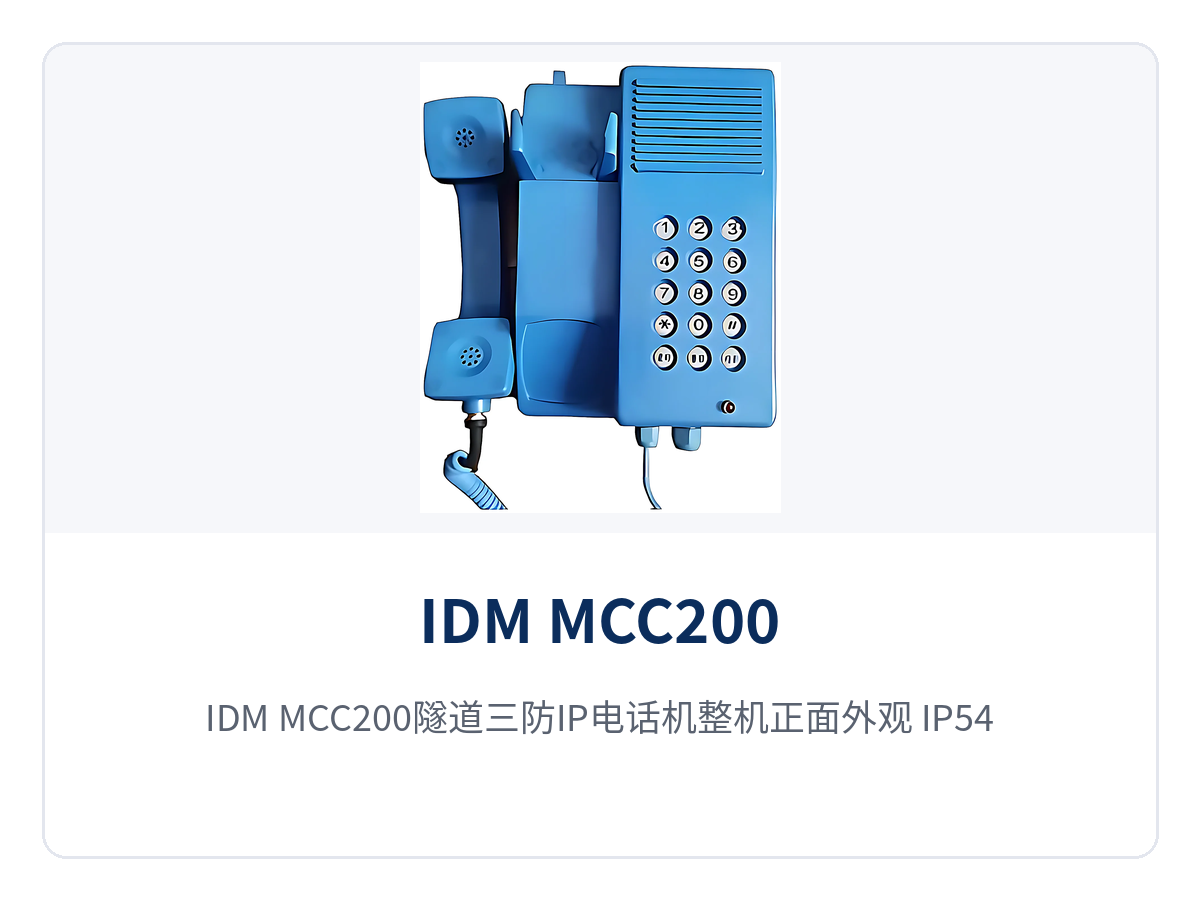
Figure 1: Front view of the IDM MCC200 tunnel rugged IP telephone, showing the IP54 rugged enclosure and fully sealed keypad
What Kind of Device Is the Tunnel Rugged IP Telephone
The IDM MCC200 tunnel rugged IP telephone builds its rugged capability into the telephone body itself, without relying on an external protective box. The keyboard uses fully sealed keys, the hook switch is a newly developed mechanism, and there are no moving parts on the telephone; returning the handset to the cradle hangs up the call. The front panel has three keys—emergency call, hang up, and redial—and going off-hook and pressing the emergency call key connects the user to the dispatch console. As an IP access terminal designed for tunnel scenarios, the unit incorporates protection into the enclosure at the structural level.
Dust, water seepage, and saline mist in tunnels and underground spaces are the main causes of telephone damage; the fewer the gaps and moving parts, the less contaminant enters the telephone interior. The desk-mounted and wall-mounted structure allows the same model to be placed on a duty desk surface or wall-mounted at a portal or on a mine roadway side wall, so the site does not need two separate devices for the two installation positions.
How the IP54 Rugged Enclosure and Fully Sealed Keyboard Handle Tunnel Environments
The two digits of IP54 correspond to protection against solid foreign objects and water respectively: the first digit, 5, indicates dust protection, and the second digit, 4, indicates splash water protection, with the rating defined in GB/T 4208, Degrees of Protection Provided by Enclosures (IP Code). Water spray, washdown water, and accumulated dust in tunnels fall within the operating conditions covered by these two ratings, so the telephone can be installed without an external protective box.
The anti-static ABS plastic enclosure combines corrosion resistance with anti-static requirements; the surface resists static dust accumulation and can be wiped with a damp cloth during routine cleaning without opening the telephone. During on-site cleaning, avoiding direct high-pressure water spray into the key gaps remains the standard practice for extending the service life of the telephone.
What Functions and Keys Does the MCC200 Provide
The telephone's functions address three categories of needs—rugged structure, on-site calling, and routine O&M—and the number of keys is kept small so that duty personnel do not need to memorize key combinations. The functions and their descriptions are listed in the table below for item-by-item verification against on-site services and for checking registration and call configuration with the dispatch side.
| Function | Description |
|---|---|
| Dustproof, waterproof, and corrosion-resistant structure | The enclosure is made of anti-static ABS plastic, waterproof, dustproof, and corrosion-resistant, with an ingress protection (IP) rating of IP54, suitable for high-humidity, dusty, and corrosive tunnel atmospheres |
| Fully sealed keyboard and moving-part-free design | The keyboard uses fully sealed keys, the hook switch adopts a newly developed mechanism, and there are no moving parts on the telephone, reducing the paths through which dust and moisture enter the interior |
| Dedicated operation keys | The front panel has three keys—emergency call, hang up, and redial; to change the number during a call, press hang up, and on a busy tone, press redial to redial the last number |
| Desk-mounted and wall-mounted installation | The same telephone can be placed on a duty desk surface or wall-mounted, adapting to different positions such as duty rooms, portals, and mine roadway side walls |
| One-touch direct calling of the dispatch console | Supports one-touch direct calling of the dispatch console; going off-hook and pressing the key calls the preset dispatch console, so duty personnel do not need to memorize numbers |
| Full-duplex intercom and echo cancellation | Supports full-duplex intercom with echo cancellation; speaker and microphone sensitivity are adjustable |
| Recording and query | The system provides recording and recording output, and recording files can be retrieved and queried at any time |
| WEB interface configuration | Settings can be made through the WEB interface; numbers, codecs, and network parameters are configured centrally on the equipment room side |
| Online software upgrade | Supports online software upgrade, so function updates do not require returning the telephone to the manufacturer |
| Video linkage | Can integrate network surveillance cameras to transmit surveillance images near the telephone to a SIP videophone |
| Customizable optical fiber port | The optical fiber port can be customized to replace twisted pair over longer transmission distances, connecting directly to Fast Ethernet media converters and optical port Ethernet switches |
| Power over Ethernet (PoE) | Powered by PoE over the Ethernet port, so only one network cable is needed at the site, eliminating a separate power feed on the telephone side |
How Does the Customizable Optical Fiber Port Overcome Twisted-Pair Distance Limits
The cabling standard for twisted-pair Ethernet (IEEE 802.3) limits the transmission distance of a single segment to the hundred-meter range, whereas portal equipment rooms in tunnels, pipe galleries, and field sites are often hundreds to thousands of meters from the telephone position. The telephone's optical fiber port can be customized to replace the twisted-pair access segment from the telephone to the equipment room with optical fiber, connecting directly to Fast Ethernet media converters or optical port Ethernet switches.
After switching to optical fiber, the available transmission distance is determined by the selected optical module and the link loss budget, calculated during selection based on transmit optical power and receiver sensitivity, and is no longer limited by hundred-meter cabling. This modification changes only the medium; the numbers, registration relationships, and calling methods on the dispatch side remain unchanged.
How Does Video Linkage Show Calls and Surveillance on the Same Screen
The telephone can integrate network surveillance cameras to transmit surveillance images near the telephone to a SIP videophone. When a duty operator answers a call from a portal telephone, the same screen carries both the on-site audio and the image near the telephone position, so determining whether to send personnel to the site no longer relies solely on verbal description.
The prerequisite for linkage is that the camera and the telephone are on the same IP network; the camera's encoding and platform are configured according to the existing on-site monitoring system, and the dispatch side receives images on a SIP videophone. The specific interfacing method is subject to on-site system conditions and the manufacturer's commissioning conclusions.
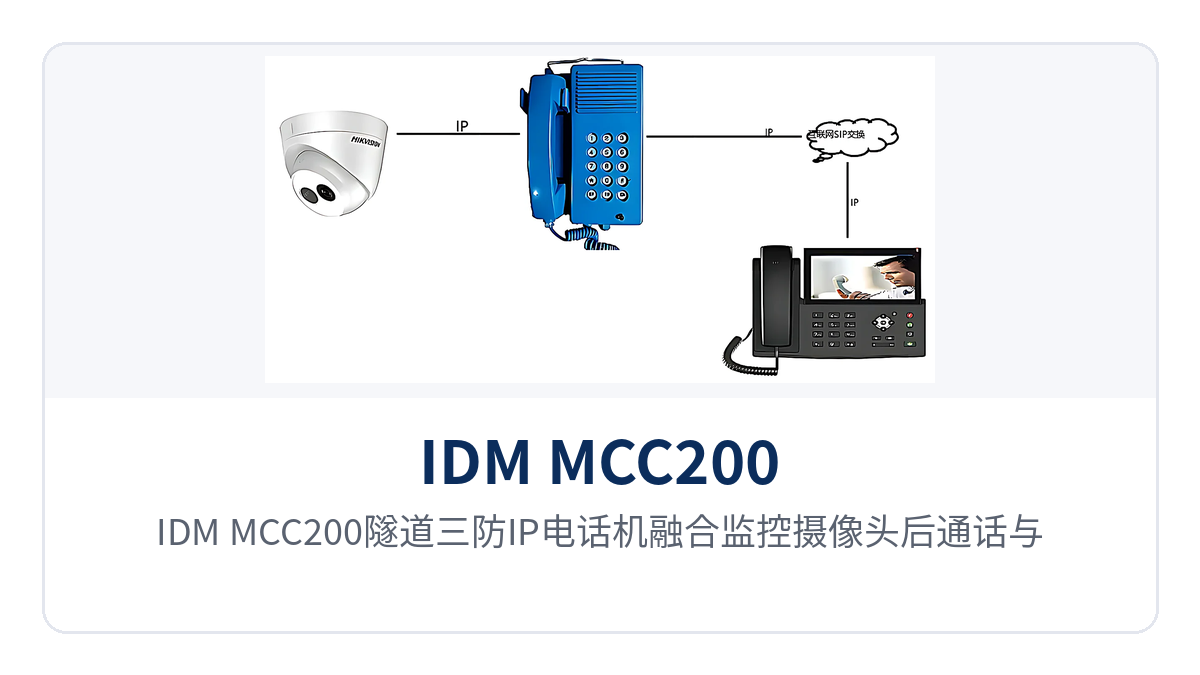
Figure 2: Terminal screen showing call and video linkage after the IDM MCC200 tunnel rugged IP telephone integrates a surveillance camera
Technical Specifications and Dialing Specifications
The parameter table covers five parts—protection, dialing, protocols, voice codecs, and interfaces—with values taken from the original product documentation and verified item by item during project selection. For overall power consumption, dimensions, and operating temperature and humidity not marked in the documentation, the accompanying technical documentation and the manufacturer's confirmation shall prevail.
| Item | Parameter/Specification | Description/Applicable Conditions |
|---|---|---|
| Ingress protection (IP) rating | IP54 | Dust protection level 5, splash water protection level 4, rated per GB/T 4208 |
| Enclosure material | Anti-static ABS plastic | Waterproof, dustproof, and corrosion-resistant |
| Installation method | Desk-mounted and wall-mounted | Desk placement or wall mounting |
| Keyboard and keys | Fully sealed keys, including emergency call, hang up, and redial | No moving parts on the telephone |
| Ringing loudness | 80dB | Audibility indicator for identifying incoming calls under on-site noise |
| Dialing method | DTMF dialing and pulse dialing | Compatible with dispatching exchanges and switching equipment of different formats |
| Pulse rate | 10±1 pulses/s | Pulse dialing parameter |
| Pulse make/break ratio | (1.6±0.2):1 | Pulse dialing parameter |
| Signaling protocol | SIP 2.0 (RFC3261) and related RFC protocols | Registers as a SIP terminal to a dispatching exchange or IPPBX |
| Voice codec | G.729, G.723, G.711, G.722, G.726 selectable | Selected according to on-site bandwidth and audio quality requirements |
| Intercom and audio | Full-duplex intercom, echo cancellation, adjustable speaker and microphone sensitivity | Hands-free call scenarios |
| Power supply mode | Power over Ethernet (PoE) | Powered over the Ethernet port, so only one network cable is needed at the site |
| Configuration method | WEB interface | Numbers and network parameters set on the equipment room side |
| Video linkage | Camera images can be transmitted to a SIP videophone | Camera and telephone on the same IP network |
| Optical fiber port | Customizable, connects to Fast Ethernet media converters and optical port Ethernet switches | Replaces twisted-pair access over long distances |
| Emergency call | Emergency number B (frequency combination 770Hz, 1633Hz) | Requires the associated dispatching exchange to support the emergency call function |
| Overall power consumption, dimensions, operating temperature and humidity | Not yet recorded in the knowledge base | Subject to the accompanying technical documentation and the manufacturer's confirmation |
Differentiated Value: Which On-Site Problems Do the Four Capabilities Address
The four selling point short labels correspond to four specific problems in tunnels, mining, and industrial sites: telephones damaged by moisture and dust, telephone positions too far from the equipment room, duty operators able to hear only audio, and inconvenient on-site power access. The table below maps labels, capabilities, and on-site benefits row by row for direct reference during selection.
| Selling Point | Corresponding Capability | Value on Site |
|---|---|---|
| IP54 rugged | IP54 rugged enclosure with fully sealed keyboard and no moving parts on the telephone | Can be installed in high-humidity, dusty, and corrosive tunnel atmospheres without a protective box; wiping for cleaning requires no disassembly |
| Customizable optical fiber port | Customizable optical fiber port connecting directly to Fast Ethernet media converters and optical port Ethernet switches | The access segment from the telephone position to the equipment room switches from twisted pair to optical fiber, no longer limited by hundred-meter cabling |
| Video linkage | Integrates network surveillance cameras to transmit images near the telephone to a SIP videophone | View images on the same screen while answering a call, so judging on-site conditions no longer relies solely on verbal description |
| Power over Ethernet (PoE) | Powered by PoE over the Ethernet port | No separate power feed at the site; one network cable provides both power and access |
Typical Application Scenarios
Tunnels and underground works, mining and field operations, and industrial private networks and dispatch communications share three characteristics: few people, harsh environments, and long distances from the equipment room. As an IP access terminal, the telephone's rugged structure, customizable optical fiber port, and one-touch direct calling of the dispatch console address structural durability, access distance, and calling efficiency respectively in these three types of sites.
Tunnels and Underground Works
Telephone positions in tunnel portal duty rooms, cross passages, pumping stations, and underground pipe galleries are exposed year-round to high humidity and dust, and both washdown water and mud and dust stirred up by vehicles fall on the telephones. The IP54 rugged IP telephone's enclosure and fully sealed keyboard allow installation at these positions without additional protective boxes, and the desk-mounted and wall-mounted options keep up with the installation conditions of different points.
The network cable distance from the portal to the electromechanical duty room often exceeds one hundred meters; the customizable optical fiber port switches this access segment to optical fiber and connects to optical port switches; the telephone is powered by PoE, so only one network cable is laid at the site. In an emergency, going off-hook and pressing the emergency call key connects directly to the dispatch console, so duty personnel do not need to dial first and wait for the call to go through.
Mining and Field Operations
Dust concentrations are high and temperature differences are large in pithead duty rooms, surface production areas, and field sites; tunnel IP telephones are mostly wall-mounted or placed on operating consoles, and a round trip for maintenance personnel is costly. The rugged structure and moving-part-free design reduce points of failure, and online software upgrade means function updates require no disassembly or return to the factory.
When entering explosive atmospheres requiring explosion-proof certification (Ex certification), a telephone with the corresponding explosion-proof certification should be selected separately; this model's rugged structure addresses waterproof, dustproof, and corrosion-resistant operating conditions. Where power supply conditions at field sites are limited, PoE eliminates a separate power feed on the telephone side.
Industrial Private Networks and Dispatch Communications
Point SIP telephones in plants, pumping stations, and pipe galleries need to be integrated into existing dispatch systems, with wiring and number configuration managed centrally from the equipment room. The telephone supports SIP 2.0 (RFC3261) and related RFC protocols and can register as a SIP terminal to a dispatching exchange or IPPBX; the one-touch direct calling of the dispatch console is used after registration according to the dispatch-side configuration.
When the dispatch side needs records, the system provides recording and recording output, and recording files can be retrieved and queried at any time. The telephone is configured through the WEB interface; numbers and network parameters take effect as soon as they are changed in the equipment room, with no need to change configurations key by key on site or to send personnel out for a single number change.
How to Use: Answering, Dialing, and Emergency Calls
On-site use centers on three things: answering incoming calls, dialing out, and pressing the urgent call key when necessary. Operation depends on the handset position: returning the handset to the cradle hangs up the call, and placing the microphone on the cradle during a call interrupts the call, which new duty personnel need to be told clearly first.
- Answering incoming calls: when an outside line calls in, the telephone rings; lift the microphone upward from the cradle to go off-hook and talk, and return it to the cradle to hang up when the call is finished.
- Dialing out: lift the microphone to go off-hook, dial after hearing the dial tone, and wait for the other party to answer after hearing the ringback tone.
- Redialing and changing numbers: when hearing a busy tone, press the redial key once to redial the last number dialed; to dial a new number, press the hang-up key once and redial after hearing the dial tone.
- Handset precautions: during a call or while calling someone to answer, the microphone must not be placed on the cradle, otherwise the telephone hangs up automatically; after a call, it must be returned to the cradle for the next call.
- Emergency calls: in an emergency, lift the microphone and press the urgent call key, and the user talks directly with the dispatcher; under normal circumstances, do not press the urgent call key, to avoid occupying the dispatch channel.
- Emergency call conditions: the telephone can implement urgent calls only when the configured dispatching exchange has the emergency call function; the telephone can set any one urgent call signal within the range of "0-9" and "A-D" according to the urgent call frequency signal that the dispatching exchange can receive.
- Care and maintenance: work according to the operating conditions and avoid strong vibration and impact; periodically inspect the four functions of urgent call, dialing, talking and ringing; the frequency combination of urgent call number B is 770Hz and 1633Hz.
Conclusion
The IDM MCC200 tunnel rugged IP telephone handles the high-humidity and dusty environments of tunnels and industrial sites with an IP54 rugged enclosure, a fully sealed keyboard and a structure without moving parts, resolves the hundred-meter cabling limit from the telephone position to the equipment room with customizable optical fiber ports, and relies on video integration linkage so that duty operators can see the on-site image while answering. Desktop or wall-mounted use, power over Ethernet (PoE) and one-touch direct calling to the dispatch console keep site deployment and daily calls simple and controllable.
During selection, first confirm whether the on-site environment requires additional explosion-proof certification (Ex certification) and the actual distance from the telephone position to the equipment room, then determine whether to customize optical fiber ports and the interfacing conditions between the camera and the visual telephone. Once these three items are settled, the telephone's number configuration, recording traceability and inspection cycle can be arranged uniformly according to the existing dispatch system.